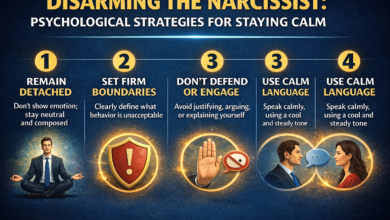
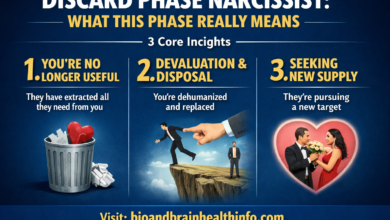
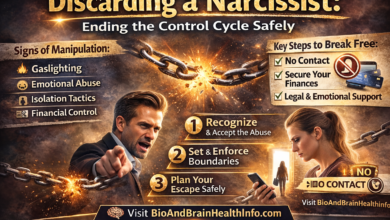
Narcissistic Abuse Cycle: 4 Stages & Recovery
Why Idealization, Devaluation and Discard Hurt

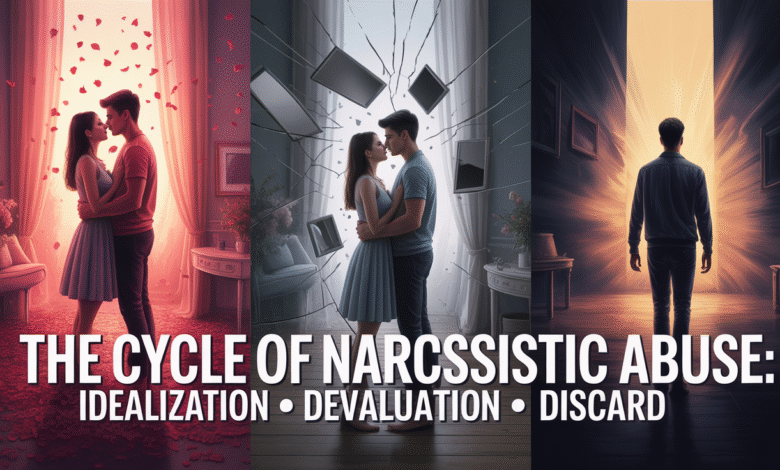
The narcissistic abuse cycle often moves through the stages of narcissistic abuse, including the idealization devaluation discard pattern, while the repeating narcissistic relationship cycle may restart through narcissistic abuse hoovering, renewed promises and temporary affection.
Thank you for reading this post, don't forget to subscribe!The narcissistic abuse cycle can begin with intense attention that makes you feel chosen, understood and safe. Over time, that warmth may change into criticism, withdrawal, confusion or sudden rejection.
The common stages of narcissistic abuse include idealization, devaluation, discard and a return through renewed affection or promises. This idealization devaluation discard pattern can weaken self-trust because the mind keeps searching for what went wrong and how to bring the earlier closeness back.
In a repeating narcissistic relationship cycle, moments of kindness may create hope that the painful behaviour is temporary.
Narcissistic abuse hoovering can restart contact through apologies, nostalgia, guilt or promises of change. Not every difficult relationship follows this pattern, and harmful behaviour does not automatically mean someone has narcissistic personality disorder.
This article explains how the cycle affects emotions, attachment and the nervous system, while offering ways to recognise repeated harm, rebuild clarity and choose safer boundaries.
Narcissistic Abuse Cycle: 4 Stages That Keep You Trapped
At first, it may not feel like abuse. It may feel like relief.
Someone finally notices you, chooses you and appears to understand what you have been missing. Their attention can feel unusually powerful because it gives you something deeply human: the feeling of being emotionally important, protected and wanted.
The connection may move quickly, but instead of feeling dangerous, it feels meaningful. You may think, “Perhaps I have finally found someone who truly understands me.”
Then something changes.
The warmth becomes inconsistent. Affection turns into criticism, silence or sudden emotional distance. You begin reviewing old conversations, trying to understand what went wrong. You search for the correct explanation, the right apology or the perfect solution that might restore the closeness you once experienced.
This repeated movement between intense connection and emotional harm is often described as the narcissistic abuse cycle.
The four commonly discussed stages are idealization, devaluation, discard and hoovering or re-entry. These stages may not always occur in a neat order, and not every difficult relationship follows this exact pattern.
However, when warmth, rejection and renewed hope repeatedly alternate, the pattern can create powerful confusion, weaken self-trust and make leaving emotionally difficult.
Clinical safety note: The presence of harmful or manipulative behaviour does not automatically mean that someone has narcissistic personality disorder. Only a qualified mental-health professional can diagnose NPD. You do not need a diagnosis, however, to recognise repeated harm or protect your emotional safety.
What Is the Narcissistic Abuse Cycle?
The narcissistic abuse cycle describes a repeating relationship pattern in which intense affection or admiration is followed by criticism, emotional withdrawal, rejection and sometimes renewed contact.
The commonly recognised stages include:
- Idealization: Intense attention, admiration or rapid emotional closeness.
- Devaluation: Criticism, inconsistency, blame, contempt or emotional withdrawal.
- Discard: Sudden rejection, abandonment, replacement or severe distancing.
- Hoovering: Attempts to restore contact through affection, apologies, promises, guilt or emotional pressure.
The pattern is not limited to romantic relationships. Similar dynamics can occur between family members, friends, colleagues, business partners or people in positions of authority.
What makes the cycle so difficult is not only the painful behaviour. It is the contrast between the beginning and what comes later.
The reader may keep asking:
- Where did the loving person go?
- Did I misunderstand the relationship?
- Was I too demanding?
- Did I cause the sudden coldness?
- Can the relationship return to how it was?
- Should I wait because this may only be temporary?
These questions keep the mind searching for certainty while the body remains emotionally activated.
The Four Stages of the Narcissistic Abuse Cycle
Stage 1: Idealization and Intense Emotional Attention
The idealization stage may feel like finally receiving the love, recognition or protection you have wanted for a long time.
The other person may appear highly interested in your thoughts, experiences and emotional needs. They may communicate frequently, offer intense compliments, speak about a special future or create the feeling that your connection is rare and unusually deep.
Common behaviours during this stage can include:
- frequent messages or calls;
- intense admiration;
- rapid emotional disclosure;
- claims that you are different from everyone else;
- early promises about the future;
- pressure to become close quickly;
- mirroring your interests, values or dreams;
- offering protection, rescue or constant reassurance.
Not every fast or passionate relationship is abusive. Some healthy relationships also begin with excitement. The important questions are whether closeness respects boundaries, whether the person remains consistent and whether emotional intimacy develops alongside responsibility and mutual respect.
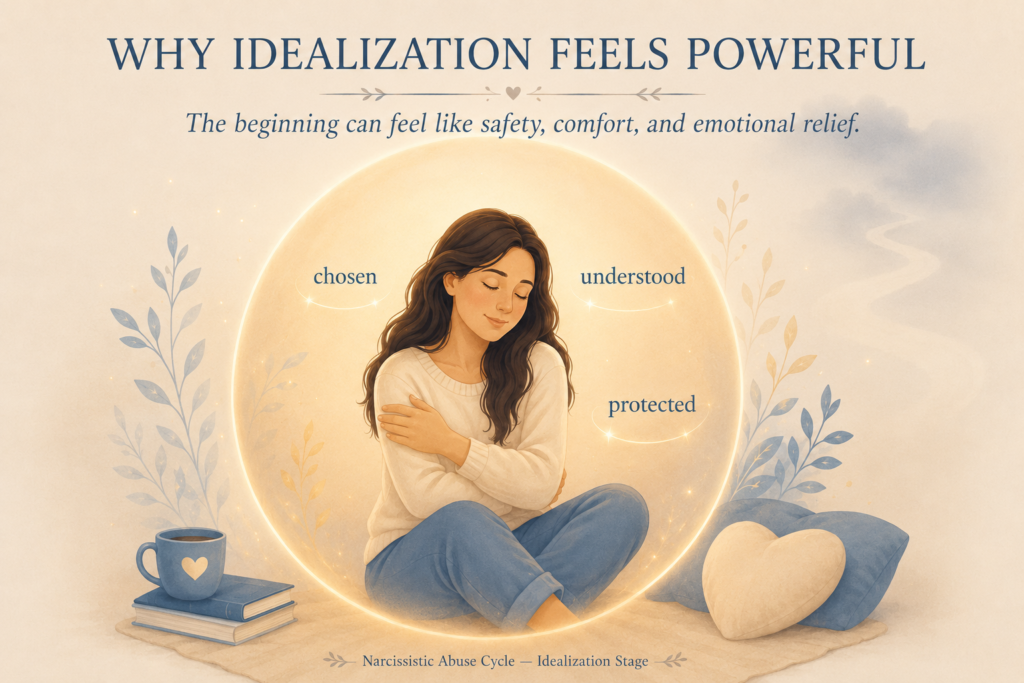
Why Idealization Feels So Powerful
Idealization is powerful because it does not only provide attention. It may temporarily answer an older emotional need.
You may feel:
- finally chosen;
- fully understood;
- emotionally protected;
- deeply attractive or valuable;
- safe enough to become vulnerable;
- hopeful about the future;
- relieved from loneliness or previous rejection.
This emotional relief can create a strong attachment to the person and to the version of yourself you experienced around them.
You may not only miss them later. You may miss how you felt when they were loving you.
That distinction is important.
Sometimes the strongest attachment is not to the complete reality of the relationship. It is to the peace, validation and emotional significance experienced during its most loving moments.
Is Idealization the Same as Love Bombing?
The terms are often used together, but they are not always identical.
Idealization describes seeing or presenting someone as unusually perfect, special or valuable. Love bombing generally refers to an overwhelming level of attention, affection, gifts, communication or future promises that accelerates emotional attachment.
What matters is not whether you can find the perfect label. What matters is whether the intensity is followed by consistency, accountability and respect.
Healthy love can feel exciting, but it also allows time.
It does not require you to abandon your boundaries, ignore uncertainty or make major commitments before trust has been earned.
Stage 2: Devaluation and Emotional Confusion
The second stage often begins with a change that is difficult to explain.
Warmth may become conditional. Compliments may turn into criticism. Communication may become inconsistent, dismissive or emotionally cold.
The person who once seemed deeply interested in your feelings may begin acting irritated by them.
Common behaviours associated with devaluation may include:
- sudden criticism;
- comparison with other people;
- emotional withdrawal;
- silent treatment;
- blame shifting;
- mocking sensitivity;
- minimising your achievements;
- dismissing your memory or perception;
- affection that appears only after compliance;
- creating jealousy or insecurity;
- treating normal questions as attacks;
- changing expectations without explanation.
The change may happen gradually or suddenly.
Either way, the emotional effect can be profound because the mind begins comparing the current pain with the earlier closeness.
Why Sudden Coldness Creates Obsessive Review
When the relationship changes without a clear explanation, the mind naturally tries to solve the problem.
You may review:
- old messages;
- previous arguments;
- the exact words you used;
- moments when their mood changed;
- whether you asked for too much;
- whether another person influenced them;
- whether you failed to understand their needs.
This review can feel productive because it appears to offer a path back to safety.
You may believe that if you identify the precise mistake, you can repair the relationship.
But in a repeated devaluation pattern, there may be no stable solution because the rules keep changing. What pleased the person yesterday may irritate them today. An apology may produce temporary peace but not lasting accountability.
Lived insight: “The hardest part was not only the sudden coldness. It was the confusion that followed. I kept reviewing every conversation, searching for what went wrong and hoping that, with the right explanation or solution, the warmth would return.”
This does not mean reflection is always unhealthy. Healthy relationships require self-examination and repair.
The difference is reciprocity.
In healthy conflict, both people can discuss what happened, acknowledge impact and work toward a clearer agreement. In a harmful dynamic, one person may be expected to carry the entire burden of understanding, apologising and repairing.
How Devaluation Weakens Self-Trust
Repeated emotional inconsistency may slowly alter how you interpret yourself.
You may begin thinking:
- Perhaps I am too sensitive.
- Maybe I remembered it incorrectly.
- I should have stayed quiet.
- I always create problems.
- They were happy before I asked for clarity.
- I need to become easier to love.
Over time, the central question may shift from “Is this behaviour acceptable?” to “What is wrong with me?”
That shift is one of the most damaging effects of the narcissistic relationship cycle.
Your attention moves away from evaluating the relationship and toward constantly correcting yourself.
For a deeper explanation of empathy limitations and emotional dismissal, read:
Read Also: Why Covert Narcissists Dismiss Your Emotional Pain?
Stage 3: Discard and Sudden Rejection
The discard stage involves severe emotional distancing, rejection, replacement or abandonment.
The person may end the relationship suddenly, disappear, block communication, become openly contemptuous or behave as if the connection never mattered.
In other situations, the discard is emotional rather than physical. The relationship technically continues, but affection, attention and mutual care largely disappear.
Common discard-stage experiences may include:
- abrupt separation;
- unexplained disappearance;
- blocking and unblocking;
- public humiliation;
- replacing you quickly;
- withdrawing financial or practical support;
- refusing closure;
- acting indifferent to your pain;
- blaming you for the relationship ending;
- rewriting the history of the relationship;
- maintaining contact only when they need something.
The discard can feel especially destabilising because it attacks both attachment and meaning.
You may not only grieve the person. You may question whether the entire relationship was real.
Was the Loving Version Real?
This is one of the most painful questions in the idealization devaluation discard pattern.
The answer is rarely emotionally simple.
Some affection may have felt real in the moment. The person may have experienced attraction, excitement, admiration or emotional need. But temporary intensity is not the same as stable love.
Love is not measured only by how strongly someone feels when the relationship is pleasing them.
It is also measured by:
- consistency;
- responsibility;
- respect during conflict;
- concern for emotional impact;
- willingness to repair;
- honesty when attraction changes;
- respect for boundaries;
- behaviour when there is no immediate personal reward.
Attraction can be powerful. Need can be powerful. Loneliness, physical desire, validation and personal benefit can also create intense closeness.
But intensity alone does not establish unconditional or emotionally responsible love.
Some relationships become unstable because the connection depends too heavily on what each person is receiving in that moment. When attraction, convenience, admiration or personal benefit changes, the relationship may lose its foundation.
A healthier question may be:
Was the love consistent enough to be safe, respectful and sustainable?
This question focuses on observable behaviour rather than trying to read another person’s private motives.
Read Also : narcissistic-parenting-traits-how-do-i-know-if-i-am-a-narcissist
Stage 4: Hoovering and Re-Entry
Hoovering refers to attempts to pull someone back into contact after rejection, separation or emotional distancing.
The person may return with warmth, apologies, promises, vulnerability or claims that they have changed.
Hoovering can include:
- “I finally understand what I did.”
- “No one knows me like you.”
- “I cannot live without you.”
- “I was going through a difficult period.”
- “We should not throw away everything we had.”
- “I only need one chance to explain.”
- sudden gifts or affection;
- contact during birthdays, illness or emotionally vulnerable moments;
- using mutual friends or family members to reach you;
- creating an emergency that requires your help;
- promises of therapy, commitment or transformation.
Not every attempt at reconciliation is manipulative. People can genuinely regret harmful behaviour and make meaningful changes.
The difference is demonstrated over time.
Real repair usually includes:
- specific accountability;
- no pressure for immediate forgiveness;
- respect for your boundaries;
- willingness to hear your pain;
- consistent behavioural change;
- professional help when appropriate;
- acceptance that you may still choose not to return.
Hoovering relies more heavily on urgency, guilt, nostalgia or emotional intensity than on sustained evidence of change.
Why Hoovering Restarts the Cycle
The return of warmth can reactivate the memory of the idealization stage.
You may think:
- This is the person I originally knew.
- Perhaps the painful stage was temporary.
- Maybe they finally understand.
- We have suffered too much to give up now.
- I should give the relationship one last chance.
The nervous system may experience the return of affection as relief after prolonged distress.
That relief can be confused with proof that the relationship is now safe.
But relief is not the same as repair.
The key question is not, “Do they sound loving again?”
It is:
Has the pattern changed consistently, responsibly and without requiring me to abandon my boundaries?
Narcissistic Abuse Cycle Table
| Stage | Common behaviour | What you may feel | What happens internally | Safer response |
|---|---|---|---|---|
| Idealization | Intense attention, admiration and rapid closeness | Chosen, protected and deeply understood | Hope and attachment grow quickly | Slow the pace and observe consistency |
| Devaluation | Criticism, withdrawal, blame and mixed signals | Confused, anxious and inadequate | Self-trust weakens; the mind searches for answers | Record patterns and seek outside perspective |
| Discard | Rejection, silence, replacement or abandonment | Shocked, desperate and emotionally erased | Attachment distress and loss of meaning intensify | Protect contact, finances, privacy and support |
| Hoovering | Apologies, promises, affection or emotional pressure | Hopeful, relieved but uncertain | Earlier attachment memories reactivate | Evaluate sustained behaviour, not urgent words |
Why the Narcissistic Abuse Cycle Feels Addictive
People often use the word “addictive” to describe this pattern. This should not be understood as proof that the reader enjoys suffering or consciously chooses abuse.
The attachment may become powerful because warmth and pain are unpredictable.
When affection returns after a period of rejection, the relief can feel stronger than ordinary stability. The person may begin waiting for the next positive moment, much like waiting for emotional confirmation that safety has returned.
“Human beings can become attached not only to love, but also to the hope that pain will eventually turn back into love.”
This hope may be supported by memories of genuinely happy moments.
You may remember:
- how peaceful the beginning felt;
- how deeply you laughed together;
- the promises that were made;
- the times the person supported you;
- the version of yourself who felt loved;
- the future you imagined.
Because those moments brought happiness and emotional satisfaction, the mind may keep searching for a way to restore them.
You may tell yourself:
- This situation is temporary.
- Every relationship has difficult periods.
- They are stressed.
- I should wait a little longer.
- Love requires sacrifice.
- They will change when they feel secure.
- I should not abandon them during a difficult time.
Patience and commitment are valuable qualities. But without boundaries, those qualities can be used against the person who carries them.
Why Childhood Learning Can Make Leaving Harder
Many people are not taught what to do when love becomes emotionally unsafe.
Childhood may teach us to:
- tolerate pain to preserve relationships;
- remain quiet to avoid conflict;
- earn affection through compliance;
- forgive without requiring repair;
- prioritise family reputation over emotional truth;
- wait indefinitely for someone to change;
- believe that leaving means failure;
- confuse endurance with loyalty.
A person may understand that the relationship hurts but still lack an internal map for deciding when enough is enough.
The question is not only, “Why did I stay?”
It may also be:
Who taught me what safe love should look like, and what was I taught to tolerate?
This is not about blaming childhood for every adult decision. It is about recognising that boundaries, emotional literacy and relationship safety are learned skills.
If those skills were not taught early, they can still be learned now.
What the Cycle Does to the Nervous System
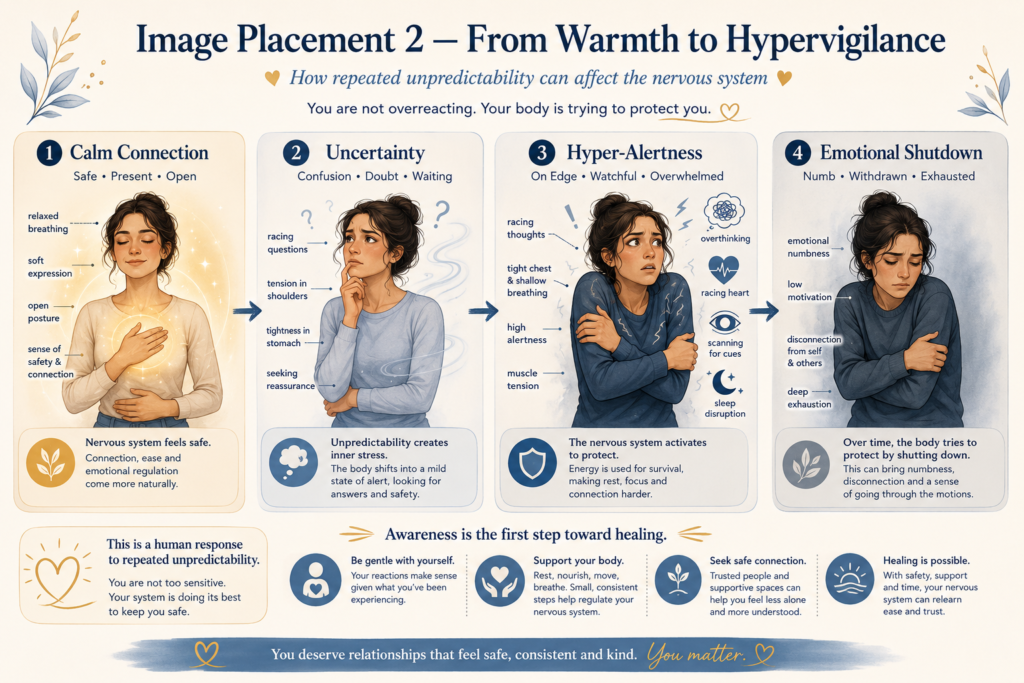
The nervous system constantly monitors the environment for signs of safety and threat.
In an unpredictable relationship, the body may become highly sensitive to changes in tone, facial expression, communication or availability.
You may notice:
- checking your phone repeatedly;
- difficulty sleeping after conflict;
- tension in the chest, jaw or stomach;
- replaying conversations;
- feeling startled by message notifications;
- monitoring the person’s mood;
- struggling to concentrate;
- feeling unable to relax even during calm periods;
- becoming emotionally numb;
- apologising quickly to stop tension;
- feeling intense relief when they become kind again.
These reactions do not automatically mean you have a trauma disorder. They may represent the body’s attempt to anticipate emotional danger.
When the environment is inconsistent, hyper-alertness can become protective.
The body learns:
Warmth may disappear without warning, so I must stay prepared.
That preparation can continue even when the person is temporarily kind.
The Body May Notice the Pattern Before the Mind Accepts It
You may still love the person while your body feels tense around them.
You may defend the relationship while experiencing headaches, poor sleep, panic, exhaustion or emotional shutdown.
This does not prove the relationship is abusive, and physical symptoms should always be medically evaluated when needed. But the body’s repeated response deserves attention.
Ask:
- Do I feel emotionally safe expressing disagreement?
- Can I ask a question without fearing punishment?
- Does conflict lead to repair or greater confusion?
- Am I becoming more myself or constantly shrinking?
- Does my body relax around this person?
- Am I allowed to have needs without losing affection?
Your body is not always a perfect judge, but neither should it be ignored.
Signs You May Be Inside a Repeating Abuse Cycle
One painful event does not establish a complete pattern. Look for repetition, escalation and the absence of genuine repair.
Possible signs include:
- Affection becomes intense after you try to leave.
- Kindness disappears when you express a boundary.
- You repeatedly apologise without understanding what you did.
- Conflict ends through silence, fear or surrender rather than resolution.
- You keep waiting for the person from the beginning to return.
- Your confidence has decreased since the relationship began.
- You feel responsible for managing the other person’s mood.
- You hide parts of the relationship from people you trust.
- Promises of change are frequent, but behavioural change is brief.
- You feel more relief than safety when conflict temporarily stops.
- Your concerns are repeatedly reframed as attacks.
- The person’s affection appears linked to obedience, admiration or usefulness.
- You feel unable to make ordinary decisions without anticipating their reaction.
- You are becoming isolated from support.
- You fear what may happen if you leave.
You do not need every sign for the relationship to deserve serious attention.
The central issue is whether repeated behaviour is creating fear, coercion, humiliation, instability or loss of emotional freedom.
Is Every Difficult Relationship a Narcissistic Relationship Cycle?
No.
All relationships contain misunderstanding, stress, defensive reactions and imperfect communication.
A difficult period becomes more concerning when the pattern is:
- repeated rather than occasional;
- one-sided rather than mutual;
- coercive rather than collaborative;
- humiliating rather than respectful;
- denied rather than acknowledged;
- escalating rather than improving;
- followed by promises without sustained change.
A healthy partner may become defensive but later reflect.
A healthy partner may say something hurtful but show genuine concern for the impact.
A healthy relationship does not require perfection. It requires the capacity for accountability and repair.
For clinical clarity about traits and diagnosis, read: DSM-5 Criteria for Narcissistic Personality Disorder Explained
You can also explore the BBH overview: Understanding Narcissism: Traits, Types and Meaning
How to Break the Narcissistic Abuse Cycle Safely
Breaking the cycle does not always begin with immediately leaving.
For many people, it begins with recognising reality without explaining it away.
Step 1: Name Observable Behaviour
Instead of writing, “They are a narcissist,” record what happened:
- They stopped speaking to me for three days after I disagreed.
- They threatened to leave when I asked about money.
- They apologised but repeated the same behaviour the following week.
- They contacted me warmly after I stopped responding.
- They mocked me when I became emotional.
Observable facts reduce confusion.
They also help you separate what happened from the explanations you have been given.
Step 2: Stop Searching for the Perfect Explanation
Understanding can help, but endless analysis may keep you emotionally trapped.
You may never receive a complete or honest explanation for why the behaviour changed.
Closure may not arrive through one final conversation.
Sometimes clarity comes from observing what repeatedly happens, even when the person’s words keep changing.
Step 3: Rebuild Outside Perspective
Confusing relationships often become clearer when discussed with someone who is not emotionally inside the cycle.
Consider speaking with:
- a trusted friend;
- a family member who respects your choices;
- a qualified therapist;
- a domestic-abuse support service;
- a legal or financial adviser when practical risk is present.
Choose someone who will listen without forcing you into a decision before you are ready, unless there is immediate danger.
Step 4: Create Practical Boundaries
A boundary is not only a sentence. It is a decision about what you will do when harmful behaviour occurs.
Examples include:
- ending a call when insults begin;
- refusing to discuss important matters while being threatened;
- keeping financial documents secure;
- limiting contact to written communication;
- not responding immediately to emotionally urgent messages;
- refusing surprise visits;
- involving a third party in necessary exchanges.
Boundaries cannot force another person to behave respectfully. They clarify how you will protect yourself.
Step 5: Prepare Before Confronting or Leaving
When coercion, stalking, threats, financial control or violence is present, direct confrontation may increase danger.
A safety plan may include:
- storing important documents securely;
- changing passwords;
- reviewing shared accounts;
- identifying a safe place;
- keeping emergency numbers accessible;
- telling a trusted person;
- documenting threats;
- speaking with a domestic-abuse organisation;
- obtaining legal advice.
Do not announce every protective step to someone who may use that information to interfere.
Step 6: Evaluate Change Through Evidence
Do not measure change only through apologies, tears, gifts or promises.
Look for:
- consistent accountability;
- respect for boundaries;
- reduced blame;
- willingness to receive professional help;
- repair without emotional pressure;
- sustained change over time;
- acceptance of consequences.
A short period of kindness does not erase a long-standing pattern.
Step 7: Expect Grief Even When the Decision Is Right
Leaving a harmful cycle does not mean you stop loving the person immediately.
You may grieve:
- the person you believed they were;
- the good moments;
- the future you imagined;
- the years invested;
- the version of yourself who kept hoping;
- the possibility that never became reality.
Grief does not mean your boundary is wrong.
Missing someone does not prove the relationship was safe.
What Healthy Repair Looks Like
It can be difficult to evaluate a relationship when the person occasionally shows remorse.
Use this comparison:
| Temporary reconciliation | Healthy repair |
|---|---|
| “Forget it and start again” | “Let us understand what happened” |
| Intense affection | Consistent respect |
| General apology | Specific accountability |
| Pressure to forgive | Space for your decision |
| Promises without a plan | Observable behavioural change |
| Blaming stress or you | Owning choices and impact |
| Change for several days | Change sustained over time |
| Anger at your boundary | Respect for your boundary |
| Asking you to trust immediately | Accepting that trust must be rebuilt |
The goal is not to demand perfection.
The goal is to identify whether the relationship has a real capacity for mutual repair.
Explore the BBH narcissism education hub narcissism
People Also Ask
1. What are the four stages of narcissistic abuse?
The four commonly discussed stages are idealization, devaluation, discard and hoovering. The pattern may begin with intense attention, shift into criticism or withdrawal, lead to rejection and later restart through renewed contact.
2. How long does the narcissistic abuse cycle last?
There is no fixed duration. One stage may last days, months or years. The timing depends on the people, circumstances, level of contact and whether boundaries or separation interrupt the pattern.
3. Why does someone return after the discard stage?
A person may return because they feel lonely, want attention, need practical support, miss the relationship or want to restore influence. A return does not automatically prove manipulation, but renewed words should be evaluated through sustained behaviour.
4. Can the narcissistic abuse cycle happen in families?
Yes. Similar cycles of approval, criticism, rejection and renewed closeness may appear between parents and children, siblings or extended family members. Family loyalty and dependency can make boundaries especially difficult.
5. How do you break the narcissistic abuse cycle?
Begin by documenting behaviour, seeking outside perspective, creating practical boundaries and preparing a safety plan when risk is present. Evaluate change through consistent action rather than promises or temporary affection.
Read Also : trauma-recovery-start-your-healing-journey-today
Frequently Asked Questions
1. Is the narcissistic abuse cycle an official medical diagnosis?
No. The phrase describes a commonly discussed relationship pattern. It is not itself a diagnosis. Narcissistic personality disorder is a clinical condition that can only be diagnosed by a qualified professional.
2. Can someone show this cycle without having NPD?
Yes. A person may behave in controlling, inconsistent or emotionally abusive ways without meeting the diagnostic criteria for narcissistic personality disorder. Focus on behaviour and impact rather than relying only on a label.
3. Why do I still miss someone who hurt me?
You may miss the good moments, emotional closeness, shared history or the future you imagined. Attachment does not disappear immediately when you recognise harm. Missing the person does not mean you must return.
4. Can the relationship become healthy?
Meaningful change is possible only when harmful behaviour is acknowledged, responsibility is accepted and change continues over time. One person cannot repair a repeated relationship pattern alone.
5. Should I confront the person about narcissistic abuse?
Direct confrontation is not always safe or useful. When threats, coercion, stalking, financial control or violence are present, seek professional safety guidance before confronting or leaving.
YMYL Safety Note
Educational relationship information cannot determine whether someone has narcissistic personality disorder or replace personalised mental-health, medical, legal or domestic-abuse support.
If you are experiencing threats, coercion, stalking, sexual violence, financial control, physical violence or fear for your safety, contact an appropriate emergency service or domestic-abuse organisation in your country.
Secure communication can support healthier repair, but it cannot replace safety, boundaries or professional help when abuse, coercion, humiliation or fear is present.
Read Also : nervous-system-reset-program-for-anxiety-stress
BBH Support Resource
Want a simple tool to help you recognise the pattern?
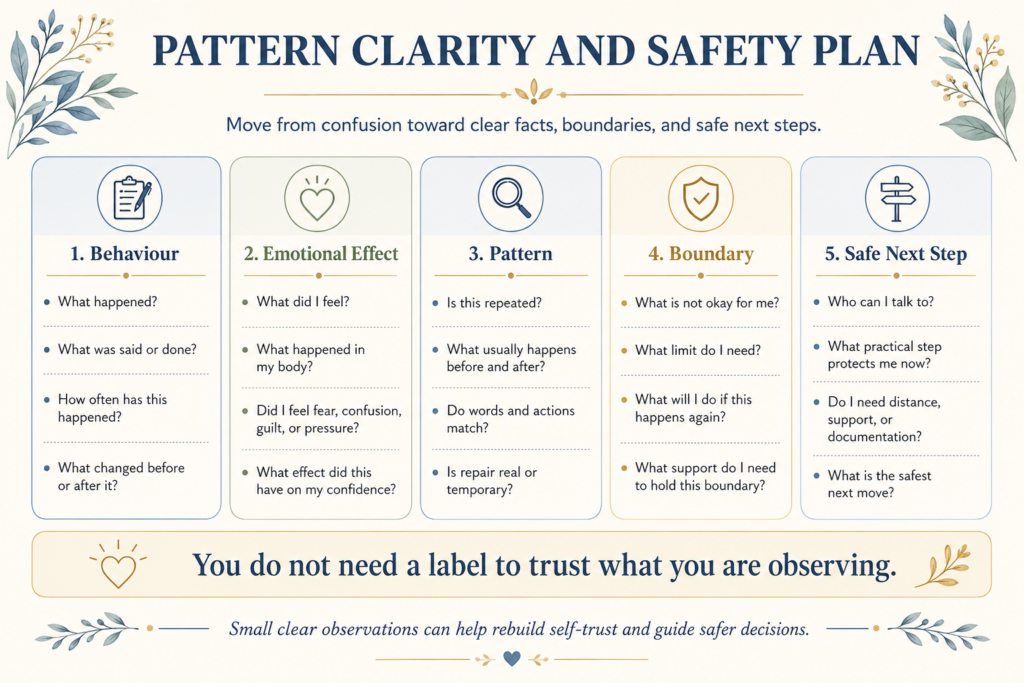
Request the BBH Narcissistic Abuse Cycle Clarity Worksheet to reflect on:
- the behaviour you observed;
- your body’s reaction;
- the emotional effect;
- the repeated pattern;
- the boundary you may need;
- your safest next step.
Email info@bioandbrainhealthinfo.com and write:
“Send me the Narcissistic Abuse Cycle Clarity Worksheet.”
This educational worksheet is not therapy, diagnosis, legal advice or emergency support.
Personal Note
For a long time, people may believe that love means waiting.
They remember the good time because it gave happiness, satisfaction and peace. They keep thinking that the painful stage may be temporary and that patience will eventually restore what was lost.
But there is a difference between waiting while two people repair a relationship and waiting alone while the same harm continues.
The deepest pain is sometimes not the final separation. It is the repeated movement between hope and disappointment.
You keep searching for the loving version because that version made you feel chosen, understood and protected.
But real love cannot be measured only by its most beautiful moments.
It must also be measured by what happens when you disagree, ask for clarity, become vulnerable or stop serving the other person’s immediate needs.
Some affection may feel real in the moment. Attraction, physical desire, emotional need or personal benefit can all create intensity. But love that is built only on need or convenience often becomes unstable when circumstances change.
Mature love requires more than emotion.
It requires faith, responsibility, truth, consistency and the willingness to protect another person’s dignity even when the relationship becomes difficult.
You do not have to prove that every loving moment was false.
You only have to ask whether the complete relationship was safe enough, mutual enough and responsible enough to continue.
Final Takeaway
The narcissistic abuse cycle is painful because every stage affects more than the relationship.
- Idealization may create intense hope.
- Devaluation may weaken self-trust.
- Discard may create shock and emotional desperation.
- Hoovering may reactivate the belief that the original warmth has finally returned.
- Recognising this pattern does not require you to diagnose another person.
It requires you to look honestly at repeated behaviour, emotional impact and whether genuine repair is taking place.
You are not weak because you became attached.
You are human.
You remembered what felt good, hoped the pain was temporary and searched for a solution because the relationship mattered to you.
Healing begins when that hope is no longer used to silence reality.
The goal is not to become cold or stop believing in love.
The goal is to recognise that love without consistency, respect, accountability and safety cannot provide the peace you keep waiting for.
External References
- American Psychiatric Association — What Is Narcissistic Personality Disorder?
https://www.psychiatry.org/news-room/apa-blogs/what-is-narcissistic-personality-disorder - American Psychiatric Association — What Are Personality Disorders?
https://www.psychiatry.org/patients-families/personality-disorders/what-are-personality-disorders - MedlinePlus — Narcissistic Personality Disorder
https://medlineplus.gov/ency/article/000934.htm - NHS — Getting Help for Domestic Violence and Abuse
https://www.nhs.uk/live-well/getting-help-for-domestic-violence/ - SAMHSA — Trauma and Violence: What Is Trauma and Its Effects?
https://www.samhsa.gov/mental-health/trauma-violence