Empath and Narcissist: Trauma Bond and Healing
Empath and Narcissist: Why It Feels Hard to Leave

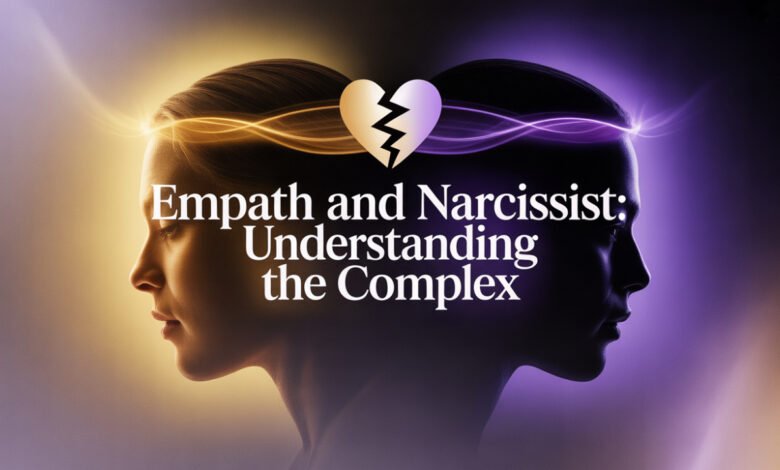
An empath and narcissist relationship can feel confusing because the bond is not only about love, conflict, or attraction. Many readers feel addicted, guilty, emotionally drained, hopeful, ashamed, afraid to leave, and unable to trust themselves.
Thank you for reading this post, don't forget to subscribe!This blog is important because it explains the hidden emotional pattern behind that pain: how empathy becomes self-abandonment when compassion loses boundaries.
You will also understand the trauma bond with narcissist dynamics that make the same person feel like both comfort and danger.
Unlike generic articles, this guide does not only list narcissistic manipulation signs; it explains how a soft-hearted person slowly trades self-worth for hope, validation, and the dream that love will change someone.
Most importantly, this blog shows why boundaries after narcissistic abuse are not selfish. They are the first step toward nervous system healing, self-respect, and freedom from fixing people who choose not to grow.
Empath and Narcissist Relationship: Why It Feels Hard to Leave
An empath and narcissist relationship can feel deeply confusing because the heart, mind, and body may all tell different stories at the same time. One part of the person knows they are emotionally drained.
Another part still hopes the relationship can become loving, respectful, and safe again. This is why many empaths feel confused, addicted, guilty, hopeful, ashamed, afraid to leave, and unable to trust themselves.
The pain is not only about loving the wrong person. It is about slowly losing emotional clarity. The empath may begin to think,
- “Maybe I should understand more.
- Maybe I should forgive again.
- Maybe if I stay calm, give more, help more, or sacrifice more, this person will finally change.”
This is where the relationship becomes dangerous for the inner self. The empath may stop listening to their own pain and start focusing only on the other person’s mood, needs, reactions, anger, silence, or approval. They may begin to measure their own worth through how the narcissistic person treats them that day.
The deeper BBH angle is this: empathy is not the problem. The problem begins when empathy loses boundaries and becomes self-abandonment.
This guide also helps you recognize narcissistic manipulation signs such as guilt, gaslighting, emotional withdrawal, blame shifting, and false promises. More importantly, it explains why boundaries after narcissistic abuse are not selfish, but necessary for rebuilding self-respect, emotional safety, and trust in yourself again.
Read Also: Narcissistic Tendencies in a Relationship: Recognizing Patterns
Why the Bond Feels Like Love and Pain Together
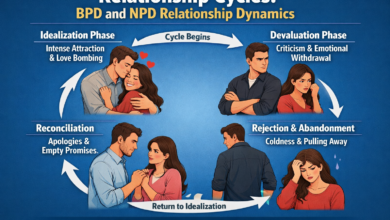
A painful relationship becomes more confusing when the same person gives both comfort and hurt. There may be beautiful moments, soft apologies, emotional promises, sudden affection, and memories that make the empath believe the relationship still has hope. But these moments may be followed by criticism, blame, distance, disrespect, gaslighting, or emotional punishment.
This creates a strong emotional pull. The empath starts waiting for the loving version of the person to return. They remember the good moments and try to ignore the painful pattern.
This is one reason a trauma bond with narcissist can feel so powerful. The bond is not built only on love; it is built on emotional highs and lows that keep the nervous system attached.
The empath may not miss peace. They may miss relief after pain. That is why leaving feels difficult even when staying hurts.
The Hope Loop That Keeps an Empath Giving
In an empath and narcissist relationship, the empath often keeps giving because they believe their effort may finally change the other person. They may give love, care, money, time, forgiveness, emotional support, and endless chances because deep inside they are hoping,
- “Maybe this time they will understand.
- Maybe they will see my value.
- Maybe they will respect this relationship again.”
This is not foolishness. It often comes from a soft emotional heart that wants to believe love can repair everything. But when the other person keeps repeating the same harmful behavior, hope can slowly become a trap.
The empath may start doing things they do not truly want to do just to make the other person happy. They may accept words, behavior, or disrespect that hurts them inside. Slowly, they begin trading self-respect for the possibility of being valued.
This is one of the deepest wounds: the empath is not only giving love; they are slowly selling parts of themselves for hope.
When Hope Starts Replacing Reality
Hope is beautiful when reality supports it. But when reality keeps showing disrespect, emotional harm, broken promises, and repeated manipulation, hope can become emotional denial.
A person may keep saying, “They will change,” while their body is already tired, their mind is already anxious, and their self-respect is already wounded. This does not mean the empath is weak. It means their compassion has started working against their own clarity.
The heart keeps waiting for change, but the nervous system keeps carrying the damage.
That is why healing begins when the empath stops asking only, “Can this person change?” and starts asking, “What is this relationship doing to me?”
How Empathy Becomes Self-Abandonment
To understand how empathy becomes self-abandonment, we must first separate real empathy from unhealthy sacrifice. Real empathy includes respect, care, boundaries, and responsibility. It allows a person to understand someone else’s pain without losing their own dignity. A truly empathetic person can care deeply and still say, “This behavior is not okay for me.”
Self-abandonment is different. It begins when a person ignores their own pain to protect someone else’s comfort. It happens when the empath excuses repeated disrespect, hides their feelings, over-explains their needs, forgives without change, and keeps giving even when their inner self feels broken.
This is how empathy becomes self-abandonment in a narcissistic dynamic: compassion becomes rescue, patience becomes self-betrayal, and love becomes a need for validation from someone who does not consistently respect emotional boundaries.
Real empathy respects both people. Self-abandonment protects the other person while slowly destroying your own peace, identity, and self-worth.
Read Also: DSM-5 Criteria for Narcissistic Personality Disorder
Real Empathy vs Losing Yourself in the Name of Love
Real empathy does not ask you to become smaller. It does not ask you to accept misbehavior, misunderstanding, emotional neglect, or disrespect as proof of love. Real empathy allows you to care for another person while still remaining connected to your own truth.
But when empathy turns into self-abandonment, the person may start believing that suffering is love.
They may think, “If I tolerate more, forgive more, or sacrifice more, then the relationship will survive.”
This belief can make them feel responsible for another person’s growth, mood, healing, and behavior.
That is not healthy love. That is emotional over-responsibility.
A relationship should not require you to lose your self-respect to keep connection alive. Compassion is beautiful, but when compassion destroys your peace, it needs boundaries. The empath must learn that their softness is not wrong, but softness without self-protection can become suffering.
Part 1 Key Insight
The first step in healing is not blaming yourself for caring too much. The first step is seeing where care became self-loss.
An empath does not usually lose themselves in one big moment. They lose themselves slowly — one ignored boundary, one forced forgiveness, one silent pain, one emotional compromise, and one false hope at a time.
This is why the empath and narcissist relationship needs deeper understanding.
It is not only about attraction between two personalities.
It is about how a caring person can begin to confuse love with rescue, guilt with responsibility, and emotional intensity with connection.
When the empath starts seeing this pattern clearly, healing can begin. Because clarity returns the power that confusion took away.
Trauma Bond With Narcissist: Why the Body Feels Attached
A trauma bond with narcissist does not form only because someone loves deeply. It often forms because the nervous system becomes trained to survive emotional highs and lows.
One day the person may feel loved, wanted, chosen, and special. Another day they may feel ignored, blamed, criticized, or emotionally punished. This sudden shift creates confusion inside the body.
The empath may begin waiting for relief after pain. When the narcissistic person becomes kind again, apologizes, promises change, or gives affection, the nervous system feels temporary safety. But this safety is not stable. It is relief from stress created by the same relationship.
That is why leaving can feel so difficult. The person may not only miss love. They may miss the emotional relief that comes after fear, distance, silence, or rejection. In this pattern, the body can become attached to the cycle, even when the mind knows the relationship is unhealthy.
A trauma bond with narcissist is not weakness. It is emotional conditioning. Healing begins when the empath understands that intensity is not proof of love, and temporary relief is not the same as real safety.
Read Also: Narcissism
Why the Same Person Feels Like Safety and Danger
In an empath and narcissist relationship, the same person can feel like both home and harm. This is what makes the bond emotionally confusing. The empath may remember the early attention, deep conversations, promises, affection, and moments of closeness. But they may also carry the pain of disrespect, silence, blame, emotional withdrawal, or manipulation.
This mixed experience makes the mind search for answers.
The empath may ask, “Which version is real?
The loving one or the hurtful one?” But the deeper question is not only which version is real.
The deeper question is: “What pattern keeps repeating?”
When someone gives love and pain in cycles, the nervous system stops feeling stable. The empath may become alert, careful, and emotionally dependent on the other person’s mood. Instead of feeling safe in love, they begin working hard to earn calmness.
A healthy relationship gives emotional security.
A painful narcissistic dynamic makes a person chase moments of peace.
Narcissistic Manipulation Signs That Confuse an Empath
Many narcissistic manipulation signs are difficult to notice at first because they do not always begin with obvious cruelty. Sometimes the pattern starts with intense attention, fast emotional closeness, special promises, and the feeling that the connection is rare. This can make the empath feel deeply seen in the beginning.
Later, the pattern may change.
The empath may experience blame shifting, guilt trapping, silent treatment, gaslighting, comparison, emotional withdrawal, and future promises that are never followed by real change.
The narcissistic person may make the empath feel responsible for every conflict while avoiding their own accountability.
These narcissistic manipulation signs can slowly damage self-trust. The empath may start doubting their memory, feelings, and boundaries.
They may wonder,
- “Am I overreacting?
- Am I too sensitive?
- Did I cause this?”
This self-doubt keeps the empath trapped because they stop trusting their own inner warning signals.
The danger is not only the manipulation itself. The danger is when the empath begins to explain away the pattern because they are still hoping the loving version of the person will return.
Read Also: Toxic Narcissist Traits: How to Understand the Pattern
The Most Painful Damage Is Losing Self-Trust
One of the deepest wounds in this dynamic is the loss of self-trust. The empath may no longer know whether their feelings are valid, whether their memory is clear, or whether their boundaries are reasonable.
They may become dependent on the other person’s reaction to decide whether they are right or wrong. This is emotionally dangerous because the person who benefits from their confusion becomes the person they look to for clarity.
Healing begins when the empath starts believing their own discomfort again. Pain is not always weakness. Sometimes pain is the inner self saying, “Something here is not safe for me.”
Maya in Relationships: When You Stop Seeing Yourself
In BBH spiritual psychology, Maya is not only illusion in the outside world. Maya can also appear inside relationships.
Maya begins when a person cannot see their own suffering clearly because they keep seeing the other person as the source of their worth, validation, and emotional identity.
This is how empathy becomes self-abandonment at a deeper level.
The empath may think, “If this person needs me, I matter.
If they choose me, I am valuable.
If they change for me, my love was enough.”
Slowly, the other person becomes the mirror through which the empath tries to see their own worth.
But this is painful because self-worth cannot safely depend on someone who repeatedly disrespects emotional boundaries. When a person stops seeing their own needs and keeps chasing another person’s validation, compassion becomes attachment.
Maya in relationships begins when you stop seeing your own pain clearly and keep waiting for the other person to prove that you are lovable.
Real healing begins when you return to yourself and ask, “Where did I disappear while trying to be chosen?”
Read Also: Spiritual Psychology: Detachment and Awareness
When Compassion Starts Selling Your Self-Worth
Compassion is beautiful, but compassion without boundaries can become self-harm in spiritual language. A soft-hearted person may keep giving love, care, money, time, forgiveness, and emotional support because they believe the other person will finally change.
They may think,
If I do more, maybe they will value me.
If I stay patient, maybe they will respect the relationship. If I sacrifice, maybe we will become close again.”
But slowly, this becomes a painful trade. The empath starts selling their self-worth under the name of compassion.
They may do things they do not truly want to do only to keep the other person happy.
They may accept disrespect because they are afraid of losing connection.
This is not real love. This is self-loss hidden under goodness.
A person who truly values you does not need your self-destruction as proof of love. And a relationship that requires you to lose your soul to keep peace is not asking for compassion; it is asking for your disappearance.
Part 2 Key Insight
The deeper wound is not only that the empath was manipulated. The deeper wound is that they slowly stopped seeing themselves. They stopped seeing their pain clearly, stopped trusting their inner voice, and started measuring their value through another person’s attention, approval, or change.
A trauma bond with narcissist can make emotional chaos feel normal. Repeated narcissistic manipulation signs can make confusion feel like love. Maya can make self-loss look like loyalty.
This is why healing must begin with clarity. The empath does not need to become cold or selfish. They need to stop confusing emotional intensity with love, guilt with responsibility, and self-abandonment with compassion.
These narcissistic manipulation signs are not always loud or obvious. Sometimes they appear as small emotional pressure, repeated blame, sudden distance, guilt, or promises without change. When the empath ignores these narcissistic manipulation signs for too long, self-trust becomes weaker and confusion becomes normal.
Boundaries After Narcissistic Abuse Are Not Selfish
Boundaries after narcissistic abuse are not punishment, ego, revenge, or cruelty. They are the protection system of self-respect. When someone has lived inside confusion, guilt, emotional pressure, manipulation, and repeated disrespect, boundaries become the first step back to inner safety.
Many empaths feel guilty when they start setting limits.
They may think,
“Am I becoming selfish?
Am I hurting them?
Am I abandoning them?”
But a boundary is not abandonment.
A boundary is the moment where a person stops abandoning themselves.
In an unhealthy bond, the empath may have spent too much time adjusting, explaining, forgiving, rescuing, and proving their love. But love should not require self-destruction. Compassion is beautiful, but when compassion destroys your peace, it needs boundaries.
This is why boundaries after narcissistic abuse are deeply connected to healing. They help the empath rebuild self-trust, emotional dignity, and the ability to say, “My peace also matters.”
Read Also: Start Here – Your Journey to Mental Clarity & Emotional Healing
Heal Your Nervous System Before Big Emotional Decisions
When someone is inside a trauma bond with narcissist, their nervous system may feel unstable. One moment they may feel strong enough to leave or set a boundary. The next moment guilt, fear, loneliness, craving, or panic may pull them back toward the same person.
This does not mean they are weak. It means the body has become used to emotional intensity. Before making big emotional decisions, the person needs regulation, not shame. A calmer nervous system helps the mind see reality more clearly.
Simple healing may begin with breathing slowly, taking space before replying, writing the facts of what happened, talking to a safe person, sleeping properly, and reducing contact when possible. The goal is not to become emotionless. The goal is to stop making decisions from fear, guilt, panic, or emotional addiction.
When the nervous system becomes calmer, the empath can finally ask, “What is healthy for me?” instead of only asking, “How do I keep this person happy?”
Learn Boundaries Without Guilt
Learning boundaries after narcissistic abuse means learning to protect peace without explaining everything again and again. Many empaths over-explain because they want the other person to understand their pain. But in a narcissistic dynamic, over-explaining can become another form of emotional exhaustion.
A boundary can be simple.
- “I will not continue this conversation if I am being insulted.”
- “I need time before I respond.”
- “I cannot keep giving money, time, or emotional support in this pattern.”
- “I care, but I will not lose myself to prove it.”
The empath does not need permission from the person who benefits from their lack of boundaries. This is important. Someone who enjoyed unlimited access to your patience may not celebrate your healing. They may call your boundary selfish because your self-respect interrupts their control.
But guilt is not always a sign that you are wrong. Sometimes guilt appears because you are finally choosing yourself after years of abandoning yourself.
Read Also: Emotional Healing Roadmap
A Boundary Is Not Cruelty; It Is Clarity
A boundary does not say, “I hate you.” A boundary says, “I will not keep losing myself to prove I care.”
This difference matters. Cruelty tries to hurt another person. Clarity tries to protect your inner life. A healthy boundary does not require anger, shouting, revenge, or emotional drama. It only requires honesty.
The empath can still be kind, but kindness must include self-respect. If compassion keeps asking you to silence your pain, ignore your dignity, and betray your truth, then it is no longer compassion. It is self-abandonment wearing the language of love.
Stop Fixing People Who Choose Not to Grow
One of the hardest lessons in an empath and narcissist relationship is accepting that love cannot replace another person’s responsibility.
You can support someone, communicate clearly, forgive wisely, and show care, but you cannot grow for them.
You cannot do their inner work by destroying your own peace.
Many narcissistic manipulation signs keep the empath stuck in the role of fixer. The narcissistic person may promise change, blame past pain, create guilt, or show temporary softness when the empath starts pulling away. The empath then feels responsible again and thinks, “Maybe I should help one more time.”
But real change is consistent. Real change includes accountability, repair, humility, and respect for boundaries. If someone only changes when they fear losing access to you, that is not healing. That is control trying to survive.
The empath’s freedom begins when they stop trying to fix people who choose not to grow. This does not mean they stop caring. It means they stop sacrificing their self-worth for someone else’s unfinished responsibility.
Read Also: How Detachment Helps Control Emotions
Final BBH Healing Reminder
Real empathy shows respect, care, boundaries, and responsibility. Self-abandonment in the name of empathy creates suffering, weakness, misunderstanding, self-disrespect, and loss of your own self.
You are not required to sell your soul under the name of compassion. You are not required to lose your peace so another person can feel powerful, comfortable, or unchallenged. Love should not make you disappear.
The healing path is not to become cold. The healing path is to become clear. Heal your nervous system first. Learn boundaries without guilt. Stop trying to fix people who choose not to grow.
A healthy relationship will not ask you to destroy yourself to prove your love.
Boundaries after narcissistic abuse must be practiced slowly and consistently. These boundaries after narcissistic abuse may include saying no without over-explaining, reducing emotional arguments, protecting money and time, and refusing to accept disrespect as the price of love.
Read Also: Healing After Narcissistic Relationship: Why You Still Miss Them
People Also Ask
1. Why do empath and narcissist dynamics feel so powerful?
An empath and narcissist dynamic feels powerful because it often mixes emotional intensity, hope, guilt, validation, and confusion. The empath may keep remembering the loving moments while trying to repair the painful ones. This creates a cycle where the relationship feels difficult to leave, even when it is emotionally draining.
2. How empathy becomes self-abandonment in toxic relationships?
How empathy becomes self-abandonment is seen when a person keeps ignoring their own pain to protect someone else’s comfort. Real empathy includes care, respect, and boundaries. Self-abandonment begins when compassion makes someone tolerate repeated disrespect, emotional confusion, or loss of self-worth.
3. What is a trauma bond with narcissist?
A trauma bond with narcissist is an unhealthy emotional attachment that can form through repeated cycles of harm and temporary affection. The person may feel attached not because the relationship is safe, but because the nervous system becomes used to emotional highs, lows, fear, relief, and hope. Psychology Today describes trauma bonding as attachment shaped by abuse mixed with intermittent positive reinforcement.
4. What are common narcissistic manipulation signs?
Common narcissistic manipulation signs may include love bombing, blame shifting, guilt trapping, gaslighting, silent treatment, future promises, emotional withdrawal, and making the other person doubt their own feelings. Cleveland Clinic notes that narcissistic traits can include exploitative behavior and lack of empathy, which can damage relationships.
5. Why are boundaries after narcissistic abuse important?
Boundaries after narcissistic abuse are important because they help a person rebuild self-respect, emotional safety, and self-trust. Boundaries are not punishment. They are a way to stop over-explaining, over-giving, and losing yourself to keep another person comfortable.
FAQ
1. Can an empath heal after a narcissistic relationship?
Yes. Healing is possible when the person stops blaming themselves, recognizes the pattern, calms the nervous system, rebuilds self-trust, and gets safe support. Recovery begins with clarity, not shame.
2. Why does an empath keep going back?
An empath may go back because of hope, guilt, fear, emotional addiction, loneliness, or the belief that more love will change the other person. Verywell Mind explains that trauma bonding can involve cycles of affection and harm that create dependency.
3. Is empathy a weakness?
No. Empathy is not weakness. Empathy becomes harmful only when it loses boundaries. A caring person can love deeply and still say, “This behavior is not healthy for me.”
4. Can a narcissistic person change?
Change is possible only when the person accepts responsibility and commits to long-term inner work. Mayo Clinic explains that narcissistic personality disorder can affect relationships, work, and personal functioning, and treatment usually involves psychotherapy.
5. What should I do first if I feel emotionally unsafe?
Start with safety and support. Write down facts, reduce emotional arguments, speak with a trusted person, and consider professional help if the relationship includes fear, control, or emotional abuse. The National Domestic Violence Hotline explains that abuse is not only physical; emotional abuse can also be serious and harmful.
External References
- Cleveland Clinic — Narcissistic Personality Disorder Symptoms & Treatment
Website: Cleveland Clinic
URL: https://my.clevelandclinic.org/health/diseases/9742-narcissistic-personality-disorder - Mayo Clinic — Narcissistic Personality Disorder Symptoms and Causes
Website: Mayo Clinic
URL: https://www.mayoclinic.org/diseases-conditions/narcissistic-personality-disorder/symptoms-causes/syc-20366662 - Psychology Today — Trauma Bonding
Website: Psychology Today
URL: https://www.psychologytoday.com/us/basics/trauma-bonding - Verywell Mind — Understanding Trauma Bonding
Website: Verywell Mind
URL: https://www.verywellmind.com/trauma-bonding-5207136 - National Domestic Violence Hotline — What Is Emotional Abuse?
Website: The Hotline
URL: https://www.thehotline.org/resources/what-is-emotional-abuse/