What Causes Diabetes? Major Risk Factors
Diabetes Causes: Major Risk Factors

What causes diabetes? There is no single answer across type 1, type 2 and gestational diabetes. This BBH guide explains the mechanisms, major diabetes risk factors, prevention strategies and practical screening advice without treating age, weight or food choices as proof of disease.
Thank you for reading this post, don't forget to subscribe!We examine the causes of diabetes, type 2 diabetes causes and risk factors for type 2 diabetes using current clinical guidance, while distinguishing modifiable risks from inherited and pregnancy-related influences.
Quick Answer: What Causes Diabetes?
Quick answer
Type 1 is autoimmune; type 2 involves insulin resistance and inadequate insulin secretion; gestational diabetes develops when insulin resistance in pregnancy exceeds the body’s compensation.
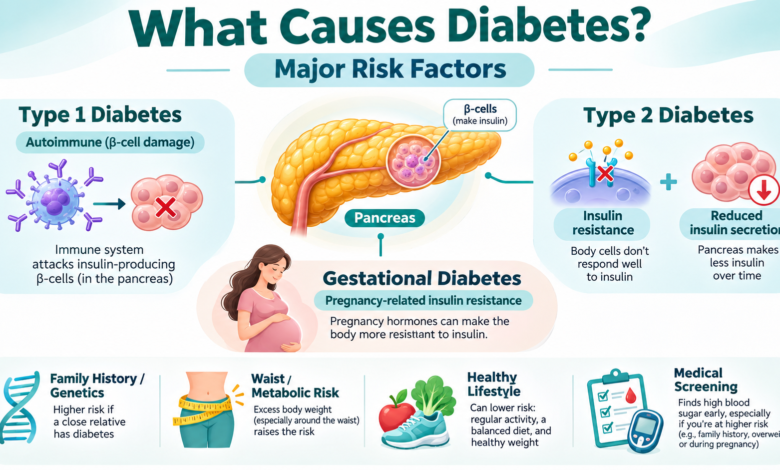
The causes of diabetes depend on the type. Type 1 involves autoimmune damage to insulin-producing cells. Type 2 involves insulin resistance and inadequate insulin secretion. Gestational diabetes occurs when pregnancy-related insulin resistance exceeds the body’s ability to compensate. Genetics, age, metabolic health and certain medical conditions can influence risk.
A risk factor does not mean an illness is inevitable. Nor does it establish that someone has made a mistake. Understanding what causes diabetes requires distinguishing biology from the circumstances that make diabetes more likely.
How Diabetes Develops in the Body
The pancreas releases insulin, helping tissues use and store glucose from food. Insulin also helps regulate how much glucose the liver releases between meals. When the body does not produce adequate insulin or respond to it effectively, glucose accumulates in the bloodstream.
Persistently high glucose may harm blood vessels, nerves, kidneys, eyes and the cardiovascular system. Yet early type 2 diabetes can produce few symptoms, which is why risk assessment and appropriate laboratory screening are important. The underlying causes of diabetes cannot be inferred from glucose readings alone.
For an overview of how diabetes develops across different categories, start with our complete guide to diabetes types, symptoms and causes.
What Causes Type 1 Diabetes?
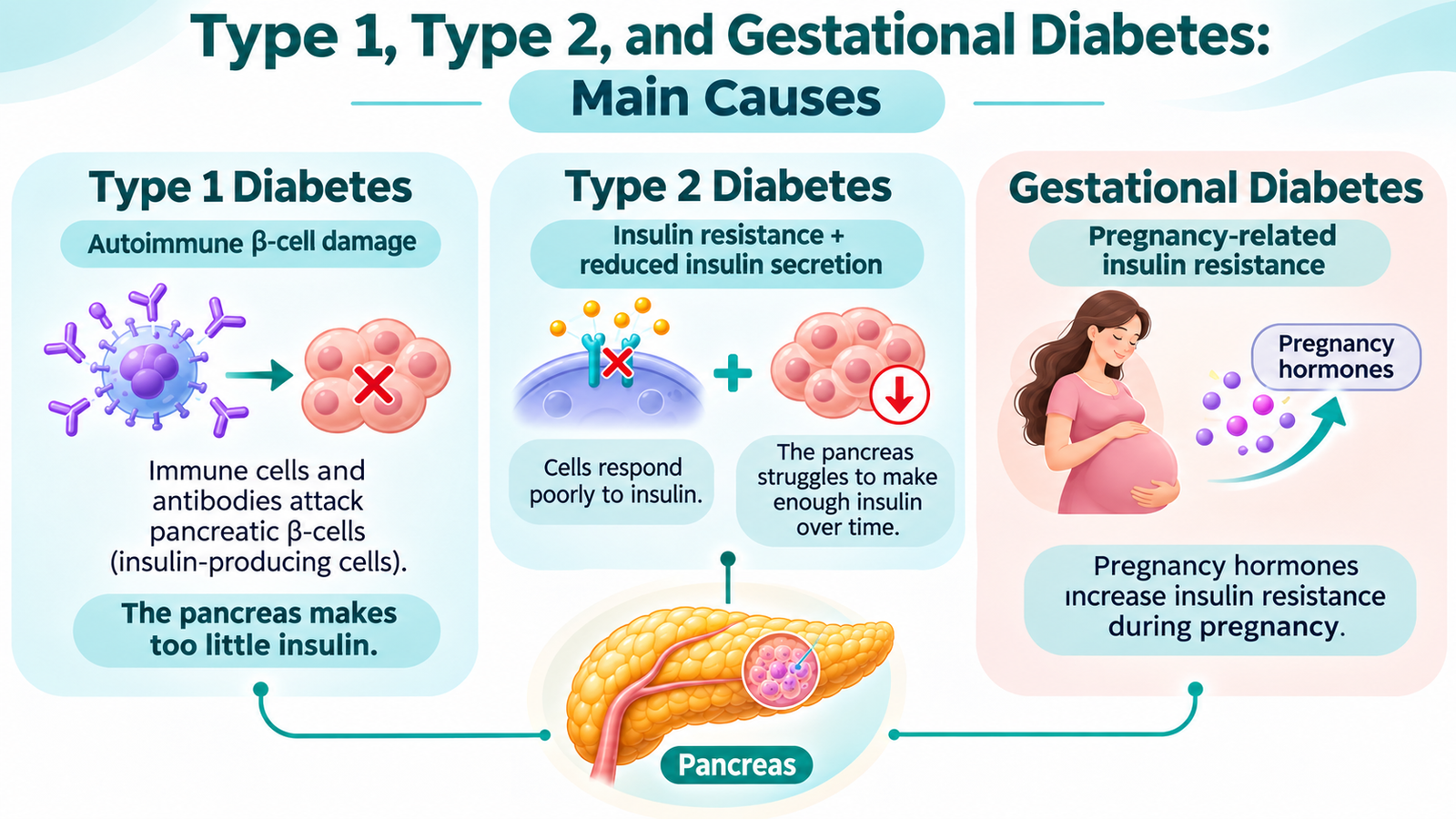
Type 1 diabetes develops when an autoimmune response damages pancreatic beta cells. These cells normally supply insulin, and significant loss leads to a dependence on replacement insulin. Type 1 can appear in children or adults, sometimes with an unexpectedly rapid onset.
Inherited genetic variants contribute to susceptibility, but many people with these variants never develop diabetes. A close family member with type 1 raises risk, yet many people diagnosed do not have such a relative. Researchers are investigating environmental and immune triggers, although an individual infection cannot usually explain a diagnosis with certainty.
Eating sugar, lacking exercise or being above a particular weight is not an established direct cause of autoimmune diabetes. For some relatives of affected people, specialist screening for pancreatic autoantibodies can identify risk before symptoms appear. The interpretation of such testing requires clinical expertise.
Established type 1 diabetes is not treatable with diet alone. Insulin must not be stopped without appropriate medical supervision.
For more detail about autoimmune diabetes and the role of insulin, read Type 1 Diabetes: Symptoms and Management.
What Causes Type 2 Diabetes?
Type 2 diabetes develops when tissues become less sensitive to insulin and the pancreas cannot consistently make enough insulin to meet the body’s needs. These processes often build over time, which helps explain why some people remain unaware of elevated blood glucose.
Insulin resistance affects how muscle, fat and liver tissues handle glucose. The pancreas may initially compensate by producing more insulin. Whether glucose eventually rises depends partly on beta-cell function, inherited susceptibility and other metabolic influences. These interacting factors explain why type 2 diabetes causes cannot be reduced to one food or habit.
Family history is a meaningful clue, but shared genes interact with environment, medical history and everyday circumstances. People with the same family history may experience very different outcomes.
Abdominal or visceral fat is associated with insulin resistance, yet people without obesity can develop type 2 diabetes. Body appearance is not a reliable screening test. Some people of Asian ancestry face increased metabolic risk at lower BMI levels than conventional thresholds indicate.
These diabetes risk factors can operate together, so individual assessment should consider weight distribution, family history, metabolic measurements and underlying health conditions rather than focusing on one characteristic.
Explore Type 2 Diabetes: Symptoms, Causes and Treatment for the distinction between risk factors, diagnosis and individualized medical care.
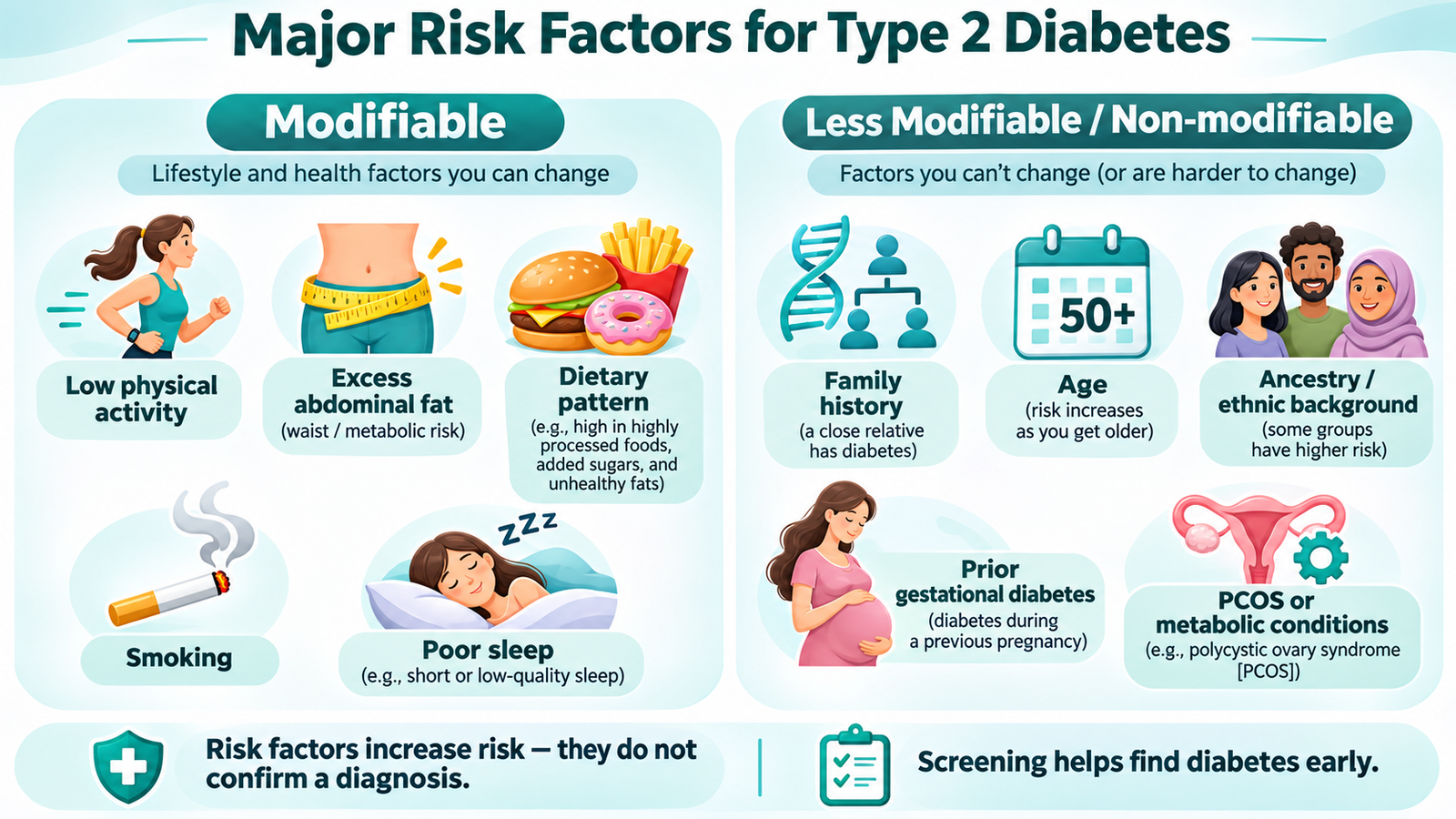
Major Modifiable Diabetes Risk Factors
Regular physical activity helps muscles use glucose and may improve insulin sensitivity. Prolonged inactivity and low movement levels are associated with higher type 2 diabetes risk. Exercise plans should be adapted to age, mobility, medicines and cardiovascular health.
Eating patterns can affect overall metabolic risk. Frequent sugar-sweetened drinks, excess energy intake and dietary patterns low in fiber are associated with risk in different ways, but a single meal does not cause type 2 diabetes. Vegetables, whole grains, pulses, suitable proteins and unsaturated fats can support a sustainable dietary pattern.
For people with excess abdominal fat, health-supporting weight management may reduce future risk. However, there is no universal weight target, and avoiding stigma is important. Waist circumference, blood pressure and laboratory results can add context beyond BMI.
Smoking is associated with poorer cardiovascular and metabolic outcomes. Chronic sleep disruption may also be associated with insulin resistance and changes in appetite or activity. Each of these may be relevant when reviewing risk factors for type 2 diabetes, although none alone establishes causation.
The best prevention strategy typically combines manageable improvements with appropriate medical monitoring rather than demanding immediate perfection.
Diabetes Risk Factors You Cannot Change
Age and inherited susceptibility influence the likelihood of type 2 diabetes. The disease occurs more frequently with advancing age, but young adults and children can also develop it. Having an affected parent or sibling makes screening discussions more important.
Population-level differences in risk can matter. The 2026 American Diabetes Association screening recommendations use a BMI threshold of 23 kg/m² for adults of Asian ancestry, compared with 25 kg/m² for other groups, when additional risk factors are present. These are screening criteria, not a way to diagnose an individual.
Prior gestational diabetes increases later type 2 diabetes risk. Polycystic ovary syndrome, high blood pressure, abnormal cholesterol levels, cardiovascular disease and metabolic dysfunction-associated steatotic liver disease can also signal elevated risk.
These diabetes risk factors often overlap. No single profile can determine whether a person currently has diabetes, and a person without obvious risk factors can still develop it.
What Causes Gestational Diabetes?
Pregnancy brings hormonal changes that increase insulin resistance. Usually the pancreas compensates by producing more insulin. Gestational diabetes occurs when the available response is not sufficient to maintain healthy glucose regulation during pregnancy.
A previous pregnancy affected by gestational diabetes, family history, age-related influences and metabolic conditions may raise risk, but the condition can develop without obvious warning signs. Routine prenatal screening matters because symptoms are frequently absent.
Gestational diabetes does not mean a pregnant person caused the condition through eating habits. Appropriate nutrition, activity and medical treatment can support pregnancy health, and professional monitoring is important for parent and baby.
Glucose may return to a non-diabetes range following delivery, yet the history continues to matter. Postpartum assessment and future screening are recommended because the risk of developing type 2 diabetes remains elevated.
Other Medical Causes of Diabetes
Not all diabetes is autoimmune or conventional type 2. Significant disease of the pancreas, chronic pancreatitis or pancreatic surgery may reduce insulin production. Some inherited single-gene conditions also produce diabetes and require a different diagnostic approach.
Medicines including glucocorticoids, such as prednisone, can increase glucose in susceptible people. Certain hormonal disorders, such as Cushing syndrome, may also cause hyperglycemia. These factors are important because medical decisions about testing and treatment may differ.
Never stop a prescribed medicine because it may affect blood glucose. A clinician can weigh its benefits against metabolic risks and arrange monitoring or adjustments.
When symptoms or family patterns are unusual, clinicians sometimes investigate forms of diabetes beyond type 1 and type 2. That diagnostic uncertainty is a reason for careful assessment, not for self-treatment.
Diabetes Causes and Risk in Children
Children can develop either type 1 or type 2 diabetes. Type 1 may lead to rapidly increasing thirst, frequent urination, tiredness, unexplained weight loss or new bedwetting. Children with these symptoms should receive prompt medical evaluation.
For type 2 diabetes in young people, clinicians consider family history, maternal diabetes during pregnancy, body composition, metabolic findings and signs of insulin resistance. Screening criteria differ from those for adults.
Neither age nor weight can identify the type reliably. When insulin deficiency is suspected, timely assessment for ketones and other metabolic abnormalities can be important. Parents should not delay testing while experimenting with restrictive diets.
Sugar, Stress and Weight: Diabetes Myths
Does sugar directly cause diabetes? Type 1 diabetes is caused by an autoimmune process, not by eating sweets. For type 2, overall dietary patterns, energy balance, genetics and metabolism may contribute to risk; an occasional dessert cannot account for a diagnosis.
Can stress alone cause diabetes? Stress hormones may alter glucose and interfere with sleep or daily routines, but a single stressful episode is not an established stand-alone cause. Persistent stress deserves care without attributing medical illness to someone’s emotional reactions.
Can thin people develop diabetes? Yes. Someone at a lower weight can develop type 2 through insulin resistance or impaired insulin secretion, and anyone can develop autoimmune type 1. These examples demonstrate why what causes diabetes cannot be answered by appearance alone.
Does every person with prediabetes develop diabetes? No. Prediabetes is a marker of increased risk, not a guarantee. Progression varies, and evidence-based interventions can delay or prevent type 2 diabetes in some people.
Who Should Get Diabetes Screening?
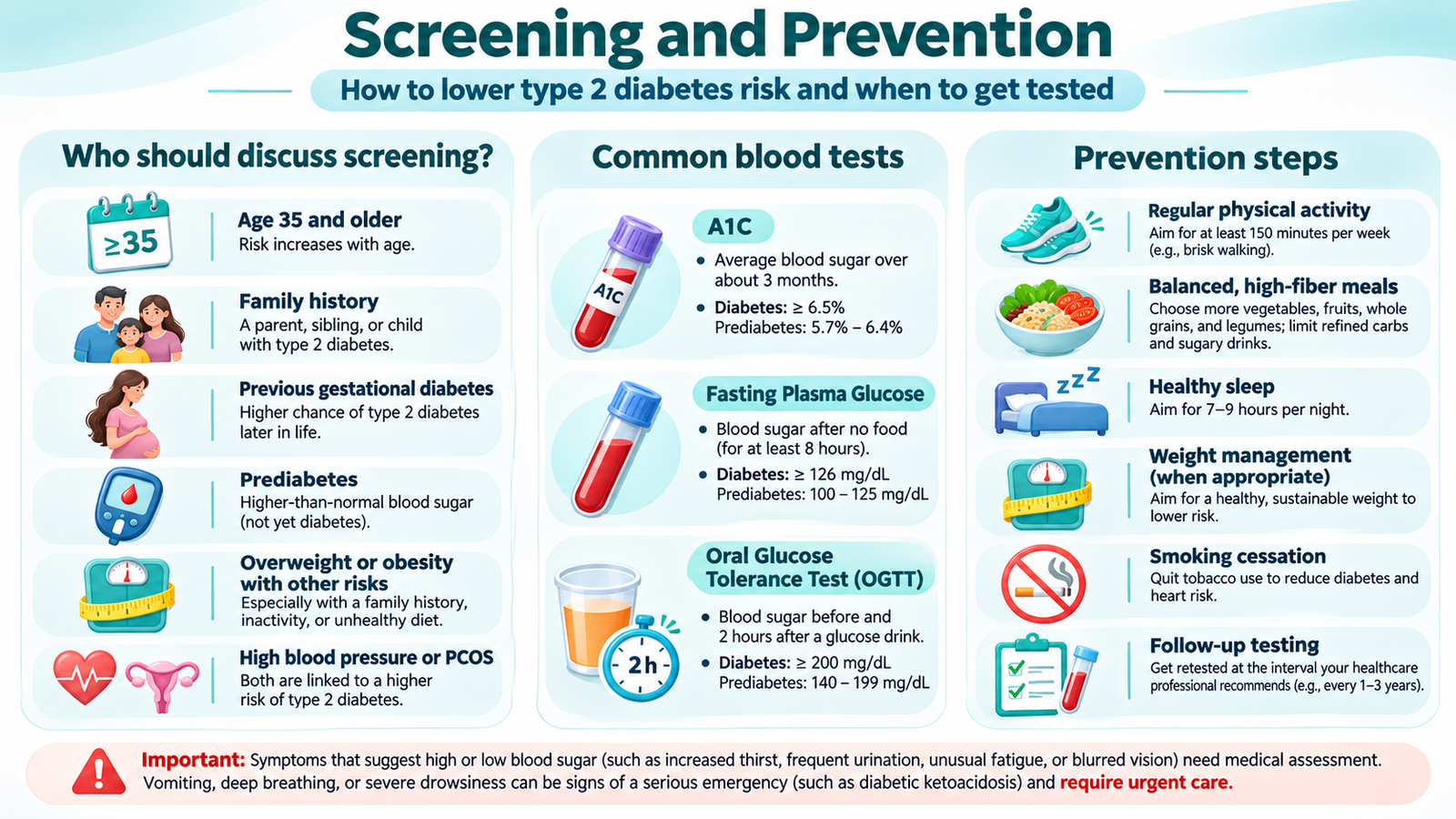
Screening helps identify elevated glucose before noticeable symptoms develop. Under 2026 ADA guidance, routine screening for type 2 diabetes is recommended from age 35 for adults without other specified risks, while earlier testing may be appropriate based on weight and additional clinical risk factors.
A family history, past gestational diabetes, high blood pressure, polycystic ovary syndrome, certain medicines or prediabetes may prompt earlier screening. Children at elevated risk need age-appropriate assessment.
The risk factors for type 2 diabetes are not identical to type 1 risk markers. People with a family history of autoimmune diabetes may benefit from specialist advice regarding autoantibody testing.
Screening recommendations differ by country and personal circumstances. A clinician can help choose a suitable test and follow-up schedule. Symptoms of diabetes should prompt evaluation even if a person is younger than the routine screening age.
Blood Tests Used to Diagnose Diabetes
Common laboratory tests include A1C, fasting plasma glucose and an oral glucose tolerance test. Random plasma glucose may establish diabetes when characteristic symptoms or a hyperglycemic crisis are present.
For nonpregnant individuals, ADA diabetes thresholds are A1C 6.5% or above, fasting glucose at least 126 mg/dL (7.0 mmol/L), and two-hour glucose at least 200 mg/dL (11.1 mmol/L) after a standard 75-gram glucose load. Random plasma glucose of at least 200 mg/dL (11.1 mmol/L) with classic symptoms is another criterion.
The ADA prediabetes ranges are A1C 5.7% to 6.4%, fasting glucose 100 to 125 mg/dL, and two-hour glucose 140 to 199 mg/dL. Results usually require confirmation unless hyperglycemia is unequivocal. Pregnancy follows separate diagnostic pathways.
A1C readings may be unreliable in some anemias or conditions altering red-cell turnover. A healthcare professional should select and interpret tests rather than relying on a single home glucose measurement.
When screening identifies glucose above normal but below the diabetes threshold, our Prediabetes: Symptoms, Tests and Prevention guide explains follow-up and evidence-based risk reduction.
How to Reduce Type 2 Diabetes Risk
Evidence from structured diabetes prevention programs shows that sustained changes can reduce progression to type 2 diabetes in people at elevated risk. Risk reduction is possible, but no lifestyle plan eliminates genetic susceptibility or guarantees a particular outcome.
Activity can include walking, dancing, cycling, strength training or mobility-appropriate exercises. Consistency matters more than starting with an extreme routine. Nutrition plans can emphasize diverse vegetables, pulses, fiber-containing carbohydrates and appropriate protein.
People with hypertension, dyslipidemia or other metabolic conditions should discuss comprehensive care rather than focusing only on blood glucose. Smoking cessation and treatment for persistent sleep problems may also support overall health.
Follow-up testing matters after prediabetes and gestational diabetes, even when someone feels healthy. These preventive steps address diabetes risk factors that can be influenced while respecting those that cannot.
Ordinary diet and exercise programs do not prevent autoimmune type 1 diabetes. Certain early-stage patients may qualify for specialist intervention aimed at delaying symptomatic onset, but this is not a general prevention strategy.
When Diabetes Symptoms Need Medical Attention
Increased thirst, more frequent urination, unintentional weight loss, fatigue or blurry vision deserve evaluation, particularly when multiple symptoms develop together. The onset can be quick in type 1 and gradual or silent in type 2.
Repeated vomiting, abdominal pain, unusually deep or rapid breathing, severe confusion, marked drowsiness or unconsciousness requires emergency care. These may indicate diabetic ketoacidosis or another dangerous condition. Do not attempt to manage such symptoms with fasting, exercise or home remedies.
For a detailed symptom overview, see our Early Signs of Diabetes guide. The appropriate medical response depends on symptoms and glucose findings, not on an online risk checklist.
Explore More BBH Guidance
For symptoms that may need testing, visit Early Signs of Diabetes: What to Look For. Our BBH Support and Resources and Diabetes & Blood Sugar Hub provide additional educational reading. These resources do not replace emergency medical services.
Frequently Asked Questions
What is the main cause of diabetes? The causes vary. Type 1 results from autoimmune beta-cell damage, type 2 from insulin resistance and inadequate insulin secretion, and gestational diabetes from insufficient compensation for pregnancy-related insulin resistance.
Can diabetes run in families? Yes. Family history increases risk, though most forms involve interactions between genetic and other factors.
Does eating too much sugar always cause type 2 diabetes? No. Dietary patterns are relevant to metabolic health, but type 2 diabetes develops from multiple influences.
Can stress cause diabetes? Stress can affect glucose and health behaviors, but it should not be considered a proven sole cause of diabetes.
Can children develop type 2? Yes. Both type 1 and type 2 can occur in childhood; evaluation is needed to distinguish them.
Can someone have diabetes without symptoms? Yes, especially with type 2 or gestational diabetes, which is why screening can matter.
Are diabetes risk factors the same as a diagnosis? No. Risk factors guide decisions about screening, whereas diagnosis requires clinical assessment and validated tests.
Related Reading and Support
Support resources: BBH Support and Resources · Diabetes & Blood Sugar Hub. These educational pages are not emergency medical services.
Scientific References and Medical Disclaimer
- ADA Standards of Care 2026 — Diagnosis and Classification
- ADA Standards of Care 2026 — Prevention or Delay
- CDC — Diabetes Risk Factors
- NIDDK — Symptoms and Causes
- NIDDK — Risk Factors for Type 2 Diabetes
- WHO — Diabetes
Medical disclaimer
This educational article is not a substitute for medical diagnosis or treatment. Seek emergency care for severe symptoms and never discontinue prescribed medicines based on an article. Sources are cited for transparency; independent clinical review is not claimed.
Written by Shubhangi Halande · Bio and Brain Health Info (BBH) · Physical Health → Diabetes & Blood Sugar