Child Development Activities for Kids in Pune
Kids' Development Activities in Pune

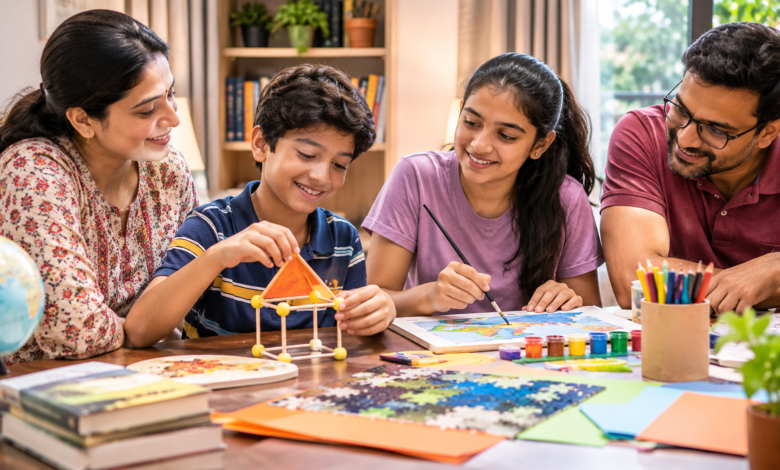
Child development activities in Pune should do more than keep children busy. Parents in Undri, Hadapsar, Hinjewadi, Magarpatta, Kondhwa and Wakad can support learning through affordable, meaningful experiences that develop communication, creativity, independence and wellbeing. This educational guide is designed for families with children aged 8–15.
Thank you for reading this post, don't forget to subscribe!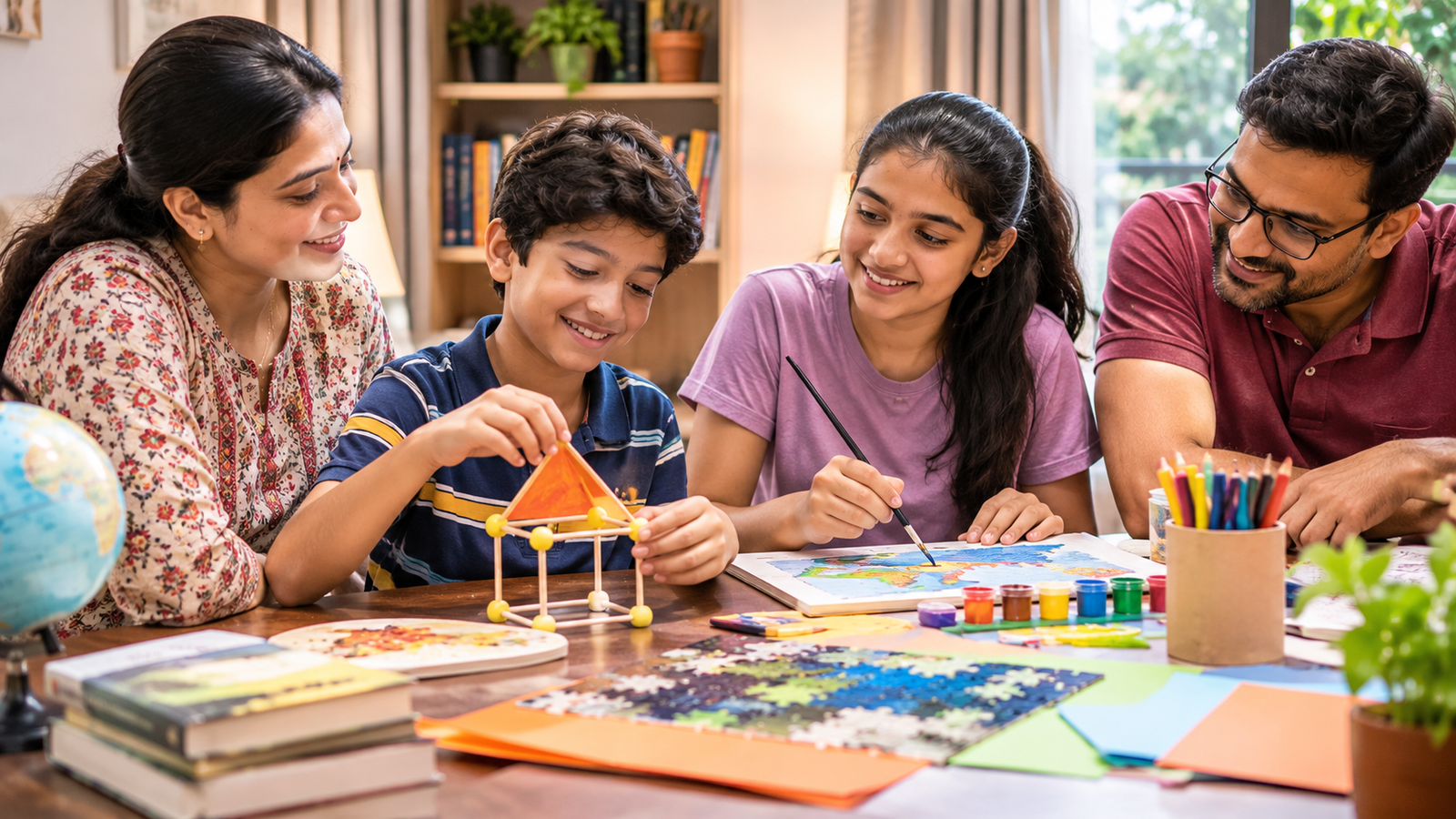
Quick answer
Choose a balanced mix of movement, problem-solving, social interaction, creativity, emotional awareness and age-appropriate responsibilities. Expensive classes are not essential; safety, interest, accessibility and consistency matter.
In This Guide
Explore: Relationship › Children | BBH Support Resources
Why Child Development Activities in Pune Matter
Development includes thinking, language, emotional understanding, social relationships, physical coordination and practical independence. A child may enjoy drawing but hesitate during group activities; another may love sports yet need support with planning. Neither difference automatically indicates a disorder. Parents can provide opportunities across several areas without treating every hobby as a performance target.
UNICEF India highlights play, conversation and everyday involvement as opportunities for learning. CDC parenting resources encourage supportive relationships and increasing independence through childhood and adolescence. These sources support broad principles, not claims that a particular commercial programme guarantees better outcomes.
| Developmental area | Activity example | Opportunity to practise |
|---|---|---|
| Cognitive | Logic puzzles | Reasoning |
| Emotional | Feelings journal | Emotional vocabulary |
| Social | Group project | Cooperation |
| Physical | Outdoor games | Movement |
| Creative | Story-making | Expression |
| Practical | Simple budget | Planning |
Child Development Activities in Pune by Age
Activities for Ages 8–11
Offer short, playful, hands-on challenges: building models, storytelling, nature observation, simple strategy games and small responsibilities. Ask open-ended questions rather than supplying every answer. Allow children to change their minds and explore their own interests.
Activities for Ages 12–15
Older children can plan a project, compare information sources, practise a respectful debate, create a budget or present a solution to a community problem. Provide supervision where needed while gradually allowing greater choice and responsibility.
Twelve Practical Child Development Activities in Pune
1. Family problem-solving challenge
Present a manageable family problem, such as reducing waste or organising a study area. Ask for three possible solutions, their trade-offs and one option to test. Younger children can draw ideas; teenagers can estimate costs.
Skill focus: Planning and flexible thinking.
2. Storytelling and communication
Invite children to create a story using three random objects. Younger children may draw scenes; older children can record a short talk or write a script. Offer specific, kind feedback instead of constant correction.
Skill focus: Expression and language.
3. Emotion detective
Discuss a fictional situation involving a disappointed or excluded child. Ask what each person might feel and how a supportive friend could respond. Avoid insisting that everyone experiences the same emotion.
Skill focus: Perspective-taking and emotional vocabulary.
4. The ₹500 budget challenge
Use an imaginary ₹500 to plan snacks or a small family celebration. Compare prices, needs and wants. Older children can account for unexpected expenses. Actual spending is unnecessary.
Skill focus: Numeracy and responsibility.
5. Cooperative construction
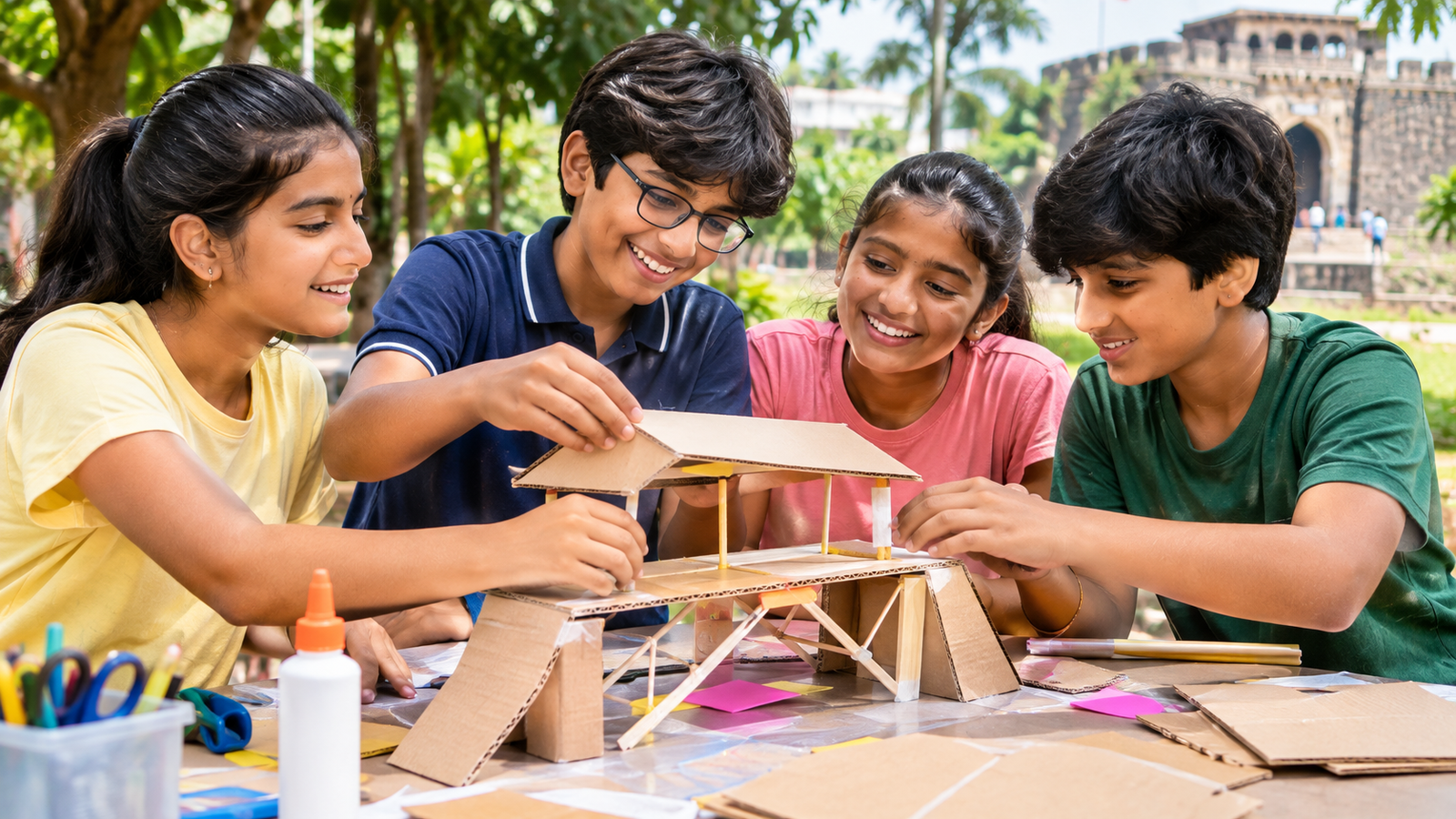
Give a small group paper, tape and cardboard to build a bridge or tower. Ask them to assign roles, test ideas and reflect on disagreements. Value cooperation, not only the final product.
Skill focus: Teamwork and experimentation.
6. Nature observation journal
During a safe walk, notice plants, birds, shade or seasonal changes. Draw observations and revisit them over several days. Older children can turn the observations into a small environmental question.
Skill focus: Curiosity and observation.
7. Weekly independence task
Let a child choose a manageable responsibility such as organising books, preparing a school bag or planning a supervised snack. Reduce assistance gradually as skills grow.
Skill focus: Organisation and self-management.
8. Respectful debate
Discuss a neutral question such as whether schools need longer breaks. Ask children to explain their position and then summarise an opposing view fairly.
Skill focus: Listening and critical thinking.
9. Digital information detective
Choose a child-safe online claim or AI-generated answer. Ask who made it, what evidence exists and whether reliable sources agree. Discuss how convincing information can still be incorrect.
Skill focus: Digital literacy.
10. Movement and coordination
Include enjoyable dancing, cycling with safety gear, sports or outdoor games. WHO recommends children aged 5–17 average at least 60 minutes of moderate-to-vigorous physical activity daily across the week.
Skill focus: Movement and participation.
11. Community kindness project
Organise a supervised book exchange, thank-you project or age-appropriate neighbourhood clean-up. Respect privacy and never require children to approach strangers.
Skill focus: Cooperation and civic awareness.
12. Future skills mini-project
Choose a local issue such as water conservation. Research it using suitable sources, sketch a solution and present it. Keep the scope small and adapt it for the child’s age.
Skill focus: Research and presentation.
How to Choose Child Development Activities in Pune
The best activity is not automatically the most expensive or highly advertised. Ask whether the child enjoys it, what skills it offers, how adults supervise it, whether accessibility needs can be accommodated, and whether travel and cost are manageable. Check the qualifications and child-safeguarding procedures of any external provider before enrolling.
BBH Activity Selection Checklist
Interest • Developmental goal • Safety • Accessibility • Cost and travel • Child feedback. This is an educational planning checklist, not a validated developmental assessment.
Quiet, Active and Stressed Children
A quiet child may prefer paired projects or small-group storytelling rather than immediate public speaking. A highly active child may enjoy movement-based learning. A child under academic stress may benefit from fewer scheduled activities and more downtime. Preferences alone do not diagnose a developmental condition.
Planning Activities Around Pune Localities
Families seeking child development activities in Pune should consider commuting time and daily routines. In Undri and Kondhwa, look for manageable travel from home; in Hadapsar and Magarpatta, consider after-school scheduling; in Hinjewadi and Wakad, weekend options may fit families with long commutes. Baner, Kharadi, NIBM and Pimpri-Chinchwad families can apply the same criteria. These are planning suggestions, not verified provider recommendations.
Watch for Overscheduling
More classes do not automatically mean healthier development. Children need rest, friendships and time to choose their own play. Rather than counting certificates, ask what the child enjoyed, attempted, learned or found challenging. A sustainable weekly rhythm is often more valuable than a crowded calendar.
Include Different Learning Needs
Adapt instructions, noise levels, equipment, session length and communication methods for children with different abilities or sensory needs. Persistent concerns about learning, behaviour or development warrant an appropriate professional assessment rather than more generic enrichment classes.
A 30-Day Child Development Activity Plan
| Week | Suggested focus |
|---|---|
| 1 | Explore interests with storytelling, drawing and a family challenge |
| 2 | Practise teamwork, listening and respectful disagreement |
| 3 | Try budgeting, digital fact-checking and one independence task |
| 4 | Complete a creative project and reflect on what worked |
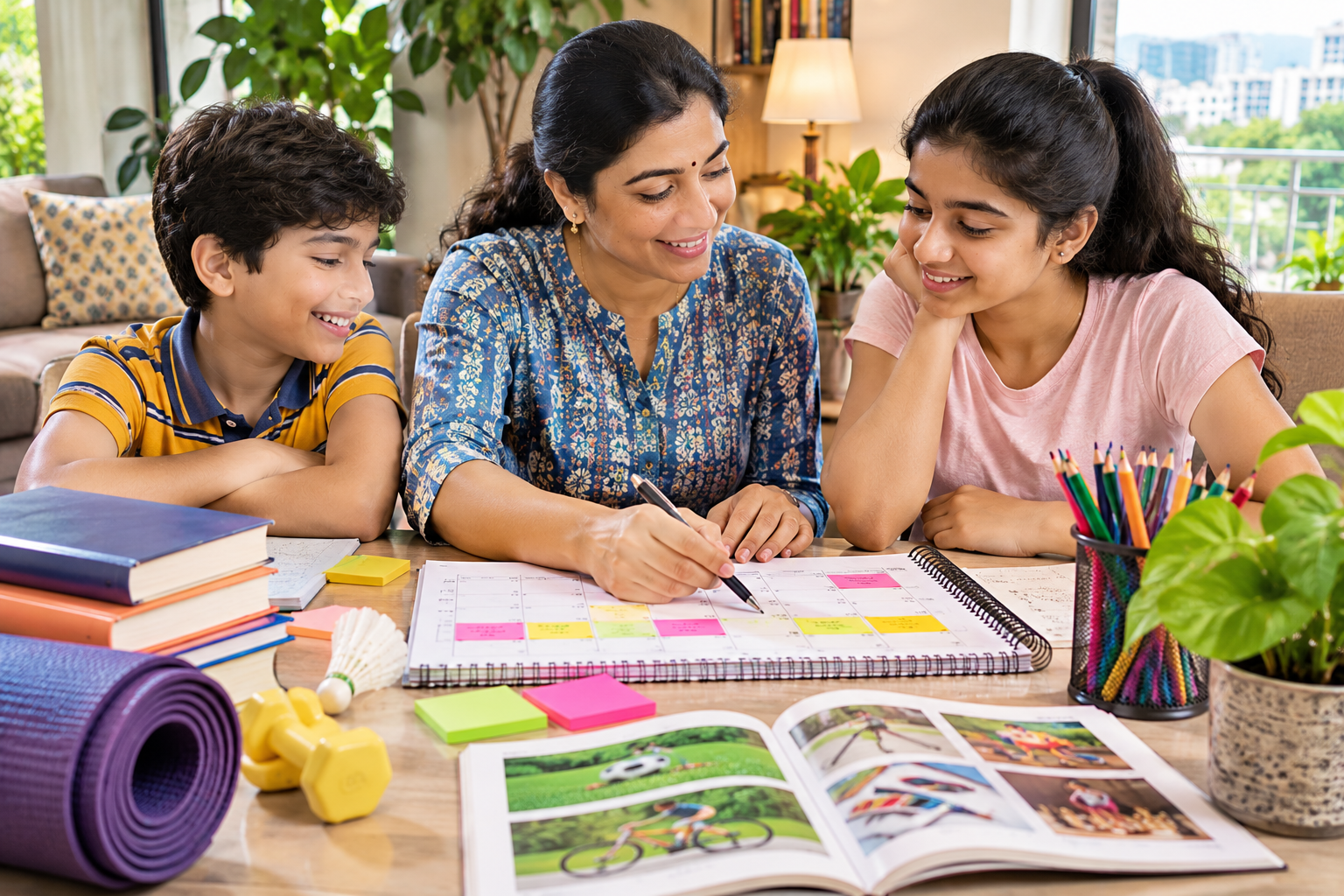
This optional plan is not a clinically tested intervention. It should complement school, sleep, family connection and physical activity. A weekly reflection can ask: What did my child enjoy? What was difficult? What support helped? What should we adjust?
Why BBH Young Minds Can Help Pune Parents
BBH Young Minds is an educational initiative being developed by Bio and Brain Health Info. Its aim is to make evidence-informed parenting, child development and family wellbeing resources accessible. For families researching child development activities in Pune, BBH offers explanations of why activities may be useful, how to adapt them and what to ask when choosing an outside programme.
Future BBH Young Minds educational programmes for children aged 8–15 are being explored, but venues, staffing, schedules and enrolment are not confirmed. No classes or clinical services are advertised as currently available in this article.
Contact BBH Young Minds
For educational enquiries or updates on future initiatives, email info@bioandbrainhealthinfo.com. Mention your child’s age group, Pune locality and topic of interest. Explore our Support Resources.
Related BBH Reading
- Parenting with a Narcissist: Protecting Children — guidance on difficult co-parenting dynamics
- Father’s Respect for Mother — family relationships, including a spiritual perspective
- How to Stop Seeking External Validation — adult self-worth and healthy modelling
- Narcissistic Parenting: 10 Hidden Patterns — understanding harmful family patterns
More BBH parenting guidance
10 Signs of a Narcissistic Parent — additional reading on family dynamics.
Frequently Asked Questions
What are the best child development activities in Pune for ages 8–15?
No single activity suits everyone. A mix of creativity, physical movement, problem-solving, communication and age-appropriate responsibilities is a practical starting point.
Are personality development classes necessary?
Not necessarily. Supportive family relationships, school opportunities and community activities can also provide meaningful practice.
Can families support development on a low budget?
Yes. Reading, puzzles, storytelling, household planning, nature observation and games often require little equipment.
How can parents track progress?
Notice participation, enjoyment, independence and willingness to try again. Avoid ranking children or using casual observations as a diagnosis.
Does BBH Young Minds currently offer Pune classes?
Programmes are in the planning stage; this article does not confirm bookings or active classes.
For a broader view of emotional wellbeing, learning, confidence and digital habits, read Child Development in Pune: A Parent’s Guide.
Final Thoughts
Meaningful child development activities in Pune need not be expensive or competitive. Consistent, enjoyable opportunities to think, communicate, create, move and take responsibility can be adapted to different children and family routines.
Educational disclaimer
This article provides general educational ideas, not individual developmental assessment, diagnosis or treatment. Seek qualified professional guidance for persistent concerns.
Research and Further Reading