Social Skills Development for Kids in Pune
Social Skills for Kids in Pune: Parent Guide

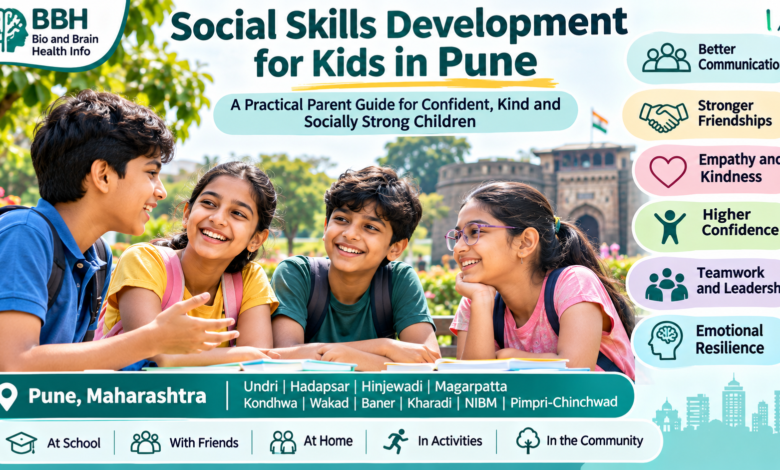
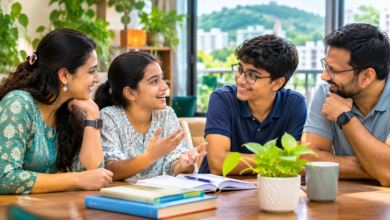
social skills development for kids in Pune is about helping children build safe, respectful relationships—not teaching every child to become outspoken. For families with children aged 8–15, friendships, school transitions, group activities and online communication offer opportunities to practise listening, boundaries, cooperation and emotional regulation. This guide combines evidence-informed principles with practical Pune-specific planning, while recognising individual differences and the limits of generic advice.
Thank you for reading this post, don't forget to subscribe!What Social Skills Really Mean
Social skills include listening, expressing needs, reading context, taking turns, cooperating, disagreeing respectfully and repairing misunderstandings. They are not the same as popularity, extroversion or perfect obedience. A quiet child may have strong relationships; an outspoken child may still need support with listening. Parents should look at whether a child can connect safely and authentically rather than counting friends. Social behaviour is influenced by age, temperament, culture, language, disability and opportunity. A child may communicate confidently at home but hesitate in a new school. Ask what conditions make participation easier before assuming a deficit. Development is gradual, and even adults continue learning these skills. A useful starting point is to identify one everyday situation, such as joining a game or asking a teacher for help, and practise it without pressure.
Social Skills Development for Kids in Pune: Age 8–11
Children aged eight to eleven often practise turn-taking, group rules, cooperation and increasingly complex friendships. They may become sensitive to fairness, exclusion or criticism. Some children prefer one close friend while others enjoy larger groups. Both can be healthy patterns. Adults can support growth through cooperative board games, shared cooking, sports or creative projects where children negotiate roles. Ask what happened during a disagreement, how each person might have felt and what repair could look like. Avoid demanding instant apologies that the child does not understand. For younger schoolchildren, short role-play scenarios can make abstract advice concrete. Try rehearsing how to ask to join a group, decline a risky suggestion or tell a trusted adult about bullying. Keep the activity playful and brief. If a child consistently cannot participate or experiences substantial distress, discuss observations with teachers and appropriate professionals.
Social Skills for Ages 12–15: Identity and Boundaries
Adolescents often place greater value on privacy, peer belonging and independent judgement. Friendships may change quickly, and online communication becomes more significant. Respectful boundaries are a core social skill: teenagers should be able to say no, recognise coercion and respect other people’s decisions. Encourage discussions about friendship expectations, consent, gossip and group pressure without treating every disagreement as a crisis. Parents can model curiosity by asking what the young person thinks would be fair. Avoid reading private messages routinely without a clear safety reason, but maintain age-appropriate supervision and a plan for reporting online harm. Teenagers benefit from practising difficult conversations, such as telling a friend they feel hurt or asking a teacher for an extension. Emphasise that friendship is not earned by accepting humiliation. A young person who withdraws suddenly, fears school or reports harassment deserves attentive support.
Listening, Conversation and Nonverbal Cues
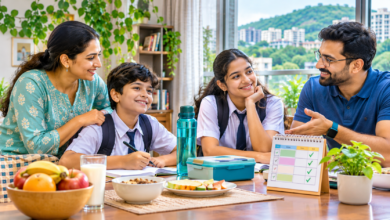
Good communication includes giving another person room to speak, asking questions and noticing whether someone wants to continue. Children can practise listening by summarising what a sibling said before responding. At dinner, invite each person to share a small experience without interruption. Do not require eye contact as proof of respect: eye contact norms differ across cultures and may be uncomfortable for some neurodivergent children. Similarly, facial expressions and body language can be ambiguous. Teach children to ask rather than guess: “Are you upset with me?” or “Would you like some space?” In multilingual Pune households, communication may shift between Marathi, Hindi, English and other languages. Hesitation in a less familiar language does not automatically indicate poor social understanding. Allow children to express complex feelings in the language they know best and seek qualified assessment if difficulties persist across settings.
Emotional Regulation During Disagreements
Children cannot cooperate consistently if they have no way to manage frustration. Begin by naming feelings without excusing harmful behaviour: “You seem disappointed that the game ended, but hitting is not okay.” Offer a pause, water or a quiet place before problem-solving. When calm, ask what the child wanted, what happened and what they could try next time. Adults should model repair too. A parent who interrupts or raises their voice can apologise and demonstrate a better approach. Do not force a distressed child to explain everything immediately. Repeated aggressive incidents, intense anxiety or difficulty recovering from minor setbacks may require a broader evaluation of sleep, stress, learning and emotional wellbeing. The goal is not to suppress emotions but to express them safely and respond flexibly to other people.
Friendship Skills and Joining Group Activities
Joining a new group can feel intimidating, especially after moving schools or changing neighbourhoods. Teach a simple sequence: observe what others are doing, approach respectfully, ask a relevant question and accept the response. A child might say, “Can I join the next round?” rather than interrupting play. Practise inviting someone into an activity as well; inclusion is a skill too. Parents can arrange low-pressure opportunities for shared interests, such as art, chess, reading, supervised sports or community activities. Do not insist that a child attend large gatherings if smaller interactions are more comfortable. Quality matters more than the number of friends. If a child is repeatedly excluded, investigate whether bullying, discrimination, accessibility barriers or group dynamics are involved rather than blaming the child for lacking confidence.
Social Skills Development for Kids in Pune Through Play
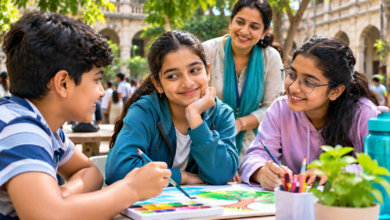
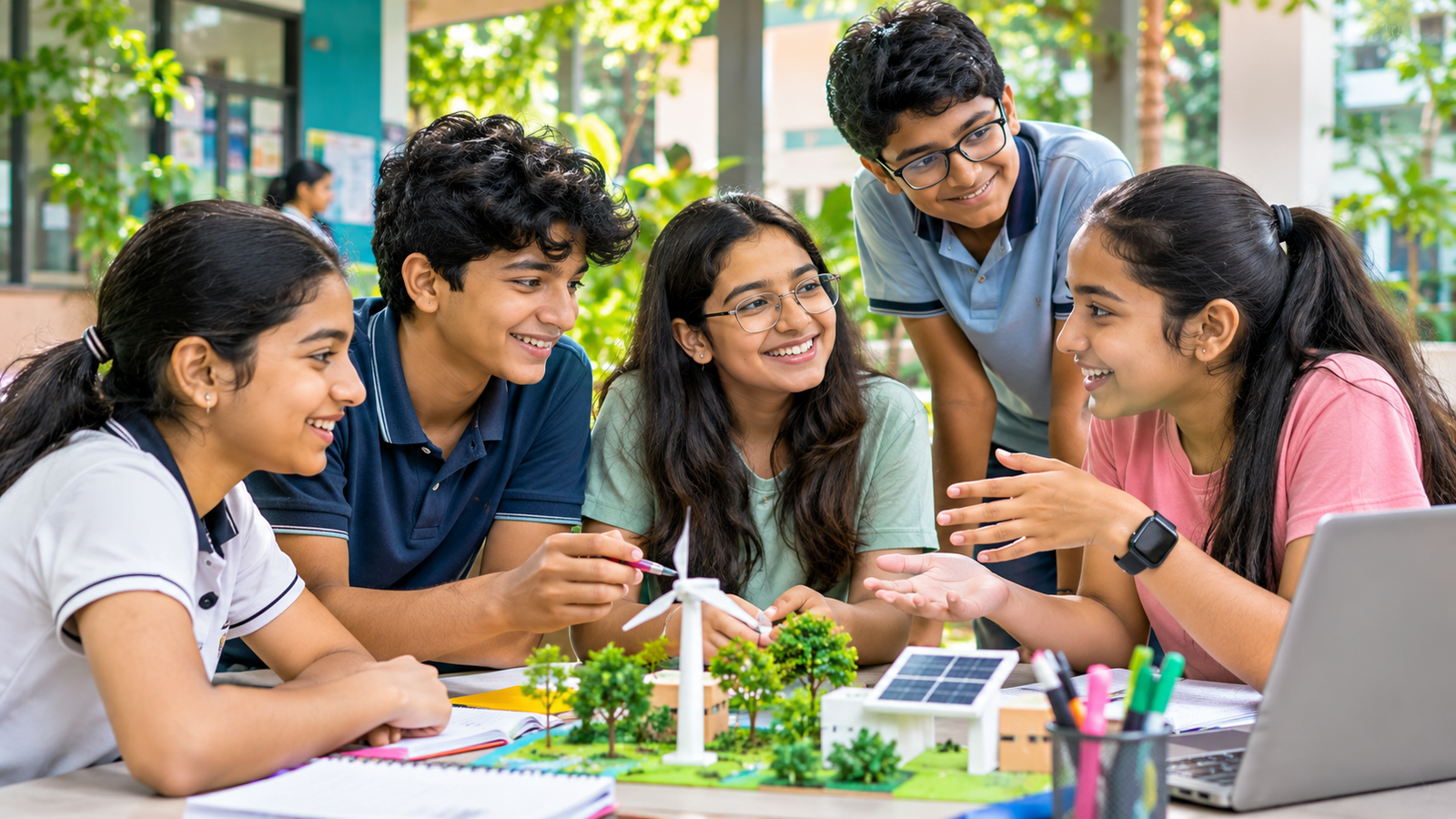
Play offers a natural setting for cooperation, negotiation, leadership and coping with losing. Team sports can help, but so can cooperative games, theatre, music, building projects and volunteering appropriate to age. A child who dislikes competitive sport may thrive in a science club or group art activity. The activity itself does not guarantee social growth; supportive adults, fair rules and safe participation matter. Choose programmes based on the child’s interests and actual accessibility. Watch how facilitators respond to conflict and whether children are encouraged rather than shamed. During outdoor play, adults can allow manageable disagreements while intervening when safety, bullying or serious exclusion is involved. A useful reflection question afterward is: “What helped your group work together?” This focuses on learning rather than on winning.
Bullying, Exclusion and Peer Pressure
Bullying involves harmful behaviour and may include repetition or a power imbalance; not every disagreement between peers is bullying. Nevertheless, even one serious threat requires attention. Listen carefully and document what happened, where and when. Coordinate with the school when appropriate, and avoid advising a child simply to fight back. Help them identify safe adults and ways to leave unsafe situations. Online harassment may require saving relevant evidence and using platform reporting tools without sharing it widely. Children experiencing caste, language, disability or other forms of discrimination may need specific protection and institutional support. A child who seems socially withdrawn may be responding rationally to an unsafe environment. Address that environment before trying to make the child more outgoing. If there is immediate danger, seek emergency assistance.
Neurodiversity, Disability and Respectful Inclusion
Children with autism, ADHD, communication differences, hearing impairments or other disabilities may interact differently. The aim should not be to force masking, eye contact or imitation of a single social style. Focus on meaningful communication, consent, access and supportive relationships. Some children benefit from visual prompts, explicit instructions, quieter settings, communication devices or extra time to process questions. Ask the child what helps. Teachers and therapists can collaborate on individual goals when appropriate. Social difficulty can also reflect anxiety, language barriers, trauma or exclusion; a checklist cannot identify the cause. Avoid describing children as defective or promising that a short course will eliminate differences. Strengths-based, individualised support is more respectful and useful than one-size-fits-all training.
Digital Friendships and Online Communication
Group chats, games and social platforms can help young people connect, but they can also intensify exclusion, gossip and pressure. Teach children that online messages lack tone and context, and that they can ask for clarification rather than escalating a misunderstanding. Discuss privacy, consent before sharing photographs, password safety and how to block or report harassment. Parents should make it safe to disclose an upsetting online experience. Rather than banning all technology without explanation, agree on age-appropriate boundaries that protect sleep and safety. Practise spotting manipulation, false claims and AI-generated images. Ask whether online interactions leave the child feeling connected, anxious or pressured. If digital conflict affects school or mental health, involve trusted adults and qualified professionals as needed.
Pune Neighbourhood Planning: Undri to Hinjewadi
For families seeking social skills development for kids in Pune, the practical question is not which locality is best but where a child can participate consistently and safely. In Undri, Hadapsar and Hinjewadi, consider actual school travel, caregiver schedules and the availability of accessible group activities. Magarpatta, Kondhwa and Wakad families may face different travel patterns; Baner, Kharadi, NIBM and Pimpri-Chinchwad households should make the same assessment. No neighbourhood automatically produces stronger social skills. A short activity close to home may be more sustainable than a prestigious class requiring a long commute. Check supervision, inclusion policies, cost, child-to-adult ratio, safeguarding practices and the child’s genuine interest before enrolling. Families can also build social opportunities at home through shared meals, cooperative chores and inviting a trusted friend for a supervised activity.
A Practical Social-Skills Practice Table
Use this educational table to select a specific skill, a safe practice setting and an observable sign of progress. It is not a diagnostic or validated scoring instrument.
| Skill | Practice | Look for |
|---|---|---|
| Joining | Ask to join a game | Respectful request |
| Listening | Summarise another view | Accurate understanding |
| Boundaries | Practise saying no | Clear and respectful words |
| Repair | Discuss a disagreement | Accountability without shame |
Review the child’s comfort as well as performance. Progress may mean asking for help or choosing a safer friendship, not becoming more talkative.
Content Gap: Social Confidence Is Not Forced Extroversion
Many online articles equate social success with public speaking, eye contact or making many friends. That overlooks the needs of introverted, neurodivergent, multilingual and disabled children. BBH recommends a different reflection framework: first identify the child’s own social goals, then remove barriers, practise a small skill and check whether the child feels safer and more connected. A child who confidently says no to an uncomfortable activity may be showing excellent social judgement. A child who needs a quieter room to participate is not failing. Consider whether the setting is welcoming before asking the child to change. This four-step framework is a practical BBH educational tool, not a validated intervention. Parents should be cautious of programmes that guarantee personality transformation or imply that quiet children are inherently deficient.
Social Skills Development for Kids in Pune: A 30-Day Plan
During week one, observe strengths and ask which friendships or situations feel comfortable. Avoid judging every interaction. In week two, choose one skill such as asking to join, listening or setting a boundary; practise it briefly through a game or role-play. In week three, offer a real-world opportunity in a safe setting, such as a small group activity or cooperative household task. In week four, ask what felt easier, what remained difficult and what support would help next. Do not track every conversation or reward children only for being outgoing. Parents can note specific examples rather than assigning labels. If a child is distressed or experiences repeated exclusion, investigate environmental factors and seek support instead of increasing social demands. This plan supports reflection and practice; it is not a substitute for assessment or treatment.
When to Seek Professional Support
Consider consulting a paediatrician or qualified mental-health or developmental professional when social difficulties are persistent, distressing or substantially interfere with school, home or relationships. Sudden withdrawal, repeated bullying, severe anxiety, communication difficulties across settings or loss of previously acquired skills deserve particular attention. A professional can consider hearing, language, neurodevelopment, mood, trauma and environmental factors. Bring observations and the child’s own account when possible. Avoid diagnosing autism, ADHD or social anxiety based on a blog post. If a child is at immediate risk of harm or expresses suicidal intent, seek emergency assistance. In Pune, families may begin with their child’s paediatrician or an appropriately qualified clinician and ask about suitable referrals. Choose providers who respect disability, confidentiality and family context.
Frequently Asked Questions
Can shy children have good social skills?
Yes. Quietness is not a disorder. Focus on meaningful relationships, consent and comfort rather than forcing a personality change.
At what age should social skills be taught?
They develop throughout childhood and adolescence. Support should match the child’s age, interests, communication style and circumstances.
Are social-skills classes necessary for every child?
No. Families, schools and everyday activities provide many opportunities. Some children benefit from targeted professional support.
How can I help a child who has no friends?
Listen to their experience, explore safe interest-based activities and check for bullying or exclusion. Seek help if loneliness is persistent or distressing.
Do online friendships count?
Online connections can be meaningful, but privacy, safety and balance with other activities still matter.
BBH Parent Resources and Related Reading
BBH provides educational parenting information. BBH Young Minds is exploring future Pune activities, but classes, venues, staff, dates and enrolment are not confirmed. For general educational enquiries or future updates, email info@bioandbrainhealthinfo.com; avoid emailing sensitive details about children.
Main menu: Relationship · Submenu: Children · Support Resources
Related BBH articles
- Narcissistic Parent and Child Impact
- Parenting with a Narcissist: Protecting Children
- Father’s Respect for Mother in Parenting
- How to Build Self-Esteem After Attachment Wounds
- Characteristics of Narcissistic Parenting
These resources discuss family relationships and emotional safety; they are complementary reading, not direct evidence for a specific social-skills training method.
Research, Evidence Limits and Disclaimer
Further reading from authoritative organisations:
- UNICEF Parenting — relationships, communication and wellbeing
- American Academy of Pediatrics: HealthyChildren — school-age and adolescent guidance
- CDC Child Development — general developmental context
- StopBullying.gov — bullying prevention and response
- WHO Adolescent Health — adolescent health context
Research note: these sources support general principles; this article does not claim that one activity or a 30-day plan has been clinically proven to improve every child’s social skills. The BBH reflection frameworks are original educational suggestions, not validated screening instruments.