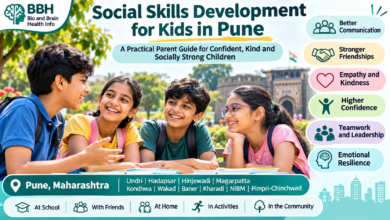
Helping Shy Children Build Confidence in Pune
Shy Children in Pune: Build Confidence


helping shy children build confidence in Pune begins with recognising that quietness is not a flaw. Children aged 8–15 may need support entering new groups, expressing boundaries or navigating school friendships, yet confidence should not be measured by popularity or loudness. This evidence-informed guide gives Pune parents practical, respectful strategies while distinguishing ordinary shyness from situations that may need professional attention.
Thank you for reading this post, don't forget to subscribe!Understanding Shyness Without Labelling Children
Shyness is a common temperament pattern: some children need more time to feel comfortable with unfamiliar people or situations. It is not automatically a disorder, a sign of weak character or evidence of poor parenting. A child may speak freely at home yet stay quiet in a new classroom. Another may enjoy one close friendship rather than a large group. Neither pattern necessarily requires correction. Confidence is better understood as feeling capable of taking meaningful actions while remaining true to one’s personality. Parents can support a child’s goals without demanding extroversion. Begin by asking where the child feels comfortable, which situations are difficult and what they would like to change. Avoid calling a child “the shy one” in front of relatives. Describe the situation instead: “New groups take time for her.” This leaves room for growth and protects dignity. Consider age, recent school changes, language, sleep, peer experiences and accessibility before deciding that a behaviour reflects a personal deficit.
Helping Shy Children Build Confidence in Pune: First Steps
Start with a safe relationship. Listen without immediately giving instructions, and acknowledge that joining a new group can feel uncomfortable. Then identify one small, child-chosen action, such as greeting a familiar classmate or asking a teacher a question after class. Practise at home if the child agrees. A successful attempt is not necessarily a fluent conversation; it may simply be approaching a situation that previously felt overwhelming. Praise the effort and specific strategy rather than declaring the child “finally normal.” Keep expectations modest and predictable. A child who becomes distressed should not be humiliated or pushed into a public performance. Supportive exposure to manageable situations can be useful, but persistent severe anxiety requires individual professional guidance. Ask the child to rate how comfortable they felt, what helped and whether they want to repeat or adjust the activity. Collaboration is more sustainable than pressure.
Shyness, Introversion and Social Anxiety Are Different
Introversion describes a preference for lower-stimulation environments or smaller groups; shyness involves discomfort or inhibition in social situations. Social anxiety disorder involves significant fear of scrutiny or embarrassment that persists and interferes with functioning. These concepts can overlap but are not interchangeable. A quiet child who enjoys school and friendships may not need intervention. A child who repeatedly avoids school, experiences panic-like distress or cannot speak in important settings may need assessment. Selective mutism is another condition in which a child consistently cannot speak in certain social settings despite speaking elsewhere; it should not be treated as defiance. Only a qualified professional can evaluate these possibilities. Parents should avoid online self-diagnosis and focus on observable impact: missed activities, distress, isolation and changes over time. Medical, communication and developmental factors may also contribute. A child’s voice and experience should guide the next steps.
What Confidence Looks Like at Ages 8–11
School-age children often build confidence by mastering manageable tasks, receiving constructive feedback and developing reliable friendships. For ages eight to eleven, useful opportunities include asking to join a game, choosing a library book, helping plan a family activity or presenting a short idea to a trusted adult. Keep practice specific and playful. Role-play a simple introduction, then let the child choose whether to try it at school. Encourage cooperative games where the goal is shared problem-solving rather than being the loudest participant. If a child has difficulty finding friends, ask whether the setting is welcoming and whether bullying is involved. Avoid comparing siblings. Children differ in communication styles, sensory needs and comfort with groups. An eight-year-old who listens attentively and maintains one close friendship may already demonstrate valuable social skills. The aim is to expand choices, not replace temperament.
Supporting Confidence at Ages 12–15
Early adolescence brings changing peer relationships, privacy needs and increased sensitivity to evaluation. Teenagers may hesitate to speak in class, attend a new activity or express disagreement. Respect their growing autonomy. Ask which situations matter to them rather than choosing goals solely to impress adults. A teenager might practise emailing a teacher, contributing one point in a small discussion or inviting a friend to a shared-interest activity. Discuss boundaries, consent and peer pressure: confidence includes the ability to say no. Avoid posting a teenager’s performance videos or personal struggles online without consent. Social media can intensify comparison, so help them question unrealistic images and claims. Offer choices about where to practise, and make sure expectations do not disrupt sleep or school responsibilities. If anxiety significantly limits attendance, relationships or daily activities, involve a qualified professional rather than escalating pressure.
Building Communication Skills Without Forced Eye Contact
Communication involves listening, asking questions, expressing preferences and understanding context. It does not require constant eye contact, loud speech or instant answers. Some neurodivergent children find eye contact uncomfortable, and cultural norms differ. Practise conversational openings that suit the child: “What did you think of the project?” or “Can I join the next round?” Model active listening by allowing time to answer. Use open-ended questions but avoid turning dinner into an interview. In multilingual Pune families, children may feel more confident in Marathi, Hindi, English or another home language depending on the setting. Hesitation in a newer school language does not necessarily reflect a lack of confidence or developmental difficulty. Encourage expression in familiar languages and ask teachers about supportive classroom opportunities. If communication difficulties persist across languages and settings, consider assessment by an appropriately qualified professional.
Small Group Activities and Friendship Opportunities
A large class or crowded event is not always the best place to start. Some children engage more comfortably in pairs or small groups built around shared interests. Consider supervised art, music, chess, science, reading, theatre or non-competitive physical activities. The quality of facilitation matters more than a programme’s marketing claims. Ask whether adults respond respectfully to quiet children, prevent bullying and offer genuine choices. A child who enjoys drawing may connect more naturally during a collaborative art project than during a public-speaking contest. Invite one trusted friend for a short, low-pressure activity if the child agrees. Afterward, ask what felt enjoyable rather than how many people they impressed. Do not assume paid classes are necessary. Cooperative household tasks and neighbourhood activities can offer practice too. Progress may mean developing one meaningful friendship or communicating a boundary clearly.
Helping Shy Children Build Confidence in Pune Schools
Teachers can support participation without calling children out unexpectedly or embarrassing them. Parents may ask about options such as preparing an answer in advance, contributing in pairs before speaking to a larger group or using written responses when appropriate. These are examples of supportive classroom adjustments, not guarantees of improvement. Discuss any persistent difficulty collaboratively and respectfully. If a child refuses school or becomes distressed before presentations, explore bullying, anxiety, learning challenges, language barriers and other factors. Punishment for being quiet may worsen fear. When possible, allow the child to help decide which teacher or school counsellor they feel comfortable approaching. A school environment that values listening and thoughtful contributions alongside public speaking is more inclusive. Parents should not interpret every quiet classroom moment as a failure; ask whether the child understands lessons, has supportive peers and can request help when needed.
Handling Teasing, Bullying and Exclusion
Sometimes a child is quiet because the environment feels unsafe. Repeated teasing, humiliation, discrimination or exclusion can undermine willingness to participate. Listen carefully and avoid saying “just be brave” when the real problem is bullying. Ask what happened, whether it is repeated and which adults witnessed it. Document relevant incidents and coordinate with school staff when appropriate. Help the child identify trusted adults and safe ways to leave threatening situations. Online bullying may require preserving relevant evidence and using reporting tools. Do not encourage retaliation or blame the child for being targeted. Children who experience discrimination related to language, disability, caste or other identities may need specific protection. Confidence-building activities cannot substitute for a safe environment. If a child is in immediate danger, seek urgent help. A respectful response communicates that the child deserves safety without needing to change their personality.
Pune Neighbourhood Choices: Undri, Hadapsar and Hinjewadi
Parents exploring helping shy children build confidence in Pune should evaluate practical access, safety and child preference rather than assuming one neighbourhood offers better development. In Undri, Hadapsar and Hinjewadi, school commutes and caregiver schedules can affect whether a child can attend a group activity consistently. Families in Magarpatta, Kondhwa and Wakad may face different travel patterns. The same applies to Baner, Kharadi, NIBM and Pimpri-Chinchwad. Before enrolling, ask about supervision, accessibility, safeguarding procedures, group size, facilitator qualifications and whether a trial visit is possible. A nearby library or supervised hobby group may be more suitable than a distant, expensive programme. Avoid promising that a particular locality or class will transform confidence. A realistic schedule preserves sleep, schoolwork, family connection and unstructured time. The child should have a meaningful say in selecting activities.
Content Gap: Confidence Includes the Right to Say No
Many confidence guides focus almost exclusively on speaking up, performing and making friends. A more complete approach includes consent, boundaries, self-advocacy and the right to decline unwanted attention. A child who says “I don’t want to hug that person” or “I need a break” may be demonstrating healthy confidence. Parents can model respect by not forcing physical affection, unnecessary public performances or personal disclosures. Practise statements such as “No, thank you,” “I disagree,” and “Can you explain that again?” Celebrate clear communication even when the child remains soft-spoken. This is especially important for children with disabilities, sensory sensitivities or histories of bullying. The BBH framework is a practical educational perspective, not a clinically validated treatment. It encourages families to measure confidence by safety, agency and meaningful participation rather than volume or popularity.
A Four-Step Practice Framework for Parents
First, listen: identify the child’s own goals and what makes a situation difficult. Second, prepare: choose a manageable action and rehearse it without embarrassment. Third, try: offer a safe real-world opportunity with support available. Fourth, reflect: ask what worked, what was uncomfortable and whether to repeat or adjust the task. Do not score the child or make rewards dependent on extroversion. For example, if a child wants to join a chess group, start by visiting the venue, meeting the facilitator, observing a session and then deciding whether to participate. A child who chooses not to join may still have learned something useful. This framework is an original BBH planning aid, not a diagnostic instrument or evidence-proven programme. If fear is severe or persistent, qualified clinicians can advise on evidence-based treatments such as developmentally appropriate cognitive behavioural therapy.
Helping Shy Children Build Confidence in Pune: A 30-Day Plan
During week one, notice situations in which the child already feels comfortable and ask what they want to practise. During week two, rehearse one small interaction at home, perhaps greeting a classmate or asking a question. During week three, arrange one voluntary, low-pressure opportunity in a safe setting. During week four, reflect together and decide whether to repeat, simplify or extend the activity. Keep notes descriptive: “asked the librarian where a book was kept” is more useful than “became confident.” Avoid requiring daily performances or tracking every conversation. If the child becomes increasingly distressed, reduce pressure and seek appropriate support. This plan is for family reflection, not a substitute for treatment or an assessment. Meaningful progress may involve a stronger friendship, clearer boundaries or greater comfort seeking help—not becoming the loudest person in the room.
When to Seek Professional Guidance
Seek advice from a paediatrician or appropriately qualified mental-health professional when fear of social situations is persistent, causes significant distress or interferes with school attendance, learning, friendships or daily life. Consider professional assessment if a child consistently cannot speak in particular settings, experiences frequent panic symptoms, withdraws suddenly or reports serious bullying. A clinician can consider social anxiety, selective mutism, communication differences, neurodevelopmental factors and environmental stressors. Avoid diagnosing based on a single checklist. Bring concrete observations, school feedback and the child’s own perspective. For immediate threats of self-harm or other serious danger, seek emergency assistance. Treatment decisions should be individualised and respectful; no blog, workshop or personality-development class can guarantee results.
Frequently Asked Questions
Is shyness a problem that must be fixed?
No. Shyness can be a normal temperament. Support is most important when the child wants help or experiences significant distress or impairment.
Should I force a shy child to speak in public?
No. Humiliation and coercion can increase distress. Offer preparation, manageable opportunities and supportive choices.
Can shy children become good leaders?
Yes. Leadership can involve listening, thoughtful decisions, collaboration and integrity, not only public speaking.
Are confidence classes necessary?
No. Everyday relationships, supportive schools and interest-based activities can offer meaningful opportunities. Some children need tailored professional support.
What if my child is shy only at school?
Explore the school context, language, peer relationships and anxiety. Persistent inability to speak in specific settings warrants professional assessment.
BBH Parent Resources and Internal Links
BBH publishes educational information for Pune families. BBH Young Minds is exploring possible future activities, but no venues, dates, staff, registration or services are confirmed. For general educational enquiries and future updates, email info@bioandbrainhealthinfo.com; please do not email sensitive information about a child.
Main menu: Relationship · Submenu: Children · BBH Support Resources
Related BBH articles
- Parenting with a Narcissist: Protecting Children
- Father’s Respect for Mother in Parenting
- How to Build Self-Esteem After Attachment Wounds
- Characteristics of Narcissistic Parenting
- Narcissistic Parent and Child Impact
These are complementary articles about family relationships and emotional safety, not proof that a specific confidence-building exercise is effective.
Research Sources and Educational Disclaimer
Authoritative starting points for further reading include American Academy of Pediatrics: HealthyChildren, NIMH: Social Anxiety Disorder, NHS: Anxiety in Children, UNICEF Parenting, and ASHA: Selective Mutism. These sources inform broad principles; they do not validate BBH’s proposed four-step or 30-day planning tools. No clinical review of this article is claimed.