Walking After Meals and Blood Sugar
Does Walking After Meals Lower Sugar?

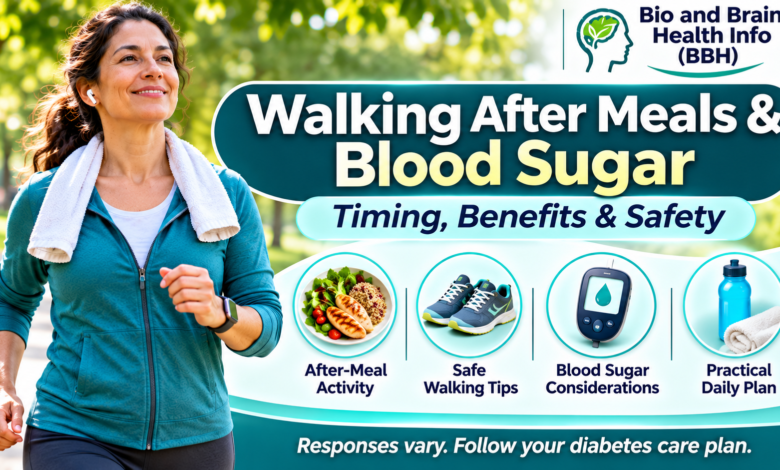
Many people wonder whether walking after meals and blood sugar changes are connected. Research suggests that a manageable walk following food can help reduce the immediate glucose rise for some adults, including people with type 2 diabetes. The effect is not automatic, and someone using insulin may face different safety risks from someone who is not taking glucose-lowering medicine.
Thank you for reading this post, don't forget to subscribe!This evidence-based BBH guide prioritizes the United States while explaining relevant advice from the United Kingdom, Australia and Canada. It answers questions about timing, duration, monitoring, safety and real-world barriers. It also distinguishes a short-term glucose improvement from proven long-term health outcomes.
Related BBH reading: Exercise and Blood Sugar: Safety Tips.
How Does Walking After Eating Affect Blood Glucose?
Once a meal is digested, glucose enters the bloodstream. Contracting leg muscles need energy and can take up glucose through mechanisms that work partly independently of insulin. A walk can therefore help limit the rise after eating, especially when it replaces sitting. Your liver, insulin action and medication timing continue influencing the glucose curve throughout the same period.
A glucose graph is not an instant score for a workout. Some people see a smaller peak, while others notice a shorter high period or very little measurable difference. Carbohydrate quantity, the food’s fat and fiber content, pace, stress and underlying glucose regulation all matter. Walking supports metabolic health but does not erase a meal or replace prescribed care.
Walking After Meals and Blood Sugar: What Studies Actually Show
What Does the Research Say About Post-Meal Walking?
A 2023 systematic review and meta-analysis compared exercise after eating with exercise before eating and with remaining inactive. It found that activity after food generally reduced the immediate post-meal glucose rise more than either comparison. The included experiments were relatively short, so the results should not be overstated as proof of improved long-term A1C or fewer diabetes complications.
A 2026 meta-analysis of crossover studies in adults with type 2 diabetes found modest improvements in continuous glucose monitoring outcomes after post-meal activity. Timing analyses were exploratory and did not show statistically convincing differences between timing subgroups. A separate 2026 review of middle-aged and older adults suggested benefits of a 30–90-minute start for certain measures, but not a single superior window on every outcome.
When Is the Best Time to Walk After a Meal?
A practical option is to begin a gentle walk soon after finishing eating, provided you feel comfortable and it is medically safe. There is no universally proven minute at which the walk must start. For people who develop stomach discomfort immediately after a large meal, starting a little later may be more realistic than forcing a brisk walk.
The best time is also the time you can repeat: after breakfast before work, after lunch during a break, or after dinner with a family member. Some studies favor earlier activity for immediate glucose excursions; other evidence shows that later starts can be beneficial too. Medication, individual glucose patterns and symptoms are more useful than a rigid timer.
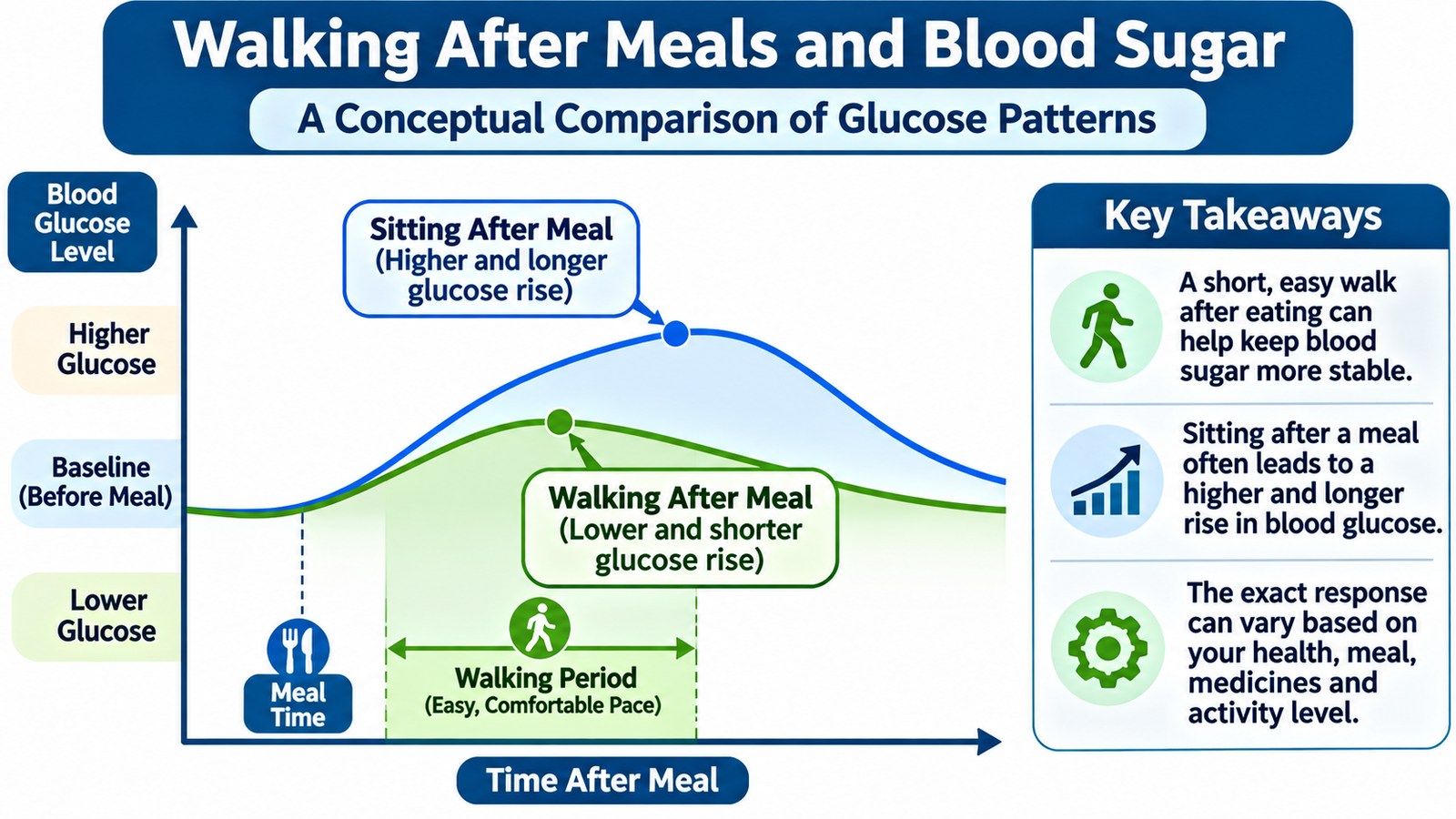
When considering walking after meals and blood sugar, remember that the evidence supports manageable activity rather than a guaranteed number of minutes for every person.
Is Five, Ten or Fifteen Minutes Enough?
Short bouts are a reasonable starting point for people who are inactive, older, busy or recovering fitness. Diabetes Canada advises that light walking for about 10–15 minutes after eating may help reduce a glucose rise. A five-minute stroll still replaces sitting and may serve as a stepping stone, but no short duration guarantees a specific glucose reduction.
Build gradually if activity feels safe. Someone who can comfortably walk longer may choose 15–20 minutes, while a person with joint pain or limited mobility may benefit from shorter intervals. Total movement throughout the day matters, but an additional meal walk should not create exhaustion, foot injury or low glucose.
| Starting option | Potential advantage | Limitations |
|---|---|---|
| 5-minute comfortable stroll | Accessible introduction; replaces sitting | May not produce a measurable glucose change |
| 10–15-minute light walk | Practical window supported by diabetes education resources | Requires low-glucose precautions with certain medicines |
| 15–20-minute walk | More movement for a person who tolerates it | Not necessary or safe for everyone |
| Brief indoor movement breaks | Alternative when weather or time limits walking | Evidence varies by activity type |
Easy Walking or Brisk Walking: Which Is Better?
An easy conversational pace is often an accessible choice after meals. Brisk walking may use more energy but also adds effort, and the glucose response is individualized. You do not need to sweat heavily for the movement to be worthwhile. The choice depends on fitness, weather, digestive comfort and any complications that limit safe exercise.
If brisk walking causes breathlessness, unusual dizziness, chest pressure or severe pain, stop and seek appropriate assessment. More intensity is not automatically a better response to a high reading. People starting from low activity should prioritize regularity and comfort before trying to reach an ambitious step goal.
Related BBH reading: Blood Sugar Spikes After Meals: Causes.
Should You Walk After Breakfast, Lunch or Dinner?
Different meals may produce different glucose curves. Breakfast can interact with morning hormones and the dawn phenomenon; lunch may occur during an otherwise sedentary workday; dinner can be followed by long periods of sitting. A short walk after whichever meal is most convenient is preferable to doing nothing because the schedule is imperfect.
If you use a CGM or clinician-recommended finger-stick schedule, compare similar meals across several days. One walk might appear helpful because of smaller carbohydrate portions or different medicine timing. Avoid claiming that dinner walks always outperform breakfast walks, since the evidence varies by study population and measured outcome.
Why Meal Composition Still Matters
Rice, bread, potatoes, fruit and other digestible carbohydrates contribute to post-meal glucose. The amount consumed, processing, fiber, and combination with protein and fat change how quickly carbohydrate is absorbed. Fat-rich meals sometimes create a later glucose rise, especially in insulin-treated diabetes.
A walk should complement balanced nutrition, not justify skipping diabetes education or increasing portions without regard to carbohydrate needs. The CDC plate method, suitable food portions and regular meal planning can be used alongside movement. A dietitian can help adapt this to familiar US, South Asian or other cultural meals.
Post-Meal Walking for Type 2 Diabetes and Prediabetes
For many adults with type 2 diabetes, regular walking supports insulin sensitivity and cardiovascular health. Movement soon after meals can help reduce post-meal elevations in some circumstances, but individual treatment depends on overall patterns, A1C, kidney and heart health, and medications. A person with prediabetes may also benefit from walking as one part of broader lifestyle change.
It is important to distinguish an acute glucose benefit from a claim of remission. Remission cannot be established from a few good readings, and walking alone is not a proven cure. Long-term benefits require an achievable routine and evidence-based medical care where indicated.
Walking After Meals and Blood Sugar in Insulin-Treated Diabetes
Walking After Meals With Type 1 Diabetes
People with type 1 diabetes need insulin even when they are physically active. Walking can lower glucose while rapid-acting meal insulin is still working, making unexpected hypoglycemia possible. The same session may have different outcomes depending on recent insulin, carbohydrate intake, exercise history and starting glucose.
An insulin and activity plan should be individualized with the diabetes team. Do not independently turn off essential basal insulin, skip insulin or make large corrective doses solely because of a CGM arrow. Carry an appropriate fast-acting carbohydrate when the care plan indicates and know how to respond to a low.
Medication-Related Hypoglycemia Risks
Insulin and medicines that stimulate insulin release, including sulfonylureas, can cause glucose to fall too low during or following activity. Metformin alone usually has a much lower risk of hypoglycemia, although other health and medicine considerations still matter. Meals, alcohol, kidney function and prior exercise may change individual risk.
People who take SGLT2 inhibitors should follow sick-day, dehydration and ketoacidosis precautions, particularly during illness or fasting. A five-to-ten-minute stroll is not a reason to improvise a medication change. Discuss repeated lows or highs with the prescriber instead of changing doses based on a blog article.
Related BBH reading: Time in Range: What Your CGM Shows.
How to Check Whether a Walk Helped
If glucose monitoring is appropriate for your treatment, note the meal start, food portion, walk start, duration and how you felt. ADA guidance commonly discusses post-meal checks one to two hours from the beginning of the meal, though individualized testing schedules differ. Comparing a few similar days is more informative than reacting to one reading.
CGM values come from interstitial fluid and may lag behind capillary blood glucose during rapid movement-related changes. A rise or fall on a graph does not prove that a walk caused it. Follow the device manufacturer’s finger-stick confirmation directions when symptoms and readings disagree, particularly for a suspected low.
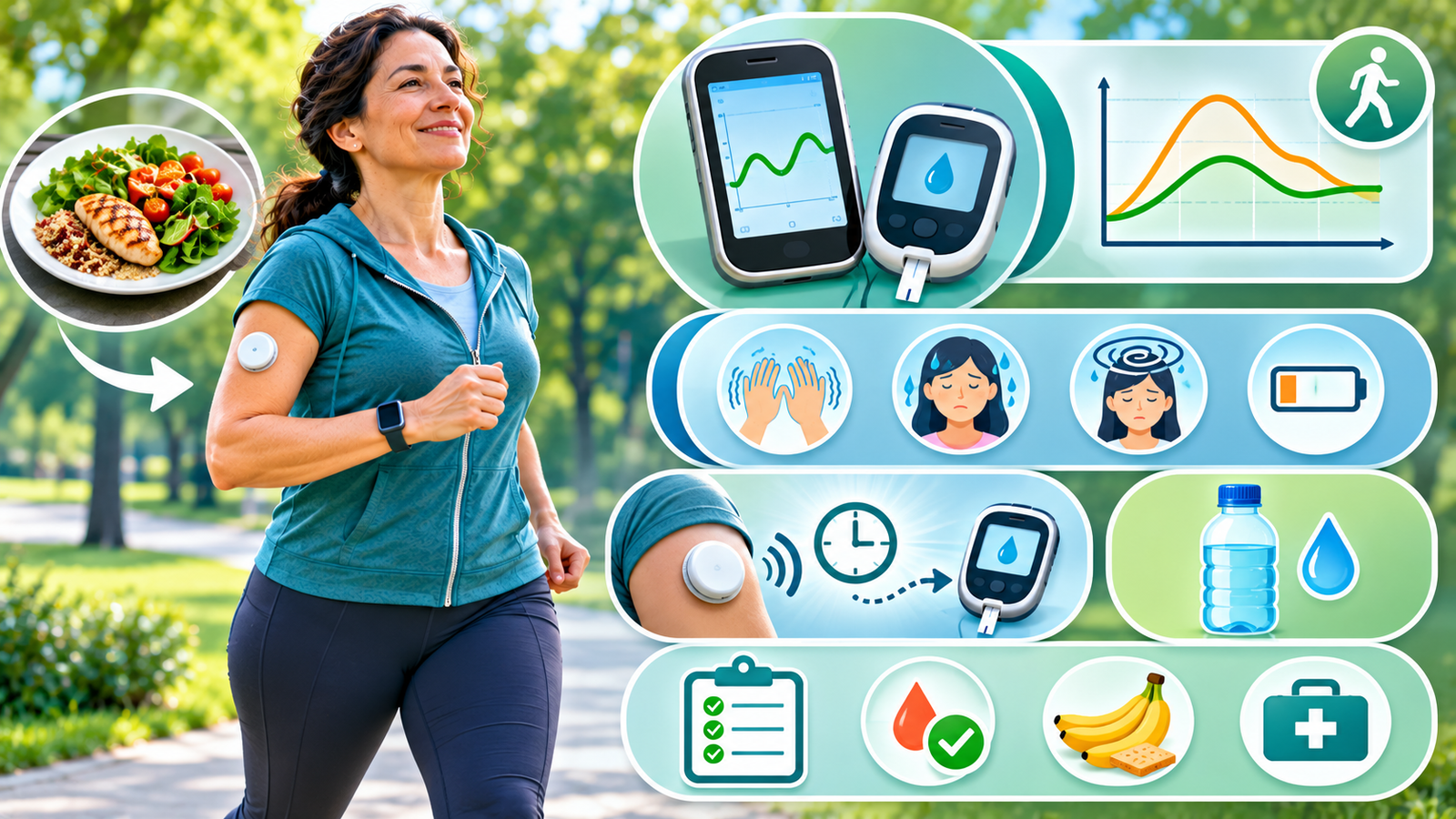
A useful way to evaluate walking after meals and blood sugar is to compare several ordinary days, without assuming every change came from the walk.
Walking Versus Sitting After Meals: A Practical Comparison
Sitting after meals is not automatically dangerous, but prolonged sedentary time can be replaced by brief movement when health allows. A 2026 systematic review and meta-analysis of short activity breaks found improvements in post-meal glucose and insulin responses compared with uninterrupted sitting; walking breaks were among the strongest studied options.
For office workers or people with limited time, a short loop through a corridor or a few manageable movement breaks can be useful. The comparison is not about proving superiority over every other form of activity. Regular cycling, resistance training, physiotherapy and household movement also contribute to overall health.
What if Walking Immediately After Eating Feels Uncomfortable?
Some people feel reflux, nausea, bloating or abdominal discomfort after eating. Gentle movement may be tolerated, but avoid forcing fast walking or a strenuous workout when you feel unwell. Large meals, reflux disorders and delayed gastric emptying can change what feels comfortable. Recurring nausea, early fullness or vomiting deserves clinical discussion, especially if diabetic gastroparesis is possible.
A slower start, a shorter walk or a later session can preserve consistency. A rigid rule such as “you must start within five minutes” is neither necessary nor suitable for everyone. Persistent chest discomfort or breathing difficulty is not ordinary digestive discomfort and needs medical assessment.
Foot, Neuropathy, Balance and Joint Safety
Diabetes-related neuropathy may reduce awareness of foot pressure, blisters or minor injuries. Check footwear and feet as advised, particularly if you have reduced protective sensation or a prior ulcer. An active foot wound or severe joint problem may call for adapted or non-weight-bearing exercise until a clinician recommends otherwise.
Use supportive shoes and select a flat, well-lit route. Older people or people with balance concerns may prefer walking indoors with assistance or supervised rehabilitation. Safe movement is better than achieving a step count at the expense of falls or injury.
Heart Conditions, Heat and Hydration Precautions
People with cardiovascular disease, severe breathlessness, new chest pain or fainting symptoms should seek appropriate medical evaluation. During hot weather, dehydration and heat stress can complicate activity, particularly with older age, kidney disease or certain medicines. Carry suitable water and follow any personal fluid restrictions.
Walking can be beneficial for blood pressure and long-term cardiovascular fitness, but it should never be used to treat severe chest symptoms or a suspected acute glucose emergency. Adapt pace, distance and timing to the weather, personal condition and available medical guidance.
When High Glucose or Ketones Make Walking Unsafe
A high reading is not always a reason to “walk it off.” For people at risk of insulin deficiency, especially type 1 diabetes and some people using SGLT2 inhibitors, suspected ketoacidosis or significant ketones require medical guidance rather than exercise. Physical exertion during an insulin-deficient state can make the problem worse.
Vomiting, abdominal pain, unusual deep breathing, confusion, severe dehydration or persistent illness requires urgent assessment. Ketoacidosis can sometimes occur without a very high glucose reading in people using SGLT2 inhibitors. Follow your own sick-day and ketone-testing plan rather than generic online thresholds.
Related BBH reading: Why Does Blood Sugar Fluctuate?.
Walking After Meals and Blood Sugar During Emotional Stress
Stress, Financial Problems and Emotional Barriers to Walking
Financial pressure, relationship conflict, depression, anxiety, grief and sleep problems may make even a brief walk difficult. Stress hormones can also change glucose, and disturbed routines can affect meals, medication and physical activity. A nonjudgmental plan helps more than treating exercise as punishment for a reading.
A short walk with a trusted person, gentle breathing before setting out, or a calm indoor route can be supportive. Meditation and optional spiritual practices may help coping, but they are not replacements for glucose monitoring, necessary medicines or professional mental-health care. When daily functioning or diabetes self-care becomes difficult, seek additional support.
What if You Cannot Walk After Eating?
For a person with disability, arthritis, an active foot ulcer or unsafe surroundings, alternative movement may be more appropriate: seated arm movements, gentle chair exercise, light household tasks or individualized physiotherapy. The evidence for each alternative and its immediate glucose effect is not identical to walking studies.
The purpose is to reduce prolonged inactivity within your own limits. You do not need to risk a fall, skip work obligations or ignore pain to follow an internet trend. Discuss accessible exercise options with a diabetes educator or rehabilitation professional.
Related BBH reading: Managing Blood Sugar: Daily Habits.
For lasting success with walking after meals and blood sugar, start with one realistic session, check personal safety needs and build a routine that works with family and work responsibilities.
A Realistic Seven-Day Post-Meal Walking Plan
Begin by choosing one ordinary meal rather than committing to three sessions every day. Record the time, duration, comfort and any glucose reading already recommended in your care plan. Continue for a week and notice whether the activity was manageable, not only whether it produced a lower number.
A weekly plan can be adapted around work, family care, weather, medication needs and emotional health. Some days may call for rest or indoor movement. Progress can mean greater consistency, reduced sitting or better stamina even when a CGM chart changes very little.
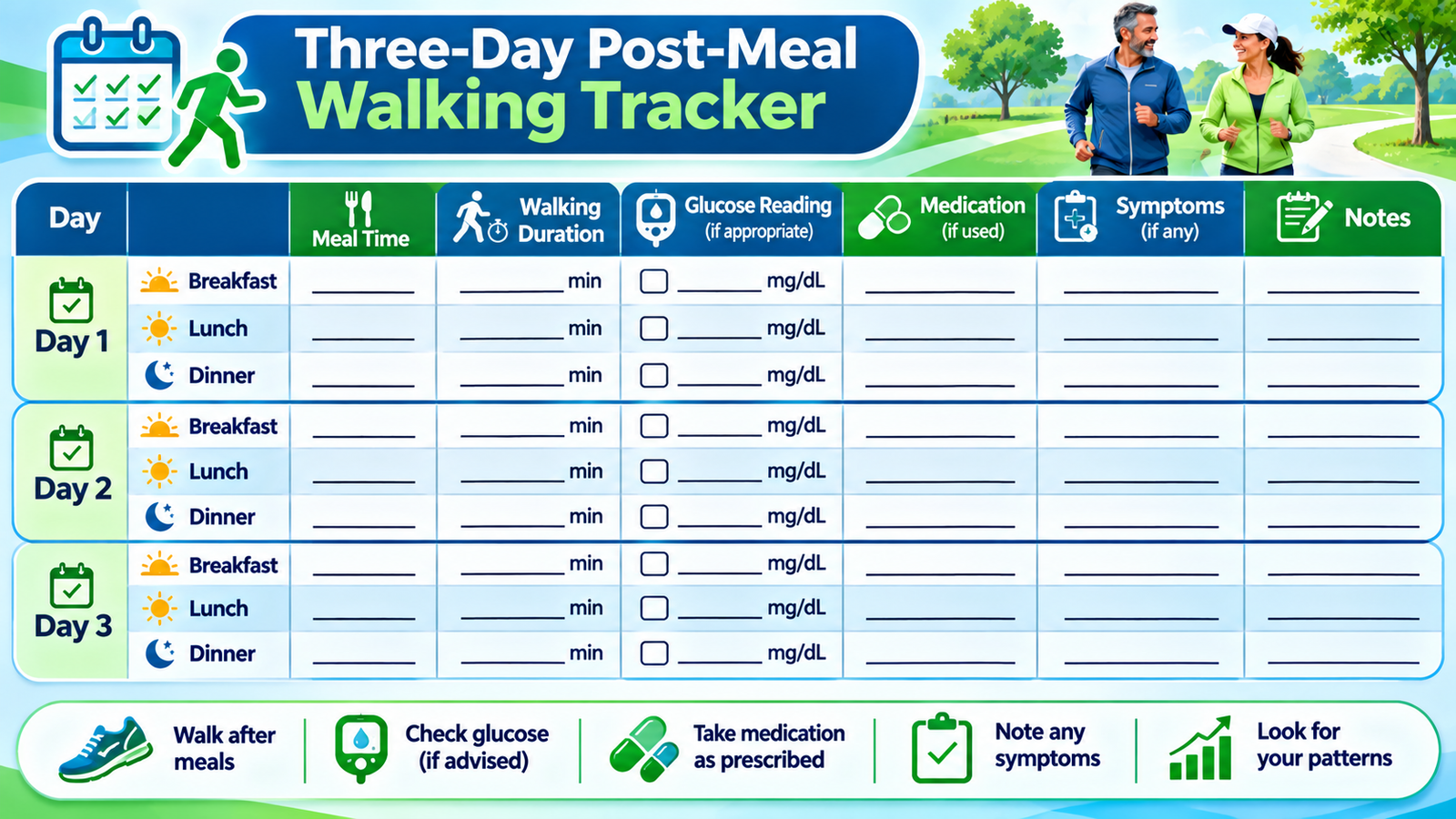
Three-Day Food, Walk and Glucose Pattern Tracker
For a practical comparison, record the time you started a meal, what you ate, when the walk began, minutes walked, medication timing if relevant, glucose readings if prescribed, and symptoms. Add notes on sleep, emotional stress or unusual illness. These details help distinguish exercise effects from other reasons a reading changed.
The worksheet is an educational conversation aid, not a research trial or mandate for extra testing. Repeated low glucose, unexpected high patterns or poor exercise tolerance requires a clinician’s review; do not adjust insulin based on a single tracked day.
| Day | Meal and start time | Walk start / minutes | Glucose / symptoms if monitoring advised | Other factors |
|---|---|---|---|---|
| Day 1 | Breakfast / lunch / dinner | Sleep, medicines, stress | ||
| Day 2 | Breakfast / lunch / dinner | Food portions, illness | ||
| Day 3 | Breakfast / lunch / dinner | Similar-meal comparisons |
US, UK, Australia and Canada: What Guidance Says
In the United States, ADA 2026 guidance emphasizes regular activity, reducing sedentary behavior and individualized hypoglycemia precautions. Diabetes Canada specifically discusses light walking for around 10–15 minutes after meals. Diabetes UK highlights the need for glucose checks around walking for people with type 1 diabetes or glucose-lowering medicines such as sulfonylureas.
The Australian NDSS provides type 1 exercise guidance about pre-, during- and post-activity monitoring and consulting clinicians about meal insulin changes. US glucose results are usually shown as mg/dL, whereas UK, Australian and Canadian resources often use mmol/L. These differences should be respected rather than copying one country’s medication advice directly to another.
Walking After Meals and Blood Sugar: Common Questions
Frequently Asked Questions
Is ten minutes enough? It can be a useful starting point; benefits vary. Should I walk immediately? Soon after eating may help, but there is no mandatory start minute. Should I walk after every meal? Not necessarily—choose a sustainable pattern. Does a short walk cancel sugar or carbohydrates? No, it only influences glucose use as part of a broader care plan.
Can my blood sugar go too low? Yes, especially with insulin or sulfonylureas. Why did my CGM barely change? Individual response, sensor lag and meal composition can affect the result. Can I walk with high blood sugar? Not when ketones, illness or serious symptoms make exercise unsafe. Is post-meal walking a cure? No. It is a supportive habit, not a substitute for evidence-based diabetes treatment.
Five Related BBH Articles and Support
Medical References and Disclaimer
- Engeroff et al. 2023: Systematic Review of Exercise Timing and Post-Meal Glucose
- 2026 Meta-Analysis: Acute Postprandial Exercise and CGM Outcomes
- 2026 Review: Timing of Post-Meal Exercise in Type 2 Diabetes
- ADA Standards of Care 2026: Physical Activity and Well-being
- Diabetes Canada: Preventing Blood Sugar Spikes
- Diabetes UK: Walking with Diabetes
- Australian NDSS: Physical Activity with Type 1 Diabetes
- 2026 Systematic Review: Activity Breaks Versus Sitting