Managing Blood Sugar: Daily Habits
Daily Habits for Better Blood Sugar Control

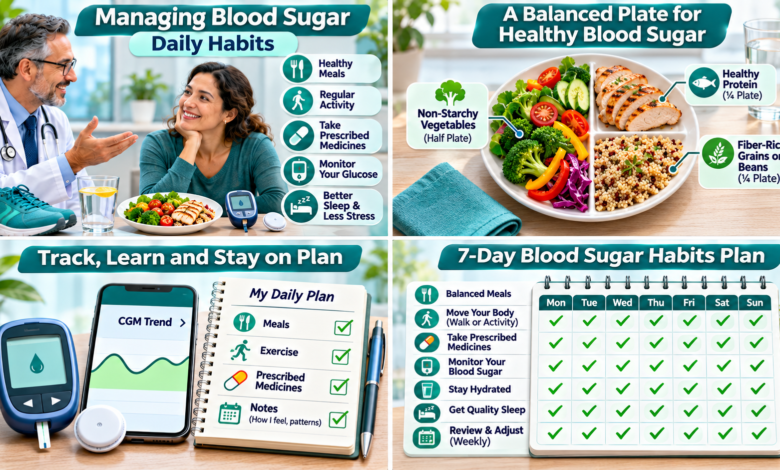
Managing blood sugar involves more than eliminating sugar from food. Everyday choices—meals, movement, prescribed treatment, glucose monitoring, sleep, and how you respond to illness—work together to influence glucose patterns. There is no single routine that is right for every person with diabetes, and daily care should fit medical needs, culture, work, finances, and personal preferences.
Thank you for reading this post, don't forget to subscribe!This research-based guide provides practical daily diabetes habits for people with type 2 diabetes and other adults who want to understand glucose management. The United States is the primary audience, with relevant UK, Australian, and Canadian considerations. It also addresses gaps often missed in quick-tip articles: medication-associated low glucose, shift work, sick days, hydration, CGM limitations, mental well-being, and what to do when healthy habits are not enough.
Managing Blood Sugar: Daily Habits That Make a Difference
The ADA’s 2026 Standards of Care emphasize personalized education, nutrition, movement, sleep and behavioral support in addition to medication. The CDC similarly recommends diabetes self-management education and support, which can help people turn medical advice into routines they can maintain.
A single high reading does not erase weeks of progress. Glucose can change because of infection, stress, hormones, medicines, sleep and activity. Understanding patterns is more useful than blaming yourself or trying to correct every reading aggressively.
Related BBH reading: Diabetes Treatment Goals: Individualized Care.
Know Your Blood Sugar Targets Before Changing Habits
Before making a major lifestyle change, understand what your own clinician considers an appropriate fasting, premeal, after-meal and A1C range. For many nonpregnant US adults, general reference targets include 80–130 mg/dL before meals and below 180 mg/dL around one to two hours after the start of a meal. These figures are not prescriptions and may differ based on hypoglycemia risk and other conditions.
The long-term A1C reference often used for many adults is below 7%, but some people benefit from different goals. Pregnancy, older age with frailty, kidney disease, frequent lows and the type of medicine used can all change what is safe.
Why personal targets matter
People taking insulin or sulfonylureas must consider low blood sugar when adding exercise, missing meals or modifying carbohydrates. Others may focus more on after-meal patterns or protecting the heart and kidneys. A written care plan identifies when to call the clinic rather than guessing from generic online charts.
Managing Blood Sugar With Consistent Meals
Regular meal patterns can make it easier to understand how food, medicines and activity affect glucose. A predictable routine does not require eating at identical times every day; it means anticipating long gaps, changes in work schedules and the possibility of medication-related low glucose.
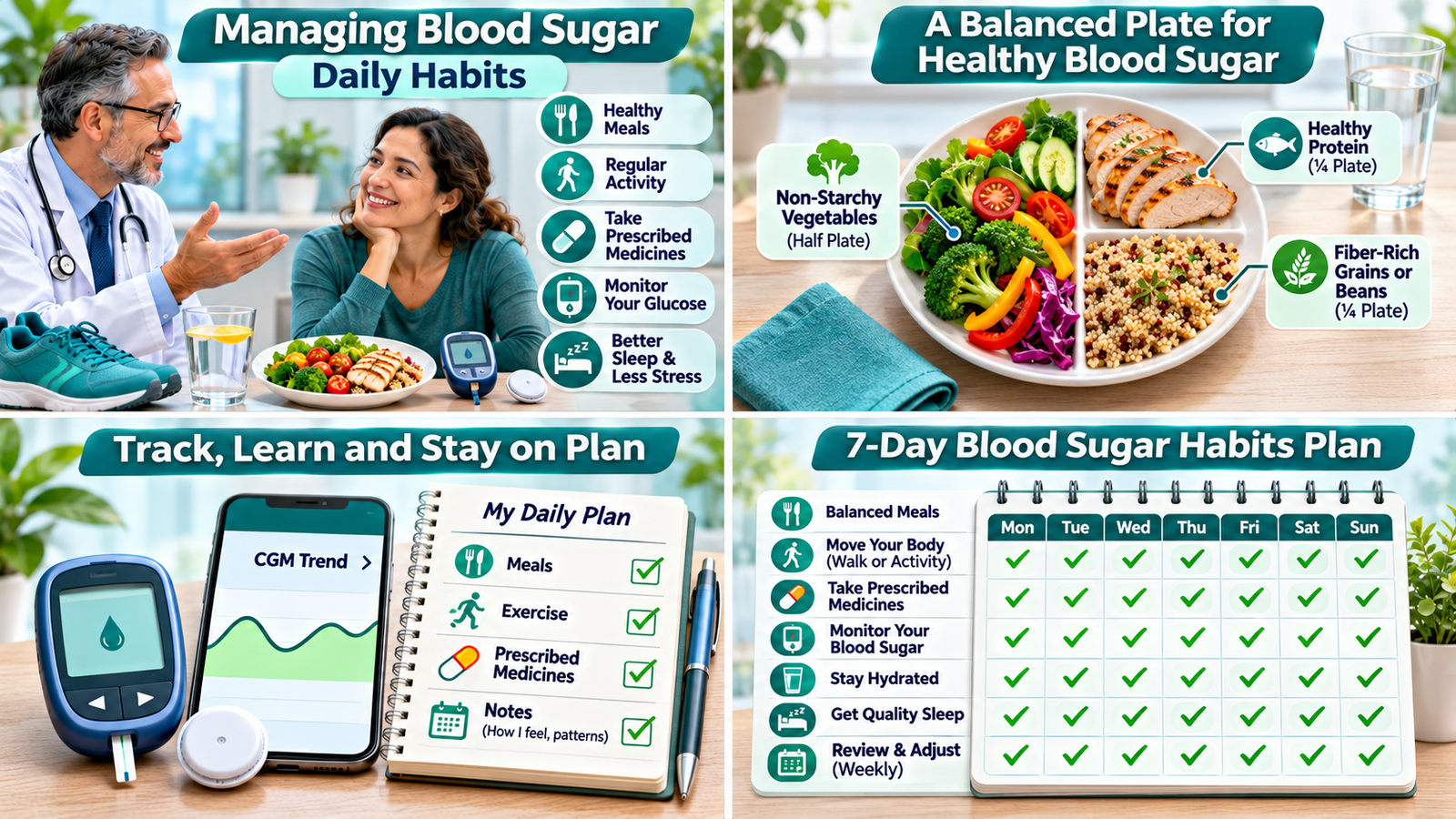
The CDC diabetes plate method is a simple starting point for many adults: approximately half the plate nonstarchy vegetables, one-quarter protein and one-quarter carbohydrate foods. This is a planning tool, not a fixed prescription, and needs adaptation for appetite, allergies, culture, pregnancy and medical nutrition needs.
What if you prefer two meals or work late?
Discuss a flexible pattern with a dietitian if your routine is unusual. Some people use time-restricted eating successfully, but fasting can be risky with insulin, sulfonylureas, pregnancy, eating-disorder history or specific illnesses. Do not skip meals to force a glucose number lower.
Related BBH reading: Carb Counting for Diabetes: Beginner Guide.
Carbohydrate Awareness Without Extreme Restriction
Carbohydrates include grains, bread, rice, potatoes, fruit, milk, beans, sweets and many drinks. They are not all nutritionally equivalent: fiber-rich, minimally processed choices tend to offer additional nutrients and satiety. The amount eaten, preparation and combination with other foods influence after-meal glucose.
Reading food labels and learning common portions may be helpful. People using mealtime insulin might require formal carbohydrate-counting education, while someone not using insulin may manage well with a plate method and consistent portions. A dietitian can tailor either approach to a person’s goals.
Does every person need to avoid rice or fruit?
No. Rice and fruit can be part of an appropriate diabetes eating plan. Consider portions, whole-food quality, protein or fiber alongside them, and how your own glucose responds when monitoring is indicated. Restrictive food rules can become counterproductive when they reduce dietary variety or increase anxiety.
The best habit is to notice recurring patterns rather than judge a meal as a failure. If a repeated food choice seems to produce high glucose, discuss portions and alternatives before making drastic changes.
Related BBH reading: Mediterranean Diet and Type 2 Diabetes.
Build Meals Around Fiber, Protein and Healthy Fats
Vegetables, legumes, whole grains, nuts and seeds can increase dietary fiber, while appropriate proteins help maintain muscle and support satiety. Unsaturated fats from foods such as olive oil, fish and certain nuts can support cardiovascular health. A Mediterranean-style pattern is one evidence-supported approach, but other culturally suitable whole-food patterns can work.
The ADA’s 2026 nutrition guidance emphasizes adequate nutrients and individualized medical nutrition therapy. People with advanced kidney disease, food allergies, swallowing problems or specific gastrointestinal conditions may need different protein, potassium or fiber guidance.
Is one superfood enough?
No single ingredient replaces a balanced eating pattern. Beans, oats, vegetables and fruit each contribute different nutrients, but the overall pattern and sustainable portions are more useful than buying expensive “blood-sugar miracle” foods.
Choose Drinks That Fit Your Glucose Plan
Sugar-sweetened sodas, sweetened teas, many energy drinks and some juices can contribute substantial rapidly absorbed carbohydrate without the same fullness as a solid meal. Water and other unsweetened drinks are generally practical alternatives for daily hydration.
Juice is not automatically equivalent to whole fruit. It can raise glucose quickly and is sometimes intentionally used to treat hypoglycemia, which is a different situation from choosing a routine beverage. Sugar substitutes can be considered in context, but drinking only “diet” products does not replace healthy eating.
Alcohol may increase the risk of delayed hypoglycemia, especially in people using insulin or insulin-releasing medicines. Ask a clinician about alcohol in your situation; do not drink on an empty stomach when you have been advised this creates risk.
Can Detox Drinks Clean Stored Sugar From the Body?
A drink labeled “sugar detox” cannot be relied upon to flush glucose or glycogen out of the body. No convincing clinical evidence shows that lemon water, cucumber water, herbal detox teas, juice cleanses or vinegar drinks remove stored sugar or cure diabetes. Glucose is managed through hormones and the coordinated actions of the liver, muscles and other tissues—not through a special cleanse.
What can a healthy drink actually do?
Plain water can help maintain hydration and is usually a better daily replacement for soda, sugar-sweetened tea, energy drinks and juice drinks. Unsweetened lemon, mint or cucumber water can be an enjoyable option, but the benefit mainly comes from hydration and avoiding added sugar rather than a cleansing action. People with fluid restrictions should follow their clinician’s advice.
Why sugar-cleansing claims can be risky
Commercial detox teas and concentrated supplements may have ingredients, side effects or interactions that are poorly studied. Prolonged juice-only diets or fasting can lead to nutritional problems, dehydration, hypoglycemia or electrolyte disturbance; people taking insulin or sulfonylureas are especially vulnerable to low glucose. SGLT2 medicines require additional sick-day and fasting precautions because of ketoacidosis risk.
If home readings are consistently high, the safer response is to review meals, medications, movement, illness and glucose monitoring with the diabetes team. No drink can replace essential insulin or clinical treatment. Choose water as a beverage, balanced meals for nourishment and safe physical activity to help muscles use glucose.
Managing Blood Sugar With Walking and Movement
Regular physical activity supports insulin sensitivity, cardiovascular fitness, sleep and well-being. The ADA commonly recommends progressing toward at least 150 minutes per week of moderate-to-vigorous aerobic activity for many adults, spread across multiple days, as medically appropriate. This target should be adapted for disability, fitness, cardiovascular disease and prior activity.
Walking after meals may improve glucose patterns for some people. A short, comfortable walk is a realistic starting point for someone who has been inactive, but it is not necessary to exercise after every meal. Gradual progress and enjoyment are more sustainable than an extreme challenge.
Safety when taking insulin
Exercise can lower glucose during or after activity and sometimes cause delayed hypoglycemia. People taking insulin or sulfonylureas need a clinician-approved plan for glucose checks, carrying rapid carbohydrate and recognizing lows. Anyone with chest pain, marked breathlessness or significant complications should seek individualized exercise guidance.
How Walking Helps Muscles Use Blood Glucose and Glycogen
Reducing excess added sugar is useful, but there is another important part of daily diabetes management: active muscles use glucose for energy. After a meal, some glucose is used immediately and some is stored in the liver and muscles as glycogen. The liver can release glucose to help maintain blood levels; muscle glycogen mainly fuels that muscle’s own work.
Muscle contractions during walking, cycling and resistance exercises increase glucose uptake through mechanisms partly independent of insulin. Regular activity can also improve insulin sensitivity. This helps explain why healthy eating and movement work together rather than competing as separate solutions. Walking does not literally wash sugar from the body, and the liver continues regulating glucose throughout the day.
Does walking burn stored sugar?
Working muscles use different mixtures of blood glucose, muscle glycogen and fat, depending on intensity, duration, fitness and when you last ate. A single walk cannot be promised to burn a fixed quantity of stored sugar. A gradual routine is generally more meaningful than trying to compensate for one meal with intense exercise.
A gentle daily walking plan
If walking is medically safe for you, consider starting with a comfortable 5–10-minute walk after one meal, or several brief walks during the day. Increase duration gradually as tolerated. The ADA supports aerobic, resistance, flexibility and balance activity, adapted for individual abilities. People using insulin or sulfonylureas need an individualized plan for hypoglycemia, and people with active foot disease, chest symptoms or serious complications may need modified activity.
Strengthening muscles with resistance bands, appropriate bodyweight exercises or supervised weights can also support glucose control and preserve muscle mass. For many adults, a long-term goal includes about 150 minutes weekly of suitable aerobic activity, but a modest safe increase from baseline is a worthwhile first step.
Add Resistance Exercise and Break Up Sitting
Muscle is an important site for glucose uptake, so strengthening activities complement walking and other aerobic exercise. Resistance bands, suitable bodyweight activities or supervised weights can help preserve muscle and improve physical function. Start at a safe level and progress with professional help when appropriate.
Long periods of sitting can be interrupted with short opportunities to stand or move. This can be useful for office workers and people with sedentary routines. The goal is not an arbitrary step total but reducing inactivity and increasing tolerable movement.
People with neuropathy, foot ulcers, balance limitations, retinopathy or arthritis may need exercise adaptations. A safer activity performed regularly is preferable to a strenuous plan that cannot be sustained.
Use Diabetes Medicines Consistently and Safely
Prescribed medicines may be an essential part of glucose management even when someone eats well and exercises. Metformin, GLP-1 receptor agonists, SGLT2 inhibitors, insulin and other therapies work differently. Some also protect the heart or kidneys in selected patients. A medicine should not be stopped simply because a few readings look better.
Use reminders, a written medication list or pill organizer when appropriate. Ensure that combination tablets and insulin formulations are correctly identified. If you miss a dose, follow the product-specific instructions or contact a pharmacist; do not automatically double the next one.
What if medicine costs are too high?
Medication affordability is a clinical safety issue. Explain insurance, refill and supply problems to your healthcare team before rationing medicines. A licensed pharmacist may help identify appropriate alternatives, but insulin brands and concentrations must never be converted independently.
Related BBH reading: Time in Range: What Your CGM Shows.
Glucose Monitoring: Learn From Patterns, Not One Number
Some adults benefit from finger-stick monitoring, while others use continuous glucose monitoring (CGM). The frequency depends on treatment, hypoglycemia risk, symptoms and clinical goals. Not every adult using only low-hypoglycemia-risk tablets needs the same testing schedule as someone using multiple daily insulin injections.
If using CGM, consider time in range, time below range and how food, activity and sleep affect trends. Sensor values can differ from blood glucose during rapid changes; follow device instructions about confirming readings when symptoms disagree. Keep enough supplies and know whom to call when a device fails.
A brief log can note meals, unusual activity, medication changes, illness and symptoms. A1C reflects longer-term glucose exposure but can conceal frequent lows and highs. Discuss trends with the diabetes team rather than self-adjusting prescription doses from a chart.
Managing Blood Sugar With Better Sleep Habits
Sleep and Daily Rhythm Matter for Glucose
Poor sleep can affect glucose regulation, hunger, stress and the ability to follow a care plan. The CDC notes that sleep loss may make insulin work less efficiently, and the ADA 2026 standards recognize sleep as an important component of diabetes care.
Create a reasonably consistent sleep-and-wake schedule where possible, reduce stimulating activities near bedtime and discuss persistent insomnia or suspected sleep apnea. Heavy snoring, waking while gasping and excessive daytime sleepiness are reasons to seek clinical evaluation.
Shift work and caregiving may limit perfect routines. A flexible plan can focus on sleep quality, predictable medication use and meal preparation instead of demanding fixed hours that are impossible to maintain.
Stress, Emotional Health and Diabetes Distress
Stress hormones and changes in routine can influence glucose, while living with diabetes may itself cause distress. Anxiety about food, frequent testing or complications can make self-care more difficult. These experiences deserve supportive medical attention rather than blame.
Short walks, relaxation, social support, counseling or mindfulness may improve coping and make routines easier to maintain. Such practices supplement, but do not replace, appropriate diabetes medicines and monitoring. People with persistent distress should discuss it with a healthcare professional.
Set a small number of realistic weekly actions, such as preparing one balanced breakfast, scheduling a walk or reviewing glucose trends. Progress tends to be more sustainable when the plan can adapt to busy or difficult days.
Meditation and Spiritual Practices for Long-Term Diabetes Care
Meditation can provide a realistic way to manage diabetes-related stress. Mindful breathing, quiet reflection or a brief body scan may help people notice worry without abandoning healthy routines. Research suggests some benefits for stress and emotional well-being, and selected studies have observed improvements in glycemic measures, but the evidence is mixed or low certainty. Meditation is supportive care, not a proven cure or a substitute for medicines.
A five-minute meditation routine
Sit comfortably, relax your shoulders and place your attention gently on the natural rhythm of breathing. When thoughts arise about food, glucose readings or daily responsibilities, return your focus without criticism. After several minutes, choose one achievable action: taking prescribed medicine, preparing a balanced meal, walking or going to bed on time. There is no need to force a completely empty mind.
Prayer, gratitude, mantra and spirituality
For people who value spiritual practice, prayer, gratitude journaling, chanting, reflective reading or time in a supportive faith community can provide meaning, connection and emotional comfort. Such activities should be optional and respectful of individual beliefs. No prayer, mantra or spiritual ritual has been established as a way to remove glucose from blood, replace insulin or reverse diabetes. Spiritual well-being can complement medical care without turning symptoms into personal or moral failures.
A simple routine might pair a few minutes of reflection with breakfast, a short walk and medication reminders. The goal is consistency and reduced distress—not a promise that meditation directly burns sugar.
Gentle Breathing Exercises to Support Stress Management
Slow breathing may help some people feel calmer, improve attention and manage stress. Small studies have examined breathing practices alongside physical activity and mindfulness in people with type 2 diabetes, but results do not justify claiming that breathing rapidly lowers dangerously high blood sugar. Movement uses muscle energy more directly, while relaxation may make daily self-care easier to sustain.
Try two to five minutes of comfortable breathing
Sit with feet supported or lie comfortably. Inhale gently for about three to four seconds and exhale without strain for about four to six seconds, repeating at a pace that feels natural. There is no required count. Stop if you feel dizzy, breathless or distressed. Avoid forced breath-holding and hyperventilation challenges, particularly with relevant medical conditions.
Try using a breathing pause before meals, after stressful moments or near bedtime. It can work alongside walking, medication, meals and sleep habits, but it should not delay urgent assessment for suspected severe low glucose, ketoacidosis or breathing problems.
Hydration, Hot Weather and Traveling Safely
Hydration matters because illness, heat, high glucose and some medications can increase fluid loss. Water is a suitable everyday choice for many people, though those with heart failure, kidney disease or prescribed fluid restrictions should follow their individual medical advice.
When traveling, pack medicines, monitoring supplies and prescriptions where they remain accessible. Insulin and certain devices require protection from extreme temperatures. Changing time zones can affect insulin and some medication schedules, so ask the care team for a travel plan before leaving.
Avoid assuming one routine suits all climates or activities. On a hot day, symptoms such as dizziness, vomiting or marked weakness may require assessment rather than simply consuming more water.
Create a Sick-Day Plan Before Becoming Ill
Illness can increase glucose even when someone eats less than usual. Fever, infections, vomiting or dehydration may also change how medicines should be managed. Ask for a written, individualized sick-day plan that identifies glucose and ketone monitoring needs and when to seek urgent help.
People who rely on insulin must not independently stop essential basal insulin. SGLT2 medicines can carry a risk of ketoacidosis during severe illness, prolonged fasting or surgery and may need clinician-directed temporary interruption. Other medicines have different considerations, so broad “stop all tablets” advice is unsafe.
Repeated vomiting, deep breathing, significant abdominal pain, confusion or inability to remain hydrated can signal a medical emergency. A normal or moderately elevated glucose reading does not exclude SGLT2-associated euglycemic ketoacidosis.
Related BBH reading: Low Blood Sugar: Symptoms and Treatment.
Daily Habits to Reduce Low Blood Sugar Risk
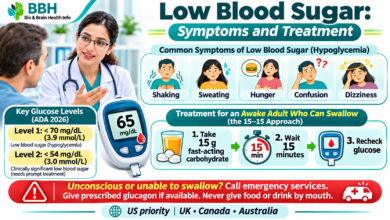
Hypoglycemia is especially relevant to people using insulin or sulfonylureas. Skipping meals, unusually intense activity, alcohol and changing kidney function can increase risk. Warning symptoms may include sweating, shakiness, hunger, palpitations, confusion or changes in behavior.
The person should follow an individualized fast-carbohydrate treatment and rechecking plan. Clinicians often teach the 15-15 approach for appropriate awake adults, but it is not universally applicable. Severe confusion, seizures or unconsciousness require emergency services and prescribed glucagon when available.
Do not give food or drink by mouth to someone who cannot swallow safely. Frequent lows should trigger a medication review, not simply another attempt to “push through” them.
Know When High Blood Sugar Needs Medical Attention
High readings can arise from illness, missed medicine, inadequate treatment, stress, medications such as steroids or progression of diabetes. An unusually high reading should be interpreted in the context of symptoms, the personal care plan and whether follow-up testing is indicated.
Excessive thirst, frequent urination, blurry vision and unexplained weight loss merit a timely medical review. Severe dehydration, vomiting, unusual drowsiness, abdominal pain or rapid breathing require urgent assessment for dangerous hyperglycemic crises.
Avoid repeated unplanned insulin corrections, extreme exercise or prolonged fasting to force glucose down. The safest next step may be speaking with a diabetes professional about why a pattern is recurring.
Make Habits Work With Shifts, Family Life and Fasting
People with rotating shifts, demanding jobs, caregiving responsibilities or unpredictable transport may find standard schedules unrealistic. Plan portable meals, safe snacks when needed, medicine reminders and monitoring around work requirements. A dietitian or diabetes educator can help adapt recommendations to the person’s circumstances.
Religious fasting requires special attention for people who use insulin, sulfonylureas or other medicines with sick-day precautions. Discuss the expected fasting schedule with a clinician in advance; timing and dose changes must be individualized.
Healthy habits are not limited to expensive equipment or premium foods. Walking, frozen vegetables, affordable beans, whole grains and a simple notebook may be useful within an accessible plan.
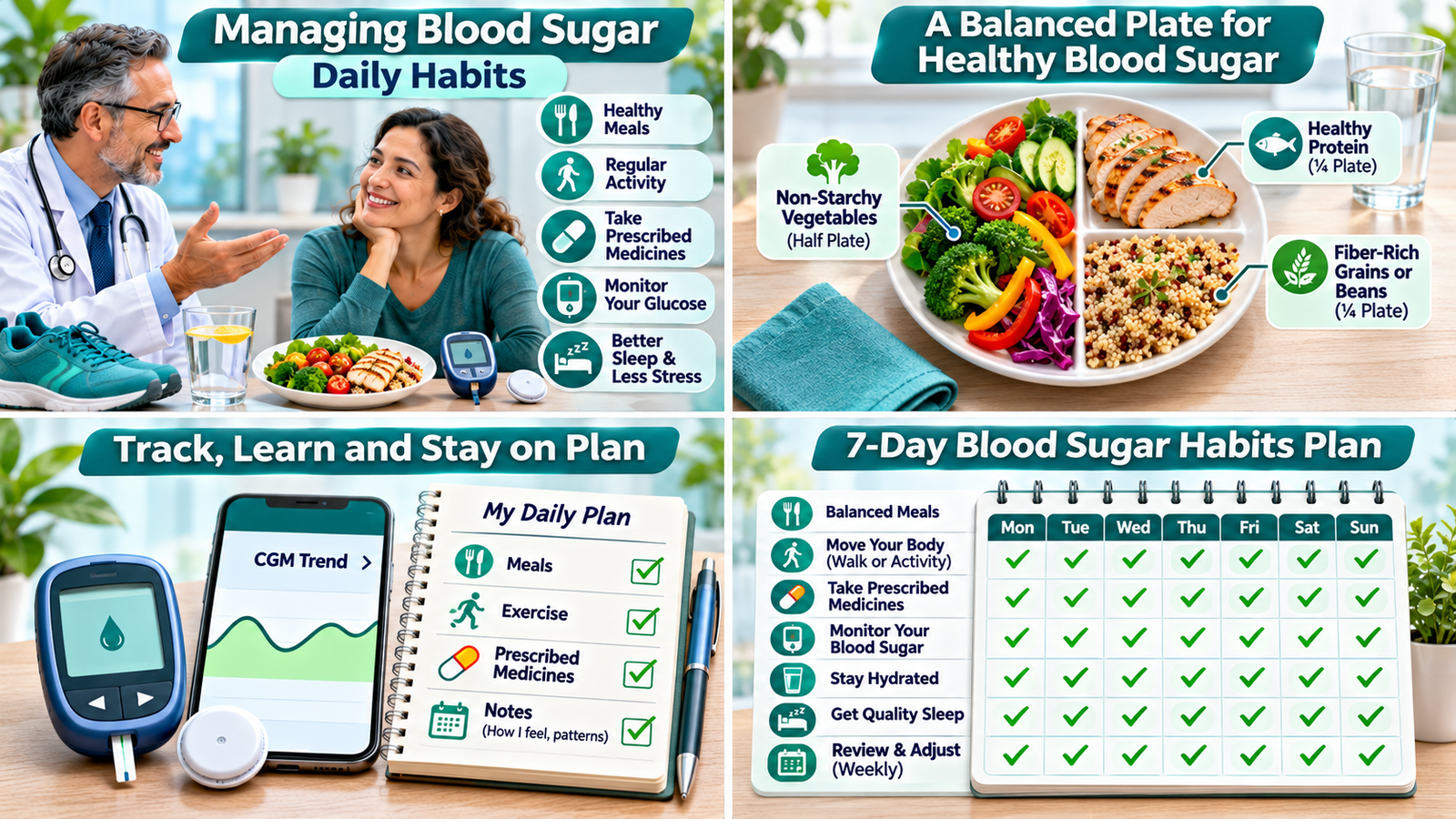
Seven-Day Practical Routine for Managing Blood Sugar
| Day | One sustainable focus | How to review it |
|---|---|---|
| Monday | Identify personal glucose targets and medicine schedule | Check that written instructions are clear |
| Tuesday | Build one balanced meal using a plate approach | Notice portions and satisfaction |
| Wednesday | Add a tolerable walk or active break | Record how you felt before and after |
| Thursday | Plan hydration and an unsweetened drink option | Review symptoms or restrictions |
| Friday | Protect a consistent sleep opportunity | Note whether rest affects daily routine |
| Saturday | Review glucose trends if monitoring is prescribed | Look for recurring patterns, not a perfect number |
| Sunday | Prepare two practical actions for the next week | Write questions for the healthcare team |
This seven-day plan is a habit-building example, not a treatment or weight-loss challenge. If a day is missed, simply resume an achievable step. Discuss additional activity or meal timing with your clinician when prescribed medicines create hypoglycemia risk.
One of the most useful long-term behaviors is periodic review with a registered dietitian or diabetes self-management education and support service. The aim is to develop confidence and independence while knowing when professional input is needed.
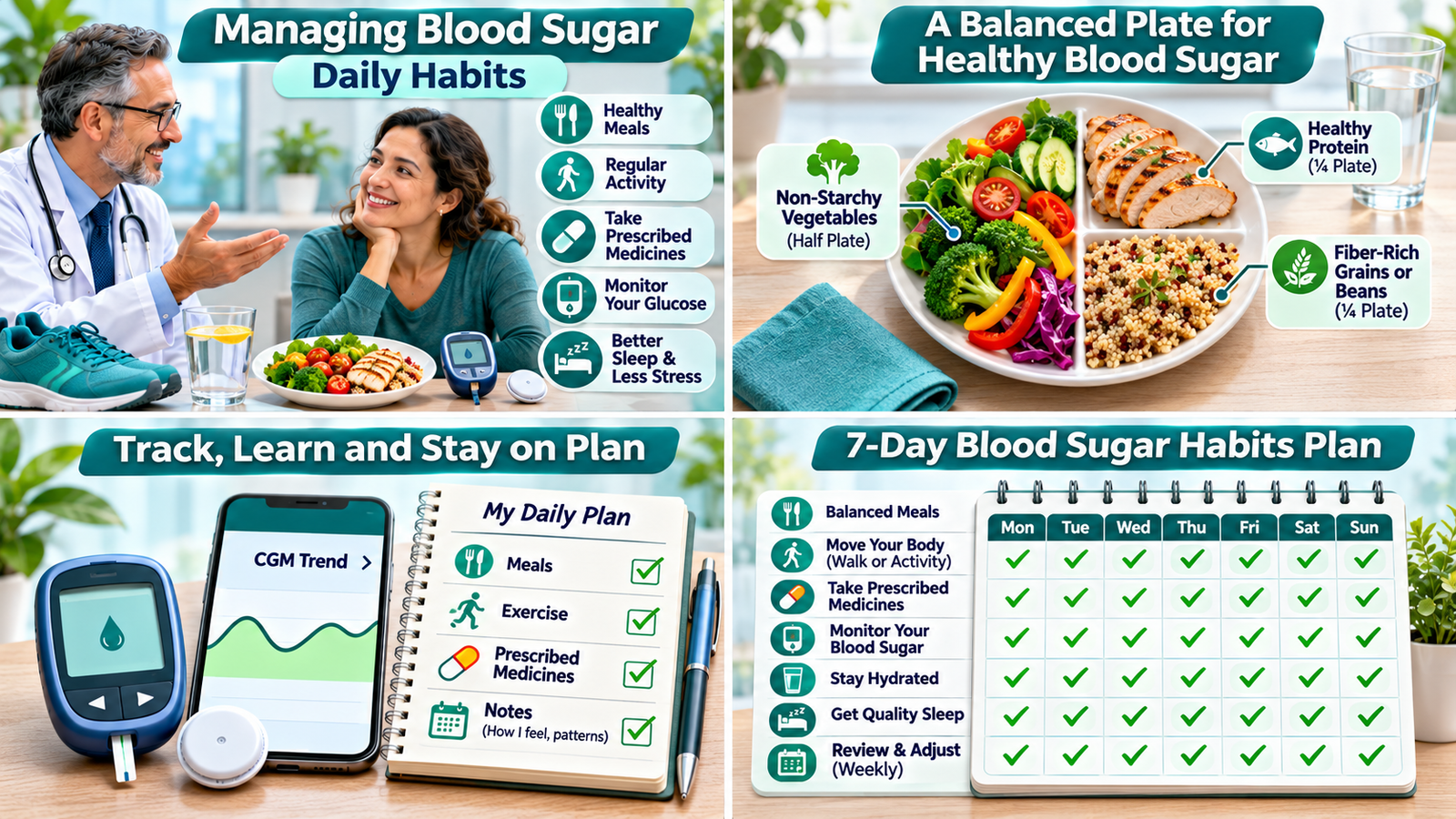
For many people, managing blood sugar becomes more manageable when the care team helps identify two repeatable habits rather than demanding perfection across every meal and reading.
Measure Progress Without Perfectionism
Glucose trends can improve without every reading being inside range. Meaningful outcomes include fewer severe lows, better symptom control, more consistent medication use and appropriate management of blood pressure, cholesterol and kidney health. A1C and CGM metrics can inform decisions, but do not represent the person’s value or effort.
If habits feel unmanageable, simplify the plan rather than abandoning it. The most helpful first change may be addressing medicine affordability, treating sleep apnea, seeking mental-health support or reducing unnecessary monitoring workload.
A clinician should periodically reassess whether the selected targets are safe, realistic and aligned with the person’s medical history and current medications.
Daily Diabetes Care in the USA, UK, Australia and Canada
| Country | Key education sources | Practical consideration |
|---|---|---|
| United States — priority | ADA Standards 2026, CDC and DSMES services | Individualized nutrition, activity, monitoring and glucose targets |
| United Kingdom | NICE NG28, updated February 2026; NHS / Diabetes UK | HbA1c targets depend partly on medicines and hypoglycemia risk |
| Australia | NDSS and Diabetes Australia | Local diabetes educators, exercise and glucose management resources |
| Canada | Diabetes Canada clinical practice resources | Individualized glucose management and provincial access pathways |
The general habits are similar internationally, but glucose units, clinical thresholds, medicine availability and services differ. Readers in the UK, Australia and Canada commonly see mmol/L, while many US resources use mg/dL. Follow the clinical plan and regulatory guidance for the country where you receive care.
The 2026 NICE guidance recommends individual discussions about HbA1c and medicines rather than assuming one target fits everyone. The same principle of personalized, sustainable care applies across all four regions.
Common Mistakes and Content Gaps in Daily Diabetes Advice
Mistake: Only sugary foods raise glucose
Starches, illness, stress, medications and sleep can also affect readings. Patterns and portion sizes matter.
Mistake: Everyone must check glucose the same number of times
Monitoring needs vary by medicine, symptoms, diagnosis and hypoglycemia risk.
Mistake: Walking can replace prescribed insulin
Activity supports metabolic health but does not replace essential insulin or other prescribed treatment.
Mistake: Skipping meals always improves glucose
For people using hypoglycemia-prone medication or facing eating concerns, fasting can be unsafe.
Mistake: A normal CGM value always proves everything is fine
Sensors have limitations; symptoms and a personal emergency plan remain important.
Mistake: One bad reading means all progress is lost
Health is influenced by long-term patterns, organ protection, treatment safety and sustainable behaviors.
Frequently Asked Questions About Blood Sugar Habits
What daily habit helps most?
There is no single universally best choice. Consistent use of prescribed therapy, balanced meals, appropriate movement and monitoring when indicated work together.
Can walking after meals help?
It may improve post-meal glucose for some people. Start safely and follow exercise precautions if using insulin or sulfonylureas.
Must I avoid all carbohydrates?
No. Carbohydrate quality, amount and the overall eating pattern should be individualized.
How often should I test my blood sugar?
The frequency depends on your diabetes type, medicines, symptoms and agreed treatment goals.
Does poor sleep affect glucose?
Sleep disruption can affect glucose regulation and day-to-day care. Persistent problems deserve assessment.
What should I do if glucose stays high?
Contact your diabetes team for review, especially if symptoms develop; do not make unplanned medicine changes.
Can I drink fruit juice?
It contains quickly absorbed sugar; routine portions require consideration, and it can also have a specific role in treating hypoglycemia.
How long until healthy habits work?
Some activity-related glucose effects can be seen quickly, but sustained improvements and long-term risk reduction depend on consistent care and individual medical circumstances.
Five Related BBH Articles and Support
Research Sources and Medical Disclaimer
- ADA Standards of Care 2026: Positive Health Behaviors and Well-Being
- ADA Standards 2026: Glycemic Goals and Hypoglycemia
- CDC: Manage Blood Sugar
- CDC: Diabetes Meal Planning
- CDC: Living With Diabetes
- NICE NG28: Blood Glucose Management, February 2026
- Australia NDSS Diabetes Support
- Diabetes Canada Clinical Practice Guidelines
- ADA/EASD 2026: Management of Type 2 Diabetes
- 2025 Systematic Review: Mindfulness and Type 2 Diabetes
- NCCIH: Stress and Relaxation
- NCCIH: Detoxes and Cleanses
- CDC: Water and Healthier Drinks