Diabetes Treatment Goals: Individualized Care
Personalized Diabetes Goals: A Care Guide

Diabetes treatment goals should reflect the whole person, not only a laboratory number. A healthy younger adult may have different glucose targets from an older person who has recurrent hypoglycemia, kidney disease or problems managing a complex medicine schedule. Goals also change with pregnancy, the type of diabetes and a person’s priorities.
Thank you for reading this post, don't forget to subscribe!This evidence-based guide explains personalized A1C targets, fasting and post-meal glucose, continuous glucose monitoring, heart and kidney protection, prevention of low blood sugar and how to make decisions together with a clinician. The United States is our primary audience, with clear comparisons for the UK, Australia and Canada.
Diabetes Treatment Goals: What Does Individualized Care Mean?
An individualized goal is one the person and care team choose after weighing evidence against real life. The same glucose target may be suitable for one patient and unsafe for another. A clinician also needs to know whether the target describes a long-term A1C result, fasting glucose, post-meal glucose or CGM time in range.
Why Diabetes Treatment Goals Must Be Individualized
In diabetes care, better is not always synonymous with lower. Reducing high glucose can prevent symptoms and long-term complications, but treating aggressively with insulin or sulfonylureas can create dangerous low-glucose episodes. The balance differs for someone with stable health compared with a person who is frail, has cognitive impairment or lives with advanced organ disease.
Other relevant factors include diabetes duration, medication burden, hypoglycemia awareness, pregnancy plans, support at home, personal values and the cost of treatment. Shared decision-making means people can explain what they can realistically do and understand the tradeoffs rather than simply receiving a number without context.
Is an individualized goal permanent?
No. Goals should be revisited when treatment changes, a serious illness develops, weight or activity patterns shift, or a person experiences frequent lows. Periodic reassessment is recommended by the 2026 ADA Standards of Care.
Related BBH reading: Diabetes Diagnosis: Which Tests Are Used?.
A1C Targets for Adults With Diabetes
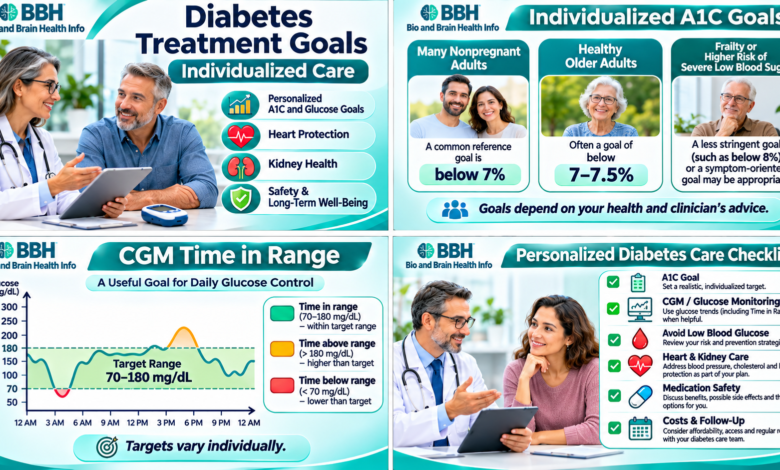
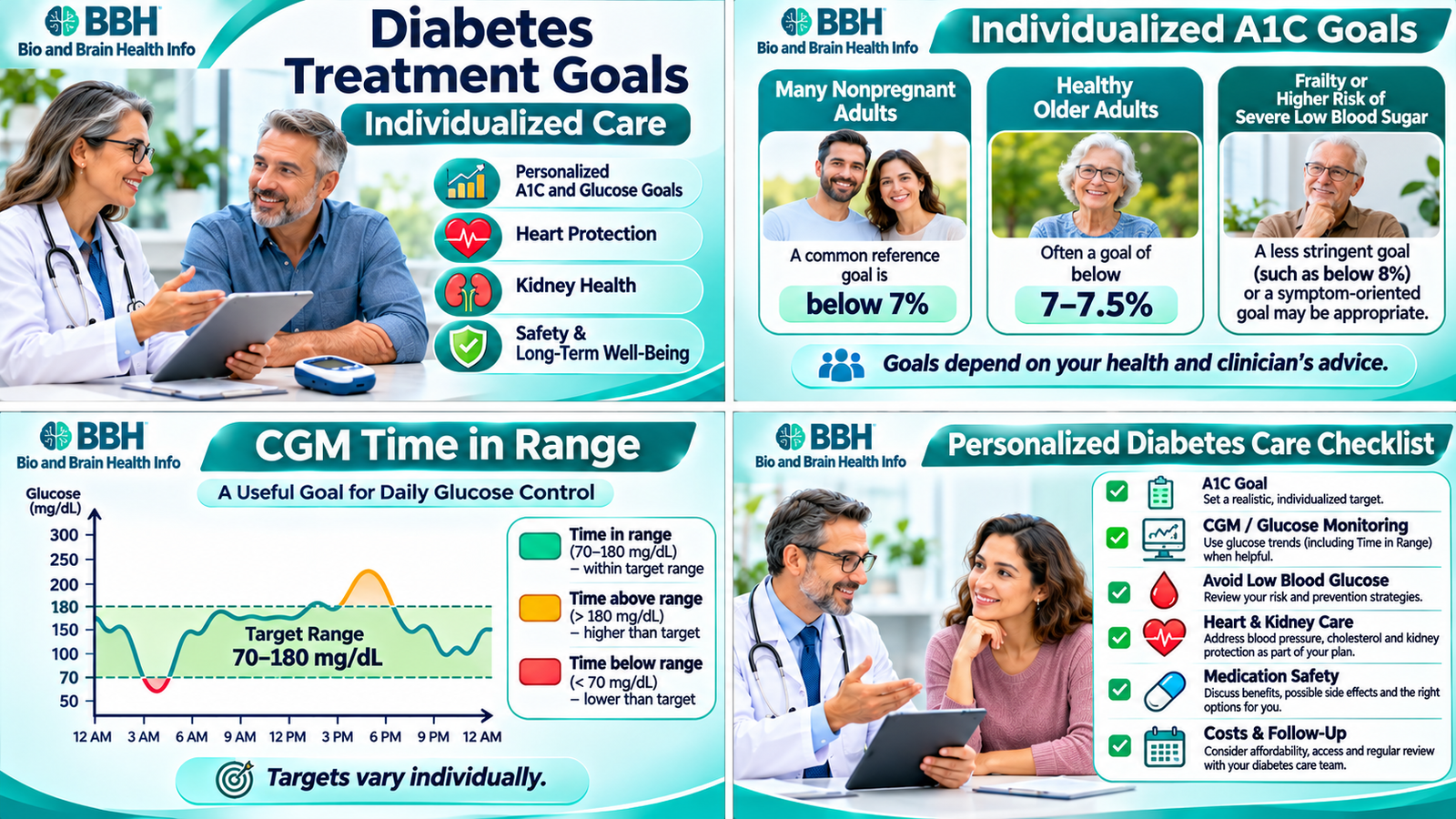
Hemoglobin A1C estimates glucose exposure across roughly two to three months, though the test has limitations. For many nonpregnant adults with diabetes, the ADA suggests an A1C below 7%, while selected people may benefit from a lower target if they can achieve it without severe lows or undue treatment burden.
| Clinical example | Potential A1C approach | Important qualification |
|---|---|---|
| Many nonpregnant adults with stable health | Often below 7% | Individualize based on risks, preferences and therapy |
| Selected adults with low hypoglycemia risk | A lower target may be appropriate | Only when sustainable and safe |
| Healthy older adults with intact function | Often below 7.0–7.5% | ADA 2026 older adult framework |
| Older adults with frailty or significant limitations | Sometimes below 8.0%, or symptom-oriented approach | Avoid excessive treatment and hypoglycemia |
| Very complex health or limited benefit from strict control | Focus on avoiding lows and symptomatic highs | A1C may be a poor primary target |
These are educational examples, not instructions to choose a target from a table. An individual may have reasons to set a different goal, and clinicians should consider the person’s health trajectory rather than age alone.
When Should A1C Targets Be Lower or Less Strict?
A lower A1C can be appropriate for some people with recent type 2 diabetes, long expected lifespan and treatments that rarely cause hypoglycemia. Potential benefits must still be balanced against workload, medication adverse effects and any anxiety about eating or monitoring. A number should not become a source of harmful pressure.
Less stringent goals may be safer for patients with recurrent severe hypoglycemia, hypoglycemia unawareness, serious comorbidities, limited functional capacity or high treatment burden. ADA guidance allows deintensifying treatment when the risk of medication harm exceeds the likely benefit. This is planned care, not abandoning diabetes management.
What about long-standing high A1C?
An A1C that remains significantly elevated warrants a treatment and self-management review. The correct response is not necessarily to add the maximum possible number of medicines: check access, side effects, monitoring, symptoms, clinical priorities and whether insulin is required.
Related BBH reading: Type 2 Diabetes Treatment: Main Options.
Fasting and Post-Meal Blood Sugar Goals
A1C alone does not show daily patterns. For many nonpregnant adults, the ADA often uses a premeal capillary plasma glucose range of approximately 80–130 mg/dL (4.4–7.2 mmol/L), and a peak post-meal value below 180 mg/dL (10.0 mmol/L) as reference points. These values are not universal prescriptions.
Post-meal checks are typically interpreted one to two hours after the start of the meal, depending on the patient’s plan. Some people need more flexible targets to prevent lows, while pregnancy requires distinct goals. A diabetes professional should identify which readings have the most value for a particular treatment regimen.
A record of symptoms, missed meals, medication changes and activity can make a series of readings more meaningful than a single measurement. Patients should not increase insulin or skip food based solely on generic online targets.
Related BBH reading: Time in Range: What Your CGM Shows.
When setting diabetes treatment goals, CGM patterns can reveal low-glucose episodes that an average A1C does not show.
Continuous Glucose Monitoring: Time in Range and Safety
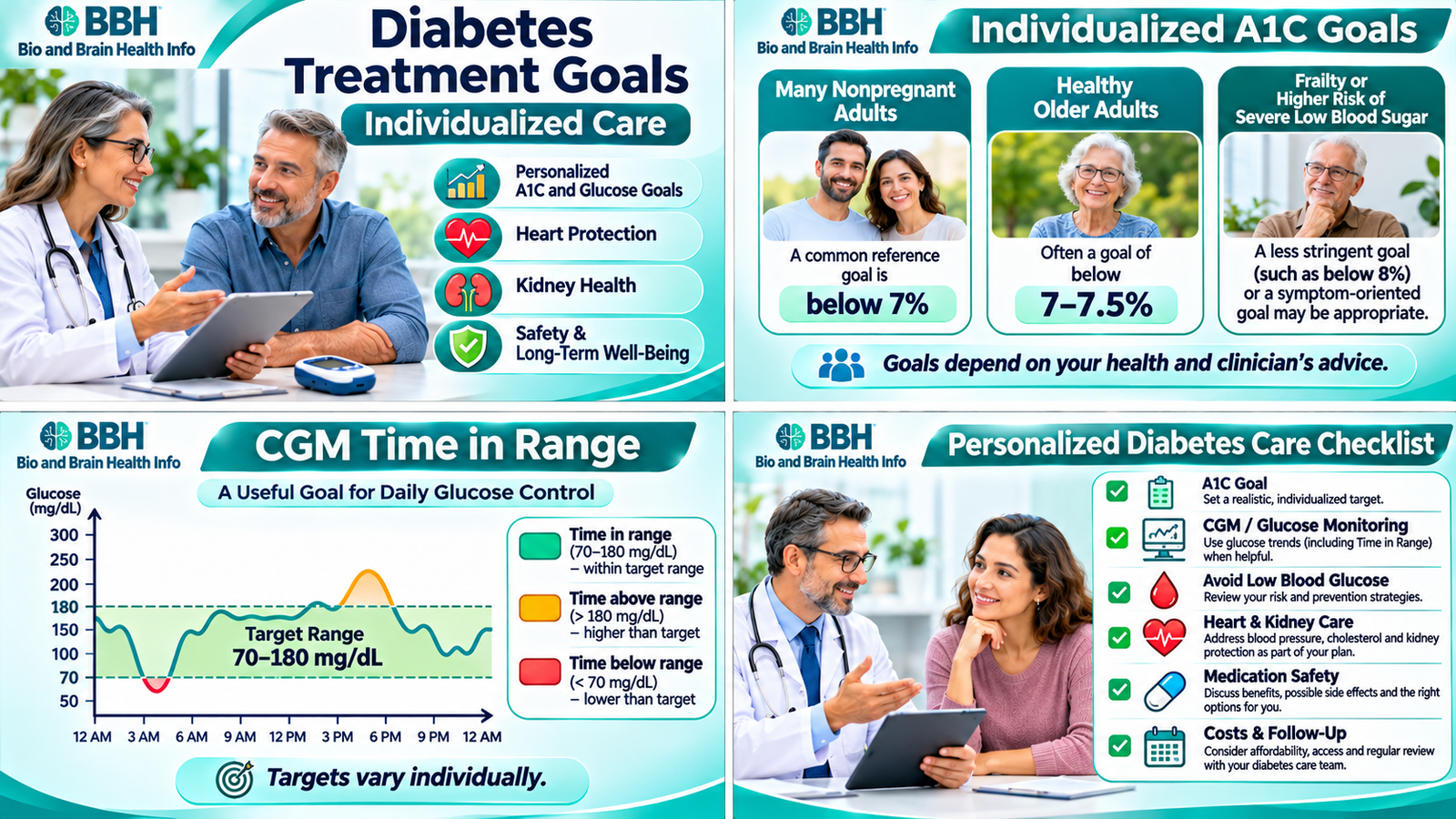
A continuous glucose monitor (CGM) samples glucose in interstitial fluid and displays trends over time. Its time-in-range metric can show how much of the day glucose stays within an agreed range. A common adult reference interval is 70–180 mg/dL (3.9–10.0 mmol/L), but technology does not eliminate the need for individual goals.
| CGM metric | General adult reference | Clinical meaning |
|---|---|---|
| Time in range 70–180 mg/dL | Often more than 70% | Indicates time spent in the agreed glucose interval |
| Time below 70 mg/dL | Generally less than 4%; stricter in some older or high-risk adults | Highlights potentially dangerous low readings |
| Time below 54 mg/dL | Less than 1% | Helps detect clinically significant hypoglycemia |
| Older adults with frailty or complex health | Sometimes TIR at least 50% with very low time below range | Safety and comfort can take priority over tight control |
These are consensus reference targets, not universal thresholds for every person. CGM devices can lag behind blood glucose changes, and patients should follow device instructions for confirming readings when symptoms disagree with a sensor.
Related BBH reading: Low Blood Sugar: Symptoms and Treatment.
Preventing Hypoglycemia and Overtreatment
Severe hypoglycemia can cause confusion, fainting, seizures or loss of consciousness. People using insulin and sulfonylureas need clear recognition and emergency response instructions, including access to glucagon when appropriate. Recurrent lows deserve a clinical medicine review even when the overall A1C seems excellent.
A1C can conceal alternating high and low readings, so glucose logs and CGM patterns may be essential. Overtreatment occurs when the burden or harm of treatment is greater than its likely benefit. Simplifying a regimen or reducing hypoglycemia-prone therapy can sometimes improve both safety and quality of life.
Older Adults, Frailty and Functional Health
Chronological age alone should not determine glucose control. The ADA 2026 Standards distinguish older adults with relatively stable health and intact cognition from those with major functional impairment, multiple severe illnesses or high risk of hypoglycemia. Treatment goals should reflect likely benefit and the safety of the actual regimen.
A person living independently with good support might use a similar A1C target to a younger adult. Someone who needs assistance with medicine administration or has frailty may benefit from simplified treatment, lower monitoring burden and a higher tolerated A1C. The aim is to prevent symptoms and dangerous glucose extremes.
Vision, dexterity, medication cost, dementia, falls and eating patterns should all be discussed. Family involvement can help when the person wishes it, but their values and dignity remain central.
Goals for Heart, Kidney and Cardiovascular Protection
Healthy glucose control matters, but diabetes care also includes preventing cardiovascular disease and kidney damage. For some patients with chronic kidney disease or heart failure, clinicians choose particular SGLT2 inhibitors or GLP-1 receptor agonists with proven benefits regardless of whether A1C is already close to target.
Blood pressure management, appropriate lipid-lowering therapy, smoking cessation, kidney function tests and urine albumin assessment may be equally important. The most valuable treatment decision can be improving organ protection while avoiding hypoglycemia rather than trying to lower A1C another fraction of a percent.
Each drug has its own approved indications, risks, renal thresholds and cost considerations. Patients should ask whether a medicine is being prescribed for blood sugar, heart protection, kidney protection or several of these goals.
Related BBH reading: Starting Insulin for Type 2 Diabetes.
Choosing Medication Based on Personal Goals
Metformin may be suitable for glucose management in many adults, while GLP-1 receptor agonists, SGLT2 inhibitors, insulin and other classes have different strengths. Some therapies offer weight-related or cardiorenal benefits; insulin is especially important for marked insulin deficiency, severe hyperglycemia or other clinical needs.
Selection should reflect treatment effect, medication safety, pregnancy considerations, kidney function, the ability to use a device, affordability and patient preferences. A complex regimen that causes repeated lows or cannot be purchased may be less useful than a sustainable alternative.
Should every change mean stronger medication?
No. Clinicians may intensify treatment when glucose remains above individualized goals, or simplify it if the patient has repeated lows, intolerable effects or changing health status. Both directions can represent good medical care.
Nutrition, Physical Activity and Weight-Related Priorities
Food and exercise goals should support cardiometabolic health without imposing unnecessary restriction or guilt. Balanced food patterns with vegetables, legumes, appropriate carbohydrates, proteins and unsaturated fats can be adapted to cultural preferences and finances. Walking, resistance training and reducing prolonged sitting can improve fitness and glucose regulation.
Weight loss may be a useful health goal for some adults with overweight or obesity, but not every person needs it, and weight change is not the sole measure of metabolic success. Blood pressure, physical function, glucose patterns and quality of life also matter. A dietitian can help create an individualized plan.
People using insulin or other medicines capable of causing hypoglycemia should ask for exercise and fasting precautions. Abrupt carbohydrate restriction or fasting may be unsafe in some treatment regimens.
Sleep, Mental Health and Diabetes Distress
Living with diabetes requires continuous decisions about meals, activity, medicine, costs and testing. Distress, anxiety, sleep disruption and burnout can make the plan harder to follow. Emotional well-being is a legitimate part of individualized treatment, not a separate or unimportant concern.
Clinicians should ask whether monitoring feels overwhelming, whether a patient fears hypoglycemia, and whether employment or caregiving duties make medication timing difficult. Shared decisions can include reducing unnecessary tests, simplifying schedules or offering diabetes self-management education and support.
Realistic goals acknowledge what a person can maintain consistently. Perfectionism or punitive approaches may undermine engagement; compassionate education and clear instructions can improve trust and long-term care.
Type 1 Diabetes, Pregnancy and Other Special Situations
Although this guide emphasizes type 2 diabetes, diabetes treatment targets are not identical across diagnoses. People with type 1 diabetes require insulin and often use CGM or structured glucose monitoring. Their plans must account for insulin delivery and the immediate risk of ketoacidosis if essential treatment is interrupted.
Pregnancy has different glucose targets and a particular balance of maternal and fetal risks. Someone planning pregnancy should seek specialist guidance before changing glucose-lowering medicines. Children and adolescents also require age-appropriate care with family and school support when suitable.
Other conditions such as anemia, advanced kidney disease and certain blood disorders can affect A1C interpretation; glucose measurements may be needed to assess the actual pattern rather than relying on a single laboratory number.
Treatment Goals Must Account for Cost and Daily Life
Prescription prices, insurance rules, CGM eligibility and access to clinicians vary across health systems. In the US, out-of-pocket costs can influence which treatment is sustainable. People should tell their team about medication gaps or the cost of sensors and supplies instead of silently rationing or discontinuing treatment.
A plan should also account for work schedules, religious practices, travel, physical limitations and family responsibilities. Medicine timing and monitoring requirements can be adapted only through product-appropriate clinical decisions. Two patients with similar A1C may therefore need different strategies.
The best goal is not merely medically plausible; it must be understandable, affordable, measurable and safe enough to maintain.
Revisiting diabetes treatment goals after major changes in health or treatment helps maintain a safe and realistic care plan.
When to Revisit Diabetes Treatment Goals
Goals should be reviewed whenever health status, medication or personal circumstances change. Clinicians often reassess A1C about every three months when treatment is being adjusted or goals are unmet, while stable patients may have less frequent assessment depending on guidance and medical need.
A review considers A1C, glucose logs, CGM time in range, low-glucose episodes, complications, kidney function, blood pressure, medication adherence and treatment burden. Also ask what has changed since the last visit: a new job, shift work, sleep problems, pregnancy plans or concern about side effects.
A plan that worked previously may need revision after a major illness, new kidney disease or increasing difficulty administering injections. Updating goals is expected, not a failure.
When A1C Alone Can Give an Incomplete Picture
A1C represents average glycated hemoglobin, not each day’s highs or lows. Anemia, some hemoglobin variants, recent blood loss, transfusion, pregnancy and certain kidney-related conditions can change its reliability. If A1C and home glucose measurements disagree, the healthcare team should investigate rather than force therapy to match one number.
CGM and finger-stick monitoring can provide complementary information about hypoglycemia, meal effects and variability. A single high reading does not always justify changing medicine, and a single normal reading cannot guarantee overall control.
The useful question is whether measurements are improving meaningful health outcomes with acceptable risk and treatment burden.
Making Diabetes Treatment Goals More Practical
A Practical Shared Decision-Making Framework
| Step | What to discuss with your clinician |
|---|---|
| 1. Define priorities | Glucose symptoms, heart and kidney risk, weight-related concerns, safety and quality of life |
| 2. Agree on measurements | Personalized A1C, fasting readings, CGM metrics or symptom-focused goals |
| 3. Review treatment burden | Medicine adverse effects, dosing complexity, costs and access |
| 4. Make a realistic plan | Nutrition, activity, medicine review, monitoring and education |
| 5. Establish follow-up | When to repeat tests, whom to call and what changes should trigger reassessment |
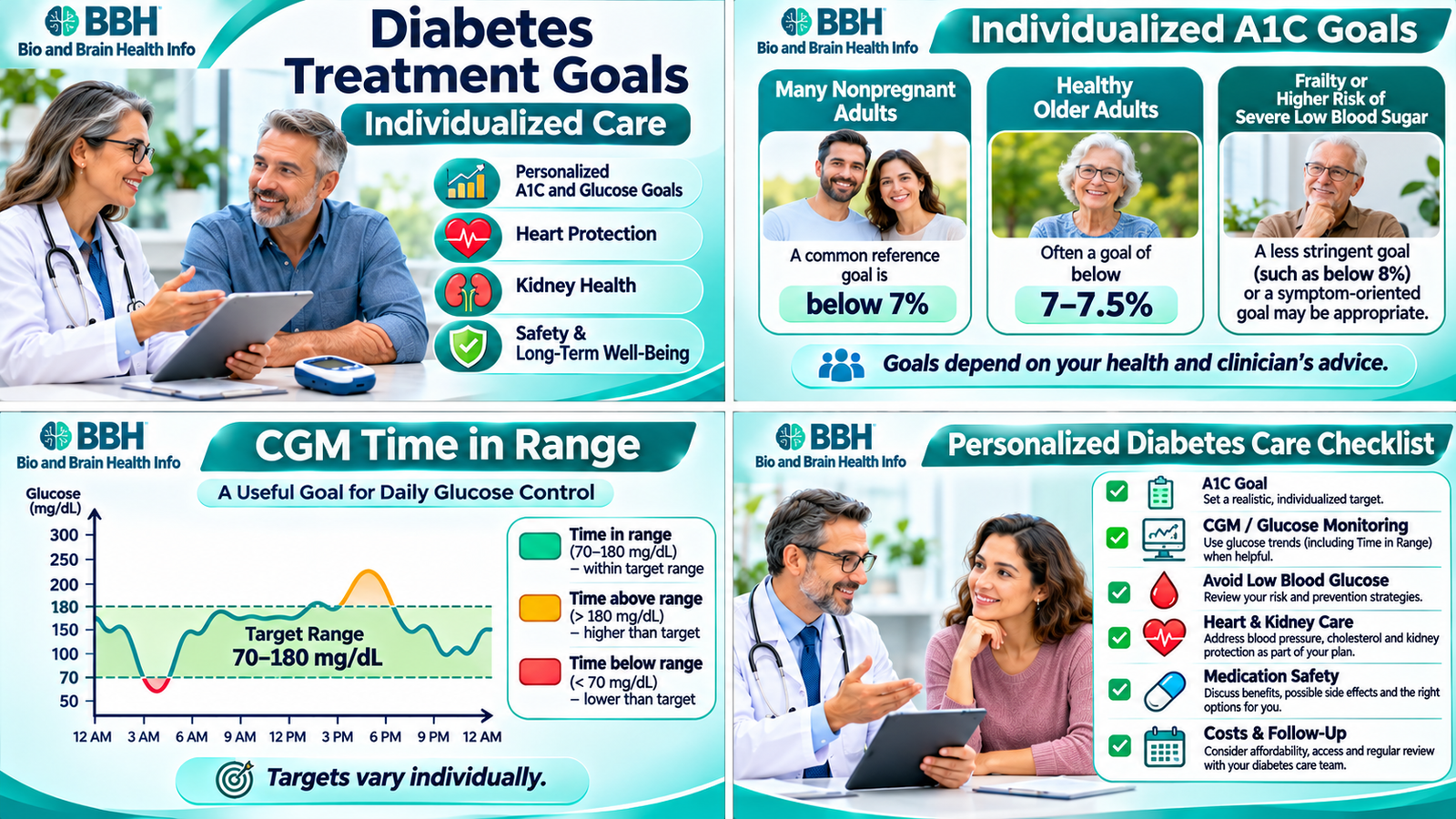
Use a written care plan that states what the goal means, how it is monitored and who can authorize medication changes. Patients can ask the clinician to explain the benefits and tradeoffs in plain language. A shared plan also gives caregivers clearer guidance when the person wants help.
Diabetes Targets in the USA, UK, Australia and Canada
| Country | Current guidance framework | Important distinction |
|---|---|---|
| USA — primary | ADA Standards of Care 2026 | Individualize A1C, CGM targets, hypoglycemia risk and overall treatment burden |
| United Kingdom | NICE NG28, updated February 2026 | HbA1c targets depend on treatment and circumstances; consider relaxation in older or frailer people |
| Australia | Australian Diabetes Society September 2026 algorithm | Choose appropriate blood glucose and HbA1c targets with life expectancy and patient wishes in mind |
| Canada | Diabetes Canada glycemic target resources and 2024 pharmacologic update | Individualized A1C goals consider frailty, hypoglycemia, function and clinical priorities |
Targets and units may vary across regions. For example, Canada and the UK commonly present glucose values in mmol/L, while US materials often use mg/dL. UK NICE guidance differentiates HbA1c goals by treatment-related hypoglycemia risk and encourages individual discussion.
Readers should follow their own country’s current prescribing information and clinical team rather than applying a foreign threshold or monitoring schedule automatically.
Questions to Ask Your Diabetes Care Team
| Question | Why it matters |
|---|---|
| What A1C or CGM goal is right for me? | Defines an individualized, measurable target |
| Am I at risk of dangerous low glucose? | Supports appropriate medicine and monitoring decisions |
| Are my heart and kidneys protected? | Expands care beyond glucose readings |
| Should my medicines be intensified or simplified? | Addresses effectiveness, risks and treatment burden |
| How do costs and my schedule affect the plan? | Makes care sustainable |
| When should we review these targets again? | Creates an agreed follow-up point |
Bring recent glucose readings, a medicine list and any concerns about symptoms or medication access. It can help to explain which goal matters most to you and what makes the proposed plan hard to sustain. Decisions should not be made solely from a general chart.
Common Misconceptions About Personalized Diabetes Care
Myth: Everyone needs an A1C below 6%
No. An excessively strict target can increase harm for some people. The correct target reflects overall health, the medicines used and hypoglycemia risk.
Myth: Higher A1C targets always mean poor care
A less stringent goal can be appropriate in frailty or significant comorbidity when preventing serious lows and symptomatic highs matters more than very tight control.
Myth: Only glucose matters
Blood pressure, kidney health, lipids, heart risk, well-being and practical access are also essential parts of diabetes care.
Myth: One good reading proves treatment is working
Trends over time, A1C, time in range and side effects provide more context than an isolated measurement.
Myth: Simplifying treatment means giving up
Appropriate deintensification can reduce treatment harm and improve quality of life while preserving meaningful protection.
Frequently Asked Questions About Treatment Targets
What A1C should most adults aim for?
For many nonpregnant adults, below 7% is a common reference, but the agreed target can be higher or lower.
Is an A1C of 8% always dangerous?
Not necessarily the same for every person. Some higher goals may be appropriate in frailty or serious comorbidities, while other patients need treatment review.
What is time in range?
It is the proportion of CGM readings within a chosen glucose interval, often 70–180 mg/dL for many adults.
Can I have a good A1C but frequent lows?
Yes. A1C averages do not show all episodes. CGM or monitoring logs may reveal a problem.
When should treatment targets change?
After major health changes, recurrent lows, new medicines, pregnancy or changing functional ability.
Does diabetes care only mean taking medication?
No. Nutrition, activity, emotional health, blood pressure, organ protection and access are important components.
Should older people always have higher goals?
No. Functional health and hypoglycemia risk matter more than age alone.
Can I change insulin to reach a new target?
Only using the individual plan prescribed by a qualified diabetes professional.
Related BBH Guides and Support
Evidence Sources and Medical Disclaimer