Diabetes Medication Side Effects: Guide
Diabetes Drugs: Side Effects and Safety

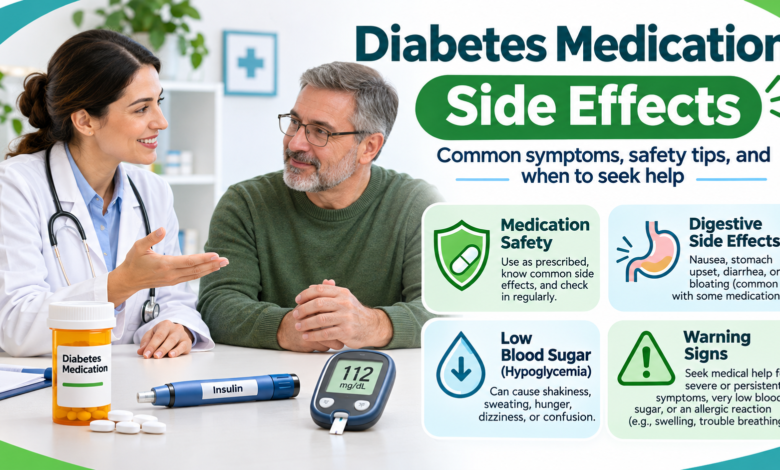
Diabetes medication side effects differ between individual medicines, and understanding the difference helps people recognize concerning symptoms without unnecessarily fearing every treatment. Metformin frequently causes stomach symptoms. Insulin and some insulin-releasing tablets can cause low blood glucose. GLP-1 therapies may lead to nausea or constipation, while SGLT2 inhibitors have infection, dehydration and ketoacidosis precautions.
Thank you for reading this post, don't forget to subscribe!This research-based educational guide compares treatment classes, the seriousness of potential reactions, drug combinations and appropriate follow-up. It is written primarily for readers in the United States and also explains how the UK, Australia and Canada approach medicine safety. Always follow individual product instructions and qualified medical advice.
Diabetes Medication Side Effects: What to Know
Side effects arise because each medication acts through a different pathway. Metformin influences liver glucose production; SGLT2 inhibitors change how the kidney reabsorbs glucose; GLP-1 receptor agonists affect hormonal and gastrointestinal signaling; and insulin supplies the hormone directly. Two drugs can lower A1C while having very different safety profiles.
Many reactions are mild and manageable, but severity, duration and medical context matter. A symptom that begins after a prescription change may be related, yet an infection, another medication or a separate medical problem could be responsible. A professional evaluation is more reliable than self-diagnosis.
Related BBH guide: Diabetes Medicines: Types and Uses.
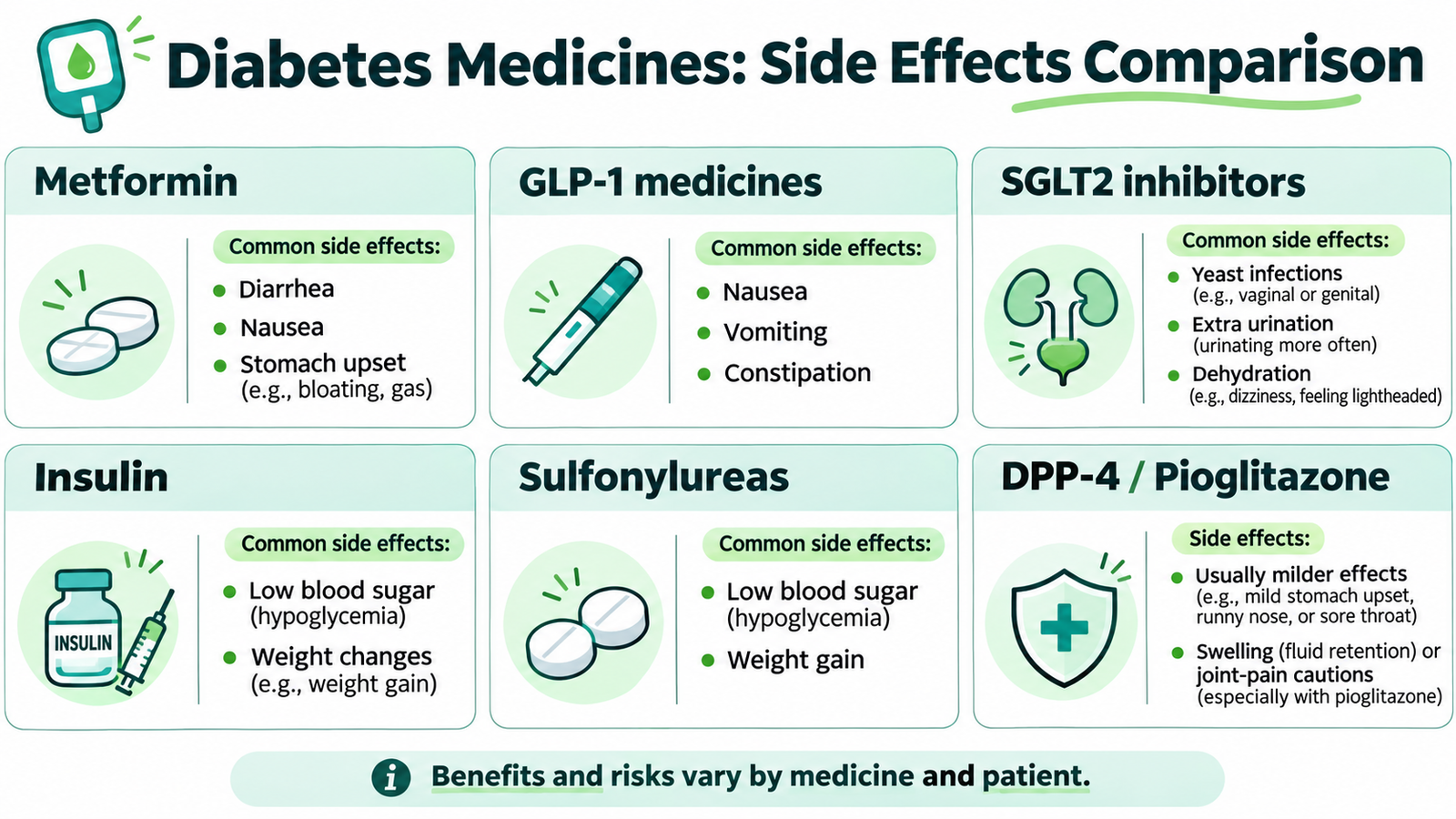
Side Effects of Diabetes Medicines: Comparison Table
| Class | Common effects | Potential serious concerns |
|---|---|---|
| Metformin | Diarrhea, nausea, abdominal discomfort | Low B12; rare lactic acidosis with important risk factors |
| GLP-1 receptor agonists | Nausea, constipation, vomiting, early fullness | Gallbladder disease, pancreatitis warnings, severe gastrointestinal symptoms |
| Dual GIP/GLP-1 tirzepatide | Digestive symptoms and appetite reduction | Product-specific severe gastrointestinal and other warnings |
| SGLT2 inhibitors | Yeast infections, increased urination, dizziness | Ketoacidosis sometimes without high glucose; serious infections |
| Insulin | Low blood glucose, weight changes, injection-site issues | Severe hypoglycemia and medication errors |
| Sulfonylureas and meglitinides | Hypoglycemia and possible weight gain | Prolonged severe hypoglycemia |
| DPP-4 inhibitors | Often mild symptoms | Rare severe joint pain, pancreatitis and agent-specific heart failure concerns |
| Pioglitazone | Swelling, weight gain | Heart failure exacerbation and fracture risk |
| Acarbose | Gas and bloating | Digestive intolerance |
This is a general reference rather than a complete prescribing list. Risk estimates vary by formulation, kidney function, other medicines and the population studied. Selected GLP-1 and SGLT2 treatments have proven cardiovascular or renal benefits for particular conditions, so a medicine review must consider more than side effects alone.
Related BBH guide: Metformin: Uses, Side Effects and Safety.
Metformin: Common Digestive Side Effects
Metformin can cause diarrhea, nausea, gas and abdominal discomfort, especially at the start of therapy. Some people improve after a gradual, clinician-supervised introduction or a switch to extended-release tablets. Individual formulation instructions matter; modified-release tablets may not be suitable for crushing or splitting.
Vitamin B12 and long-term treatment
Metformin use is associated with lower vitamin B12 levels in some people, particularly during longer treatment. Anemia, fatigue, tingling or numbness can have several causes, including neuropathy. Periodic B12 assessment may be appropriate, especially when these symptoms occur.
Kidney function and lactic acidosis
Metformin is cleared through the kidneys and requires eGFR-based prescribing decisions. Severe kidney impairment, certain acute illnesses, hypoxia or marked dehydration can increase concern for rare metformin-associated lactic acidosis. Marked weakness, confusion, abnormal breathing and severe illness should prompt urgent medical assessment, not an internet dose adjustment.
In some circumstances such as specific contrast studies or serious dehydration, clinicians may give written instructions to temporarily interrupt treatment. These decisions must reflect the exact procedure and current kidney function.
Related BBH guide: GLP-1 Medicines for Type 2 Diabetes.
Because diabetes medication side effects vary, severe abdominal symptoms warrant assessment rather than assuming all nausea comes from treatment.
GLP-1 Medicines: Nausea, Constipation and Warnings
Semaglutide, dulaglutide and liraglutide are GLP-1 receptor agonists. Their effects on appetite and gastric emptying explain why nausea, early fullness, vomiting, constipation or diarrhea can occur. Tirzepatide is a related dual GIP/GLP-1 agonist, not simply an identical single-receptor drug.
Mild symptoms may improve with smaller meals, slower eating, avoiding foods that worsen discomfort and clinician-directed titration. Persistent vomiting or inability to stay hydrated requires evaluation, because dehydration can cause kidney problems. Severe adverse reactions should not be mistaken for proof that weight loss treatment is succeeding.
Product-specific serious warnings
Pancreatitis has been reported with certain incretin treatments, and gallbladder problems merit attention. Some US products have boxed warnings about thyroid C-cell tumors observed in rodents and contraindications involving medullary thyroid carcinoma or MEN2. The exact label, prior history and risks should be checked with a prescriber. Pregnancy planning and oral medicine absorption considerations also differ across preparations.
People with significant gastroparesis, severe digestive symptoms or relevant eye conditions need individualized review. Not every medicine within the class has identical cardiac, kidney or other approved indications.
Related BBH guide: SGLT2 Inhibitors: Benefits and Risks.
SGLT2 Drugs: Yeast Infection, Dehydration and Ketoacidosis
Empagliflozin and dapagliflozin are examples of SGLT2 inhibitors. They help the kidney excrete more glucose into urine and may offer heart failure or kidney benefits to eligible patients. However, glucose in the urinary tract can contribute to genital yeast infections and frequent urination. Fluid loss may cause lightheadedness, particularly with illness, hot weather or other diuretic medicines.
Ketoacidosis even when glucose is not very high
A rare but dangerous complication is euglycemic diabetic ketoacidosis. Persistent vomiting, abdominal pain, rapid or deep breathing, marked weakness and confusion can occur even when glucose readings appear unexpectedly modest. This requires urgent medical testing; a near-normal glucose result does not exclude ketoacidosis.
Risk may be elevated by prolonged fasting, major illness, surgery, dehydration or substantial insulin deficiency. Some products have specific instructions to stop before planned surgery, generally several days in advance. The clinician and surgical team should set the exact plan.
Serious urinary infections and very rare necrotizing infection around the genital or perineal region are further warnings. Fever, severe genital swelling or intense pain should prompt emergency care. Mild itching or burning still merits appropriate diagnosis rather than assuming the drug is always the cause.
Understanding diabetes medication side effects helps distinguish a low glucose episode from a local injection reaction or an unrelated illness.
Insulin Side Effects: Low Glucose and Weight Gain
Insulin is essential in type 1 diabetes and may be necessary in type 2 diabetes. Its most important adverse effect is hypoglycemia. Sweating, shakiness, hunger, rapid heartbeat, irritability or confusion may be warning signs. Severe low glucose can lead to seizures or loss of consciousness.
Some insulin-treated patients experience weight gain or local injection reactions. Reusing the same area can cause lumps or altered absorption. Proper site rotation and injection technique should be demonstrated by a diabetes educator. Storage, device selection and needle use also influence safety.
Concentrated insulin products and different brands are not automatically interchangeable. Changing pens, syringes or formulations without a prescriber may produce serious medication errors. Insulin users should have a clear plan for managing low glucose and emergency access to glucagon when appropriate.
Sulfonylureas: Why Low Blood Sugar Matters
Sulfonylureas stimulate insulin release and include glipizide and glimepiride in the United States, with gliclazide used in several other countries. Their lower cost can improve access, but delayed meals, impaired kidney function, certain interacting medicines and older age may increase the risk of hypoglycemia.
Weight gain can also occur. Some episodes of low glucose may be prolonged, so severe symptoms require medical care rather than repeated self-management alone. Meglitinides such as repaglinide also stimulate insulin and make meal timing especially relevant.
Treatment reviews should consider whether a safer alternative is available and affordable for a patient with repeated lows or frailty. Never discontinue treatment independently without a plan for glucose control.
DPP-4 Inhibitors, Pioglitazone and Other Drugs
DPP-4 inhibitors such as sitagliptin and linagliptin are often relatively weight-neutral and carry low intrinsic hypoglycemia risk. Rare concerns include serious joint pain, bullous pemphigoid and reported pancreatitis. Certain members, notably saxagliptin, have agent-specific heart failure cautions.
Pioglitazone improves insulin sensitivity but may cause weight gain, swelling and fluid retention, potentially worsening heart failure in susceptible people. Fracture risk also matters. Acarbose may cause bothersome gas and abdominal discomfort; availability and use vary internationally.
Different medicines solve different problems. Broad claims that every diabetes pill is safe or dangerous oversimplify evidence. A medicine may be appropriate for one person but unsuitable for another because of existing illnesses, monitoring needs or cost.
Diabetes medication side effects may change when new treatments are combined, which is why a current medicine list matters.
Combination Diabetes Treatment: Added Benefits and Risks
People with type 2 diabetes may take several medicines because drug classes target different mechanisms. A combination can reduce glucose or address heart and kidney risks, but it may also increase hypoglycemia or dehydration concerns. The combination is the important issue, not simply the number of tablets.
A fixed-dose tablet sometimes contains two active ingredients. Patients should verify the full ingredient list, especially when changing pharmacies or starting another prescription, to avoid duplicate treatment. Some combinations, such as a DPP-4 inhibitor with a GLP-1 receptor agonist, generally offer little added benefit and are not routinely recommended.
Review prescription medicines, vitamins, supplements and recent changes with a pharmacist. A symptom log can help document when complaints started, but confirmation of a side effect may require examination and laboratory testing.
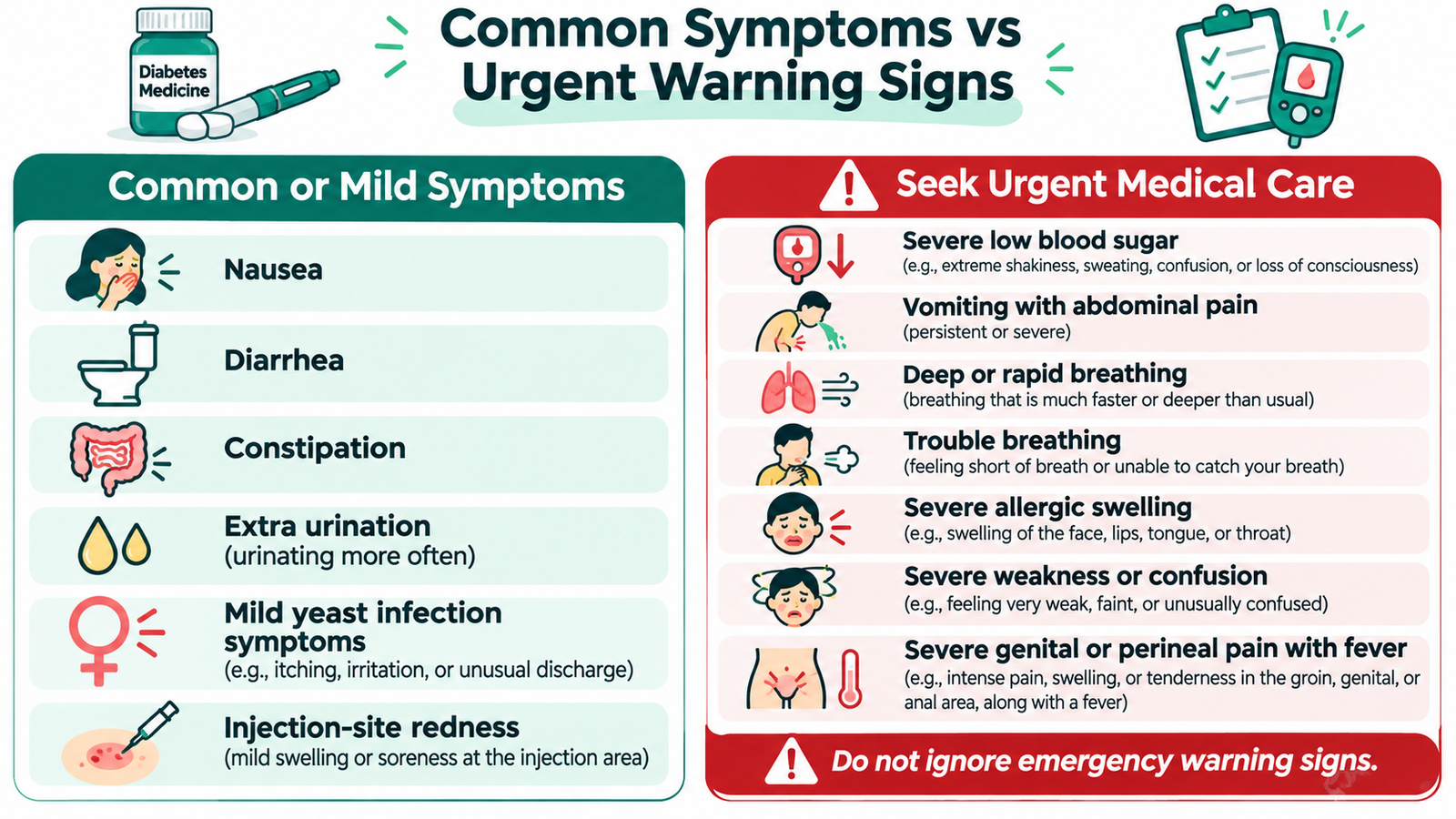
Warning Signs That Need Emergency Assessment
| Symptoms | Possible concern / action |
|---|---|
| Unconsciousness, seizure, inability to swallow | Severe hypoglycemia; seek emergency help, use prescribed glucagon if available |
| Vomiting, abdominal pain and deep breathing | Possible ketoacidosis, even with unexpectedly normal glucose |
| Severe persistent abdominal pain | Possible pancreatitis, gallbladder disease or another urgent condition |
| Facial swelling or breathing difficulty | Possible severe allergic reaction |
| Fever with severe genital or perineal pain | Possible serious infection requiring emergency care |
| Severe weakness and abnormal breathing during relevant metformin illness | Possible serious metabolic disorder requiring urgent evaluation |
Symptoms overlap among many conditions, and a diagnosis cannot be confirmed by a blog. Emergency services should be used when severe illness is suspected. Tell the clinical team which medicines are being taken, recent doses if known, kidney history and any major illness or fasting.
Related BBH guide: Low Blood Sugar: Symptoms and Treatment.
Hypoglycemia: What to Recognize and Discuss
Insulin and insulin-releasing medicines carry a substantial risk of low glucose compared with medicines that do not directly stimulate insulin. Symptoms can include shakiness, sweating, palpitations and confusion, but some people have reduced warning awareness. A personalized treatment plan is therefore essential.
Adults who are awake and can swallow often follow clinician-taught rapid carbohydrate treatment and repeat monitoring. Someone who is unconscious, seizing or cannot swallow safely needs emergency help and prescribed glucagon where available; do not give oral food or drink.
Repeated lows warrant medication review, considering exercise, missed meals, alcohol, renal function and overlapping medicines. A seemingly excellent A1C can conceal significant low-glucose episodes. Monitor patterns, not only average results.
Managing Mild Digestive Symptoms Without Guesswork
Stomach symptoms can appear with metformin and incretin therapies, yet their exact causes and management differ. Discuss whether prescribed meal timing, a formulation change or a slower escalation might help. Do not split extended-release tablets or adjust injections simply because a general article suggests it.
Maintaining adequate hydration may help, unless a person has fluid restrictions. Persistent diarrhea, severe constipation, repeated vomiting or inability to drink needs professional assessment because kidney function and electrolyte balance may be affected.
Record the medicine name, symptom onset, food intake and associated signs. If a symptom began before the medicine or persists long afterward, another explanation may need investigation. Avoid assuming every digestive complaint is medication-related.
Kidney Function, B12 and Heart Safety Monitoring
Kidney tests such as eGFR matter for metformin, several oral agents and the overall safety of diabetes care. Some SGLT2 medicines offer kidney protection even when their glucose-lowering effect diminishes at lower eGFR, but product-specific approval and risks differ.
Long-term metformin use may justify B12 assessment, especially with unexplained anemia or neuropathy. Blood pressure and volume status matter for SGLT2 medicines and diuretics, while edema or shortness of breath can be relevant to pioglitazone.
Monitoring frequency should be individualized by age, kidney disease, cardiovascular history, concurrent medicines and symptoms. A patient should not be told that all drug classes require the same tests or that a single normal laboratory result rules out future harm.
Sick-Day Plans, Fasting, Surgery and Anesthesia
Illness, dehydration, prolonged fasting and surgery can change medication risks. SGLT2 inhibitors may need to be temporarily withheld before planned surgery or serious illness to reduce ketoacidosis risk. Certain metformin users may require pausing during acute dehydration or specific contrast procedures, following medical instructions.
GLP-1 therapy can affect gastric emptying, which may be relevant to anesthesia or deep sedation; clinical recommendations evolve and are patient- and procedure-specific. Tell the anesthesia team about the precise medication and any ongoing gastrointestinal symptoms.
People requiring essential insulin should not independently stop basal insulin during illness or fasting. Ask the care team for written rules on monitoring, whom to call, and how to handle individual medicines safely.
Older Adults, Pregnancy and Other Higher-Risk Groups
Older people with frailty, cognitive changes, renal disease or irregular meals are more vulnerable to medication errors, dehydration and severe low glucose. Simpler regimens and individualized A1C goals may be safer than pursuing aggressive numbers at all costs.
Pregnancy and pregnancy planning change medication suitability. Insulin is important in selected settings, while several non-insulin agents require special caution or are not recommended. These decisions should be coordinated with obstetric and diabetes clinicians.
Patients with prior pancreatitis, severe gastroparesis, recurrent genital infections or heart failure need particular care in selecting treatment. Type 1 diabetes requires essential insulin, and type 2 medication lists cannot substitute for it.
Descriptions of diabetes medication side effects should reflect current country-specific product labels rather than assuming every brand is identical.
Diabetes Medication Safety in the USA, UK, Australia and Canada
| Country | Sources and approach | Safety focus |
|---|---|---|
| USA (primary) | ADA 2026 Standards, FDA labels and MedWatch | Individualized risk review, product warnings and reporting |
| UK | NICE NG28 updated February 2026; MHRA Yellow Card | Shared decisions, combination effects and safety monitoring |
| Australia | Australian Diabetes Society, TGA product information | Local medicine availability and adverse-event reporting |
| Canada | Diabetes Canada guidance and Health Canada monographs | Individualized drug safety, access and Canada Vigilance |
Some warnings are class-wide; others apply only to an individual product or approved use. Local brand names, pregnancy guidance, kidney thresholds and insurance coverage can differ. In the UK, NICE emphasizes discussing medicine benefits and harms and reviewing combined treatment effects, including hypoglycemia.
US readers should use the current FDA label for their exact drug. Readers in other countries should check the relevant regulator and local healthcare professional instead of assuming a foreign package or recommendation is identical.
A structured review of diabetes medication side effects should include symptom timing, severity, glucose readings and medication access.
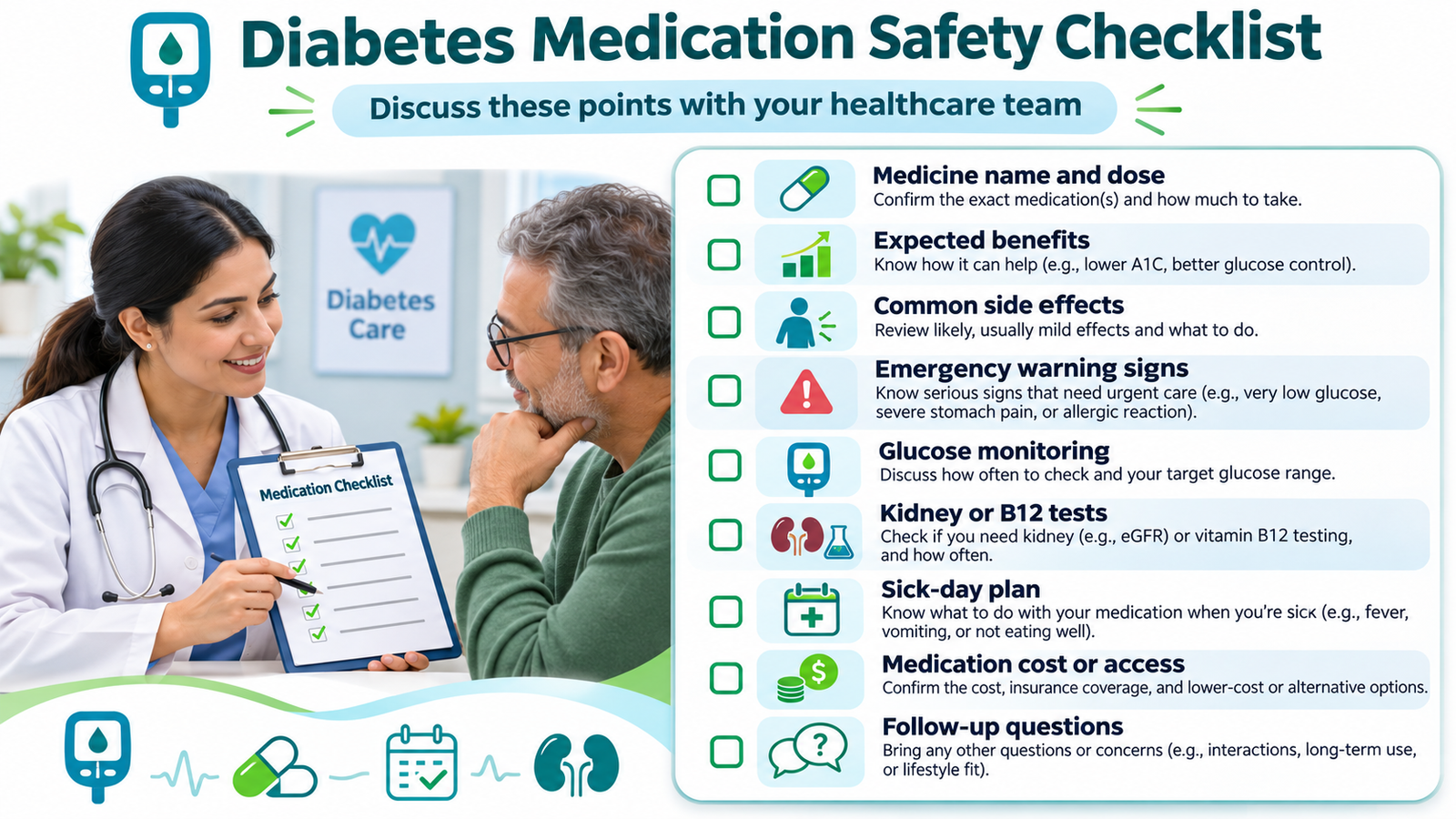
Checklist Before Changing a Diabetes Medicine
| Ask your clinician | Purpose |
|---|---|
| What does this drug protect or improve? | Understand glucose versus heart or kidney outcomes |
| Which side effects are expected and which are emergencies? | Recognize warning signs promptly |
| Could another medicine increase my risk? | Review combinations and interactions |
| Do I need kidney, B12 or other tests? | Establish appropriate follow-up |
| What if I am sick, fasting or having surgery? | Get individualized written precautions |
| Is there an affordable and tolerable alternative? | Prevent unsafe rationing or stopping |
Bring the actual medication packages, glucose readings, recent laboratory results and a symptom log to the appointment. If symptoms seem embarrassing, such as genital irritation, still discuss them. Clinicians need that information to select safer treatment.
Reporting Suspected Medication Reactions
Report worrying nonemergency symptoms to the prescriber or pharmacist, describing the medicine, onset, other medications and associated signs. In the US, adverse events can be reported to FDA MedWatch; the UK uses MHRA Yellow Card; Australia uses TGA reporting; and Canada provides Canada Vigilance.
These reports can help regulators identify safety signals but do not automatically prove causation. Never delay urgent assessment because a form is incomplete. If possible, retain the package, name and strength to help healthcare professionals review the problem.
Common Myths About Medication Adverse Effects
All diabetes medicines cause low blood sugar
No. Risk is much greater with insulin and some insulin-releasing drugs than with many other classes used alone.
Normal blood sugar means ketoacidosis is impossible
SGLT2-associated ketoacidosis may occur without unusually high glucose. Warning symptoms still require urgent attention.
Severe nausea means the medicine is working
Symptoms are not a measure of benefit. Inability to eat or drink and persistent abdominal pain need assessment.
Stopping every diabetes drug when sick is safe
Sick-day guidance varies by treatment; independently stopping essential insulin can be dangerous.
An herbal supplement is always safer
Supplements can interact with treatments and vary in composition. They should not replace prescribed care.
Diabetes Medicine Side Effects: Frequently Asked Questions
Which drugs most commonly cause low blood sugar?
Insulin and insulin secretagogues such as sulfonylureas have important hypoglycemia risk, especially with missed meals or renal impairment.
Does metformin usually cause diarrhea?
Digestive effects are common, particularly early on, but the degree and duration vary. Persistent symptoms deserve review.
Can GLP-1 drugs cause nausea?
Yes. Nausea, early fullness, vomiting or constipation may occur. Severe symptoms need medical evaluation.
Can SGLT2 medicines cause urinary or yeast infections?
Genital yeast infections are a known risk, while urinary symptoms should be properly assessed for infection or other causes.
What if I have a normal glucose reading but severe symptoms?
Normal glucose does not rule out all dangerous complications, including euglycemic ketoacidosis. Seek urgent help for concerning signs.
Should I stop medication when side effects appear?
Contact the prescribing team promptly. Do not change treatment on your own; severe reactions need urgent medical attention.
Should kidney function be checked?
Kidney monitoring is relevant to many people with diabetes, especially with certain drugs or established kidney disease.
How can I report a suspected adverse effect?
Use professional medical guidance and official reporting services such as FDA MedWatch in the United States.
Related BBH Articles and Support
Evidence Sources and Medical Disclaimer