Diabetes Snacks: Balanced Options
Best Snacks for Diabetes: Easy Ideas

BBH Physical Health · Diabetes & Blood Sugar · U.S.-priority evidence-based nutrition guide with UK, Canada and Australia comparisons
Thank you for reading this post, don't forget to subscribe!Choosing something between meals can seem confusing when living with diabetes. Should every snack contain 15 grams of carbohydrate? Are nuts enough? What should someone take to work, and is an evening snack necessary? The answers depend on whether the goal is ordinary hunger, a planned medication-related snack or treatment of low glucose.
This guide to diabetes snacks offers balanced combinations, practical portions, shopping advice and safety distinctions. It prioritizes the American Diabetes Association’s 2026 nutrition standards, with supporting guidance from Diabetes UK, Diabetes Canada and Australia’s National Diabetes Services Scheme.
It does not prescribe a fixed snack schedule, calorie allowance or insulin dose. Many adults do not need routine snacks, while certain medicines, activities and clinical situations make individualized planning more important.
Do people with diabetes need snacks?
No. Having diabetes does not automatically mean a person must eat something every two or three hours. The appropriate schedule depends on hunger, medication, glucose patterns, activity and individual nutritional needs. Diabetes UK explicitly notes that many people with type 2 diabetes who do not take medicines causing hypoglycemia need not snack.
A snack can nevertheless be useful when there is a long interval between meals, when appetite makes smaller meals easier, or when an individualized insulin or medication plan calls for planned carbohydrate. Children, pregnant people and adults with other conditions may have different requirements.
Frequent unplanned eating can add carbohydrate and energy without satisfying hunger. Someone who repeatedly grazes on biscuits, juice and crisps may find that their overall glucose management becomes harder, even if individual servings seem small.
Instead of following a fixed snack rule, start with your actual goal: preventing medication-related low glucose, responding to genuine hunger, meeting nutritional needs or making the next meal easier to manage. This helps avoid both unnecessary restriction and automatic snacking.
Diabetes Snacks: How to Build a Balanced Option
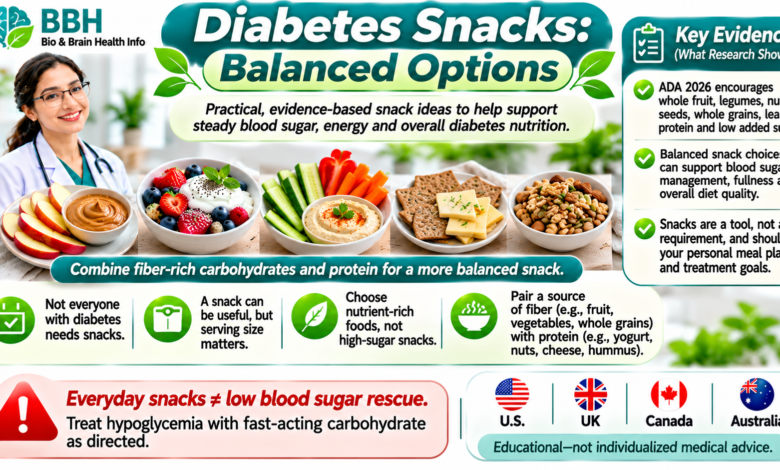
A convenient starting point is to combine a fiber-rich carbohydrate food with a protein source. Diabetes Canada describes a balanced snack that often contains approximately 15–30 grams of carbohydrate with protein, but this is an educational example, not a universal carbohydrate prescription.
Options include an apple with unsweetened peanut butter, berries with plain yogurt, wholegrain crackers with cheese, or a small portion of hummus with vegetables and a carbohydrate-containing side. The amount of carbohydrate differs across combinations.
| Fiber-rich carbohydrate choice | Protein or fat pairing | What to consider |
|---|---|---|
| Apple or whole fruit | Unsweetened peanut butter, nuts | Fruit size and nut portion |
| Wholegrain crackers | Cheese, egg or hummus | Cracker carbohydrate and sodium |
| Berries | Plain Greek-style yogurt | Added sugars in flavored yogurt |
| Cut vegetables | Hummus or plain yogurt dip | Legumes also contain carbohydrate |
| Air-popped popcorn | A suitable protein if desired | Total serving and toppings |
Protein and unsaturated fat can make a snack more satisfying and may slow digestion, but they do not erase the carbohydrate in fruit, crackers or milk. People counting carbohydrates for mealtime insulin need to include the full snack when applying their prescribed approach.
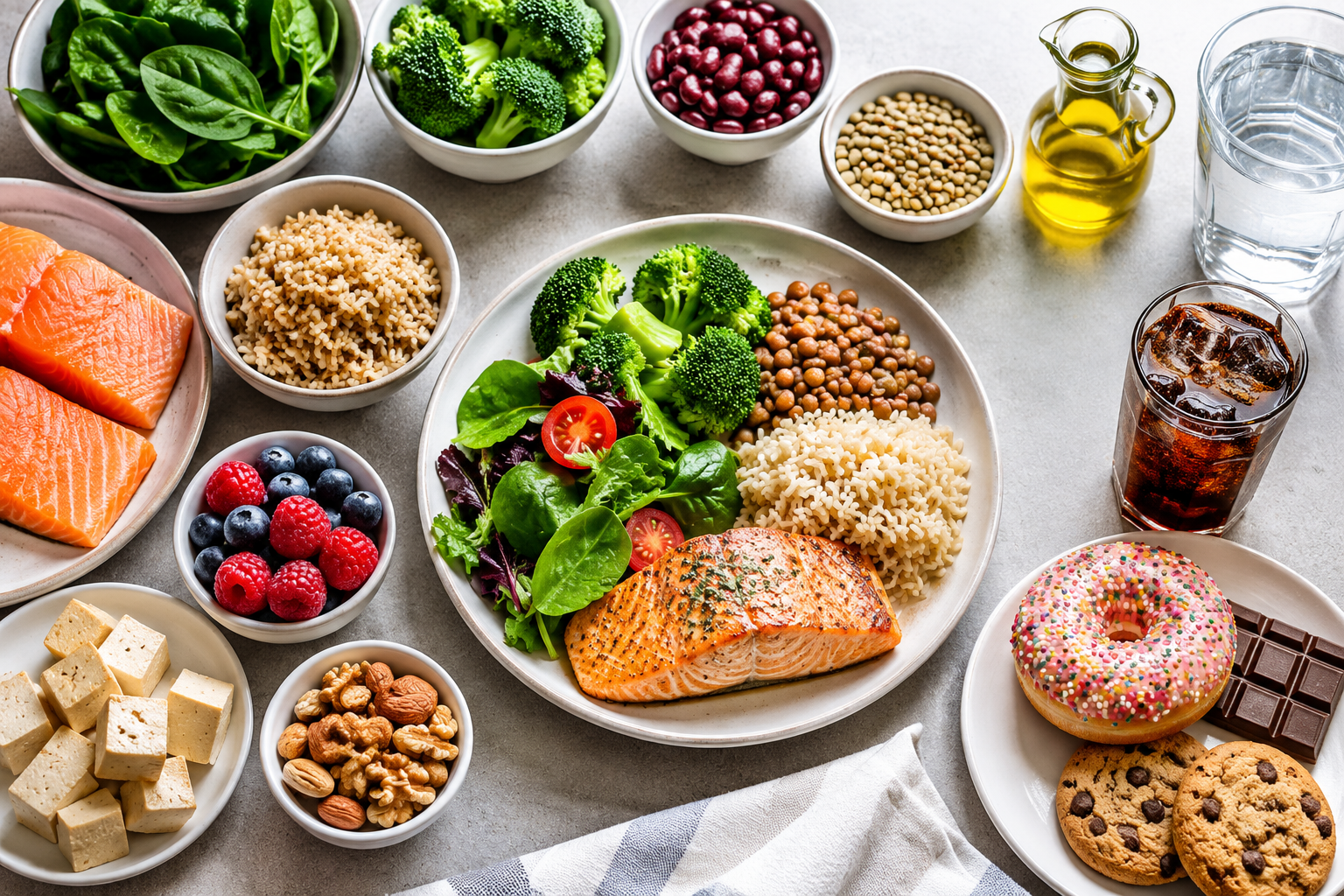
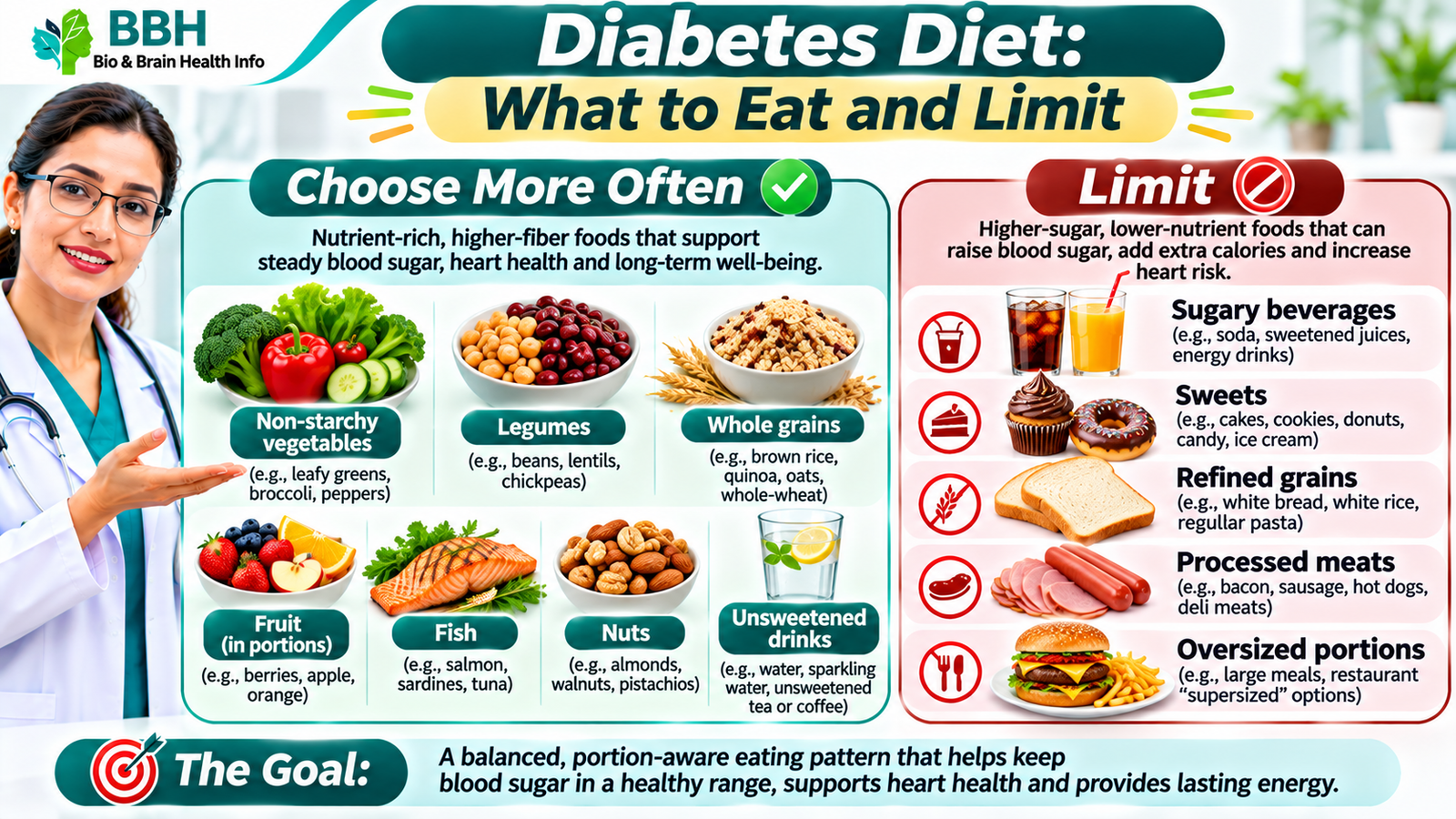
The ADA 2026 emphasizes non-starchy vegetables, whole fruit, legumes, lean proteins, whole grains, nuts, seeds and suitable dairy or alternatives. These same food groups can be combined into everyday snacks without buying products labeled ‘diabetic’.
Fruits, yogurt and nut butter
Whole fruit is a practical snack because it brings fiber, water and micronutrients. An apple, pear, orange or portion of berries can be eaten alone or paired with unsweetened yogurt or a small amount of nut butter when a more substantial snack is needed.
Fruit sizes vary, so the carbohydrate in a small apple differs from a very large one. Avoid assuming bananas, mangoes or grapes are forbidden; measure a portion that fits the person’s overall eating plan.
Plain Greek-style yogurt may contain protein, while flavored yogurts can include added sugar. Milk and yogurt also contain carbohydrate naturally. Choose the label and serving size deliberately, particularly if a snack needs to match an insulin plan.
Nut butters and nuts are nutrient-dense but energy-dense. A spoonful or a small portion can be useful, while unlimited servings are not necessary. People with allergies should use safe alternatives.
Vegetables, hummus and savory snacks
Carrot sticks, cucumber, bell peppers, cherry tomatoes and other non-starchy vegetables are convenient for a crunchy snack. Pair them with a measured amount of hummus, plain yogurt dip or another protein-containing option for greater satisfaction.
Hummus contains chickpeas, which contribute carbohydrate and protein. A small serving with vegetables is different from eating a very large tub alongside a bag of refined chips. Check the nutrition information when exact counting matters.
Wholegrain crackers with tuna, cottage cheese, tofu spread or a boiled egg can be useful savory combinations. Sodium and saturated fat content vary across cheese, crackers and packaged spreads, so compare brands.
Roasted chickpeas or edamame can offer fiber and protein. Their carbohydrate content is not zero, and packaged versions may be salty. Adjust the amount to the person’s hunger and medical needs.
Nuts, seeds, cheese and eggs
Unsalted almonds, walnuts, peanuts, chia and pumpkin seeds provide unsaturated fats, some protein and other nutrients. A small handful may be an easy option when away from home, though people can find a package’s serving guidance helpful.
Boiled eggs, plain cottage cheese, tofu cubes or an appropriate cheese serving can help build a snack with more protein. For some people, adding wholegrain toast or fruit makes the snack more complete.
Cheese and nuts are sometimes labeled ‘free foods’ in low-carbohydrate discussions, but they still supply calories and may contain saturated fat or sodium. Overall dietary quality and individual cardiovascular risk remain important.
Nut allergies, swallowing problems, pregnancy food-safety precautions and kidney-related restrictions require modifications. A snack suggestion cannot replace individualized dietary guidance.
Whole grains and fiber-rich options
Plain oatmeal in a small portion, wholegrain crackers, wholewheat toast or a modest serving of high-fiber cereal may fit as snacks. Fiber is useful for digestive and heart health, and the ADA 2026 recommends at least about 14 grams per 1,000 calories as a general target.
Read packaged grain labels. Products described as multigrain, natural or high-protein may still be refined or sweetened. Compare serving sizes, total carbohydrate, fiber and added sugars instead of relying on front-of-package language.
Air-popped popcorn without heavy butter or sugary coatings can be a wholegrain snack. Portion size still matters; a very large bowl may supply more carbohydrate than a small serving.
For an economical option, a slice of wholegrain toast with peanut butter or hummus can be practical. People following a carbohydrate-counting plan should use their usual product labels and prescribed targets.
Snack portions and nutrition labels
Snack portion needs are not fixed. A person who is physically active and uses insulin may need a different amount from someone managing type 2 diabetes without medicines that cause lows. Calories and carbohydrate targets should be individualized.
On U.S. Nutrition Facts labels, start with serving size and total carbohydrate. Then review fiber, added sugars, saturated fat and sodium. A packet containing two servings doubles those nutrients if the whole packet is eaten.
| Label item | What to check | Why it matters |
|---|---|---|
| Serving size | Amount per package and portions eaten | All nutrients are calculated from it |
| Total carbohydrate | Carbohydrate grams in chosen portion | Important for glucose and insulin counting |
| Fiber | Fiber in the actual serving | Supports nutrition and fullness |
| Added sugar | Sugar added during processing | Often high in sweetened snack foods |
| Sodium and saturated fat | Total per serving | Important for cardiovascular health |
In Canada and the United States, carbohydrates are often shown in grams. UK and Australian labels also show carbohydrate information, but their formatting and serving definitions differ. Compare per-serving and per-100-gram values carefully.
A 15-gram carbohydrate choice is a teaching reference, not a requirement that every snack be exactly 15 grams. A snack made mostly of vegetables and protein may contain less, while an individualized planned snack may contain more.
Diabetes Snacks: Ten Quick Ideas
Practical combinations include apple and peanut butter; berries with unsweetened yogurt; vegetable sticks and hummus; wholegrain crackers and cheese; a boiled egg with wholegrain toast; pear and almonds; roasted chickpeas; edamame; plain cottage cheese with tomatoes; and a modest popcorn serving paired with a protein food if desired.
These examples have different carbohydrate totals and are not nutritionally equivalent. The appropriate portions depend on the product, appetite, glucose-management plan and whether the snack is optional or specifically prescribed.
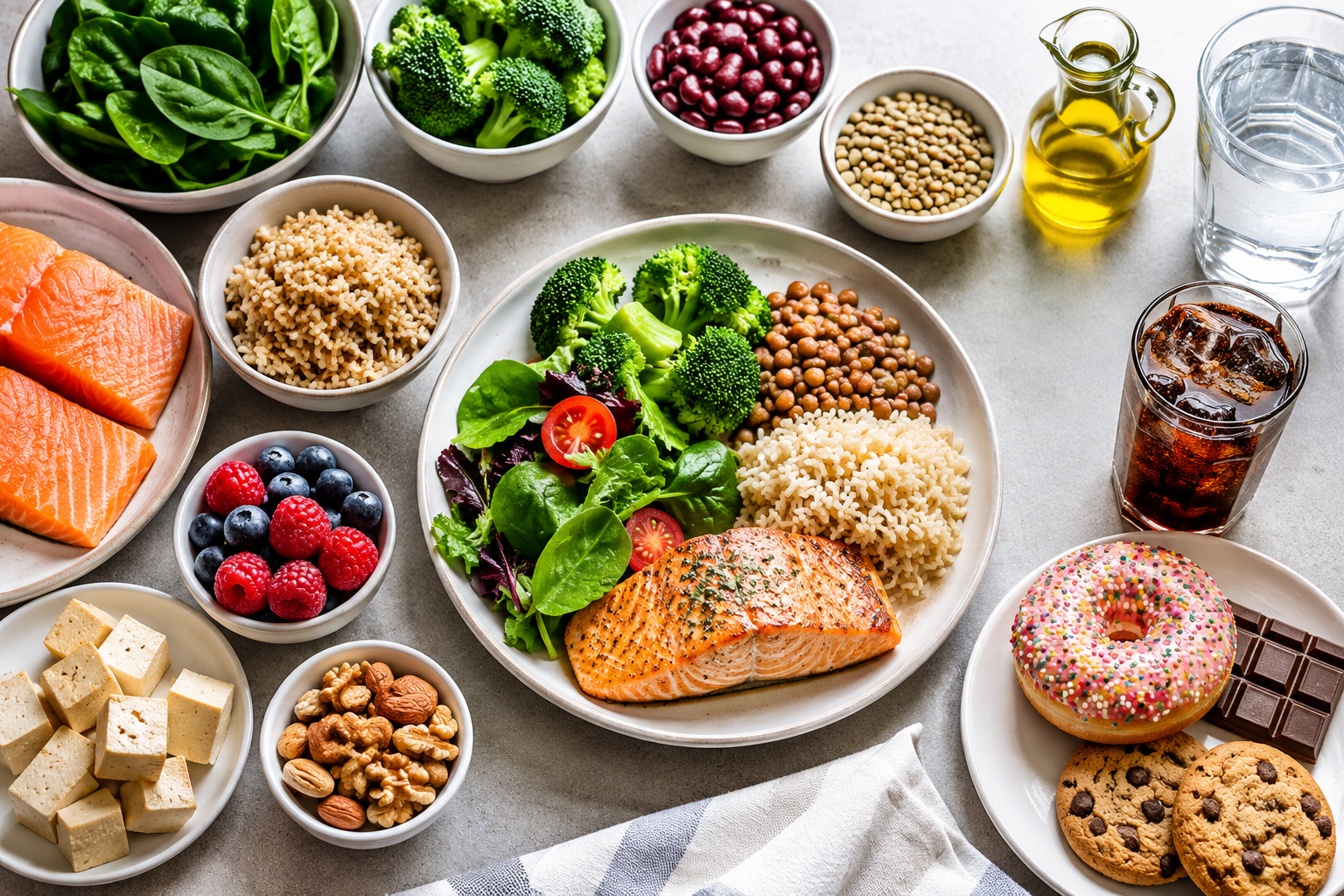
A common swap is water instead of sweetened soda, whole fruit instead of juice, or plain yogurt instead of a dessert-style yogurt. Choose unsalted nuts instead of heavily salted fried snacks when feasible.
Try keeping two reliable options at home and one portable choice for travel. This makes the plan easier than purchasing ten specialty foods or following complicated recipes.
Travel, work and evening snacking
A long commute, shift work or unexpected delay can make a planned snack useful. Shelf-stable choices such as a measured packet of unsalted nuts or suitable wholegrain crackers can be convenient, while yogurt and cut produce require safe temperature control.
At work, consider eating away from a desk when possible and checking whether a snack reflects hunger or habit. This is not a rule against eating while busy; the aim is mindful, sustainable choices without judgment.
An evening snack is not compulsory for everyone with diabetes. Some people need one under a clinician-approved overnight hypoglycemia prevention plan; others may prefer not to eat between dinner and breakfast.
If repeated nighttime low glucose occurs, speak with the diabetes care team. Do not treat a bedtime snack as a substitute for reviewing insulin, sulfonylureas, exercise, alcohol or other risk factors.
Diabetes Snacks vs Low Blood Sugar Treatment
An everyday snack containing fiber, fat and protein is not the same as emergency treatment for low blood glucose. If a person is awake, able to swallow and following standard CDC instructions for glucose below 70 mg/dL, the usual initial approach is about 15 grams of fast-acting carbohydrate, then rechecking after 15 minutes.
Examples can include glucose tablets or a measured amount of regular juice. Peanut butter, nuts, high-fiber cereal or chocolate may act too slowly to be the preferred initial treatment for a low glucose episode.
If glucose remains low, repeat the appropriate fast-acting carbohydrate according to the person’s plan. Once glucose has recovered, a balanced snack with carbohydrate and protein may be useful when a meal is not soon.
Unconsciousness, seizures or inability to swallow safely require emergency assistance and prescribed glucagon where available and appropriate. Never put food or drink into the mouth of someone who cannot swallow safely.
US, UK, Canada and Australia approaches
In the United States, ADA 2026 nutrition standards emphasize minimally processed foods, whole fruit, legumes, vegetables, nuts, seeds and lean protein. The CDC distinguishes routine meal planning from low-glucose rescue protocols.
Diabetes UK recommends snacks such as unsalted nuts, seeds, hummus with vegetable sticks, fruit and wholegrain crackers. It also notes that people on insulin or medicines that increase hypoglycemia risk may need individual snack arrangements.
Diabetes Canada offers a balanced-snack model combining roughly 15–30 grams of carbohydrate with protein. That example should not be copied as a fixed dose of carbohydrate for every patient or child.
| Country | Everyday snack emphasis | Clinical difference |
|---|---|---|
| United States | ADA: whole foods, fiber, protein, fewer sugary snacks | Individual nutrition and medicines |
| United Kingdom | Diabetes UK: fruit, nuts, hummus, crackers | Not everyone needs snacks |
| Canada | Diabetes Canada: carbohydrate plus protein | 15–30 g carbohydrate is an example, not a universal rule |
| Australia | NDSS: fruit, yogurt, nuts, portion guidance | Some insulin or tablet users need planned snacks |
Australia’s NDSS highlights that some people taking insulin or particular tablets need between-meal snacks, while others do not. Its healthy snack resources include whole fruit, plain yogurt, milk and unsalted nuts depending on individual needs.
Special situations and common mistakes
One mistake is buying snacks solely because they are labeled diabetic, keto, sugar-free or protein-rich. Those claims do not establish a healthy nutrient profile; a product may still contain substantial calories, saturated fat, sodium or carbohydrate.
People using insulin or sulfonylureas need a plan for meals, activity and treating hypoglycemia. They should not add or remove routine snacks abruptly if the treatment schedule assumes them, and should not independently change medication doses.
Pregnancy, chronic kidney disease, food allergies, gastrointestinal conditions or an eating-disorder history can change which snacks are appropriate. A registered dietitian can tailor the options to nutritional and medical needs.
A snack is not a cure for high glucose, and repeatedly eating sugary foods to compensate for fatigue is not a reliable diabetes management strategy. Seek medical guidance for persistent unusual readings or symptoms.
Frequently asked questions about diabetes snacks
Do all people with diabetes need snacks? No. Timing and need depend on hunger, treatment, activity and personal health.
Are bananas and grapes allowed? Yes, in portions that fit the carbohydrate plan; no whole fruit is automatically forbidden.
Are nuts a good snack? Unsalted nuts can fit because they supply unsaturated fats and some protein, although portions matter.
Can I snack before bed? Sometimes, especially when part of a clinician-approved plan for low glucose prevention. It is not mandatory for everyone.
Is popcorn suitable? Plain air-popped popcorn can be a wholegrain snack, with portions considered.
Does ‘sugar free’ mean carbohydrate free? No. Read total carbohydrate and the full nutrition label.
Should someone treat a low with nuts or cheese? No. Fast-acting carbohydrate is generally preferred initially for a person able to swallow.
Will balanced snacks prevent every glucose spike? No. Food, medicine, activity, stress and individual physiology can all affect glucose.
Conclusion: Snack When It Serves Your Needs
The most useful diabetes snacks are nutritious, satisfying and compatible with the person’s treatment. Whole fruit, vegetables, legumes, whole grains, nuts and suitable protein foods offer flexible combinations without requiring specialty products.
No fixed snack schedule is right for everyone. Prioritize glucose safety, listen to appropriate hunger cues, and review planned snacks with a diabetes educator or dietitian when insulin, sulfonylureas or medical conditions make timing important.
Evidence and Further Reading