HbA1c vs Blood Sugar: Key Differences
HbA1c vs Blood Glucose: What's Different?

BBH Physical Health · Diabetes & Blood Sugar · U.S.-priority clinical education with UK, Canada and Australia comparisons
Thank you for reading this post, don't forget to subscribe!A laboratory report shows HbA1c of 6.2%, but a home glucose meter displays 98 mg/dL before breakfast. Are the results inconsistent? Not necessarily. The two measurements describe different time periods and can both be accurate. Understanding the difference helps patients avoid unnecessary fear and makes medical follow-up more productive.
The phrase HbA1c vs blood sugar compares a longer-term estimate of glucose exposure with a point-in-time measurement. This article examines that distinction, the U.S. ADA 2026 diabetes thresholds, international reporting units and what to do when results disagree. It is educational, not a substitute for individualized medical assessment.
1. HbA1c vs Blood Sugar: Comparison Chart
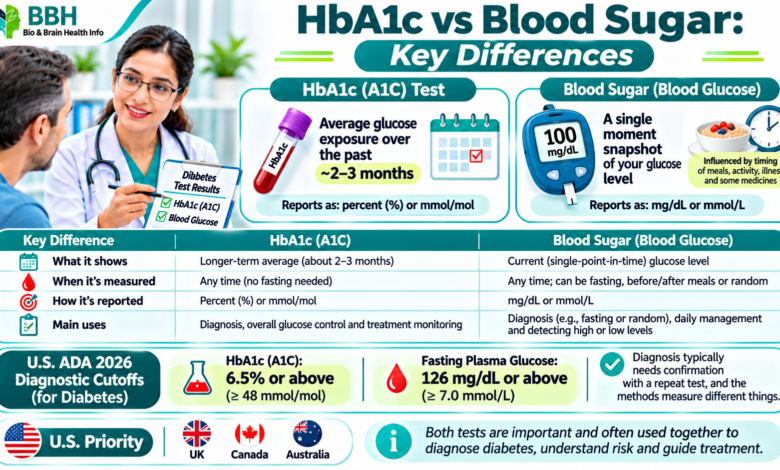
The most useful distinction is time. HbA1c reflects glucose exposure over approximately the preceding two to three months. A blood glucose test instead reports the concentration at a specific moment, whether that is fasting, after a meal or during an illness. Neither measurement describes every aspect of diabetes by itself.
| Feature | HbA1c (A1C) | Blood glucose |
|---|---|---|
| What it describes | Average glucose exposure over about 2–3 months | Concentration at one specific moment |
| Units | % or mmol/mol | mg/dL or mmol/L |
| Fasting | Usually not needed | Required for fasting glucose, not for random glucose |
| Clinical uses | Diagnosis and longer-term treatment monitoring | Diagnosis under defined conditions, and day-to-day management |
An HbA1c result is usually shown as a percentage in the United States or as mmol/mol in other systems. Plasma glucose may be shown as mg/dL in the U.S. or mmol/L in the UK, Canada and Australia. Mixing these units can make an otherwise clear report look contradictory.
A clinician may use both tests to detect diabetes, identify elevated risk or monitor glucose management. The choice depends on the clinical question, the person’s medical history, the method available and whether a condition makes HbA1c less reliable.
A common mistake is calling an A1C of 6.0% the same as a glucose of 6.0 mmol/L. They are entirely different measurements; conversion between them is not a simple change of units.
2. How HbA1c works
HbA1c is glycated hemoglobin: glucose attaches to hemoglobin inside circulating red blood cells. The proportion measured reflects average glucose exposure over the lifespan of those cells, weighted toward more recent weeks. The result is not the actual glucose level at the instant a laboratory technician draws blood.
The test is convenient because fasting is normally unnecessary. It also avoids many of the hour-to-hour changes that occur after meals or exercise. In people already diagnosed with diabetes, it can help assess whether the overall treatment plan is meeting longer-term goals.
Yet an average hides variation. Two patients can have a similar A1C even if one spends most days near a steady glucose level and another experiences frequent highs and lows. A finger-stick record or continuous glucose monitor can reveal patterns that a single average cannot.
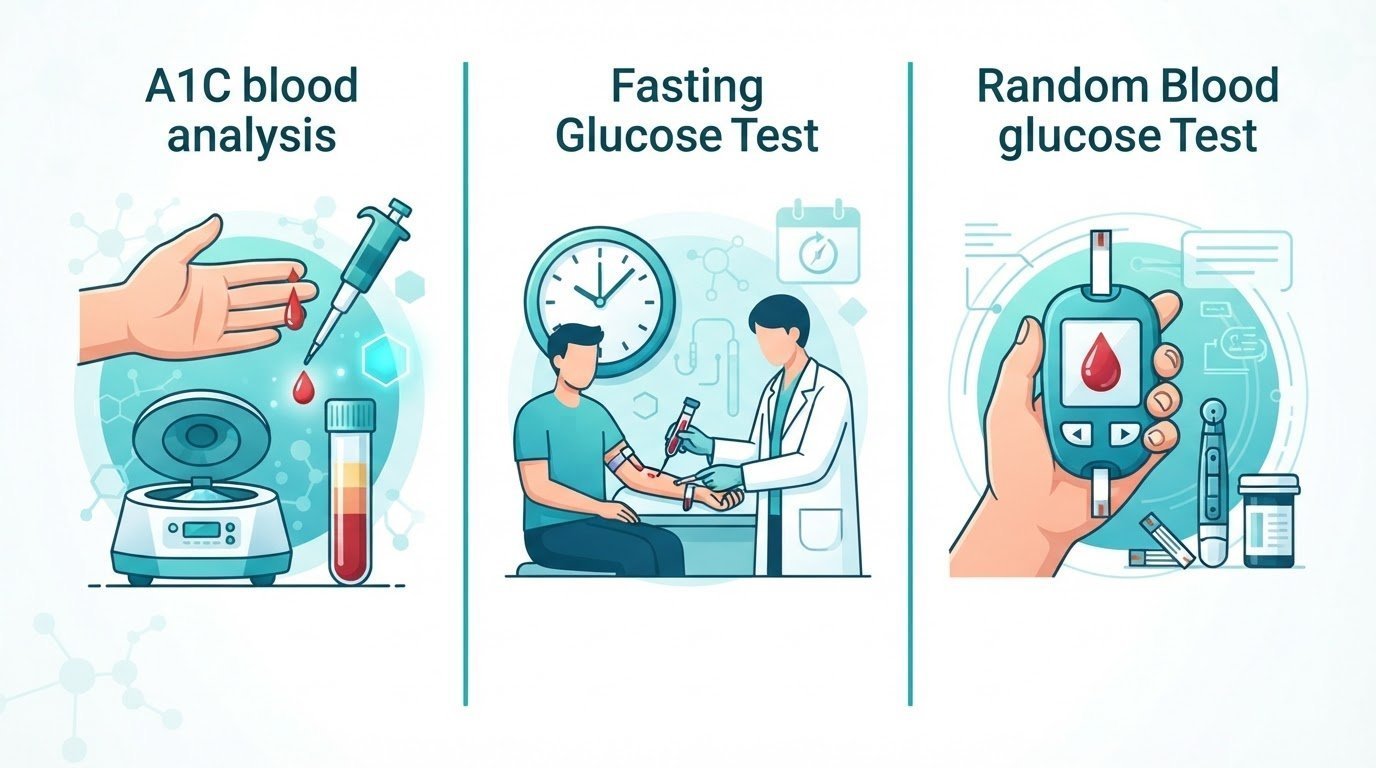
A1C is not a test of insulin quantity or a stand-alone method for distinguishing type 1 from type 2 diabetes. Clinical symptoms and additional evaluation may be required, particularly when the person becomes unwell quickly.
A careful HbA1c vs blood sugar comparison must preserve the test type, its units and the clinical question being asked.
3. What glucose tests measure
Fasting plasma glucose measures blood glucose after at least eight hours without calorie intake. A random laboratory plasma glucose measurement is collected without regard to meals. The two-hour glucose result during a 75-gram oral glucose tolerance test comes from a standardized glucose challenge.
Each test answers a specific question. Fasting glucose provides a consistent reference condition. Random glucose can be valuable when classic symptoms develop and prompt testing is important. The oral glucose tolerance test evaluates the response to a controlled challenge.
Home meters sample capillary blood glucose to assist ongoing management, while continuous glucose monitors estimate glucose in interstitial fluid and display patterns. They are valuable tools but are not generally interchangeable with diagnostic venous laboratory tests.
A reading of 150 mg/dL after lunch should not be interpreted as a fasting glucose result, nor should a home reading two hours after breakfast be treated as the standardized two-hour OGTT.
4. US ADA 2026 diagnostic thresholds
The ADA 2026 diabetes diagnostic thresholds for nonpregnant adults include A1C at least 6.5%, fasting plasma glucose at least 126 mg/dL (7.0 mmol/L) and two-hour 75-g OGTT plasma glucose at least 200 mg/dL (11.1 mmol/L). Random plasma glucose at least 200 mg/dL can establish diabetes with classic hyperglycemia symptoms or a hyperglycemic crisis.
For prediabetes, U.S. ADA criteria include HbA1c 5.7–6.4%, fasting plasma glucose 100–125 mg/dL and two-hour OGTT glucose 140–199 mg/dL. These categories refer to different laboratory tests and cannot be used interchangeably.
| US ADA 2026 test | Prediabetes range | Diabetes threshold |
|---|---|---|
| HbA1c | 5.7–6.4% (39–47 mmol/mol) | ≥6.5% (≥48 mmol/mol) |
| Fasting plasma glucose | 100–125 mg/dL (5.6–6.9 mmol/L) | ≥126 mg/dL (≥7.0 mmol/L) |
| Two-hour 75-g OGTT | 140–199 mg/dL (7.8–11.0 mmol/L) | ≥200 mg/dL (≥11.1 mmol/L) |
Unless unequivocal hyperglycemia is present, diabetes diagnosis generally requires two qualifying abnormal results, which may come from the same test repeated or from two different appropriate tests. If the tests disagree, clinicians often repeat the test above its diagnostic threshold.
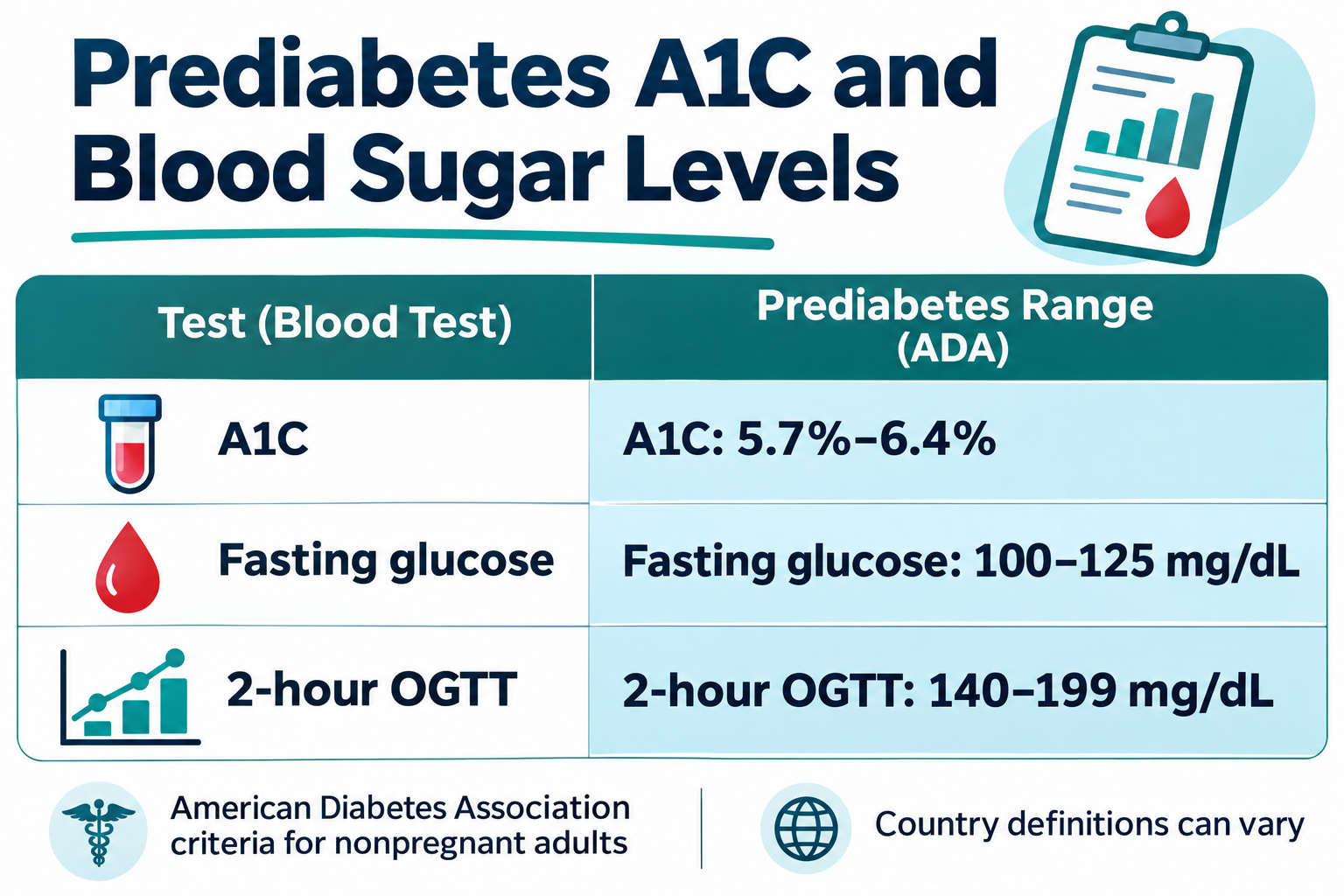
An individual result close to a cutoff deserves clinical context rather than an assumption that one point of difference marks an abrupt biological change. Test variability, the condition of the patient and the testing method can all influence follow-up.
A careful HbA1c vs blood sugar comparison must preserve the test type, its units and the clinical question being asked.
5. International differences and units
U.S. ADA guidance calls HbA1c 5.7–6.4% prediabetes. The United Kingdom commonly uses 42–47 mmol/mol, approximately 6.0–6.4%, for non-diabetic hyperglycemia or increased diabetes risk. Canadian and Australian references also often use 6.0–6.4% as an HbA1c higher-risk range.
Diabetes diagnosis at HbA1c 6.5% (48 mmol/mol) or higher is broadly recognized, subject to confirmation and appropriate testing circumstances. The difference in prediabetes definitions does not imply different glucose biology among countries.
| Country | HbA1c higher-risk category | HbA1c diabetes threshold |
|---|---|---|
| United States | 5.7–6.4% | ≥6.5% |
| United Kingdom | 42–47 mmol/mol (~6.0–6.4%) | ≥48 mmol/mol (~6.5%) |
| Canada | 6.0–6.4% | ≥6.5% |
| Australia | 6.0–6.4% commonly used for increased risk | ≥6.5% |
The United States commonly presents glucose results in mg/dL while the UK, Canada and Australia generally use mmol/L. To convert glucose, divide mg/dL by approximately 18.018 for mmol/L. This conversion does not apply to HbA1c percentages or IFCC mmol/mol.
A report may show both A1C percentage and IFCC mmol/mol for convenience. Always use the correct unit and local guideline before interpreting a result, particularly if information is being compared across countries.
6. Do you need to fast?
An HbA1c-only laboratory visit usually does not require fasting. This is useful when a person cannot attend an early morning appointment or when a clinician wants a long-term overview without scheduling an overnight fast.
A fasting plasma glucose test does require at least eight hours without calories. Plain water is generally permitted, but the laboratory may give specific instructions if other tests are ordered. People using insulin or glucose-lowering medicines should request individualized medication and fasting guidance.
Random plasma glucose does not require fasting. A two-hour OGTT has its own preparation and measured glucose drink. It should never be confused with checking a home meter two hours after an ordinary meal.
When multiple tests are ordered together, follow the preparation instructions for each rather than assuming the HbA1c rule applies to every blood sample.
A careful HbA1c vs blood sugar comparison must preserve the test type, its units and the clinical question being asked.
7. HbA1c vs Blood Sugar: Why Results Disagree
Discordance does not automatically mean one laboratory made an error. The measurements have different time horizons. A person whose glucose rises mostly after meals may have a fairly ordinary fasting reading while their longer-term average is higher.
Red blood cell changes also affect A1C. Iron deficiency can sometimes produce a falsely elevated HbA1c, while bleeding, transfusion, hemolysis, certain hemoglobin variants, kidney disease and therapies affecting red-cell production may alter the relationship between A1C and actual glucose.
ADA 2026 recommends considering interference when A1C and repeated glucose measurements disagree substantially. In conditions where HbA1c is unreliable, diagnosis should use appropriate plasma glucose criteria instead of forcing an interpretation from the A1C value.

Pregnancy introduces further limitations and separate diagnostic pathways. Rapidly developing type 1 diabetes can also require prompt plasma glucose and ketone evaluation rather than relying on an average that may not yet reflect the acute change.
8. Estimated average glucose explained
Estimated average glucose (eAG) expresses an HbA1c result as an approximate glucose concentration using a population-derived relationship. A commonly used formula is eAG in mg/dL = 28.7 × A1C (%) − 46.7.
For example, an HbA1c of 6.0% corresponds to an eAG around 126 mg/dL (7.0 mmol/L); 6.5% to around 140 mg/dL (7.8 mmol/L); and 7.0% to around 154 mg/dL (8.6 mmol/L). These are estimates, not direct measurements at any particular meal or hour.
An estimated average should not be labeled a fasting glucose result. Two people with similar eAG values can have very different patterns of hypoglycemia, postmeal spikes or overnight glucose exposure.
If the HbA1c result is inaccurate because of a red-cell condition, the eAG derived from it may also be misleading. This is another reason to consider symptoms and glucose monitoring records rather than relying on a calculated average alone.
9. Diagnosis versus management targets
An HbA1c result at or above 6.5% is a diagnostic threshold in the appropriate setting, but after someone has diabetes, HbA1c can serve as a treatment measure. Many nonpregnant adults have an individualized goal around below 7%, when that is safe and appropriate.
This means that an A1C result of 6.8% can meet a diagnostic definition and still be near or within a particular person’s treatment goal. There is no contradiction: diagnosis and glucose-management assessment ask different questions.
For many nonpregnant adults already living with diabetes, common before-meal glucose targets are 80–130 mg/dL, with peak postmeal glucose below 180 mg/dL. These are treatment targets and do not replace laboratory diagnostic thresholds.
Pregnancy, frailty, frequent severe low glucose and complex health conditions may call for other treatment goals. Medication changes should reflect a clinician-approved plan, not a general article.
10. Home meters and CGM
Finger-stick meters answer what blood glucose is doing at the moment. CGM shows interstitial-glucose trends and alerts, which may help identify nighttime lows, postmeal rises or large day-to-day fluctuations.
CGM can lag blood glucose during rapid change and is subject to sensor inaccuracies. If a reading does not match symptoms, follow the device instructions regarding finger-stick confirmation. Severe symptoms should not be ignored merely because a sensor displays a reassuring value.
HbA1c complements these patterns by summarizing longer-term exposure. Someone with frequent severe lows may have a seemingly acceptable A1C but still need urgent treatment adjustments to reduce risk.
Not everyone needs a CGM or frequent self-monitoring. The best approach depends on diabetes type, treatment, access, personal risk and professional guidance.
11. Choosing follow-up tests
When symptoms suggest diabetes, a clinician may order fasting plasma glucose or HbA1c and consider OGTT if further assessment is necessary. Classic symptoms with a random laboratory plasma glucose at least 200 mg/dL can meet the diagnostic criterion without routine fasting first.
Related BBH reading: HbA1c Test: Levels, Results and Meaning, Fasting Blood Sugar: Levels and Results and Diabetes Diagnosis: Which Tests Are Used?.
If A1C is unreliable due to anemia or altered red-cell lifespan, appropriate plasma glucose testing becomes particularly useful. Where tests conflict, a clinician may repeat the abnormal test and investigate interfering conditions.
For an established diabetes patient, the question may instead be whether current treatment controls average exposure and prevents dangerous highs and lows. HbA1c along with appropriate home monitoring can be useful for that different purpose.
Bring the complete laboratory report, test units, dates, medication list, glucose records and any symptoms to the clinical visit. This makes comparison much more informative than reporting only a rounded A1C number.
12. Common questions
Is HbA1c better than fasting glucose? Neither is universally better. They measure different aspects of glucose exposure, and the appropriate choice depends on the clinical question and possible interference.
Does A1C require fasting? Generally no, unless other fasting blood tests are ordered alongside it.
Can HbA1c be normal when glucose readings are high? Yes. The measurements cover different time periods, and recent changes or red-cell conditions may influence results.
Does A1C 6.5% mean blood glucose is 6.5 mmol/L? No. HbA1c percentage and plasma glucose mmol/L are different types of measurement.
Why do UK and U.S. A1C prediabetes ranges differ? Their guidelines apply somewhat different higher-risk definitions, despite similar diabetes thresholds.
Can a home meter diagnose diabetes? Home monitoring is valuable but does not generally replace laboratory diagnostic testing.
What if I have vomiting, abnormal deep breathing or confusion? These can signal an emergency and require immediate medical assessment, even if a recent HbA1c seems reassuring.
How often is A1C checked? In established diabetes, often about twice a year when stable and at goal or about quarterly when treatment changes or goals are not met; clinicians individualize the schedule.
Conclusion: Use HbA1c and Glucose Results Together
Comparing HbA1c vs blood sugar is most useful when readers remember that an average over months and a snapshot today answer different questions. An A1C result can complement fasting, random or monitored glucose values without replacing the context of symptoms and medical history.
U.S. ADA 2026 diagnostic criteria and international laboratory units provide reference points, but confirmatory testing and individual factors still matter. Discuss persistent disagreement between results, recurrent high or low readings, or medical conditions that may affect HbA1c with a qualified clinician.
Scientific References