Best Foods for Type 2 Diabetes
Type 2 Diabetes: Best Foods to Eat

BBH Physical Health · Diabetes & Blood Sugar · Evidence-based U.S.-first guide with UK, Canada and Australia comparisons
Thank you for reading this post, don't forget to subscribe!Searching for a list of foods that are ‘safe’ for type 2 diabetes often produces conflicting advice. One source bans bananas, another praises oats, and another claims a handful of nuts will reverse diabetes. The science supports a more useful approach: choose nutritious foods regularly, plan realistic portions and consider how your overall eating pattern supports glucose and cardiovascular health.
This guide to the best foods for type 2 diabetes focuses on specific food groups and practical choices rather than repeating a complete diet-plan article. It draws primarily on the American Diabetes Association’s 2026 nutrition recommendations, with comparisons for readers in the UK, Canada and Australia.
Why food quality matters in type 2 diabetes
Type 2 diabetes involves impaired regulation of blood glucose, commonly including insulin resistance and changes in insulin production. Food influences glucose after meals, but the overall eating pattern also affects cardiovascular health, blood pressure, lipids, body weight and everyday energy. A person’s diet should therefore be judged by more than one meter reading.
The ADA 2026 standards emphasize minimally processed, nutrient-dense foods and an individualized eating plan. No specific carbohydrate-to-protein-to-fat ratio works best for everyone. Choices may vary with medication, food availability, cultural background and health goals.
Foods higher in fiber can contribute to fullness and better diet quality. The ADA recommends at least about 14 grams of fiber per 1,000 calories, tailored to tolerance and clinical needs. The aim is gradual, sustainable improvements, not instantly removing whole food groups.
Someone with diabetes can eat nourishing carbohydrate-containing foods such as beans, fruit and oats. These contain carbohydrate and may raise glucose, but they also deliver nutrients and often fiber. The serving size, meal combination and glucose response still matter.
Best Foods for Type 2 Diabetes: Vegetables
Leafy greens, broccoli, cauliflower, peppers, zucchini, tomatoes, cucumber and many other non-starchy vegetables are practical first choices. They provide fiber, potassium and a range of vitamins with relatively modest carbohydrate loads. Fresh, canned without excessive salt and frozen versions can all be useful.
Cook vegetables in ways that preserve their appeal. Roast broccoli with a little olive oil, add tomatoes and spinach to eggs, use peppers in stir-fries or prepare a large mixed salad. There is no need to rely on raw salad at every meal.
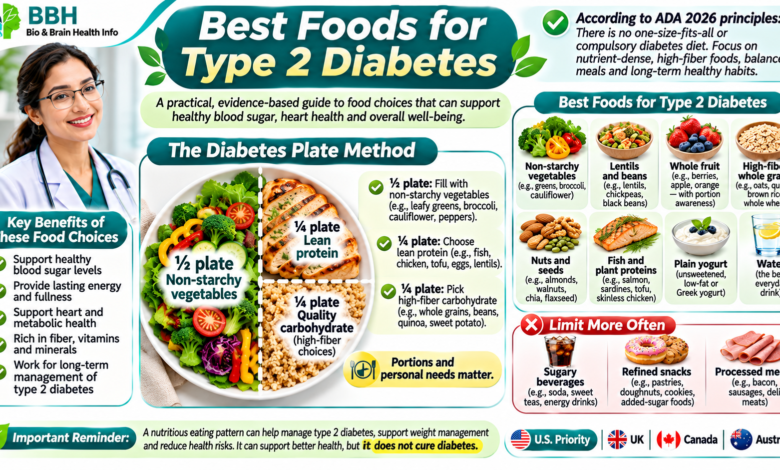
For the familiar diabetes plate method, non-starchy vegetables occupy roughly half the plate. This is a visual teaching approach rather than a mandatory weight or calorie prescription. Portion sizes and individual nutritional needs differ.
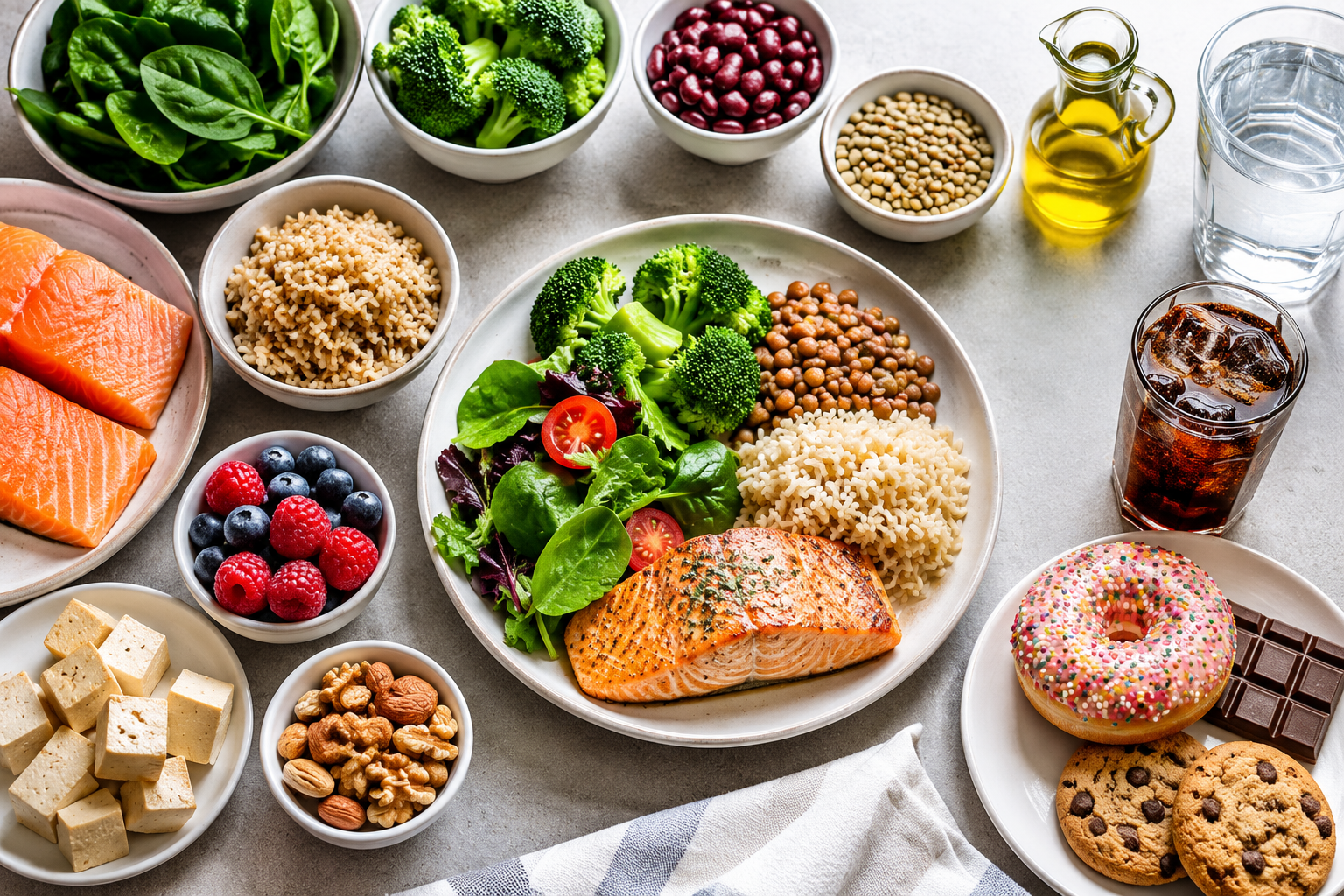
Starchy vegetables such as potatoes, corn and peas are not forbidden, but they contribute more carbohydrate and should be considered with the plate’s other carbohydrate sources. A whole potato eaten with vegetables and protein differs from a large portion of fried potatoes with sugary soda.
Best Foods for Type 2 Diabetes: Legumes
Black beans, kidney beans, chickpeas, lentils and split peas contain carbohydrate, plant protein and fiber. Their relatively slow digestion often makes them useful in satisfying meals. They are affordable, available dried or canned and adaptable to many cuisines.
Try a lentil soup, chickpea salad, bean chili or kidney beans with vegetables and a modest portion of whole grain. Rinsing canned beans can help reduce sodium. Cooking dried beans thoroughly is important for food safety.
| Food group | Examples | Useful quality |
|---|---|---|
| Non-starchy vegetables | Broccoli, spinach, peppers, cauliflower | Fiber, micronutrients, relatively few carbohydrates |
| Legumes | Lentils, chickpeas, beans | Fiber and plant protein; still contain carbohydrate |
| Whole grains | Oats, barley, quinoa, brown rice | Higher-fiber carbohydrate choices |
| Whole fruit | Berries, apples, citrus | Fiber and vitamins, especially versus juice |
| Proteins and healthy fats | Fish, tofu, eggs, unsalted nuts | Protein, unsaturated fats and meal variety |
Beans are not carbohydrate-free. A large bowl of beans plus a large helping of rice may produce more postmeal glucose rise than anticipated. Nutrition labels, the portions served and individual monitoring help guide meal construction.
People with kidney disease or a medically prescribed restriction of potassium, phosphorus or protein need individualized advice rather than assuming large amounts of legumes are appropriate.
Best Foods for Type 2 Diabetes: Whole Grains
Oats, barley, quinoa, brown rice, wholegrain bread and wholewheat pasta can fit into a type 2 diabetes eating plan. Their benefits generally relate to greater fiber and nutrient content compared with highly refined choices. Intact or minimally processed grains can be particularly useful.
The distinction is not that brown rice has zero carbohydrate or that white rice is prohibited. Both contain carbohydrate; wholegrain varieties often deliver more fiber, while the amount served remains central to glucose impact.
For breakfast, choose plain oats with unsweetened yogurt, berries and nuts rather than a very sweet flavored cereal. At lunch, combine a moderate portion of grain with vegetables and a protein source instead of eating grain alone.
Check packaged wholegrain products carefully. Some contain considerable added sugars or sodium. A claim such as ‘multigrain’ does not necessarily mean the food is predominantly wholegrain; review the ingredient list.
When choosing the best foods for type 2 diabetes, consider fiber, carbohydrates, portions, overall food quality and personal needs.
Whole fruit: berries, apples and citrus
Whole fruit provides vitamins, water and fiber and is part of the nutritious eating patterns recommended by the ADA and Diabetes UK. Berries, apples, pears, oranges, peaches and many other fruits can be included according to portion needs and preferences.
Fruit juice is less satisfying and often contains less fiber than whole fruit. A large glass can deliver the sugar of multiple pieces of fruit quickly. Whole fruit is therefore usually a better routine choice than juice or sweetened smoothies.
Bananas, mangoes and grapes are not intrinsically forbidden. They have different carbohydrate amounts for common portions, and ripeness can affect the response. Smaller servings, paired with nuts or yogurt when appropriate, can help make a balanced snack.
A person using insulin may account for fruit carbohydrate as part of their usual dosing plan. Do not use the same fixed fruit portion for everyone, especially children, pregnancy or individuals with highly variable glucose.
Fish, poultry, eggs and tofu
Fish, skinless poultry, eggs, tofu and tempeh help provide protein, which supports maintenance of tissues and can make meals more satisfying. Protein foods can be chosen according to dietary preference, finances and other health conditions.
Fatty fish such as salmon, sardines and mackerel also provide omega-3 fats. Diabetes UK and other nutrition guidance favor fish as part of overall cardiovascular eating patterns, while recognizing that no single fish meal is a blood-sugar treatment.
Vegetarian options include tofu, eggs, yogurt and legumes. A plant-forward eating pattern can provide adequate protein with thoughtful variety. Heavily breaded, deep-fried or salty processed protein products may undermine some benefits.
Patients with chronic kidney disease should discuss protein portions with their renal or diabetes dietitian; the best amount can vary with kidney function and other circumstances.
When choosing the best foods for type 2 diabetes, consider fiber, carbohydrates, portions, overall food quality and personal needs.
Nuts, seeds and unsaturated fats
Almonds, walnuts, peanuts, chia seeds, flaxseed and pumpkin seeds add fiber, unsaturated fat and some protein. Olive or canola oil and avocado are other useful sources of mostly unsaturated fat in balanced meals.
These foods support food variety and can be substituted for sources of excessive saturated fat. Their calories still count: a small handful of nuts or measured oil may be practical, while repeatedly adding large quantities is not necessary.
Choose unsalted nuts where possible. Nut butters can be convenient, but read labels for added sugars and consider the amount used. People with nut allergies should avoid allergens and select suitable alternatives.
The objective is to improve dietary patterns and cardiovascular risk factors, not to promise that walnuts, chia or olive oil directly lowers blood sugar in everyone.
Plain yogurt, dairy and alternatives
Plain yogurt, milk and suitable unsweetened fortified alternatives can contribute protein, calcium and other nutrients. The ADA includes low-fat dairy and nondairy alternatives among foods compatible with a nutrient-dense eating pattern.
Sweetened fruit yogurts and flavored coffees may contain substantial added sugar. Compare nutrition panels and choose plain yogurt with whole fruit when practical. Milk still contains lactose, a carbohydrate, so portions remain relevant.
Greek-style yogurt may provide more protein than some other varieties, but amounts depend on the product. If using plant-based drinks, check whether they provide protein and calcium and whether sweeteners have been added.
People with lactose intolerance, milk allergy, kidney problems or other dietary restrictions should choose appropriate options with professional support.
The best drinks and simple food swaps
Water is generally an excellent everyday drink. Unsweetened tea, coffee and sparkling water can also fit, depending on caffeine tolerance and other individual needs. Replacing sugar-sweetened beverages is an impactful food decision.
Instead of a large fruit juice, eat whole fruit. Replace a frequent pastry breakfast with oats, eggs or plain yogurt. Try beans or fish more often in place of processed meats, and add vegetables when ordering takeout.
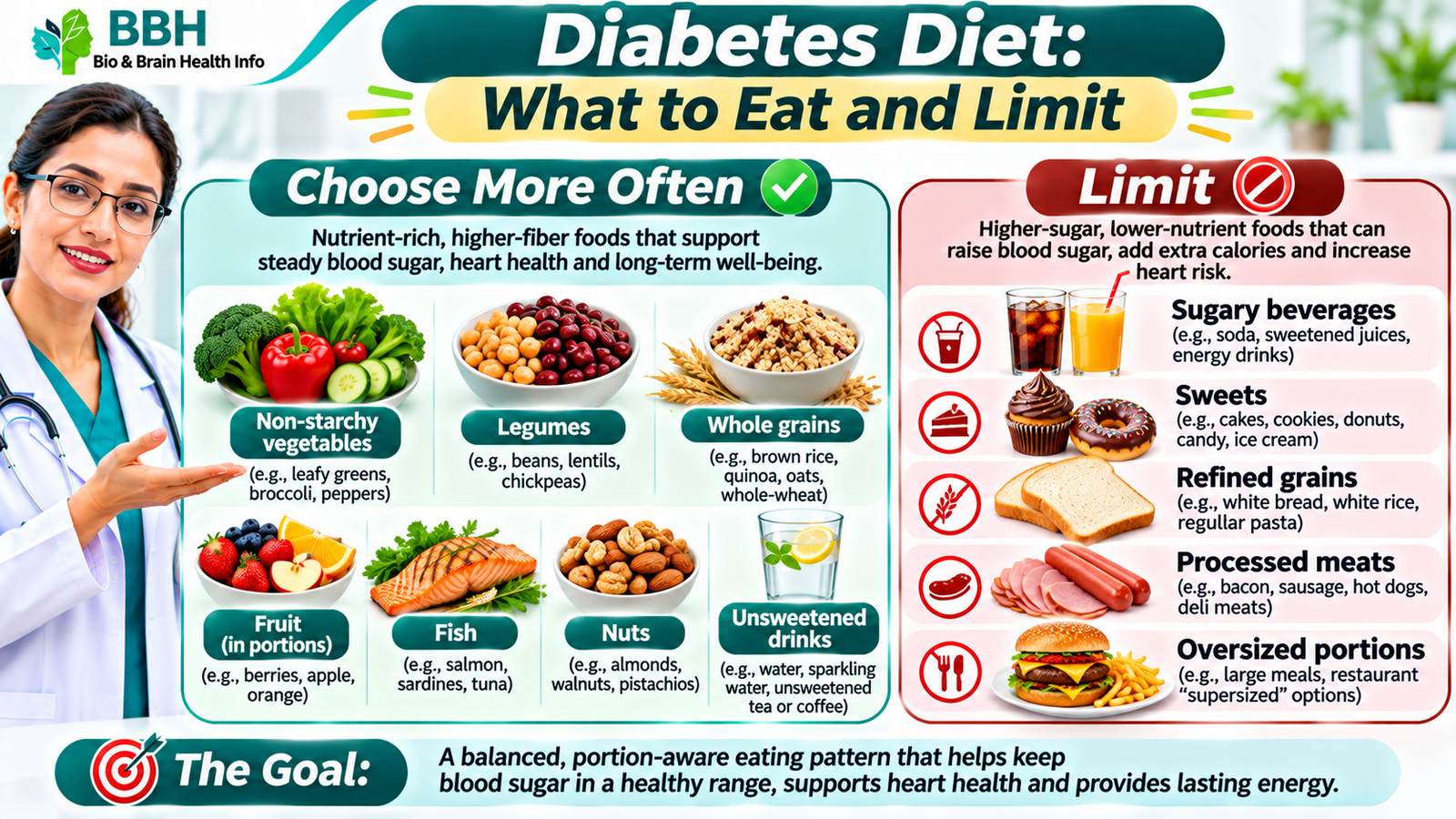
Food labels help distinguish sugar-free from carbohydrate-free. A product marketed as ‘diabetic’ may still contribute carbohydrate, saturated fat or calories. The label and serving size are more useful than the marketing term.
Small, repeatable substitutions are often easier to maintain than strict ‘good food/bad food’ rules. People can plan treats occasionally within an overall nutritious eating pattern.
A practical balanced plate and meal combinations
Use roughly half the plate for non-starchy vegetables, a quarter for protein and a quarter for a carbohydrate food. Add water and moderate amounts of healthy fat. The method is adaptable to Mediterranean meals, South Asian lentil dishes, UK dinners and Australian mixed meals.
| Part of plate | Visual share | Example |
|---|---|---|
| Non-starchy vegetables | About half | Salad, peppers and broccoli |
| Protein | About one-quarter | Tofu, chicken, eggs or fish |
| Carbohydrate food | About one-quarter | Rice, beans, wholegrain bread or potato |
| Healthy fat and drink | As appropriate | Olive oil, nuts and water |
A lunch might combine roasted vegetables, salmon and quinoa. A vegetarian bowl might contain tofu, greens, chickpeas and a measured wholegrain portion. The carbohydrate amount is not identical in those two meals, so monitoring and individual goals remain important.
For a simple breakfast, consider oats with berries and nuts or a vegetable omelet and wholegrain toast. For a convenient dinner, use a frozen vegetable mix, canned beans and a quick-cooking grain, with modest seasoning and oil.

People who need carbohydrate counting should use their prescribed plan, especially with mealtime insulin. The plate illustration is educational and not a replacement for a personalized carbohydrate target.
US, UK, Canada and Australia food guidance
The U.S. ADA 2026 standards emphasize non-starchy vegetables, whole fruit, legumes, lean proteins, whole grains, nuts and seeds while minimizing sugary drinks, sweets and refined or heavily processed foods. The standards also emphasize individualized medical nutrition therapy.
Diabetes UK similarly encourages vegetables, fruit, wholegrains, oily fish, pulses and healthier fats. Its advice recognizes that someone with type 2 diabetes need not avoid every carbohydrate or buy special products marketed for diabetes.
Diabetes Canada’s balanced plate resource focuses on food-group proportions and practical everyday meals. The Australian NDSS recommends a variety of healthy eating patterns, including Mediterranean-style, plant-based and suitably planned lower-carbohydrate approaches.
| Region | Main evidence-based emphasis | Food examples |
|---|---|---|
| United States | ADA 2026: individualized nutrient-dense patterns | Vegetables, whole fruit, legumes, whole grains |
| United Kingdom | Diabetes UK: balanced variety and reduced refined foods | Pulses, wholemeal foods, oily fish |
| Canada | Diabetes Canada: balanced plate portions | Vegetables, grains and protein foods |
| Australia | NDSS: high-fiber, flexible eating patterns | Vegetables, legumes and healthy fats |
Food labels and cultural staples vary by country, but the core approach is similar: prioritize nutrient density, consider carbohydrate portions and make habits sustainable. Regional food examples are suggestions, not clinical thresholds.
Safety: medications, kidneys and weight changes
People taking insulin or medicines such as sulfonylureas can develop hypoglycemia when meals are delayed or carbohydrate intake suddenly decreases. A major dietary change should be discussed with the treating team rather than accompanied by independently altered medication doses.
Very restrictive or ketogenic diets may be inappropriate for some people taking SGLT2 medicines because of ketoacidosis risk. Prolonged fasting, dehydration and illness also require clinical planning, not instructions from a general food list.
Weight management can improve several outcomes for some people with type 2 diabetes, but weight loss is not universally appropriate, and no food list guarantees remission. The ADA recommends attention to access, financial resources and individual health needs.
Those who are pregnant, older, have chronic kidney disease or live with an eating disorder need an individualized nutrition approach. Seek care for repeated low readings, major unintended weight loss or severe symptoms.
Frequently asked questions about foods
Are bananas safe for type 2 diabetes? They can be included in portions that fit a person’s carbohydrate needs; they are not universally prohibited.
Is brown rice better than white rice? Brown rice typically supplies more fiber, but both contain carbohydrate and portion size still matters.
Can I eat potatoes? Yes. Potatoes are starchy carbohydrate foods, so their preparation, portion and meal pairing matter.
Are eggs allowed? Eggs can fit a balanced pattern; overall dietary quality and individual cardiovascular considerations are more important than a universal ban.
Is honey healthier than sugar for glucose? Honey still contains sugars and should not be treated as a free food.
Are oats safe? Plain oats are a higher-fiber choice, but flavored instant packets may contain added sugar and portions still matter.
Can I eat fruit every day? Whole fruit generally belongs in a healthy pattern; individual carbohydrate targets can guide serving amounts.
Will eating these foods cure diabetes? No. Food choices can support management and sometimes contribute to type 2 remission in a broader supervised program, but they are not a guaranteed cure.
Conclusion: Choose a Variety of Nourishing Foods
The best foods for type 2 diabetes are not a mysterious list of superfoods. Non-starchy vegetables, legumes, whole grains, whole fruit, appropriate proteins, nuts, healthy oils and water work together as part of an individualized eating pattern.
Focus on realistic portions, consistent habits and medical nutrition advice that accounts for medication and other health conditions. An evidence-based approach can support glucose management and heart health without promising a cure.
Scientific References