Diabetes Meal Plan: 7-Day Example
7-Day Diabetes Meal Plan for Beginners

BBH Physical Health · Diabetes & Blood Sugar · U.S.-priority evidence-based meal planning with UK, Canada and Australia context
Thank you for reading this post, don't forget to subscribe!A menu can make healthy eating feel more manageable, but one ready-made calendar cannot meet every person’s calorie, carbohydrate or medicine needs. This example offers seven days of practical meal combinations using familiar ingredients, while showing readers how to adapt the plan safely.
This diabetes meal plan follows the general principles of ADA 2026 medical nutrition therapy: choose nutrient-dense foods, build balanced meals, plan carbohydrate portions and personalize eating to medications, preferences and health conditions. It is a worked example, not a prescription or a promise of weight loss.
The United States is the primary audience, with examples adaptable for the UK, Canada and Australia. It also includes a grocery list, meal-preparation approach, optional snacks and answers to common questions about rice, fruit, timing and insulin.
How to use this seven-day example
This seven-day example is a flexible menu for adults interested in balanced diabetes-friendly eating. It is not a fixed-calorie, fixed-carbohydrate prescription, and it does not determine how much insulin or other medication anyone should take. A qualified dietitian can adjust portions, allergies, medical conditions, cultural foods and financial constraints.
The American Diabetes Association 2026 states that there is no single ideal percentage of calories from carbohydrate, protein and fat for everyone with diabetes. The food pattern should support glucose management, cardiovascular health, adequate nutrition and sustainable habits.
The meals use non-starchy vegetables, legumes, protein, whole fruit, whole grains and unsaturated fats repeatedly so shopping and preparation stay manageable. Optional snacks are suggestions rather than requirements; timing and need depend on hunger, medicine and the care plan.
Use your prescribed approach to monitoring and take notes about repeated postmeal changes when your clinician recommends it. Glucose responses vary, so a sample menu should never override individual clinical advice.
Build meals using the diabetes plate
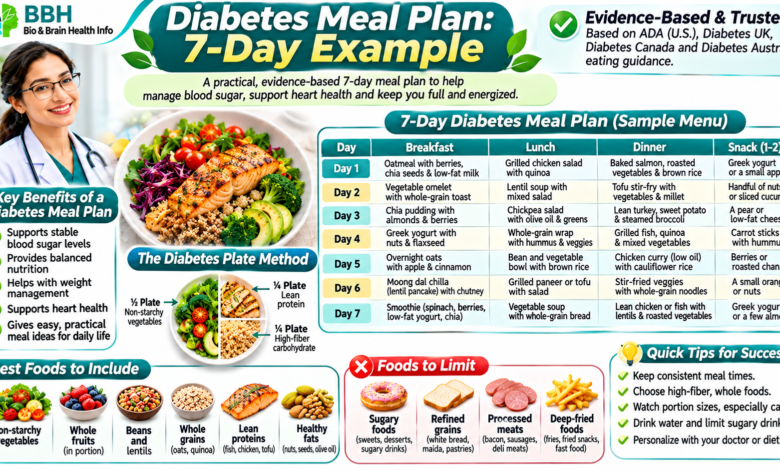
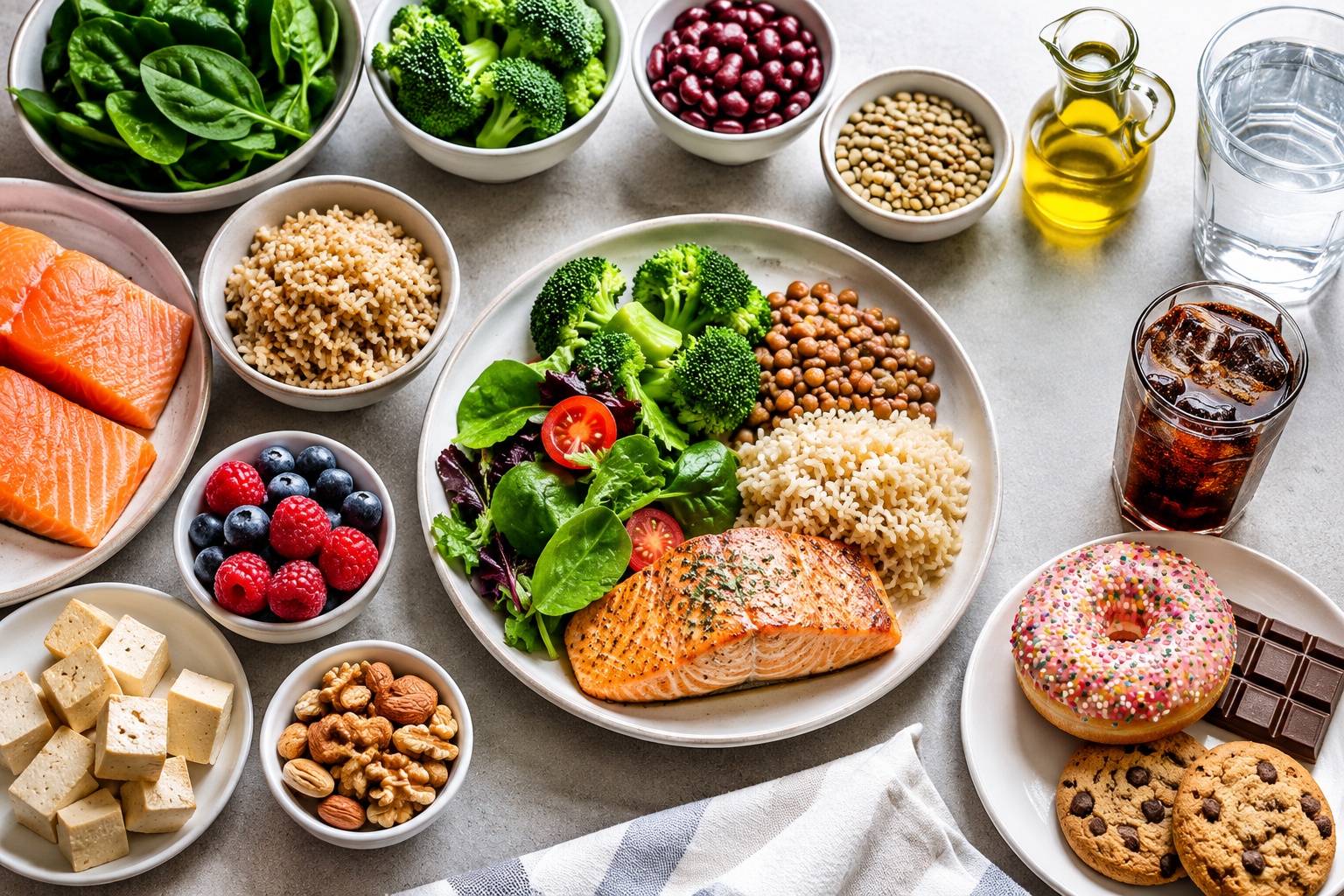
A practical starting point is the plate method. Use approximately half the plate for non-starchy vegetables, one-quarter for protein and one-quarter for carbohydrate-containing foods. Water or another unsweetened drink commonly accompanies the meal, while healthy fats can be added in reasonable amounts.
Vegetable choices include broccoli, green beans, spinach, peppers, leafy salads and cauliflower. Protein choices include fish, skinless poultry, tofu, eggs and beans. Carbohydrate choices include oats, wholegrain bread, brown rice, quinoa, legumes or potato.
| Plate component | Visual share | Examples |
|---|---|---|
| Non-starchy vegetables | Half | Broccoli, greens, tomato, peppers |
| Protein | One-quarter | Fish, tofu, eggs, poultry |
| Carbohydrate foods | One-quarter | Whole grains, beans, potato, brown rice |
| Drink and fats | As appropriate | Water, olive oil, nuts |
Legumes can provide both carbohydrate and protein, so the plate is a visual aid rather than a precise nutrient calculation. People who require carbohydrate counting, including some insulin users, should use their individualized target and the nutrition labels or food information available.

A plate diagram should not force someone to eat too little. Food needs change with age, activity, appetite, pregnancy and other illnesses. The best plan meets energy and nutrient requirements while supporting safe glucose management.
Diabetes Meal Plan: Seven-Day Menu Table
Each day includes three main meal ideas plus one optional snack. Swapping a lunch from Monday with a lunch from Thursday is perfectly acceptable; this is not a strict sequence in which foods must be eaten on exact weekdays.
| Day | Breakfast | Lunch | Dinner | Optional snack |
|---|---|---|---|---|
| 1 | Oatmeal, berries, walnuts | Chickpea and vegetable salad | Salmon or tofu, broccoli, quinoa | Apple with almonds |
| 2 | Spinach eggs and wholegrain toast | Lentil soup and salad | Chicken or tofu, vegetables, brown rice | Plain yogurt and berries |
| 3 | Chia pudding and fruit | Wholegrain hummus vegetable wrap | Tofu and vegetable stir-fry | Vegetables and hummus |
| 4 | Plain yogurt, nuts and seeds | Quinoa and bean salad | Salmon, green beans, brown rice | Orange or seasonal fruit |
| 5 | Vegetable omelet | Rice, bean and vegetable bowl | Turkey or tofu, sweet potato, salad | Unsalted nuts |
| 6 | Overnight oats and fruit | Chicken or tofu salad with wholegrain side | Lentil vegetable curry and rice | Pear and seeds |
| 7 | Wholegrain porridge and banana | Bean vegetable soup and toast | Bean vegetable bowl with avocado | Whole fruit |
Meals were selected to reuse practical ingredients while including a variety of plant and protein foods. Most combinations can be adapted for vegetarian diets, and all should be adjusted for allergies, food access, medication and cultural preferences.
The menu deliberately avoids naming exact calories or carbohydrate totals because they would require standardized recipes, weighed serving sizes and personal nutritional assessment. A person using insulin should never guess an insulin dose from this table.
If you prefer smaller, more frequent meals, discuss how that pattern fits your treatment. Some people benefit from routine meal timing; others follow different schedules safely with clinician-guided treatment.
Diabetes Meal Plan Day 1: A Balanced Start
Breakfast: prepare plain oatmeal with cinnamon and a modest portion of berries. Add unsalted walnuts or a spoon of chia seeds for texture and unsaturated fat. Use an unsweetened milk option if preferred, checking the label for carbohydrate.
Lunch: combine chickpeas, cucumber, tomatoes, peppers and leafy greens with lemon and olive oil. Add an appropriate serving of wholegrain toast or another familiar grain. Chickpeas contain carbohydrate as well as plant protein.
Dinner: serve baked salmon or tofu with roasted broccoli and a suitable portion of quinoa. Season with herbs, garlic and lemon rather than relying on high-sugar sauces. This balances fiber-rich vegetables, protein and carbohydrate.
Optional snack: an apple with a small handful of almonds. This is an example only; if snacks are not needed for your treatment or hunger, do not add them automatically.
A personalized diabetes meal plan should account for medication, activity, food preferences and safe carbohydrate intake.
Day 2: affordable batch-cooked meals
Breakfast: eggs with spinach and tomatoes, accompanied by wholegrain toast. A tofu scramble can replace the eggs, while an unsweetened drink completes the meal.
Lunch: warm lentil soup with carrots, celery, greens and herbs. Serve it with a side salad and a portion of wholegrain bread if needed. Lentils provide both fiber and carbohydrate, so consider the combined amount.
Dinner: grilled chicken or baked tofu with roasted cauliflower, peppers and a portion of brown rice. Cook enough vegetables and rice to use in another meal, storing leftovers safely in the refrigerator.
Optional snack: plain yogurt with berries. Choose an unsweetened yogurt or fortified dairy-free alternative, reviewing protein and carbohydrate on the label.
Day 3: vegetarian-friendly options
Breakfast: unsweetened chia pudding with plain yogurt or fortified soy yogurt and whole fruit. Add seeds or nuts if appropriate; portions can be adjusted to appetite and nutritional needs.
Lunch: a wholegrain wrap containing hummus, shredded vegetables and tofu or beans. Pair it with extra salad and water. Check sauces and ready-made wraps because their carbohydrate and sodium content varies.
Dinner: stir-fry tofu with broccoli, mushrooms and peppers, served with a modest portion of wholegrain noodles or brown rice. Use garlic, ginger and reduced-sodium seasonings to add flavor.
Optional snack: cucumber, carrot or bell pepper sticks with a small serving of hummus. For a person with a nut or soy allergy, use alternative ingredients.
A personalized diabetes meal plan should account for medication, activity, food preferences and safe carbohydrate intake.
Day 4: fish and high-fiber grains
Breakfast: plain Greek-style yogurt with chopped nuts, seeds and a portion of fruit. If a yogurt alternative is used, compare labels for added sugar and protein.
Lunch: quinoa and black bean salad with leafy greens, tomatoes and a lemon dressing. Both quinoa and beans contribute carbohydrate, so the combined portion matters more than whether the ingredients are described as healthy.
Dinner: baked salmon, green beans and a portion of brown rice. A plant-based alternative is seasoned tofu or tempeh. Add a little olive oil if desired and use herbs instead of overly salty bottled sauces.
Optional snack: a whole orange or seasonal whole fruit. Whole fruit is usually more satisfying than juice because of its fiber and the need to chew.
Day 5: easy home cooking
Breakfast: vegetable omelet with tomatoes and mushrooms, accompanied by a slice of wholegrain toast. A breakfast containing protein and vegetables can be a convenient alternative to sweet pastries.
Lunch: brown rice and bean bowl with roasted vegetables, avocado and a small amount of salsa. Beans and rice both supply carbohydrate; adjust the grain amount and use generous non-starchy vegetables.
Dinner: lean turkey, chicken or a vegetarian protein with baked sweet potato and a large salad. Sweet potato is nutritious but is still a starchy carbohydrate; the amount served should fit individual needs.
Optional snack: a small handful of unsalted nuts. Nuts are energy-dense, so they work best as a sensible portion rather than unlimited snacking.
Day 6: simple family-friendly meals
Breakfast: overnight oats prepared with plain yogurt, chia and whole fruit. Mix ingredients the previous evening and refrigerate. Watch sweetened flavored yogurts and large additions of honey or syrup.
Lunch: grilled chicken or tofu salad with mixed vegetables, olive oil dressing and a small wholegrain roll if appropriate. Adding protein and a carbohydrate source can create a more complete meal than salad greens alone.
Dinner: a lentil-and-vegetable curry with cauliflower and a measured portion of rice, or grilled fish with vegetables. Choose cooking methods and oil amounts that support overall heart health.
Optional snack: a pear with pumpkin seeds or another unsalted seed. Individuals with swallowing difficulties, allergies or kidney-related restrictions need different choices.
Diabetes Meal Plan Day 7: Flexible Leftovers
Breakfast: wholegrain porridge topped with banana slices and a few nuts. Bananas can fit into diabetes eating plans; their carbohydrate contribution should be considered alongside the porridge portion.
Lunch: vegetable soup with beans and a side of wholegrain crackers or toast. A leftover lentil dish can be reused safely if stored promptly, reheated thoroughly and consumed within appropriate food safety guidance.
Dinner: a vegetable-and-bean bowl with avocado, leafy greens and a suitable carbohydrate portion. Add tofu, eggs or another protein if desired, and use herbs to keep the meal interesting.
Optional snack: mixed berries or a small bowl of other whole fruit. A flexible weekly menu can include an occasional favorite meal; it need not become a rigid rulebook.
Shopping list and 90-minute preparation strategy
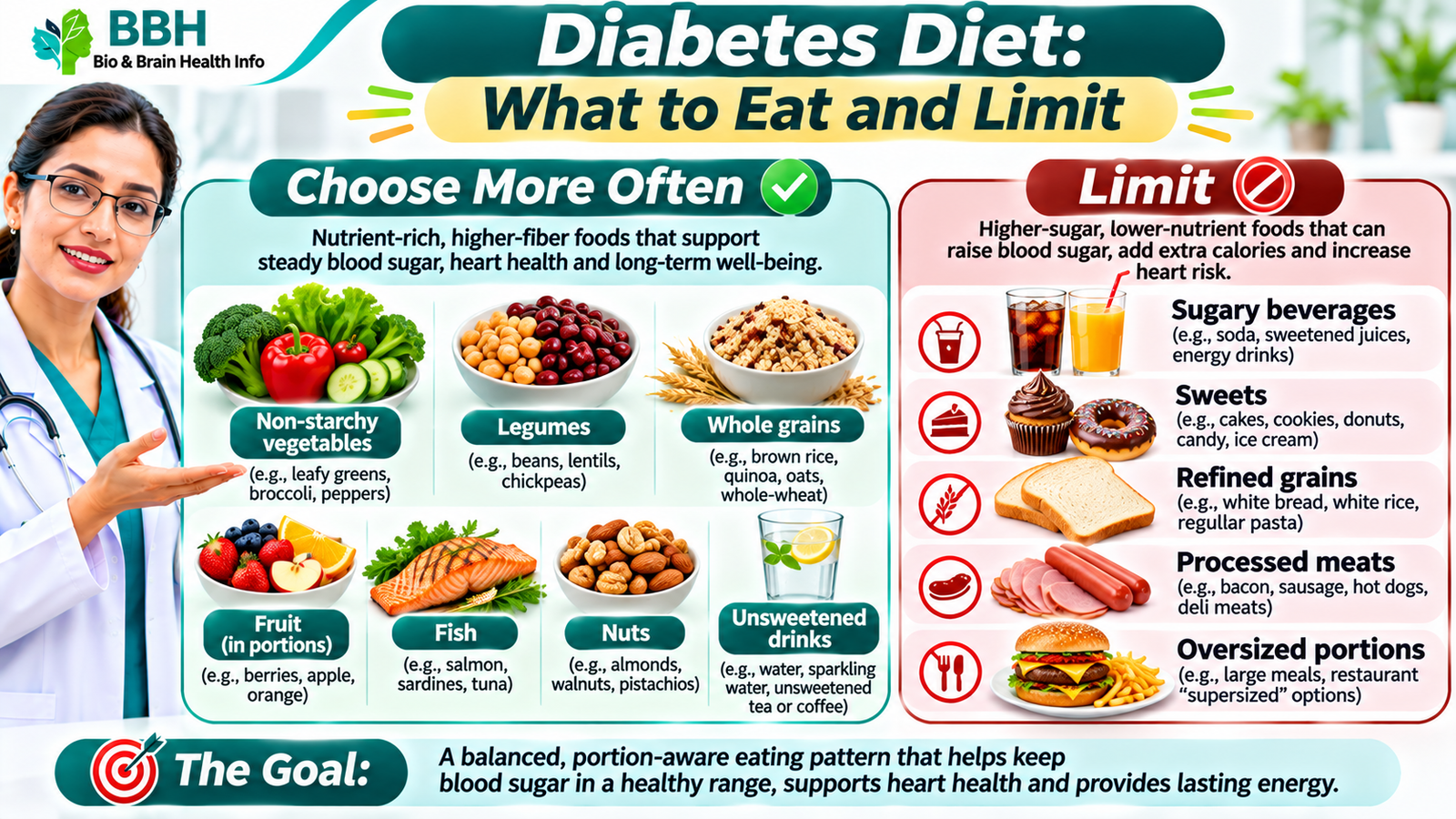
Start with vegetables: leafy greens, broccoli, cauliflower, peppers, tomatoes, cucumbers, carrots and seasonal alternatives. Frozen vegetables are useful when fresh ingredients are expensive or likely to spoil.
Choose carbohydrate staples such as oats, brown rice, quinoa, wholegrain bread or wraps, beans and lentils. Buy one or two rather than every grain on the list if storage or budget is limited. Canned beans can reduce cooking time; select low-sodium versions or rinse them.
Add proteins such as eggs, tofu, fish, chicken and plain yogurt, according to preference. Keep fruit, nuts and seeds available for optional snacks. Water, unsweetened tea and plain sparkling water help replace sugar-sweetened drinks.
Batch-cook one grain, one bean or lentil dish and a tray of vegetables. Wash produce and prepare a simple dressing. Refrigerate foods promptly, keep raw proteins separate and follow safe storage guidance. Rather than cooking seven full days of perishable meals in advance, freeze suitable portions and prepare fresh components as needed.
Adapting meals in the US, UK, Canada and Australia
U.S. readers may use oatmeal, bean chili, mixed greens, chicken and brown rice. The ADA 2026 emphasizes individual preferences and a balanced food pattern instead of one mandatory menu.
In the UK, porridge oats, wholemeal toast, lentil soup, oily fish and seasonal vegetables fit Diabetes UK’s flexible meal-planning approach. Canadian readers can use the Diabetes Canada balanced plate with familiar foods and seasonal produce.
Australian NDSS resources support varied nutritious meals and the plate method. Wholegrain bread, beans, seafood, vegetables and unsweetened dairy or alternatives can be adapted to everyday preferences.
The main differences are available foods, labeling systems, access to dietetic care and cultural meal patterns—not fundamentally different glucose physiology. A rice-based or chapati-based family meal can also use vegetable, protein and carbohydrate proportions.
Safety when changing your meal schedule
People taking insulin or sulfonylureas can develop low blood glucose if they suddenly skip meals or substantially reduce carbohydrate without a medication plan. Do not independently change medicine doses to match an internet meal chart; discuss changes with the treating professional.
Readers with type 1 diabetes still require insulin. Very-low-carbohydrate or prolonged fasting plans may be particularly risky with some medicines, including SGLT2 inhibitors, and need medical review. Pregnancy and kidney disease often require specialized nutrition planning.
Symptoms of hypoglycemia may include sweating, trembling, hunger or confusion. Follow your individual low-glucose treatment plan rather than refusing fast-acting carbohydrate because it falls outside the menu.
An educational menu cannot determine your daily energy needs. A registered dietitian can tailor serving sizes, food substitutions and nutritional adequacy, including for people who need to gain rather than lose weight.
Frequently asked questions
Does this seven-day menu provide exact calories? No. Recipe quantities and personal nutritional needs differ, so it is an illustrative plan rather than a calorie-prescribed diet.
Can the meals be vegetarian? Yes. Replace meat or fish with tofu, beans, lentils, eggs or suitable alternatives while considering combined carbohydrate and protein.
Can rice and potatoes be included? Yes. They are carbohydrate foods; include portions appropriate to the individual and balance them with vegetables and protein.
Do I need snacks? Not necessarily. Snack timing and need depend on appetite, medication and an individualized diabetes plan.
Will seven days on this plan cure diabetes? No. Nutrition supports management but cannot guarantee remission or cure.
Can I use frozen and canned foods? Yes. Unsweetened and lower-sodium options can make meal preparation convenient and affordable.
Can I repeat meals to save money? Yes. Variety across time matters, and repeated nutritious staples can simplify shopping.
Should I adjust my insulin according to this table? No. Use your prescribed insulin and carbohydrate management plan with professional advice.
Conclusion: Make a Flexible Plan That Fits Your Life
A useful diabetes meal plan is repeatable, affordable and safe with your treatment. Seven days of balanced examples can reduce planning effort, but serving sizes and meal timing should reflect your preferences, glucose monitoring and nutritional needs.
For ongoing guidance, review your eating pattern with a registered dietitian or diabetes care team, especially if you use medication that can lower glucose. Food planning can support overall health without promising that any one week reverses diabetes.
Scientific References