Starting Insulin for Type 2 Diabetes
Type 2 Diabetes: Beginning Insulin Treatment

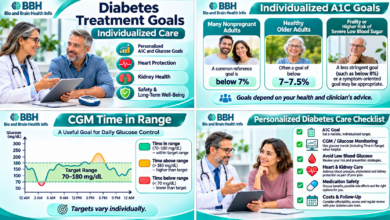
Starting insulin for type 2 diabetes can bring a mixture of questions and concerns: Will injections hurt? Is insulin permanent? What if blood sugar falls too low? Insulin is a long-established, effective treatment for diabetes, and needing it does not mean that someone has failed to manage their health. The goal is a safe, realistic treatment plan designed around individual glucose levels, other illnesses and daily life.
Thank you for reading this post, don't forget to subscribe!This education-based guide explains the role of basal insulin, insulin injection training, glucose checks, hypoglycemia, meal planning, treatment costs and the first weeks of care. United States guidance is prioritized, with important differences from the UK, Australia and Canada. It does not give a personal insulin dose, injection schedule or permission to change medication.
Starting Insulin for Type 2 Diabetes: Quick Answer
Insulin treatment is not identical for every person. Some use it temporarily during illness or severe hyperglycemia; others benefit from long-term treatment as insulin production changes. Your medical history, kidney function, work schedule, vision, dexterity, glucose patterns and medication coverage can influence the plan.
Related BBH guide: Type 2 Diabetes Treatment: Main Options.
When Should Someone With Type 2 Diabetes Start Insulin?
The ADA 2026 Standards recommend considering insulin for adults with type 2 diabetes when symptoms of hyperglycemia are present, or A1C is greater than 10% (86 mmol/mol) or blood glucose reaches at least 300 mg/dL (16.7 mmol/L). Unexpected weight loss and other evidence of catabolism also raise concern. These thresholds identify circumstances for medical consideration, not permission to inject insulin without a prescription.
For adults who do not have severe hyperglycemia or a glucose-related crisis, GLP-1-based therapy is often preferred before starting insulin. However, the choice depends on drug access, safety, the degree of glucose elevation and personal circumstances. Some people require insulin even when taking other medicines correctly.
Why prompt medical assessment matters
Excessive thirst, frequent urination, dehydration, blurred vision and unexplained weight loss can indicate substantial hyperglycemia. Vomiting, abdominal pain, deep breathing or confusion could signal an emergency and warrant urgent evaluation rather than routine outpatient treatment decisions.
Starting Insulin Is Not a Sign of Personal Failure
Type 2 diabetes often progresses because pancreatic beta cells cannot always maintain sufficient insulin production to meet the body’s needs. Food choices and activity can help, but neither can guarantee that insulin will never be required. Genetics, diabetes duration, other medical conditions and medication response also matter.
Patients sometimes delay treatment because of anxiety about needles, fear of weight gain, concern about hypoglycemia or worries about what friends and family will think. These concerns deserve straightforward answers and respectful support. A nurse or pharmacist can demonstrate the device and help identify practical barriers rather than treating reluctance as poor motivation.
The benefits of insulin depend on safe use and follow-up. A plan that is confusing, unaffordable or incompatible with daily life needs adjustment by the healthcare team.
Related BBH guide: Insulin Types: Rapid, Short and Long Acting.
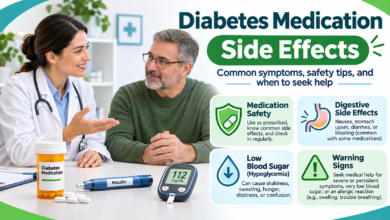
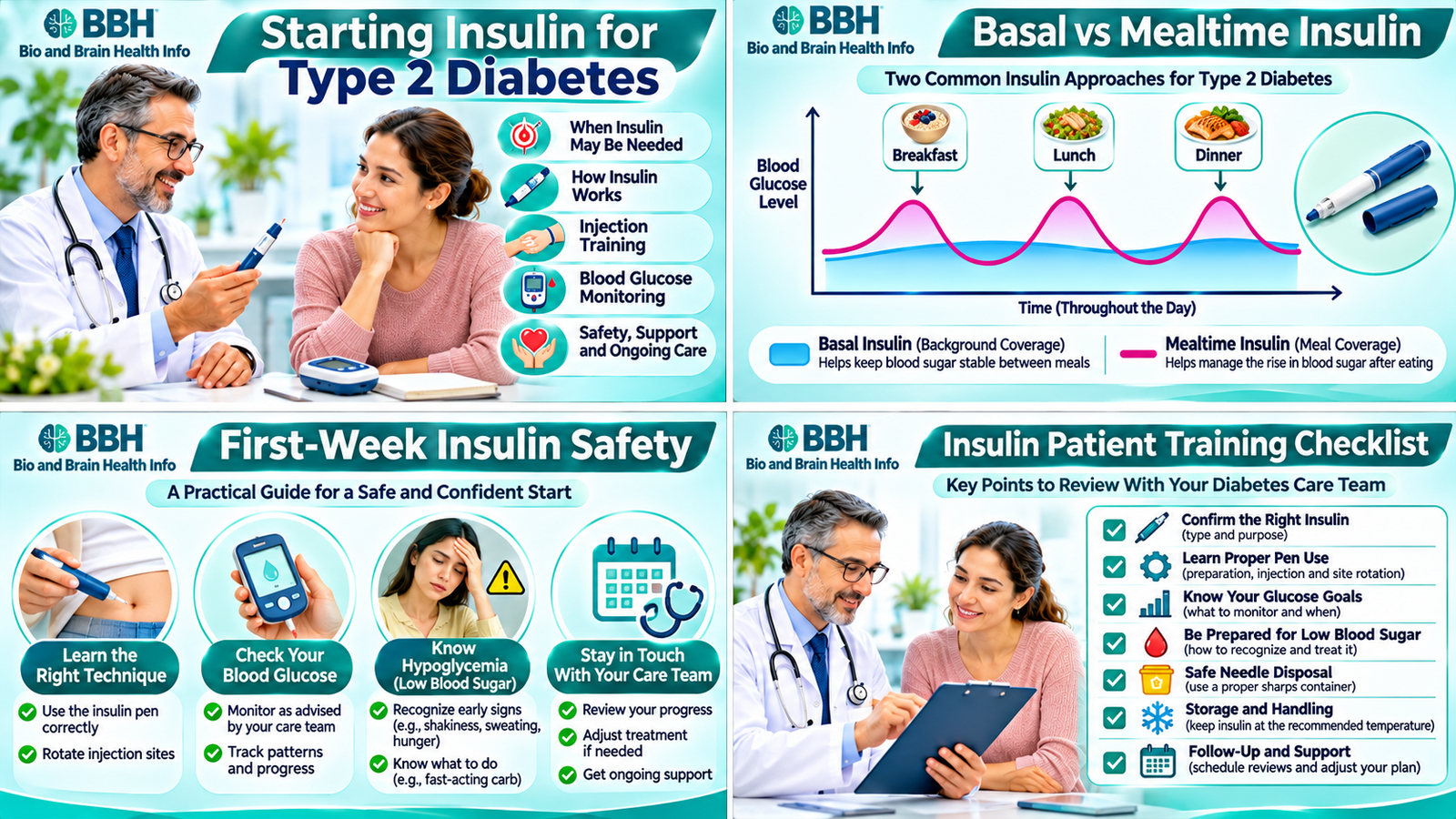
Basal, Bolus and Premixed Insulin: Main Differences
| Type | General purpose | Important distinction |
|---|---|---|
| Basal (background) insulin | Helps manage glucose between meals and overnight | Often the first insulin type for type 2 diabetes; formulation determines duration |
| Rapid- or short-acting meal insulin | Covers food-related glucose increases when prescribed | Timing and dosing depend on exact product and meal plan |
| Premixed insulin | Contains a fixed combination of insulin components | May simplify injections for some but offers less timing flexibility |
| Pump-delivered insulin | Provides programmed background and additional meal insulin | Requires training and a backup plan for device failure |
US and international recommendations commonly begin outpatient insulin treatment in type 2 diabetes with a basal preparation. This is not a universal rule: a person with severe illness, ketosis, or complicated glucose patterns may need a different approach. Different concentrations and branded formulations are not automatically interchangeable.
What about once-weekly basal insulin?
Newer long-duration formulations and evolving national approvals make it especially important to check current local prescribing information. Do not use a daily-versus-weekly product conversion from a blog or assume a longer interval means simpler risk management.
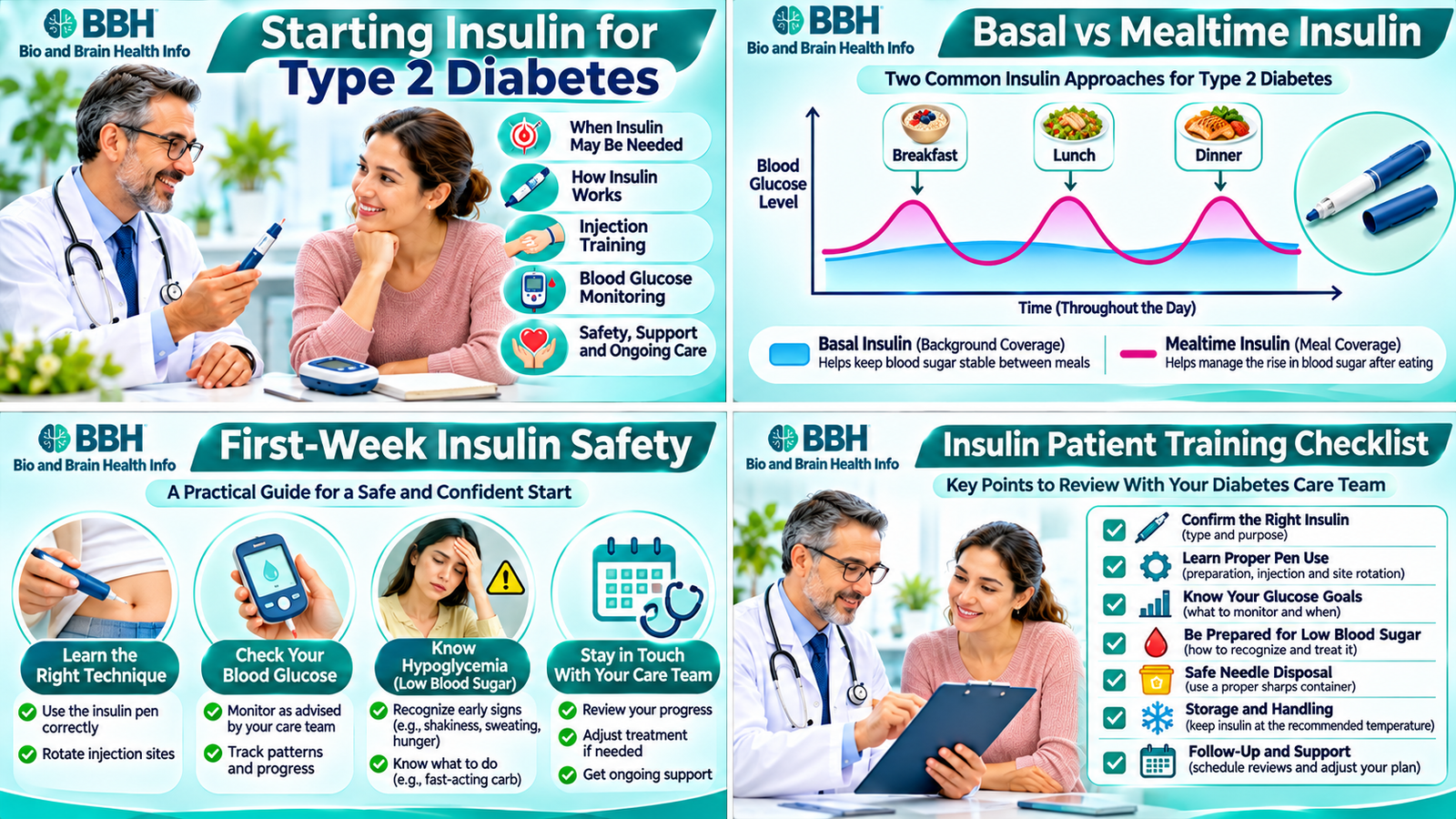
The first step in starting insulin for type 2 diabetes should always include practical education, a treatment review and clear instructions for contacting the care team.
What Happens at the First Insulin Appointment?
A diabetes professional should explain the reason for adding insulin, the expected benefits and the patient’s current medicines. The appointment may involve checking A1C and glucose history, discussing recent lows, choosing a device and confirming that all necessary supplies are affordable and available.
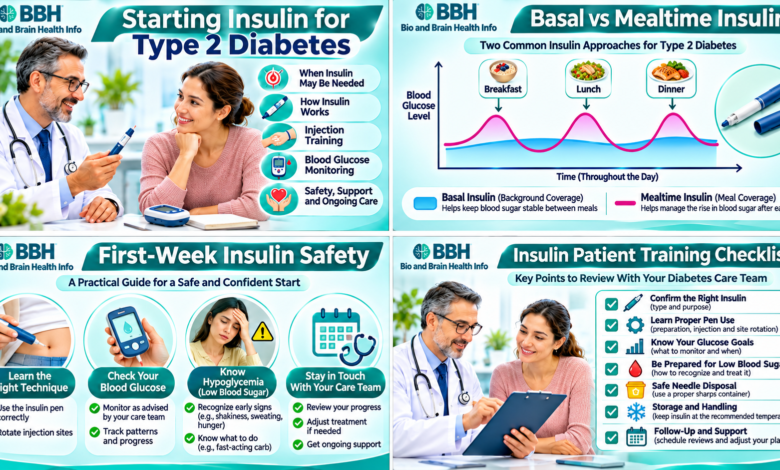
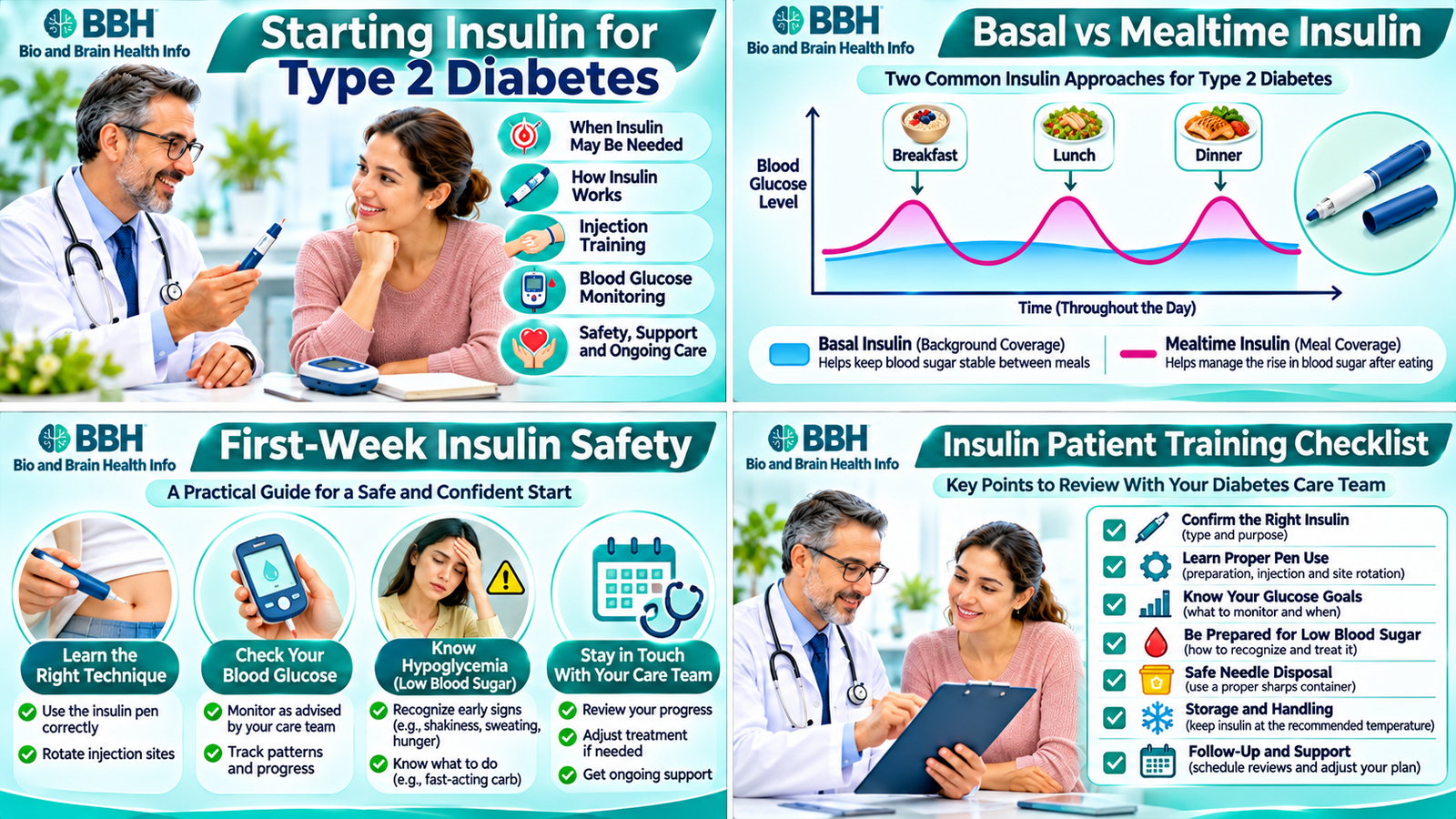
Hands-on training is essential. Patients should learn how to confirm the correct insulin and device, prepare a dose exactly as prescribed, select and rotate injection areas, use needles safely, recognize a problem with the pen and store the product according to its labeling. The healthcare professional should watch a return demonstration.
The team should also provide written instructions covering personal glucose targets, monitoring frequency, when to contact the clinic, how missed doses are handled and what to do during illness. Family or caregiver training can be valuable when requested and appropriate.
Starting Insulin for Type 2 Diabetes: Questions Before Leaving
A patient should know the insulin’s generic and brand name, how the prescribed units are displayed by the device, who to contact for a refill, and how to recognize urgently low or high glucose. If any step remains unclear, ask for a repeat demonstration or pharmacist follow-up.
Insulin Pens, Vials, Syringes and Connected Devices
Insulin pens are commonly used because many people find them easier to handle and carry than vials and syringes. Yet device choice is individual. Vision changes, hand arthritis, needle anxiety, hearing or memory limitations and insurance coverage may influence which tool is safest.
A vial and syringe can be appropriate when prescribed with correct teaching. Different products may have different concentrations; medication errors can occur when the wrong syringe, device or insulin preparation is used. The dose display on an approved pen is designed for that particular product and should not be converted independently.
Some connected pens and continuous glucose monitors can help patients and clinicians review treatment patterns. Technology is useful only when the person understands its limitations and has a backup way to check glucose or administer essential insulin.
Learning Safe Insulin Injection Technique
Insulin is generally given into subcutaneous tissue, but specific technique depends on the product and device. A trained professional should show suitable sites, proper needle use, disposal and site rotation. Repeated injections into the same area may cause lumps or altered absorption, making glucose results harder to interpret.
Avoid sharing pens or needles, even with a family member. People should never remove insulin from a pen using a syringe unless they have received explicit product-specific clinical instructions; concentration errors can be dangerous. A damaged device, unexpected medicine appearance or uncertain labeling should be checked with a pharmacist.
Do injections usually hurt?
Modern pen needles are relatively small, and many people report less discomfort than expected. However, pain, needle fear and bruising can occur. A clinician can assess technique, needle choice and whether injection sites need evaluation. Avoid promises that injections are always painless.
When starting insulin for type 2 diabetes, knowing which glucose readings to record can help the healthcare team interpret patterns and reduce avoidable low-glucose episodes.
Blood Sugar Monitoring When Starting Insulin
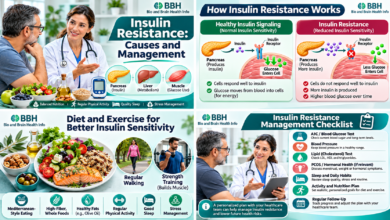
Monitoring allows the team to assess whether insulin is improving glucose while avoiding hypoglycemia. Depending on the regimen, a patient may be asked to check fasting glucose, readings around meals, bedtime values or symptoms. A continuous glucose monitor may be appropriate for certain insulin-treated adults.
For many nonpregnant adults, an A1C goal below 7% is a common starting reference, but a personalized target may be higher or lower. Frequent hypoglycemia, frailty, pregnancy and other health conditions can change the balance. A1C does not capture all low-glucose events, so logs or CGM data may add information.
The most useful record includes glucose readings together with symptoms, meal changes, unusual activity and missed or delayed doses. Do not change the dose solely because of one unexpectedly high or low reading unless following a written clinician-approved plan.
Related BBH guide: Low Blood Sugar: Symptoms and Treatment.
Low Blood Sugar: Prevention and Emergency Action
Hypoglycemia is one of the most important risks of insulin. Signs can include sweating, shaking, hunger, headache, dizziness, rapid heartbeat, confusion or unusual behavior. Some people have reduced awareness of warning symptoms, making glucose monitoring and education particularly important.
If someone is awake and able to swallow safely, they should follow their individualized rapid-carbohydrate treatment and glucose rechecking instructions. Clinicians often teach the 15-15 approach for certain situations, but plans need adaptation for age, medication and medical condition. Severe confusion, seizure or unconsciousness requires emergency help and glucagon if prescribed and available.
A person unable to swallow safely should never be given food or drink by mouth. If lows recur, contact the diabetes team to review medicine timing, activity, intake and the treatment plan rather than repeatedly coping without a review.
Related BBH guide: Carb Counting for Diabetes: Beginner Guide.
Meals, Activity and Daily Life With Insulin
Nutrition remains important after insulin begins. There is no single diet every insulin-treated adult must follow. A balanced pattern with vegetables, fiber-rich carbohydrates, suitable protein and unsaturated fats can support cardiometabolic health. The approach should also respect food preferences, culture, affordability and other conditions.
Activity such as walking or resistance exercise can improve glucose management, but it may also change insulin requirements and increase the risk of lows. The diabetes team should explain how to plan for additional activity and what monitoring or carbohydrate supplies may be needed.
What if a meal is missed?
Insulin and food timing can interact differently depending on whether a person uses only basal insulin, meal insulin or a mixed regimen. Ask for specific written instructions for irregular meals, shift work, travel, religious fasting and poor appetite. A generic rule can be unsafe across these different regimens.
Related BBH guide: Diabetes Medicines: Types and Uses.
Can Metformin, GLP-1 or SGLT2 Medicines Continue?
Some adults continue metformin or certain other glucose-lowering medicines after insulin is introduced because the treatments serve different purposes. For example, specific GLP-1 and SGLT2 therapies may offer cardiovascular or renal benefits in eligible patients. The appropriate combination depends on current guidance and medical history.
A clinician may reconsider medicines that raise hypoglycemia risk when insulin is added. SGLT2 therapy requires additional sick-day and ketoacidosis precautions, particularly when insulin intake is changed or the person is acutely ill. GLP-1 treatments can affect appetite and food intake, which may influence overall glucose patterns.
Insulin does not replace comprehensive diabetes care. Blood pressure treatment, lipid management, kidney testing, foot health and eye screening remain essential elements of prevention.
How the Diabetes Team Adjusts Insulin Over Time
Insulin plans are typically reviewed using glucose trends, symptoms and adherence rather than a fixed schedule taken from a website. Clinicians may begin with a conservative regimen and adjust it over time. The ADA 2026 professional guidelines contain dose algorithms, but these require clinical interpretation and should not be treated as self-prescribing advice.
The team considers fasting glucose, A1C, low-glucose episodes, meal patterns, exercise, kidney function, costs and injection technique. Patients may receive a written self-titration plan from their clinician, with explicit thresholds and actions; others need more frequent professional supervision.
Regular follow-up matters because insulin needs can change with illness, weight change, steroid use, other medications or progression of diabetes. Changes should be made in partnership with the healthcare team.
What If Basal Insulin Is Not Enough?
Sometimes fasting readings improve but A1C remains above the individualized target. Post-meal glucose rises may be contributing, or there may be signs of overbasalization—trying to address every glucose problem by increasing only background insulin. Further increases can create overnight or between-meal hypoglycemia without adequately controlling after-meal glucose.
The ADA 2026 Standards recommend evaluating whether a GLP-1-based therapy, another option or prandial insulin is suitable before escalating treatment. The decision depends on medical conditions, individual preferences and affordability. More injections are not automatically the best solution.
A structured review should also examine insulin storage, technique, missed doses and any unexpected interactions. People should not assume a change in therapy means their earlier plan was a mistake.
Storing Insulin and Preparing for Travel
Most unopened insulin products need refrigeration according to their official instructions; many in-use products can remain at controlled room temperature for a limited product-specific period. Heat, freezing and direct sunlight can damage insulin. The permitted storage duration varies and should not be generalized across brands.
When traveling, carry medicine in an appropriate protective case, maintain access to monitoring supplies and bring the prescription information. Long flights and time-zone changes can affect an injection schedule; request individualized advice before travel rather than changing times independently.
If a pen malfunctions or insulin may have frozen, warmed excessively or expired, ask a pharmacist about replacement. An emergency backup plan may be especially important for people who depend on insulin every day.
Insulin Costs, Insurance and Access in the United States
Out-of-pocket insulin costs depend on insurance, the prescribed product, pharmacy, eligibility for assistance and other factors. The availability of lower-cost human insulin and certain biosimilar or alternative products may help, but switching requires careful review of action profiles, delivery devices and risk of hypoglycemia.
Ask the prescriber and pharmacist about formulary coverage, available manufacturer programs and licensed alternatives before rationing or skipping insulin. Do not assume that cheaper insulin can be exchanged unit-for-unit with the current prescription. If essential insulin is running out, seek prompt help instead of reducing it without medical direction.
Affordability is a medical safety issue. A realistic treatment plan should include enough needles, test strips or sensors, glucagon if appropriate, secure storage and scheduled refills—not just the insulin itself.
Insulin in Older Adults, Kidney Disease and Pregnancy
Older adults may experience changes in appetite, memory, dexterity, vision or kidney function. Simpler regimens and less aggressive glucose targets may sometimes improve safety. Caregiver involvement, when welcomed, can help ensure that the correct medicine is administered and hypoglycemia is recognized.
Declining kidney function can change insulin clearance and increase the risk of low blood glucose. A clinician may adjust treatment and monitor more closely. Pregnancy has separate glucose targets and treatment considerations; insulin decisions should be coordinated with obstetric and diabetes specialists.
A person with suspected type 1 diabetes, unexpected weight loss or ketosis may need urgent evaluation. Insulin plans should reflect the correct diagnosis, not assume every adult with high glucose has ordinary type 2 diabetes.
Sick Days, Very High Glucose and Warning Signs
Illness can increase glucose levels even when someone is eating less. Vomiting, dehydration or infection may require additional monitoring, ketone assessment and medical attention. People taking essential insulin should not simply discontinue it because they are unable to eat normally; their individualized sick-day plan should state what to do.
Symptoms such as repeated vomiting, significant abdominal pain, deep or rapid breathing, severe drowsiness, confusion or inability to remain hydrated require urgent assessment. These can signal diabetic ketoacidosis or hyperosmolar hyperglycemic state rather than a routine need to adjust medication.
Ask in advance whom to contact outside office hours, whether ketone strips are appropriate, and how to handle a pen failure or missed dose. Clear emergency plans help prevent dangerous guesswork.
Starting Insulin: USA, UK, Australia and Canada
| Country | Clinical reference | Practical point |
|---|---|---|
| United States — primary | ADA Standards 2026 and ADA/EASD 2026 consensus | Individualized assessment, basal insulin often used first, education and avoidance of hypoglycemia |
| United Kingdom | NICE NG28, amended February 2026 | Structured education and clinician support; basal insulin as initial insulin treatment in many adults |
| Australia | NDSS February 2026 Starting Insulin fact sheet | Emphasizes insulin use, training, blood glucose checks and ongoing support |
| Canada | Diabetes Canada guidance and insulin prescribing resources | Person-centered initiation, monitoring and adjustments supervised by the care team |
The scientific principles are similar, but brand names, products, costs, public coverage and insulin devices differ. A dosing chart from one country’s resource should never be copied to another person’s regimen. Local medicine labels and the patient’s clinical team have priority.
For our US readership, the ADA professional standards and FDA product information are central references. The NHS, NDSS and Diabetes Canada provide useful parallel patient education and demonstrate why instruction needs to be adapted to local services.
Questions to Ask Before Leaving the Insulin Clinic
| Question | Why it matters |
|---|---|
| Why is insulin appropriate for me now? | Connects treatment to symptoms, glucose trends and overall health |
| Which insulin and delivery device am I receiving? | Prevents confusion between brands and concentrations |
| What readings should I check and record? | Supports safe assessment of effectiveness and lows |
| What should I do if I miss a dose or cannot eat? | Creates clear instructions for irregular routines |
| How do I treat a low glucose episode? | Improves safety and emergency preparedness |
| Who reviews the plan and handles refills? | Prevents prolonged access or treatment gaps |
Bring the actual pen or box to the training appointment, if available, and ask to practice using the device. Written materials in a preferred language and a family member’s involvement can help when appropriate. Ask for confirmation of costs before leaving the pharmacy.
Common Myths About Starting Insulin
Myth: Insulin always means diabetes has become type 1
No. Many people with type 2 diabetes need insulin when their bodies cannot produce enough for current needs. The diabetes type is based on the underlying disease, not the therapy used.
Myth: Once insulin begins it can never be stopped
Some people use it temporarily while others need long-term treatment. The decision depends on glucose control, medical circumstances and clinical review, not a universal promise.
Myth: Every injection causes severe pain
Modern pen needles can make injections manageable, though pain and needle anxiety are genuine concerns. Proper device education can help.
Myth: A high reading means taking extra insulin is always safe
No. Unplanned correction injections can cause insulin stacking and severe hypoglycemia. A clinician-approved dosing plan is essential.
Myth: Good A1C means no need to monitor for low glucose
An average A1C can conceal frequent lows. Blood glucose readings or continuous glucose monitoring provide additional insight into safety.
Starting Insulin for Type 2 Diabetes: Frequently Asked Questions
What is usually the first kind of insulin prescribed?
Many adults with type 2 diabetes begin with basal insulin, although the exact plan depends on the clinical situation.
Will I still need diabetes tablets?
Possibly. Some medicines continue for glucose management or heart and kidney protection, while others may be adjusted.
Does insulin make you gain weight?
Weight gain can occur, but the extent varies. Nutrition, activity and other medications may influence the overall effect.
Can insulin cause low blood sugar overnight?
Yes. Some regimens can lead to overnight hypoglycemia, so symptoms and monitoring patterns must be reviewed.
Can I use a continuous glucose monitor?
CGM can be useful for some adults using insulin, subject to the prescribing team and insurance access.
What if I am afraid of needles?
Tell the diabetes educator. Device demonstrations and gradually building confidence can help address needle-related anxiety.
Is insulin a permanent treatment?
Not always. Some people need it temporarily; others require it over many years. Never stop without medical advice.
Can I use someone else’s insulin pen?
No. Sharing insulin pens is unsafe even when needles are changed, and doses and formulations may differ.
Related BBH Articles and Support
Research Sources and Medical Disclaimer
- ADA Standards of Care 2026: Pharmacologic Approaches
- ADA/EASD Management of Type 2 Diabetes, 2026 Consensus
- ADA 2026: Glycemic Goals and Hypoglycemia
- NICE NG28: Insulin-Based Treatments, February 2026
- Australian NDSS: Starting Insulin for Type 2 Diabetes, February 2026
- Diabetes Canada Clinical Practice Guidelines
- CDC: Using Insulin