Insulin Types: Rapid, Short and Long Acting
Types of Insulin: Timing and Uses

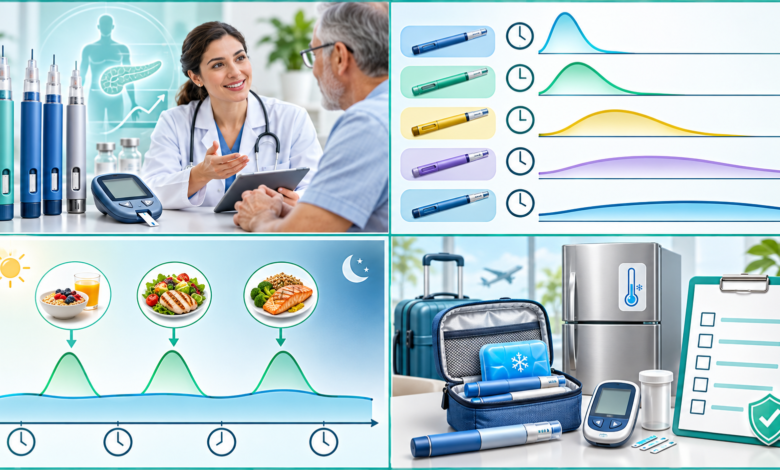
Insulin types differ in how quickly they start working, when their effect is strongest and how long their action generally lasts. Understanding the difference between rapid-acting insulin, short-acting insulin, intermediate-acting insulin and long-acting insulin can help people ask informed questions and follow their own diabetes care instructions safely.
Thank you for reading this post, don't forget to subscribe!This research-based beginner guide explains the timing profiles, basal vs bolus insulin, premixed products, pumps, glucose monitoring, low-glucose risks and practical differences in the United States, United Kingdom, Australia and Canada. It is written for education, not as a dosing, switching or injection-timing guide. Insulin is essential for people with type 1 diabetes and also used by some people with type 2 diabetes or diabetes during pregnancy.
Insulin Types: Rapid, Short and Long Acting
The US CDC and American Diabetes Association organize insulin based on its action profile. The broad categories are helpful, but two different preparations marketed as “long-acting” may not last exactly the same number of hours. Some newer and concentrated formulations also have different absorption and delivery requirements.
An important principle is that a familiar brand name does not determine whether doses are interchangeable. The active formulation, concentration, delivery device and prescription must be checked before switching products.
Related reading: Diabetes Medicines: Types and Uses.
How Insulin Works in Diabetes
Insulin is a hormone made by pancreatic beta cells. It helps glucose enter cells and regulates how the liver stores and releases energy. In type 1 diabetes, an autoimmune process leads to severe insulin deficiency. In type 2 diabetes, the body becomes resistant to insulin and may gradually fail to make enough for its needs.
Injected insulin can replace missing insulin or supplement the body’s supply. A normal pancreas releases smaller background amounts between meals and additional amounts in response to food. Many treatment plans attempt to imitate these two functions while minimizing dangerously low glucose.
Does taking insulin mean type 2 has become type 1?
No. Diabetes classification depends on underlying biology, not simply the medication chosen. Some people with type 2 diabetes temporarily need insulin during severe illness or marked hyperglycemia; others require ongoing treatment. Insulin is a clinically appropriate therapy rather than a sign of personal failure.
Onset, Peak and Duration: Three Essential Terms
Onset is when a preparation begins to lower glucose after administration. Peak refers to the approximate time of its strongest action; some basal formulations have little pronounced peak. Duration describes the period of useful glucose-lowering effect. None of these times should be used alone to choose an injection time.
The action profile changes with the molecule, concentration, dose, injection site, temperature, activity and individual physiology. In particular, “peakless” does not mean the effect is identical every minute or that hypoglycemia cannot occur.
Insulin action charts display approximate population patterns, not personal guarantees. Blood glucose monitoring and specific product instructions help the diabetes team design the regimen.
Insulin Types Comparison Chart: Timing and Uses
| Insulin category | Approximate onset | Typical peak | Approximate duration / role |
|---|---|---|---|
| Rapid-acting analog | ~10–20 minutes | ~1 hour | ~2–5 hours; meals or corrections |
| Short-acting regular human | ~30–60 minutes | ~2–3 hours | ~3–6 hours; mealtime use |
| Intermediate-acting NPH | ~1–4 hours | ~4–12 hours | ~12–18 hours, variable; background insulin |
| Long-acting basal analog | ~1–4 hours, product-dependent | Often no pronounced peak | About 20–24 hours or longer; background |
| Ultra-long basal analog | Product-dependent, may begin after several hours | Usually no pronounced peak | ~36–42 hours or more, depending on formulation |
| Premixed insulin | Depends on rapid/regular component | Multiple or variable peaks | Combination coverage; timing varies |
These ranges are broad educational approximations compiled from CDC, NIDDK, ADA and diabetes education resources—not substitutes for current product labeling. Some ultra-rapid preparations begin sooner, while certain concentrated regular insulins have much longer effects than ordinary U-100 regular insulin.
For example, a person using one brand of basal insulin should not assume an equal number of units of another brand provides identical coverage. A pharmacist or prescriber must review switches and concentration differences.

Rapid-Acting Insulin: Mealtime Coverage
Rapid-acting insulin analogs include insulin lispro, aspart and glulisine. These are designed to work relatively quickly and are commonly used to cover meals or for clinician-prescribed glucose corrections. Some products are approved for use in pumps, depending on device compatibility.
Why rapid insulin is used around meals
Food containing carbohydrate can raise blood glucose as it is absorbed. A rapid preparation helps address the rise, but timing instructions differ across products and medical situations. The patient’s prescribed schedule—not a generic internet rule—determines when it is administered.
Meal composition, delayed eating, vomiting, exercise and glucose levels can affect the balance between injected insulin and available carbohydrate. Mistimed doses can cause hypoglycemia. Do not inject an additional correction without a prescribed correction plan, even when a meter reading is higher than expected.
Ultra-Rapid Insulin and Inhaled Insulin
Some newer injectable analog formulations, including faster aspart and ultra-rapid lispro, are engineered for more rapid absorption than conventional rapid analogs. Their labeled administration windows differ by formulation and country, and none should be assumed interchangeable without clinical review.
Inhaled insulin is another mealtime option available to eligible patients in certain markets, including the United States. It has a faster, shorter action profile but requires specific pulmonary assessment and is inappropriate for some people with lung disease. It does not replace basal insulin for people who require background insulin.
The term “ultra-rapid” describes timing characteristics, not overall superiority for every person. Injection technique, availability, cost, lung health and clinical goals may make an alternative more appropriate.
Short-Acting Insulin: Regular Human Insulin
Short-acting insulin, often called regular human insulin, generally begins working later than a rapid-acting analog. Examples include U-100 regular formulations supplied under different brand names in different countries. Clinicians sometimes prescribe it for meals or particular clinical settings.
Regular insulin often has a longer peak and tail than rapid analogs, which may increase the need to consider later low-glucose risk. The actual eating schedule should be set by the diabetes team according to the product label and treatment plan.
Are regular and rapid-acting insulin interchangeable?
No. Their timing profiles differ, and switching may require a revised regimen and monitoring. Concentrated U-500 regular insulin is particularly different: it is used in selected circumstances and has a prolonged action profile. Concentration and device errors can be dangerous.
Intermediate-Acting Insulin (NPH)
Intermediate-acting insulin includes NPH, also called isophane insulin. It is traditionally used to provide background insulin coverage, sometimes in split regimens or as a component of premixed products. Its pronounced peak can require careful planning to reduce hypoglycemia risk.
NPH is generally cloudy because it is a suspension. Specific products require gentle resuspension according to their labeling; other insulins should not be handled the same way. Always ask a pharmacist to demonstrate the correct technique for the exact pen or vial.
Some health systems use NPH because it is available and can be less expensive than certain analogs. Affordability matters, but a treatment’s cost should be balanced against the risk of lows, frequency of injections, monitoring needs and lifestyle fit.
Long-Acting Insulin and Basal Coverage
Long-acting insulin is designed to provide relatively stable background action. Examples include insulin glargine formulations and other basal analog products, although duration and concentrations vary. These are typically used to control glucose between meals and overnight.
Why ‘flat’ does not mean risk-free
Some long-acting preparations have no strong peak in standard action charts. Nevertheless, taking too much, missing meals during a complex regimen, increased activity or other conditions can still cause low glucose. A healthcare team should set individualized monitoring and adjustment instructions.
Concentration and brand differences
A product labeled U-100 and one labeled U-300 do not necessarily have identical pharmacokinetics despite sharing an insulin name. They must not be converted by the patient. The pen’s dose display and the prescribed units should be reviewed by a trained professional.
Ultra-Long-Acting Insulin: More Extended Coverage
Ultra-long basal formulations such as insulin degludec can provide extended coverage, often lasting beyond a day. Certain higher-concentration glargine products also offer long durations. These options may offer convenience or reduced variability for selected individuals, but results depend on the preparation and circumstances.
Once-weekly basal insulin is an evolving area with country-specific approvals and eligibility, so any such product must be evaluated separately from ordinary daily basal insulin. A weekly product should never be treated as a simple replacement for a daily dose.
The practical question is not which product lasts the longest on paper, but which safe and affordable regimen matches the person’s glucose patterns, treatment goals, access and ability to follow it reliably.
Premixed Insulin and Concentrated Formulations
Premixed preparations contain a set proportion of shorter-acting and intermediate components. They may simplify the number of injections for some people, but the fixed proportions reduce flexibility compared with independently adjusted basal and meal insulin. Timing, meal consistency and the exact product are important.
Concentrated insulins such as U-200, U-300 and U-500 contain more insulin units per milliliter than U-100. They are not automatically stronger per prescribed unit, but changes in device or concentration create serious error risks. Never draw insulin from a pen with a syringe unless explicit device-specific clinical instructions authorize it.
Combination products and names vary across countries, so photographs or generic charts should never be used to identify a medicine instead of its prescription label.
Related reading: Type 1 Diabetes: Symptoms and Management.
Basal vs Bolus Insulin: The Key Difference
Basal insulin refers to background glucose-lowering coverage between meals and overnight. Bolus insulin addresses meal-related glucose needs or other specific situations within a clinician-prescribed plan. Many people with type 1 diabetes use both functions through multiple daily injections or a pump.
| Treatment role | Typical delivery | Primary purpose |
|---|---|---|
| Basal coverage | Long or intermediate insulin injection, or continuous rapid insulin through pump | Background needs throughout the day and night |
| Meal bolus | Rapid or regular insulin according to prescription | Food-related glucose rise |
| Correction bolus | Only where an individualized correction plan is prescribed | High glucose outside the person’s target |
The basal vs bolus insulin distinction is clinically important, but “bolus” does not mean an extra dose is safe whenever glucose is elevated. Active insulin from previous doses and other factors can cause insulin stacking and dangerous lows.

Insulin Pens, Vials, Syringes and Pumps
Insulin may be delivered through disposable or reusable pens, vials and syringes, or infusion pumps. Pumps generally deliver short-duration insulin continuously to provide background coverage and allow additional programmed meal doses. Automated insulin delivery systems pair sensor data with algorithms, though they still require training and monitoring.
Choosing a device involves manual dexterity, vision, school or work routine, availability, skin comfort, insurance coverage and the ability to manage failures. Pump infusion interruption can cause rapid insulin deficiency and possible ketoacidosis, especially for people with type 1 diabetes.
Always check the name, concentration, expiration, appearance and intended device when collecting or changing supplies. The site of injection should be rotated using professional guidance to help prevent lumps, abnormal absorption and skin complications.
Related reading: Type 2 Diabetes Treatment: Main Options.
How Clinicians Choose Between Insulin Types
The decision starts with the type of diabetes, current glucose, A1C, symptoms, previous medicines, risk of hypoglycemia, kidney function, meal schedule and patient priorities. For some people with type 2 diabetes, basal insulin is sufficient initially; for others, mealtime coverage or different treatments may be necessary.
The ADA 2026 Standards emphasize individualization, avoidance of hypoglycemia, affordability and use of glucose data to adjust care. A person may prefer fewer injections, while another values flexibility for irregular meals. The clinically appropriate regimen must balance these considerations.
A modern insulin types comparison should discuss practical access and follow-up rather than imply that an expensive analog is automatically the right answer for everyone.
Related reading: Carb Counting for Diabetes: Beginner Guide.
Glucose Monitoring and Insulin Adjustment
Blood glucose meters and continuous glucose monitors (CGMs) can help identify fasting, meal-related and overnight glucose patterns. People using insulin may need additional checking around activity, driving, illness or suspected low glucose. Frequency and targets are individualized.
An A1C is useful for longer-term control but can hide frequent lows or variability. Clinicians may also review time in range and time below range from CGM data. Monitoring is not a substitute for an explicit dosing plan.
During treatment reviews, the care team may examine injection technique, missed or late doses, the exact insulin product, meter accuracy and factors that affect absorption. These details can matter as much as an isolated number.
Related reading: Low Blood Sugar: Symptoms and Treatment.
Hypoglycemia Safety: The Most Important Precaution
All insulin preparations can cause low blood glucose. Signs may include sweating, shaking, hunger, headache, rapid heartbeat, confusion or unusual behavior. Some people have reduced awareness of warning signs, particularly after repeated hypoglycemia.
A person who is awake and able to swallow should follow their individualized fast-acting carbohydrate treatment plan and reassessment instructions. Someone who cannot swallow safely, is unconscious or is having a seizure needs emergency help and glucagon when prescribed and available. Never give food or drink by mouth to an unconscious person.
Severe hyperglycemia accompanied by vomiting, abdominal pain, deep breathing, dehydration or confusion also requires urgent evaluation for diabetic ketoacidosis or another emergency. People with type 1 diabetes must not independently stop their essential background insulin during illness.

Insulin Storage, Travel and Handling
Unopened insulin usually requires refrigeration according to its product labeling, while many in-use pens or vials can remain at specified room temperatures for a limited period. The precise days and temperature limits differ by product. Protect insulin from freezing, extreme heat and direct sunlight.
When traveling, pack medicines and supplies in accessible hand luggage where possible, carry the prescription information, and plan for time-zone changes with the diabetes team. Do not assume a brand sold abroad is identical to the product used at home.
Cloudy NPH and clear analog formulations have different appearance rules. Discoloration, unexpected particles or damaged containers warrant checking with the pharmacist rather than assuming the medicine is safe.
Insulin Guidance in the USA, UK, Australia and Canada
| Country | Useful professional sources | Practical consideration |
|---|---|---|
| USA — primary | ADA Standards 2026, CDC, NIDDK, FDA and prescribing labels | Insurance coverage, biosimilars and device availability can influence regimen choices |
| United Kingdom | Diabetes UK and NHS | Insulin names, prescribing pathways and local education may differ |
| Australia | NDSS and Australian diabetes clinicians | Availability, government subsidy and product labeling affect access |
| Canada | Diabetes Canada insulin tables and local product monographs | Timing charts include variability; local brands and funding differ |
For US readers, the insulin type and its exact labeling are the primary reference points. In the UK, Australia and Canada, nationally recognized patient education can help explain similar concepts, but not necessarily identical product availability or prescribing rules.
The user-facing lesson is consistent across regions: insulin choices require professional instruction, especially when changing from one formulation or device to another.
Insulin in Pregnancy, Children, Older Adults and Kidney Disease
Pregnancy
Pregnancy changes insulin requirements and glucose targets. People with pre-existing type 1 or type 2 diabetes or gestational diabetes may need specialist obstetric-diabetes guidance. Choice of insulin formulation should reflect pregnancy-specific evidence and local approvals.
Children and adolescents
Young people need age-appropriate dosing education, caregiver or school support, meal planning and safeguards against severe lows. A child should never use an adult insulin regimen from the internet.
Older people and kidney impairment
Changes in kidney function, appetite, vision, memory or mobility may affect insulin handling and hypoglycemia risk. Simplifying a regimen or adjusting monitoring goals may improve safety; these decisions require a clinician.
Emotional distress and fear of injections can also interfere with effective care. Respectful education and practical device training often help more than pressure to achieve perfect glucose numbers.
Common Mistakes and Content Gaps
Mistake: All long-acting insulin lasts exactly 24 hours
Duration varies by product, concentration and person. Some basal products provide longer action, while others have variable coverage.
Mistake: Rapid and regular insulin have identical meal timing
They differ in onset and duration. Follow the specific prescription and product label.
Mistake: Clear and cloudy insulins should be mixed the same way
Some NPH suspensions need gentle resuspension. Many clear insulins must not be mixed. Follow product-specific instructions.
Mistake: A pump means insulin is no longer essential
Pumps deliver insulin; they do not replace the biological need for it. A pump failure requires following the patient’s emergency backup plan.
Mistake: One brand can be exchanged unit-for-unit with another
Concentrations and action profiles can differ, and substitution may require close supervision. The treating team should manage changes.
Insulin Types: Frequently Asked Questions
What are the main types of insulin?
Rapid-acting, short-acting regular, intermediate-acting NPH, long-acting, ultra-long-acting and premixed products are common categories. Ultra-rapid and inhaled forms are additional options for selected users.
Which insulin works fastest?
Certain ultra-rapid formulations and inhaled insulin have rapid onset, but their approved use and suitability differ. The fastest option is not automatically safest.
Does long-acting insulin cover meals?
Long-acting products primarily supply basal coverage. Some people require additional mealtime treatment; others have a simpler regimen depending on diabetes type and clinical needs.
Is insulin glargine rapid acting?
No. Glargine is a basal insulin with extended action, although concentrations and particular formulations differ.
Is NPH the same as long-acting analog insulin?
No. NPH has a more distinct peak and generally shorter duration than many basal analogs.
Can people with type 2 diabetes use insulin?
Yes. Some need insulin temporarily, while others need long-term treatment. It does not mean their diabetes has changed to type 1.
Can I switch brands to save money?
Discuss alternatives with a prescriber and pharmacist. Switching requires checking concentrations, delivery devices, timing and glucose monitoring.
Can insulin be stored outside the refrigerator?
Some in-use products can be stored at specified room temperatures for limited periods, but limits differ. Read the exact product label.
Related BBH Diabetes Guides and Support
Research Sources and Medical Disclaimer
- ADA Standards of Care 2026: Pharmacologic Approaches
- ADA 2026 Insulin and Delivery Options Guide
- CDC: Types of Insulin
- NIDDK: Insulin and Diabetes Treatments
- FDA: Insulin Formulations and Safety
- Diabetes UK: Types of Insulin
- Diabetes Canada: Insulin Types and Action Profiles
- Australia NDSS: Insulin Management Resources