Cherries: Nutrition, Benefits and Side Effects
Cherry Health Benefits, Nutrition and Risks

Cherries are often described as a natural remedy for gout, poor sleep and muscle soreness. Yet the fresh sweet cherries sold in a supermarket are not the same as the tart cherry concentrate used in many research studies. If you are managing blood glucose, taking medicines for gout or trying to improve recovery after exercise, the distinction matters. A promising result from a concentrated product cannot establish that an ordinary handful of fruit has the same effect.
Thank you for reading this post, don't forget to subscribe!Understanding cherry health benefits begins with the edible fruit, its nutrient composition and the strength of human evidence. This guide uses US reference serving sizes and metric weights for readers in the United States, United Kingdom, Canada and Australia. It provides a practical framework for interpreting research, choosing portions and recognizing potential risks.
Medical Safety & Disclaimer
This article is for nutrition education, not diagnosis or treatment. Follow individualized guidance for gout, diabetes, kidney disease, allergies or persistent sleep problems. Do not replace prescribed medicines with cherry juice or supplements.
Quick Answer
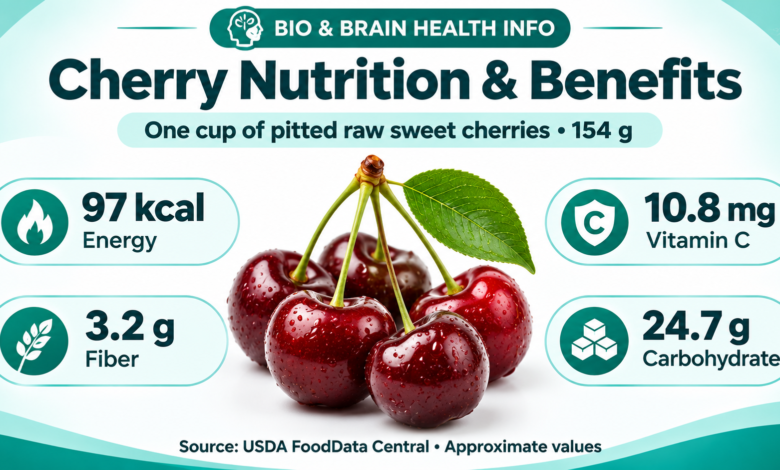
One cup of raw pitted sweet cherries (154 g) provides about 97 calories, 24.7 g total carbohydrate, 3.2 g fiber and 342 mg potassium. Tart cherry products have been studied for sleep, gout and exercise recovery, but evidence is mixed and preparation-specific. Remove pits before eating and consider individual digestive tolerance.
In This Guide
What you will learn
Nutrition facts • Sweet versus tart cherries • Anthocyanins • Gout and uric acid • Sleep • Exercise recovery • Diabetes portions • Juice and concentrates • IBS and allergies • Pit safety • FAQs
1. Cherry nutrition facts: What does one cup contain?
Sweet cherries contain water, natural sugars, dietary fiber, vitamin C and potassium. Their edible flesh supplies relatively little protein or fat. Reference values are for raw sweet cherries with pits removed. Different cultivars, maturity and storage conditions can influence the exact composition.
| Nutrient | Per 100 g | One cup pitted (154 g) |
|---|---|---|
| Energy | 63 kcal | 97 kcal |
| Total carbohydrate | 16.01 g | 24.7 g |
| Total sugars | 12.82 g | 19.7 g |
| Fiber | 2.1 g | 3.2 g |
| Protein | 1.06 g | 1.6 g |
| Fat | 0.20 g | 0.3 g |
| Vitamin C | 7 mg | 10.8 mg |
| Potassium | 222 mg | 342 mg |
Sources: USDA FoodData Central: sweet cherries and USDA-derived sweet cherry nutrient table. All amounts are approximate and rounded independently. Total carbohydrate in the US includes fiber and sugars; they are not additional carbohydrate on top of the total. A cup provides roughly 12% of the US adult label Daily Value for vitamin C and about 12% of the 28 g Daily Value for fiber. These are labeling benchmarks, not individualized targets.
Which nutrients explain cherry health benefits?
Vitamin C participates in normal immune function and collagen formation. Potassium supports normal nerve and muscle activity, and fiber contributes to dietary adequacy and bowel function. Cherries also contain polyphenols, including anthocyanins in many red and dark varieties. Their presence does not establish a specific therapeutic dose or guarantee prevention of chronic illness.
2. Cherry health benefits: Sweet versus tart varieties
Sweet cherries, commonly eaten fresh, belong primarily to Prunus avium. Tart or sour cherries, including Montmorency, belong to Prunus cerasus and are frequently used in juices, concentrates and cooking. Their nutrient profiles and polyphenol concentrations differ. Color alone does not establish the quantity of any individual compound.
| Raw edible fruit per 100 g | Sweet cherries | Sour red cherries |
|---|---|---|
| Energy | 63 kcal | 50 kcal |
| Total carbohydrate | 16.0 g | 12.2 g |
References: USDA-derived sweet cherry nutrient table and USDA-derived sour cherry nutrient table. This comparison uses equal weights of raw fruit, not a bottle of juice or a spoon of concentrate. A sweetened tart cherry product can contain more carbohydrate per serving than fresh sweet cherries. Always check the actual preparation, added ingredients and portion rather than relying on the word tart.
Practical Nutrition Tip
Choose whole unsweetened fruit when you want its original food structure and fiber. A concentrate is a different product, not simply a smaller serving of fresh cherries.
3. Cherries and gout: What does the evidence establish?
Gout is an inflammatory arthritis caused by deposition of monosodium urate crystals. Managing serum urate over time is important for many patients. Dietary changes may support overall care, but a food that affects a biological marker does not necessarily dissolve established crystal deposits or prevent future flares.
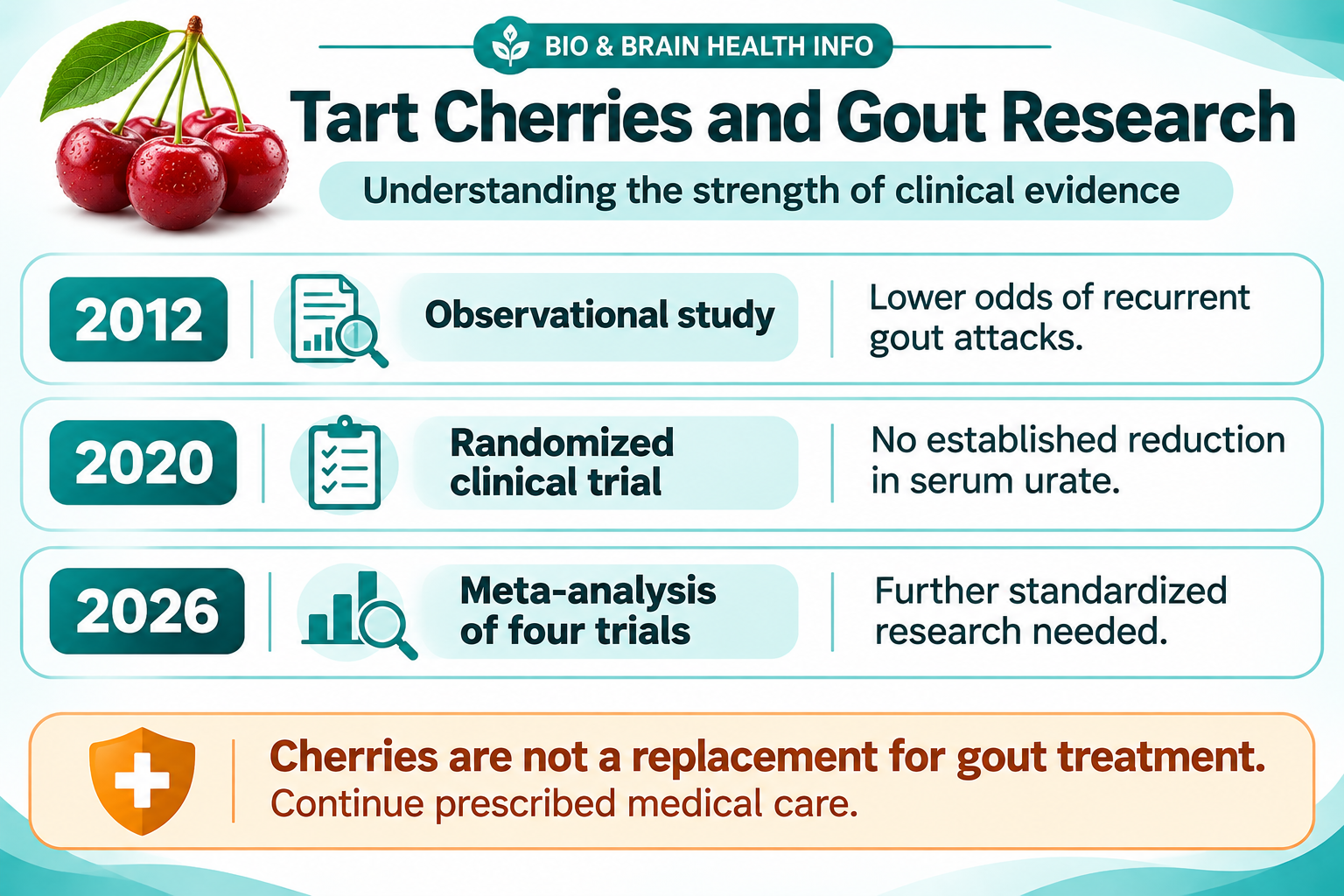
The 2012 cherry consumption and gout case-crossover study found an association between recent cherry intake and lower odds of recurrent gout attacks (adjusted odds ratio 0.65). This observational design compared periods within individuals, but it could not eliminate all confounding or prove that cherries caused the difference. It is not evidence that every person eating cherries experiences a 35% reduction in their future risk.
The 2020 randomized gout trial tested tart cherry concentrate at different doses for 28 days in people with gout. It did not establish a meaningful effect on serum urate. The NICE gout diet evidence review likewise identified limited clinical evidence for cherry extract in gout management.
A newer 2026 tart cherry and serum urate meta-analysis synthesized four randomized trials and eight comparisons examining serum urate. The research highlights the need to improve standardization and clarify which people, if any, benefit from particular formulations. Study outcomes cannot justify replacing prescribed urate-lowering treatment.
Gout Safety
Continue prescribed gout care. Do not stop allopurinol, febuxostat or other treatment because of cherry research. A new hot swollen joint, particularly with fever or systemic illness, requires prompt medical evaluation because infection can resemble gout.
4. Content gap: Cherry health benefits depend on the outcome and formulation
A major limitation of popular nutrition advice is that it mixes distinct study outcomes. Serum urate is a biochemical measurement. Gout flare frequency is a clinical event. Muscle soreness is a symptom, and blood markers of inflammation are laboratory outcomes. A change in one does not automatically demonstrate a change in the others.
| Research question | What must be measured |
|---|---|
| Does the product lower urate? | Serum urate over an appropriate period. |
| Does it prevent gout flares? | Actual flare frequency and clinical outcomes. |
| Does it improve sleep? | Validated sleep measures and relevant objective data. |
| Does it improve athletic recovery? | Strength, performance, soreness and recovery timing. |
The form of cherry studied matters as much as the outcome. Fresh fruit provides fiber and water, while juice typically provides less fiber. Concentrates and extracts can deliver different amounts of anthocyanins and other compounds. Their composition depends on manufacturing and storage. There is no reliable universal conversion between one cup of sweet cherries and a research dose of tart cherry extract.
A useful way to evaluate a headline is to identify the participants, product, comparator, dose, duration and primary outcome. Ask whether the result reflects a comparison with placebo or merely a change from baseline. An improvement in one secondary measurement does not necessarily establish that a study achieved its main goal. The same principles apply to other fruit and supplement research.
5. Tart cherry health benefits for sleep: Promising but uncertain
Tart cherries have attracted interest partly because they contain melatonin and other compounds that might influence sleep-related pathways. The amount present varies by product. Simply detecting melatonin in food does not demonstrate that it provides a predictable clinical effect.
The 2025 sleep systematic review reviewed human intervention studies and identified encouraging findings alongside substantial limitations in sample sizes, duration and study methods. A 2026 sleep meta-analysis also examined sleep measures and associated biological markers, emphasizing the need for stronger and longer trials, particularly in people with established sleep disorders.
Sleep quality reported by a participant and sleep duration measured by an instrument are not interchangeable outcomes. Both may be useful, but improvements in one cannot automatically be attributed to changes in the other. The evidence does not establish a universal bedtime dose of cherry juice or fresh cherries.
People with persistent insomnia, significant daytime sleepiness or symptoms of sleep apnea should seek appropriate assessment. Cherry products are not substitutes for established insomnia treatment. If you choose an evening fruit snack, consider digestive tolerance, carbohydrate intake and whether drinking a large amount of liquid before bed disrupts sleep through nighttime urination.
6. Cherry health benefits and exercise recovery
Anthocyanins and other polyphenols are being investigated in the context of exercise-induced muscle damage. Research frequently involves tart cherry juice or concentrates given around demanding exercise sessions. The findings are more relevant to the studied recovery context than to routine fruit consumption by every recreational exerciser.
The 2026 athlete recovery systematic review analyzed tart cherry juice interventions in athletes. Another 2026 sports scoping review found mixed results across performance and delayed-onset muscle soreness outcomes. Differences in training, formulations and outcome measures limit universal conclusions. Even if a particular intervention helps restore strength, it does not necessarily improve race performance or eliminate soreness.
An appropriate recovery strategy still includes adequate energy, protein, fluids and rest. A serving of cherries supplies carbohydrate but little protein. It can accompany a suitable recovery meal rather than replace one. Persistent severe muscle pain, marked weakness or dark urine after exercise requires medical attention rather than supplementation.
Evidence Literacy
Antioxidant activity in laboratory tests, reduced soreness and improved athletic performance are different claims. Evaluate each using the outcome actually studied.
7. Cherries and blood sugar: Can people with diabetes eat them?
Many people with diabetes can include measured portions of cherries in their individualized meal plans. Their natural sugar contributes to total carbohydrate. Anthocyanins and fiber do not cancel out the carbohydrate content, and a product described as unsweetened can still raise blood glucose.
| Edible sweet cherry portion | Approximate total carbohydrate |
|---|---|
| 50 g | 8.0 g |
| Half cup (77 g) | 12.3 g |
| 100 g | 16.0 g |
| One cup (154 g) | 24.7 g |
| 200 g | 32.0 g |
About 94 g of raw sweet cherries supplies 15 g total carbohydrate, approximately one carbohydrate choice in common US diabetes education. This is not a universal portion target or insulin dosing instruction. International nutrition labels may use different carbohydrate conventions. Follow your local care team’s counting method.
Fruit counts can be convenient but are less precise because individual cherries vary in size. A weighed edible portion excludes stones and stems. The glucose effect also depends on other ingredients in a meal, activity, medication and physiology. Read Fruit and Diabetes: Portions and Choices and Carb Counting for Diabetes: Beginner Guide for broader planning guidance.
Blood Sugar Safety
Do not adjust medication based on a single food response. Follow your individualized glucose monitoring and hypoglycemia treatment instructions. Severe hypoglycemia requires emergency assistance.
8. Fresh, frozen, dried, canned and juiced cherries
| Form | What to check |
|---|---|
| Fresh or unsweetened frozen | Edible portion and intact pits. |
| Dried cherries | Concentrated carbohydrate per gram; possible added sugar. |
| Canned cherries | Packing liquid and drained portion. |
| Cherry juice | Serving size, carbohydrate and lower fiber. |
| Concentrate or extract | Product-specific composition and evidence. |
| Candied cherries | Added sugar and dessert portion. |
Unsweetened frozen cherries can be useful outside the fresh fruit season. Dried fruit is more concentrated because water is removed. A small handful of dried cherries is not equivalent by weight to the same amount of fresh fruit. Juice and concentrate labels should be read carefully, since both may contain substantial natural sugar even without added sweeteners.
For heart health and weight management, consider the overall food pattern rather than pursuing a therapeutic cherry product. A measured portion replacing an energy-dense dessert may be appropriate for some people; adding a large sweetened beverage to the existing diet is a different choice. Read Mediterranean Diet and Type 2 Diabetes for a broader dietary approach.
9. Cherry side effects and medical precautions
IBS, fructose and sorbitol
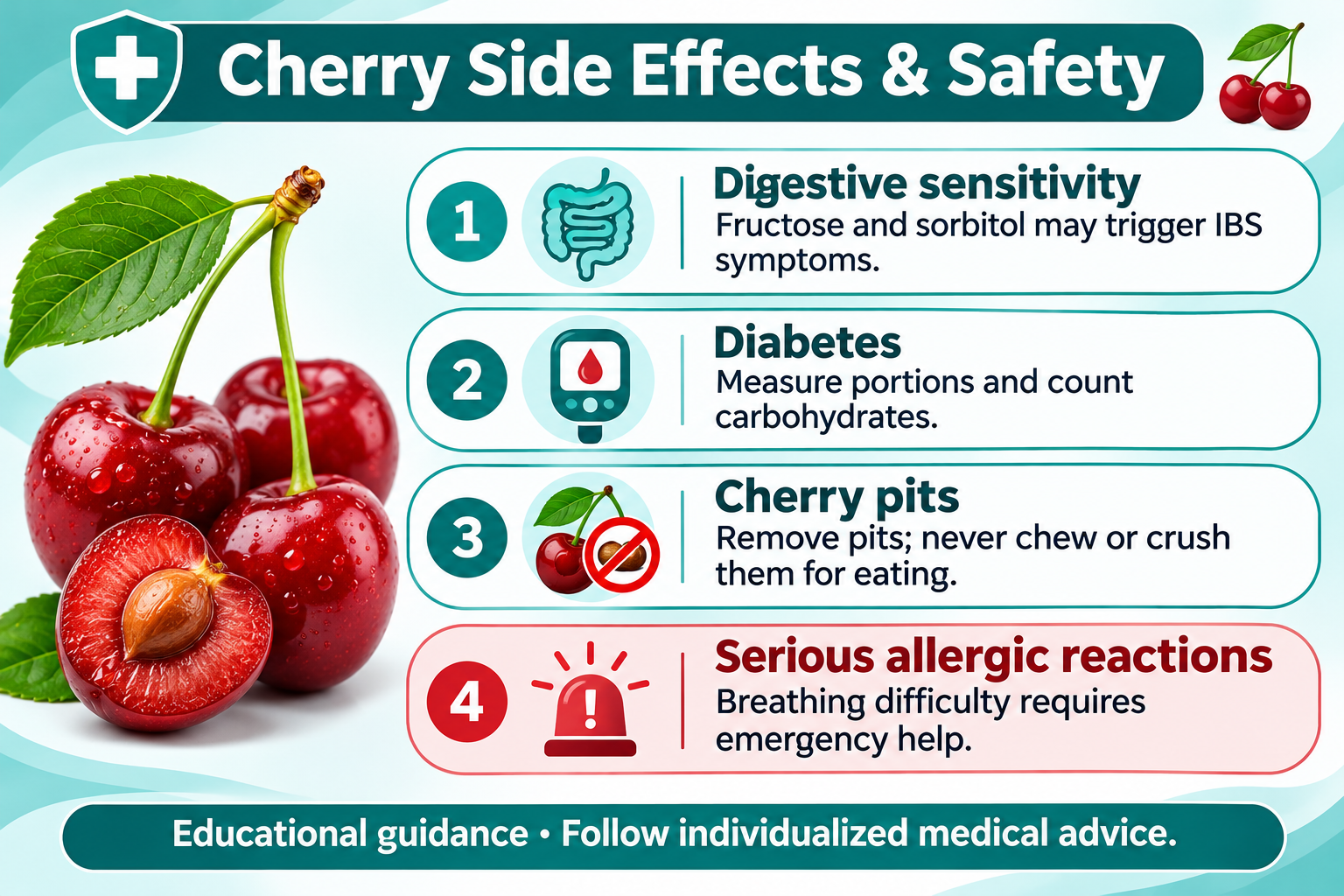
The Monash University FODMAP guidance lists cherries among fruits containing excess fructose. Cherries can also contain fermentable polyols such as sorbitol. These carbohydrates may contribute to gas, bloating or loose stools in susceptible people, especially at larger portions. Fiber can be useful for bowel function without guaranteeing comfort.
A low-FODMAP diet is not necessary for everyone and is usually personalized through a structured restriction and reintroduction process with professional guidance. If you have persistent symptoms, avoid repeatedly increasing cherry intake in an attempt to force a bowel movement. Read Pear: Nutrition, Benefits and Side Effects and Kiwi: Nutrition, Benefits and Side Effects for comparisons of other fruits and digestive evidence.
Allergy and kidney considerations
Cherries can cause food allergy, including pollen-associated reactions in some individuals. Stop eating the fruit if you suspect allergy. Breathing difficulty, throat swelling or faintness may indicate anaphylaxis; call emergency services and use prescribed epinephrine if indicated. Do not deliberately test a different variety after a suspected serious reaction.
A cup contains approximately 342 mg potassium. People with kidney disease do not necessarily need to avoid cherries, but they should follow individualized potassium and fluid guidance. Juice or concentrated supplements may represent a different exposure. Discuss supplement use with your clinician or pharmacist, particularly when you have chronic medical conditions or take prescription medicines.
Cherry pits: A separate food safety risk
Cherry pits are not part of the edible fruit. The kernels inside can contain cyanogenic compounds that release cyanide when the kernel is damaged. Accidentally swallowing a single intact pit is generally different from chewing or crushing pits, but individual circumstances matter. Do not intentionally eat or grind cherry pits. The Poison Control cherry pit safety provides specific poisoning guidance.
Pit and Allergy Safety
Remove pits before preparing food for children and anyone with swallowing difficulties. If pits were chewed or crushed, contact your local poison information service promptly. In the US, Poison Control is available at 1-800-222-1222. Severe symptoms or breathing difficulty require emergency assistance.
10. How to enjoy cherry health benefits safely
Wash fresh cherries under running water, remove stems and pits where appropriate, and refrigerate prepared fruit promptly. Follow FDA produce safety and local recall advice. Frozen pitted fruit can occasionally contain fragments, so check carefully. For young children, remove stones and cut into developmentally appropriate pieces to reduce choking risk.
Try a measured portion with plain yogurt, oatmeal or a suitable protein-containing snack. Use cherries to add flavor and variety rather than treating them as a mandatory daily remedy. If a juice or supplement is being considered for a medical concern, discuss the evidence and alternatives with a healthcare professional.
11. Frequently asked questions
Can I eat cherries every day?
They can fit a varied diet when tolerated. There is no universally required daily serving.
Do cherries cure gout?
No. Observational and randomized evidence differ, and cherries do not replace established urate-lowering treatment.
Does tart cherry juice cure insomnia?
No. Small studies suggest possible benefit, but evidence does not establish an insomnia treatment or universal dose.
Are tart cherries better than sweet cherries?
Neither is universally better. Compare the food form, portion, nutrient profile and evidence for the specific outcome.
Can people with diabetes eat cherries?
Many can include measured portions in an individualized eating plan. Count carbohydrate as advised.
Conclusion
The most dependable cherry health benefits come from their nutrients and contribution to a varied diet. Research on tart cherry products is promising in selected contexts but does not establish a cure for gout, insomnia or inflammatory disease. Choose appropriate portions, distinguish food from concentrated products and continue necessary clinical care.
BBH Key Takeaway
Enjoy cherries as food. Interpret research according to formulation and outcome, count carbohydrate where appropriate, remove pits and seek professional advice about persistent symptoms.
Scientific references
USDA FoodData Central: sweet cherries • USDA-derived sweet cherry nutrient table • USDA-derived sour cherry nutrient table • 2026 tart cherry and serum urate meta-analysis • 2020 randomized gout trial • NICE gout diet evidence review • 2012 cherry consumption and gout case-crossover study • 2025 sleep systematic review • 2026 sleep meta-analysis • 2026 athlete recovery systematic review • 2026 sports scoping review • Monash University FODMAP guidance • Poison Control cherry pit safety • FDA produce safety • 2020 review of sweet cherry research
Related reading on BBH
Explore: Physical Health → Weight, Nutrition & Metabolic Health support page