Pomegranate: Nutrition, Benefits and Side Effects
Pomegranate Health Benefits, Nutrition and Risks

Pomegranate is often marketed as a fruit that protects the heart, slows aging and improves blood sugar. Its bright red arils and distinctive plant compounds make it an interesting subject for nutrition research. Yet a bottle of juice, a bowl of fresh arils and a capsule of concentrated extract are not nutritionally interchangeable. If you are trying to manage diabetes or blood pressure, these differences can matter more than the word superfood on a label.
Thank you for reading this post, don't forget to subscribe!Understanding pomegranate health benefits starts with the edible portion, the quality of clinical evidence and your individual nutritional needs. This guide is intended for readers in the United States, with relevant considerations for the United Kingdom, Canada and Australia. It explains what is established, what is promising and where scientific uncertainty remains.
Medical Safety & Disclaimer
This article provides nutrition education, not diagnosis or individualized treatment. If you have diabetes, kidney disease, low blood pressure, food allergies or prescribed dietary restrictions, discuss suitable portions with your healthcare team. Do not replace blood pressure medicines, insulin, cancer treatment or other prescribed care with pomegranate products.
Quick Answer
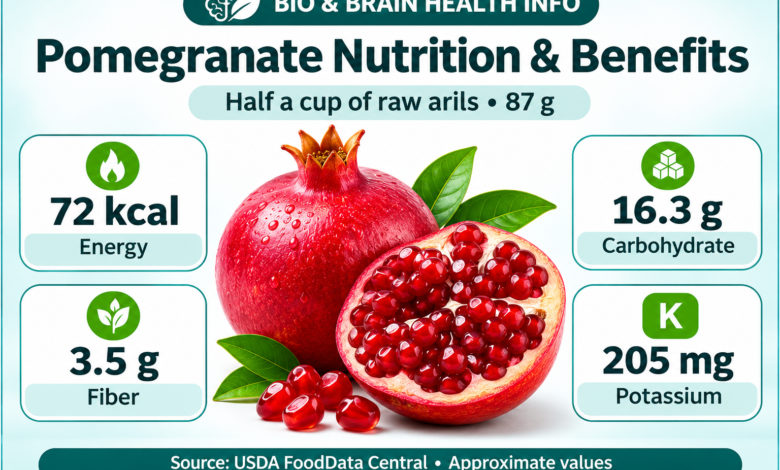
Half a cup of raw pomegranate arils (87 g) contains approximately 72 calories, 16.3 g total carbohydrate, 3.5 g fiber and 205 mg potassium. Pomegranate provides nutrients and polyphenols. Clinical reviews suggest possible modest blood pressure improvements, but evidence does not establish that the fruit prevents heart attacks, cures diabetes or treats cancer.
In This Guide
What you will learn
Nutrition facts • Polyphenols and urolithins • Heart and brain research • Blood sugar • Whole fruit versus juice • Weight management • Cancer claims • Medication and kidney precautions • Practical food choices • FAQs
1. Pomegranate nutrition facts: What does a serving contain?
The edible portion of a pomegranate consists of juicy seed-containing structures commonly called arils. Most of their energy comes from carbohydrates, with smaller amounts of fat and protein. They contain dietary fiber, potassium, vitamin C, folate and vitamin K. Unlike juice, whole arils retain the seed and other edible structures that contribute to fiber intake.
| Nutrient | Per 100 g | Half cup (87 g) |
|---|---|---|
| Energy | 83 kcal | 72 kcal |
| Total carbohydrate | 18.7 g | 16.3 g |
| Total sugars | 13.67 g | 11.9 g |
| Fiber | 4.0 g | 3.5 g |
| Protein | 1.67 g | 1.45 g |
| Fat | 1.17 g | 1.02 g |
| Potassium | 236 mg | 205 mg |
| Vitamin C | 10.2 mg | 8.9 mg |
| Folate | 38 mcg | 33 mcg |
| Water | 77.9 g | 67.8 g |
Source: USDA FoodData Central: raw pomegranates. These values are rounded estimates for edible raw fruit, excluding the rind. The size of a whole pomegranate does not reliably tell you how much edible fruit it contains. For consistent meal planning, use a measured portion of arils. Fiber and sugars are already included in the total carbohydrate value.
Which nutrients contribute to pomegranate health benefits?
Fiber contributes to normal bowel function, vitamin C participates in collagen production and normal immune function, and potassium supports normal muscle and nerve activity. Folate contributes to normal cell division. These established nutrient functions are different from claims that eating pomegranate cures a nutritional deficiency or prevents a particular disease. Dietary variety remains important.
2. Pomegranate health benefits: Polyphenols and ellagitannins
Pomegranate contains plant compounds belonging to several polyphenol groups, including anthocyanins and ellagitannins. Punicalagins are ellagitannins found particularly in the peel and in some processed products. The amounts consumed depend on the cultivar, the part of the fruit used and processing methods. A whole aril is not the same intervention as a standardized peel extract.
Laboratory assays may detect antioxidant activity, but they do not reproduce human digestion, metabolism and tissue exposure. A compound that affects cells in a laboratory may behave differently when eaten as food. Scientists need human studies with suitable comparisons to determine whether an intervention improves a meaningful clinical outcome.
Evidence Literacy
A high antioxidant score is not proof of disease prevention. Check whether a study used edible fruit, juice, a concentrated extract or an isolated compound before interpreting its findings.
3. Pomegranate health benefits for heart health: Clinical research
Blood pressure is one of the more extensively studied outcomes in pomegranate research. The 2023 blood pressure meta-analysis pooled 14 trials involving 573 participants and estimated a systolic blood pressure reduction of about 5 mmHg with juice. A 2024 blood pressure systematic review examined randomized evidence through January 2024, noting that individual trials had produced inconsistent results.
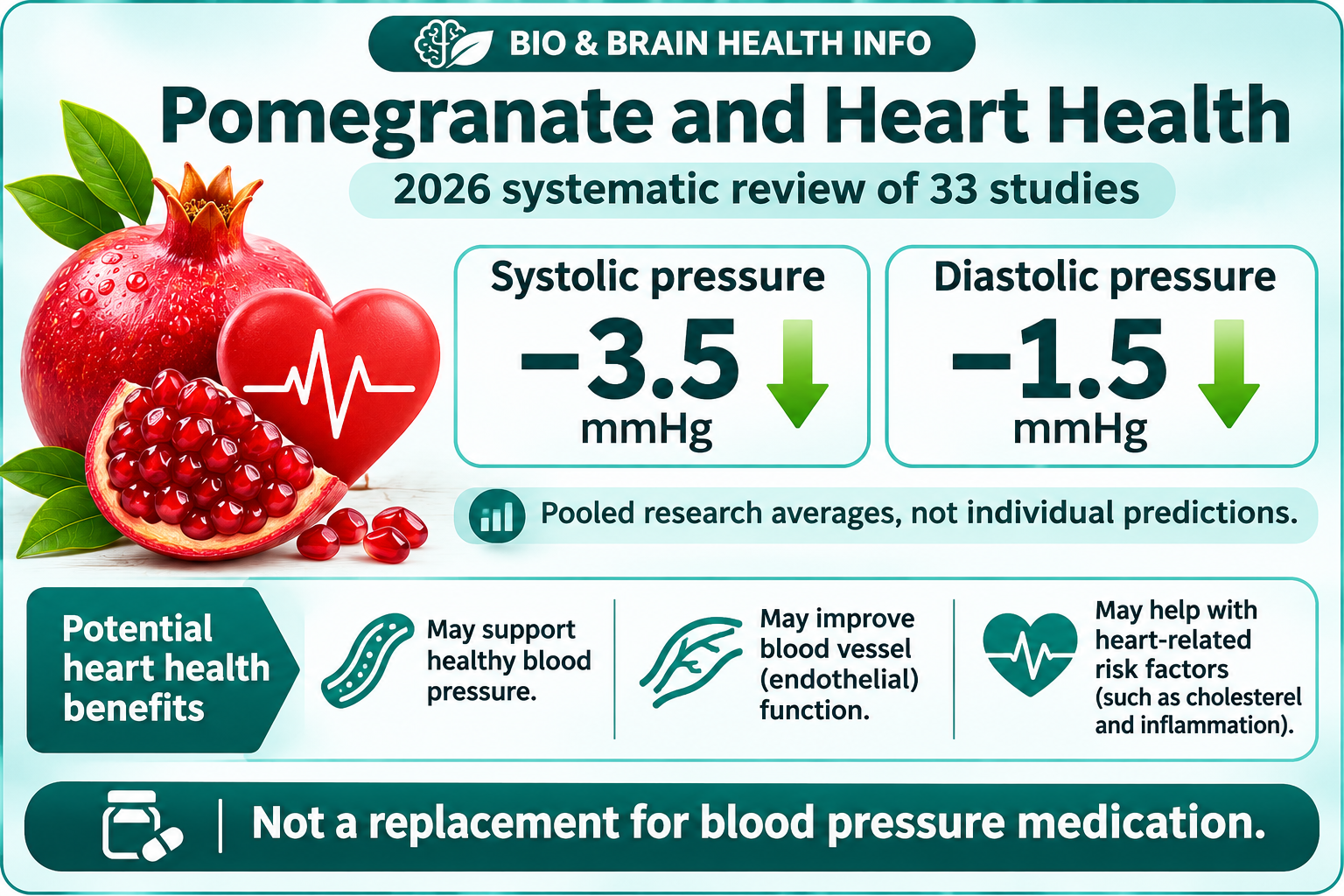
The 2026 blood pressure and endothelial function review examined 33 studies and reported pooled reductions of approximately 3.5 mmHg systolic and 1.5 mmHg diastolic. These are average estimates across interventions, not predictions for an individual. Reviews can include overlapping studies, so they should not be interpreted as independent confirmations from entirely separate populations.
Different products, doses, durations and baseline blood pressure levels complicate interpretation. A short-term change in a blood pressure reading does not demonstrate fewer strokes or heart attacks. The 2025 cardiometabolic meta-analysis also examined several metabolic markers, but its supplement findings cannot be automatically transferred to ordinary servings of raw fruit.
Pomegranate can fit into a heart-supportive eating pattern, alongside vegetables, other fruits, legumes and whole grains. Blood pressure monitoring and prescribed treatment remain important. Read Mediterranean Diet and Type 2 Diabetes for broader dietary guidance.
Blood Pressure Safety
Do not reduce or stop antihypertensive medicines because of pomegranate juice research. If you experience dizziness, faintness or repeated unexpectedly low blood pressure readings, seek appropriate medical advice.
4. Pomegranate health benefits for brain health: What is established?
Research into pomegranate and cognition includes human trials, laboratory work and animal studies. The 2020 randomized memory trial evaluated pomegranate juice over 12 months in middle-aged and older adults. It reported preservation of a particular measure of visual learning compared with a control drink. That finding does not establish improvement in every area of memory or prevention of dementia.
Cognitive test scores may be influenced by repeated testing, baseline differences and the specific measure chosen. A benefit on one measure needs to be considered alongside other results. Larger studies examining long-term clinical outcomes are needed before making disease-prevention recommendations.
A nutritious dietary pattern can support general health, but persistent memory changes deserve assessment. Sleep, medication effects, mood, vascular risk and nutrient deficiencies may be relevant. Pomegranate is not a treatment for dementia or depression. Read Vitamins and Minerals for Brain Health for related nutritional education.
5. Content gap: Why two people may metabolize the same pomegranate differently
Ellagitannins and ellagic acid can be transformed by intestinal microorganisms into compounds called urolithins. People differ in the gut microbial pathways that perform this conversion. Some produce particular urolithins, others produce different profiles, and some produce little or none of the measured metabolites.
The 2024 urolithin and gut microbial metabolism study examined how microbial urolithin production was associated with changes in gut metabolism after a pomegranate extract intervention in adults with mild dyslipidemia and overweight or obesity. It identified differences in microbial bile acid and cholesterol metabolism linked to metabolite profiles. This does not establish a reliable way to predict an individual’s health outcome from ordinary fruit consumption.
| Step | What the science means |
|---|---|
| Pomegranate consumption | Introduces dietary nutrients and plant compounds. |
| Gut microbial metabolism | May transform ellagitannin-related compounds. |
| Urolithin production | Varies among individuals. |
| Clinical health outcomes | Require direct human evidence; cannot be inferred from metabolite production alone. |
This is a useful reason to avoid universal claims about pomegranate health benefits. A standardized urolithin A supplement bypasses some aspects of microbial conversion and is a distinct research intervention. There is no established need for consumers to purchase microbiome testing or supplements simply to enjoy pomegranate.
6. Pomegranate and blood sugar: Can people with diabetes eat it?
Many people with diabetes can include pomegranate arils in individualized meal plans. The fruit supplies naturally occurring sugars and fiber, but it is not carbohydrate-free. Half a cup provides about 16.3 grams of total carbohydrate, close to one 15-gram carbohydrate choice in common US diabetes education.
| Edible portion | Approximate total carbohydrate | Approximate fiber |
|---|---|---|
| 50 g | 9.4 g | 2.0 g |
| Half cup (87 g) | 16.3 g | 3.5 g |
| 100 g | 18.7 g | 4.0 g |
| One cup (174 g) | 32.5 g | 7.0 g |
These are reference estimates, not individualized insulin dosing instructions. US nutrition labels include fiber within total carbohydrate, whereas other countries may use different labeling conventions. Follow your local diabetes team’s counting approach and consider all carbohydrate-containing ingredients in the meal.
Clinical research on pomegranate supplements and fasting glucose does not establish that sweet pomegranate juice reliably lowers glucose after a meal. The carbohydrate in both juice and whole arils may raise blood glucose. Monitoring, where recommended, can help readers understand their own response. See Fruit and Diabetes: Portions and Choices and Carb Counting for Diabetes: Beginner Guide.
Blood Sugar Safety
Do not change diabetes medication based on pomegranate research or a single food response. For hypoglycemia, use the fast-acting carbohydrate treatment prescribed in your personal care plan. Seek emergency assistance for severe symptoms or inability to swallow.
7. Pomegranate health benefits: Whole arils versus juice and extracts
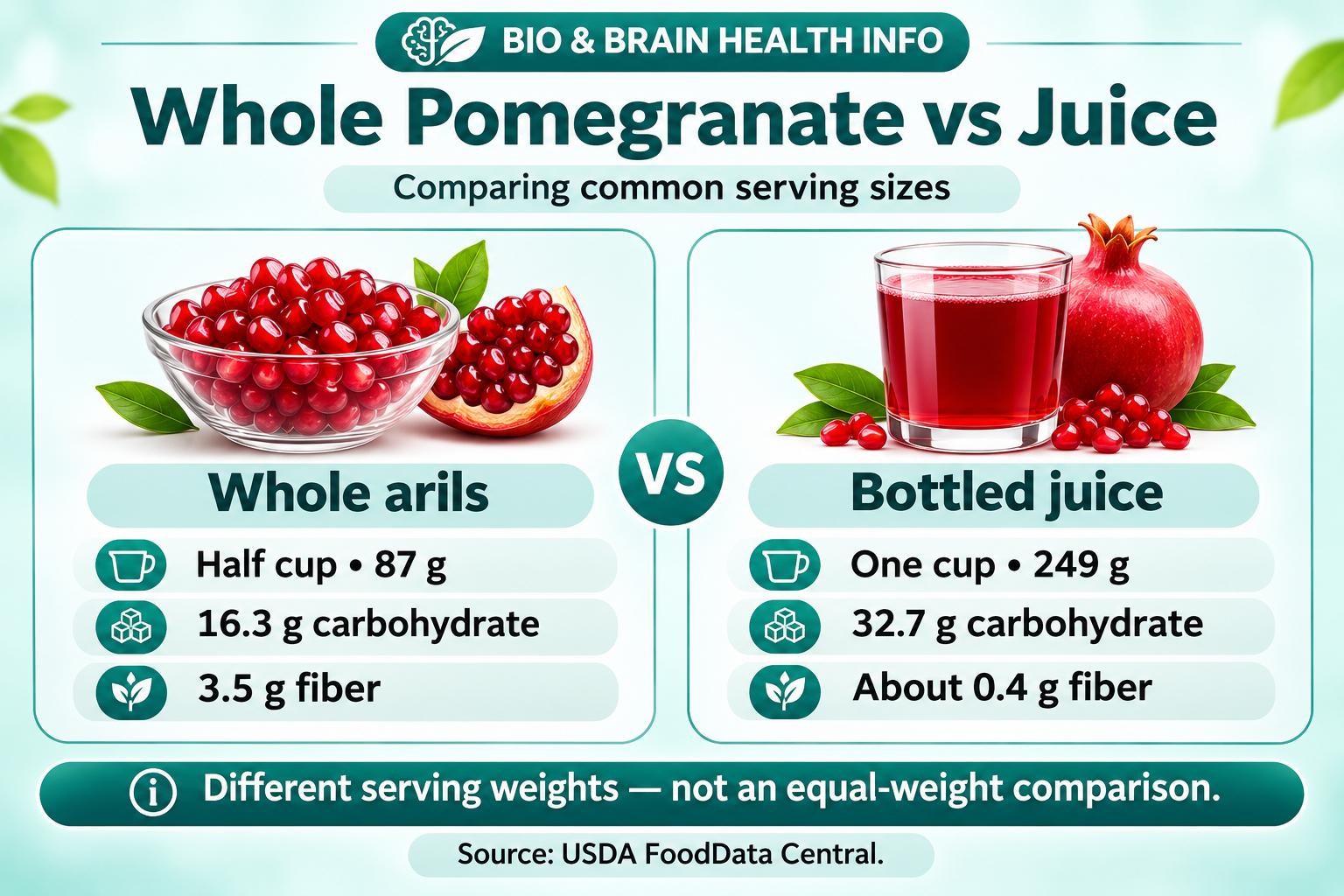
Juicing changes the food structure and removes much of the fiber. Although bottled pomegranate juice retains some nutrients and polyphenols, it is easy to consume a larger carbohydrate portion in a drink. A comparison based on equal weights answers a different question from a comparison based on typical household servings.
| Food | Serving weight | Carbohydrate | Fiber |
|---|---|---|---|
| Raw arils | 100 g | 18.7 g | 4.0 g |
| Bottled juice | 100 g | 13.1 g | 0.1 g |
| Raw arils | 87 g (half cup) | 16.3 g | 3.5 g |
| Bottled juice | 249 g (about one cup) | 32.7 g | about 0.4 g |
Sources: USDA FoodData Central: raw pomegranates and USDA FoodData Central: bottled pomegranate juice. Individual juice products vary. The equal-weight comparison shows that juice is not automatically higher in carbohydrate per gram; the common serving comparison demonstrates how a larger drink can provide substantially more carbohydrate while retaining little fiber. This distinction is often missed in nutrition discussions.
The NHS fruit and juice portions recommends limiting combined fruit juice, vegetable juice and smoothies to 150 mL per day in UK population guidance. Individual clinical recommendations may differ. In the US, Canada and Australia, follow local dietary advice and your personal care plan. A product labeled 100% juice can contain significant naturally occurring sugar without added sweeteners.
BBH Practical Comparison
Choose whole arils when you want the fruit’s fiber. If you choose juice, measure the actual portion and check the label. Concentrated extracts are separate products with separate evidence and safety considerations.
8. Weight management and cancer claims: Avoiding exaggerated promises
Pomegranate can contribute flavor, fiber and variety to meals. Replacing an energy-dense dessert with an appropriate fruit portion may suit some dietary goals, but adding fruit or juice to an unchanged diet is a different intervention. Supplement studies reporting small average weight changes do not establish that pomegranate burns abdominal fat.
Pomegranate compounds have also been investigated in cancer research. Laboratory experiments and preliminary studies of biological markers should not be interpreted as proof of tumor shrinkage, prevention or improved survival. The Memorial Sloan Kettering: Pomegranate discusses the limits of available clinical evidence. Patients receiving cancer treatment should discuss supplements with their oncology team rather than use them as alternatives to established care.
9. Pomegranate side effects and medical precautions
Medication interactions and low blood pressure
Potential interactions involving pomegranate have been investigated, including effects on drug-metabolizing enzymes. Laboratory and animal findings do not necessarily translate to clinically meaningful human interactions. Memorial Sloan Kettering notes that several human studies have not demonstrated the enzyme interactions suggested by preclinical research. Nevertheless, people taking medicines should seek individualized advice before beginning concentrated supplements or making major changes in juice intake.
Do not assume that pomegranate has exactly the same interactions as grapefruit. Ask a pharmacist about your specific medicine, especially when it requires careful monitoring. People taking blood pressure medicines should discuss symptoms of low blood pressure with their care team. See NIH NCCIH: Pomegranate usefulness and safety.
Kidney disease and potassium
Half a cup of arils contains about 205 mg potassium. People with healthy kidney function can generally regulate potassium intake, but some people with kidney disease or elevated blood potassium need individualized restrictions. Juice can contribute potassium in a larger serving. Not everyone with kidney disease must avoid pomegranate. Discuss your laboratory results and prescribed dietary plan with a renal dietitian. Read Diabetic Kidney Disease: Complete Guide.
Digestive symptoms, allergy and supplement safety
Some people experience digestive discomfort after consuming pomegranate products. Food allergy is possible. Difficulty breathing, throat swelling or faintness after eating may indicate a severe allergic reaction. Call emergency services immediately and use prescribed epinephrine if indicated by your allergy plan.
NCCIH advises caution with large amounts of root, stem or peel, which may contain potentially harmful substances. Do not prepare concentrated homemade remedies from these parts. Ordinary food portions and medicinal extracts have different safety profiles; evidence during pregnancy and breastfeeding is limited for forms other than juice.
Medical Safety: Supplements
Discuss pomegranate extracts with your clinician or pharmacist before use. Do not substitute peel, root or stem preparations for medical treatment. Seek emergency help for suspected severe allergic reactions.
10. How to enjoy pomegranate health benefits in balanced meals
Sprinkle measured arils over plain yogurt, oatmeal or a salad containing legumes and a suitable protein source. Add the fruit to meals for texture and flavor rather than treating it as a required daily supplement. Frozen unsweetened arils may be a convenient alternative when fresh fruit is expensive or unavailable.
Wash the outside of the fruit under running water before cutting, use clean utensils and refrigerate prepared arils promptly. Discard spoiled fruit and follow local recall notices. Choose pasteurized juice if you are at increased risk from foodborne illness. See FDA produce safety.
11. Frequently asked questions
Can I eat pomegranate every day?
It can fit into a varied diet if portions suit your needs. No universal daily requirement exists.
Can pomegranate lower blood pressure?
Some clinical reviews suggest modest average reductions, but individual responses differ. It is not a replacement for hypertension treatment.
Are the seeds inside pomegranate arils edible?
Yes, the seeds within the arils are ordinarily eaten. People with swallowing difficulties should follow individualized texture advice.
Is pomegranate juice better than whole fruit?
Not universally. Whole arils retain more fiber, while juice is convenient but can provide larger carbohydrate portions.
Can pomegranate prevent cancer or dementia?
There is insufficient clinical evidence to establish either benefit. Continue recommended screening and treatment.
Conclusion
Pomegranate provides fiber, nutrients and distinctive polyphenols. Its blood pressure research is promising, while many other medical claims remain unproven. Choose the food form and portion that suit your dietary needs, and distinguish research on extracts or metabolites from ordinary fruit consumption.
BBH Key Takeaway
Enjoy pomegranate as part of a varied diet, not as a medicine. Prefer whole arils for fiber, consider juice portions, and follow professional guidance for medication or kidney-related restrictions.
Scientific references
USDA FoodData Central: raw pomegranates • USDA FoodData Central: bottled pomegranate juice • 2023 blood pressure meta-analysis • 2024 blood pressure systematic review • 2025 cardiometabolic meta-analysis • 2026 blood pressure and endothelial function review • 2024 urolithin and gut microbial metabolism study • 2020 randomized memory trial • NIH NCCIH: Pomegranate usefulness and safety • Memorial Sloan Kettering: Pomegranate • FDA produce safety • NHS fruit and juice portions
Related reading on BBH
Explore: Physical Health → Weight, Nutrition & Metabolic Health support page