Avocado: Nutrition, Benefits and Side Effects
Avocado Health Benefits, Nutrition and Risks

Avocados are frequently described as a superfood that lowers cholesterol, supports weight loss and helps manage blood sugar. Yet a fruit that is relatively high in calories and fat can raise understandable questions. Is eating an avocado every day useful? Does adding it to a meal have the same effect as replacing butter with it? And when might its potassium or fiber content be a concern?
Thank you for reading this post, don't forget to subscribe!Understanding avocado health benefits requires looking at the actual food, the portion and the rest of the diet. Avocados can contribute valuable nutrients, but no single fruit guarantees protection against chronic disease. This guide is intended for readers in the United States, with relevant considerations for the United Kingdom, Canada and Australia.
Medical Safety & Disclaimer
This article provides general education, not individual medical advice. If you have kidney disease, elevated blood potassium, a food allergy, diabetes or medication-related dietary restrictions, discuss appropriate portions with your healthcare team. Do not change medicines or insulin based on food claims.
Quick Answer
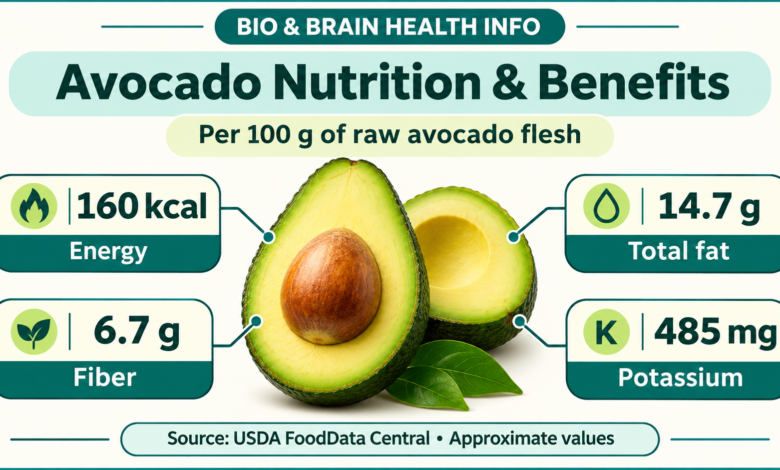
A 100 g edible portion of raw avocado provides approximately 160 calories, 14.7 g fat, 8.5 g total carbohydrate, 6.7 g fiber and 485 mg potassium. Most of its fat is unsaturated. Clinical research suggests modest LDL cholesterol improvements in some settings, but daily avocado intake has not been shown to reliably reduce abdominal fat or prevent cardiovascular events.
In This Guide
What you will learn
Nutrition facts • Unsaturated fats • Cholesterol research • Weight management • Blood sugar • Brain health • Food replacement versus addition • Avocado oil • Kidney and allergy safety • Preparation • FAQs
1. Avocado nutrition facts: What does a serving contain?
Unlike most fruits, avocado obtains much of its energy from fat rather than sugars. Its creamy flesh contains fiber, potassium, folate, vitamin E and vitamin K, alongside water and other nutrients. The following reference values apply to edible raw flesh across commercial varieties, excluding the skin and pit.
| Nutrient | Per 100 g | Per 50 g |
|---|---|---|
| Energy | 160 kcal | 80 kcal |
| Total fat | 14.66 g | 7.33 g |
| Monounsaturated fat | 9.80 g | 4.90 g |
| Saturated fat | 2.13 g | 1.06 g |
| Total carbohydrate | 8.53 g | 4.27 g |
| Fiber | 6.7 g | 3.35 g |
| Total sugars | 0.66 g | 0.33 g |
| Protein | 2.0 g | 1.0 g |
| Potassium | 485 mg | 243 mg |
| Folate | 81 mcg | 40.5 mcg |
| Vitamin E | 2.07 mg | 1.04 mg |
| Vitamin K | 21 mcg | 10.5 mcg |
Source: USDA FoodData Central: avocados, raw, all commercial varieties. Values are approximate and rounded. Avocado varieties and fruit sizes differ, so half an avocado is not a fixed weight. The US nutrition label includes fiber within total carbohydrate. The 50 g serving here is an illustrative measured portion, not a prescription for every reader.
Which nutrients explain avocado health benefits?
Monounsaturated fat, including oleic acid, is a major component of avocado flesh. Fiber contributes to normal bowel function. Folate supports normal cell division, while potassium participates in nerve signaling and muscle function. Vitamin E has an antioxidant role and vitamin K participates in normal clotting. These nutrient functions do not establish that avocado treats a deficiency or prevents a disease.
2. Avocado health benefits for heart health: What human studies show
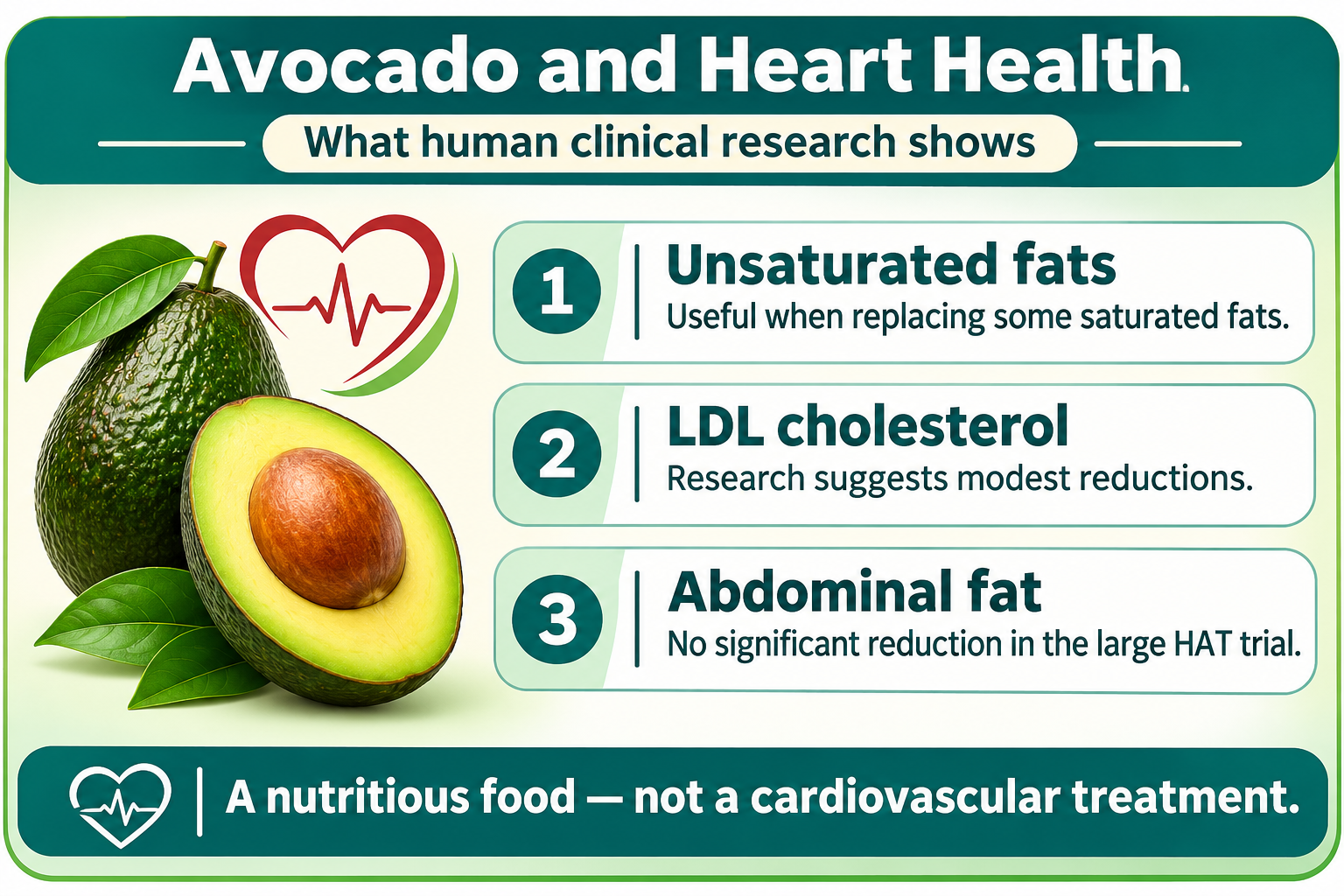
Replacing some saturated fat in the diet with unsaturated fat is a recognized cardiovascular nutrition strategy. Avocado is one food that can contribute to this change. Its potential usefulness depends on what it replaces, the amount consumed and the rest of the dietary pattern.
A 2025 lipid profile meta-analysis reported a pooled LDL cholesterol reduction of about 6 mg/dL, alongside a reduction in total cholesterol. A separate 2025 GRADE-assessed cardiovascular risk review also identified LDL and systolic blood pressure improvements, but did not find significant effects on several other outcomes, including fasting glucose, triglycerides and BMI. Differences in trial design and participants make a universal estimate inappropriate.
The 2022 US prospective cohort study followed adults in two large US cohorts. Higher avocado consumption and modeled replacement of certain other fat-containing foods were associated with lower cardiovascular risk. Because this was observational research, it cannot prove avocado caused the difference. People who eat avocados may differ in other aspects of diet, healthcare or activity.
Taken together, these findings support using avocado as one option within a heart-supportive eating pattern. They do not support replacing prescribed cholesterol or blood pressure medication with avocado. See Mediterranean Diet and Type 2 Diabetes for a broader dietary framework.
Evidence Check
A modest improvement in LDL cholesterol is not the same as proof that eating one avocado prevents a heart attack. Randomized trials and observational studies have different strengths and limitations.
3. Avocado health benefits and weight management
A 100 g portion of avocado contains roughly 160 calories. Its energy density is higher than that of many water-rich fruits, although it also provides useful fat and fiber. These features can make a meal satisfying, but satiety varies across individuals and does not automatically result in reduced energy intake.
The 2022 Habitual Diet and Avocado Trial randomly assigned 1,008 adults with elevated waist circumference to a daily large avocado or their usual diet for six months. The primary measure of abdominal visceral fat did not improve significantly in the avocado group relative to the comparison group. Changes in body weight and several metabolic measures were also similar.
A subsequent 2024 diet-quality analysis found improvements in overall diet quality. A 2025 cardiovascular health ancillary analysis found no significant improvement in the overall cardiovascular health score, despite changes in some individual components. These analyses help distinguish dietary quality from a guaranteed change in body composition or a comprehensive cardiovascular outcome.
A practical strategy is to choose a portion that fits your meal rather than adding a whole avocado to every plate. For someone who is undernourished, its energy density may be useful. For someone managing energy intake, a smaller measured portion may be more appropriate. Neither approach is a universal rule.
4. Avocado and blood sugar: Can people with diabetes eat it?
Avocado is relatively low in total carbohydrate compared with many fruits, and much of that carbohydrate is fiber. Many people with diabetes can include avocado in an individualized eating plan. However, its low carbohydrate content does not make an entire avocado-based meal carbohydrate-free.
| Edible avocado portion | Approximate total carbohydrate | Approximate fiber |
|---|---|---|
| 30 g | 2.6 g | 2.0 g |
| 50 g | 4.3 g | 3.4 g |
| 75 g | 6.4 g | 5.0 g |
| 100 g | 8.5 g | 6.7 g |
| 150 g | 12.8 g | 10.1 g |
Consider the bread, tortillas, rice, chips or other ingredients served with avocado. A meal containing avocado toast may provide substantially more carbohydrate than the avocado alone. US labels and carbohydrate-counting methods differ from some conventions used in the UK, Canada and Australia. Follow the method recommended by your local diabetes care team.
The 2025 GRADE-assessed cardiovascular risk review did not identify a significant pooled fasting glucose improvement. This is an important distinction between a food that fits a diabetes meal plan and a treatment that reliably lowers glucose. See Fruit and Diabetes: Portions and Choices and Carb Counting for Diabetes: Beginner Guide.
Blood Sugar Safety
Avocado is not an appropriate fast-acting treatment for hypoglycemia. Follow your prescribed low-glucose treatment plan. Do not adjust insulin or other medicines based on the carbohydrate content of one food without your clinician’s guidance.
5. Avocado health benefits for digestion and the brain
Fiber can help support bowel regularity when the overall diet contains sufficient fiber and appropriate fluid. Different fibers interact with gut microbes in different ways. However, changes in microbial composition do not automatically establish a clinical improvement in digestive health. People who rapidly increase fiber may experience gas or discomfort.
Avocado also supplies unsaturated fat and several micronutrients relevant to normal nervous system function. Fat in a meal can facilitate absorption of fat-soluble nutrients from other foods. For example, avocado can complement a vegetable salad containing carotenoids. This is a useful nutritional pairing, not a proven memory-enhancing intervention.
The 2025 human research evidence map identifies several areas of avocado research, but the presence of a research question is not equivalent to a confirmed benefit. Current evidence does not establish avocado as a treatment for dementia, depression or anxiety. Persistent cognitive or mood concerns require appropriate medical assessment. Read Vitamins and Minerals for Brain Health.
6. Content gap: Adding avocado is not the same as replacing another food
Food headlines often describe avocado as a source of healthy fat without explaining the intervention. The important question is what changes elsewhere in the meal. Consider three illustrative breakfast choices, all starting with the same slice of whole-grain toast.
| Meal change | Approximate added energy | Interpretation |
|---|---|---|
| 10 g butter | 72 kcal | Provides more saturated fat than the avocado portion. |
| 45 g avocado instead of butter | 72 kcal | Similar energy, different fat profile and more fiber. |
| 10 g butter plus 45 g avocado | 144 kcal | Both foods remain; total energy increases. |
The numbers are rounded estimates based on typical butter composition and USDA avocado values. The example is not a clinical experiment. It shows why replacing a food at roughly comparable energy is different from adding a new food to an unchanged meal. A person can still choose either option depending on their nutritional needs.
Another useful comparison is replacing mayonnaise, cheese or processed meat in a sandwich with avocado. The nutritional effect depends on the particular product and portion. Replacing another unsaturated-fat food, such as olive oil or nuts, is not automatically an improvement. Consider protein, fiber, sodium, energy and dietary variety together.
BBH Practical Food Swap
Before changing a meal, ask what the avocado is replacing. Compare the portion and overall nutrient profile, not just whether the food is described as healthy.
7. Avocado health benefits: Whole fruit vs oil and guacamole
| Product | What to consider |
|---|---|
| Whole avocado | Contains fat, fiber, water and micronutrients. |
| Avocado oil | Concentrated fat; essentially no fiber; nutrient profile depends on processing. |
| Homemade guacamole | Composition depends on avocado, vegetables, salt and other ingredients. |
| Packaged guacamole | Check ingredients, sodium and serving size. |
Avocado oil is a cooking fat rather than a direct nutritional substitute for whole fruit. A tablespoon of oil is much more energy-dense by weight than avocado flesh. It does not supply the whole fruit’s fiber or potassium. A claim supported by a trial of whole avocado cannot automatically be applied to avocado oil.
Guacamole may be a convenient choice, but the accompanying chips or other foods can change the meal’s carbohydrate, sodium and energy content. Choose products according to the whole meal rather than the avocado label alone.
8. Avocado side effects and medical precautions
Potassium and kidney disease
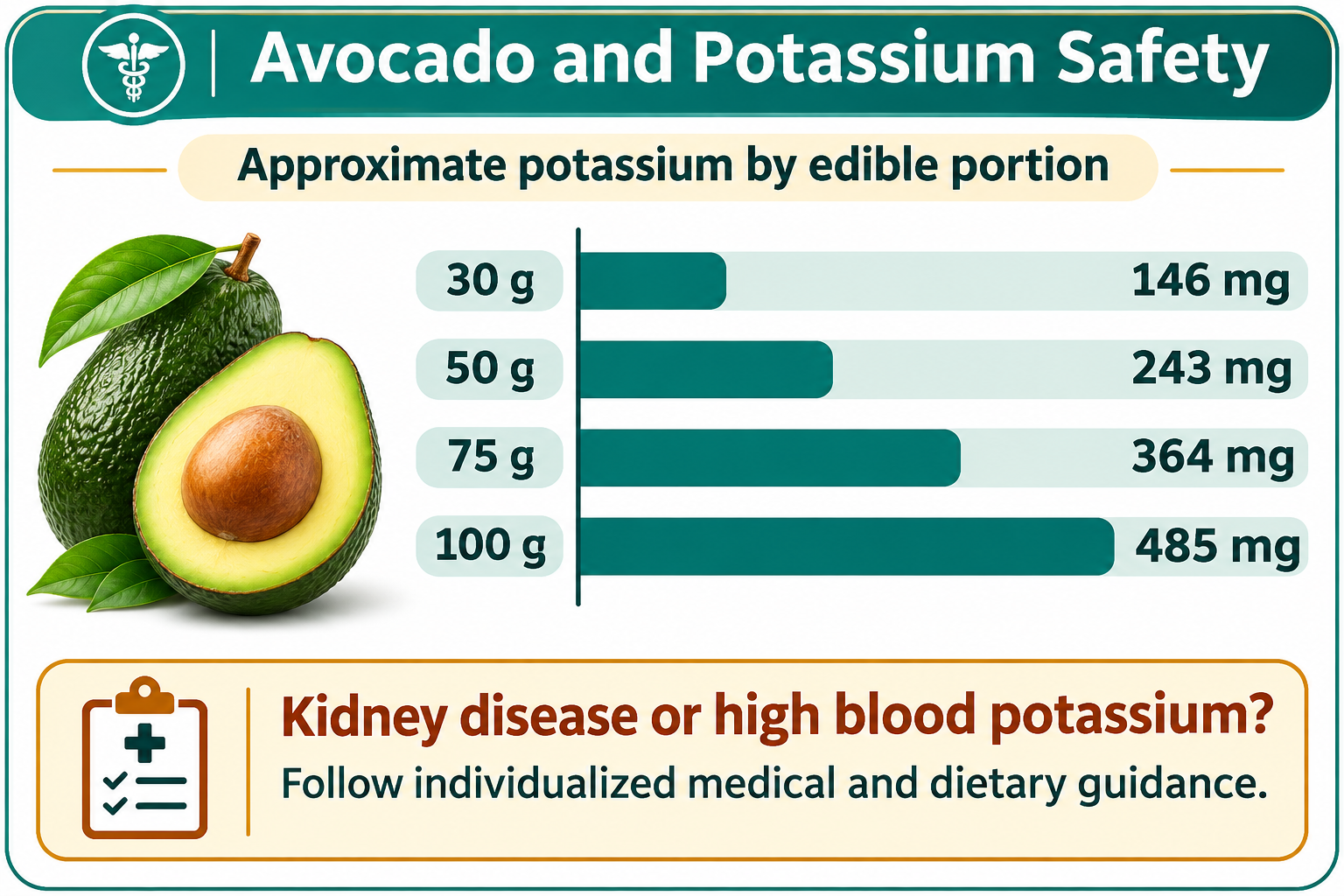
A 100 g serving contains approximately 485 mg potassium. Most healthy kidneys regulate potassium effectively, but some people with chronic kidney disease, elevated blood potassium or certain medications have additional needs. The NIH potassium fact sheet explains that kidney impairment and medications can affect potassium balance.
Do not assume that all people with kidney disease must avoid avocado. Dietary restrictions depend on laboratory results, kidney function and the individual treatment plan. People taking ACE inhibitors, ARBs or potassium-sparing medicines should follow clinical advice about potassium intake. See Diabetic Kidney Disease: Complete Guide.
Medical Safety: Potassium and Medicines
If your healthcare team has prescribed a potassium restriction, ask a renal dietitian whether avocado fits your plan. Do not stop prescribed medicines or use high-potassium foods to self-treat suspected deficiencies.
Digestive symptoms and food allergies
Large servings of avocado may cause digestive discomfort in some people. Those with irritable bowel syndrome may be sensitive to certain fermentable carbohydrates in avocado. Tolerance can depend on serving size. If following a clinician-directed low-FODMAP plan, use current tested portion guidance and discuss reintroduction with a dietitian.
Avocado allergy is possible and can occur in people with latex–fruit syndrome. Symptoms can include itching, hives or swelling. Difficulty breathing, throat swelling, faintness or rapidly worsening symptoms may indicate a serious allergic reaction. Call emergency services immediately and follow your allergy action plan, including prescribed epinephrine when indicated.
Vitamin K and warfarin
Avocado contains vitamin K. People taking warfarin are generally advised to maintain reasonably consistent vitamin K intake rather than avoid every vitamin K-containing food. Significant changes in diet should be discussed with the anticoagulation team. See NIH vitamin K fact sheet.
9. How to enjoy avocado health benefits safely
Try a measured portion of avocado on whole-grain toast with eggs or beans, add it to a salad containing a protein source, or use it in a sandwich in place of some saturated-fat-rich ingredients. Adjust the meal for allergies, kidney restrictions and personal energy requirements.
Wash the outside of an avocado under running water before cutting, even though you will discard the peel. The knife can transfer contamination from skin to flesh. Use a stable cutting board and avoid holding the fruit in your palm while removing the pit with a sharp knife. Refrigerate cut fruit promptly. Follow FDA produce safety.
Allow firm avocados to ripen at room temperature, then refrigerate when ripe to slow further changes. Browning can result from oxidation and is not by itself proof of spoilage, but mold, an unpleasant odor or other signs of deterioration warrant discarding the fruit.
10. Frequently asked questions
Is it healthy to eat avocado every day?
It can fit many balanced diets, but no daily avocado requirement exists. Portion, dietary variety, budget and medical needs matter.
Does avocado reduce belly fat?
The large six-month randomized HAT trial did not show a significant reduction in visceral fat relative to usual diet. Avocado is not a fat-burning treatment.
Is avocado high in protein?
No. Raw avocado provides about 2 g protein per 100 g. Include suitable protein-rich foods elsewhere in the meal.
Is avocado safe for diabetes?
Many people can include it within their individualized meal plan. Count the full meal’s carbohydrate and consider energy intake.
Can you eat the avocado pit?
There is insufficient evidence establishing a safe or beneficial routine human intake of avocado pit powder. Stick to the edible flesh.
Conclusion
The most reliable avocado health benefits come from its unsaturated fat, fiber and nutrient content. Human research suggests possible modest LDL improvements, while evidence for weight loss and glucose lowering is less convincing. Choose a suitable portion, consider what it replaces in the meal and seek individualized advice when medical conditions affect food choices.
BBH Key Takeaway
Avocado is a nutritious option, not a medicine. Replacing some saturated-fat-rich foods with avocado can be a practical dietary choice. Adding it without considering the rest of the meal is a different intervention.
Scientific references
USDA FoodData Central: avocados, raw, all commercial varieties • 2022 Habitual Diet and Avocado Trial • 2025 lipid profile meta-analysis • 2025 GRADE-assessed cardiovascular risk review • 2022 US prospective cohort study • 2025 cardiovascular health ancillary analysis • 2024 diet-quality analysis • 2025 human research evidence map • FDA produce safety • NIH potassium fact sheet • NIH vitamin K fact sheet
Related reading on BBH
Explore: Physical Health → Weight, Nutrition & Metabolic Health support page