Strawberries: Nutrition, Benefits and Side Effects
Strawberry Health Benefits, Nutrition and Risks

Can strawberries improve blood sugar, support your heart or help you absorb more iron? These bright red berries are often promoted as a powerful superfood, but the difference between a useful food and a proven medical treatment matters. If you have diabetes, experience digestive discomfort or are trying to make nutritious choices on a budget, understanding the evidence can help you decide what belongs on your plate.
Thank you for reading this post, don't forget to subscribe!The most reliable strawberry health benefits arise from the fruit’s nutrient content and its place in a varied eating pattern. Emerging clinical research is interesting, but a result obtained using measured amounts of freeze-dried powder does not establish that every strawberry snack produces the same effect. This guide is written for readers in the United States, with relevant considerations for the United Kingdom, Canada and Australia.
Medical Safety & Disclaimer
This article provides nutrition education, not individualized medical advice. People with diabetes, food allergies, prescribed dietary restrictions or diagnosed nutrient deficiencies should discuss dietary changes with a qualified healthcare professional. Do not stop medication, insulin or iron treatment because of claims about fruit.
Quick Answer
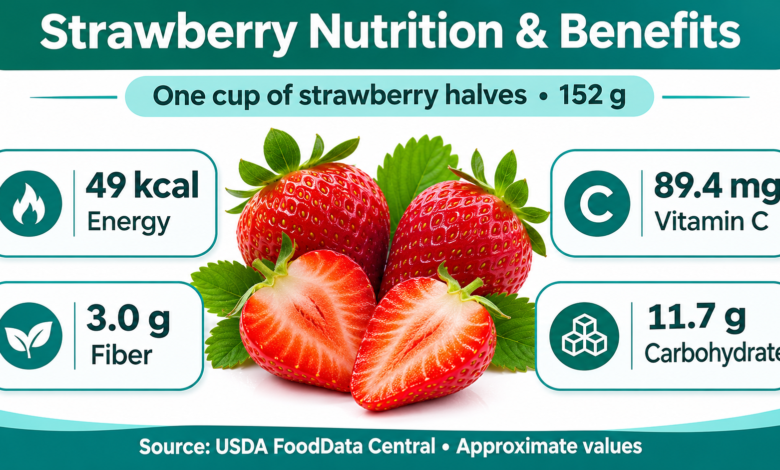
One cup of raw strawberry halves (152 g) provides approximately 49 calories, 11.7 g carbohydrate, 3 g fiber and 89.4 mg vitamin C. Strawberries are a nutritious source of vitamin C and contain plant compounds called polyphenols. Human studies suggest possible cardiometabolic benefits, but strawberries are not a treatment for diabetes or cardiovascular disease.
In This Guide
What you will learn
Nutrition facts • Vitamin C and iron absorption • Heart health • Insulin resistance • Brain research • Carbohydrate portions • Fresh and frozen berries • Research doses versus supplements • Food safety • Side effects • FAQs
1. Strawberry nutrition facts: What does a cup contain?
Strawberries contain a high proportion of water and relatively little fat or protein. Their carbohydrate includes naturally occurring sugars and fiber. The fruit is especially notable for vitamin C, with smaller amounts of folate, manganese and potassium. The figures below refer to the edible portion, without the green tops.
| Nutrient | Per 100 g | One cup of halves (152 g) |
|---|---|---|
| Energy | 32 kcal | 49 kcal |
| Total carbohydrate | 7.68 g | 11.7 g |
| Total sugars | 4.89 g | 7.4 g |
| Fiber | 2.0 g | 3.0 g |
| Protein | 0.67 g | 1.0 g |
| Fat | 0.30 g | 0.46 g |
| Vitamin C | 58.8 mg | 89.4 mg |
| Folate | 24 mcg | 36.5 mcg |
| Potassium | 153 mg | 233 mg |
| Manganese | 0.386 mg | 0.59 mg |
Source: USDA FoodData Central, raw strawberries, FDC 167762. These are reference estimates, not laboratory measurements of individual fruit. Ripeness, variety, storage and preparation can change the values. Total carbohydrate includes fiber and sugars; do not add them to the total again.
Which nutrients explain strawberry health benefits?
Vitamin C participates in collagen formation and helps maintain normal immune function. Folate contributes to normal cell division, while manganese is involved in enzyme activity. Fiber helps people meet daily fiber needs. In the US, the adult food-label Daily Value for vitamin C is 90 mg, so a cup of strawberry halves supplies approximately that reference amount. Individual requirements and national labeling standards differ.
2. Strawberry health benefits: Vitamin C and iron absorption
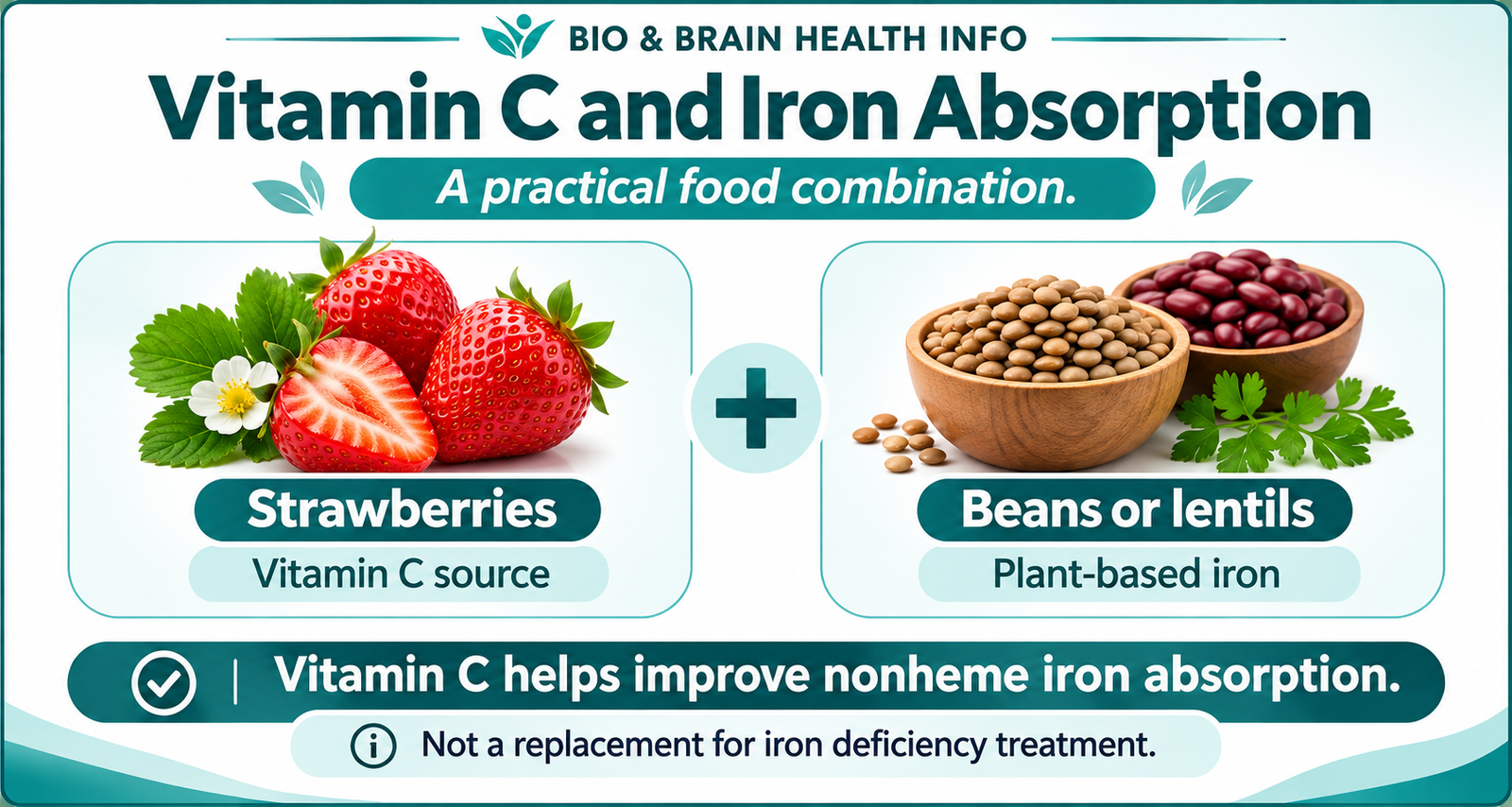
One useful but often overlooked role of vitamin C is improving absorption of nonheme iron, the form found in plant foods. Eating a vitamin C source alongside a meal containing beans, lentils or iron-fortified grains can make more of the meal’s iron available for absorption. This is especially relevant to people who eat predominantly plant-based diets.
Try strawberries as a side with a lentil-based lunch or add them to iron-fortified breakfast cereal. The berries themselves are not a concentrated iron source. They cannot correct iron deficiency on their own. Diagnosed anemia requires evaluation of its cause, which may include blood loss, absorption problems or other conditions. Treatment should follow clinical advice. The NIH vitamin C fact sheet explains the nutrient’s role in nonheme iron absorption.
Practical Nutrition Tip
Pair a vitamin C food with an iron-containing meal. Strawberries with iron-fortified oats or lentils can be useful combinations. Do not use this strategy as a substitute for prescribed iron or investigation of anemia.
3. Strawberries and heart health: What human studies show
Strawberries contain anthocyanins, ellagitannins and other polyphenols. Researchers are studying their effects on vascular function, inflammatory markers and lipid metabolism. A high antioxidant reading in a laboratory does not prove that eating the fruit prevents a heart attack.
A 2020 meta-analysis of randomized trials found a reduction in C-reactive protein, an inflammatory marker, but no consistent overall improvements in blood pressure, lipid measures or fasting glucose. Some subgroup analyses suggested cholesterol improvements among participants with elevated baseline levels. These subgroup findings require cautious interpretation.
A 2021 randomized trial in adults with moderately elevated cholesterol reported no significant differences in fasting LDL cholesterol, blood pressure or several metabolic measures after four-week interventions, although it identified some interesting vascular responses. A 2024 literature review also described encouraging cardiometabolic findings across heterogeneous studies.
The practical conclusion is that strawberries can fit into a heart-supportive diet, but their contribution should not be confused with the established benefits of managing blood pressure, cholesterol, smoking and diabetes. Read Mediterranean Diet and Type 2 Diabetes for a broader dietary framework.
4. Strawberry health benefits for brain health: Evidence and limits
Polyphenol-rich foods are of interest in research on cognitive aging. Scientists investigate possible links involving vascular function, cellular signaling and other biological pathways. The presence of a potentially useful compound does not establish that it reaches the brain in a particular amount or produces a clinically meaningful benefit.
A 2025 randomized crossover trial involving 35 older adults compared 26 g of freeze-dried strawberry powder daily with a control powder over eight-week periods. Processing speed improved during the strawberry period, but episodic memory improved during the control period. The findings are not evidence that strawberries prevent dementia or reliably improve all aspects of cognition.
The study was small and short relative to the long course of age-related cognitive disorders. Larger trials with clinically meaningful outcomes would be needed before making disease-prevention claims. Persistent memory changes warrant appropriate medical assessment. For related education, see Vitamins and Minerals for Brain Health.
Brain Health Safety
Strawberries are not a treatment for dementia, depression or other neurological conditions. Do not delay assessment or discontinue prescribed treatment because a food is described as brain-protective.
5. Strawberries and blood sugar: Can people with diabetes eat them?
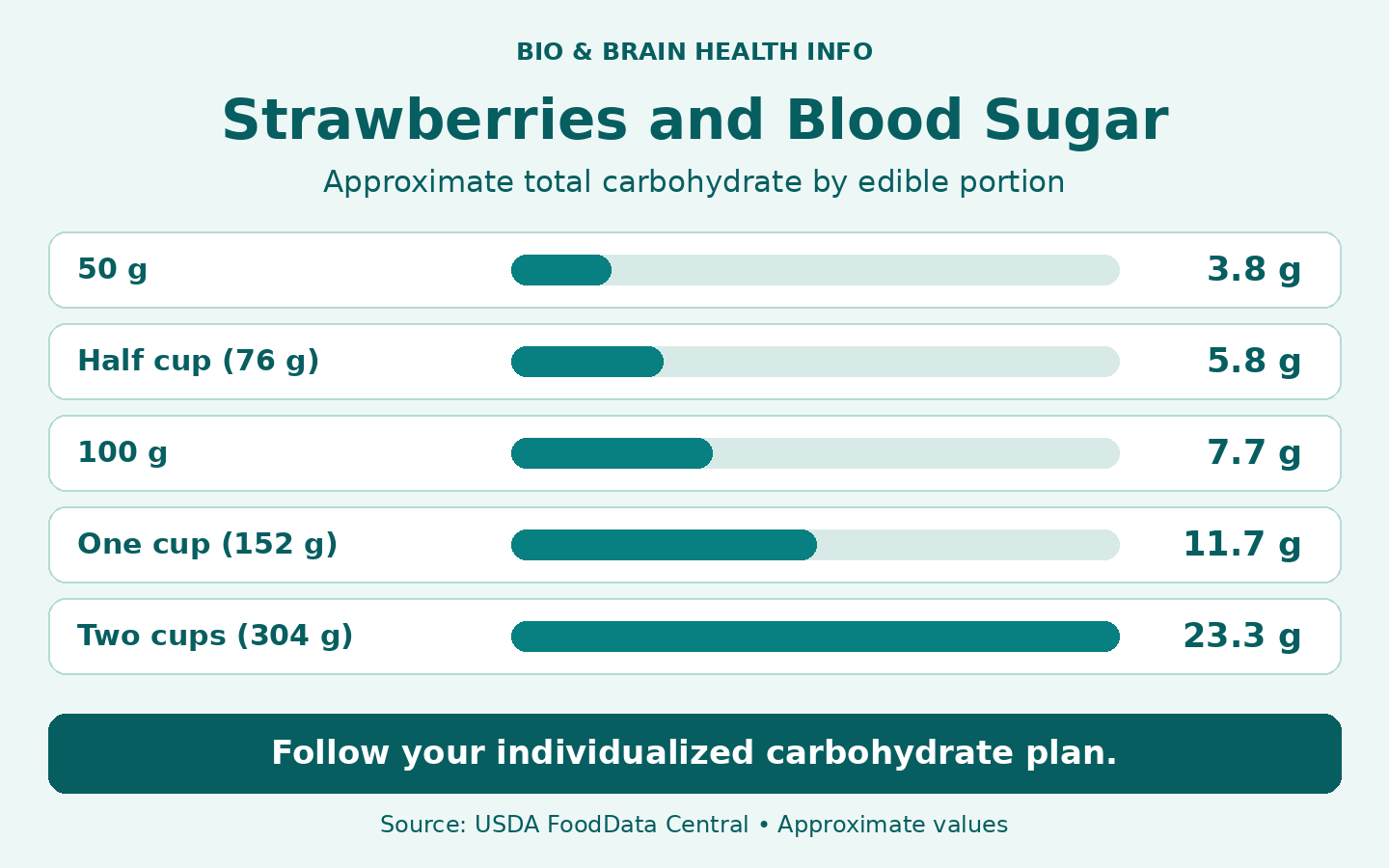
Whole strawberries can fit into many individualized diabetes meal plans. They supply less carbohydrate by weight than some other fruits, but they still contain digestible carbohydrate and may raise blood glucose. Portion size and the other ingredients in the meal matter.
| Edible portion | Approximate total carbohydrate | Approximate fiber |
|---|---|---|
| 50 g | 3.8 g | 1.0 g |
| Half cup of halves (76 g) | 5.8 g | 1.5 g |
| 100 g | 7.7 g | 2.0 g |
| One cup of halves (152 g) | 11.7 g | 3.0 g |
| Two cups of halves (304 g) | 23.3 g | 6.1 g |
These estimates use USDA composition values. The weight of a cup varies when berries are whole, sliced or halved. For reliable comparison, weigh the edible portion or use the serving guidance provided by your diabetes team. US carbohydrate labels include fiber in total carbohydrate; labeling conventions and counting methods differ between countries.
See Fruit and Diabetes: Portions and Choices and Carb Counting for Diabetes: Beginner Guide for additional practical guidance.
Strawberry health benefits and insulin resistance research
A 2025 randomized crossover study in adults with prediabetes examined 32 g of freeze-dried strawberries daily, equivalent to about 2.5 servings of fresh fruit, during a 12-week intervention period. The analysis found improvements in several glycemic measurements, including an adjusted HbA1c difference of approximately 0.2 percentage points compared with the control period.
These are interesting results, but the study was small, used a specific powder dose and included a defined population. Earlier pooled evidence did not show consistent glucose improvements. The trial does not establish that ordinary strawberry portions will lower HbA1c in every person with type 2 diabetes, or that the fruit can replace preventive care or medication.
Blood Sugar Safety
Strawberries can raise blood glucose. Consider the whole meal and follow your individualized carbohydrate plan. For hypoglycemia, use your prescribed fast-acting carbohydrate treatment rather than assuming strawberries will act quickly enough.
6. Content gap: Research doses are not supermarket serving instructions
A clinical trial may describe its intervention as equivalent to a number of servings of fresh fruit. That does not mean the researchers handed participants ordinary berries. A freeze-dried powder can be weighed precisely and standardized, whereas fresh fruit varies in water content, maturity and composition.
| Product | What to check before comparing |
|---|---|
| Fresh strawberries | Edible weight and serving size. |
| Unsweetened frozen fruit | Ingredients and nutrition per edible weight. |
| Freeze-dried whole fruit | Fruit-equivalent quantity and carbohydrate per serving. |
| Extract or capsule | Composition, independent testing and safety evidence. |
| Sweetened strawberry drink | Total carbohydrate, added ingredients and portion. |
Before using a research headline to guide purchases, ask whether the study measured a laboratory marker or a real clinical outcome, how long it lasted, who participated and whether the control group was suitable. Also consider funding and replication. A change in an insulin-resistance index cannot be directly translated into a guaranteed reduction in diabetes incidence.
This distinction makes strawberry health benefits easier to interpret without expensive supplements or unrealistic expectations. A person who enjoys a modest serving of fresh berries does not need to reproduce a research protocol to obtain nutritional value.
7. Strawberry health benefits: Fresh vs frozen berries
Unsweetened frozen strawberries can provide a useful alternative when fresh berries are expensive or out of season. Both can contribute fiber and vitamin C, although storage and processing influence the final nutrient content. Vitamin C is sensitive to degradation, so the nutritional value of an individual package depends partly on handling.
Choose a product that fits your budget and intended use. Unsweetened frozen berries work in cooked oatmeal, yogurt or recipes according to package instructions. Sweetened frozen fruit, strawberry syrup and dried fruit with added sugar can have a different carbohydrate and energy profile. Read the ingredient list rather than judging the product by a picture of strawberries.
8. Strawberry side effects and safety precautions
Digestive discomfort
Large portions of fruit may contribute to bloating, loose stools or abdominal discomfort in some people. Tolerance can depend on total fiber intake, meal composition and underlying digestive conditions. Reduce the portion if necessary rather than assuming that all berries are unsuitable. Persistent symptoms or unexplained weight loss deserve medical assessment.
Strawberry allergy
Strawberry allergy is possible. Symptoms may include mouth itching, hives or swelling. Difficulty breathing, throat swelling, faintness or rapidly progressing symptoms can indicate a severe allergic reaction. Call emergency services immediately and use prescribed epinephrine if indicated by your allergy action plan. Do not deliberately retest a suspected serious allergy at home.
Medical Safety: Allergy
Seek emergency assistance for suspected anaphylaxis. USA and Canada: 911; UK: 999 or 112; Australia: 000. A fruit’s nutritional benefits never override a confirmed food allergy.
9. How to wash, store and prepare strawberries safely
Fresh berries are perishable. The FDA produce safety guidance recommends storing strawberries in a clean refrigerator at 40°F (about 4°C) or below. Wash hands and utensils before preparing fruit, rinse berries under clean running water and discard visibly moldy or spoiled berries. Avoid using soap, detergent or household disinfectants on food.
Washing reduces contamination but cannot guarantee the removal of all pathogens. Frozen berries are not necessarily ready to eat; follow cooking instructions, local food safety advice and recall notices. This matters particularly for people at greater risk of serious foodborne illness. Freezing does not reliably kill every pathogen.
10. How to enjoy strawberry health benefits in balanced meals
Combine strawberry halves with plain Greek yogurt and unsalted nuts for a snack containing carbohydrate, protein and fat. Add berries to oatmeal, serve them with an iron-containing meal or use them in a salad. Adjust portions for your dietary needs and substitute ingredients if you have allergies.
For a practical weekly approach, buy an amount you can use before spoilage, or keep unsweetened frozen berries available. A half-cup serving can add flavor to breakfast without requiring a full cup every time. Vary the fruit you eat across the week so that strawberries complement, rather than displace, other sources of nutrients. If comparing products, read the serving weight and ingredient list before comparing calories or carbohydrates. This approach is useful for grocery shopping in all four target countries, where packaging conventions and seasonal availability may differ.
A strawberry dessert can be enjoyable, but a milkshake, jam or pastry is not nutritionally equivalent to whole fruit. Added sugars, cream and serving size change the meal’s composition. The aim is not to forbid desserts but to understand what you are eating. See Diabetes Snacks: Balanced Options for balanced snack ideas.
11. Frequently asked questions
Is it healthy to eat strawberries every day?
For many people, strawberries can be part of a daily varied diet. There is no universal requirement to eat them every day, and other fruits also supply valuable nutrients.
Do strawberries lower blood sugar?
Strawberries contain carbohydrate. Small clinical studies have investigated metabolic effects, but the fruit is not an established glucose-lowering treatment.
Can strawberries cure iron deficiency?
No. Their vitamin C can improve absorption of plant-based iron in a meal, but strawberries are not a substitute for appropriate assessment or treatment of iron deficiency.
Are organic strawberries more nutritious?
Organic production does not guarantee superior nutritional content. Variety, maturity and storage can influence composition. Choose safe, affordable fruit that suits your preferences.
Are strawberries safe during pregnancy?
Properly handled strawberries can fit into a varied pregnancy diet unless there is an individual contraindication such as an allergy. Follow food safety guidance and any advice from your maternity care team.
Conclusion
The strongest reasons to eat strawberries are their vitamin C, fiber, flavor and contribution to a diverse diet. Cardiometabolic and cognitive studies offer promising research directions, but the results do not establish disease-prevention or treatment effects. Choose a suitable portion and preparation, consider food safety and discuss medical concerns with a qualified professional.
BBH Key Takeaway
Strawberries provide vitamin C and fiber, and may complement iron-containing meals. Enjoy whole fresh or unsweetened frozen berries when suitable. Evaluate health claims by the quality of human evidence, not by antioxidant marketing.
Scientific references
USDA FoodData Central: raw strawberries • NIH: vitamin C • 2020 cardiovascular risk meta-analysis • 2024 comprehensive strawberry review • 2025 prediabetes randomized crossover trial • 2025 cognition trial in older adults • 2021 vascular function trial • FDA: selecting and serving produce safely
Related reading on BBH
Explore: Physical Health → Weight, Nutrition & Metabolic Health support page