Orange: Nutrition, Benefits and Side Effects
Orange Health Benefits, Nutrition and Risks

Is an orange a day good for your health? Does orange juice offer the same benefits as whole fruit? Can people with diabetes enjoy oranges without compromising their glucose management? These questions arise because citrus fruit is frequently promoted as an immunity booster, a natural detox remedy or a way to improve circulation. Some claims have a sound nutritional foundation, while others go well beyond the available human evidence.
Thank you for reading this post, don't forget to subscribe!Understanding orange health benefits starts with the edible portion, the form of the fruit and the person’s individual nutritional needs. This guide separates established nutrient functions from emerging clinical research and offers practical advice for readers in the United States, United Kingdom, Canada and Australia. The aim is to support informed decisions, not to prescribe a universal daily fruit dose.
Medical Safety & Disclaimer
This article is educational and does not replace medical diagnosis, treatment or personalized dietetic guidance. If you have diabetes, kidney disease, elevated potassium, reflux, citrus allergy or take medication with fruit juice restrictions, discuss suitable choices with your healthcare professional. Do not stop prescribed treatment because of claims about oranges.
Quick Answer
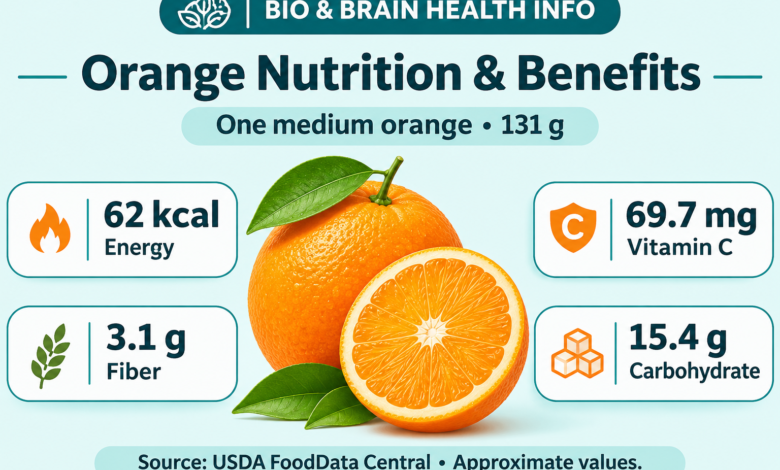
A medium raw orange (131 g edible portion) provides approximately 62 calories, 15.4 g total carbohydrate, 3.1 g fiber and 69.7 mg vitamin C. Whole oranges can contribute to a balanced diet. Orange juice retains useful nutrients but typically supplies less fiber and can be consumed in larger carbohydrate portions. Neither form is a treatment for chronic disease.
In This Guide
What you will learn
Nutrition facts • Vitamin C and immunity • Iron absorption • Heart health research • Brain health • Diabetes portions • Whole fruit versus juice • Citrus medication interactions • Reflux and dental health • Kidney precautions • Food safety • FAQs
1. Orange nutrition facts: What does one orange contain?
Oranges contain mostly water, with carbohydrates providing most of their energy. They offer fiber, vitamin C, folate and potassium, but relatively little protein or fat. The following USDA reference values are for raw oranges across commercial varieties. The edible weight excludes the peel and seeds. A larger orange may supply substantially more carbohydrate than a smaller one.
| Nutrient | Per 100 g | Medium orange (131 g) |
|---|---|---|
| Energy | 47 kcal | 62 kcal |
| Total carbohydrate | 11.75 g | 15.4 g |
| Total sugars | 9.35 g | 12.2 g |
| Fiber | 2.4 g | 3.1 g |
| Protein | 0.94 g | 1.2 g |
| Fat | 0.12 g | 0.16 g |
| Vitamin C | 53.2 mg | 69.7 mg |
| Potassium | 181 mg | 237 mg |
| Folate | 30 mcg | 39 mcg |
| Calcium | 40 mg | 52 mg |
| Water | 86.75 g | 114 g |
Source: USDA FoodData Central: raw oranges. Nutrient values are approximate. Growing conditions, variety and storage can affect composition. Fiber and sugars are already included in total carbohydrate. In the United States, a medium orange supplies around 77% of the adult nutrition-label Daily Value for vitamin C (90 mg). This reference is not the same as every individual’s recommended intake.
Which nutrients explain orange health benefits?
Vitamin C participates in collagen synthesis and immune function. Folate contributes to normal cell division. Potassium supports normal nerve and muscle function, while fiber helps meet daily dietary requirements. Citrus fruits also contain flavanones, including hesperidin. Their presence does not prove that every serving produces a measurable clinical benefit.
2. Orange health benefits: Vitamin C, immunity and iron absorption
Supporting normal immune function
Adequate vitamin C intake helps maintain normal immune function. That is different from claiming an orange prevents a cold or influenza. The NIH notes that even regular vitamin C supplementation does not substantially reduce the chance of catching a cold in most people, although it may modestly shorten illness duration. Supplement trials are not evidence that eating an orange after symptoms begin will cure an infection.
A varied diet, adequate sleep, appropriate vaccination and timely healthcare remain relevant to infectious disease prevention. If you already obtain adequate vitamin C, consuming more oranges does not necessarily translate into additional immune protection. See NIH vitamin C fact sheet for the scientific background.
Vitamin C and plant-based iron absorption
Vitamin C can increase the absorption of nonheme iron from foods such as beans, lentils and fortified cereals. Eating an orange with a plant-based meal is a practical way to combine these nutrients. The fruit itself is not a concentrated source of iron, and it does not correct the underlying cause of anemia.
Persistent fatigue or suspected iron deficiency deserves appropriate assessment. Blood loss, malabsorption and other conditions may require specific treatment. People with iron overload disorders should seek individualized advice before using high-dose vitamin C supplements.
Practical Nutrition Tip
Combine orange segments with a lentil-based meal or iron-fortified breakfast cereal. The vitamin C can support nonheme iron absorption. Continue prescribed iron treatment as directed; an orange is not a replacement.
3. Orange health benefits for heart health: What research shows
Researchers have investigated citrus flavanones and cardiovascular markers, including blood pressure, lipid concentrations and blood vessel function. A randomized CITRUS study published in 2020 examined regular and hesperidin-enriched orange juice in people with mildly elevated blood pressure. Some blood pressure outcomes improved. However, the intervention was a measured beverage consumed over weeks, not simply one orange eaten occasionally. See CITRUS randomized clinical trial.
A 2021 meta-analysis of randomized trials reported improvements in total cholesterol and an insulin resistance measure, but evidence was not uniformly favorable across all outcomes. A 2022 systematic review in adults with overweight or obesity found a pooled systolic blood pressure difference of about one millimeter of mercury and a modest HDL improvement. These are intermediate markers rather than evidence of fewer heart attacks. See 2021 orange juice meta-analysis and 2022 orange juice systematic review.
The practical interpretation is that oranges can fit within a heart-supportive diet, but orange juice should not be prescribed as a blood pressure or cholesterol remedy. Consider the calories, carbohydrate and serving size alongside the overall dietary pattern. Read Mediterranean Diet and Type 2 Diabetes for a broader approach.
4. Orange health benefits for the brain: Evidence versus marketing
The brain depends on adequate nutrition and normal circulation. Vitamin C participates in several biochemical pathways relevant to nervous system function, and citrus flavonoids are being investigated for possible vascular and metabolic effects. However, nutrient functions and laboratory experiments cannot establish that an orange improves memory, prevents dementia or treats depression.
Many studies investigating citrus compounds use standardized extracts or combinations of foods. Their results should not be attributed to a particular supermarket orange without direct supporting evidence. A nutritious dietary pattern may help maintain overall health, but persistent cognitive changes, mood symptoms or neurological concerns warrant professional evaluation. See Vitamins and Minerals for Brain Health.
5. Oranges and blood sugar: Can people with diabetes eat them?
Many people with diabetes can include whole oranges in an individualized eating plan. Fruit contains natural sugars, but the total carbohydrate amount is more useful for meal planning than sweetness alone. One medium orange contains about 15.4 grams of total carbohydrate, approximately one 15-gram carbohydrate choice in common US diabetes education.
| Edible portion | Approximate total carbohydrate | Approximate fiber |
|---|---|---|
| 50 g | 5.9 g | 1.2 g |
| Half medium orange (65.5 g) | 7.7 g | 1.6 g |
| Small orange (96 g) | 11.3 g | 2.3 g |
| Medium orange (131 g) | 15.4 g | 3.1 g |
| Large orange (184 g) | 21.6 g | 4.4 g |
These estimates use the same reference composition for all sizes. Actual fruit varies. US labels include fiber in total carbohydrate; other countries use different labeling conventions. Follow the method recommended by your diabetes care team. See Fruit and Diabetes: Portions and Choices and Carb Counting for Diabetes: Beginner Guide.
Blood Sugar Safety
Whole oranges can raise blood glucose. Do not adjust insulin or other medication based on a single food response. For hypoglycemia, use the fast-acting carbohydrate treatment recommended in your personal care plan. Juice may be suitable in some plans, but people with potassium restrictions may need alternatives.
6. Whole oranges vs orange juice: Understanding the difference
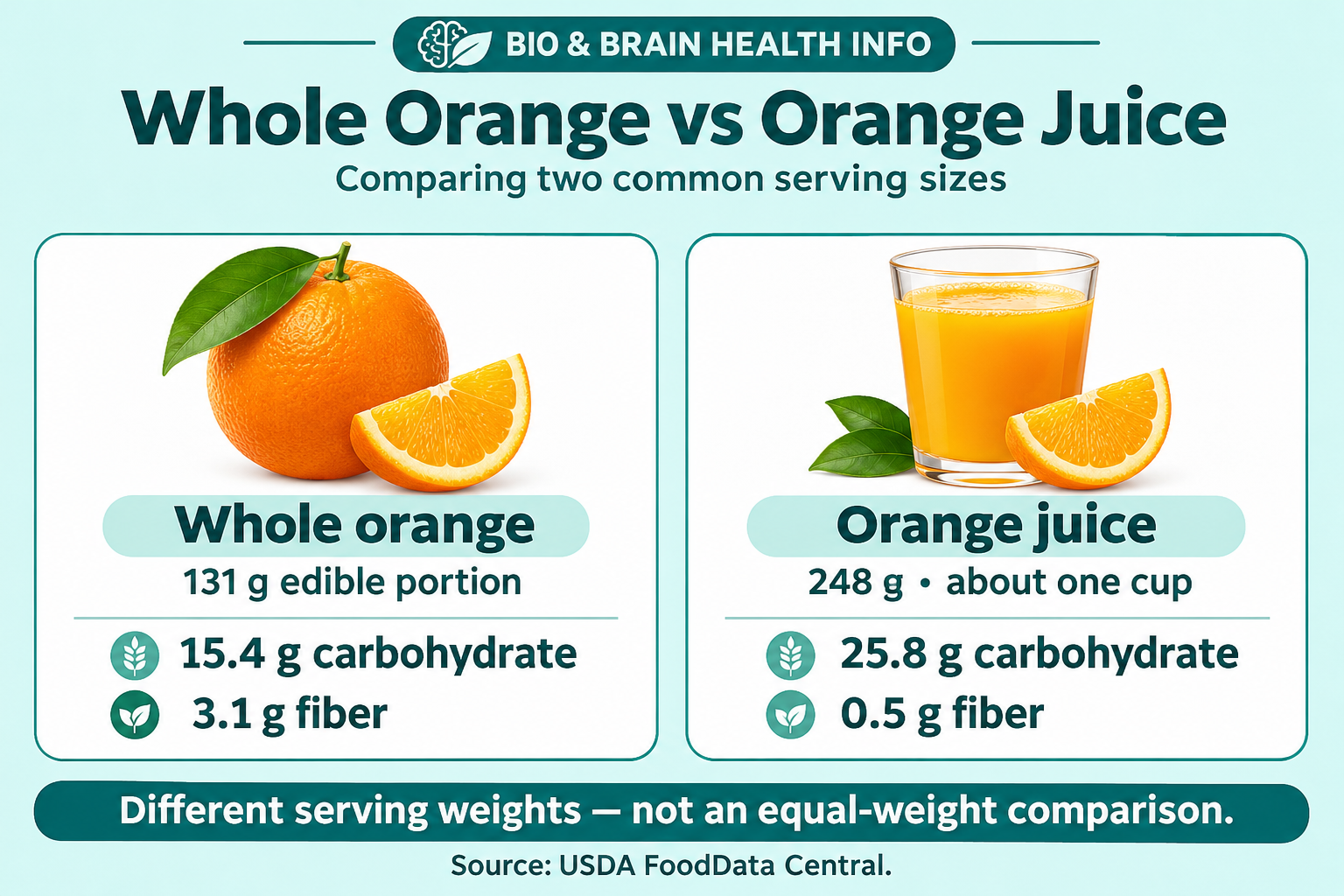
A glass of 100% orange juice is not nutritionally identical to the whole fruit. Juicing removes much of the fruit’s structural fiber, while retaining water, carbohydrate and some micronutrients. Because juice is easy to drink, it can deliver several fruit-equivalent portions before fullness becomes apparent. The amount depends on fruit size, yield and the glass used.
| Food or drink | Typical serving | Approximate carbohydrate | Approximate fiber |
|---|---|---|---|
| Whole orange | 131 g | 15.4 g | 3.1 g |
| Raw orange juice | 248 g (about 1 cup) | 25.8 g | 0.5 g |
Juice estimates use USDA raw orange juice reference composition (FDC 169098). Packaged juices vary, and added pulp, fortification and processing affect their nutritional profiles. These servings differ in weight; this table illustrates practical portions, not an equal-weight clinical comparison.
The NHS recommends keeping combined fruit juice, vegetable juice and smoothie consumption to no more than 150 mL daily. This is UK population guidance rather than a universal limit for every medical condition. In the United States, Canada and Australia, check local dietary guidance and individual diabetes advice. See NHS fruit and juice portions.
7. Content gap: Compare the actual carbohydrate dose, not just the fruit form
Imagine someone eats one medium orange for breakfast on Monday and drinks a large glass of orange juice on Tuesday. If their glucose rises more on Tuesday, the difference may reflect the additional carbohydrate, faster consumption, other meal ingredients or individual circumstances rather than juicing alone.
A useful educational comparison records the edible weight or beverage serving, total carbohydrate, other meal ingredients and relevant activity or medication timing. If glucose monitoring is part of your medical plan, compare readings at times agreed with your care team. Do not assume that comparing unequal carbohydrate portions proves one food has a specific glycemic effect.
A second distinction concerns clinical research. The CITRUS trial used measured orange juice interventions, including a hesperidin-enriched beverage. Its results cannot automatically be transferred to a fresh orange, a citrus extract capsule or an ordinary sweetened orange drink. This is why orange health benefits should be interpreted in the context of the actual product and measured outcome.
Evidence Check
Before trusting a citrus health headline, ask: Was the intervention whole fruit, juice or extract? What was the dose? Did the study measure a clinical outcome or a laboratory marker? Was there an appropriate comparison group?
8. Orange side effects and medication interactions
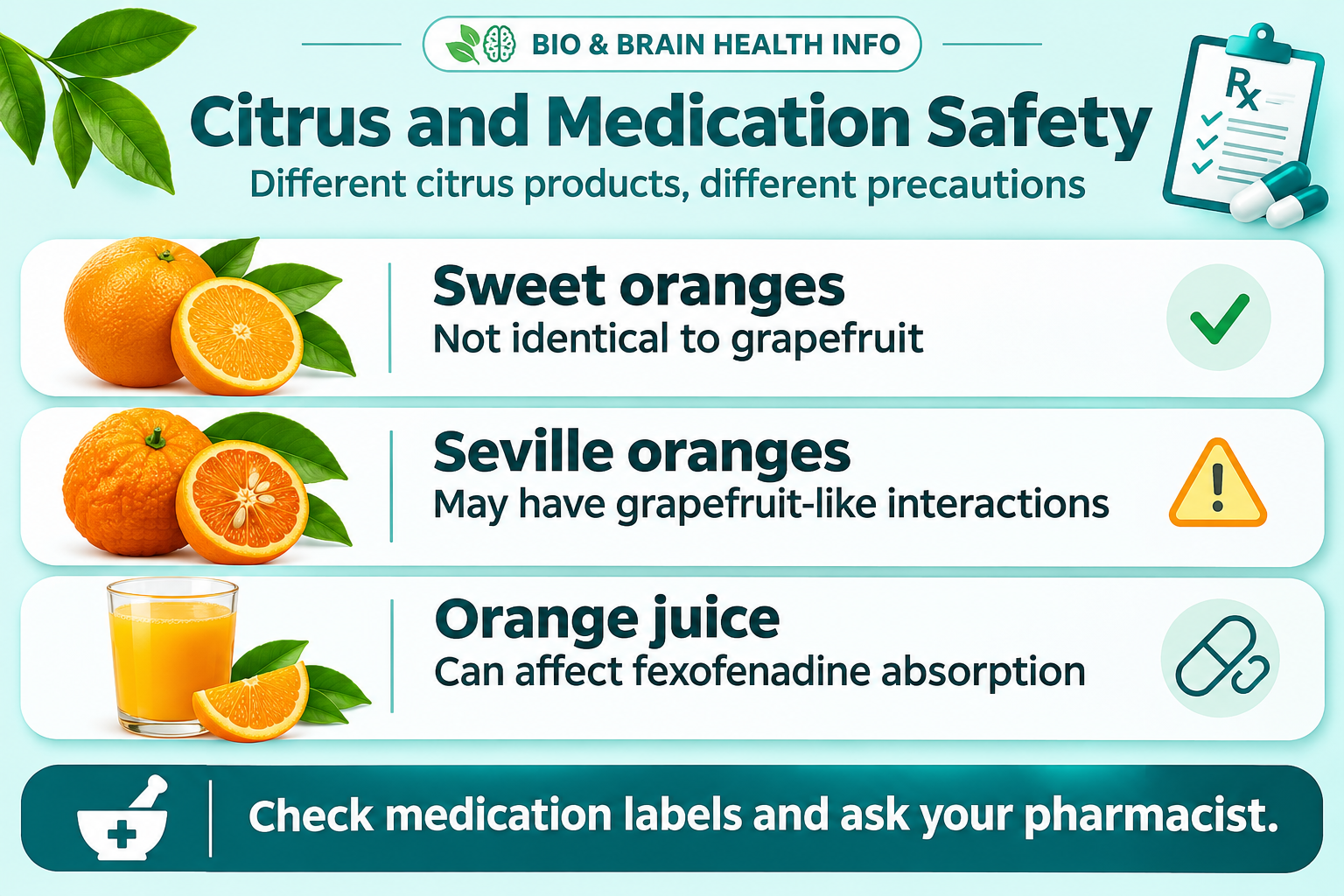
Sweet oranges are not the same as Seville oranges
The FDA warns that grapefruit and certain related citrus fruits can interact with medicines. Seville oranges, sometimes used in marmalade, may have grapefruit-like effects. Ordinary sweet oranges do not automatically share every grapefruit interaction, but orange juice has its own medication considerations. For example, it can reduce absorption of the antihistamine fexofenadine.
Take medicines according to the product label and pharmacist’s advice. Do not assume that separating a juice and a medicine by a few hours resolves every interaction. Use water when instructed, and ask specifically about citrus products, marmalade and supplements. See FDA fruit juice and medication interactions.
Medication Safety
If your medication label warns against fruit juice or grapefruit-related citrus, ask a pharmacist which products to avoid. Orange juice and Seville orange products can have different interaction profiles. Never stop a prescribed medicine to accommodate a food choice.
Acid reflux, dental health and digestive tolerance
Citrus acidity may trigger heartburn in susceptible individuals, although not everyone with reflux needs to avoid oranges. Identify personal triggers and discuss persistent symptoms with a clinician. Frequent exposure of teeth to acidic drinks can also contribute to enamel erosion. Avoid sipping juice continuously throughout the day and follow dental advice. See NIDDK reflux nutrition guidance.
Kidney disease and potassium
Oranges contribute potassium, and a large juice serving may provide a greater amount than a small fruit portion. People with chronic kidney disease or high blood potassium may require individualized dietary adjustments. Not every person with kidney disease needs potassium restriction. Laboratory results, medicines and kidney function help determine an appropriate plan. Read Diabetic Kidney Disease: Complete Guide.
Citrus allergy
Citrus allergy can cause itching, hives or swelling. Breathing difficulty, throat swelling or faintness after eating may indicate anaphylaxis. Seek emergency help immediately and use prescribed epinephrine if indicated by your allergy plan. Call 911 in the USA or Canada, 999 or 112 in the UK, or 000 in Australia.
9. How to enjoy orange health benefits in balanced meals
Include orange segments with plain yogurt, oats or unsalted nuts, or serve them alongside a bean-based meal. These combinations supply nutrients that the fruit alone cannot provide. For a portable snack, carry a whole orange rather than assuming a large bottle of juice has an equivalent nutritional profile.
Navel, Valencia and blood oranges differ in flavor, appearance and plant compounds. Blood oranges contain anthocyanins, but their color does not prove superior disease prevention. Choose varieties based on availability, price and preference. Wash fruit under running water before peeling or cutting, use clean utensils and refrigerate cut fruit promptly. Follow FDA produce safety.
10. Frequently asked questions
Is eating an orange every day healthy?
A daily orange can fit many balanced diets, but there is no universal requirement. Consider carbohydrate needs, digestive tolerance and variety across the week.
Does orange juice contain added sugar?
A product labeled 100% orange juice contains naturally occurring fruit sugars and may have no added sugar. Orange drinks and other products can contain added sweeteners. Check the ingredients and nutrition label.
Can oranges prevent colds?
They provide vitamin C, which supports normal immune function. Evidence does not establish that oranges prevent or cure common colds.
Are oranges safe for people with diabetes?
Many people can include them in suitable portions. Individual glucose responses and treatment plans matter.
Can oranges lower blood pressure?
Some citrus juice studies show modest changes in cardiovascular markers, but oranges are not a substitute for hypertension treatment.
Conclusion
The most dependable orange health benefits are their contribution of vitamin C, fiber and other nutrients within a varied diet. Whole fruit and juice offer different practical portions, and medication interactions, reflux or kidney needs may influence suitability. Choose foods based on nutritional evidence and personal circumstances rather than promises of a cure.
BBH Key Takeaway
Whole oranges are a useful source of vitamin C and fiber. Consider portion size, distinguish juice research from whole fruit evidence, and check medication or medical restrictions when relevant.
Scientific references
USDA FoodData Central: raw oranges • NIH vitamin C fact sheet • CITRUS randomized clinical trial • 2021 orange juice meta-analysis • 2022 orange juice systematic review • FDA fruit juice and medication interactions • NHS fruit and juice portions • NIDDK reflux nutrition guidance • FDA produce safety
Related reading on BBH
Explore: Physical Health → Weight, Nutrition & Metabolic Health support page