Grapes: Nutrition, Benefits
Grape Health Benefits, Nutrition and Risks

Grapes are convenient, naturally sweet and available in many varieties. Yet their reputation can be confusing. Some headlines describe them as powerful anti-aging foods because they contain resveratrol. Others suggest that people with diabetes should avoid them because of their sugar content. Neither extreme provides a useful starting point for everyday nutrition.
Thank you for reading this post, don't forget to subscribe!Understanding grape health benefits requires examining the actual food, its serving size and the quality of the evidence. A bowl of fresh grapes is different from a glass of juice, a packet of raisins or a concentrated supplement. This guide focuses on practical decisions for readers in the United States, United Kingdom, Canada and Australia.
Medical Safety & Disclaimer
This article is general nutrition education, not individualized medical advice. If you have diabetes, food allergies, swallowing difficulties or prescribed dietary restrictions, discuss suitable portions with your healthcare team. Do not replace prescribed treatment with grapes, grape seed extract or resveratrol.
Quick Answer
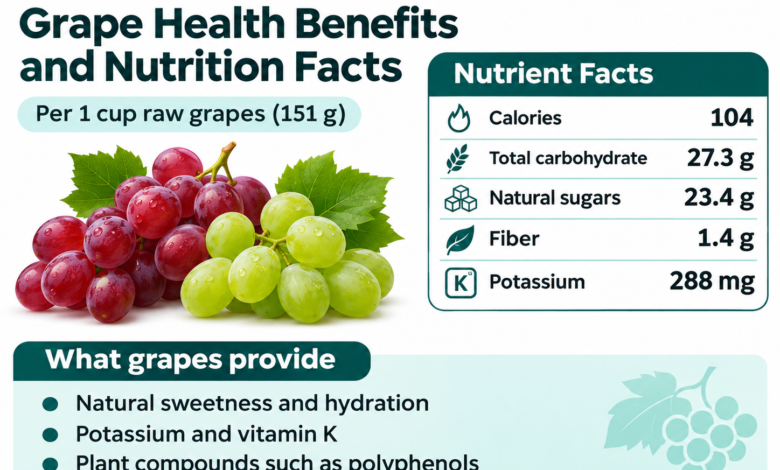
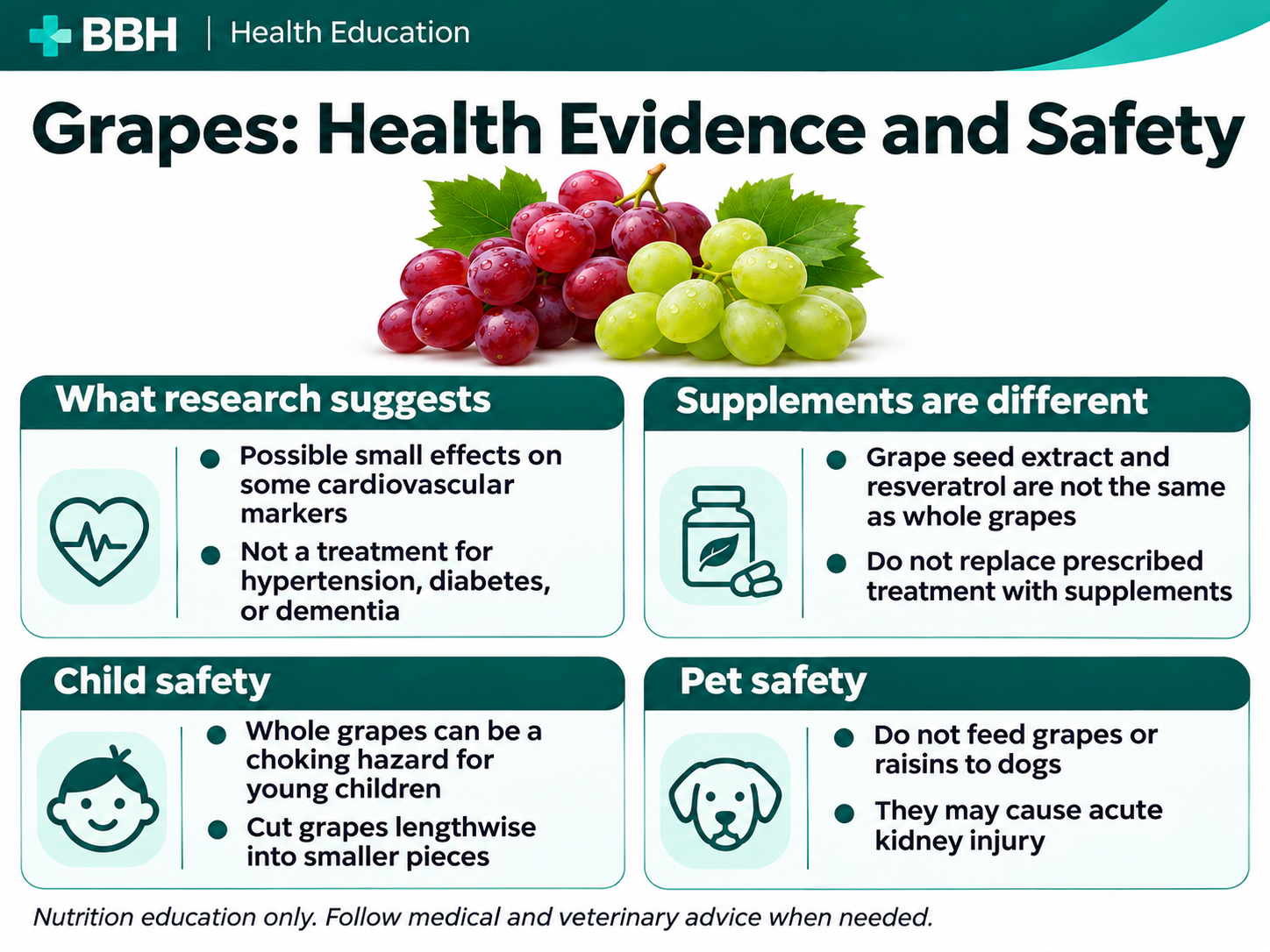
One cup of raw red or green grapes (151 g) contains approximately 104 calories, 27.3 g total carbohydrate, 23.4 g naturally occurring sugars and 1.4 g fiber. Grapes provide useful nutrients and plant compounds. Human trials suggest possible small improvements in some cardiovascular markers, but grapes are not a treatment for hypertension, diabetes or dementia.
In This Guide
What you will learn
Nutrition facts • Polyphenols and resveratrol • Heart and brain research • Blood sugar • Red versus green grapes • Whole fruit, juice and raisins • Supplements • Weight management • Medical safety • Child and pet safety • FAQs
1. Grape nutrition facts: What does one cup contain?
Most of the energy in fresh grapes comes from carbohydrate. They also supply water, potassium, vitamin K and smaller amounts of vitamin C, along with plant compounds. Their fiber content is relatively modest compared with some berries. The following values use the USDA legacy reference for raw red or green European-type grapes, such as Thompson seedless. They are not a separate analysis of every color or cultivar.
| Nutrient | Per 100 g | One cup (151 g) |
|---|---|---|
| Energy | 69 kcal | 104 kcal |
| Total carbohydrate | 18.1 g | 27.3 g |
| Total sugars | 15.5 g | 23.4 g |
| Fiber | 0.9 g | 1.4 g |
| Protein | 0.72 g | 1.1 g |
| Fat | 0.16 g | 0.24 g |
| Potassium | 191 mg | 288 mg |
| Vitamin C | 3.2 mg | 4.8 mg |
| Vitamin K | 14.6 mcg | 22.0 mcg |
| Water | 80.5 g | 121.5 g |
Source: USDA FoodData Central: raw red or green grapes. Values are approximate and rounded. Sugars and fiber form part of total carbohydrate, so they should not be added again. Actual grape size, ripeness and variety can change composition. A cup is a convenient household measure, but edible weight provides a more reproducible comparison.
Which nutrients explain grape health benefits?
Carbohydrate supplies energy, potassium contributes to normal nerve and muscle function, and vitamin K participates in normal blood clotting. Water contributes to fluid intake. The small amount of fiber in a serving can contribute to overall dietary fiber, although grapes alone are not a particularly concentrated fiber source. Combining different fruits, vegetables, legumes and whole grains helps provide a broader nutrient profile.
2. Resveratrol and polyphenols: What makes grapes interesting?
Grapes contain multiple classes of plant compounds, including flavanols, flavonols and, in many darker varieties, anthocyanins. Resveratrol is a stilbene that occurs in grape tissues, particularly the skin. The amount varies with cultivar, growing conditions and processing. Seedless grapes still contain plant compounds; removing seeds does not make the fruit nutritionally worthless.
Laboratory experiments may show antioxidant activity or changes in cellular signaling. However, digestion and metabolism change the compounds that circulate in the body. A laboratory finding cannot establish that eating a particular number of grapes prevents disease or slows human aging. Research using an isolated compound at a measured dose is especially difficult to translate into ordinary food servings.
Evidence Literacy
A food containing resveratrol is not equivalent to a resveratrol supplement. Antioxidant activity in a laboratory does not prove a benefit in human clinical outcomes.
3. Grape health benefits for heart health: Human research
Researchers have examined grape products in relation to blood pressure, blood vessel function and cholesterol. The 2023 systematic review of whole grape products and vascular function found a small reduction in systolic blood pressure with grape products, especially whole-form interventions, but the certainty of evidence was low and other cardiovascular markers did not consistently improve.
The 2019 systematic review of grape products and blood lipids examined lipid outcomes across randomized trials. Such reviews are useful for identifying potential patterns, but products, doses, study lengths and baseline participant health may vary substantially. A measured change in a lipid or blood pressure result does not establish that consuming ordinary grapes prevents heart attacks or strokes.
A practical interpretation is to enjoy grapes as part of a varied dietary pattern rather than prescribe them as a cardiovascular remedy. Blood pressure management, appropriate cholesterol treatment, smoking cessation and physical activity remain important. Read Mediterranean Diet and Type 2 Diabetes for a wider dietary framework.
4. Grape health benefits for brain health: Evidence versus marketing
The brain depends on adequate nutrition and healthy circulation. Grape polyphenols are of research interest because vascular and cellular signaling pathways may be relevant to cognitive function. This scientific interest is not proof that grapes improve memory, prevent dementia or treat anxiety or depression.
Studies of grape juice, extracts or isolated resveratrol may involve doses that differ considerably from those in an everyday fruit portion. Small short-term changes in a cognitive test also cannot establish protection against a neurological disease developing over many years. Readers should distinguish a promising hypothesis from a confirmed medical outcome.
For a person concerned about memory, adequate sleep, physical activity, cardiovascular assessment and evaluation of relevant nutrient deficiencies may be important. Persistent changes deserve professional assessment rather than a trial of increasingly expensive supplements. Read Vitamins and Minerals for Brain Health.
5. Grapes and blood sugar: Can people with diabetes eat grapes?
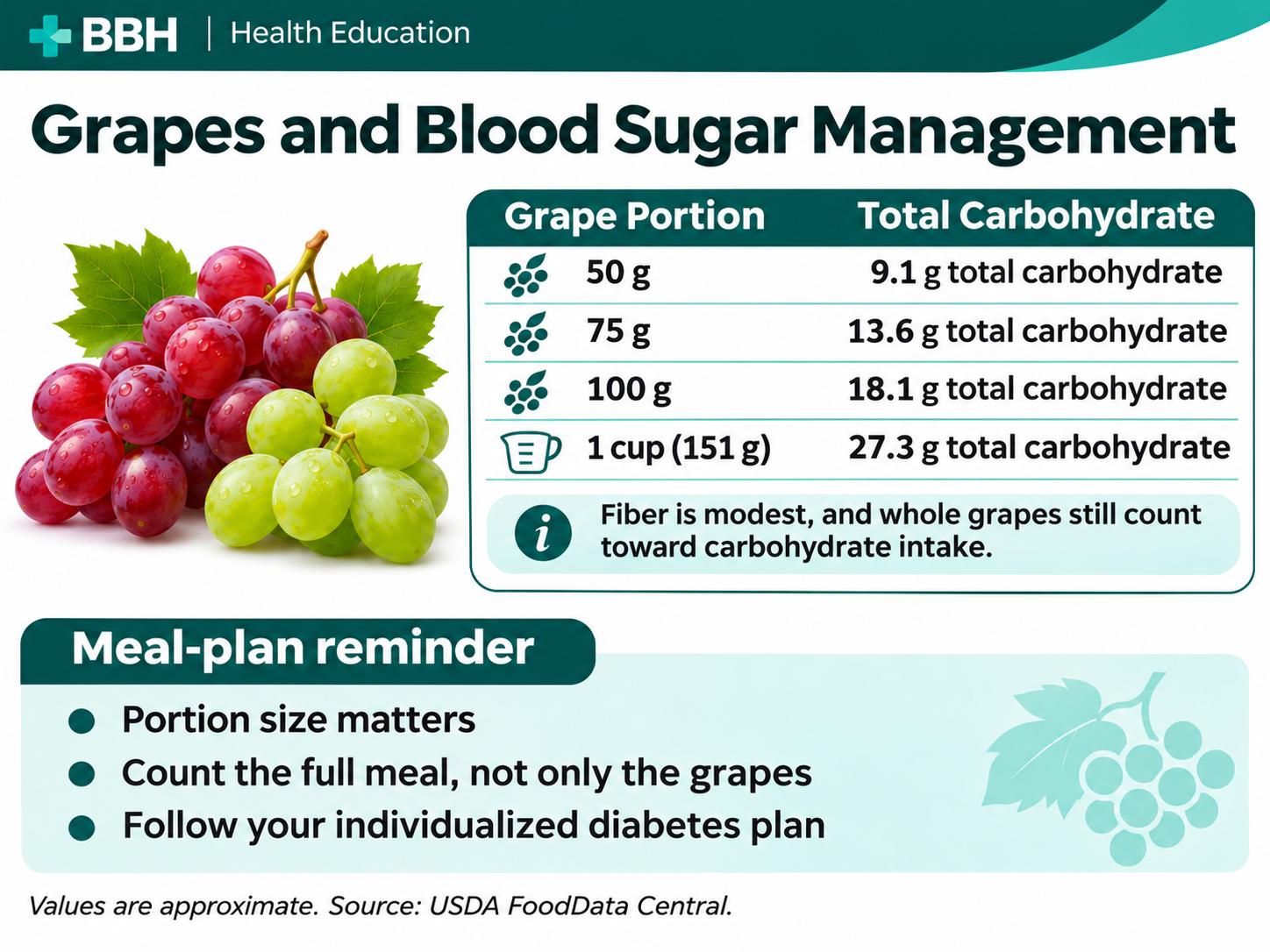
Many people with diabetes can include whole grapes in an individualized eating plan. Their natural sugars remain part of the carbohydrate total. A full cup contains around 27.3 grams of total carbohydrate, whereas a smaller weighed portion contains proportionately less. This is one reason that advice about a handful of grapes can be difficult to interpret: hands and grape sizes differ.
| Edible grape portion | Approximate total carbohydrate | Approximate fiber |
|---|---|---|
| 50 g | 9.1 g | 0.45 g |
| 75 g | 13.6 g | 0.68 g |
| 100 g | 18.1 g | 0.9 g |
| One cup (151 g) | 27.3 g | 1.4 g |
A 75 g portion is close to one 15-gram carbohydrate choice used in common US diabetes education. This is a reference comparison, not a universal serving recommendation or insulin dose. Label conventions differ internationally: some countries list available carbohydrate separately from fiber. Follow your local diabetes team’s counting method.
The 2021 systematic review of glycemic outcomes assessed glycemic measurements after grape-product interventions. These studies do not justify assuming that a portion of sweet fruit will lower glucose immediately after eating or replace diabetes treatment. Consider the full meal, the medication regimen and your individual response. See Fruit and Diabetes: Portions and Choices and Carb Counting for Diabetes: Beginner Guide.
Blood Sugar Safety
Grapes can raise blood glucose. Follow your individualized carbohydrate plan. If you experience hypoglycemia, use your prescribed fast-acting carbohydrate treatment. Do not alter medication based on a single food response.
6. Red, green and black grapes: Is one color healthier?
Grape color partly reflects differences in skin pigments. Many red and black varieties contain anthocyanins that contribute to their darker appearance. Green grapes can contain other polyphenols, and all three color groups can contribute nutrients. The precise composition is not determined by color alone.
| Variety | What to know |
|---|---|
| Green grapes | Often lack the dark anthocyanin pigments; still provide nutrients and other plant compounds. |
| Red grapes | Typically contain red-purple skin pigments. |
| Black or dark purple grapes | Often contain substantial dark pigments; levels vary by cultivar. |
A darker grape is not automatically lower in sugar, higher in every antioxidant or better at preventing a disease. The USDA table above combines red and green grapes; it cannot establish exact differences between individual varieties. Choose according to freshness, taste, cost and dietary needs.
7. Grape health benefits: Whole fruit versus juice and raisins
Grape products differ in water content, food structure and typical serving size. Juicing often reduces fiber, while drying removes water and concentrates carbohydrate by weight. Raisins retain useful nutrients and can be included in a varied diet, but a small handful may contain more carbohydrate than its volume suggests.
| Product | Practical consideration |
|---|---|
| Fresh grapes | Water-rich whole fruit with a small amount of fiber. |
| 100% grape juice | Liquid carbohydrate; usually less fiber than whole fruit. |
| Raisins or sultanas | Concentrated carbohydrate by weight; measure portions. |
| Grape seed extract | Concentrated supplement; not interchangeable with food. |
| Wine | Contains alcohol; not recommended as a health intervention. |
When buying packaged juice or dried fruit, read the ingredients and compare carbohydrate per actual serving. A 100% juice can contain substantial natural sugar even if it contains no added sugar. Sweetened grape drinks may contain additional ingredients. The label ‘natural’ does not tell you whether a product fits a particular dietary plan.
8. Content gap: Equal carbohydrate does not mean equal nutrition
An informative way to compare grape products is to hold one nutritional variable constant. Approximately 83 g of fresh grapes contains 15 g total carbohydrate using the USDA reference. To find a similar carbohydrate portion of a particular juice or raisin product, read the carbohydrate per serving on its own label and measure accordingly.
Even when two portions contain the same carbohydrate, they can differ in volume, chewing, water, fiber, energy from other ingredients and satiety. Equal-carbohydrate comparisons are useful for education, but they do not guarantee identical glucose responses. Medication timing, exercise, illness, sleep and the rest of the meal also matter.
This distinction helps readers interpret grape health benefits without falling into the trap of comparing a small fruit portion with a large juice serving. If glucose monitoring is part of your medical care, record portions and meal context at times recommended by your care team rather than trying to diagnose a food response from one reading.
BBH Practical Comparison
Compare equal edible weights when assessing nutrient concentration. Compare actual servings when planning meals. Compare equal carbohydrate amounts when exploring carbohydrate portions. These are three different questions.
9. Grape health benefits and everyday snacking
Grapes can be a convenient snack because they require little preparation and are naturally sweet. Replacing some energy-dense desserts with a measured portion of fruit may help a person achieve dietary goals, but adding grapes to an unchanged diet is not the same intervention.
The 2025 systematic review of weight and anthropometric outcomes examines weight and body measurements across trials of grapes and grape products. These interventions should not be treated as evidence that grapes burn fat. Long-term energy balance, food preferences, sleep, activity and access to suitable foods affect weight management.
For a balanced snack, pair a suitable grape portion with plain yogurt or another protein-rich food, or include grapes alongside a meal. This may help meet other nutritional needs, although no pairing guarantees a particular glucose or appetite response. Read Diabetes Snacks: Balanced Options.
10. Grape side effects and safety precautions
Digestive tolerance, allergies and medications
Large portions of fruit may contribute to bloating or loose stools in some individuals. Portion size and other foods influence tolerance. Grape allergy is possible. Hives, mouth itching or swelling warrant assessment. Difficulty breathing, throat swelling or faintness may indicate a severe allergic reaction; call emergency services immediately and use prescribed epinephrine if indicated by your allergy plan.
Grapes contain vitamin K, so people taking warfarin should discuss significant changes in dietary vitamin K with their anticoagulation team. Concentrated grape seed or resveratrol products raise separate safety questions. The NCCIH: grape seed extract usefulness and safety advises people taking medicines to consult their healthcare professional before using grape seed extract. Safety information during pregnancy and breastfeeding is limited.
Why wine is not a substitute for grapes
Alcohol introduces health risks that are not present in ordinary fresh fruit. The American Heart Association: alcohol and heart health does not recommend beginning to drink alcohol for possible cardiovascular benefits. Choose nonalcoholic sources of plant compounds instead of interpreting resveratrol research as a reason to drink wine.
Child and household pet safety
Child Safety: Choking Hazard
Uncut grapes are a choking hazard for young children. Cut grapes lengthwise into quarters or smaller developmentally appropriate pieces, supervise meals and follow pediatric feeding advice. See CDC: choking hazards.
Pet Safety: Grapes and Raisins
Do not feed grapes or raisins to dogs. Ingestion may cause acute kidney injury. If a dog eats either, contact a veterinarian or animal poison service immediately, even if the dog appears well. See Cornell University: grape and raisin toxicity in dogs.
11. How to enjoy grape health benefits safely
Choose firm grapes without visible mold or deterioration. Keep them refrigerated and rinse under running water before eating. Avoid soap and household disinfectants on produce. Wash hands and use clean utensils when cutting fruit. Follow FDA: selecting and serving produce safely and local recall notices.
For lunchboxes, pack an appropriate portion and prepare grapes safely for the child’s age. For adults, portion fruit into a bowl instead of eating directly from a large bag if that helps with meal planning. Frozen grapes can be enjoyable for adults who can chew safely, but do not offer hard frozen whole grapes to young children or people with swallowing difficulties.
12. Frequently asked questions
Is it healthy to eat grapes every day?
Grapes can fit into a daily varied diet if the portion suits your needs. No universal daily grape requirement exists.
Do grapes contain too much sugar for diabetes?
Not necessarily. Many people can include measured portions within individualized carbohydrate plans. A cup contains about 27.3 g total carbohydrate.
Are black grapes better than green grapes?
Dark grapes often contain different pigments, but no color is universally superior for clinical health outcomes.
Can grapes prevent aging or dementia?
No clinical evidence establishes that ordinary grape consumption prevents aging or dementia. Resveratrol research should not be interpreted as a proven treatment.
Are grape seeds or extracts necessary?
No. Ordinary grapes can contribute nutrients without supplements. Extracts have different compositions and require separate safety assessment.
Conclusion
Grapes offer natural sweetness, water, carbohydrate and useful plant compounds. Clinical research suggests possible small effects on some cardiovascular markers, while disease prevention, glucose lowering and anti-aging claims remain unproven. Choose portions and preparations that suit your health needs, and keep the safety of children and pets in mind.
BBH Key Takeaway
Enjoy grapes as food rather than medicine. Compare actual portions, distinguish whole fruit from supplements and juice, and follow individualized medical advice when needed.
Scientific references
USDA FoodData Central: raw red or green grapes • 2023 systematic review of whole grape products and vascular function • 2019 systematic review of grape products and blood lipids • 2021 systematic review of glycemic outcomes • 2025 systematic review of weight and anthropometric outcomes • NCCIH: grape seed extract usefulness and safety • American Heart Association: alcohol and heart health • CDC: choking hazards • Cornell University: grape and raisin toxicity in dogs • FDA: selecting and serving produce safely
Related reading on BBH
Explore: Physical Health → Weight, Nutrition & Metabolic Health support page