Honeydew: Nutrition, Benefits and Side Effects
Honeydew Health Benefits, Nutrition and Risks

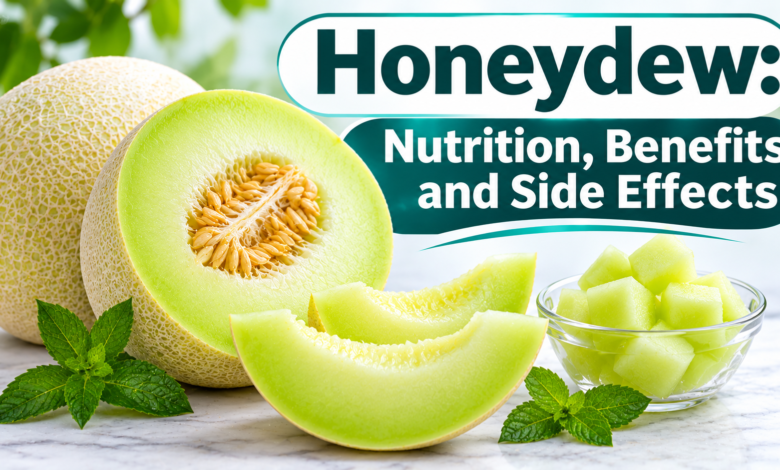
Honeydew melon is often chosen for its pale green flesh, mild sweetness and refreshing texture. It is easy to add to breakfast or a fruit salad, but its high water content can create a misleading impression that it contains almost no carbohydrate. A large bowl and a small wedge are different nutritional portions. Food safety and individual allergy risks also deserve attention, especially when the melon has already been cut.
Thank you for reading this post, don't forget to subscribe!Understanding honeydew health benefits means looking at the fruit’s actual composition, the preparation and the person’s needs. This US-focused guide uses USDA reference data, human research and public health recommendations. It separates established nutrient functions from unsupported claims about diabetes treatment, weight loss and detoxification, while explaining practical decisions that arise in American grocery stores and kitchens.
Independent Clinical Review
Review status: Pending independent clinical review. This article draws on the research and public guidance linked below. BBH will add the reviewer’s name, credentials, and review date once an independent review is documented.
Medical Safety & Disclaimer
This article provides general nutrition education, not diagnosis or treatment. Follow individualized medical advice for diabetes, kidney disease, food allergies and fluid restrictions. Do not consume recalled melon or replace prescribed treatment with fruit.
Quick Answer
Raw honeydew provides approximately 36 calories, 9.09 g carbohydrate, 18 mg vitamin C and 228 mg potassium per 100 g. It is about 89.8% water. A 165 g edible portion supplies approximately 15 g total carbohydrate. Honeydew can fit a varied diet, but safe handling and individual medical needs matter.
In This Guide
Topics covered
Nutrition facts • Honeydew versus cantaloupe • Hydration • Blood sugar portions • Clinical evidence limits • Vitamin C and potassium • Food safety • Melon allergy • US shopping and storage • FAQs
1. Honeydew nutrition facts: What a realistic serving provides
The USDA reference for raw honeydew describes edible flesh rather than the whole fruit with rind and seeds. The following calculations use the same SR Legacy dataset throughout. Different varieties, maturity and growing conditions may produce different values. A weighed serving makes comparisons easier than estimating nutrient content from the number of cubes alone.
| Nutrient | Per 100 g | Per 170 g edible portion |
|---|---|---|
| Energy | 36 kcal | 61 kcal |
| Total carbohydrate | 9.09 g | 15.5 g |
| Total sugars | 8.12 g | 13.8 g |
| Dietary fiber | 0.8 g | 1.4 g |
| Protein | 0.54 g | 0.9 g |
| Potassium | 228 mg | 388 mg |
| Vitamin C | 18 mg | 30.6 mg |
| Water | 89.82 g | 152.7 g |
Source: USDA FoodData Central: honeydew melon, raw. Values are rounded. The 170 g serving approximates a cup of diced melon in the reference data, but actual cup weights differ with cube size and packing. The rind is not included in the edible portion. Natural fruit sugars are part of total carbohydrate, not an additional quantity to add to that figure.
Which nutrients explain honeydew health benefits?
The fruit supplies vitamin C, potassium, water and small amounts of other nutrients, including folate. Its low energy density reflects its water content. However, honeydew supplies relatively little protein and only a modest amount of fiber. It is not a nutritionally complete meal. Its value is best assessed alongside other foods rather than by counting the number of vitamins listed in a promotional article.
A nutrient’s established role is different from a demonstrated clinical effect of a food. For example, vitamin C is essential for normal immune function, but the presence of vitamin C in honeydew does not prove that eating it prevents respiratory infections. This distinction is important throughout the guide.
2. Honeydew health benefits versus cantaloupe: An evidence-based comparison
Honeydew and cantaloupe are related melons, but their nutrient profiles are not identical. Orange-fleshed cantaloupe generally contains substantially more provitamin A carotenoids than the familiar pale green honeydew represented in the USDA reference. Both are water-rich, and both contribute carbohydrate. Neither needs to be classified as universally healthier.
| Per 100 g raw edible flesh | Honeydew | Cantaloupe |
|---|---|---|
| Calories | 36 | 34 |
| Carbohydrate | 9.09 g | 8.16 g |
| Fiber | 0.8 g | 0.9 g |
| Vitamin C | 18 mg | 36.7 mg |
| Vitamin A | 3 mcg RAE | 169 mcg RAE |
| Potassium | 228 mg | 267 mg |
Sources: USDA FoodData Central: honeydew melon, raw and USDA FoodData Central: cantaloupe, raw. RAE means retinol activity equivalents. These values refer to particular reference foods rather than all cultivars. The NIH Vitamin A fact sheet describes the biological roles of vitamin A. A reader seeking a larger contribution of provitamin A may choose orange-fleshed melon or another carotenoid-rich food, provided it fits their individual needs.
For more context, see Cantaloupe: Nutrition, Benefits and Side Effects and Watermelon: Nutrition, Benefits and Side Effects. Taste, seasonal availability, affordability and dietary tolerance are legitimate reasons to choose a particular fruit. Comparing equal edible weights also avoids misleading claims that are based on unequal portions.
3. Honeydew health benefits and hydration: What the water content means
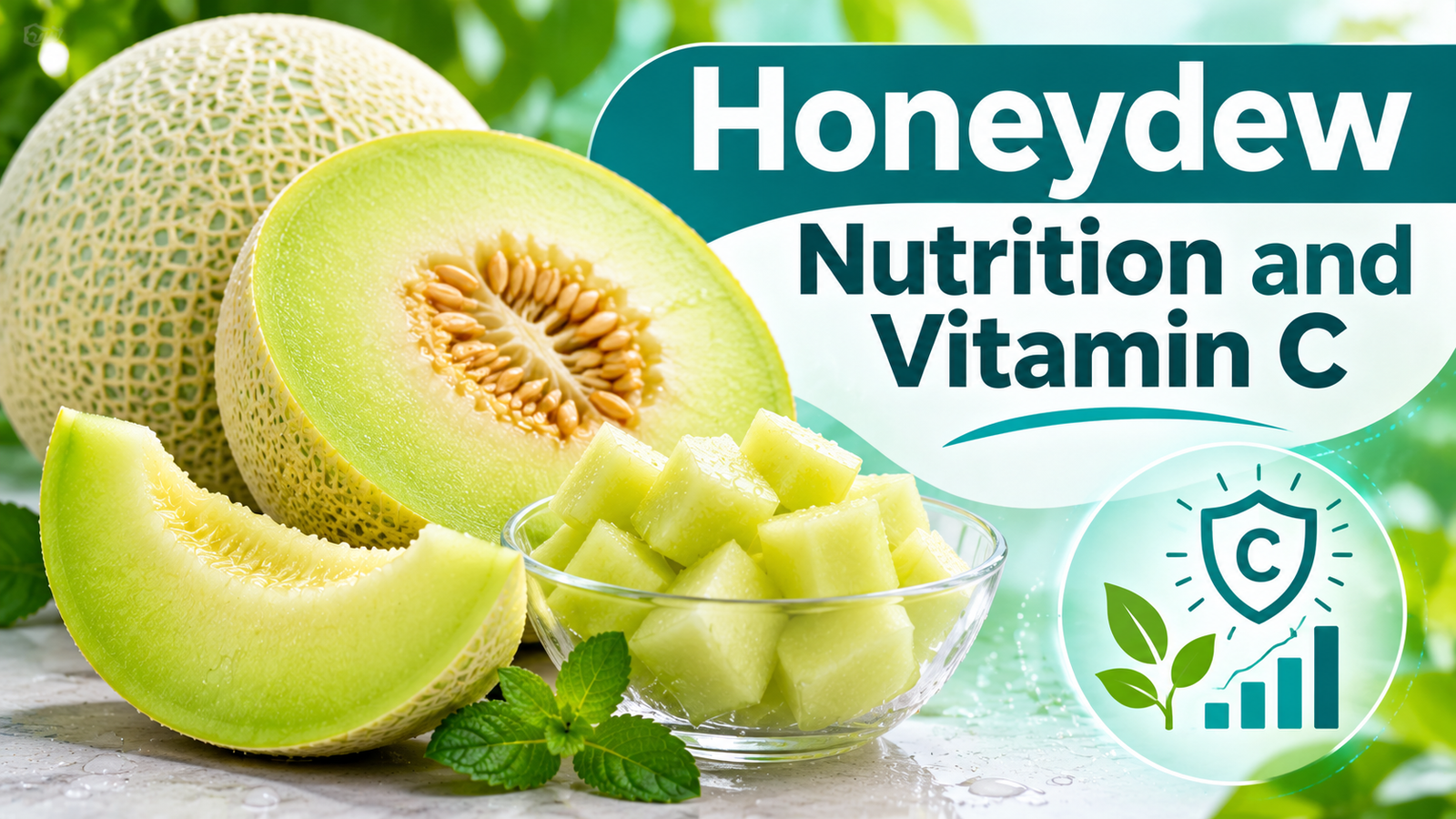
A 170 g edible portion contains approximately 153 g of water. That is roughly 153 mL of water within the fruit, rather than an exact measurement of the fluid absorbed by an individual. It contributes to overall dietary fluid intake along with beverages and other foods. Its sweetness and texture may make it appealing during warm weather.
However, honeydew is not an oral rehydration solution. Its carbohydrate and mineral composition is not standardized to address significant fluid and electrolyte losses from vomiting or diarrhea. People engaged in prolonged strenuous exercise may also have different requirements from those eating an ordinary snack. More fruit is not necessarily the appropriate solution in either situation.
The fruit should not be used as a detoxification treatment or a substitute for necessary medical care. The kidneys and liver perform essential physiological functions, and there is no convincing evidence that honeydew provides a special cleansing effect. People with prescribed fluid restrictions should ask their clinician how water-rich foods fit their plan.
Hydration Safety
Seek medical advice for persistent vomiting, markedly reduced urination or other signs of dehydration. Severe symptoms may require urgent care. Follow individualized fluid guidance if you have a medical restriction.
4. Honeydew health benefits and blood sugar: Realistic US portions
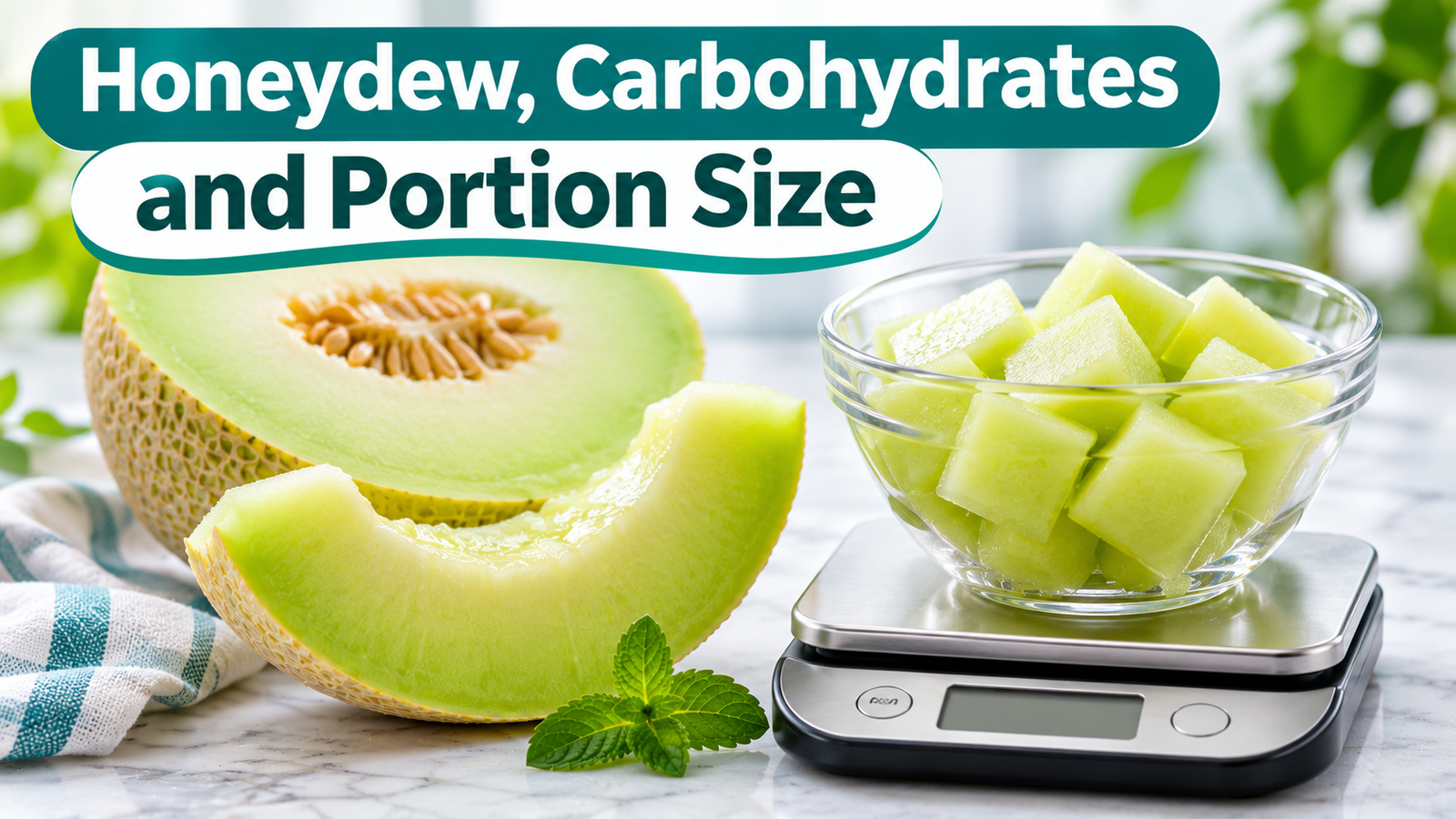
The water-rich appearance of honeydew does not mean it is carbohydrate-free. The reference contains 9.09 g total carbohydrate per 100 g. A 165 g edible portion contains approximately 15 g. A larger 250 g bowl provides about 22.7 g. The difference matters when planning a meal with a defined carbohydrate target.
| Edible weight | Total carbohydrate | Energy |
|---|---|---|
| 100 g | 9.1 g | 36 kcal |
| 165 g | 15.0 g | 59 kcal |
| 170 g | 15.5 g | 61 kcal |
| 250 g | 22.7 g | 90 kcal |
These are educational calculations, not a recommended insulin dose or a prediction of blood glucose. Individual glucose responses vary with medication, activity, insulin production and the entire meal. Fruit eaten alongside yogurt, nuts or another suitable food still contributes carbohydrate. Added juice or sweetened ingredients can substantially change the total in a smoothie or fruit salad.
The practical step is to identify the actual amount consumed rather than choosing an arbitrary number of melon cubes. For additional guidance, see Fruit and Diabetes: Portions and Choices and Carb Counting for Diabetes. People with diabetes should follow the carbohydrate-counting method and monitoring recommendations agreed with their care team.
Blood Sugar Safety
Honeydew does not reverse diabetes or replace prescribed medicines. Do not change insulin doses using this table. Follow your established fast-acting carbohydrate plan for hypoglycemia and seek advice for recurrent unexplained glucose changes.
5. Honeydew health benefits: What clinical evidence establishes
The BMJ 2013: Fruit consumption and type 2 diabetes risk examined fruit consumption in three large US prospective cohorts. The investigators observed differences in associations between various whole fruits, fruit juice and subsequent type 2 diabetes incidence. Prospective cohort research is useful for identifying patterns in real populations over time, but it depends on reported exposures and statistical adjustment.
This design cannot establish that a specific fruit directly causes a lower or higher disease risk. Participants may differ in other dietary habits, activity, healthcare access and health characteristics. A grouped melon category also cannot isolate the effect of honeydew from other melons. The findings therefore should not be transformed into a claim that honeydew prevents diabetes or lowers HbA1c in people already receiving treatment.
The evidence hierarchy matters here. USDA data establish approximate nutrient content; physiological research establishes nutrient functions; observational studies investigate associations; and randomized clinical trials can test a defined intervention. These sources answer different questions. Direct evidence reviewed for this guide is insufficient to establish honeydew as a treatment for chronic disease.
6. Honeydew health benefits for vitamin C, digestion and heart-health context
A 170 g serving supplies approximately 31 mg vitamin C, about 34% of the US adult label Daily Value of 90 mg. The NIH Vitamin C fact sheet describes vitamin C’s roles in collagen formation, normal immune function and nonheme iron absorption. Actual requirements depend on age and other factors. The nutrient contribution is useful, but it does not establish a medical treatment effect.
Honeydew contributes about 1.4 g fiber per 170 g serving, around 5% of the US label Daily Value of 28 g. This is a modest amount. People seeking more dietary fiber can combine different fruits, vegetables, beans and whole grains. The NIDDK constipation nutrition discusses sufficient fiber and appropriate fluid intake for bowel regularity. Persistent constipation may require assessment rather than increasing fruit intake indefinitely.
The NIH Potassium fact sheet explains potassium’s roles in nerve transmission, muscle contraction and physiological function. A 170 g portion contains about 388 mg potassium. This amount can be meaningful for someone with a prescribed restriction, but it does not establish a specific blood-pressure reduction in someone who eats honeydew.
A varied eating pattern is more relevant to cardiovascular health than selecting a single fruit. See Mediterranean Diet and Type 2 Diabetes. Honeydew’s relatively low energy density may also help when it replaces a more energy-dense snack. Adding fruit to an unchanged eating pattern does not guarantee weight loss, and the fruit cannot selectively burn abdominal fat.
Kidney Safety
If you have kidney disease, a prescribed potassium restriction or take medicines affecting potassium balance, ask your clinician or renal dietitian how melon portions fit your plan. Do not alter medication based on food composition data.
7. Content gap: Honeydew food safety is not determined by rind texture
Unlike the heavily netted rind of many cantaloupes, honeydew usually has a smoother outer surface. That visible difference does not mean the fruit is sterile. Melons can encounter microorganisms during production, transport and handling. Cutting can transfer contamination from the exterior to the flesh, and cut melon requires careful temperature control.
The CDC 2019 Salmonella outbreak linked to pre-cut melons documents a historical Salmonella outbreak associated with ready-cut melon products, including honeydew and other melons. The investigation illustrates why pre-cut fruit should be considered a perishable product. It does not mean that every honeydew sold today is contaminated or that the historical recall remains active.
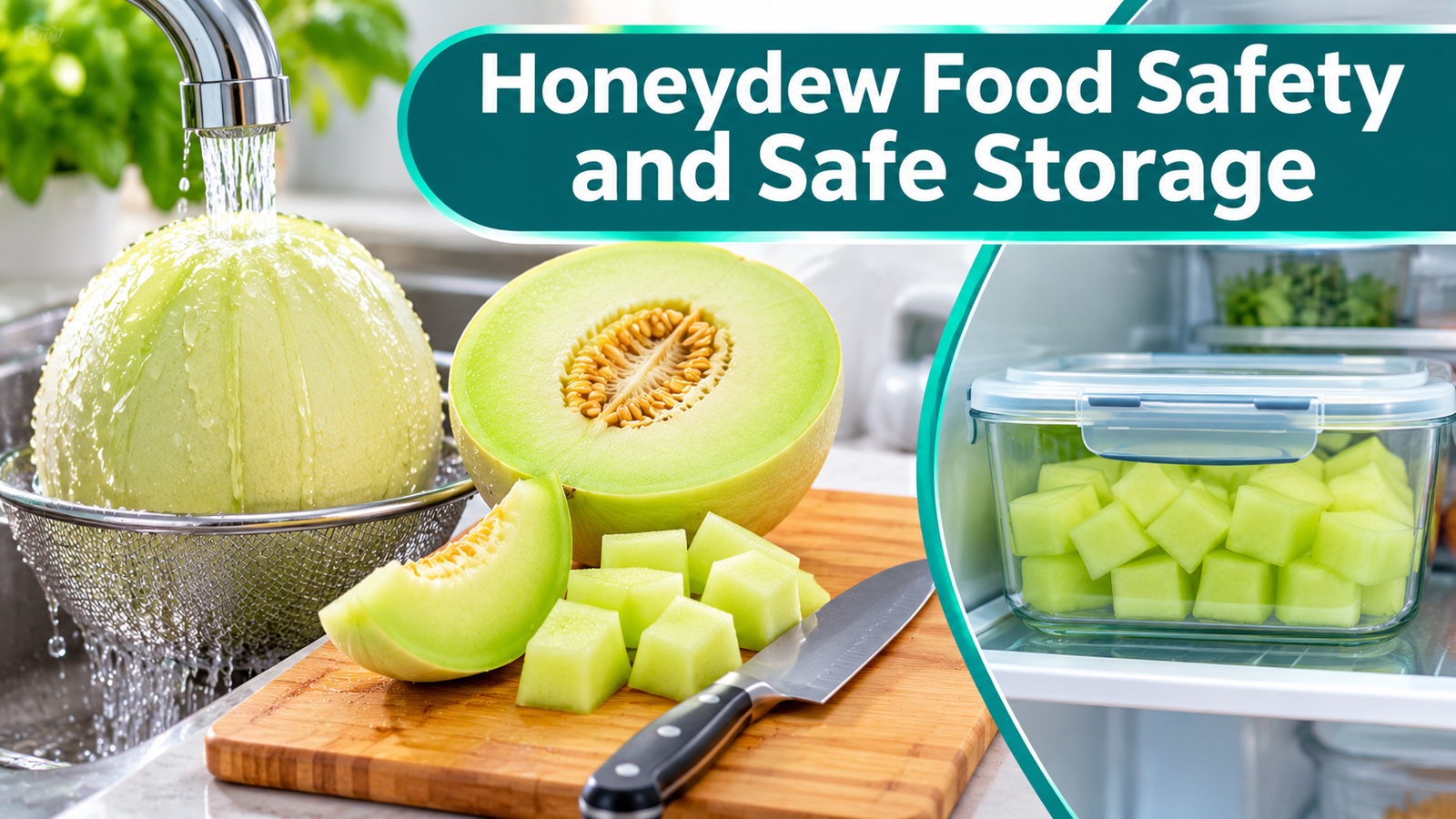
The FDA selecting and serving produce safely recommends washing produce under running water even when the peel or rind will not be eaten. Scrub firm produce such as melon with a clean produce brush. Do not use household soap, bleach or detergent on fruit. Washing can reduce contamination but cannot guarantee elimination of all pathogens.
| Household step | Practical guidance |
|---|---|
| Before cutting | Wash hands and scrub the whole melon under running water. |
| Cutting | Use a clean knife and board; separate raw meat and produce. |
| Refrigeration | Store cut melon at 40°F or below. |
| Time outside refrigeration | Refrigerate within two hours, or one hour above 90°F. |
| Recall | Do not eat affected products; follow disposal or return instructions. |
Keep track of cumulative time outside refrigeration, including transport and serving. Returning cut melon to the refrigerator does not erase earlier time at room temperature. If a fruit tray has been left out beyond the safe time limit, discard it rather than relying on smell or appearance. The CDC outbreak guidance provides additional details on safe handling.
8. Honeydew side effects: Melon allergy and pollen-food syndrome
The ACAAI pollen-food allergy syndrome describes pollen-food allergy syndrome, sometimes called oral allergy syndrome, in which a person sensitized to certain pollens reacts to related proteins in raw foods. Melons can be among the relevant foods. Symptoms may include itching or discomfort in the mouth and throat. This is not the same as ordinary digestive intolerance.
A Randomized double-blind melon allergy challenge study evaluated 53 people reporting adverse reactions to melon. Among confirmed reactions, oral symptoms were common, but serious systemic reactions also occurred. This study concerns a selected group with suspected melon allergy, not the prevalence of allergy in the general US population. It does not establish that honeydew is safe for everyone who has mild symptoms with another melon.
The 2024 AAAAI consensus on pollen-food allergy syndrome emphasizes individualized management of pollen-food allergy syndrome. People with suspected reactions should discuss their symptom pattern and appropriate testing with an allergist. Do not deliberately challenge a suspected serious allergy at home or assume that a different melon variety is automatically safe.
Allergy Safety
For breathing difficulty, throat swelling, collapse or other signs of a severe allergic reaction, use prescribed epinephrine if indicated and call 911. Seek professional assessment for recurring symptoms after melon consumption.
9. Digestive tolerance and foodborne illness: Knowing the difference
Large servings of fruit may cause digestive discomfort for some people, depending on their individual tolerance and the rest of the meal. This is different from foodborne infection. New diarrhea, fever, vomiting or abdominal cramps after a shared meal may warrant consideration of contamination, especially if other people are also ill.
The CDC food poisoning symptoms identifies warning signs such as bloody diarrhea, prolonged diarrhea, high fever, vomiting that prevents fluid intake and dehydration. Seek medical care for concerning symptoms. Older adults, young children, pregnant people and people with weakened immunity may need earlier assessment. A person cannot identify the responsible organism solely from symptoms.
If you discover that a melon is subject to a recall, do not try to make it safe by washing or removing the outer portion. Check the specific product identifiers in FDA recalls and safety alerts and follow official instructions. Clean surfaces that contacted the recalled food. Historical outbreaks should not be confused with a current recall notice.
10. How to enjoy honeydew health benefits in everyday US meals
Choose refrigerated pre-cut melon with intact packaging, or buy a whole melon and prepare it with clean equipment. Follow package use-by instructions and refrigerate cut fruit promptly. Avoid purchasing damaged or spoiled fruit. A measured portion can complement breakfast, a salad or another meal that contains adequate protein and other nutrients.
When buying packaged fruit salad, use the FDA Nutrition Facts label to check serving weight, total carbohydrate and added sugars. A product described as containing fruit may include syrup or juice. Natural sugars and added sugars are already counted within total carbohydrate. Comparing the actual product label is more informative than assuming that every packaged melon product has the same composition as raw fruit.
A practical approach is to choose the amount your household can consume safely, rather than purchasing a large ready-cut container that may remain open for an extended period. Portion the fruit into clean containers and maintain refrigeration during transport. A varied diet does not require honeydew every day, and no honeydew supplement or extract is necessary to obtain the nutritional contribution of ordinary fruit.
11. Frequently asked questions
Can people with diabetes eat honeydew?
Many can include appropriate portions within an individualized plan. Approximately 165 g edible flesh supplies 15 g total carbohydrate.
Is honeydew better than cantaloupe?
Neither is universally superior. Cantaloupe generally provides more vitamin A activity and vitamin C per equal weight; preferences and medical needs matter.
Does honeydew help hydration?
It contributes water to ordinary dietary intake but is not a replacement for medical rehydration treatment.
Should you wash the rind before cutting?
Yes. Scrub the whole melon under running water with a clean produce brush before cutting.
Is honeydew safe with a melon allergy?
Do not assume it is safe. Ask an allergist about your specific allergy and related foods.
Can honeydew help you lose weight?
It may be a lower-energy replacement for some snacks, but it is not a proven weight-loss treatment.
Conclusion
Honeydew provides water, vitamin C, potassium and carbohydrate in a refreshing fruit. Its value depends on the actual portion, the rest of the diet and individual medical needs. Safe preparation, refrigeration and allergy awareness are important. Evidence does not justify claims that honeydew treats diabetes, cardiovascular disease or other chronic conditions.
BBH Key Takeaway
Choose an appropriate edible portion of safely handled honeydew. Compare nutrients using equal weights, interpret research according to its actual scope and follow individualized medical guidance.
Scientific references
USDA FoodData Central: honeydew melon, raw • USDA FoodData Central: cantaloupe, raw • NIH Vitamin C fact sheet • NIH Potassium fact sheet • NIH Vitamin A fact sheet • BMJ 2013: Fruit consumption and type 2 diabetes risk • NIDDK constipation nutrition • FDA selecting and serving produce safely • CDC 2019 Salmonella outbreak linked to pre-cut melons • CDC food poisoning symptoms • ACAAI pollen-food allergy syndrome • Randomized double-blind melon allergy challenge study • 2024 AAAAI consensus on pollen-food allergy syndrome • FDA Nutrition Facts label • FDA recalls and safety alerts
Related reading on BBH
Physical Health → Weight, Nutrition & Metabolic Health support page
Cantaloupe: Nutrition, Benefits and Side Effects • Watermelon: Nutrition, Benefits and Side Effects • Fruit and Diabetes: Portions and Choices • Carb Counting for Diabetes • Mediterranean Diet and Type 2 Diabetes