Apricots: Nutrition, Benefits and Side Effects
Apricot Health Benefits, Nutrition and Risks

Fresh apricots are tender, juicy stone fruits, while dried apricots offer a concentrated, shelf-stable snack. Both can contribute to a varied diet, but they are not equivalent by weight. Someone choosing a snack for diabetes meal planning, managing a potassium restriction or reading claims about apricot seeds needs more than a list of supposed benefits.
Thank you for reading this post, don't forget to subscribe!Understanding apricot health benefits begins with separating the edible flesh from the kernel inside its hard pit. The flesh contains useful nutrients; the kernel is not a safe nutritional supplement. This US-focused guide uses USDA food composition references, human research and federal safety guidance to explain what the evidence supports, where it remains uncertain and how to make practical food choices.
Independent Clinical Review
Review status: Pending independent clinical review. This article draws on the research and public guidance linked below. BBH will add the reviewer’s name, credentials, and review date once an independent review is documented.
Medical Safety & Disclaimer
This article provides general nutrition education, not individualized medical advice. Do not eat apricot kernels or use amygdalin products as disease treatments. Follow your clinician’s guidance for diabetes, kidney disease, food allergies and sulfite sensitivity.
Quick Answer
Fresh apricots provide approximately 48 calories, 2 g fiber and 96 mcg vitamin A RAE per 100 g. Dried apricots contain more carbohydrate, energy and potassium per gram because water has been removed. The edible fruit may fit a balanced diet; apricot kernels can cause serious cyanide poisoning and should not be eaten.
In This Guide
Topics covered
Nutrition facts • Vitamin A and vision • Fresh versus dried fruit • Blood sugar research • Digestive health • Potassium and kidney precautions • Sulfite labeling • Apricot kernel safety • Shopping and serving • FAQs
1. Apricot nutrition facts: Fresh and dried fruit compared
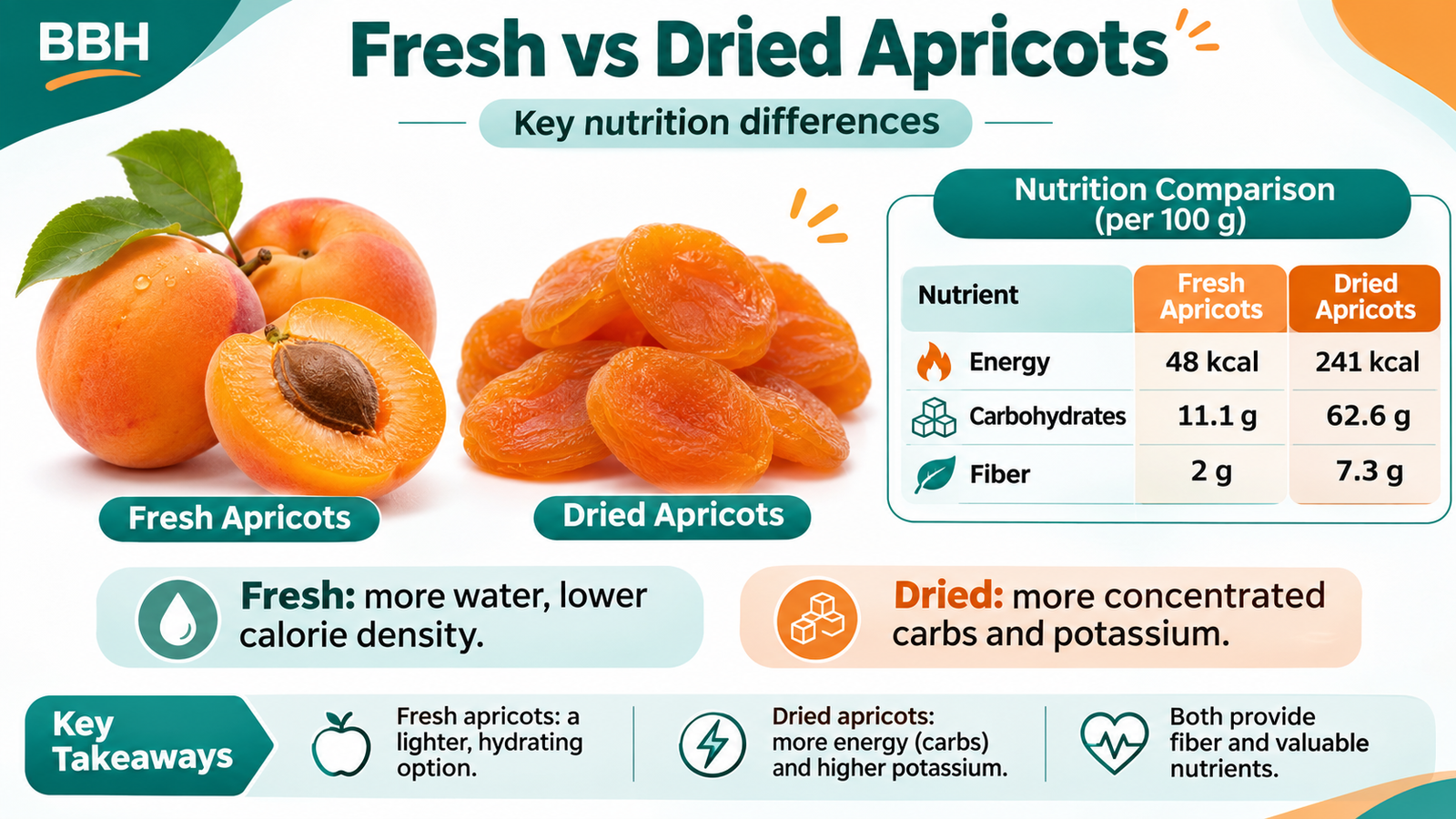
The USDA has separate reference records for raw apricots and dried, sulfured, uncooked apricots. The table compares equal edible weights, not equivalent numbers of individual fruits. Drying removes water and changes the concentration of nutrients. Processing and storage may also reduce some vitamins. Actual products vary with cultivar, moisture content and added ingredients.
| Nutrient | Fresh per 100 g | Dried per 100 g |
|---|---|---|
| Energy | 48 kcal | 241 kcal |
| Carbohydrate | 11.12 g | 62.64 g |
| Fiber | 2.0 g | 7.3 g |
| Total sugars | 9.24 g | 53.44 g |
| Protein | 1.4 g | 3.39 g |
| Potassium | 259 mg | 1,162 mg |
| Vitamin A | 96 mcg RAE | 180 mcg RAE |
| Vitamin C | 10 mg | 1 mg |
Sources: USDA raw apricots and USDA dried, sulfured, uncooked apricots. RAE means retinol activity equivalents, the US unit for vitamin A activity. Total sugar includes naturally occurring fruit sugars. The dried reference describes a specific preparation and does not guarantee the composition of every unsulfured, sweetened or commercially packaged product.
Which nutrients explain apricot health benefits?
The orange color reflects carotenoids, including beta-carotene. The body can convert some dietary carotenoids into vitamin A. Fiber contributes to bowel function, while potassium participates in normal nerve and muscle activity. Fresh fruit also supplies some vitamin C. These are established nutrient functions; they do not prove that apricots treat a disease or reverse a diagnosed deficiency.
A balanced diet includes many nutrient sources. Compare Orange: Nutrition, Benefits and Side Effects for another fruit with a different vitamin profile. A person who dislikes apricots or cannot tolerate them does not need to eat them to achieve an adequate intake of these nutrients.
2. Apricot health benefits for vitamin A and normal vision
The NIH Vitamin A fact sheet explains that vitamin A supports normal vision, immune function, growth and cell differentiation. Apricots contain provitamin A carotenoids rather than being a major source of preformed retinol. Conversion varies according to the food matrix, nutritional status and individual factors.
The US adult label Daily Value is 900 mcg RAE. A 100 g serving of fresh apricots provides approximately 11% of that benchmark, while 30 g of the dried reference provides about 54 mcg RAE, or 6%. This comparison illustrates why a higher nutrient concentration per 100 g does not necessarily translate into a higher intake from a customary serving.
Carotenoid absorption may benefit from fat consumed with a meal. A practical example is eating fresh apricot slices alongside a meal containing olive oil or a tolerated nut or seed. This does not establish a therapeutic dose or imply that more fat always increases benefit. People with diagnosed vitamin A deficiency, malabsorption or progressive vision changes require appropriate assessment, not a fruit-only treatment plan.
3. Apricot health benefits and the fresh-versus-dried portion gap
Many fruit comparisons emphasize nutrient values per 100 g without showing what people actually eat. One hundred grams of dried apricots is a substantially more concentrated serving than 100 g of fresh fruit. A small handful of dried fruit may deliver more carbohydrate than expected, even when no sugar has been added. Weighing a portion once can help develop a more realistic visual estimate.
| Illustrative serving | Calories | Carbohydrate | Fiber | Potassium |
|---|---|---|---|---|
| Fresh, 100 g | 48 | 11.1 g | 2.0 g | 259 mg |
| Fresh, 135 g | 65 | 15.0 g | 2.7 g | 350 mg |
| Dried, 24 g | 58 | 15.0 g | 1.8 g | 279 mg |
| Dried, 30 g | 72 | 18.8 g | 2.2 g | 349 mg |
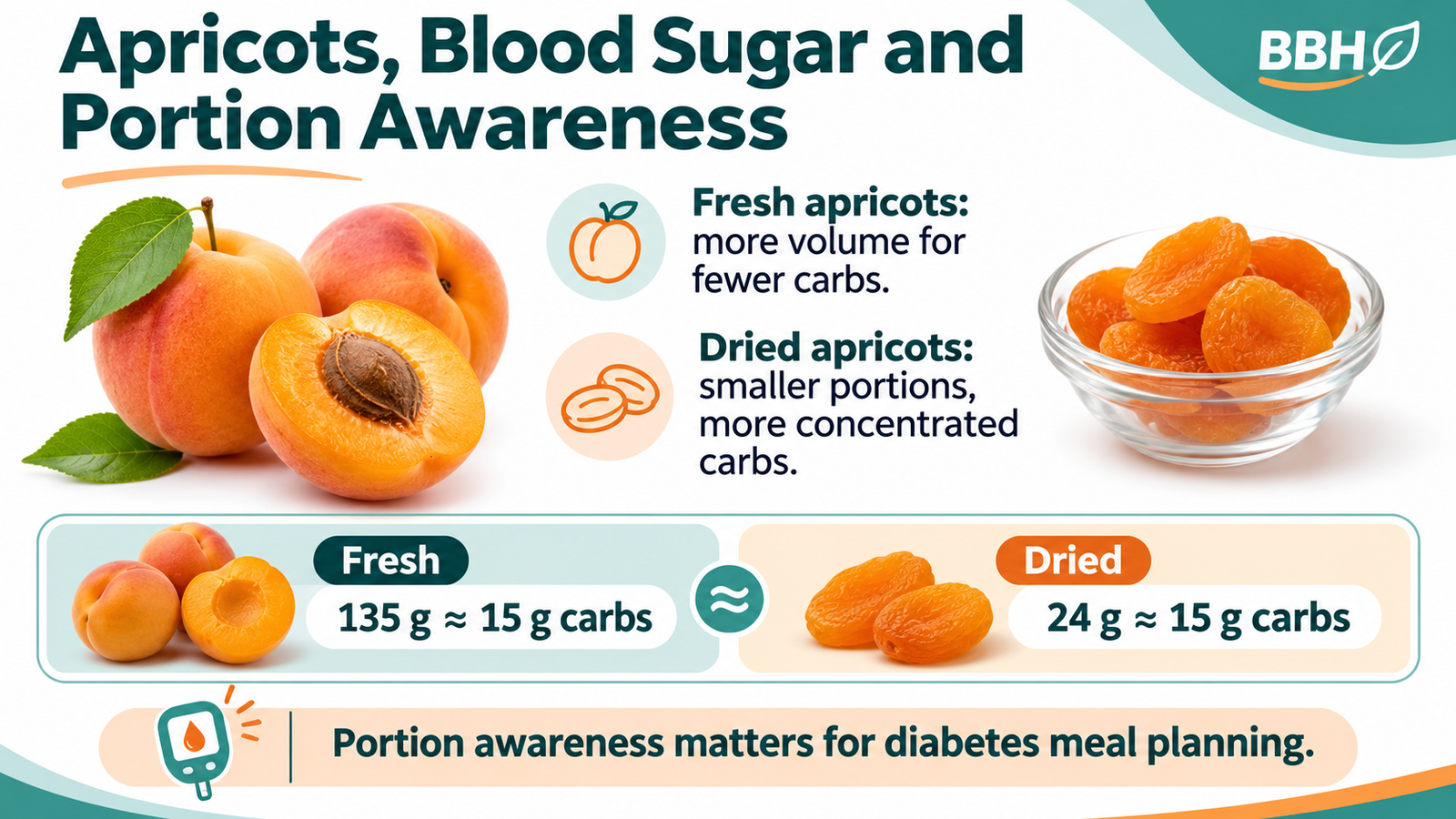
The examples are calculated from USDA reference values. Approximately 135 g fresh fruit and 24 g dried fruit each supply 15 g total carbohydrate, but they differ in volume, fiber and other nutrients. Equal carbohydrate portions are not a guarantee of equal glucose responses. The comparison is educational, not an insulin-dosing recommendation.
A similar concentration principle applies to other dried fruits; see Figs: Nutrition, Benefits and Side Effects. The key is not to classify dried fruit as inherently unhealthy, but to compare the actual amount and the role it plays in a meal. For example, replacing one snack with a measured amount of dried fruit is different from adding dried fruit to an unchanged snack.
4. Apricot health benefits and blood sugar: Human research
The 2018 randomized acute-feeding trial tested dried dates, apricots, raisins and sultanas in a short-term randomized feeding experiment. Replacing part of the available carbohydrate in white bread with dried fruit reduced post-meal glycemic responses under the study conditions. This was a controlled substitution experiment, not a demonstration that adding dried fruit to any meal will lower glucose.
The 2018 randomized mixed-meal trial tested dried fruit and mixed meals in eleven healthy adults. Results suggested that the tested dried fruits could produce lower glycemic responses than some refined carbohydrate foods. The small sample, healthy participants and short observation period limit application to long-term diabetes management.
The 2020 mixed dried-fruit crossover trial offers an important contrast. It compared mixed dried fruit with an energy- and carbohydrate-matched snack over four weeks in 55 adults with elevated BMI and another cardiometabolic risk factor. The fruit mixture did not include apricots, and fasting glucose was slightly higher than with the comparison snack. That trial is indirect evidence about dried fruit generally, not an apricot-specific result.
These studies address different questions: immediate response to a particular meal versus changes after several weeks of daily consumption. Neither establishes that apricots reverse diabetes or improve HbA1c. Read Fruit and Diabetes: Portions and Choices and Carb Counting for Diabetes for practical US meal-planning guidance.
Diabetes Safety
Count carbohydrate according to your individualized care plan, and continue prescribed treatment. Do not adjust insulin or other medicines based on the portion examples or a glycemic-index claim. Treat hypoglycemia according to your established fast-acting carbohydrate plan.
5. Apricot health benefits and digestive function
Fresh and dried apricots both supply fiber. The dried fruit provides more fiber per gram, but customary portions are smaller. The NIDDK constipation nutrition recommends sufficient fiber and fluids for constipation prevention and management, adapted to the individual’s health circumstances. Apricots may contribute to that overall pattern.
Apricots contain naturally occurring sugars and sugar alcohols, including sorbitol. In susceptible people, larger portions may contribute to bloating, gas or loose stools. This is especially relevant when someone abruptly increases dried fruit consumption because they have read that it supports digestion. Tolerance varies, and more is not always better.
Rather than assuming that apricots are a standardized laxative, consider the rest of the diet, fluid intake, physical activity and medicines. A clinician or dietitian can help identify persistent symptoms and determine whether specific dietary adjustments are appropriate. Severe abdominal pain, vomiting, blood in the stool or unexplained changes in bowel habits deserve medical evaluation.
6. Apricot health benefits, potassium and cardiovascular claims
The NIH Potassium fact sheet describes potassium’s role in nerve transmission, muscle contraction and normal physiological function. Dried apricots are relatively potassium concentrated. A 30 g dried portion contains about 349 mg, while 100 g fresh fruit provides 259 mg. These figures can help readers compare food choices when potassium intake matters.
A varied dietary pattern can support cardiovascular health, but nutrient content alone does not establish that apricots lower blood pressure or prevent heart attacks. The available human dried-fruit research is limited and often evaluates mixtures rather than isolated apricots. It is inappropriate to convert a potassium content measurement into a promise of a specific blood-pressure reduction.
For broader context, read Mediterranean Diet and Type 2 Diabetes. People taking medicines that affect potassium balance or living with impaired kidney function may need individualized advice. A food described as beneficial for one person may be unsuitable in a larger quantity for another. The decision should reflect clinical information, not a universal rule about fresh or dried fruit.
Kidney Safety
If you have a prescribed potassium restriction, kidney disease or medicines that affect potassium, ask your clinician or renal dietitian how apricots fit your plan. Do not change medication or potassium supplements based on this article.
7. US shopping guide: Sulfured versus unsulfured dried apricots
Some dried apricots are treated with sulfur dioxide or other sulfiting agents to preserve color and quality. Unsulfured products often darken during drying and storage. Color is not a reliable measure of vitamin content, freshness or medical suitability. Read the ingredient list rather than relying on the appearance of the fruit.
FDA guidance on FDA food allergies and sulfites discusses sulfiting agents and sensitivity. US labeling requires declaration of sulfiting agents when present at specified levels. Some susceptible people, including some individuals with asthma, can experience reactions. Sulfite sensitivity is distinct from a fruit allergy, and a sulfured product is not automatically unsafe for everyone.
Compare packages using the FDA Nutrition Facts label. Look at serving weight, total carbohydrate, fiber, added sugars and ingredients. A no-added-sugar claim does not mean that the product is sugar-free. The natural sugars in dried apricots remain present and count toward total carbohydrate. Products sold as fruit snacks may contain coatings, sweeteners or other ingredients that change the nutritional profile.
| Label check | Reason |
|---|---|
| Serving weight | Portion comparisons require a common weight. |
| Total carbohydrate | Includes naturally occurring sugars and fiber. |
| Added sugars | Identifies sweeteners added during processing. |
| Ingredient list | Shows sulfiting agents and other additions. |
| Potassium | Useful where individualized restrictions apply. |
8. Apricot side effects: Kernel toxicity and unsupported cancer claims
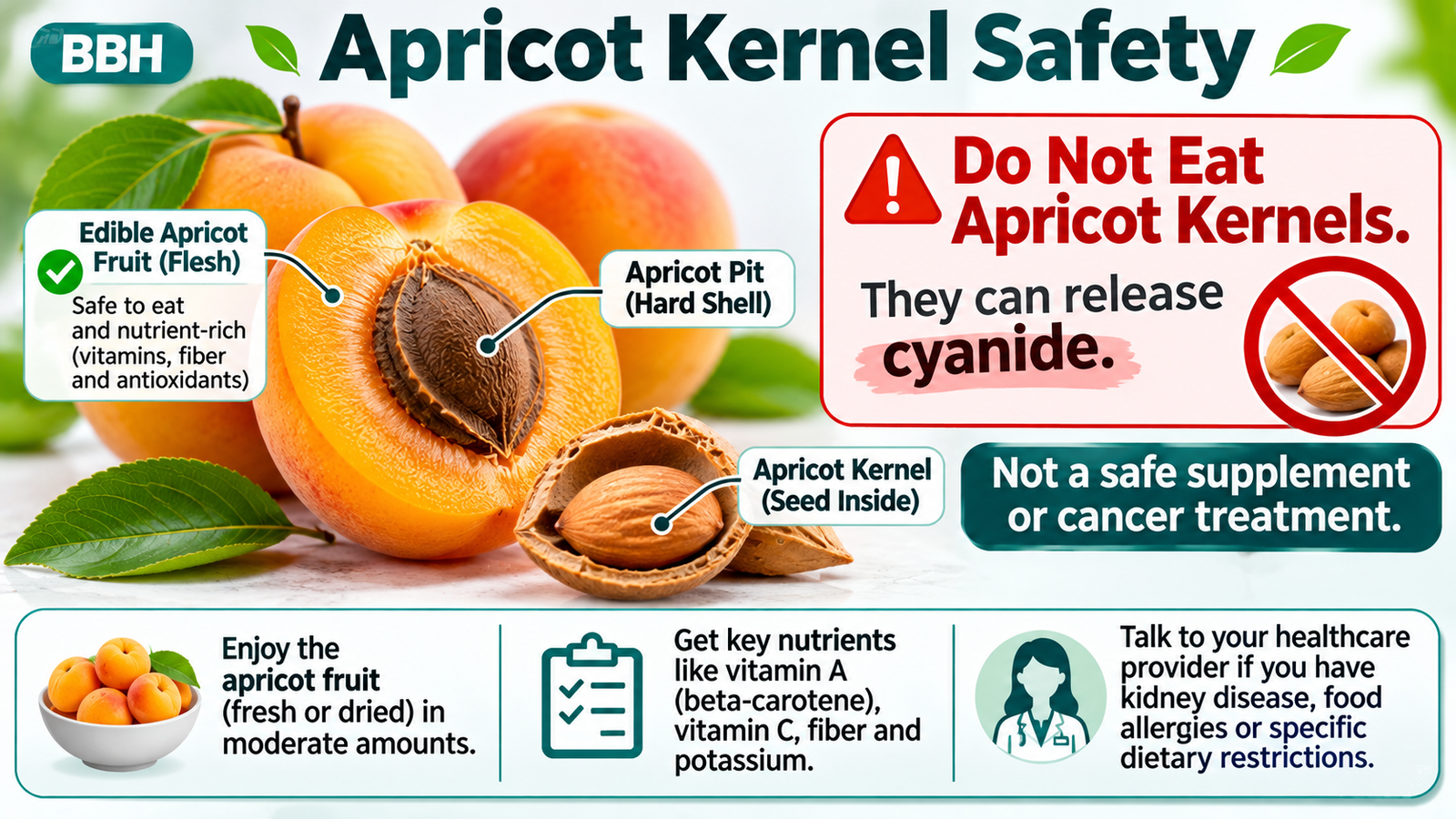
The edible flesh is different from the seed inside the hard pit. Apricot kernels can contain amygdalin, which can release cyanide when ingested. The FDA warning about toxic amygdalin in apricot seeds warns consumers about toxic amygdalin in certain apricot seed products. Discard the pit and do not eat kernels or use kernel products as health supplements.
The National Cancer Institute: Laetrile/amygdalin reviews laetrile and amygdalin as proposed cancer treatments. Evidence does not establish clinical effectiveness against cancer, and ingestion can cause cyanide toxicity. The marketing term vitamin B17 does not identify an established essential vitamin. A product’s natural origin, testimonials or supplement labeling do not demonstrate safety or effectiveness.
Do not attempt to prepare, process or dose kernels to make them safe. Toxicity is unpredictable. Keep kernels and pits away from children. The fruit’s nutrient content cannot justify consuming the kernel, and people receiving cancer care should not delay or replace recommended treatment with amygdalin products.
Urgent Medical Safety — Apricot Kernels
If a kernel or amygdalin product has been swallowed, contact US Poison Control immediately at 1-800-222-1222. Do not wait for symptoms or induce vomiting. Call 911 for severe symptoms, breathing difficulty, collapse or seizures. Source: Poison Control: Apricot seed safety.
9. Other apricot side effects and individual precautions
Fruit allergy and digestive tolerance
Apricot allergy is possible, including reactions associated with pollen-food allergy syndrome. Mouth itching after raw fruit, hives or other suspected reactions warrant appropriate assessment. Do not deliberately reintroduce a suspected serious allergen without medical guidance. For breathing difficulty, throat swelling or faintness, use prescribed epinephrine if indicated and call 911.
Remove pits before serving. For young children, adapt the texture and size of fruit to developmental ability and supervise eating; sticky dried fruit and hard pits can present choking concerns. Adults with swallowing difficulties should follow their clinician’s texture guidance. These practical safety considerations are separate from the nutrient profile.
10. How to enjoy apricot health benefits in everyday US meals
Fresh apricot slices can complement oatmeal, yogurt or a salad. Measured dried apricots can be added to a trail mix or grain dish. When combining foods, consider the complete meal rather than counting only the fruit. A recipe with dried fruit, sweetener and other carbohydrate ingredients may supply substantially more carbohydrate than the fruit portion alone.
For fresh produce, follow FDA safe produce handling and wash under running water before cutting. Discard damaged or moldy fruit as appropriate, refrigerate cut fruit and follow package storage directions for dried products. Canned apricots packed in syrup differ from those packed in water or juice, so use the product label rather than the fresh-fruit table.
A practical weekly approach is to vary fruit types according to availability, cost and preference. If fresh apricots are out of season, another suitable fruit can provide nutrients without requiring an expensive specialty product. No extract, powder or kernel supplement is required to obtain the nutritional advantages of ordinary fruit.
11. Frequently asked questions
Are dried apricots healthier than fresh apricots?
Neither is universally better. Dried fruit concentrates energy, carbohydrate and minerals; fresh fruit provides more water. Compare actual portions.
Can people with diabetes eat apricots?
Many can include appropriate portions within an individualized plan. Dried fruit requires particular attention to serving weight.
Do apricots improve eyesight?
Their provitamin A carotenoids contribute to vitamin A intake and normal vision, but they do not treat eye disease.
Are apricot kernels safe?
No. They may release cyanide and should not be eaten.
Why are unsulfured dried apricots darker?
Natural color changes occur during drying and storage. Color alone does not determine nutritional quality.
Do apricots cure constipation?
They provide fiber and may contribute to bowel regularity, but persistent constipation requires appropriate assessment.
Conclusion
Fresh apricots and dried apricots are useful but nutritionally distinct forms of edible fruit. Their fiber, carotenoids and potassium contribute to dietary adequacy. Human research does not establish apricots as a treatment for diabetes, cardiovascular disease or cancer. The strongest practical priorities are portion awareness, individualized medical advice and avoiding toxic kernels.
BBH Key Takeaway
Choose the edible fruit in a portion that fits your needs. Read labels for dried products, distinguish nutrient functions from disease-treatment claims and discard apricot pits and kernels.
Scientific references
USDA raw apricots • USDA dried, sulfured, uncooked apricots • NIH Vitamin A fact sheet • NIH Potassium fact sheet • 2018 randomized acute-feeding trial • 2018 randomized mixed-meal trial • 2020 mixed dried-fruit crossover trial • FDA warning about toxic amygdalin in apricot seeds • National Cancer Institute: Laetrile/amygdalin • Poison Control: Apricot seed safety • FDA food allergies and sulfites • FDA Nutrition Facts label • NIDDK constipation nutrition • FDA safe produce handling • NIH Vitamin C fact sheet
Related reading on BBH
Physical Health → Weight, Nutrition & Metabolic Health support page
Figs: Nutrition, Benefits and Side Effects • Orange: Nutrition, Benefits and Side Effects • Fruit and Diabetes: Portions and Choices • Carb Counting for Diabetes • Mediterranean Diet and Type 2 Diabetes