What Is Vitamin G? Benefits and Uses
Vitamin G: Riboflavin Benefits and Facts

Have you encountered the term vitamin G in an older nutrition book, a family recipe, an online discussion or a supplement advertisement? Looking for it on a modern American nutrition label can be confusing. The reason is that the name belongs to the history of vitamin research rather than to a separate nutrient missing from today’s recommended diet.
Thank you for reading this post, don't forget to subscribe!Vitamin G is an older designation associated with riboflavin, the nutrient now called vitamin B2. Early researchers used different naming systems as they attempted to identify substances necessary for growth and health. Modern nutrition science recognizes riboflavin as one of the essential B vitamins. This guide connects the historical terminology with practical nutritional decisions for readers in the United States.
Quick Answer
Vitamin G is a historical name for riboflavin (vitamin B2), a water-soluble essential nutrient. Riboflavin helps enzymes perform energy-related and other cellular reactions. Modern US labels identify it as riboflavin or vitamin B2, not as a separate vitamin G requirement.
Medical Safety Notice
This article is educational. It does not diagnose deficiency or prescribe supplements. Persistent fatigue, mouth sores, eye irritation or recurrent headaches deserve appropriate assessment. Discuss high-dose riboflavin and other supplements with your healthcare professional, especially during pregnancy or when managing a medical condition.
In This Guide
Historical terminology • Modern vitamin classification • Cellular functions • US daily requirements • Foods and storage • Deficiency • Migraine research • Supplement labels • Safety • FAQs
1. What Is Vitamin G? The Historical Meaning
During the early development of nutritional science, investigators knew that certain food components were important before they understood their chemical identities. Names were sometimes assigned to a biological activity or a preparation containing several substances. As experiments became more precise, some names disappeared and others acquired narrower meanings.
Historical sources document the use of vitamin G in connection with the growth-promoting factor eventually identified as riboflavin. The historical vitamin B2 complex was not always identical to the modern definition of a single B2 molecule. A 1937 discussion of dietary requirements described how investigators had distinguished multiple relatively heat-stable B-complex factors. A 1939 research paper explicitly referred to riboflavin by its former vitamin G name.
The distinction matters when reading an old scientific text. A historical experiment involving a partially purified vitamin preparation cannot automatically be interpreted as an experiment with chemically pure riboflavin. Read the methods and date before translating old terminology into present-day nutritional recommendations.
Historical references: 1939 paper on nutritional riboflavin intake and 2012 historical review.
2. Vitamin G vs Vitamin B2: Are They Different?
| Term | Meaning today |
|---|---|
| Vitamin G | Historical designation associated with riboflavin |
| Vitamin B2 | Modern vitamin designation |
| Riboflavin | Chemical name of the nutrient |
| Lactoflavin | Historical name associated with flavin obtained from milk |
| FMN and FAD | Riboflavin-derived coenzymes, not separate dietary vitamins |
A modern nutrition plan does not need separate allowances for vitamin G and riboflavin. Both names point toward the same recognized nutrient in this context. Modern food databases and US dietary recommendations use riboflavin. If a product uses the older term, examine its actual ingredients and amounts rather than assuming it contains something unusual.
Other historical vitamin names underwent different changes, so this rule does not apply to every unfamiliar letter. Some historical designations referred to mixtures or substances later found not to be essential vitamins. A letter attached to a supplement name is not evidence of essentiality.
3. Vitamin G Benefits: What Riboflavin Does in Cells
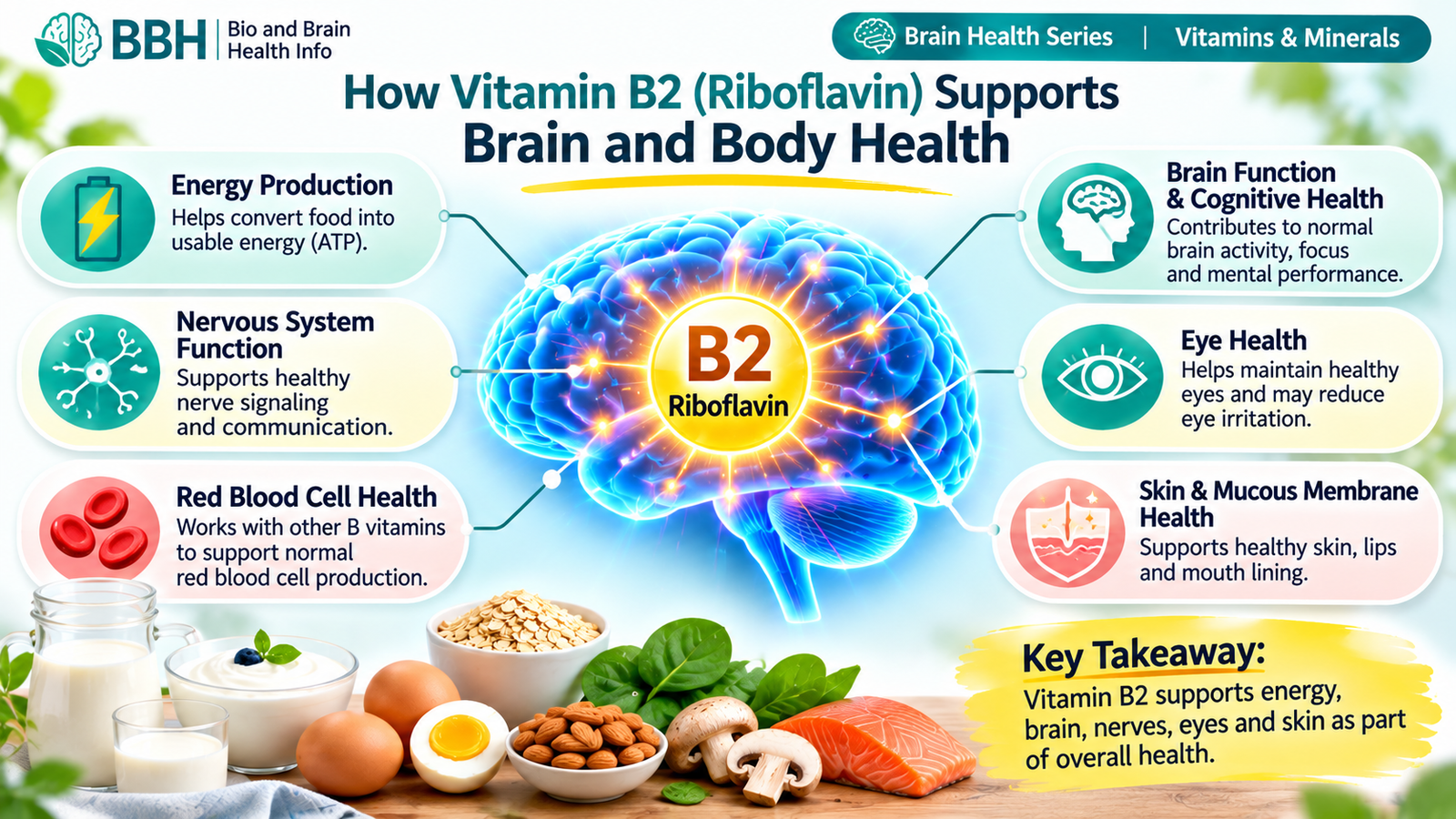
Riboflavin provides the starting material for two important coenzymes, flavin mononucleotide (FMN) and flavin adenine dinucleotide (FAD). Coenzymes assist enzymes in carrying out chemical reactions. These flavin-dependent reactions contribute to metabolic pathways that process nutrients and support cellular function.
Vitamin G uses in energy metabolism
Cells need coordinated reactions to obtain usable energy from carbohydrates, fats and proteins. Riboflavin-derived coenzymes participate in these processes. They are involved in reactions that transfer electrons, including pathways associated with mitochondrial energy metabolism. The vitamin itself is not a calorie source or a stimulant.
A deficiency can disrupt normal metabolic processes. But when nutritional requirements are already met, taking additional riboflavin does not necessarily produce a noticeable increase in energy. Persistent exhaustion can have many explanations, including sleep disorders, anemia, medication effects and medical conditions. Nutritional adequacy is one part of a broader assessment.
Riboflavin and other B-vitamin pathways
Nutrient pathways interact rather than functioning in isolation. Flavin-dependent enzymes participate in processes involving other nutrients, including conversion of vitamin B6 to its active coenzyme form. This helps explain why a varied diet is more useful than treating each vitamin as an independent solution to every symptom.
Explore BBH’s Vitamin B1 deficiency guide and Niacin deficiency guide to understand why different B vitamins should not be treated as interchangeable. A biochemical overview is available in Riboflavin, Advances in Nutrition, 2016.
4. Vitamin G Daily Requirements in the United States
The modern dietary reference values are expressed in milligrams of riboflavin. These recommendations describe usual total intake, not a requirement to take a standalone supplement. Healthy individuals differ by age and life stage.
| Life stage | Recommended intake (mg/day) |
|---|---|
| Infants 0–6 months (adequate intake) | 0.3 |
| Infants 7–12 months (adequate intake) | 0.4 |
| Children 1–3 | 0.5 |
| Children 4–8 | 0.6 |
| Children 9–13 | 0.9 |
| Teen boys 14–18 | 1.3 |
| Teen girls 14–18 | 1.0 |
| Adult men | 1.3 |
| Adult women | 1.1 |
| Pregnancy | 1.4 |
| Breastfeeding | 1.6 |
The adult and child recommendations above are based on US dietary reference intakes summarized by the NIH Office of Dietary Supplements. Individual clinical requirements may differ. The FDA general Daily Value for adults and children aged four and older is 1.3 mg, which is not identical to every person’s recommended intake.
5. Vitamin G Food Sources in American Grocery Stores
Riboflavin is naturally present in many foods and is added to some enriched grain products. A combination of ordinary foods can help meet requirements without purchasing a product marketed under a historical name. Food selection should also account for dietary preferences, allergies and overall nutritional needs.
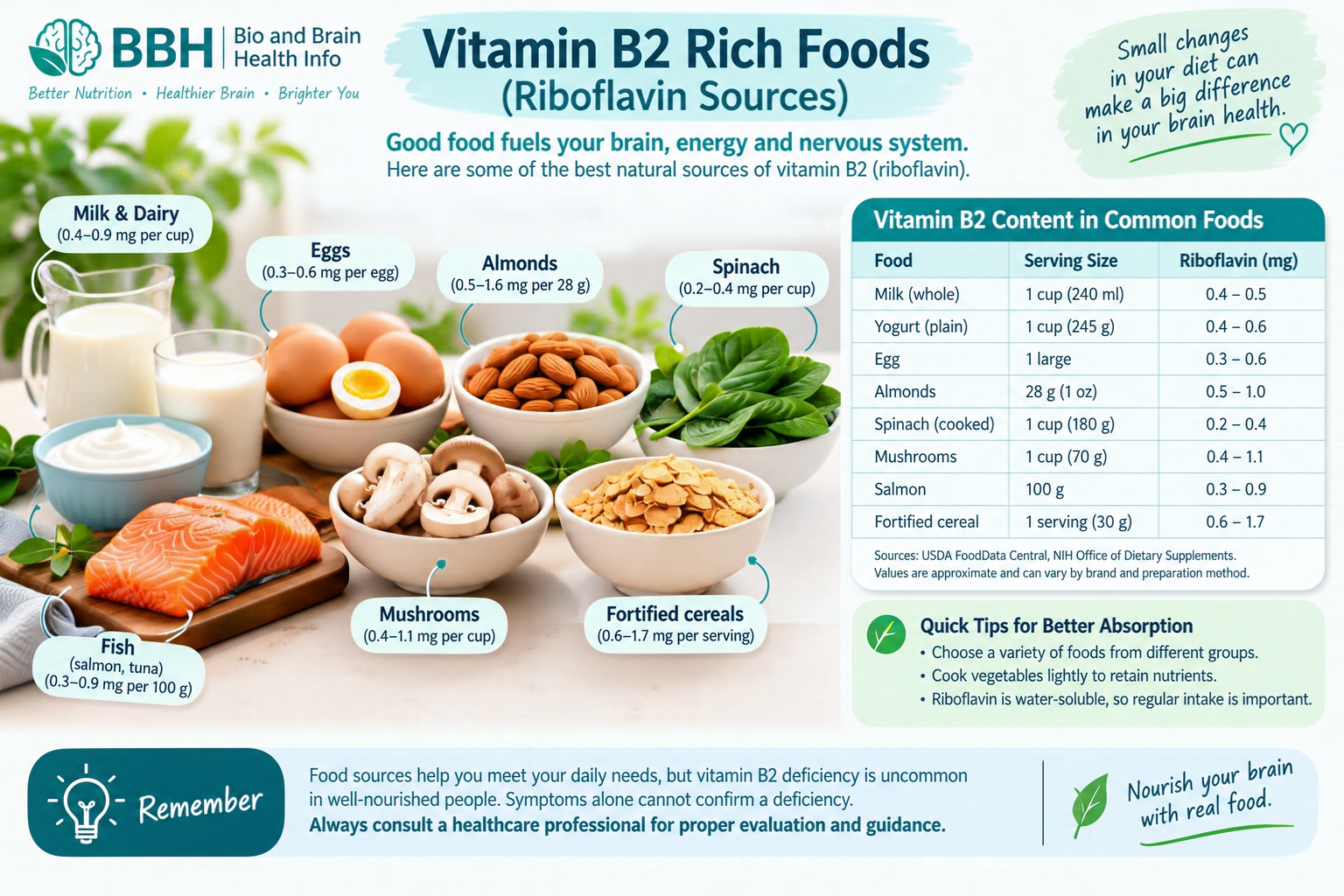
| Food group | Examples to consider |
|---|---|
| Dairy | Milk and plain yogurt |
| Eggs and meat | Eggs, lean meats |
| Plant foods | Almonds, mushrooms, spinach |
| Grains | Enriched bread and fortified cereal |
| Plant-based beverages | Check riboflavin fortification on the label |
For a household with a limited grocery budget, compare store-brand enriched grain products and ordinary dairy or suitable fortified alternatives. Frozen vegetables can reduce food waste. There is no requirement to purchase expensive specialized supplements or foods described as ancient vitamin G sources.
A plant-based diet can supply riboflavin, but fortified products differ considerably. Do not assume that every plant beverage has the same nutrient content as milk. Check serving sizes and nutrient declarations. A registered dietitian can help assess the overall adequacy of a restricted eating pattern.
6. Vitamin G and Food Storage: Why Light Matters
Riboflavin is sensitive to light. This chemical property is particularly relevant to foods such as milk exposed to light in transparent containers. Light exposure can reduce riboflavin content, although actual losses depend on the exposure and product conditions.
For practical household use, store refrigerated products according to their package instructions, keep containers closed and avoid leaving milk in direct sunlight. Do not sacrifice food safety by leaving products at room temperature to pursue a nutritional benefit. Ordinary preparation and storage practices are sufficient for most households.
Because riboflavin is water-soluble, some can also move into cooking water. In dishes such as soups and stews, the liquid is often consumed rather than discarded. These observations are not reasons to avoid cooked vegetables. The overall diet, serving size and preparation method matter more than a single rigid cooking rule.
See Biological Properties of Vitamins of the B-Complex, 2022 for scientific background.
7. Vitamin G Deficiency: Recognizing the Modern Diagnosis
The modern term is riboflavin deficiency, sometimes called ariboflavinosis. Possible findings include irritation or cracking at the corners of the mouth, changes affecting the lips and tongue, skin problems and eye symptoms. Longer-lasting severe deficiency can contribute to anemia.
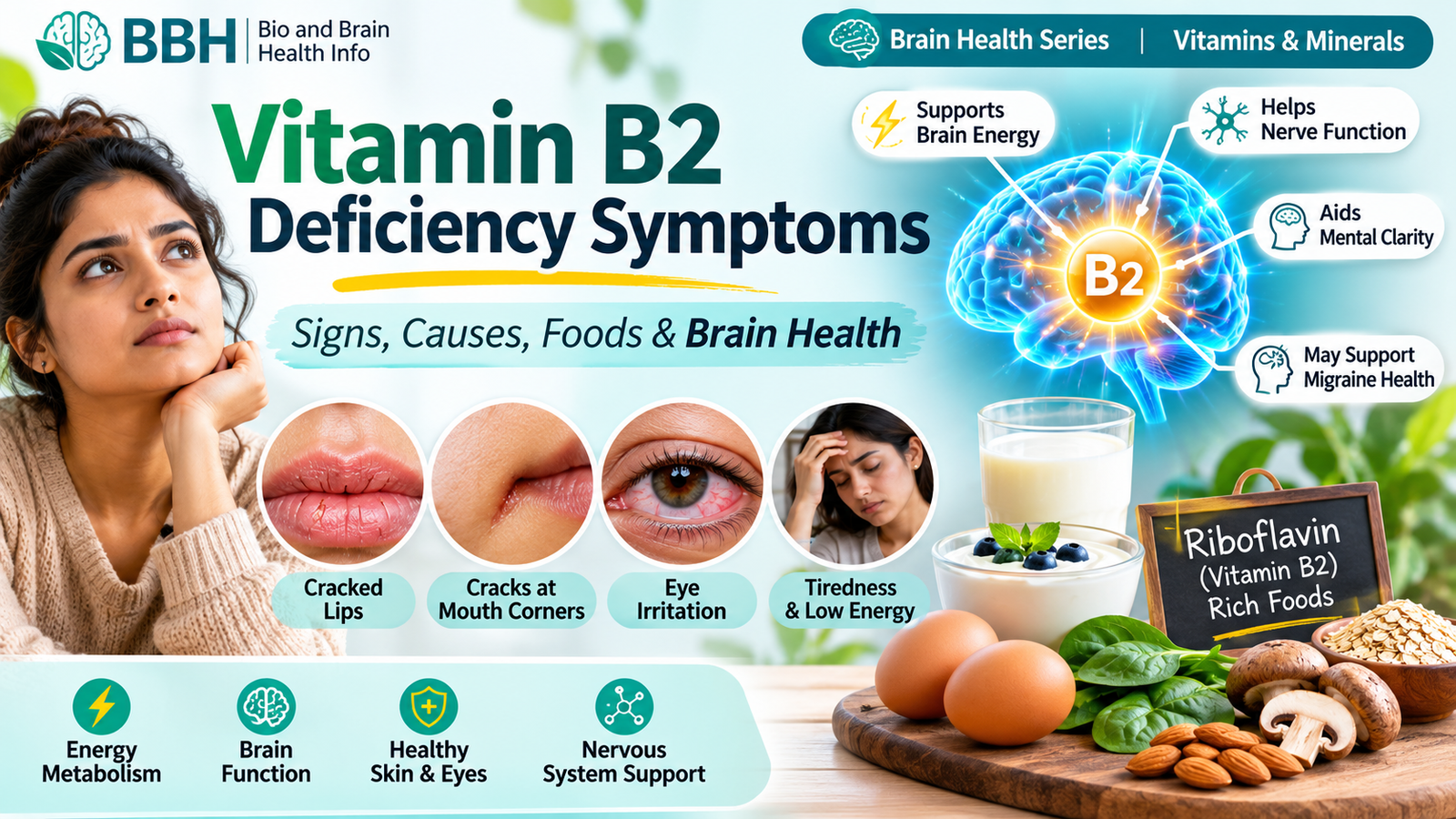
These findings are not specific enough for self-diagnosis. Mouth irritation can occur for infectious, inflammatory or mechanical reasons, and fatigue has numerous possible causes. A clinician considers the history, diet and examination, and may investigate other deficiencies or medical problems.
People with restricted diets or certain medical conditions may need individualized assessment. Pregnancy and breastfeeding increase recommended intake. A person who avoids dairy and several other sources should review dietary adequacy rather than assume deficiency is inevitable. For a more detailed discussion, use BBH’s existing Vitamin B2 Deficiency Symptoms article.
8. Vitamin G Supplement Uses: What Research Actually Supports
Riboflavin supplements can contribute to nutritional intake when appropriate. A confirmed deficiency or an unusual clinical condition may require a professionally directed treatment plan. These applications should be distinguished from marketing claims that a supplement universally improves concentration, mood or physical performance.
Riboflavin and migraine prevention research
A randomized placebo-controlled trial published in 1998 evaluated 55 people with migraine over three months. It reported encouraging preventive outcomes with a high-dose riboflavin regimen. Subsequent research has explored this approach, but findings and study designs vary. The NIH notes that the evidence is not uniform.
Migraine studies concern prevention rather than immediate relief during an attack. Therapeutic doses studied for migraine are very different from ordinary nutritional requirements. A patient should discuss the diagnosis, potential benefits, treatment alternatives and monitoring with a clinician instead of interpreting this research as a general daily supplement recommendation.
Research: Schoenen and colleagues, Neurology, 1998; systematic review of riboflavin and migraine prophylaxis.
9. Reading Vitamin G and Riboflavin Supplement Labels
In a US store, look for riboflavin in the Supplement Facts panel. Check the amount per serving, the number of tablets or capsules in that serving and the percentage Daily Value. A high percentage does not establish that the product is needed. When comparing two products, use the same units and actual serving amounts.
Some products use riboflavin or riboflavin phosphate forms. A chemical form described as active is not automatically clinically superior for every consumer. Look for evidence relevant to the intended use. Avoid paying a premium merely because a product uses an unfamiliar historical name or promises a guaranteed increase in energy.
BBH Label Translation Checklist
Find the modern ingredient name; verify the milligram amount and serving size; check other B-complex or multivitamin products for overlap; distinguish nutritional needs from clinical treatment claims; consult a pharmacist when a product label is unclear.
10. Vitamin G Safety and Bright Yellow Urine
Riboflavin is a naturally yellow compound. After consuming some vitamin products, urine can appear unusually bright yellow because riboflavin is excreted. This observation does not measure the amount absorbed, prove that a supplement is working or establish that an entire product is safe.
The US Food and Nutrition Board has not established a tolerable upper intake level for riboflavin because available evidence is insufficient to establish such a limit and adverse effects have not been demonstrated at studied intakes. This is not proof that unlimited intake is harmless. Multivitamins may also contain other ingredients with different safety limits.
Seek advice for persistent unusual urine color, blood in urine, pain, or other concerning symptoms. Do not attribute every change to vitamins. Discuss supplements with your healthcare team and keep products away from children. See BBH’s biotin guide for another example of why supplement-related safety issues differ across B vitamins.
11. How to Evaluate Historical Vitamin Claims
When a website presents a forgotten vitamin as a new discovery, identify the actual molecule before accepting the health claims. Check whether modern authoritative nutrient guidance recognizes it as essential. Then distinguish historical research, laboratory experiments and controlled human trials. Each type of evidence answers a different question.
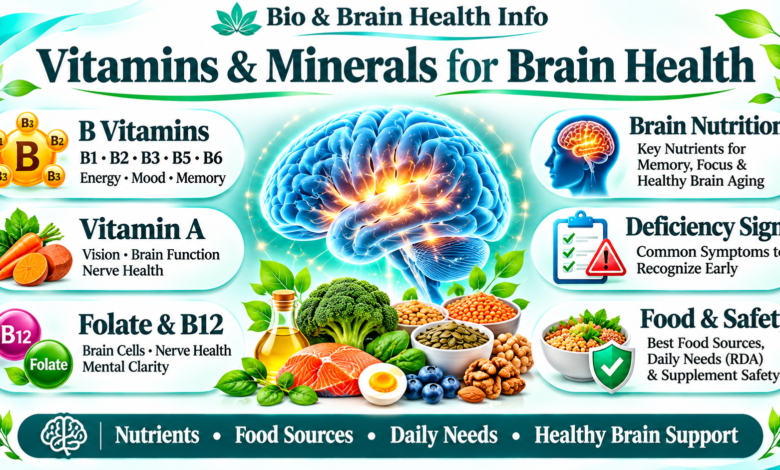
For vitamin G, the historical terminology is well documented, while current riboflavin recommendations are available from US public-health nutrition resources. There is no need to create a separate nutritional requirement. Explore Vitamins and Minerals for Brain Health and the BBH Vitamins and Minerals support hub for additional context.
Free BBH Food and Symptom Tracker
Download the seven-day Vitamin B2 food and symptom tracker (PDF). Use it to organize dietary observations and questions for a healthcare professional, not to diagnose deficiency.
Frequently Asked Questions
Is vitamin G a real vitamin?
It is a historical name associated with riboflavin, an established essential vitamin.
Is vitamin G the same as vitamin B2?
Yes, in modern nutritional interpretation of the historical riboflavin name.
Why is vitamin G not on US food labels?
Modern nutrition labeling uses riboflavin rather than the obsolete name.
Can vitamin G give me more energy?
Adequate riboflavin supports normal metabolism, but extra intake is not a proven energy boost for everyone.
Does vitamin G prevent migraine?
Riboflavin has been investigated for prevention, with mixed evidence. Discuss treatment decisions with a clinician.
Is vitamin G different from vitamin H?
Yes. Vitamin H historically refers to biotin, now vitamin B7.
Do I need a vitamin G supplement?
There is no separate vitamin G requirement. Supplement needs depend on riboflavin intake and medical circumstances.
Compare the historical and modern names for riboflavin in Vitamin G vs Vitamin B2: key facts.
Conclusion
Vitamin G illustrates how scientific language changes as evidence improves. Its modern identity is riboflavin or vitamin B2. Focus on a varied diet, current US nutritional recommendations and appropriate professional advice rather than purchasing products based on obsolete terminology.
Independent Clinical Review
Review status: Pending independent clinical review. This article draws on the research and public guidance linked below. BBH will add the reviewer’s name, credentials, and review date once an independent review is documented.
Research References
Historical riboflavin intake paper (1939)
Discovery and characterization of riboflavin (2012)
NIH riboflavin consumer guidance
NIH riboflavin professional guidance
Riboflavin biochemical review (2016)
B-complex biological properties (2022)