Vitamin A Supplements: Uses and Safety
Vitamin A Supplements: Dosage and Risks

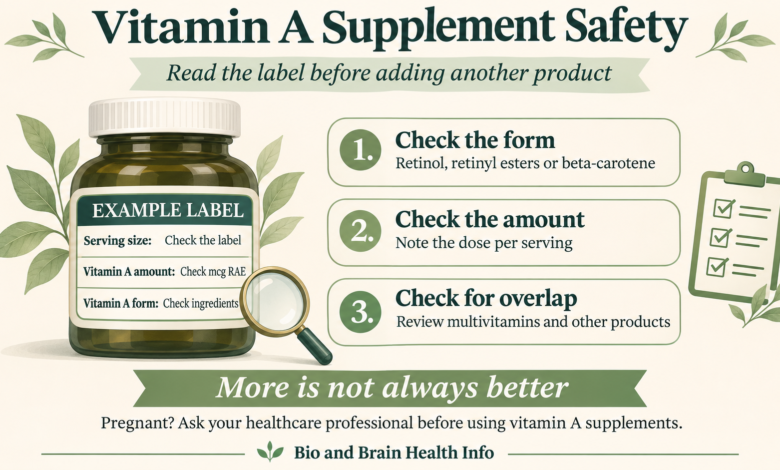
Are you considering a vitamin A supplement for your eyesight, immune health or skin? Before buying a bottle, it helps to understand whether you need additional vitamin A at all. A nutrient that is essential to normal health can still cause harm when taken in excessive amounts. In the United States, where fortified foods and multivitamins are widely available, the same nutrient can appear in several products used every day.
Thank you for reading this post, don't forget to subscribe!Vitamin A supplements may have a role in correcting inadequate intake or managing specific medical conditions under professional supervision. This guide explains the forms sold in the United States, how to read Supplement Facts labels, why the recommended intake differs from the upper limit, and how to identify situations that require individualized advice.
Quick Answer
Healthy US adults generally need 900 mcg RAE of vitamin A daily for men and 700 mcg RAE for women, from all sources. The adult upper limit for preformed vitamin A is 3,000 mcg RAE per day. This is not a recommended supplement dose. Extra vitamin A is not automatically beneficial, and pregnancy, smoking history and certain medications require special attention.
Medical Safety Notice
This article provides education, not an individualized supplement prescription. Do not start high-dose vitamin A or change prescribed replacement therapy without consulting your healthcare professional. For suspected overdose in the United States, call Poison Control at 1-800-222-1222. Call 911 for life-threatening symptoms.
In This Guide
Supplement forms • Evidence-based uses • Daily requirements • Label conversions • Supplement stacking • Side effects • Medication interactions • Pregnancy and smoking • US product quality • FAQs
1. What Are Vitamin A Supplements?
Vitamin A is a fat-soluble nutrient that participates in normal visual function, cell differentiation and immune processes. It is stored in the body, particularly in the liver. Supplements may contain preformed vitamin A, provitamin A carotenoids or a combination. Understanding the form matters because the compounds have different biological activity and safety considerations.
| Label ingredient | What it means |
|---|---|
| Retinol | Preformed vitamin A |
| Retinyl palmitate or retinyl acetate | Preformed vitamin A esters |
| Beta-carotene | Provitamin A carotenoid requiring conversion |
| Mixed vitamin A sources | Check how much comes from each form |
Products include standalone capsules, multivitamins, prenatal formulas and some fish liver oils. Topical retinoids and prescription oral retinoids are medications or skin treatments, not interchangeable with nutritional supplements. Read BBH’s Vitamin A Benefits and Daily Requirements for the broader nutritional context.
2. Vitamin A Supplement Benefits: When Supplementation May Help
The clearest nutritional reason for replacement is to address inadequate vitamin A status when a healthcare professional determines that additional intake is appropriate. A person with documented deficiency may require a treatment plan different from ordinary dietary recommendations.
Vitamin A supplement uses in deficiency management
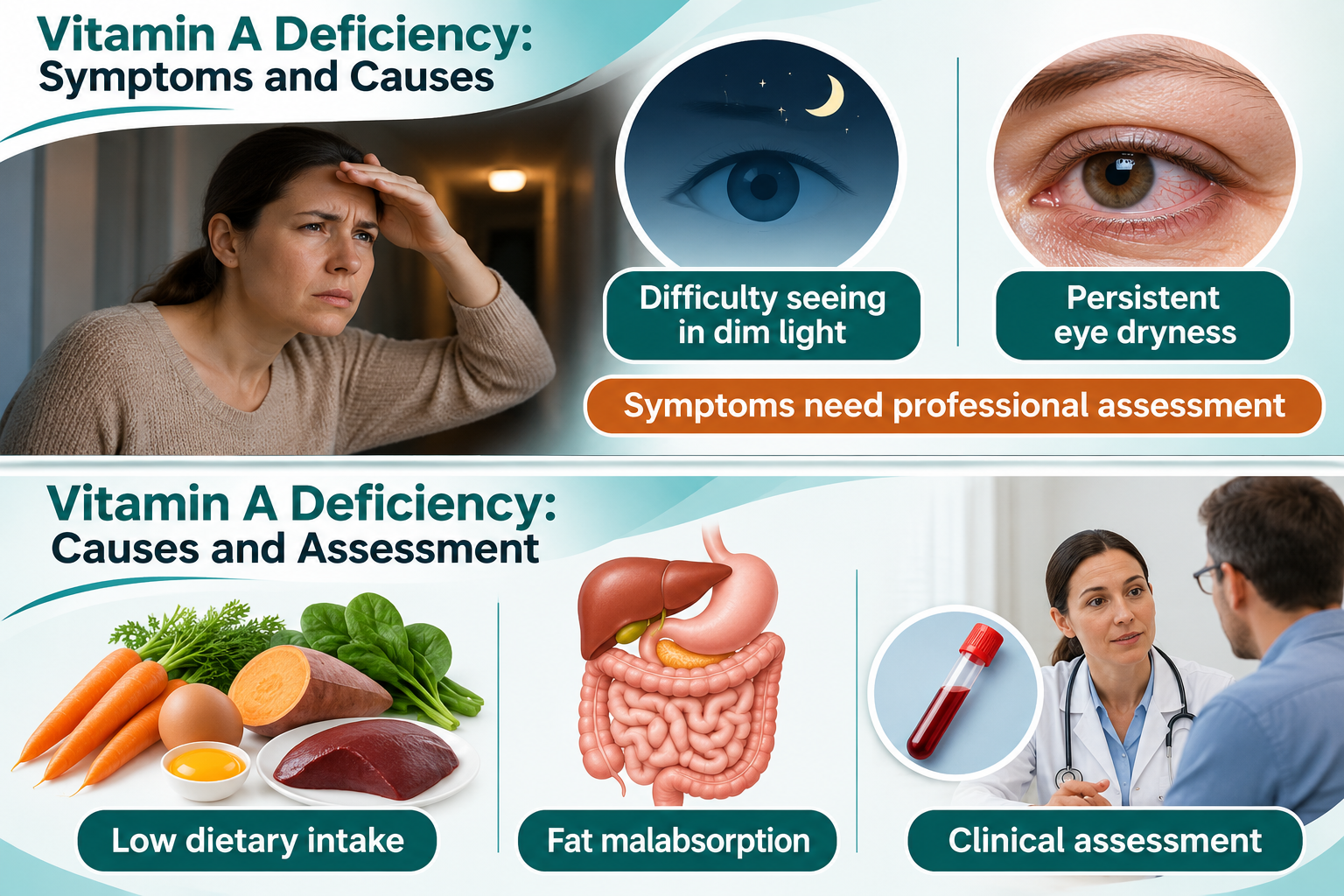
A clinician may recommend replacement after assessing symptoms, food intake, medical history and relevant laboratory findings. People with fat malabsorption, pancreatic insufficiency or previous bariatric surgery may need condition-specific products and monitoring. They should follow their specialist’s plan rather than selecting a dose from a general wellness article.
Changes in night vision can be a clue to deficiency, but other eye disorders can cause similar symptoms. A supplement should never delay an eye examination. Learn more in Vitamin A Deficiency: Symptoms and Causes.
Do vitamin A supplements improve normal eyesight or immunity?
An essential physiological role is not evidence that additional supplementation improves health in someone who already meets nutritional needs. Correcting deficiency can address deficiency-related problems, but taking more vitamin A does not generally correct refractive errors or establish protection from infections. Claims about improved memory, acne cures or cancer prevention should be evaluated against human clinical evidence, not just descriptions of nutrient functions.
3. Vitamin A Supplement Dosage: US Dietary Requirements
The National Academies dietary reference values, summarized by the NIH Office of Dietary Supplements, describe total intake from food and supplements. They are not prescriptions for standalone capsules. The unit used is micrograms of retinol activity equivalents, or mcg RAE.
| Life stage | Recommended intake, mcg RAE/day |
|---|---|
| Men 19+ | 900 |
| Women 19+ | 700 |
| Pregnancy 19–50 | 770 |
| Breastfeeding 19–50 | 1,300 |
| Children 1–3 | 300 |
| Children 4–8 | 400 |
| Children 9–13 | 600 |
The FDA general Daily Value for vitamin A is 900 mcg RAE for adults and children four years and older. A multivitamin with 100% Daily Value therefore does not necessarily match a person’s individual requirement. Consider what the rest of the diet already contributes. The goal is adequate usual intake, not maximizing the number on a bottle.
4. Safe Vitamin A Supplements: Understand the Upper Limit
The tolerable upper intake level is a population safety reference for usual daily exposure to preformed vitamin A from food and supplements. It is not a target and does not guarantee individual safety. Clinician-directed treatment for documented deficiency may require a different approach.
| Age | Upper limit, preformed vitamin A (mcg/day) |
|---|---|
| Birth–12 months | 600 |
| 1–3 years | 600 |
| 4–8 years | 900 |
| 9–13 years | 1,700 |
| 14–18 years | 2,800 |
| 19 years and older | 3,000 |
The same upper limit applies to pregnant or breastfeeding adults in the corresponding age group. Ordinary dietary carotenoids are not subject to this preformed vitamin A limit, but high-dose beta-carotene supplements have separate safety concerns. The absence of an established upper limit for beta-carotene does not mean unlimited supplementation is safe.
5. Vitamin A Supplement Labels: IU Versus mcg RAE
Older labels and online product descriptions sometimes use International Units (IU). Conversion depends on the form. For preformed retinol, 1 IU corresponds to 0.3 mcg RAE. Thus, 5,000 IU of retinol corresponds to 1,500 mcg RAE and 10,000 IU corresponds to 3,000 mcg RAE. Do not apply a retinol conversion indiscriminately to carotenoid quantities in food.
A mixed-source label may state the percentage of vitamin A supplied by beta-carotene. When that percentage refers to the declared vitamin A activity, the remaining fraction can be used to estimate preformed vitamin A. If the form or proportion is unclear, contact the manufacturer or ask a pharmacist. Do not assume the entire amount is retinol or entirely beta-carotene.
BBH Label Reading Checklist
Check serving size, number of capsules per serving, total mcg RAE, ingredient form, percentage from beta-carotene, other products containing vitamin A and the manufacturer’s contact details. Keep a photograph of the Supplement Facts panel.
6. Supplement Stacking: Calculate Preformed Vitamin A Separately
A practical safety gap is the tendency to assess each supplement in isolation. A person may use a multivitamin, a separate skin-health product and fish liver oil without realizing that all contribute preformed vitamin A. The combined amount matters.
| Hypothetical product | Total vitamin A | Preformed fraction | Preformed amount |
|---|---|---|---|
| Multivitamin | 900 mcg RAE | 50% | 450 mcg |
| Standalone retinol | 1,500 mcg RAE | 100% | 1,500 mcg |
| Cod liver oil | 900 mcg RAE | 100% | 900 mcg |
| Total | 3,300 mcg RAE | — | 2,850 mcg |
This example is not a recommended regimen. The preformed subtotal is 2,850 mcg before food, close to the adult upper limit. Additional preformed vitamin A from food could take the total above it. The example also illustrates why simply comparing total RAE with the preformed upper limit can be misleading. Actual formulations vary considerably.
Download the BBH Vitamin A Tracker
Download the free Vitamin A Food and Supplement Safety Tracker (PDF). Record your products, meals and questions for your healthcare appointment. This existing educational worksheet is not a diagnostic tool.
7. Vitamin A Supplement Side Effects and Toxicity
Excessive preformed vitamin A may cause acute or chronic toxicity. Symptoms can include nausea, headache, dizziness, blurred vision and muscle or joint discomfort. Long-term excessive exposure can injure the liver and cause other health problems. Symptoms overlap with unrelated conditions, so a symptom checklist cannot diagnose toxicity.
Do not take another dose of a suspected overdose product while awaiting professional guidance. Contact Poison Control promptly, even if symptoms have not yet appeared. Keep the product packaging available and tell the specialist the amount and time of ingestion. Do not induce vomiting unless specifically instructed.
For ongoing concerns about repeated intake, bring your supplement list to your primary care clinician. They may consider the history, symptoms and appropriate tests. A normal result from a single laboratory test is not a substitute for evaluating exposure.
8. Vitamin A Supplement Safety With Prescription Medicines
Medication review is particularly important when a nutrient has related pharmaceutical compounds or when a drug changes nutrient absorption. Do not stop prescribed treatment in order to take a supplement.
| Medication or situation | Why discuss it with a professional |
|---|---|
| Oral retinoids, including isotretinoin or acitretin | Additional vitamin A can increase toxicity concerns. |
| Orlistat | May reduce absorption of fat-soluble vitamins; follow medication-specific vitamin guidance. |
| Other prescribed therapies | Ask a pharmacist to review the entire medication and supplement list. |
A person using orlistat may receive instructions to take a multivitamin at a different time from the medicine. Follow the actual prescription or product label and the healthcare team’s advice rather than improvising with standalone high-dose vitamin A. Prescription retinoids also carry important pregnancy precautions that must be followed independently of supplement advice.
9. Pregnancy, Smoking and Other High-Risk Situations
Pregnancy requires adequate vitamin A for normal development, but excessive preformed vitamin A can cause birth defects. Review prenatal formulations and other products with an obstetric clinician. Do not add a separate retinol product merely because a prenatal vitamin contains less than an online supplement recommendation.
Large randomized trials have identified harm from high-dose beta-carotene supplements among certain populations at increased risk of lung cancer, including smokers. The US CARET trial examined beta-carotene combined with retinol in high-risk participants and was stopped early after unfavorable outcomes. The Finnish ATBC trial also identified increased lung cancer risk in male smokers receiving beta-carotene. These findings do not mean that ordinary carrots and leafy vegetables are unsafe.
Certain people with age-related macular degeneration may benefit from a specific AREDS2 formula under eye-care guidance. This is not a general vitamin A supplement recommendation. Current and former smokers should avoid older beta-carotene-containing AREDS formulations and discuss the appropriate product with their eye specialist.

10. Choosing Vitamin A Supplements in the United States
The FDA regulates dietary supplements but generally does not approve them for safety and effectiveness before they are marketed. A claim that a supplement is FDA approved should therefore be treated cautiously. Manufacturers have responsibilities for product safety and truthful labeling, and FDA can take action against unlawful products.
When a supplement is clinically appropriate, check whether the serving amount is clearly stated and the ingredient form is identifiable. Independent quality verification, such as a verifiable USP or NSF certification when available, can provide information about product quality within the scope of the certification. It does not establish that the product is medically necessary or effective for your symptoms.
BBH Purchase Decision Checklist
Ask whether there is a documented nutritional need, whether food can address it, whether the product overlaps with your existing supplements, whether a pharmacist has checked medication interactions, and whether the manufacturer and quality claims can be verified. Avoid products promising guaranteed cures.
11. Food First: Alternatives to Unnecessary Vitamin A Supplementation
Carrots, sweet potatoes and leafy greens supply provitamin A carotenoids. Eggs and fortified dairy can contribute preformed vitamin A. A varied diet offers other nutrients that a capsule cannot replace. See Best Food Sources of Vitamin A for serving-size comparisons and meal ideas.

A food-first strategy does not mean that people with a diagnosed absorption disorder should stop prescribed supplements. Those situations require individualized management. For additional reading, explore Vitamin A and Brain Health and Vitamins and Minerals for Brain Health.
How to prepare for a pharmacist-led supplement review
Bring a complete list of products, including gummies, powders, fortified drinks and supplements marketed for skin or eye health. Photograph both the Supplement Facts panel and the ingredient list. Write down how many servings you actually consume rather than assuming you follow the printed serving size. Include products used intermittently, because a clinician may need to evaluate patterns of exposure over time.
Ask whether your medical history changes the usual recommendations, whether a laboratory assessment is appropriate, and whether any product duplicates an ingredient in your prescription or prenatal regimen. If a clinician recommends replacement, ask what the treatment goal is, when progress should be reassessed and whether the plan has an intended end date. These questions help distinguish a targeted treatment plan from indefinite supplementation without a defined indication.
Store supplements in their original containers, out of children’s reach. Gummies can resemble ordinary candy, so keep them separate from snacks. Avoid transferring products into unmarked bottles that make it difficult to identify ingredients during an accidental ingestion. If you suspect a serious adverse reaction, seek appropriate medical assistance and discuss reporting the event to FDA through its consumer reporting resources.
Frequently Asked Questions
Can I take vitamin A supplements every day?
Only if the amount and form are appropriate for your needs and total intake. Routine standalone supplementation is not necessary for everyone.
Is 10,000 IU of vitamin A safe?
If it is preformed retinol, 10,000 IU equals the adult daily upper limit before any other preformed sources. Do not treat this as a recommended daily dose.
Which form of vitamin A is best?
There is no universally best form. The appropriate formulation depends on nutritional need, absorption, smoking history and medical circumstances.
Can vitamin A supplements help acne?
Oral nutritional supplements are not a safe substitute for prescribed acne treatments.
Should I take vitamin A with food?
Food composition can influence absorption of fat-soluble nutrients. Follow the specific product instructions and professional advice.
Can I combine a multivitamin with cod liver oil?
Check both labels for preformed vitamin A and review the combined intake with a pharmacist or clinician.
Are vitamin A supplements safe during pregnancy?
Adequacy is important, but excessive preformed vitamin A can harm fetal development. Review prenatal and additional supplements with your obstetric clinician.
Does FDA approve vitamin A supplements?
FDA generally does not approve dietary supplements for safety and effectiveness before marketing.
Conclusion
Vitamin A supplements can be useful in specific circumstances, but safe decisions begin with identifying the need, reading the label and considering all sources of exposure. Avoid unnecessary high doses and seek individualized guidance when pregnancy, medications or absorption disorders complicate nutrition. Adequate intake, not maximum intake, is the objective.
Independent Clinical Review
Review status: Pending independent clinical review. This article draws on the research and public guidance linked below. BBH will add the reviewer’s name, credentials, and review date once an independent review is documented.
Research References
NIH Vitamin A and Carotenoids: Health Professional
National Cancer Institute: Antioxidants and Cancer Prevention
National Eye Institute: AREDS2
FDA consumer supplement information