Vitamin G vs Vitamin B2: Key Facts
Vitamin G vs B2: Are They the Same?


If an old American nutrition book recommends vitamin G and a modern food label lists vitamin B2, do you need both? The apparent difference is mostly a question of scientific language. Understanding that distinction can prevent duplicate supplement purchases and help readers interpret historical nutritional research accurately.
Thank you for reading this post, don't forget to subscribe!The vitamin G vs vitamin B2 comparison has an important qualification: although vitamin G is now understood as a historical name for riboflavin, early experimental preparations and names sometimes covered a broader group of nutritional factors. This guide examines the evidence behind the naming change, separates chemical forms from independent vitamins, and explains how Americans can apply current nutritional guidance.
Quick Answer
Vitamin G is an obsolete designation associated with riboflavin, now known as vitamin B2. They do not represent two separate nutritional requirements. Early descriptions of the B2 complex were broader than the modern definition. On US labels, look for riboflavin and use modern dietary reference values.
Medical Safety Notice
This article provides historical and nutritional education, not diagnosis or a supplement prescription. Do not use old medical texts to select treatment doses. Persistent symptoms, suspected deficiency or questions about high-dose supplements should be discussed with a healthcare professional.
In This Guide
Identity comparison • Historical naming • Discovery timeline • Chemical forms • US labels • Dietary requirements • Evidence interpretation • Deficiency • Duplicate products • FAQs
1. Vitamin G vs Vitamin B2: What Is the Actual Difference?
In modern nutrition, riboflavin is the recognized nutrient. Vitamin B2 is its numbered vitamin designation. Vitamin G is an older name used in the development of this classification. The comparison is therefore not analogous to comparing vitamins B1 and B12, which are chemically distinct and have different physiological roles.
| Comparison | Vitamin G | Vitamin B2 |
|---|---|---|
| Current status | Historical designation | Recognized modern vitamin |
| Chemical identity in modern usage | Riboflavin | Riboflavin |
| Separate dietary requirement | None | Established US reference intake |
| Modern US label | Usually not used | Riboflavin |
| Need for separate supplement | No | Depends on individual circumstances |
A comprehensive introduction to the nutrient’s functions and food sources is available in What Is Vitamin G? Benefits and Uses. This comparison concentrates on why the names differ and how to avoid interpreting them as distinct nutrients.
2. Vitamin G History: American and British Naming Conventions
Vitamin research developed across countries and laboratories before a uniform naming system was established. Researchers initially classified food factors using their observed biological activities and properties, such as solubility or stability during preparation. Those categories did not always correspond to single purified molecules.
A 1938 article in the Journal of the American Medical Association describes the American designation G and the British designation B2. A 1932 historical survey in the same journal shows that the terminology was still unsettled at that time. These contemporary publications are valuable because they document what researchers actually meant rather than relying only on modern lists of obsolete vitamin names.
Read the original bibliographic records: 1932 historical survey of vitamin B2 (G) and 1938 riboflavin physiology and pathology.
3. Vitamin G and Riboflavin: A Discovery Timeline
The history begins before the nutrient was understood as essential. A yellow-green fluorescent pigment in milk attracted scientific attention in the nineteenth century. The modern historical review by Northrop-Clewes and Thurnham traces early observations to 1872. Later investigators established that purified flavin compounds from different biological sources shared a chemical identity.
| Period | Scientific development |
|---|---|
| 1872 | Early observation of a fluorescent pigment in milk, as described in a modern historical review |
| Early 1930s | Researchers refined the identification and purification of riboflavin |
| 1935 | Chemical synthesis helped establish its identity |
| Late 1930s | Human nutritional importance became clearer |
| Modern era | Riboflavin is classified as vitamin B2 |
The date of a pigment observation should not be confused with the date when its vitamin activity or chemical identity was demonstrated. Discovery is a sequence of scientific findings, not necessarily a single event. See The Discovery and Characterization of Riboflavin (2012) and Bioproduction of Riboflavin: A Bright Yellow History (2017).
4. Vitamin B2 Scientific Name: Riboflavin and Related Terms
Riboflavin is the name of the vitamin molecule. Earlier names such as lactoflavin were associated with the biological material from which researchers obtained flavins. The scientific name became useful because it identified the compound independently of the source used to extract it.
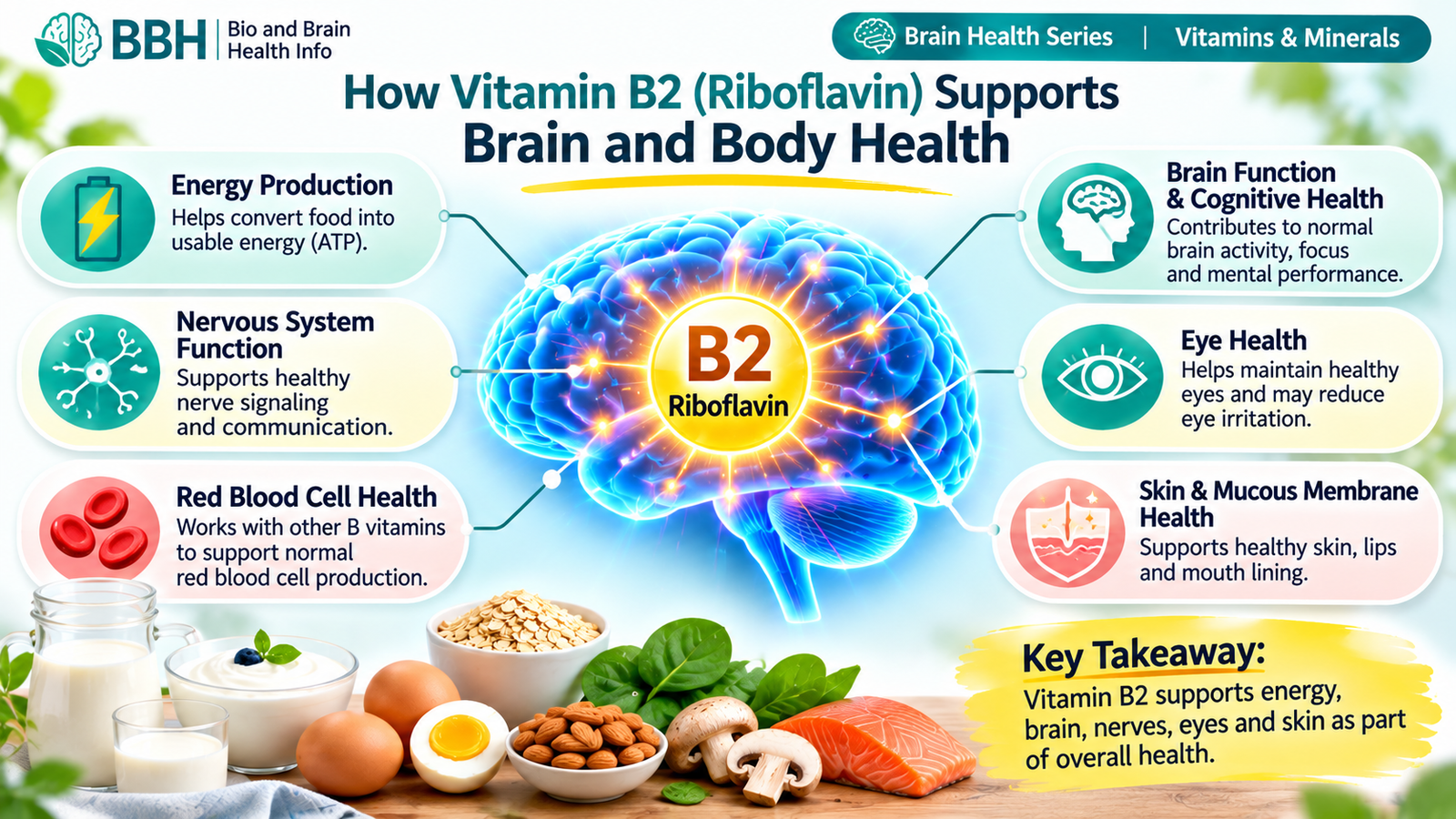
Modern biochemistry also describes flavin mononucleotide (FMN) and flavin adenine dinucleotide (FAD). These are coenzymes derived from riboflavin. They assist enzymes in carrying out cellular reactions, including reactions involved in energy metabolism. They are not additional vitamins for which consumers need separate daily allowances.
| Term | Classification |
|---|---|
| Vitamin G | Historical name |
| Vitamin B2 | Modern vitamin designation |
| Riboflavin | Vitamin molecule |
| Lactoflavin | Historical source-associated name |
| FMN | Riboflavin-derived coenzyme |
| FAD | Riboflavin-derived coenzyme |
5. Why the Historical B2 Complex Was Not Always Pure Riboflavin
One important historical qualification is often lost in a simple comparison table. Early researchers did not necessarily have purified substances. A preparation described as a heat-stable component of the vitamin B complex could contain several factors. Biological activity measured in an animal feeding experiment might therefore reflect the effects of more than one substance.
A 1938 discussion of dietary sources and requirements, written in 1937, describes evidence for multiple relatively heat-stable factors, including riboflavin and vitamin B6. A 1935 Nature article on B2 nomenclature also addresses the difficulty of attributing growth-related activity to a single compound when other substances were present.
Consequently, a claim in a historical text about vitamin G preventing a complex disease cannot automatically be translated into a modern claim that riboflavin alone treats that disease. The correct interpretation depends on the experimental preparation, outcome and date.
Historical evidence: Riboflavin: Dietary Sources and Requirements and Nomenclature of Vitamin B2 (1935).
BBH Historical Reading Rule
First identify the year. Next identify the substance or preparation. Then check whether the study measured a specific deficiency or a broader nutritional syndrome. Finally compare the claim with contemporary clinical guidance.
6. Vitamin G vs B2 Differences in Modern US Nutrition Labels
Americans shopping for supplements should look for the modern nutrient name riboflavin on the Supplement Facts panel. A front label may emphasize a brand or formulation, but the nutrient declaration is more useful for evaluating what a product contains.
The general US Daily Value for riboflavin is 1.3 milligrams for adults and children aged four and older. Daily Value percentages allow comparisons across products; they do not establish individual supplement requirements. A person’s age, pregnancy or breastfeeding status can change the recommended amount.
Read the serving size before comparing products. A serving might consist of two tablets rather than one. Also check whether a separate B-complex supplement already supplies riboflavin. Historical synonyms do not justify counting the same nutrient as two distinct ingredients.
| Example label term | Interpretation |
|---|---|
| Riboflavin 1.3 mg | One declared amount of vitamin B2 |
| Vitamin B2 (riboflavin) | Two names for the same nutrient |
| Riboflavin-5-phosphate | A related form; read the declared nutrient amount |
| Vitamin G | Ask for the modern ingredient identity and amount if unclear |
Reference: NIH riboflavin professional fact sheet.
7. Vitamin G and Vitamin B2: Do Daily Needs Differ?
No separate reference intake exists for vitamin G. The United States uses current dietary reference values for riboflavin. For healthy adults, recommended intakes are 1.3 mg daily for men and 1.1 mg for women, with higher values during pregnancy and breastfeeding.
| Life stage | Riboflavin recommended intake |
|---|---|
| Adult men | 1.3 mg/day |
| Adult women | 1.1 mg/day |
| Pregnancy | 1.4 mg/day |
| Breastfeeding | 1.6 mg/day |
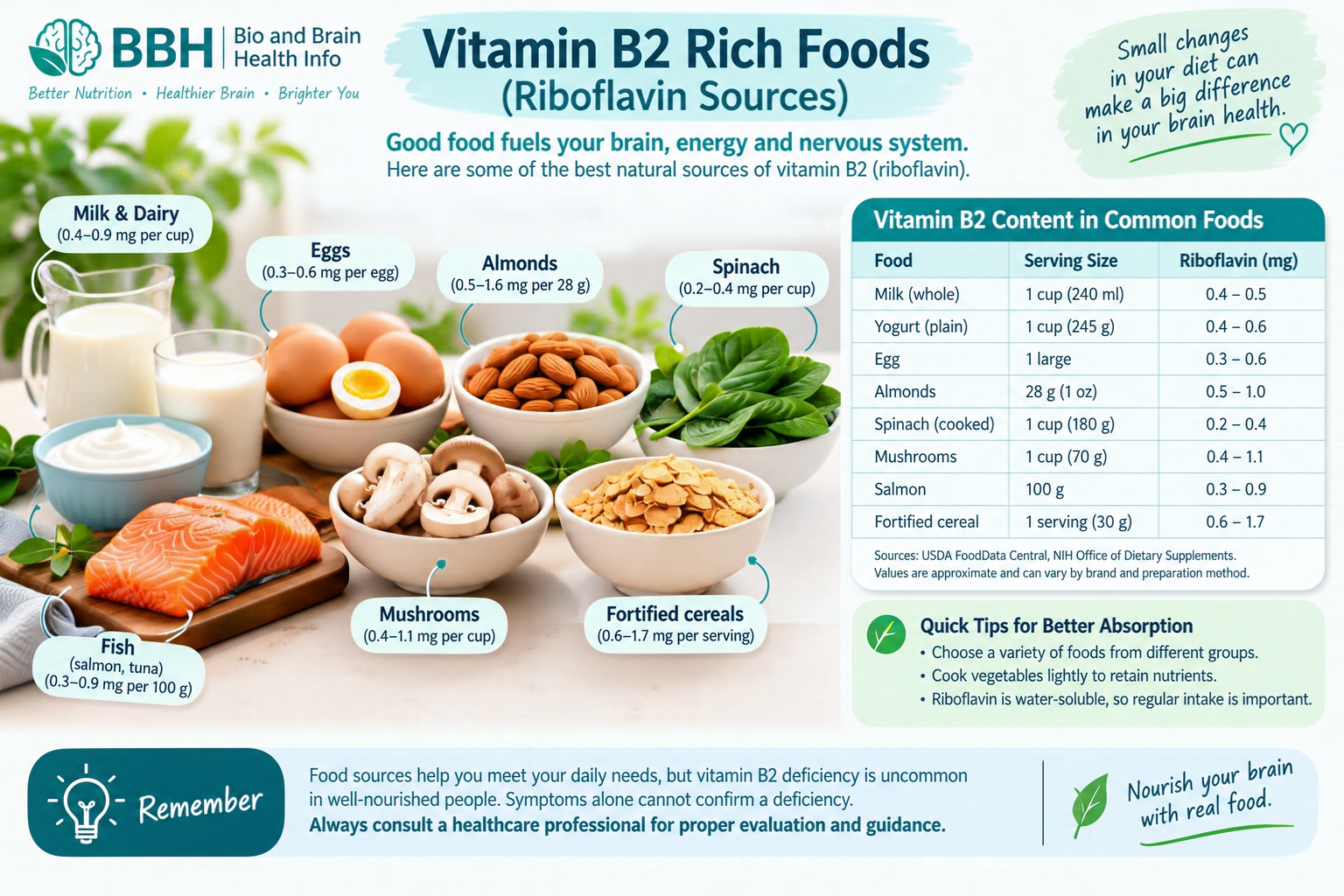
These values represent total usual intake, not a standalone supplement dose. Food sources include milk, eggs, meats, mushrooms, almonds and enriched grain products. Plant-based alternatives vary in fortification, so the actual nutrition label matters. A person with dietary restrictions can seek help from a registered dietitian if adequacy is uncertain.
8. Comparing Vitamin G Deficiency With Modern B2 Deficiency
In modern clinical terminology, inadequate riboflavin status is described as riboflavin deficiency. Possible symptoms include mouth-corner cracking, changes affecting the lips and tongue, skin problems and eye irritation. These findings can have many causes and cannot establish deficiency without appropriate assessment.

Historical references to vitamin G deficiency sometimes appeared in discussions of broader nutritional syndromes. Pellagra, for example, is now understood primarily in relation to niacin deficiency. It would be inaccurate to interpret all historical references to pellagra and vitamin G as evidence that riboflavin alone is its modern treatment.
For separate clinical background, read Vitamin B2 Deficiency Symptoms and Niacin Deficiency Symptoms: Signs and Causes. Similarly, thiamine is a distinct nutrient, as explained in Vitamin B1 Deficiency Symptoms.
9. Do Historical Vitamin Names Change the Evidence for Supplements?
The evidence for a nutrient depends on the substance, population, intervention and outcome being studied, not on the appeal of its name. Riboflavin has established essential biological functions, while high-dose regimens have been investigated for selected clinical indications. A study of a particular medical condition should not be generalized to healthy consumers seeking more energy.
No tolerable upper intake level has been established for riboflavin in US dietary reference guidance because available evidence has not established a suitable limit. This should not be interpreted as proof that every dose is safe or beneficial. Other ingredients in a combination supplement may have their own risks. Discuss high-dose use and unnecessary duplicate products with a pharmacist or clinician.
Duplicate Supplement Check
List each product, find its riboflavin declaration and record the amount per actual serving. Treat vitamin G and vitamin B2 as historical and modern names for the same nutrient, not as separate goals. Ask a pharmacist to clarify ambiguous labels.
10. How to Verify Claims About Forgotten Vitamins
A practical way to evaluate an unfamiliar vitamin name is to search a reliable historical source for its original meaning, then consult current NIH nutrient guidance. If the historical name was associated with a mixture, do not assume every finding applies to its modern counterpart. Verify whether the current substance is recognized as essential, and whether a claim is based on human trials or merely biochemical reasoning.
Marketing descriptions such as rediscovered vitamin, ancient nutrient or exclusive active form do not establish clinical superiority. Look for a precise ingredient name, a meaningful comparison and research relevant to the intended outcome. A molecule’s role in an enzyme does not by itself establish a benefit from taking additional quantities.
For additional context, visit Vitamins and Minerals for Brain Health and the Vitamins and Minerals support hub. The same verification approach will be useful for other historical names in the BBH series.
11. A Practical Guide for US Readers Using Old Nutrition Books
Suppose a digitized book describes a food as rich in vitamin G. The first useful step is to recognize the historical association with riboflavin. The second is to use current food-composition data to evaluate the food rather than copying an old serving recommendation. Agricultural practices, fortification, analytical methods and food formulations may have changed since the book was written.
For modern grocery planning, search the USDA FoodData Central database using the food name and riboflavin nutrient field. Match the food’s preparation and serving size. Do not add a separate vitamin G entry to a nutrient tracker, because that would count the same modern nutrient twice.
If a historical source describes a medical treatment, record the citation and discuss it with a qualified clinician before applying it. Old research remains valuable for understanding scientific discovery, but current medical decisions require contemporary evidence and patient-specific assessment.
Free BBH Worksheet
Download the existing BBH riboflavin food and symptom tracker to organize observations for a nutrition consultation.
Vitamin G vs Vitamin B2: checking the strength of a claim
Consider three different questions when evaluating a nutritional statement. First, does the historical source establish the name of the substance? Second, does a biochemical investigation establish how the compound participates in a cellular reaction? Third, does a clinical study establish a meaningful health outcome in people who receive an intervention? A positive answer to the first two questions does not necessarily establish the third. This distinction is particularly important when old vitamin names are used to advertise modern products.
For example, the discovery of flavin-dependent enzymes is important evidence about metabolism, but it cannot show that a healthy adult will feel more energetic after taking extra riboflavin. Similarly, a historical feeding experiment cannot establish the appropriate treatment for an individual with fatigue today. The study design, the nutritional status of participants and the comparison group all matter.
How modern nutrient databases resolve naming confusion
When entering foods into a nutrition diary, use a consistent database and record portions in the units provided. A label may show the percentage Daily Value rather than the amount of riboflavin in milligrams. The FDA reference value can help interpret that percentage, but the result remains an estimate based on a labeled serving. Do not confuse the percentage with the fraction absorbed by your body.
Finally, remember that historical terminology can be useful for finding older research without being useful as a modern diagnostic category. If you discuss an article with a healthcare professional, bring the actual publication or a reliable citation. This allows the professional to identify the substance and assess whether the findings are relevant to your medical history.
Frequently Asked Questions
Is vitamin G the same as vitamin B2?
In modern usage, vitamin G is a historical name associated with riboflavin, which is vitamin B2.
Why did American scientists use vitamin G?
Different research communities used different naming systems before chemical identities and terminology were standardized.
Is vitamin G a newly discovered vitamin?
No. It is an older designation, not an additional modern essential vitamin.
Is lactoflavin another vitamin?
It is a historical flavin name associated with milk, not a separate dietary requirement.
Are FMN and FAD independent vitamins?
No. They are riboflavin-derived coenzymes.
Should I take both vitamin G and B2 supplements?
There is no separate nutritional requirement for vitamin G. Review actual product ingredients and needs with a healthcare professional.
Does vitamin G mean niacin?
Modern riboflavin and niacin are distinct vitamins. Historical mixtures and disease descriptions require careful interpretation.
Conclusion
The vitamin G vs vitamin B2 comparison illustrates the importance of historical context in nutrition science. The modern recognized vitamin is riboflavin. Understanding the naming history helps readers avoid duplicate intake, interpret old research accurately and use current US dietary guidance rather than obsolete terminology.
Independent Clinical Review
Review status: Pending independent clinical review. This article draws on the research and public guidance linked below. BBH will add the reviewer’s name, credentials, and review date once an independent review is documented.
Research References
Historical survey of vitamin B2 (G), JAMA 1932
Riboflavin physiology and pathology, JAMA 1938
Riboflavin dietary sources and requirements, JAMA 1938
Nomenclature of vitamin B2, Nature 1935
Discovery and characterization of riboflavin, 2012