Dates: Nutrition, Benefits and Side Effects
Health Benefits of Dates: Nutrition and Risks

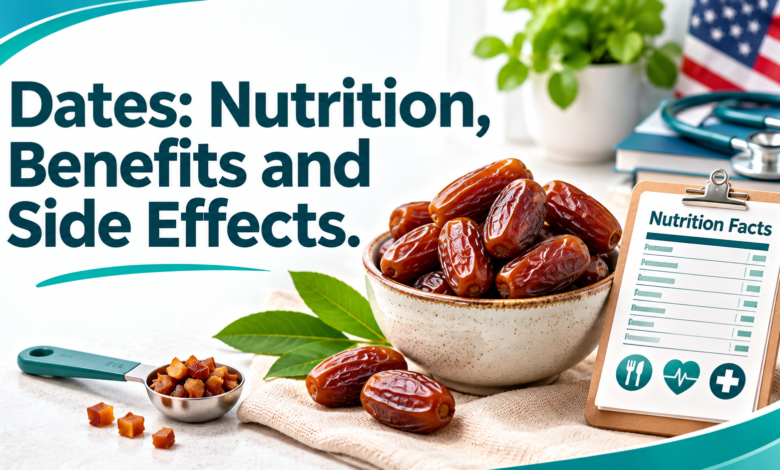
Dates are sweet, chewy fruits that can make a convenient snack or add flavor to breakfast and desserts. But if you are watching blood glucose, managing kidney disease or trying to understand food labels, their concentrated carbohydrate content deserves attention. The health benefits of dates are best understood alongside portion size, overall diet and the strength of available human research. This guide is designed for US readers using Nutrition Facts labels and familiar grocery-store varieties.
Thank you for reading this post, don't forget to subscribe!In This Guide: Varieties, nutrition, digestion, energy, heart health, blood glucose, pregnancy research, side effects, kidney considerations, portion comparisons, shopping, storage, practical meal ideas and frequently asked questions.
What are dates and how are they sold in the US?
Dates grow on the date palm, Phoenix dactylifera. The edible flesh surrounds a hard pit. Medjool dates tend to be large and soft, while Deglet Noor dates are often smaller and firmer. Both are available in American supermarkets, specialty stores and online. Fruit can be sold at different stages of ripeness, and moisture content affects its texture and nutrient concentration. A product labeled dried does not necessarily contain added sugar.
Whole pitted dates are convenient for cooking, but chopped dates, date paste, date syrup and chocolate-coated dates are distinct products. They may have different ingredients and serving sizes. A recipe using date syrup cannot automatically be assigned the fiber content of the same weight of whole fruit. Read the ingredient list and compare the actual serving information.
Dates nutrition facts: calories, carbohydrates and minerals
The USDA FoodData Central Medjool date record provides a useful reference for estimating intake. A pitted fruit weighing approximately 24 grams contains around 66 calories, 18 grams total carbohydrate, 16 grams total sugar, 1.6 grams fiber, 0.4 grams protein, 0.04 grams fat and 167 milligrams potassium. The actual amount depends on the fruit’s weight and composition.
| Nutrient | One Medjool (24 g) | 100 g |
|---|---|---|
| Calories | 66 | 277 |
| Total carbohydrate | 18 g | 75 g |
| Total sugars | 16 g | 66.5 g |
| Fiber | 1.6 g | 6.7 g |
| Protein | 0.4 g | 1.8 g |
| Potassium | 167 mg | 696 mg |
These numbers are rounded reference values, not guaranteed specifications for every package. A 100-gram comparison is useful for evaluating foods on an equal-weight basis, but it is not a suggested serving. For practical meal planning, weigh the edible portion after removing pits or use the package serving weight. Dates contain some magnesium and other micronutrients but are not a concentrated source of protein or a replacement for a balanced meal.
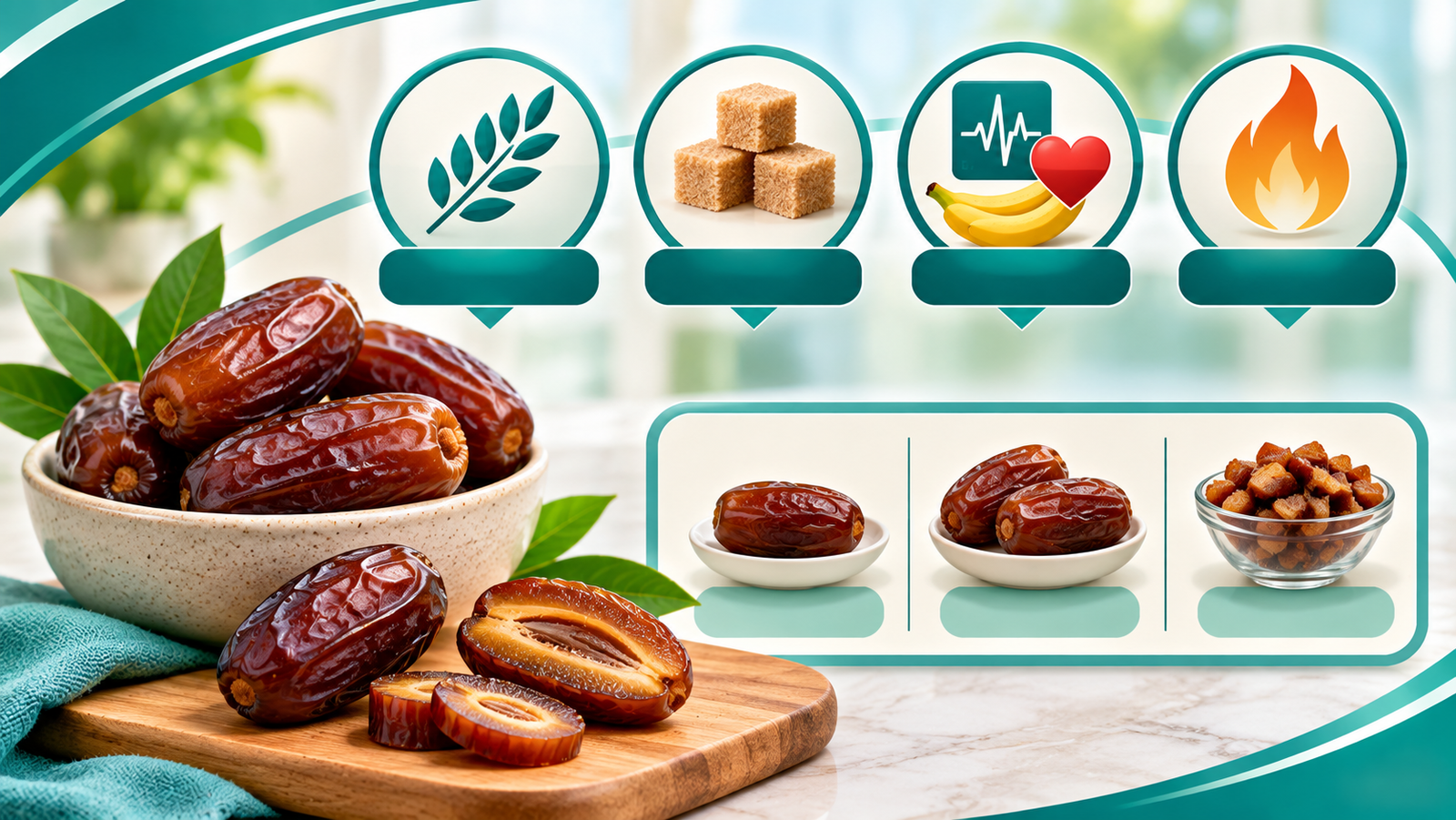
Health benefits of dates: what nutrition can and cannot do
Health benefits of dates for digestion
Dietary fiber helps support normal bowel function as part of an eating pattern with sufficient fluids and a variety of plant foods. Dates contribute some fiber, but a single date provides only a modest amount. Eating several dates to obtain more fiber also increases sugar and energy intake. Beans, oats, vegetables and other fruit can help distribute fiber across meals without relying on one food.
If you are not accustomed to fiber-rich foods, introduce changes gradually. Large portions may cause gas, abdominal discomfort or changes in stool consistency in some people. Persistent constipation, bleeding, severe pain or an unexplained change in bowel habits should be evaluated rather than treated with escalating amounts of dried fruit.
Energy and physical activity
The carbohydrates in dates supply energy. A small portion may be convenient when traveling, preparing for an activity or packing a snack that does not require refrigeration for a short period. Whether that snack is appropriate depends on the timing of meals, activity intensity and personal preferences. Dates are not a stimulant and do not have evidence establishing them as a treatment for fatigue.
For a more substantial snack, combine a measured portion with plain yogurt, nuts or another suitable protein-containing food. The combination adds nutrients and may improve satisfaction, but it also contributes calories and does not guarantee a particular glucose response. Unexplained or persistent fatigue needs medical assessment, especially if accompanied by weakness, breathlessness or other symptoms.
Health benefits of dates for heart health
Potassium supports normal muscle and nerve function, and fiber is part of heart-supportive dietary patterns. Dates can contribute to those nutrients, but it is misleading to infer that eating them will lower blood pressure or prevent a heart attack. Their nutritional composition is different from evidence of a clinical outcome. A review of metabolic research describes mixed findings and limited human intervention data. Prioritize overall dietary quality and prescribed treatment over a specific fruit.
Dates contain plant compounds, including phenolic substances. Laboratory measurements of antioxidant activity do not demonstrate that eating a particular portion prevents cancer, dementia or aging-related disease. Human outcome studies would be needed for such claims. Use dates for their flavor and nutritional contribution rather than as a supplement marketed for disease prevention.

Dates and blood sugar: can people with diabetes eat them?
The American Diabetes Association fruit guidance includes dried fruit among possible choices while emphasizing portion awareness. Dates contain naturally occurring sugar, which still contributes carbohydrate. People with diabetes can discuss suitable amounts with a registered dietitian or diabetes care team, taking their treatment plan and usual meals into account.
A 2022 randomized clinical trial compared date fruit with raisins over 12 weeks in adults with type 2 diabetes. Researchers found no significant improvement in the main measures of glycemic control and no significant deterioration under the studied conditions. The trial was limited in duration and excluded insulin users, so its findings should not be generalized to everyone with diabetes. It does not establish a therapeutic dose or justify unlimited consumption.
A separate 2020 randomized trial examined low-dose daily date intake in adults with prediabetes or type 2 diabetes. Such studies provide useful preliminary evidence but do not establish that dates reverse diabetes. A small human glycemic-index study also examined five date varieties. Glycemic index describes a standardized test response, not the glucose impact of every real-world serving.
For everyday decisions, total carbohydrate and portion size are practical starting points. A person who normally counts carbohydrates should include dates in that calculation using their established care plan. Do not adjust insulin or other medicines independently based on a food article. Read BBH’s fruit and diabetes portion guide and carbohydrate counting guide.
Original BBH content gap: compare date portions by weight
Many food discussions use the number of fruits without specifying the variety or weight. This can create substantial differences in carbohydrate exposure. A practical alternative is to multiply the edible weight by the carbohydrate content per gram. For the USDA Medjool reference, approximately 75 grams of carbohydrate per 100 grams corresponds to about 0.75 grams of carbohydrate per gram of fruit. Check the label when it differs from that reference.
A serving decision should also consider whether dates replace another food or are added to an existing meal. Replacing a sweet topping with a measured portion may produce a different overall intake from adding the same portion to a breakfast that already contains sweetened cereal and juice. Record the actual ingredients rather than assuming a food labeled natural has no carbohydrate effect.
If your clinician has asked you to monitor glucose around meals, record the portion, accompanying foods and measurements according to that plan. Single readings can be influenced by medication timing, activity, illness and other factors. Do not treat a single home observation as proof of a food’s long-term benefit or safety.
Health benefits of dates during pregnancy: evidence and limitations
Research on dates during late pregnancy has attracted interest because some studies report differences in labor outcomes. A systematic review and dose-response meta-analysis examined peripartum studies, and an earlier meta-analysis highlighted weaknesses in the underlying research. Variation in study design, populations and risk of bias limits confidence in a universal recommendation.
These findings do not establish that dates reliably induce labor, prevent cesarean delivery or replace obstetric care. Pregnant people, especially those with gestational diabetes or individualized dietary restrictions, should consult their maternity care team before deliberately increasing consumption for a clinical purpose. Ordinary food use and a planned intervention intended to alter labor are different decisions.
Health benefits of dates and weight management
Dates can satisfy a preference for sweetness and provide fiber, but they are relatively energy dense compared with many fresh fruits. Portioning a few pieces onto a plate can make it easier to recognize intake than eating directly from a large package. No particular fruit guarantees weight loss, and a person who needs to gain weight may have different dietary priorities.
A balanced pattern can include a variety of fruits, vegetables, whole grains, protein foods and suitable fats. For more background, explore BBH’s Mediterranean diet and type 2 diabetes guide. The purpose is to select foods that meet nutritional needs and preferences rather than labeling all sweet foods as forbidden.
Side effects of eating dates and who should use caution
Large portions can contribute substantial carbohydrates and energy. Some people experience digestive discomfort when eating concentrated fruit or increasing fiber rapidly. An individual with a known allergy to dates should avoid them and follow their allergy management plan. Remove pits before eating or blending, and prepare age-appropriate textures for children and anyone with swallowing difficulties.
People with chronic kidney disease may need a personalized potassium plan. The National Kidney Foundation potassium guidance includes dates among foods that may matter when potassium must be limited. Not everyone with kidney disease needs the same restriction. Lab results, medicines, kidney function and clinician guidance determine what is appropriate. Do not impose a restrictive diet solely because a food contains potassium.
Sticky sweet foods can remain on teeth. Consider regular oral hygiene and eating patterns that do not involve frequent prolonged snacking. For people managing blood glucose, the nutritional advantage of whole fruit does not eliminate its carbohydrate content. A person with swallowing difficulties should ask their clinician about suitable textures.
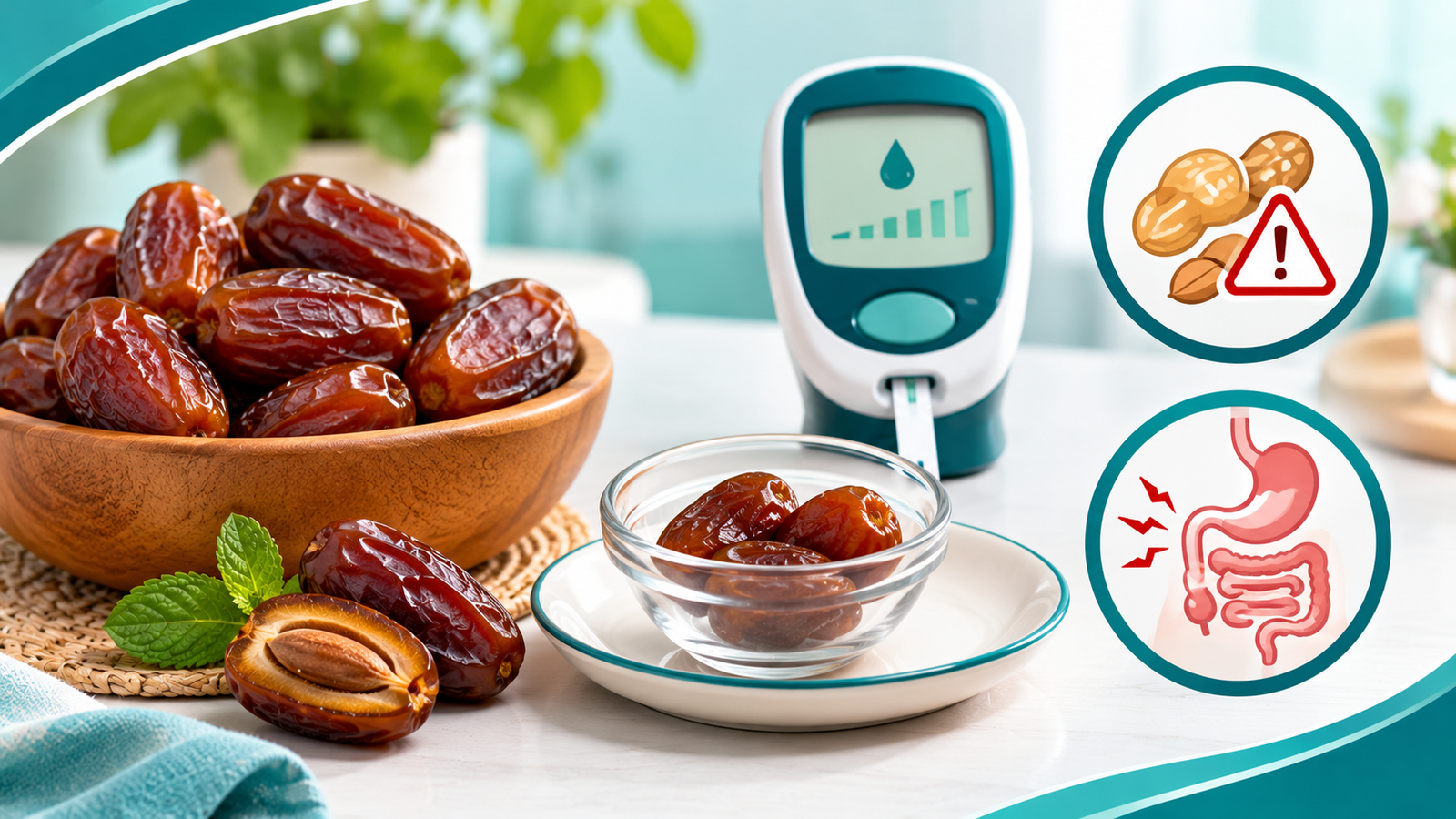
How many dates to eat per day?
There is no universal evidence-based number that suits every person. Start with the portion that fits your meal plan and consider the weight, calorie content and carbohydrate amount. For example, one 24 g Medjool date can be a measured ingredient in a snack, but this is not a prescription. Some people may choose a smaller portion or avoid dates because of their clinical needs.
When comparing fruit choices, consider fresh fruit as well as dried fruit. Fresh raspberries and blackberries provide a different combination of water, fiber and carbohydrate per serving. BBH’s raspberry nutrition guide and blackberry nutrition guide provide additional options.
How to buy, store and use dates in US kitchens
Read the serving weight, total carbohydrates, total sugars and added sugars on the package. The FDA Nutrition Facts guide explains the distinction between total and added sugars. Plain whole dates may contain no added sugar while still containing considerable naturally occurring sugar. Coated and filled products may contain additional ingredients.
Choose intact fruit from reputable suppliers and follow the manufacturer’s storage instructions. Keep packages sealed and check for signs of spoilage. Discard fruit with visible mold or unusual signs of deterioration. Remove pits carefully, even in products advertised as pitted, because occasional fragments can remain.
Try chopping a measured portion into plain oatmeal, adding it to unsweetened yogurt, or using it in a savory salad with suitable ingredients. In baking, date paste may provide sweetness and some fiber, but it is not a calorie-free sweetener. Compare the completed recipe per serving rather than assigning the nutritional properties of one date to an entire dish.
Frequently asked questions
Are dates healthier than refined sugar?
Whole dates supply fiber and micronutrients alongside sugar, while refined sugar primarily supplies energy. That difference does not make large portions automatically appropriate. Consider total intake and how the food is used.
Can dates cure anemia or improve brain function?
No convincing clinical evidence establishes dates as a treatment for anemia or cognitive disease. Iron deficiency requires evaluation and appropriate treatment. A diverse diet supports overall nutrition.
Can I eat dates on an empty stomach?
There is no established requirement to eat dates at a particular time. Choose a timing and portion appropriate to your dietary needs and tolerance.
Do dates contain added sugar?
Plain unsweetened whole dates typically have no added sugar, but naturally occurring sugars remain. Check the label for sweetened or coated products.
Are the health benefits of dates proven for everyone?
Their nutrient composition is established, but specific clinical outcomes vary in evidence strength. Results from small trials cannot be assumed to apply to all ages, conditions and treatment regimens.
Conclusion
The health benefits of dates are most useful when considered in the context of the whole diet. Enjoy their flavor if appropriate, measure portions, distinguish natural sugar from added sugar and avoid relying on dates to treat disease. People with special medical needs should seek individualized guidance.
BBH support page: Weight, Nutrition and Metabolic Health.
Editorial disclosure: Research abstracts and US nutrition guidance consulted November 29, 2026. General education only, not individualized nutrition or medical advice.