Figs: Nutrition, Benefits and Side Effects
Fig Health Benefits, Nutrition and Risks

A fresh fig and a handful of dried figs can look like interchangeable snacks, yet the amount of carbohydrate in each can be very different. If you are managing diabetes, trying to improve constipation or deciding whether soaked figs are worth adding to breakfast, serving size matters more than many online claims suggest. Figs provide useful nutrients, but the research behind their medicinal reputation deserves careful interpretation.
Thank you for reading this post, don't forget to subscribe!Understanding fig health benefits means distinguishing fresh fruit, dried fruit, paste and herbal extracts. This guide is written for US readers, using American Nutrition Facts conventions, household serving examples and federal health resources. It explains what human studies actually measured, how to compare equivalent carbohydrate portions and when digestive symptoms need medical attention. It does not assume that one fruit can meet every nutritional or clinical need.
Independent Clinical Review
Review status: Pending independent clinical review. This article draws on the research and public guidance linked below. BBH will add the reviewer’s name, credentials, and review date once an independent review is documented.
Medical Safety & Disclaimer
This article provides general nutrition education, not diagnosis or treatment. Follow individualized advice if you have diabetes, kidney disease, digestive disorders or food allergies. Do not change prescribed medication or delay medical assessment because of fig research.
Quick Answer
A medium fresh fig (50 g) provides approximately 37 calories, 9.6 g total carbohydrate and 1.5 g fiber. A 30 g portion of dried figs supplies about 75 calories, 19.2 g carbohydrate and 2.9 g fiber. Limited human studies support further research on constipation, but figs are not a proven treatment for diabetes or chronic digestive disease.
In This Guide
What you will learn
Fresh and dried fig nutrition • Constipation trials • Equal-carbohydrate comparisons • Soaked figs • Blood sugar • Heart and bone health • Fruit versus leaf preparations • Digestive and allergy precautions • US shopping tips • FAQs
1. Fig nutrition facts: Fresh versus dried fruit
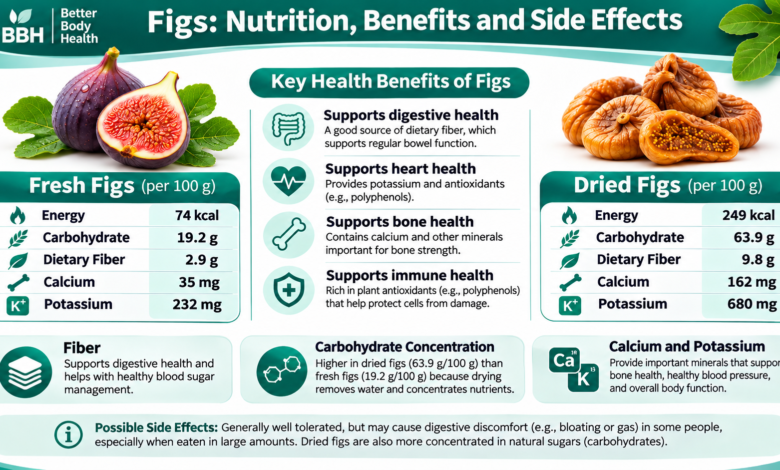
The common fig, Ficus carica, contains a fleshy edible structure surrounding many tiny flowers that develop inside it. The fruit provides carbohydrate, water, fiber and minerals. Drying removes much of the water, concentrating energy and nutrients per unit of weight. This makes a weight-based comparison more informative than comparing one fresh fig with one dried fig without specifying their sizes.
| Nutrient | Fresh, 100 g | Dried, 100 g |
|---|---|---|
| Energy | 74 kcal | 249 kcal |
| Total carbohydrate | 19.18 g | 63.87 g |
| Total sugars | 16.26 g | 47.92 g |
| Dietary fiber | 2.9 g | 9.8 g |
| Protein | 0.75 g | 3.3 g |
| Fat | 0.30 g | 0.93 g |
| Calcium | 35 mg | 162 mg |
| Potassium | 232 mg | 680 mg |
Sources: USDA FoodData Central, raw figs (173021) and USDA FoodData Central, dried figs (174665). These are USDA SR Legacy reference values, rounded where appropriate. Cultivars, moisture content and storage can influence the actual amounts. The comparison is between equal weights of edible food, not equivalent household portions. The US total carbohydrate figure includes fiber and sugars.
Which nutrients explain fig health benefits?
Fiber contributes to dietary adequacy and normal bowel function. Potassium supports normal nerve and muscle activity, while calcium contributes to bone structure and several physiological processes. Figs also contain plant polyphenols. These nutrient functions do not prove that the fruit treats osteoporosis, hypertension or inflammatory disease. A varied dietary pattern remains important because figs supply relatively little protein and fat.
A 30 g serving of dried figs contributes about 2.9 g fiber, roughly one tenth of the US label Daily Value of 28 g. It also provides approximately 49 mg calcium and 204 mg potassium. The Daily Value is a general labeling reference, not an individualized prescription. A much larger serving would provide more of these nutrients but also substantially more carbohydrate and energy.
2. Fig health benefits for constipation: What clinical studies show
Constipation can involve infrequent stools, hard stools, difficult evacuation or a feeling that bowel emptying is incomplete. A food intervention might help one symptom without improving others. For that reason, it is important to examine the outcomes in fig research instead of relying on the broad statement that figs relieve constipation.
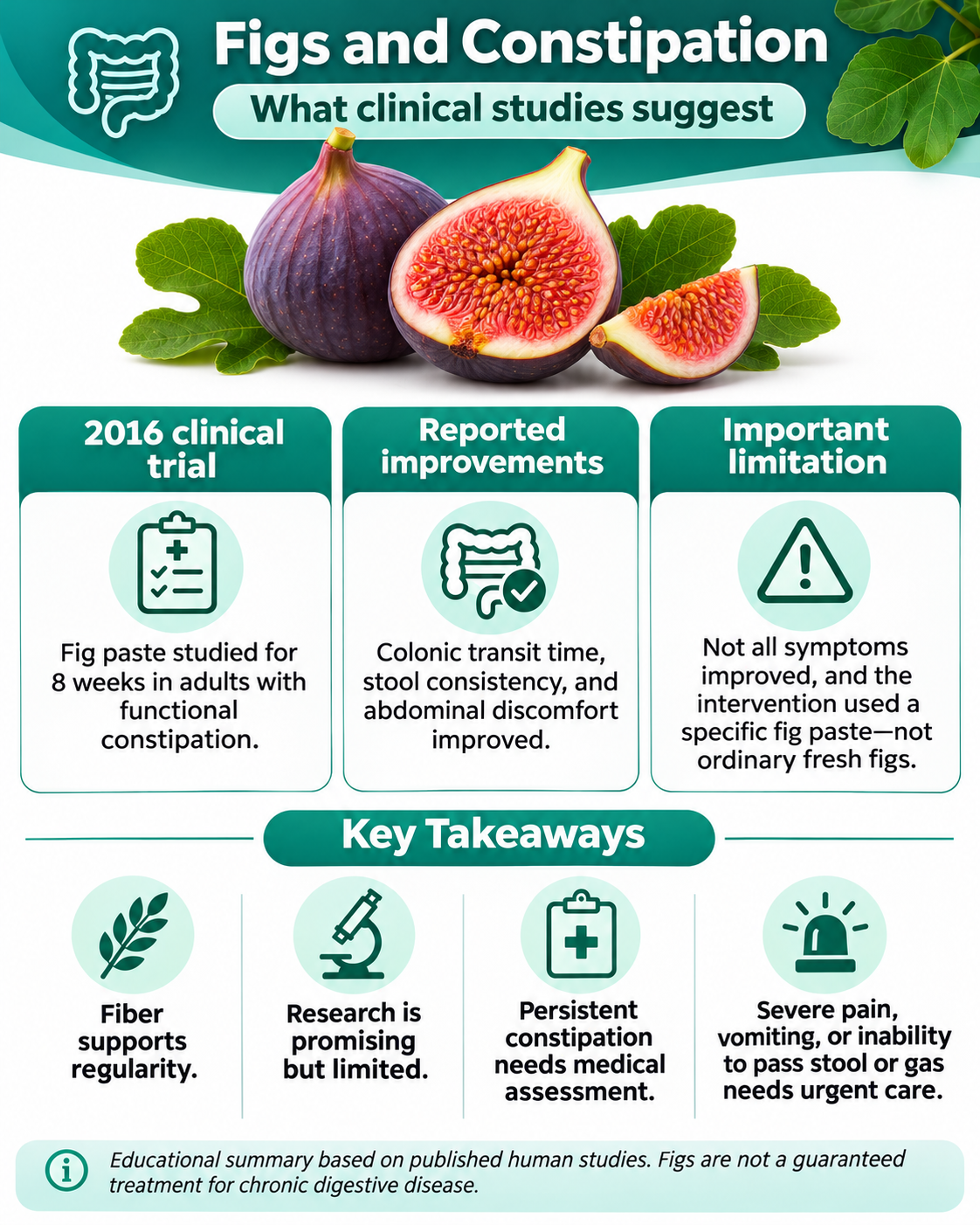
The 2016 randomized fig paste trial tested fig paste against placebo for eight weeks in adults with functional constipation. A later 2021 systematic review of constipation treatments summarizes the findings: colonic transit time, stool consistency and abdominal discomfort improved, but stool frequency, straining and some other symptoms did not show significant benefit. The intervention used a specific preparation, not an ordinary serving of fresh figs.
The 2019 randomized IBS-C trial investigated fig consumption in adults with constipation-predominant irritable bowel syndrome. The trial reported favorable changes in several symptoms. The evidence remains limited by the number of studies, particular preparations and research populations. The 2023 review of fig research reviews the broader literature, including experiments that were not conducted in humans.
These findings justify additional research, not a promise that everyone with constipation will benefit from a prescribed number of figs. In particular, a person with IBS-C may experience abdominal pain or bloating even when stool consistency improves. A useful outcome is better overall function and comfort rather than bowel frequency alone.
Digestive Safety
Persistent constipation or new bowel changes deserve assessment, especially with bleeding, unexplained weight loss or significant pain. Severe abdominal pain with vomiting or inability to pass stool or gas may require urgent care. See NIDDK constipation symptoms and causes.
3. Content gap: Fig health benefits at equal carbohydrate portions
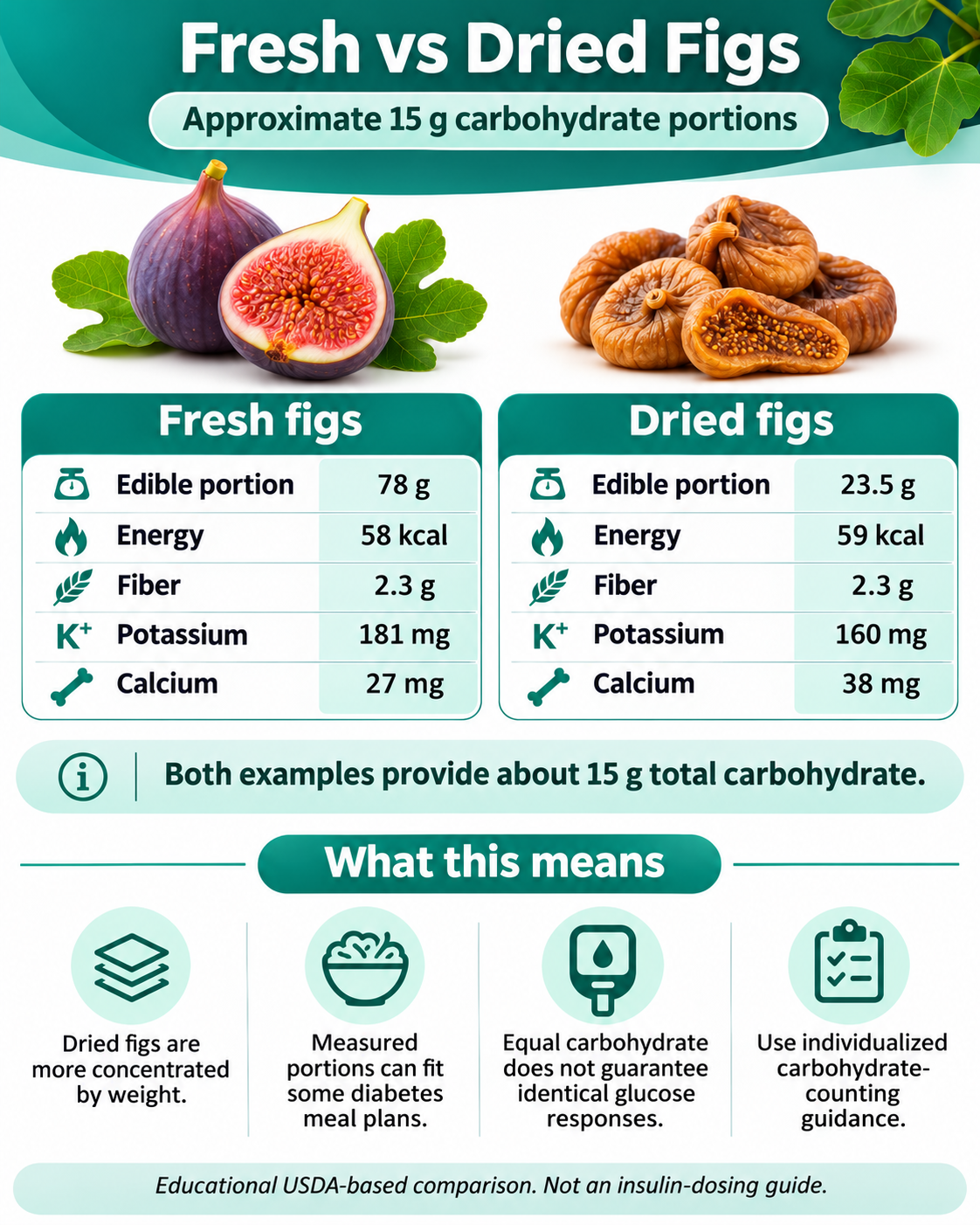
Nutrition articles frequently compare fresh and dried fruit per 100 g. That comparison describes concentration but may not reflect how people actually eat them. A second comparison holds total carbohydrate approximately constant, making it easier to understand the role of serving weight.
| Approximate 15 g carbohydrate portion | Fresh figs | Dried figs |
|---|---|---|
| Edible weight | 78 g | 23.5 g |
| Energy | 58 kcal | 59 kcal |
| Fiber | 2.3 g | 2.3 g |
| Potassium | 181 mg | 160 mg |
| Calcium | 27 mg | 38 mg |
These estimates are calculated from the two USDA records. They show that dried figs are more concentrated by weight, but equal-carbohydrate portions can have fairly similar energy and fiber. The comparison does not establish identical glucose responses, fullness or absorption. Food structure, chewing, meal composition and individual physiology still matter.
This approach can also prevent an unnecessary belief that dried fruit is always forbidden in diabetes. A carefully measured serving may fit a personalized plan. Conversely, a large handful can supply substantially more carbohydrate than expected. Read Fruit and Diabetes: Portions and Choices and Carb Counting for Diabetes: Beginner Guide for additional meal-planning guidance.
Practical Portion Guide
Compare actual edible weights and total carbohydrate rather than fruit counts. The approximately 15 g examples are educational carbohydrate comparisons, not recommended insulin doses or mandatory serving sizes.
4. Figs and blood sugar: A US meal planning guide
The natural sugars in figs contribute to total carbohydrate and can raise glucose. The word natural does not mean carbohydrate-free. Fiber can influence digestion, but it does not cancel all other carbohydrates. Many people with diabetes can include figs in an individualized meal plan, with portion and preparation considered alongside other foods.
| Food and edible portion | Approximate total carbohydrate |
|---|---|
| Fresh fig, 50 g | 9.6 g |
| Fresh figs, 100 g | 19.2 g |
| Dried figs, 15 g | 9.6 g |
| Dried figs, 30 g | 19.2 g |
| Dried figs, 50 g | 31.9 g |
Why the net carbohydrate calculation is not a medication rule
US nutrition labels include fiber in total carbohydrate. Some commercial products subtract fiber to advertise a lower net carbohydrate figure. This arithmetic does not automatically correspond to an individual’s clinical carbohydrate-counting method. Follow the instructions from your diabetes care team, especially if you take insulin or medicines that can cause hypoglycemia.
Consider the complete meal. Fresh figs served with plain yogurt may have a different nutrient profile from dried figs combined with honey and sweetened cereal. Replacing another carbohydrate-rich food is also different from adding figs to the same meal. Glucose monitoring, if recommended, can help inform individualized discussion with your care team.
Blood Sugar Safety
Do not use figs or fig leaf products to replace glucose-lowering medication. For hypoglycemia, follow your prescribed fast-acting carbohydrate and emergency instructions rather than relying on high-fiber fruit.
5. Fig health benefits and the soaked-fig misconception
Soaking dried figs softens their texture and increases their water content. The resulting fruit may weigh more even though the original portion contains approximately the same starting nutrients. Some soluble components can move into soaking water, but the amount depends on the method and has not been standardized for home carbohydrate counting.
For example, if you begin with 30 g dried figs, the starting portion contains about 19.2 g carbohydrate. Adding water does not itself remove carbohydrate. Discarding soaking water may change the composition somewhat, but it does not justify counting the fruit as sugar-free. If you drink the soaking water too, any dissolved sugars remain part of the consumed mixture.
There is no established need to soak figs overnight to obtain a special clinical benefit. Some people prefer the softer texture, while others prefer fresh or unsoaked dried fruit. For an individualized diabetes plan, it is sensible to record the original dry weight unless a reliable product-specific nutrient analysis indicates otherwise. Refrigerate fruit during prolonged soaking and use clean containers.
6. Fig health benefits for heart health and mineral intake
The 2011 California Mission fig lipid trial examined adding 120 g dried California Mission figs per day to the diets of adults with elevated LDL cholesterol. It did not establish a cholesterol-lowering effect. The amount tested was considerably larger than a typical small dried-fruit snack, and it should not be interpreted as a recommended daily intake.
A related 2015 mineral intake and food displacement trial found greater reported calcium and potassium intake during a fig-supplemented dietary period. However, adding a food can displace other foods or change total intake. Higher mineral intake does not demonstrate improved bone density, prevention of fractures or correction of a mineral deficiency. Those outcomes require separate studies.
A 2020 mixed dried fruit randomized trial tested a mixture of dried plums, figs, dates and raisins against a matched snack. It did not establish superior lipid outcomes between the interventions. Because several dried fruits were combined, the findings cannot be attributed to figs alone. For a broader dietary pattern, see Mediterranean Diet and Type 2 Diabetes.
Evidence Literacy
A nutrient contribution, a laboratory measurement and a meaningful clinical outcome are different types of evidence. Look for the specific outcome studied before accepting a disease-prevention claim.
7. Figs and digestive health: When more fiber is not better
The NIDDK constipation nutrition advises increasing dietary fiber gradually. A sudden increase in dried fruit can lead to gas, bloating or loose stools, particularly in people sensitive to fermentable carbohydrates. Adequate fluid intake can support bowel function, but people with prescribed fluid restrictions should follow their clinical plan.
A person experiencing constipation may have medication-related effects, pelvic floor dysfunction or another condition that does not respond adequately to additional fiber. In IBS-C, pain and bloating may be as important as stool frequency. Do not keep increasing figs if symptoms worsen. Compare Kiwi: Nutrition, Benefits and Side Effects and Pear: Nutrition, Benefits and Side Effects for other fruit-related evidence and tolerance considerations.
8. Whole figs versus fig leaves, extracts and processed products
Research on fig leaves, leaf tea or concentrated extracts cannot be transferred automatically to edible fruit. The compounds present and the doses used differ. Some studies examine animals or laboratory mechanisms rather than clinical outcomes in people. Evidence for a safe and effective dose of an herbal product must be evaluated separately.
| Product | Practical consideration |
|---|---|
| Fresh figs | Water-rich fruit; measure edible weight. |
| Unsweetened dried figs | Concentrated carbohydrate by weight. |
| Soaked dried figs | Count original dry portion unless reliable data indicate otherwise. |
| Fig jam or spread | Check added sugars and serving size. |
| Fig bars and cookies | Check the entire product, not just fruit filling. |
| Leaf tea or extracts | Separate safety and efficacy evidence needed. |
US labels distinguish added sugars from total sugars. The FDA added sugars guidance and FDA Nutrition Facts label guide explain these categories. Plain dried fruit can contain substantial naturally occurring sugars even when the label reports zero added sugars. If you consume two label servings, the nutrient amounts generally double. Check the actual package rather than assuming every brand has the same composition.
9. Fig side effects and medical precautions
Kidney disease and potassium
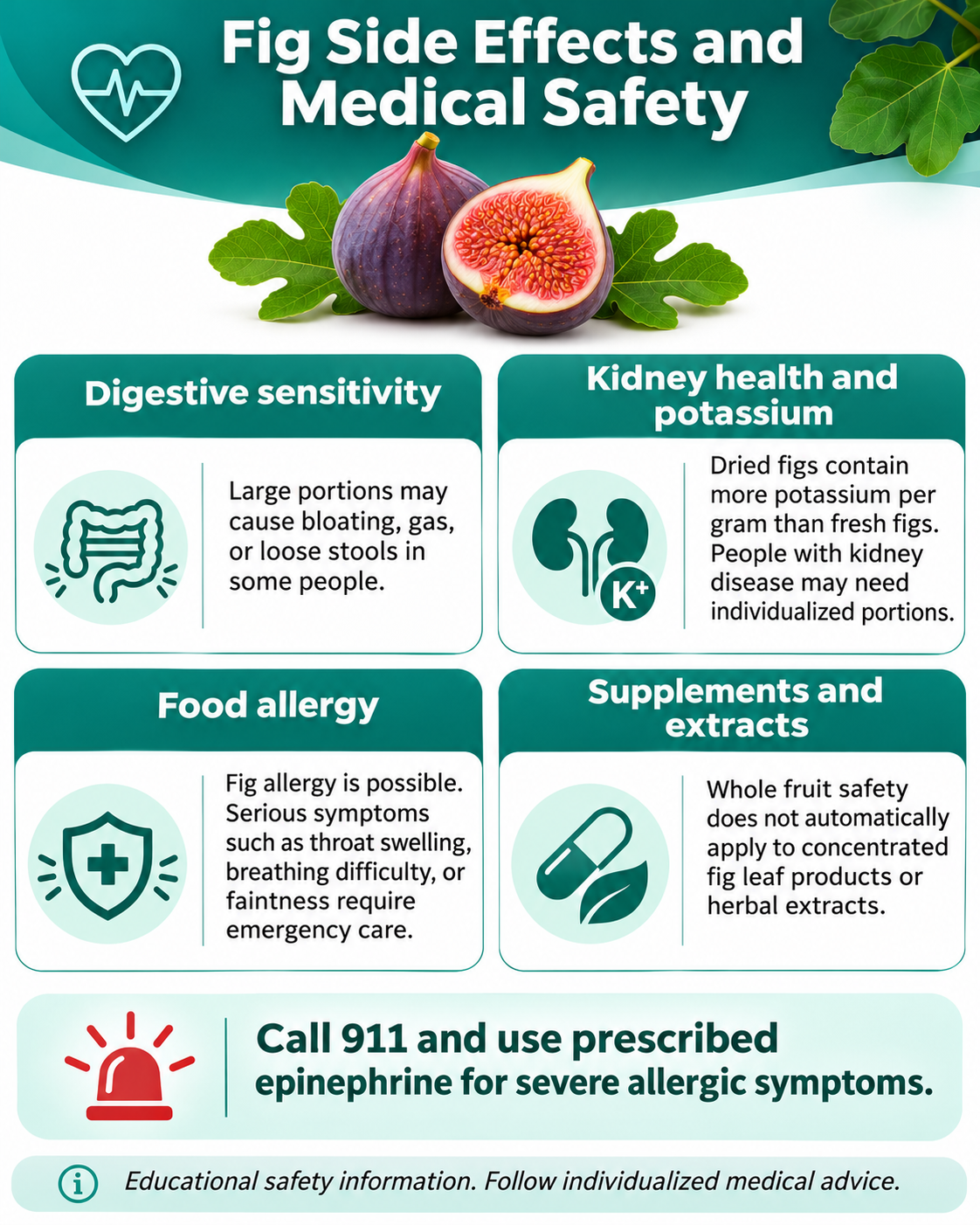
The NIH potassium fact sheet explains that some people with kidney disease or certain medication exposures are susceptible to high blood potassium. Dried figs contain more potassium per gram than fresh figs. Whether either belongs in a person’s diet depends on individual laboratory results and treatment. A renal dietitian can help determine suitable portions rather than automatically banning all fruit.
Ficus-related allergy and skin exposure
Fig allergy is possible, including reactions associated with sensitization to the ornamental weeping fig, Ficus benjamina. The 2004 Ficus-fruit allergy study documents cross-reactivity in affected individuals. This is not identical to saying that everyone with natural rubber latex allergy will react to figs. Fresh and dried figs may both cause reactions in susceptible people. Do not deliberately test a different preparation after a suspected serious reaction.
Sap from fig trees can also irritate skin; avoid unnecessary contact with sap when handling plants. Food allergy symptoms such as throat swelling, breathing difficulty or faintness require emergency assistance. In the US, call 911 and use prescribed epinephrine when indicated by the allergy action plan.
Medical Safety
Discuss concentrated fig products with your clinician if you take prescription medication or are pregnant or breastfeeding. Seek emergency care for serious allergic symptoms. Ordinary food use does not establish the safety of herbal extracts.
10. How to enjoy fig health benefits in everyday US meals
Choose fresh figs that are intact and free of spoilage, rinse them before eating and refrigerate as appropriate. Dried figs can be useful when fresh fruit is unavailable. Follow storage instructions and measure a portion from the package rather than repeatedly eating directly from a large bag. Pair fruit with other foods that suit your nutritional needs.
For a practical shopping comparison, check the price of a realistic serving rather than only the price per pound. Dried fruit contains less water and may provide more servings per package. A small measured portion with plain yogurt or oatmeal can be convenient. Fresh figs may be preferable when you want a larger food volume at similar carbohydrate exposure.
11. Frequently asked questions
Can I eat figs every day?
Figs may fit a varied diet if tolerated. No universal daily amount is required.
Are dried figs better than fresh figs?
Neither is universally better. Compare realistic portions, nutrient concentration and individual needs.
Do figs cure constipation?
No. Limited clinical studies suggest possible benefits for selected symptoms. Persistent or concerning symptoms need assessment.
Does soaking figs remove sugar?
No reliable home method establishes sugar-free soaked figs. Water changes weight and texture.
Can people with diabetes eat figs?
Many can include measured portions using an individualized carbohydrate plan.
Conclusion
The most dependable fig health benefits come from nutrient intake and dietary variety. Constipation research is promising but preparation-specific, and evidence does not establish figs as a treatment for diabetes or heart disease. Compare equivalent portions, consider digestive and allergy tolerance and continue necessary medical care.
BBH Key Takeaway
Enjoy figs as food rather than medicine. Use edible weight, read US nutrition labels, distinguish whole fruit from herbal extracts and seek professional advice for persistent symptoms.
Scientific references
USDA FoodData Central, raw figs (173021) • USDA FoodData Central, dried figs (174665) • 2016 randomized fig paste trial • 2021 systematic review of constipation treatments • 2019 randomized IBS-C trial • 2023 review of fig research • 2011 California Mission fig lipid trial • 2015 mineral intake and food displacement trial • NIDDK constipation nutrition • FDA added sugars guidance • NIH potassium fact sheet • 2004 Ficus-fruit allergy study • NIDDK constipation symptoms and causes • 2020 mixed dried fruit randomized trial • FDA Nutrition Facts label guide
Related reading on BBH
Explore: Physical Health → Weight, Nutrition & Metabolic Health support page