Nectarines: Nutrition, Benefits and Side Effects
Nectarine Health Benefits, Nutrition and Risks

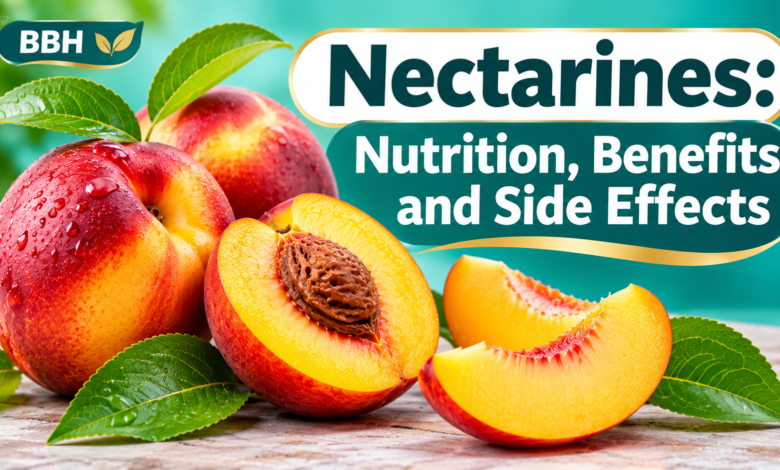
A ripe nectarine offers juicy sweetness and a smooth skin without the fuzz associated with peaches. It is an approachable summer fruit for American households, but the questions readers ask about it are not always simple. Can a person with diabetes eat a whole nectarine? Does removing its skin eliminate allergy risk? Is a white nectarine necessarily healthier than a yellow one? Answering these questions requires separating nutrient measurements from assumptions about disease prevention.
Thank you for reading this post, don't forget to subscribe!Understanding nectarine health benefits starts with the actual edible portion, the form in which the fruit is purchased, and the person’s medical needs. This USA-focused guide uses USDA reference values, human research and federal health resources. It does not treat studies of fruit consumption generally as proof that nectarines alone prevent or cure a particular disease.
Independent Clinical Review
Review status: Pending independent clinical review. This article draws on the research and public guidance linked below. BBH will add the reviewer’s name, credentials, and review date once an independent review is documented.
Medical Safety & Disclaimer
This article is for general nutrition education. Follow individualized medical advice for diabetes, kidney disease, food allergies and digestive disorders. Do not eat stone-fruit kernels or replace prescribed treatment with fruit.
Quick Answer
A 100 g edible portion of raw nectarine supplies approximately 44 calories, 10.55 g carbohydrate and 1.7 g fiber in the USDA SR Legacy reference. A medium fruit weighing approximately 142 g provides roughly 62 calories and 15 g total carbohydrate. Nectarines can fit a varied diet, but they are not a treatment for diabetes, and peach-related allergies require particular caution.
In This Guide
Topics covered
Nutrition facts • Nectarine versus peach • Vitamin C and fiber • Carbohydrate portions • Human research • Weight and cardiovascular claims • Fresh, canned and dried fruit • Allergy and digestive safety • Shopping and storage • FAQs
1. Nectarine nutrition facts: What one serving provides
The USDA reference for raw nectarines describes the edible portion, including skin but excluding the pit. A medium fruit is an approximate size, not a standardized retail unit. The table uses one named reference dataset so that values are calculated consistently rather than mixing nutrient figures from different samples or database releases.
| Nutrient | Per 100 g | Per 142 g edible portion |
|---|---|---|
| Energy | 44 kcal | 62 kcal |
| Carbohydrate | 10.55 g | 15.0 g |
| Total sugars | 7.89 g | 11.2 g |
| Dietary fiber | 1.7 g | 2.4 g |
| Protein | 1.06 g | 1.5 g |
| Total fat | 0.32 g | 0.45 g |
| Potassium | 201 mg | 285 mg |
| Vitamin C | 5.4 mg | 7.7 mg |
Source: USDA FoodData Central: raw nectarines, SR Legacy. Values are rounded. USDA maintains multiple food composition datasets, and newer Foundation records can report different nutrient values from the historical SR Legacy entry. Differences in cultivars, samples, growing conditions and analytical methods mean that an individual fruit will not necessarily match the table exactly.
Which nutrients explain nectarine health benefits?
Nectarines provide water, fiber, small amounts of vitamin C and potassium, and naturally occurring sugars. Their relatively low energy density may make them an appealing snack. They are not a substantial protein source, and a single fruit does not supply all the nutrients required for a meal. Comparing actual serving sizes is more useful than counting the number of nutrients in a promotional list.
The same principle applies to antioxidant compounds. A laboratory measurement of a plant compound or antioxidant activity describes a property of a sample. It cannot by itself establish that eating a particular fruit reduces inflammation, protects the brain or prevents cancer in people.
2. Nectarine health benefits versus peach nutrition
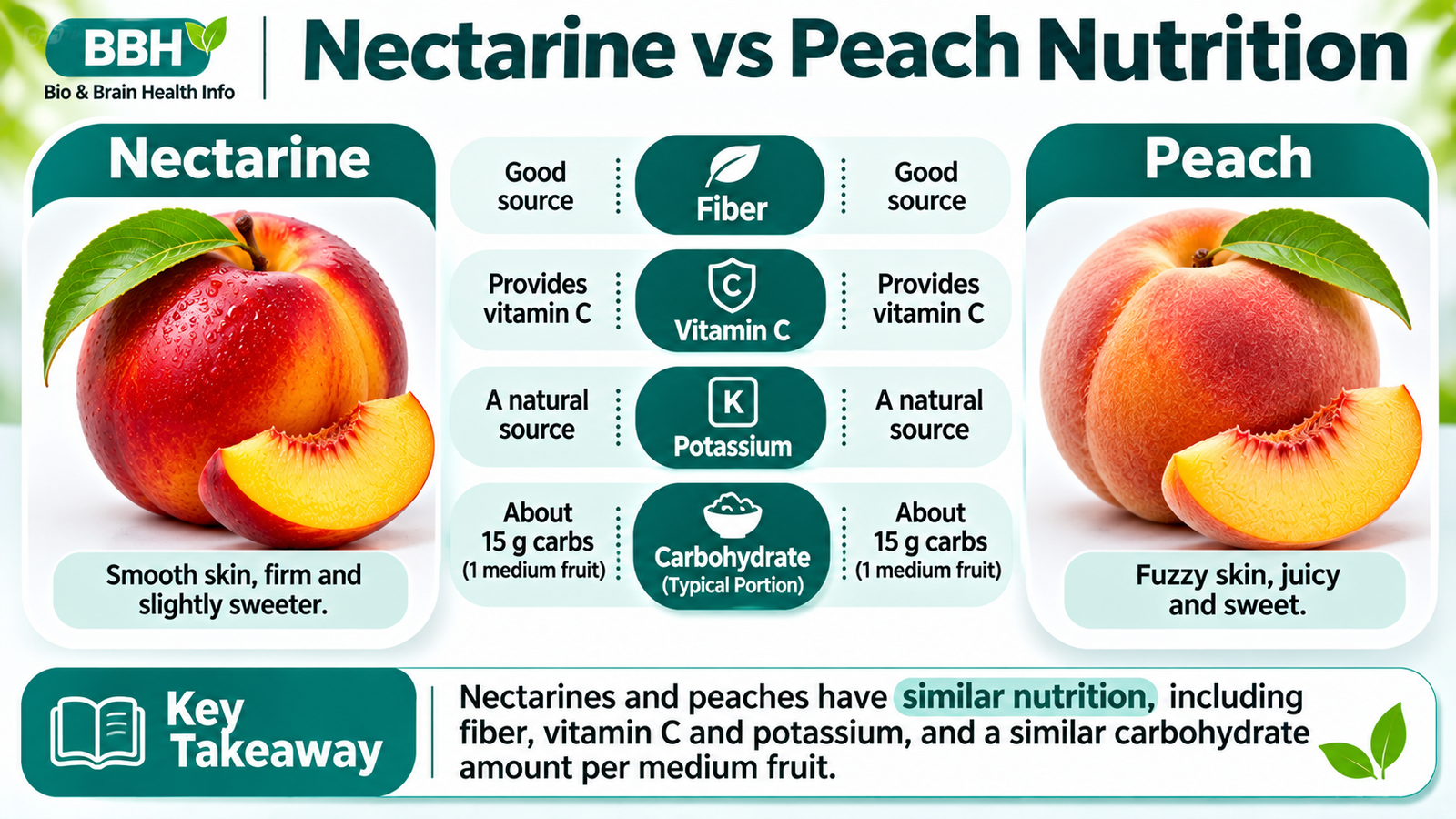
Nectarines and peaches belong to the same species, Prunus persica. Their familiar skin difference reflects genetic variation, rather than nectarines being a cross between a peach and a plum. Both are stone fruits, meaning the edible flesh surrounds a hard pit. They share broad nutritional characteristics but individual cultivars vary.
The smooth surface of a nectarine is a sensory advantage for some consumers. Others prefer a peach’s texture or aroma. There is no universal reason to choose one over the other for medical benefit. Yellow and white flesh varieties also differ in flavor and pigment composition. Flesh color alone does not quantify vitamin intake or establish superiority.
| Feature | Nectarine | Peach |
|---|---|---|
| Skin | Typically smooth | Typically fuzzy |
| Botanical species | Prunus persica | Prunus persica |
| Edible portion | Flesh and skin if tolerated | Flesh and skin if tolerated |
| Allergy consideration | Shared allergenic proteins possible | Shared allergenic proteins possible |
| Nutrition | Varies by cultivar and serving | Varies by cultivar and serving |
Choose according to taste, affordability and tolerance. For comparison with another stone fruit, see Apricots: Nutrition, Benefits and Side Effects. For someone with a known stone-fruit allergy, however, the botanical relationship is medically relevant. Switching fruit on the basis of skin texture is not a reliable safety strategy.
3. Nectarine health benefits and blood sugar: Realistic portions
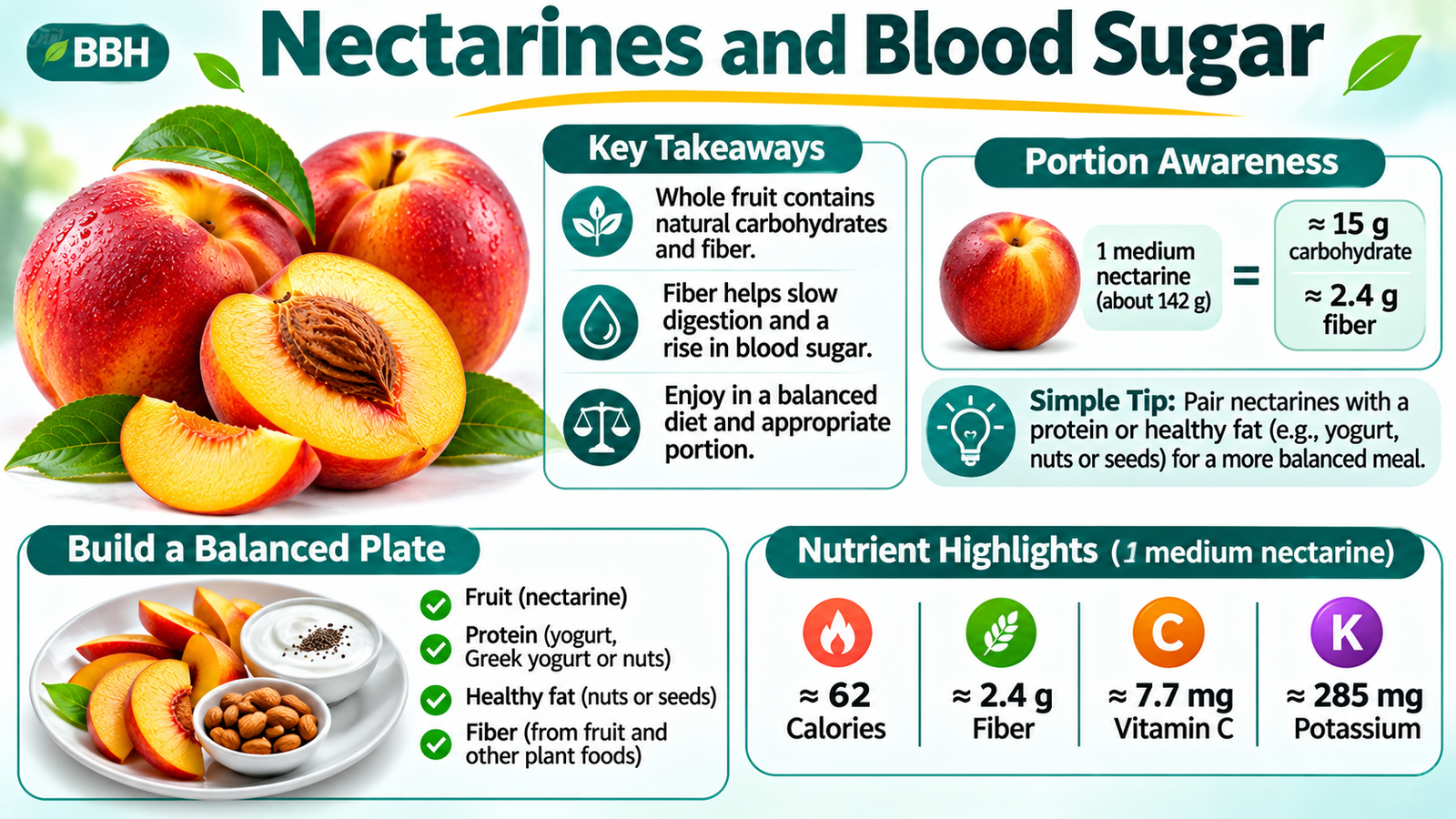
A useful US carbohydrate-counting example is the approximate 142 g edible portion in the nutrition table, which provides about 15 g total carbohydrate. The pit must not be counted as edible weight. A large nectarine can supply substantially more carbohydrate than a smaller one, even though both are described as one fruit.
| Edible weight | Approximate carbohydrate | Approximate energy |
|---|---|---|
| 100 g | 10.6 g | 44 kcal |
| 142 g | 15.0 g | 62 kcal |
| 200 g | 21.1 g | 88 kcal |
These calculations describe food composition, not a prescribed snack or a prediction of a person’s glucose response. The response depends on insulin production, medication, physical activity, the rest of the meal and other individual factors. Fiber is included in total carbohydrate on US labels; follow the counting method recommended by your diabetes care team rather than automatically subtracting it.
Fresh nectarines may be included in a meal with yogurt, nuts or another suitable food. Adding a protein or fat source changes the complete meal composition, but it does not cancel the fruit’s carbohydrate. A sweetened nectarine smoothie may contain substantially more carbohydrate because of additional fruit, juice or sweetener. Review Fruit and Diabetes: Portions and Choices and Carb Counting for Diabetes for individualized planning principles.
Blood Sugar Safety
Nectarines are not a diabetes treatment. Do not adjust insulin or other prescribed medicines on the basis of these examples. Treat low blood sugar according to your established fast-acting carbohydrate plan.
4. Nectarine health benefits: What human research establishes
The Muraki et al., BMJ 2013: fruit intake and type 2 diabetes examined fruit intake in three large US prospective cohorts. Researchers observed associations between intake of certain whole fruits and a lower incidence of type 2 diabetes, whereas fruit juice was associated with higher incidence. Participants reported their dietary habits over time, and statistical adjustment was used to address potential confounding.
This study is valuable because it concerns long-term health outcomes rather than a single laboratory measurement. However, observational associations cannot establish that one food directly causes a reduction in risk. People who consume more whole fruit may also differ in other behaviors and health characteristics. Importantly, the results do not establish a nectarine-specific effect or a therapeutic dose for people who already have diabetes.
This distinction is a central evidence gap in many fruit articles. A study may examine a broad fruit category or group together closely related fruits. Reporting its results under a single fruit’s name without explaining the exposure creates an impression of precision that the research does not support. Readers should look for the food actually studied, the comparator and whether the outcome was a disease diagnosis, a biomarker or a short-term physiological response.
5. Nectarine health benefits for digestion and vitamin intake
Dietary fiber contributes to normal bowel function. One medium nectarine supplies approximately 2.4 g fiber, or about 9% of the US label Daily Value of 28 g. This is a useful contribution, but it is not a complete daily fiber supply. Whole grains, legumes, vegetables and other fruits can provide the remainder in a varied eating pattern.
The NIDDK constipation nutrition guidance discusses sufficient fiber and fluid intake for constipation management. Increasing fiber gradually may be better tolerated than abruptly consuming several additional servings of fruit. People with medical fluid restrictions or prescribed diets should follow individual advice. A fruit’s water content does not remove the need for appropriate hydration.
Nectarines also contribute vitamin C. The NIH vitamin C fact sheet describes its roles in collagen production, immune function and absorption of nonheme iron. A medium nectarine supplies roughly 8.5% of the adult label Daily Value of 90 mg in the named USDA reference. Calling it a concentrated vitamin C treatment would overstate that contribution. Fruit variety is a more dependable approach to dietary adequacy.
6. Nectarine health benefits and weight or heart-health claims
Raw nectarines contain relatively little fat and provide about 44 calories per 100 g. Choosing one in place of a more energy-dense snack can reduce the energy content of that particular eating occasion. Adding the fruit to an unchanged diet, by contrast, does not automatically reduce calorie intake or body weight. No individual food reliably targets abdominal fat.
The NIH potassium fact sheet explains potassium’s importance for nerve transmission, muscle contraction and normal physiological function. Nectarines supply a modest amount of potassium. The presence of potassium does not demonstrate that a nectarine lowers an individual’s blood pressure by a specific amount. Evidence for broader fruit-rich dietary patterns should not be presented as a clinical trial of isolated nectarines.
A balanced eating pattern remains the relevant context. See Mediterranean Diet and Type 2 Diabetes for a discussion of Mediterranean-style meals. People with kidney disease or medicines affecting potassium balance may have individual restrictions. They should compare portions within a clinician-directed plan instead of assuming all fruit is either universally beneficial or prohibited.
Kidney Safety
If you have an individualized potassium restriction, ask your renal dietitian or clinician how nectarines fit your dietary plan. Do not alter prescribed medicines or supplements based on the fruit’s potassium content.
7. Content gap: Comparing fresh, canned, frozen and dried nectarines
Food preparation can change serving size and nutrient concentration. Fresh and frozen unsweetened fruit can be convenient choices, but a frozen product may contain added ingredients. Canned fruit may be packed in water, juice or syrup. The liquid can contribute sugar and carbohydrate depending on the product and how it is served. Drying removes water and concentrates carbohydrate and energy per gram.
| Product | What to check |
|---|---|
| Fresh | Edible weight, ripeness and tolerance |
| Frozen | Ingredient list and added sugars |
| Canned | Packing liquid, drained versus undrained serving |
| Dried | Serving weight, total carbohydrate and added ingredients |
| Fruit juice or smoothie | Total recipe and portion, not just fruit count |
For packaged products, use the FDA Nutrition Facts label to interpret the Nutrition Facts label. Total sugars include naturally occurring and added sugars; added sugars are a subset, not an additional amount to be added again. A product labeled no added sugar can still contain natural fruit carbohydrate. Compare labels at equivalent serving weights where possible.
Drying illustrates why a smaller volume does not necessarily mean less carbohydrate. See Figs: Nutrition, Benefits and Side Effects for another fruit comparison. Avoid applying raw nectarine values to dried or canned products without checking a reference for that preparation.
8. Nectarine side effects: Stone-fruit allergy and cross-reactivity
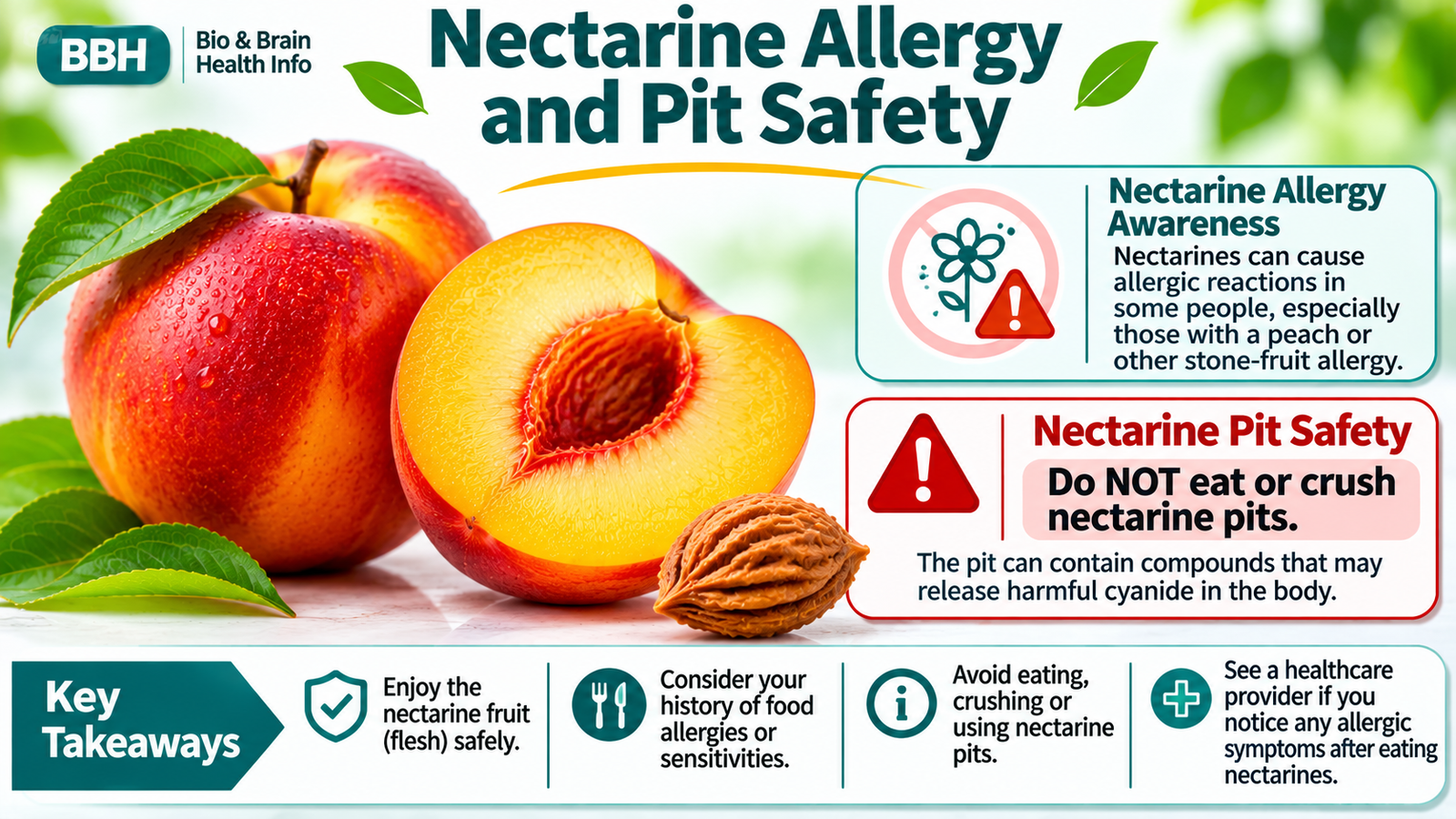
The 2007 study of allergens in peach and nectarine cultivars measured the major peach allergen Pru p 3 in peach and nectarine cultivars. This is direct evidence about allergen presence and variation, rather than a clinical trial proving that a particular nectarine variety is safe for allergic patients. The smooth skin is not a guarantee of absence of allergenic proteins.
The 2010 study of peach contact urticaria examined contact urticaria associated with peach and lipid transfer protein sensitization. Its findings suggest that peach fuzz may play a role in contact reactions in some patients. They do not show that a person with peach ingestion allergy can safely eat nectarines. Contact reactions and ingestion reactions are different clinical situations.
Pollen-food allergy syndrome can produce mouth itching or discomfort after certain raw fruits. Other patterns of allergy, including lipid transfer protein sensitization, may involve more severe reactions. The 2021 clinical review of lipid transfer protein allergy discusses clinical assessment and management. Do not assume that peeling, cooking or choosing a different cultivar makes a suspected allergen safe.
Allergy Safety
If you suspect a nectarine or peach allergy, avoid deliberate home testing and consult an allergist. For breathing difficulty, throat swelling, faintness or other signs of a severe allergic reaction, use prescribed epinephrine if indicated and call 911. See FDA food allergies.
9. Nectarine side effects: Digestive sensitivity and pit safety
Some people with irritable bowel syndrome experience symptoms after eating foods containing fermentable carbohydrates or sugar alcohols. Stone fruits can be relevant triggers for some individuals. The NIDDK irritable bowel syndrome nutrition guidance describes individualized dietary approaches for IBS, including the role of a supervised low-FODMAP approach. This does not mean that everyone needs to avoid nectarines or that a restrictive diet should be continued indefinitely without guidance.
The pit is not an edible serving of fruit. Remove it before eating, blending or preparing food for children. Stone-fruit kernels may contain cyanogenic compounds, and pits can also pose choking or obstruction risks. Do not eat the kernels or use them as supplements. Contact US Poison Control at 1-800-222-1222 if a kernel has been chewed or swallowed and seek individualized guidance. Call 911 for severe symptoms.
Persistent abdominal pain, unexplained weight loss or bleeding deserves medical evaluation rather than simply reducing fruit intake. People with swallowing difficulties should follow their clinician’s instructions on safe food texture.
10. How to enjoy nectarine health benefits in everyday US meals
Choose fruit according to ripeness, intended use and price. A firmer nectarine may be useful when it will be eaten later, whereas a ripe fruit can be enjoyed sooner. Wash it under running water before cutting, following FDA produce safety guidance. Do not use household soap on produce. Remove the pit with ordinary kitchen care and refrigerate cut fruit promptly.
A nectarine can accompany oatmeal, be sliced into plain yogurt or be added to a salad. For a cooked preparation, consider whether added syrup, sugar or butter changes the meal’s energy and carbohydrate content. A plain serving is an option, not a requirement for everyone. Foods should fit personal taste, culture, budget and medical needs.
A practical shopping strategy is to buy only the amount likely to be eaten before spoilage. Frozen unsweetened fruit may help reduce waste if available. There is no need for a nectarine extract, juice cleanse or special supplement to obtain the benefits of ordinary fruit.
11. Frequently asked questions
Can people with diabetes eat nectarines?
Many can include a measured portion in an individualized meal plan. A 142 g edible portion provides approximately 15 g total carbohydrate.
Are nectarines healthier than peaches?
Neither is universally superior. Nutritional values vary by cultivar and serving, and both can contain related allergens.
Should you peel a nectarine?
The skin is edible when washed and tolerated. Peeling is not a reliable way to prevent an allergic reaction.
Do nectarines help constipation?
They contribute fiber and water, but constipation has many causes. Persistent symptoms require appropriate assessment.
Can nectarines cure inflammation or cause weight loss?
Human evidence does not establish either effect as a nectarine-specific treatment.
Are nectarine pits edible?
No. Discard pits and do not consume the inner kernels.
Conclusion
Nectarines provide modest amounts of fiber, vitamin C and potassium in a juicy, relatively low-energy fruit. Their useful nutritional properties should be distinguished from unproven disease-treatment claims. Choose an appropriate edible portion, check packaged product labels and take stone-fruit allergy and pit safety seriously.
BBH Key Takeaway
Enjoy nectarines as part of a varied diet when medically appropriate. The strongest guidance is based on actual portions, careful interpretation of evidence and individual tolerance.
Scientific references
USDA FoodData Central: raw nectarines, SR Legacy • USDA FoodData Central • NIH vitamin C fact sheet • NIH potassium fact sheet • Muraki et al., BMJ 2013: fruit intake and type 2 diabetes • 2007 study of allergens in peach and nectarine cultivars • 2010 study of peach contact urticaria • 2021 clinical review of lipid transfer protein allergy • FDA produce safety guidance • FDA Nutrition Facts label • NIDDK constipation nutrition guidance • NIDDK irritable bowel syndrome nutrition guidance • FDA food allergies • Poison Control: cherry pits and cyanide
Related reading on BBH
Physical Health → Weight, Nutrition & Metabolic Health support page
Apricots: Nutrition, Benefits and Side Effects • Figs: Nutrition, Benefits and Side Effects • Fruit and Diabetes: Portions and Choices • Carb Counting for Diabetes • Mediterranean Diet and Type 2 Diabetes