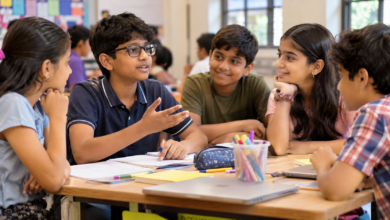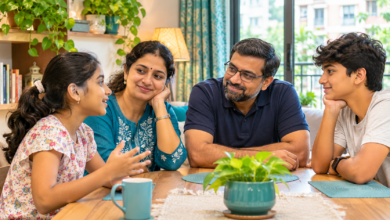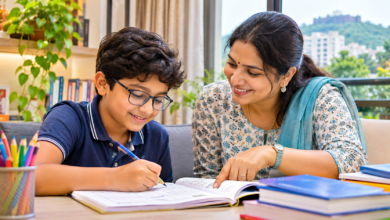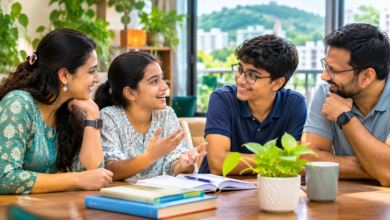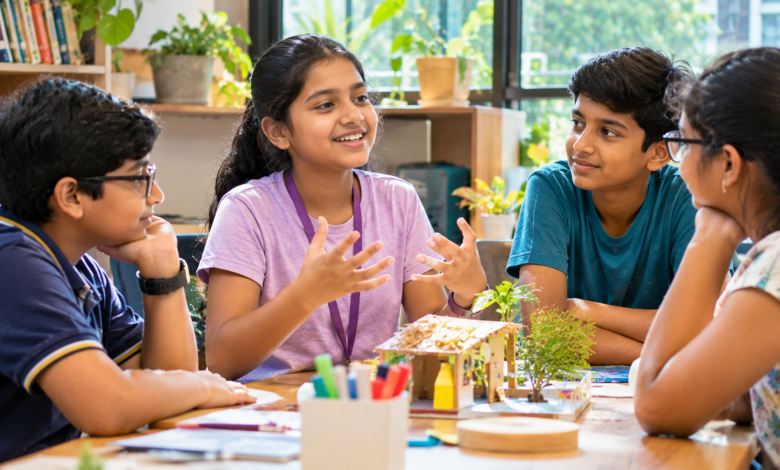
Personality development for kids in Pune should help children aged 8–15 develop practical confidence, emotional awareness, communication and responsible decision-making without forcing them into one ideal personality. This evidence-informed BBH guide considers family life, school demands, individual differences and local opportunities across Pune.
Thank you for reading this post, don't forget to subscribe!What Personality Development Actually Means
Personality development describes how children gradually develop patterns of thinking, feeling, relating and acting. It is not a makeover that turns a quiet child into an outgoing performer. Temperament varies naturally; some children enjoy groups while others prefer thoughtful one-to-one conversations. A useful educational approach supports confidence, self-awareness, communication, responsibility, empathy and flexible problem-solving without erasing individuality. Development reflects interactions among biology, relationships, experiences and opportunities. Children do not need to be excellent at public speaking to be capable or emotionally healthy. Parents should avoid labels such as weak, naughty or born leader. Instead, ask which everyday skills would help this child participate more comfortably at home, school and in the community. The goal is progress and wellbeing, not a single ideal personality.
Personality Development for Kids in Pune: Core Skills
For ages 8–15, practical skill areas include expressing needs respectfully, listening, understanding emotions, cooperating with peers, making age-appropriate decisions and recovering after mistakes. These abilities overlap with social and emotional learning, but they are not interchangeable with personality traits. Some skills can be taught and practised; stable temperament differences should be respected. Begin by identifying one meaningful goal with the child, such as introducing themselves to a new classmate or planning a weekly task. Avoid promising rapid transformation or guaranteed leadership. Parents and teachers can model skills, offer safe practice and provide specific feedback. Children may need accommodations for language, learning, hearing or neurodevelopmental differences. An inclusive programme measures participation and confidence in ways appropriate to the individual, rather than comparing every child against the loudest participant.
Self-Awareness Before Self-Improvement
A child learns self-awareness by noticing feelings, preferences, strengths and limits. Try asking what activities energise them, when they feel nervous and what helps them concentrate. Younger children may prefer drawing a feelings map or choosing words from a short list. Teenagers may prefer a private journal or conversation during a walk. Do not demand that a child disclose every emotion. Reflect observations without fixing identity: “You seemed more comfortable after you practised,” rather than “You are always shy.” Discuss how feelings and behaviour differ: anger is understandable, while hurting someone is not acceptable. Self-awareness is not constant self-monitoring. Protect time for play, rest and ordinary enjoyment. A child should feel valued even when they are not actively working on a skill.
Personality Development for Kids in Pune: Communication
Communication includes speaking, listening, interpreting context and recognising when to ask for clarification. Practice can happen through short family conversations, storytelling, collaborative games and age-appropriate role-play. Teach children to say, “I did not understand; could you explain again?” and “I need a moment to think.” Avoid correcting grammar or accent during an emotional disclosure. In multilingual Pune homes, Marathi, Hindi, English or another familiar language may help a child express complex ideas. Encourage respectful turn-taking without requiring eye contact, which can be uncomfortable for some neurodivergent children. Praise specific behaviour: “You listened and asked a useful question.” Public speaking may be an optional goal, but it is not the definition of healthy communication. Support should expand choices rather than force a single social style.

Confidence Without Pressure or Comparison
Confidence grows through manageable experiences of competence, supportive relationships and opportunities to make decisions. Set challenges that are slightly beyond what a child can already do, then offer help and celebrate learning. For example, a child could ask a shopkeeper a question with a parent nearby or explain a project to two friends before presenting to a class. Do not use embarrassment as motivation. Comparing siblings or classmates can make performance feel like a condition of love. A confident child may still feel nervous; courage can mean acting thoughtfully while uncomfortable. If avoidance is persistent and significantly interferes with school or friendships, explore anxiety, bullying, disability-related barriers and qualified support. Not every quiet child needs treatment or confidence coaching.
Personality Development for Kids in Pune: Social Skills
Social skills include joining activities, sharing space, resolving misunderstandings and recognising others’ boundaries. Encourage children to practise greetings, asking to join a game and handling a polite refusal. Explain that friendship is reciprocal: a child can be kind without tolerating bullying or pressure. Role-play can help when it is brief and child-led, but repeated forced performances may increase discomfort. Group activities such as art, sport or community projects can provide natural opportunities to cooperate. Adults should supervise safety and avoid interpreting every peer disagreement as a crisis. Children with communication differences may benefit from explicit explanations and accessible environments. Respectful friendships matter more than collecting large numbers of contacts. If bullying occurs, the responsibility for safety belongs to adults and institutions, not only to the targeted child.
Emotional Regulation and Resilience
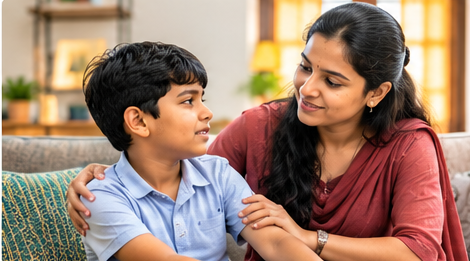
Children benefit from learning to notice rising frustration and choose safer responses. Adults can model naming feelings, taking a pause and repairing harm. Try, “I feel frustrated, so I will slow down before answering.” During a meltdown, long lectures are rarely useful; first ensure safety and reduce overload. Later, discuss what happened and which support might help next time. Resilience does not mean tolerating harmful situations without complaint. It includes seeking help, adapting plans and maintaining supportive relationships. Persistent distress, panic, sleep changes or school refusal should not be treated as ordinary personality weaknesses. A paediatrician or appropriately qualified mental-health professional can assess concerns. Activities such as breathing or journaling may be useful coping options, but they are not substitutes for clinical care when indicated.
Responsibility, Decisions and Everyday Independence
Responsibility develops through opportunities matched to age and ability. An eight-year-old may organise school supplies with reminders; a teenager may plan study blocks, travel arrangements with appropriate safeguards or a modest budget. Explain expectations, allow reasonable choices and discuss outcomes without humiliation. Mistakes can become learning opportunities when adults remain supportive. Avoid assigning children adult emotional or financial burdens. Children with executive-function difficulties may need checklists, visual prompts or smaller steps. Independence is not a competition between families. The aim is practical competence and judgement within safe boundaries. Ask the child which task they would like to own and what assistance would make success realistic. Review the plan together rather than assuming one failed attempt proves irresponsibility.
Creativity, Curiosity and Problem-Solving
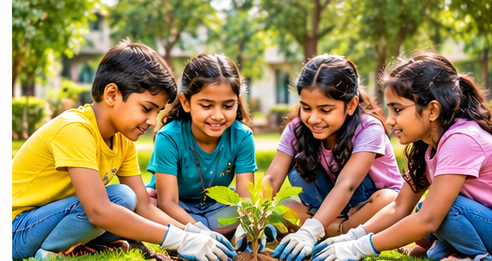
Open-ended play, reading, building, music, drawing and collaborative projects allow children to experiment with ideas. Instead of praising only the final product, ask how they approached a challenge and what they might try differently. Provide materials that suit family resources; expensive kits are not essential. A cardboard model, household recipe or neighbourhood observation project can invite planning and creativity. Children should have room to explore interests without every hobby becoming a competition or career pathway. Encourage multiple solutions and respectful disagreement. If a child needs accessible tools or adapted instructions, these can support participation. Creativity is not a fixed talent reserved for artistic children; opportunities to explore can benefit many learners. Avoid claims that a particular game scientifically raises IQ without strong evidence.
Ages 8–11: Concrete Activities
For younger schoolchildren, choose brief, playful activities that teach one skill at a time. A feelings vocabulary game can support emotional expression; cooperative board games can practise turn-taking; preparing a simple family snack can encourage planning and shared responsibility. Ask children to describe a strength and a skill they want to practise. Keep instructions clear and adapt tasks for learning or sensory needs. Praise effort and strategies without making every moment an assessment. Avoid overloading the week with classes. Schoolwork, sleep, physical activity, friendships and unstructured play remain important. Parents can observe which activities the child enjoys and adjust rather than insisting on an adult-designed personality target. When a child dislikes a group activity, ask whether the barrier is noise, unfamiliar peers, language or simply preference.
Ages 12–15: Identity and Autonomy
Teenagers increasingly explore values, friendships, privacy and future interests. Invite them to discuss what matters to them and where they want more responsibility. Collaborative planning, volunteering with suitable supervision, creative projects or school clubs may provide opportunities to practise communication and leadership. Respect the teenager’s right to decline public performance or share some thoughts privately. Talk about online identity, consent, peer pressure and trustworthy information. Avoid presenting one career, appearance or social style as proof of success. Encourage thoughtful decision-making, not automatic obedience. A teenager may be confident in art but hesitant in unfamiliar groups; development can be uneven. Provide guidance and boundaries while acknowledging growing autonomy. If significant emotional or behavioural changes emerge, consider professional advice rather than labelling them a phase.
Pune Local Context: Undri, Hadapsar and Hinjewadi
Parents searching for activities in Undri, Hadapsar or Hinjewadi should start with the child’s interests, actual commute and available time. Families in Magarpatta, Kondhwa and Wakad may have different practical constraints, as may those in Baner, Kharadi, NIBM and Pimpri-Chinchwad. No neighbourhood guarantees better developmental outcomes. A nearby library activity, supervised sport, art workshop or school club may be more sustainable than a distant programme with impressive marketing. During monsoon periods or exam weeks, consider flexible indoor alternatives. Ask any provider about safeguarding policies, age groups, accessibility, staff qualifications, parent communication and evidence for advertised outcomes. This article does not endorse or verify specific Pune providers. Avoid sharing sensitive child records with unverified organisations.
Content Gap: Assess the Environment, Not Just the Child
Many personality-development advertisements imply that children must change to fit a standard model. A more useful question is whether the environment allows different children to participate. A shy child may speak confidently in a small group; a child with ADHD may contribute more with movement breaks; a multilingual child may express ideas more clearly in a familiar language. BBH suggests a four-part reflection: identify the skill, notice the setting, adjust the environment and observe whether participation improves. This is an educational framework, not a validated diagnostic or treatment tool. Do not conclude that the child lacks confidence simply because an activity is inaccessible. If concerns persist across settings, discuss them with teachers and qualified professionals. Respectful support balances individual skill-building with changes to expectations and surroundings.
Personality Development for Kids in Pune: A 30-Day Plan
Week one: ask the child which skill matters to them and notice strengths without judgement. Week two: practise one small behaviour in a comfortable setting, such as asking a question or taking a turn in a game. Week three: try the skill in a slightly different context, with consent and suitable support. Week four: review what felt easier, what remained difficult and whether the goal should change. Record observations such as “asked for help independently” instead of global labels like “became confident.” This 30-day structure is an original BBH educational planning aid, not a scientifically tested intervention or guarantee. Stop or adapt activities that cause distress. Protect sleep, play and school responsibilities. Seek professional guidance if persistent difficulties interfere with functioning.
How to Evaluate a Child Development Programme
Ask providers what skills they teach, how activities differ for ages 8–11 and 12–15, and whether participation is voluntary and accessible. Request clear information on qualifications, supervision, safeguarding, emergency procedures, fees, refund terms and how parents receive feedback. Be cautious of promises to transform personality, cure anxiety, raise IQ or guarantee leadership in a short period. Look for respectful language, realistic outcomes and options for quieter children. A programme should not pressure families to disclose private medical or educational details before explaining data protections. Where specialist mental-health or learning assessment is offered, confirm the professional’s credentials and scope. Consider whether a simpler school or community activity could meet the same goal. An ethical programme should welcome questions and avoid exploiting parental worry.
When Professional Support May Be Needed
Personality differences alone do not require diagnosis. Seek qualified advice if a child experiences persistent severe anxiety, marked withdrawal, repeated school refusal, bullying-related distress, developmental concerns or difficulty functioning across settings. A paediatrician, child psychologist, speech-language professional or educational specialist may be appropriate depending on the concern. Avoid diagnosing ADHD, autism or a learning disorder from a social-media checklist. If a child reports abuse, threats or self-harm, prioritise safety and urgent appropriate help. Personality development activities can complement everyday learning but cannot replace individual clinical or educational assessment. Parents should include the child’s perspective and choose support that respects dignity and confidentiality.
Frequently Asked Questions
Is personality development the same as making a child extroverted?
No. Healthy development respects temperament while building practical skills and opportunities.
What is a suitable age to start?
Everyday communication, emotional understanding and cooperation develop throughout childhood; activities should be age-appropriate.
Can shy children benefit?
Yes, if participation is voluntary, respectful and adapted to the child’s comfort and needs.
Are personality development classes necessary?
No. Family routines, school experiences, friendships and accessible community activities also provide learning opportunities.
How should parents judge progress?
Look for meaningful individual goals and wellbeing, not comparisons, exaggerated promises or a fixed personality score.
BBH Navigation and Related Reading
BBH navigation: Relationship — main menu · Children — submenu · Support Resources.
Five related BBH articles
- Social Skills Development for Kids in Pune
- Helping Shy Children Build Confidence in Pune
- Positive Parenting Strategies for Pune Families
- Child Development Activities for Kids in Pune
- Developmental Milestones for Children Ages 8–15
BBH Young Minds is an exploratory educational concept, not a currently confirmed programme. For general enquiries or future updates email info@bioandbrainhealthinfo.com. Please do not email sensitive information about a child.
Research Context and Educational Disclaimer
Further reading: CDC Child Development; UNICEF Parenting; Harvard Center on the Developing Child; American Academy of Pediatrics: HealthyChildren; CASEL: Social and Emotional Learning. These organisations provide general developmental and educational guidance. The BBH activity ideas and 30-day plan are practical suggestions, not individually validated clinical interventions. No clinical review is claimed.