Watermelon: Nutrition, Benefits and Side Effects
Watermelon Health Benefits, Nutrition and Risks

Watermelon is often described as a natural hydration drink, a blood pressure remedy and a food that people with diabetes should avoid. These claims can make a simple summer snack unnecessarily confusing. Is its sweetness a problem? Does its red flesh contain enough lycopene to protect the heart? Can a slice of watermelon deliver the same effects as a concentrated sports supplement? The answers depend on the portion, preparation and quality of evidence.
Thank you for reading this post, don't forget to subscribe!Understanding watermelon health benefits requires separating reliable nutrient information from promising but incomplete treatment research. This guide uses US household portions and metric weights for readers in the United States, United Kingdom, Canada and Australia. It addresses practical questions about blood glucose, hydration, exercise, digestive tolerance and food safety without treating any one fruit as a medical solution.
Medical Safety & Disclaimer
This article provides general nutrition education, not medical advice. If you have diabetes, kidney disease, heart failure, a fluid restriction, irritable bowel syndrome or a food allergy, follow your individualized healthcare plan. Do not replace prescribed medicines with watermelon or citrulline supplements.
Quick Answer
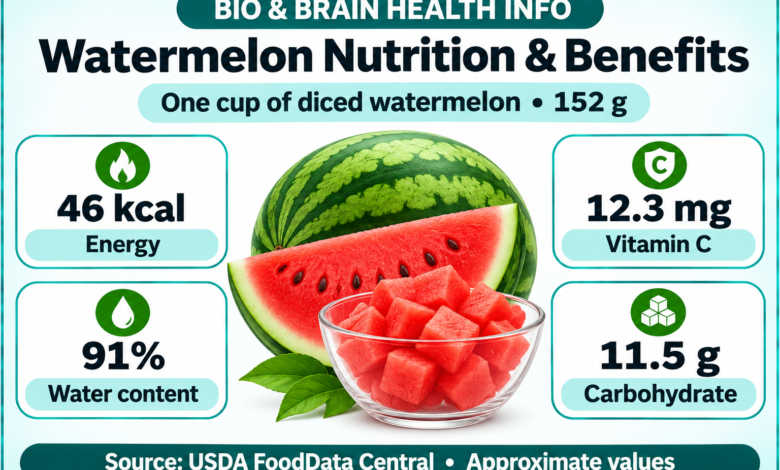
One cup of diced raw watermelon (152 g) provides about 46 calories, 11.5 g total carbohydrate, 0.6 g fiber, 12.3 mg vitamin C and 170 mg potassium. Approximately 91% of its weight is water. Research suggests potential blood pressure benefits from certain watermelon interventions, but ordinary fruit is not a proven treatment for hypertension or diabetes.
In This Guide
What you will learn
Nutrition facts • Hydration and electrolytes • Citrulline and blood pressure • Whole fruit versus supplements • Blood sugar and portions • Lycopene • Weight management • Exercise recovery • Digestive side effects • Cut-melon safety • FAQs
1. Watermelon nutrition facts: What does a cup contain?
The edible flesh of watermelon is primarily water, with carbohydrates providing most of its energy. It supplies modest amounts of vitamin C, potassium and several other nutrients. Red-fleshed varieties also contain lycopene, a carotenoid pigment. The following values refer to raw edible flesh and do not include the rind. The amount in a wedge varies considerably according to the size of the fruit and how it is cut.
| Nutrient | Per 100 g | One cup diced (152 g) |
|---|---|---|
| Energy | 30 kcal | 46 kcal |
| Total carbohydrate | 7.55 g | 11.5 g |
| Total sugars | 6.2 g | 9.4 g |
| Fiber | 0.4 g | 0.6 g |
| Protein | 0.61 g | 0.93 g |
| Fat | 0.15 g | 0.23 g |
| Vitamin C | 8.1 mg | 12.3 mg |
| Potassium | 112 mg | 170 mg |
| Magnesium | 10 mg | 15.2 mg |
| Lycopene | 4.53 mg | 6.89 mg |
| Water | 91.45 g | 139 g |
Source: USDA FoodData Central: raw watermelon. Rounded values are calculated from the reference composition per 100 g. Different varieties, ripeness and growing conditions can change the actual nutrient content. US total carbohydrate includes fiber. Watermelon contains little protein, fat or fiber compared with many other foods, so its nutritional strengths should not be confused with nutritional completeness.
Which nutrients explain watermelon health benefits?
Vitamin C participates in collagen production, normal immune function and absorption of nonheme iron. Potassium supports normal nerve and muscle activity. Lycopene is a plant compound studied for potential biological effects, but it is not an established treatment for disease. The high water content makes this fruit a useful contributor to fluid intake, while its low energy density can make measured portions satisfying for some people.
2. Watermelon health benefits for hydration: What water content means
A cup of diced watermelon contains about 139 grams of water, roughly 139 milliliters. Eating the fruit therefore contributes fluid as well as carbohydrates and micronutrients. For someone who enjoys fruit during warm weather, it can be a convenient way to supplement ordinary drinking water.
However, watermelon is not a complete electrolyte replacement. It provides very little sodium in an ordinary portion, and sodium losses can matter during prolonged heavy sweating. The appropriate replacement strategy depends on the duration and intensity of activity, environmental temperature and individual health status. Drinking water and eating balanced meals are often sufficient for routine activity, but medical dehydration from diarrhea or vomiting may require a properly formulated oral rehydration solution.
Hydration Safety
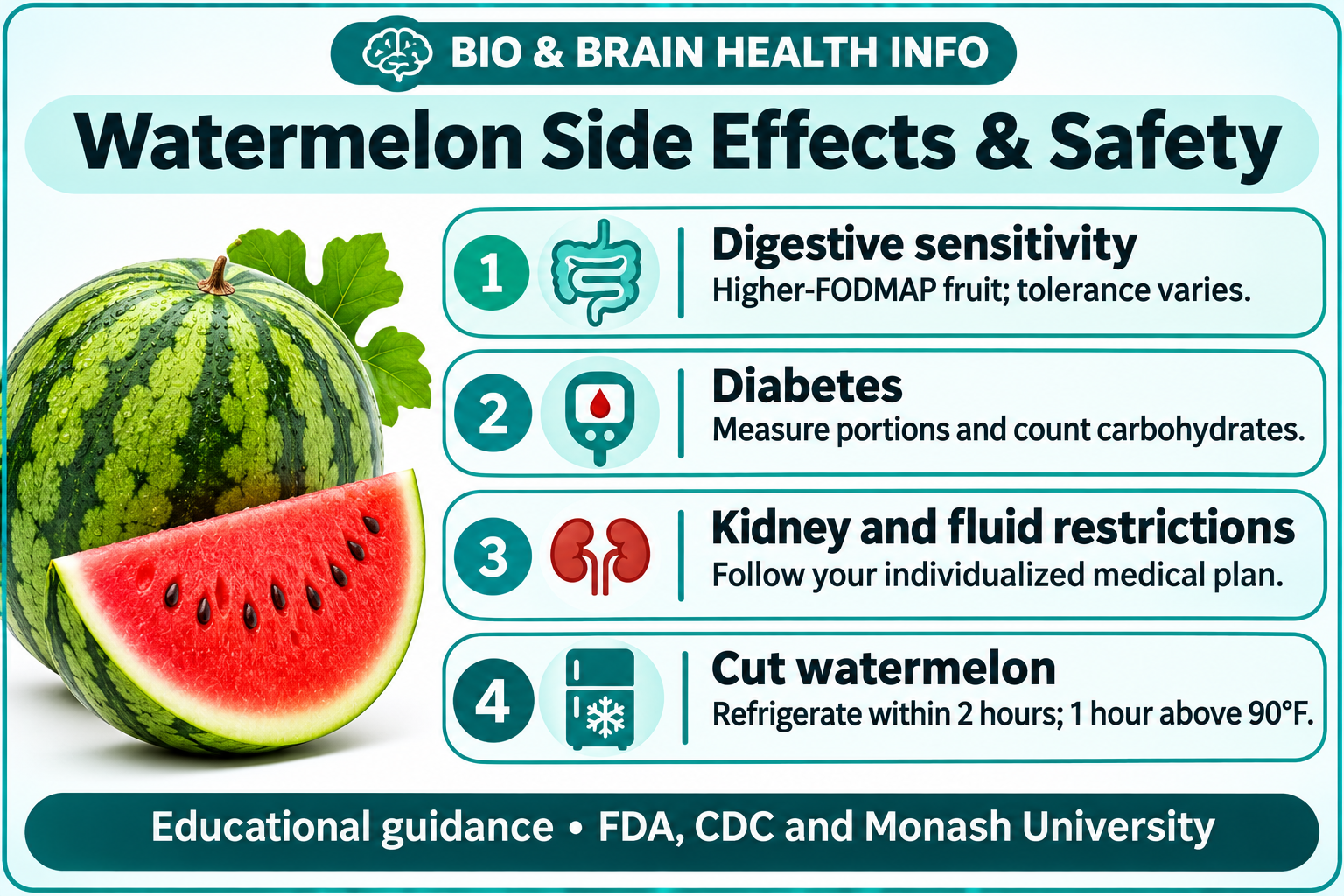
Watermelon cannot replace oral rehydration solution when medically indicated. Confusion, fainting, inability to keep fluids down or severe dehydration symptoms warrant urgent assessment. If you have a prescribed fluid restriction, ask whether and how water-rich foods count toward your allowance.
3. Watermelon and heart health: The November 2026 evidence
Watermelon contains L-citrulline, an amino acid that can be converted into L-arginine. Arginine participates in nitric oxide production, which helps regulate blood vessel function. This biological pathway makes watermelon and citrulline interesting research subjects. It does not, by itself, establish a therapeutic effect from a typical food portion.
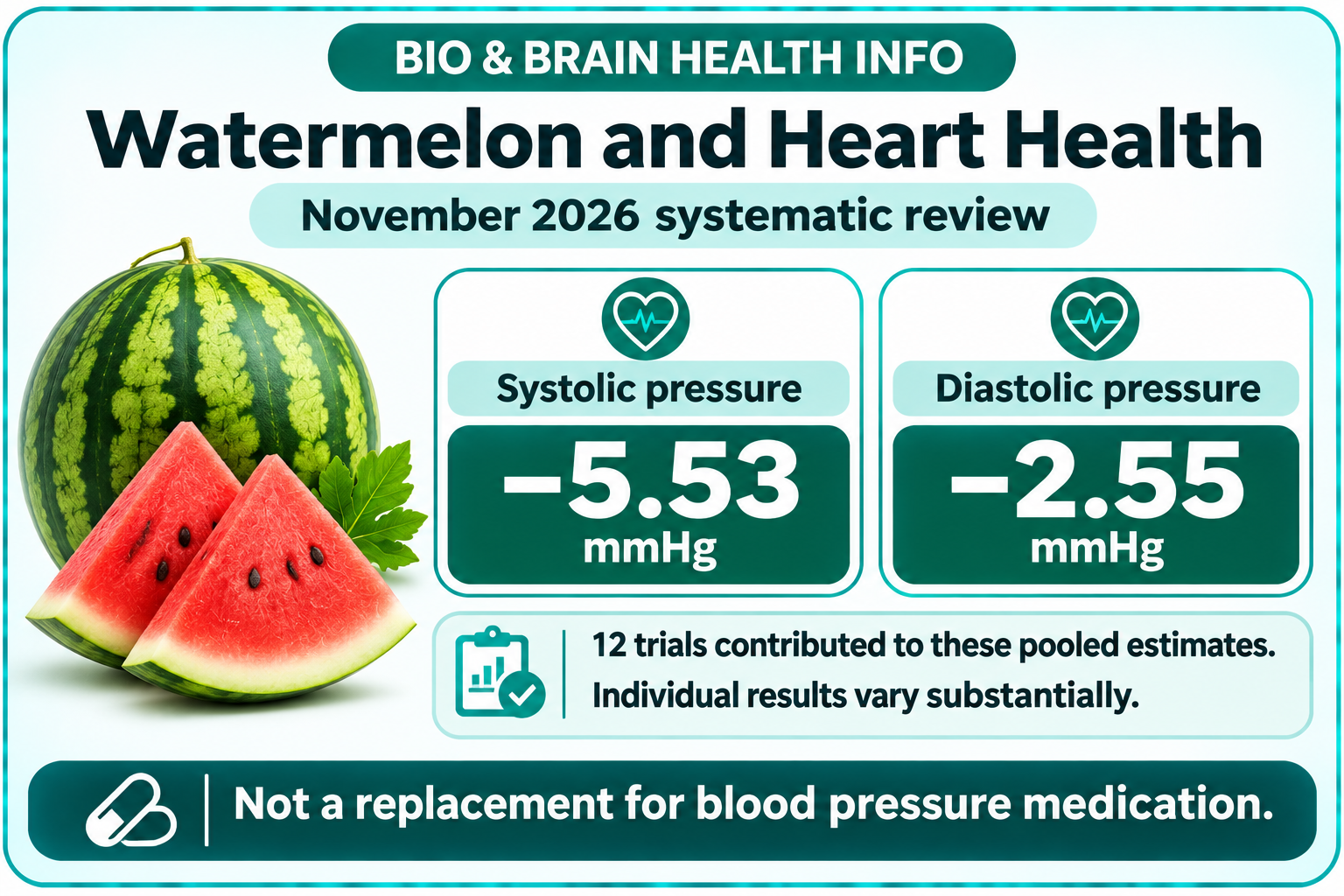
The 2026 systematic review of watermelon and blood pressure was published online on November 17, 2026, in The Journal of Nutrition. It included 16 randomized trials, with 12 contributing to the main post-intervention blood pressure analyses. The pooled systolic difference was −5.53 mmHg (95% confidence interval −8.99 to −2.06), and the diastolic difference was −2.55 mmHg (−3.77 to −1.33).
The researchers reported substantial variability across studies, especially for systolic pressure. Differences in participants, formulations and study designs complicate translation into a daily serving recommendation. The averages are not guaranteed individual changes. They also do not establish reductions in heart attacks, strokes or cardiovascular mortality.
Earlier reviews, including 2025 review of citrulline and watermelon in older adults and 2023 review of cardiovascular risk markers, provide additional context on blood pressure and selected risk markers. Their underlying trials may overlap, so several reviews do not necessarily represent several independent sets of evidence. Watermelon may fit a heart-supportive dietary pattern, but treatment decisions should be based on established clinical guidance. Read Mediterranean Diet and Type 2 Diabetes.
Blood Pressure Safety
Continue prescribed blood pressure treatment. Do not adjust medication because of watermelon or citrulline research. Seek medical advice if you experience repeated unexpectedly low readings, dizziness or faintness.
4. Content gap: Watermelon health benefits and the dose-equivalence problem
A common mistake in nutrition reporting is to assume that a trial using watermelon concentrate or isolated citrulline applies directly to any slice of fruit. The concentration of citrulline can differ by cultivar, tissue and processing method. A serving described by weight does not necessarily deliver a standardized amount of this amino acid.
| Intervention | What the evidence can establish |
|---|---|
| Fresh diced flesh | Effects of the food and portion actually consumed. |
| Watermelon puree or beverage | Effects of that particular preparation and dose. |
| Concentrated watermelon extract | Effects of a more concentrated, product-specific intervention. |
| Isolated L-citrulline | Effects of the amino acid supplement; not the same as whole fruit. |
The 2025 review of watermelon composition and citrulline describes variation in watermelon composition and research preparations. There is no reliable universal conversion from a household serving to the dose of a commercial citrulline product. Even when a supplement lists milligrams on its label, that information alone does not establish that it is equivalent to the food used in a clinical trial.
A particularly useful comparison is the 2025 randomized pilot trial of watermelon and ambulatory blood pressure, which randomized 39 adults with elevated blood pressure to three groups for four weeks, including interventions using amounts equivalent to one or two cups of watermelon daily. This small study used prepared beverages and ambulatory blood pressure measurement. Such trials are closer to familiar food portions than isolated amino acid studies, but still require replication.
When evaluating a headline, identify whether the researchers tested fruit, a beverage, concentrate or a supplement. Then check the duration, participant characteristics and measured outcome. A short-term change in a biomarker is not equivalent to proof of disease prevention. This method of reading nutrition research is more useful than searching for a universal medicinal portion.
5. Watermelon and blood sugar: Can people with diabetes eat it?
Watermelon contains natural sugars and can raise blood glucose. Nevertheless, it does not need to be automatically excluded from every diabetes eating plan. Its high water content means that a moderate weighed portion contains relatively little carbohydrate compared with a much larger serving of the same fruit.
| Edible portion | Approximate total carbohydrate |
|---|---|
| 50 g | 3.8 g |
| Half cup (76 g) | 5.7 g |
| 100 g | 7.6 g |
| One cup (152 g) | 11.5 g |
| 200 g | 15.1 g |
| Two cups (304 g) | 23.0 g |
| 500 g | 37.8 g |
About 200 g supplies 15 g total carbohydrate, close to one carbohydrate choice in common US diabetes education. This calculation is not a universal serving recommendation or insulin dosing instruction. Use the carbohydrate-counting method recommended by your local healthcare team, since nutrition-label conventions can differ across countries.
Glycemic index versus actual portion
Glycemic index compares responses to a standardized amount of available carbohydrate. Glycemic load also considers how much available carbohydrate is in a serving. Watermelon illustrates why a GI number alone cannot describe the glucose effect of an ordinary meal. Published GI estimates vary with testing conditions and fruit characteristics. Actual portion size, other foods, medicines and individual glucose responses all matter.
For practical planning, measure the edible flesh rather than counting wedges. A large wedge can contain several times as much fruit as a small bowl. Consider the carbohydrate in all ingredients if you blend watermelon with juice, sweetened yogurt or other fruits. Read Fruit and Diabetes: Portions and Choices and Carb Counting for Diabetes: Beginner Guide.
Blood Sugar Safety
Use your individualized diabetes plan and monitoring recommendations. Do not change insulin or medication based on a single food response. Treat hypoglycemia with the fast-acting carbohydrate recommended in your care plan; severe symptoms require urgent help.
6. Watermelon health benefits from lycopene: What is known?
Lycopene gives many red watermelon varieties their characteristic color. It has been studied in laboratory and human nutrition research. Its absorption depends on the food matrix, processing and the other foods eaten. Red watermelon is one source, while tomato products and other foods also contribute to dietary lycopene.
Biological antioxidant activity does not automatically establish cancer prevention, protection against sunburn or reversal of vascular disease. These claims require direct clinical evidence for the relevant outcome. Yellow and orange watermelon varieties may have different carotenoid profiles, and a standard red-watermelon reference value should not be applied to every variety. For broader nutrient education, see Vitamins and Minerals for Brain Health.
7. Watermelon health benefits: Fullness and exercise recovery
Watermelon has a low energy density because of its water content. A 2019 controlled trial of fresh watermelon and satiety compared fresh watermelon with an energy-matched cookie snack in adults with overweight or obesity over four-week interventions. Participants reported greater fullness after watermelon. This supports the idea that replacing some snacks with whole fruit may be useful, rather than proving that watermelon itself burns body fat.
The 2025 systematic review of citrulline and body composition examined citrulline and watermelon supplementation in relation to body composition. Supplement interventions and food substitutions answer different questions. Neither justifies a watermelon-only diet or a promise of targeted abdominal fat loss. Adequate protein, dietary variety and a sustainable eating pattern matter more than any single snack.
In sports nutrition, a 2022 trial of watermelon concentrate and resistance exercise tested watermelon juice concentrate in 15 resistance-trained men and found no clear performance advantage across the measured exercise outcomes. Small studies cannot settle every question about recovery, but their findings caution against marketing ordinary watermelon as a guaranteed performance enhancer. It can contribute fluid and carbohydrate without replacing appropriate recovery meals.
8. Watermelon side effects and digestive tolerance
IBS and fermentable carbohydrates
Watermelon can trigger bloating, gas or diarrhea in some people with irritable bowel syndrome or fructose-related digestive sensitivity. Monash University: FODMAP food list identifies watermelon among higher-FODMAP fruits. FODMAPs are fermentable carbohydrates that can contribute to symptoms in susceptible people. Tolerance depends on serving size and the rest of the meal.
A low-FODMAP diet is not required for everyone and is usually intended as a structured, temporary restriction followed by reintroduction and personalization. A registered dietitian can help avoid unnecessary long-term food avoidance. Persistent digestive symptoms, unexplained weight loss, bleeding or significant pain warrant medical assessment.
Kidney health, fluid restrictions and allergies
A cup of watermelon supplies approximately 170 mg potassium. This is not an automatic reason for everyone with kidney disease to avoid it, but several cups can contribute meaningful amounts of both potassium and fluid. Follow your renal team’s individualized advice rather than relying on generic lists of forbidden fruits.
Food allergy is possible. Stop eating watermelon if you develop symptoms suggesting allergy. Throat swelling, breathing difficulty or faintness can indicate a serious reaction; call emergency services and use prescribed epinephrine according to your allergy plan. Concentrated citrulline supplements are a separate exposure and should be discussed with a clinician if you take blood pressure medicines.
Medical Safety
Do not use fruit or supplements to self-treat kidney disease, high blood pressure or persistent digestive symptoms. People with fluid restrictions or prescribed potassium targets need individualized advice.
9. Food safety: Why the rind matters
Watermelon flesh can become contaminated during cutting if microorganisms on the outside are transferred by a knife. Wash the intact fruit under running water, scrub the firm rind with a clean produce brush and use clean cutting boards and utensils. Do not use soap or household cleaning products on the fruit.
The FDA: selecting and serving produce safely recommends keeping pre-cut produce refrigerated. CDC: safer food choices advises discarding cut melon that has remained unrefrigerated beyond two hours, or one hour in temperatures above 90°F (32°C). Keep cut fruit chilled at about 40°F (4°C) or colder. A normal smell is not proof that mishandled fruit is safe.
Cut Melon Safety
Wash the rind before cutting, chill promptly and discard cut melon left out beyond the applicable time limit. Follow local food recalls and stricter advice for vulnerable people.
10. How to enjoy watermelon health benefits in everyday meals
Choose a measured serving of diced fruit with plain yogurt, a suitable protein-containing meal or a salad. Frozen unsweetened pieces can offer variety. If you choose juice, check serving size and ingredients rather than assuming all drinks labeled watermelon have the same nutrition. Whole fruit preserves its original food structure, though watermelon itself is not particularly rich in fiber. Read Diabetes Snacks: Balanced Options.
11. Frequently asked questions
Can I eat watermelon every day?
It can fit a varied diet when portions suit your needs. No universal daily serving is necessary.
Does watermelon lower blood pressure?
Some trials report reductions, but responses differ and the evidence does not establish it as a replacement for prescribed treatment.
Is watermelon good for diabetes?
It can fit many individual eating plans. Count carbohydrates and consider your glucose response.
Can watermelon replace drinking water?
It contributes fluid but does not replace all drinking water or medically indicated electrolyte replacement.
Does watermelon burn belly fat?
No reliable evidence establishes selective fat loss from eating watermelon.
Conclusion
The most dependable watermelon health benefits arise from its water content, nutrients and role in dietary variety. Clinical research on blood pressure is promising, but formulation and dose differences matter. Choose appropriate portions, recognize digestive and food safety considerations, and continue necessary medical care.
BBH Key Takeaway
Enjoy watermelon as food rather than medicine. Measure portions, keep cut fruit chilled and distinguish whole fruit research from concentrated supplement studies.
Scientific references
USDA FoodData Central: raw watermelon • 2026 systematic review of watermelon and blood pressure • 2025 randomized pilot trial of watermelon and ambulatory blood pressure • 2025 review of citrulline and watermelon in older adults • 2023 review of cardiovascular risk markers • 2019 controlled trial of fresh watermelon and satiety • 2025 systematic review of citrulline and body composition • 2022 trial of watermelon concentrate and resistance exercise • Monash University: FODMAP food list • FDA: selecting and serving produce safely • CDC: safer food choices • 2025 review of watermelon composition and citrulline
Related reading on BBH
Explore: Physical Health → Weight, Nutrition & Metabolic Health support page