Mango: Nutrition, Benefits and Side Effects
Mango Health Benefits, Nutrition and Risks

Mango is often described as the king of fruits, but its sweetness also makes it a source of confusion for people managing blood glucose. Some nutrition headlines suggest mango improves insulin sensitivity, while others warn against eating it altogether. Neither message captures the whole picture. The important questions are how much edible fruit is consumed, what it replaces in the diet, and whether research findings apply to the person reading them.
Thank you for reading this post, don't forget to subscribe!Understanding mango health benefits starts with reliable nutrient information and careful interpretation of human studies. This guide focuses on fresh edible mango, using US household serving sizes and metric weights for readers in the United States, United Kingdom, Canada and Australia. It distinguishes ordinary food from extracts and supplements, addresses digestive tolerance and allergy, and offers practical ways to include the fruit without turning it into a medical treatment.
Medical Safety & Disclaimer
This article provides general nutrition education, not diagnosis or treatment. Follow your individualized care plan if you have diabetes, kidney disease, irritable bowel syndrome, a food allergy or prescribed dietary restrictions. Do not replace medicines or professional care with mango or mango extracts.
Quick Answer
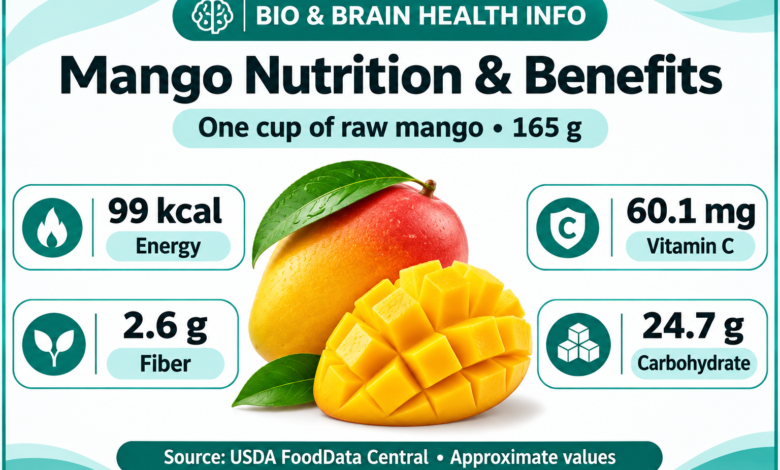
One cup of raw mango pieces (165 g) provides about 99 calories, 24.7 g total carbohydrate, 2.6 g fiber and 60.1 mg vitamin C. Mango supplies nutrients and plant compounds. Small clinical trials suggest possible metabolic benefits in specific populations, but mango still contains carbohydrate and can raise blood glucose.
In This Guide
What you will learn
Nutrition facts • Vitamin C and carotenoids • Blood sugar research • Food substitution versus addition • Portion sizes • Gut health • Cardiovascular research • Ripeness and processing • Allergy and IBS precautions • Food safety • FAQs
1. Mango nutrition facts: What does a serving contain?
Raw mango flesh is largely water, with carbohydrate providing most of its energy. It contains dietary fiber, vitamin C, folate, carotenoids and several minerals. The following reference values describe edible raw flesh, not the peel or stone. Different cultivars, growing conditions and ripeness can affect the actual composition. A whole fruit is not a standardized serving, especially because mangoes differ considerably in size and edible yield.
| Nutrient | Per 100 g | One cup (165 g) |
|---|---|---|
| Energy | 60 kcal | 99 kcal |
| Total carbohydrate | 14.98 g | 24.7 g |
| Total sugars | 13.66 g | 22.5 g |
| Fiber | 1.6 g | 2.6 g |
| Protein | 0.82 g | 1.35 g |
| Fat | 0.38 g | 0.63 g |
| Vitamin C | 36.4 mg | 60.1 mg |
| Potassium | 168 mg | 277 mg |
| Folate | 43 mcg | 71 mcg |
| Vitamin A | 54 mcg RAE | 89 mcg RAE |
Reference: USDA FoodData Central (SR Legacy, food 169910); accessible nutrient table: Raw mango nutrient reference values, USDA-derived. Values are independently rounded. In US labeling, total carbohydrate already includes sugars and fiber. The 60.1 mg of vitamin C in this reference serving is approximately 67% of the US adult label Daily Value of 90 mg. A Daily Value is a general labeling benchmark, rather than a personalized dietary prescription.
Which nutrients explain mango health benefits?
Vitamin C contributes to collagen formation, normal immune function and nonheme iron absorption. Folate participates in cell division, while provitamin A carotenoids can contribute to vitamin A intake. Fiber helps meet daily dietary needs. Mango is not a complete meal because it supplies relatively little protein and fat. Its value is best understood as part of a varied eating pattern.
2. Mango health benefits for immunity, skin and vision
Vitamin C is involved in normal connective tissue maintenance. Eating adequate amounts of this nutrient supports normal physiological function, but an additional serving of mango does not guarantee immunity against infection or reverse skin aging. The NIH vitamin C fact sheet describes established nutrient functions and the limitations of interpreting supplementation research.
Mango can complement plant foods that contain nonheme iron, such as beans or fortified cereals. The vitamin C in the meal can improve iron absorption, although mango itself does not contain enough iron to treat anemia. People with persistent fatigue or suspected nutrient deficiencies need an appropriate assessment rather than relying solely on fruit.
Yellow and orange mango flesh contains carotenoids, including compounds that the body may convert to vitamin A. Absorption and conversion vary among individuals and meals. Eating fruit as part of a meal containing some dietary fat can help with absorption of fat-soluble carotenoids. This is a nutritional principle, not evidence that mango treats eye disease or improves eyesight beyond correcting a deficiency.
Practical Nutrition Tip
Use measured mango pieces in a meal containing legumes, plain yogurt or another suitable source of protein. The combination adds nutritional variety without requiring a concentrated supplement.
3. Mango and blood sugar: What human studies actually show
Several recent randomized studies investigated mango in metabolic health. A 2025 24-week prediabetes randomized trial compared daily fresh mango with an approximately energy-matched granola bar over 24 weeks. Only 23 adults with prediabetes completed the study. The mango group had lower fasting glucose relative to the control group at the end of the intervention, and selected insulin sensitivity measures favored mango. HbA1c stayed stable in the mango group while increasing in the control group.
The intervention involved roughly 300 g edible mango daily. Participants were older adults with specific eligibility criteria, not a representative sample of everyone with diabetes. The modest sample and differences between the foods limit broad generalization. The result is encouraging but does not establish that the same portion is appropriate for every reader.
A separate 2025 insulin sensitivity trial involved 48 completers with overweight or obesity and low-grade inflammation. Over four weeks, selected insulin sensitivity measures improved with the mango intervention. The researchers called for additional work. These changes are not equivalent to proof that mango prevents diabetes or replaces treatment.
The 2025 controlled mango-versus-bread trial in type 2 diabetes studied two Indian cultivars, Safeda and Dasheri, in a calorie-restricted dietary setting. Mango was used in place of bread at breakfast. Some glycemic and metabolic measurements favored mango over the comparator. The findings apply to the tested dietary intervention and do not demonstrate that adding mango on top of an unchanged meal will have the same effect.
Research Safety
Mango is a carbohydrate-containing fruit, not a glucose-lowering medicine. Do not reduce insulin or other prescribed medication because of these studies. Prediabetes research cannot automatically be applied to type 1 diabetes or every person with type 2 diabetes.
4. Content gap: Mango health benefits and the substitution problem
When a study compares mango with bread, frozen dessert or a snack bar, it is testing an exchange between foods. The foods differ in more than sugar content: their fiber, fat, protein, food structure and other components can also differ. Even a calorie-matched comparison is not necessarily carbohydrate-matched. The 24-week trial is a useful example of how a fruit-versus-snack comparison can inform a specific food decision without establishing a therapeutic dose.
| Real-world choice | What changes |
|---|---|
| Replace a refined snack with mango | Energy and other nutrients may change; the food matrix differs. |
| Add mango to an existing meal | Total energy and carbohydrate usually increase unless another food is reduced. |
| Blend mango with sweetened ingredients | The entire drink may contain more carbohydrate than the fruit portion. |
| Take mango leaf or mangiferin extract | A different exposure with separate evidence and safety requirements. |
Consider two breakfasts. One contains toast, plain yogurt and a measured portion of mango in place of another carbohydrate-containing ingredient. The other contains the same original breakfast plus a large mango drink. The second meal delivers additional carbohydrate and energy. Research comparing one food with another cannot predict the glucose response to both scenarios equally.
This distinction also matters for long-term weight management. Adding a nutritious food is not necessarily equivalent to replacing a less suitable food. The most useful question is often what role mango plays in the entire meal. It is not necessary to demonize naturally occurring fruit sugar or pretend that it has no effect on glucose.
5. Mango carbohydrate portions for people with diabetes
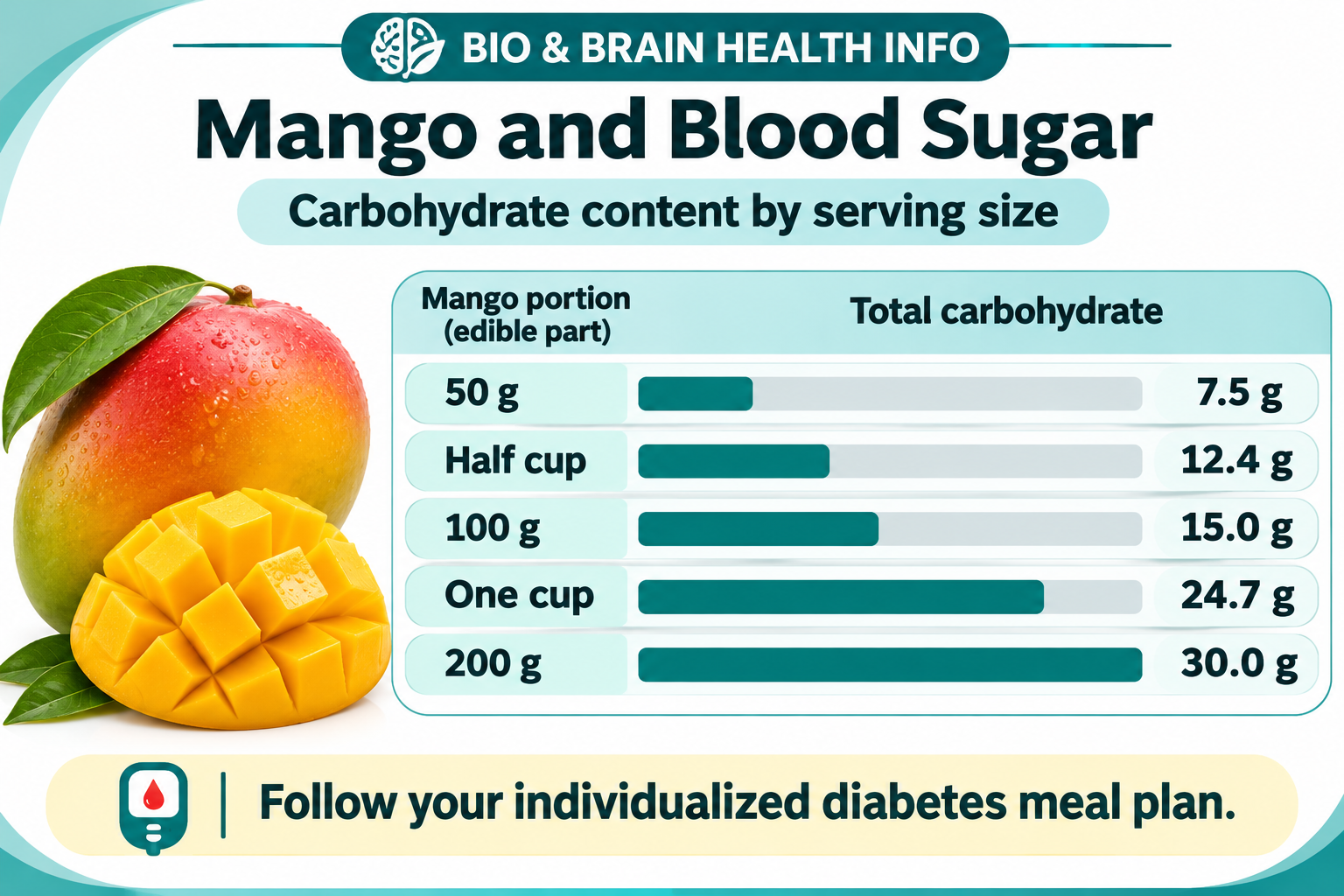
Many people with diabetes can eat mango as part of an individualized eating plan. Measuring edible weight is more useful than counting whole fruits. The following calculations are based on approximately 15 g total carbohydrate per 100 g raw mango.
| Edible portion | Approximate total carbohydrate |
|---|---|
| 50 g | 7.5 g |
| Half cup (82.5 g) | 12.4 g |
| 100 g | 15.0 g |
| One cup (165 g) | 24.7 g |
| 200 g | 30.0 g |
| 300 g | 44.9 g |
In common US diabetes education, 15 g carbohydrate is often described as one carbohydrate choice. This means about 100 g of reference mango is close to that amount. It does not mean that everyone should eat exactly 100 g or use a particular insulin dose. Carbohydrate-counting conventions differ internationally, and your healthcare team’s approach takes priority.
Does ripeness affect the glycemic response?
During ripening, starch and sugar composition can change, alongside texture and flavor. Cultivars differ as well. Sweetness, color or a generic glycemic index cannot accurately predict an individual’s post-meal glucose response. Consider the portion, other foods, activity and medications. Green mango is not automatically carbohydrate-free, and ripe mango is not automatically unsuitable for diabetes.
Readers using blood glucose monitoring can discuss how to evaluate meals with their diabetes team. Do not treat a single glucose reading as proof that a particular fruit is permanently forbidden or universally safe. Read Fruit and Diabetes: Portions and Choices and Carb Counting for Diabetes: Beginner Guide for broader portion guidance.
Blood Sugar Safety
Count carbohydrate according to your own care plan. For hypoglycemia, follow the prescribed fast-acting carbohydrate treatment and emergency instructions. Do not delay urgent care or independently adjust medication based on a fruit experiment.
6. Mango and digestive health: Fiber, polyphenols and gut research
Mango supplies fiber and water, which can contribute to a diet that supports regular bowel function. The 2018 constipation pilot trial investigated 300 g of mango daily over four weeks in people with chronic constipation, using an equivalent fiber comparison. Some constipation outcomes and biological markers improved in this small pilot study. This is preliminary evidence, rather than a recommendation to use large mango portions as a laxative.
A later 2023 gut health and microbiome trial evaluated fresh mango consumption and gut-related outcomes. It found no significant difference in several bowel symptom measures, despite some observed changes. This is an important reminder that not all trials show the same digestive effects. Microbiome changes also do not automatically establish a clinically useful benefit.
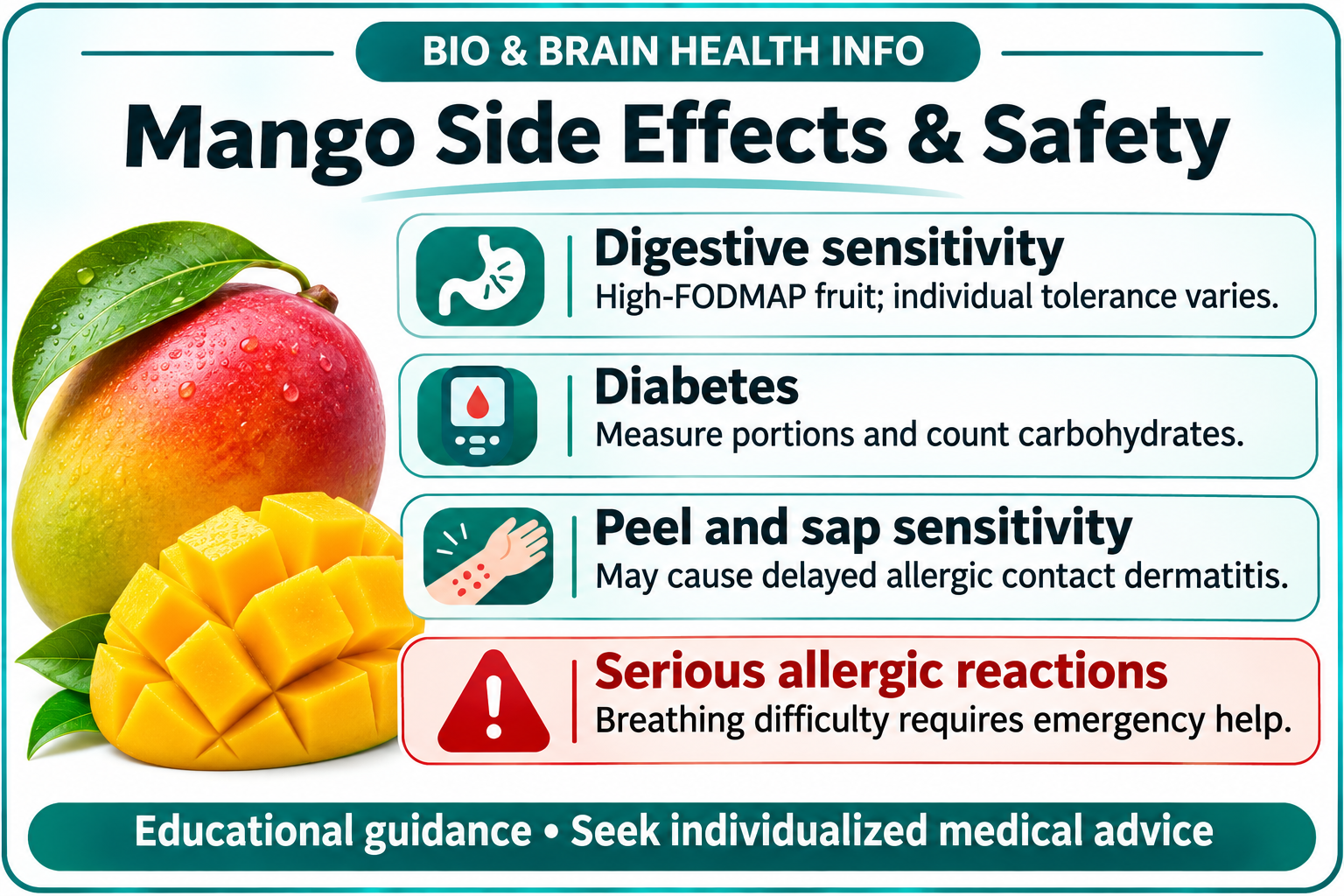
People with IBS may respond differently. Monash University FODMAP food list identifies mango among high-FODMAP fruits. Fermentable carbohydrates can contribute to gas, bloating and diarrhea in susceptible people. A structured low-FODMAP approach generally includes reintroduction and personalization, ideally with a dietitian. It is not a permanent restriction for everyone. Seek evaluation if symptoms persist or include bleeding, significant pain or unexplained weight loss.
7. Mango health benefits for heart and brain health
The 2026 avocado–mango vascular function trial investigated a diet containing both avocado and mango in 82 adults with prediabetes. The eight-week intervention improved a measure of vascular function relative to an energy-matched comparison diet. Because two fruits were introduced together, the contribution of mango alone cannot be determined. A vascular marker also does not establish fewer heart attacks or strokes.
Mango provides several nutrients and plant compounds that may be relevant to a balanced cardiovascular diet. Mangiferin and other polyphenols have attracted laboratory research, including studies of extracts. However, an extract can contain a different concentration from ordinary edible fruit. There is not sufficient clinical evidence that fresh mango prevents dementia, treats depression or reverses heart disease. See Mediterranean Diet and Type 2 Diabetes and Vitamins and Minerals for Brain Health.
Evidence Literacy
Before accepting a health claim, identify the actual food or supplement tested, the comparator, the sample size, the study duration and the clinical outcome. A promising biomarker is not proof of disease prevention.
8. Mango health benefits: Fresh, dried and juiced forms
Whole mango pieces preserve the food structure and fiber. Unsweetened frozen mango can also be a convenient option and may help reduce food waste. Mango juice generally contains less fiber, while a smoothie made with whole fruit retains more of the original material but can still deliver a large carbohydrate portion. Read ingredient labels to distinguish juice, nectar and sweetened fruit beverages.
Dried mango is more concentrated by weight because water has been removed. A small handful is not equivalent to a handful of fresh pieces. Some products include added sugar. Likewise, mango chutney, sweetened lassi and desserts have their own nutritional profiles. The name of the fruit in a product does not establish its suitability for a particular eating plan.
9. Mango side effects and medical precautions
Mango peel allergy and immediate food allergy
The 2021 mango contact allergy review documents delayed contact dermatitis associated with mango, particularly after peel or sap contact. Some affected individuals have a history of sensitivity to poison ivy or related plants. Delayed itchy rashes differ from rapid food-allergic reactions, but symptoms can overlap. The 2024 mango allergy review describes immediate reactions and cross-reactivity. Mango flesh can also cause reactions in some individuals.
If you suspect mango allergy, stop eating or handling the fruit and seek professional advice. Do not test peeled mango at home to determine whether it is safe after a previous allergic reaction. Breathing difficulty, throat swelling or faintness may indicate anaphylaxis. Call emergency services and use prescribed epinephrine when indicated by your allergy action plan.
Allergy Safety
A peel-related rash does not guarantee that the flesh is safe. Immediate swelling, breathing difficulty or faintness requires emergency medical assistance. Avoid deliberate re-exposure until medically assessed.
Kidney disease and supplement considerations
A reference cup contains about 277 mg potassium. People with kidney disease do not necessarily need to avoid mango, but individual potassium targets depend on clinical circumstances. Large servings can contribute more potassium and carbohydrate. Discuss restrictions with your renal dietitian. Concentrated mango leaf and mangiferin supplements are not interchangeable with the fruit; their safety and interactions require separate assessment.
10. How to enjoy mango health benefits in everyday meals
Try a measured portion with unsweetened yogurt, oatmeal or a salad containing beans and vegetables. Choose fruit that is suitable for eating and avoid damaged or spoiled products. Wash the outside under running water before cutting, use clean utensils and refrigerate cut mango promptly. Follow FDA produce safety and local recall notices. Read Diabetes Snacks: Balanced Options for more balanced snack ideas.
11. Frequently asked questions
Can I eat mango every day?
It can fit many varied diets, but no universal daily portion is required. Consider tolerance, dietary variety and your own carbohydrate needs.
Does mango lower blood sugar?
Small trials report promising metabolic findings in particular settings, but eating mango supplies carbohydrate and can raise glucose. It is not a diabetes treatment.
Can mango cure constipation?
Limited trials suggest possible benefit, but digestive symptoms have many causes. Some people with IBS experience more discomfort after mango.
Is unripe mango always healthier?
No. Nutrient composition changes with cultivar and ripeness, and the preparation and portion matter.
Can I eat mango peel?
The peel may cause contact reactions in susceptible people. Ordinary peeled edible flesh is the focus of this guide; seek medical advice if you suspect allergy.
Conclusion
The most dependable mango health benefits come from its nutrients and its contribution to dietary variety. Recent human studies are worth considering, but the food being replaced and the characteristics of the participants matter. Measure portions, recognize individual digestive tolerance and allergy risks, and continue necessary clinical care.
BBH Key Takeaway
Choose mango as a nutritious food rather than a medicine. Use measured portions and distinguish food substitution from addition. Seek professional advice about allergic symptoms, dietary restrictions and concentrated products.
Scientific references
USDA FoodData Central (SR Legacy, food 169910) • Raw mango nutrient reference values, USDA-derived • 2025 24-week prediabetes randomized trial • 2025 insulin sensitivity trial • 2025 controlled mango-versus-bread trial in type 2 diabetes • 2026 avocado–mango vascular function trial • 2018 constipation pilot trial • 2023 gut health and microbiome trial • 2021 mango contact allergy review • 2024 mango allergy review • Monash University FODMAP food list • NIH vitamin C fact sheet • FDA produce safety
Related reading on BBH
Explore: Physical Health → Weight, Nutrition & Metabolic Health support page