Kiwi: Nutrition, Benefits and Side Effects
Kiwi Health Benefits, Nutrition and Risks

Kiwifruit is a small fruit with a remarkably interesting nutritional profile. It is often promoted for constipation, immunity, sleep and blood sugar control. Some claims have considerably stronger human evidence than others. If you are struggling with irregular bowel movements or trying to choose fruit while managing diabetes, it is important to understand which results apply to ordinary food and which concern specific extracts or research conditions.
Thank you for reading this post, don't forget to subscribe!Understanding kiwi health benefits starts with the edible fruit, a realistic serving size and the actual outcomes measured in clinical studies. This guide uses US nutrition-label conventions and metric weights for readers in the United States, United Kingdom, Canada and Australia. It compares green and gold varieties, explains the enzyme actinidin and offers practical advice on allergies, medicines and dietary tolerance.
Medical Safety & Disclaimer
This article provides general nutrition education, not diagnosis or treatment. Follow individualized medical advice if you have diabetes, kidney disease, a food allergy, persistent constipation or take warfarin. Do not replace prescribed treatment with fruit, powders or supplements.
Quick Answer
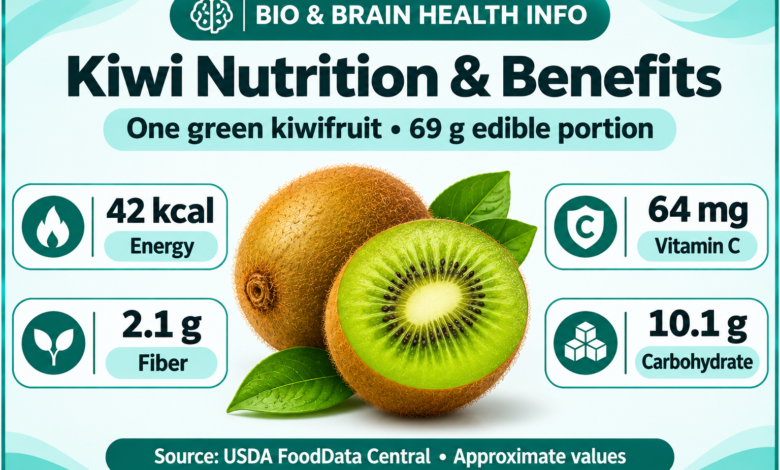
One reference green kiwifruit (69 g edible portion) provides about 42 calories, 10.1 g total carbohydrate, 2.1 g fiber and 64 mg vitamin C. Human studies support a possible role for fresh kiwifruit in managing constipation. Evidence for sleep improvement is less certain, and kiwi can cause serious allergic reactions in susceptible people.
In This Guide
What you will learn
Nutrition facts • Green versus gold kiwi • Constipation research • Fresh fruit versus extracts • Actinidin • Blood sugar • Sleep • Heart health • Allergy and medication precautions • Practical serving ideas • FAQs
1. Kiwi nutrition facts: What does one fruit contain?
Green kiwifruit provides water, naturally occurring sugars, dietary fiber, vitamin C, vitamin K and potassium. It contains relatively little fat or protein. The table uses the USDA SR Legacy reference for raw green kiwifruit and a reference edible portion of 69 g. A larger fruit may provide substantially more than this amount, so weigh the edible part when precision matters.
| Nutrient | Per 100 g | One fruit (69 g) |
|---|---|---|
| Energy | 61 kcal | 42 kcal |
| Total carbohydrate | 14.66 g | 10.1 g |
| Total sugars | 8.99 g | 6.2 g |
| Dietary fiber | 3.0 g | 2.1 g |
| Protein | 1.14 g | 0.79 g |
| Fat | 0.52 g | 0.36 g |
| Vitamin C | 92.7 mg | 64 mg |
| Vitamin K | 40.3 mcg | 27.8 mcg |
| Potassium | 312 mg | 215 mg |
| Folate | 25 mcg | 17 mcg |
Sources: USDA FoodData Central, green raw kiwifruit, record 168153 and USDA-derived nutrient table. Values are approximate and rounded independently. Other USDA records and different cultivars may report different values. In US nutrition labeling, total carbohydrate includes fiber and sugars. The vitamin C in this reference serving represents about 71% of the US adult label Daily Value of 90 mg. Daily Values are population labeling benchmarks rather than personal requirements.
Which nutrients explain kiwi health benefits?
Vitamin C contributes to collagen synthesis, immune function and the absorption of nonheme iron. Vitamin K is involved in normal blood clotting and bone metabolism. Potassium contributes to normal nerve and muscle function, while dietary fiber can support bowel regularity. These nutrient roles are well established, but they do not mean that eating more kiwi will cure a deficiency or prevent every illness.
2. Kiwi health benefits: Green versus gold varieties
Green and gold kiwifruit belong to related species and cultivars with different nutritional characteristics. The 2018 review of nutritional and health attributes compares older USDA reference values and describes the diversity of kiwifruit composition. Gold varieties often supply more vitamin C per gram than the standard green reference, while green varieties may supply more fiber. Actual values depend on the cultivar and data record.
This distinction is particularly useful when interpreting digestive research. A small gold fruit and a large green fruit do not necessarily provide the same edible weight, fiber or enzyme activity. Choosing one color as universally healthier overlooks these differences. Both can contribute to a varied diet, and the most suitable option depends on tolerance, preferences and nutritional priorities.
Kiwi can accompany a meal containing beans or fortified cereal because vitamin C supports plant iron absorption. The fruit itself is not a concentrated iron source. The NIH vitamin C fact sheet explains the underlying physiology. People with iron deficiency or persistent fatigue should obtain medical assessment instead of using fruit as a replacement for prescribed iron.
Practical Nutrition Tip
Use kiwi as one component of a balanced meal. Choose a suitable portion of green or gold fruit and include appropriate sources of protein and other nutrients.
3. Kiwi and digestive health: The evidence for constipation
Constipation can have many causes, including medication effects, insufficient dietary fiber, pelvic floor dysfunction and medical conditions. Kiwifruit is one of the foods that has been studied directly in adults with functional constipation and constipation-predominant irritable bowel syndrome (IBS-C). This makes its digestive evidence more relevant than a claim based only on a laboratory enzyme experiment.
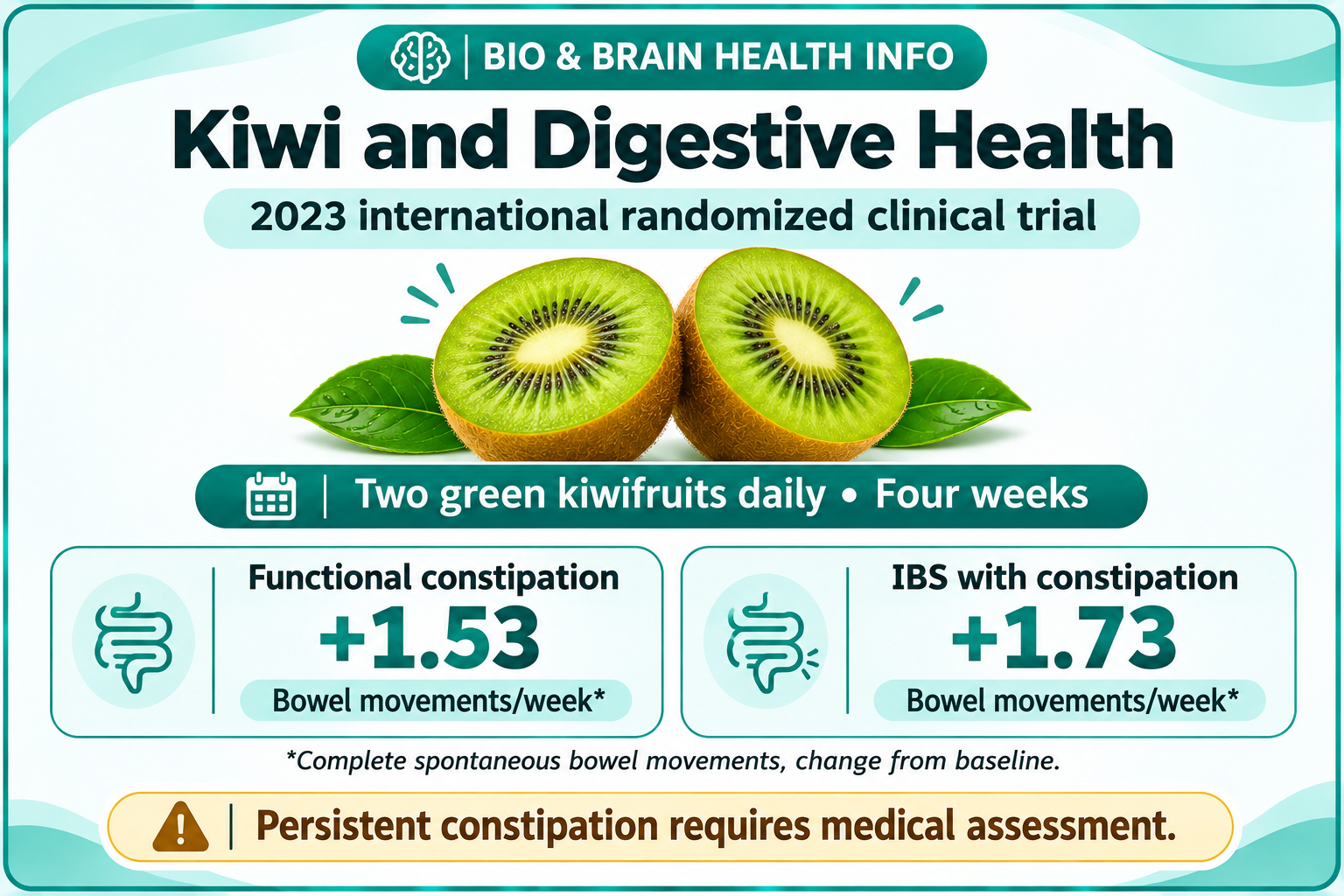
The 2023 international multicenter randomized trial evaluated two peeled green kiwifruits daily against a psyllium intervention in a multicenter randomized crossover design. After four weeks, bowel movement frequency increased by about 1.5 complete spontaneous bowel movements per week in functional constipation and about 1.7 in IBS-C, relative to baseline. Measures of gastrointestinal comfort also improved. A complete spontaneous bowel movement is a bowel movement without rescue laxative use that is accompanied by a feeling of complete evacuation.
The 2025 British Dietetic Association constipation guidelines supports kiwifruit as a potential dietary strategy but notes that certainty for some comparisons is low. The November 2026 narrative review of constipation evidence also emphasizes the evidence for fresh green fruit while identifying gaps in long-term outcomes and optimal use. These publications draw on some of the same clinical trials, so their conclusions should not be counted as independent proof from entirely separate patient populations.
For a suitable adult, a healthcare professional may suggest a monitored four-week food trial. Track bowel frequency, stool consistency, straining, abdominal discomfort and adverse reactions. The trial regimen is not a universal prescription for children, people with allergies or anyone with unexplained severe symptoms. The 2022 gold kiwifruit randomized trial also studied two gold kiwifruits daily in a smaller crossover trial.
Digestive Safety
Seek prompt medical evaluation for persistent or new constipation accompanied by blood in stool, unexplained weight loss or severe pain. Severe abdominal pain with vomiting or inability to pass stool or gas may require urgent assessment. Do not rely on fruit to delay care.
4. Content gap: Kiwi health benefits depend on the preparation
A frequent error in nutrition reporting is treating a fresh fruit, a dried powder and a concentrated extract as the same intervention. Water, fiber structure, enzyme activity, serving weight and processing can all differ. This matters because positive evidence for the whole fruit does not guarantee that a commercial product will reproduce the same results.
| Intervention | What the evidence supports |
|---|---|
| Two fresh green kiwifruits | Human trials support bowel regularity in selected adults with constipation. |
| Two gold kiwifruits | Smaller trials suggest potential benefit; results are cultivar-specific. |
| Green kiwifruit powder | Evidence depends on the formulation and studied endpoint. |
| Proprietary kiwifruit extract | Cannot be assumed equivalent to whole fruit; a major trial missed its combined primary endpoint. |
The 2025 placebo-controlled kiwifruit extract trial enrolled 186 patients with IBS-C over eight weeks. Its combined primary endpoint was achieved by 24% of the extract group and 26% of the placebo group, without a statistically significant difference. Some individual secondary measures showed possible improvement, but these cannot override the negative combined primary result.
The UK scientific opinion on green kiwifruit powder also assessed evidence for a particular powder product and identified limitations in the supporting data. The appropriate conclusion is not that every kiwi supplement is ineffective, but that product-specific claims require product-specific evidence.
What does actinidin actually do?
Actinidin is a protein-degrading enzyme present in kiwifruit, particularly in some green cultivars. It can influence protein breakdown under experimental conditions. Fiber, water and other fruit components may also contribute to gastrointestinal effects. No single mechanism has been established as the complete explanation for clinical constipation outcomes. A protein digestion experiment does not establish that kiwi treats reflux or pancreatic enzyme insufficiency.
The enzyme is also relevant to allergy research. Actinidin is among recognized kiwifruit allergens. It would be misleading to describe greater enzyme activity as universally beneficial without considering individual sensitivity. People with suspected kiwi allergy should not experiment with different cultivars or enzyme preparations without professional assessment.
5. Kiwi and blood sugar: Can people with diabetes eat it?
Many people with diabetes can include kiwi in an individualized eating plan. It provides carbohydrate and can raise blood glucose, although its water, fiber and food structure affect the response. The following table uses the raw green reference values. Weights refer to the edible portion.
| Edible portion | Approximate total carbohydrate |
|---|---|
| 50 g | 7.3 g |
| One reference fruit (69 g) | 10.1 g |
| 100 g | 14.7 g |
| Two reference fruits (138 g) | 20.2 g |
| One cup sliced (180 g) | 26.4 g |
Approximately 102 g provides 15 g total carbohydrate, near one carbohydrate choice in common US diabetes education. This is a reference calculation, not a recommended insulin dose or a required serving. Use your local diabetes team’s counting approach, because labeling conventions can differ across the United Kingdom, Canada, Australia and the US.
The 2022 randomized crossover trial of carbohydrate exchange and 2023 food order and carbohydrate exchange trial explored how replacing some cereal carbohydrate with kiwifruit influenced post-meal glucose responses. The important distinction is substitution. If fruit is added to an existing breakfast instead of replacing part of its carbohydrate, the total meal composition changes. A controlled exchange result cannot be applied automatically to an unrestricted additional portion.
Individual glucose responses depend on the entire meal, medications, activity and physiology. Monitoring as recommended by your care team can help identify suitable portions. See Fruit and Diabetes: Portions and Choices and Carb Counting for Diabetes: Beginner Guide.
Blood Sugar Safety
Kiwi is not a diabetes medicine. Do not change medication or insulin based on one food response. Treat hypoglycemia according to your individualized fast-acting carbohydrate and emergency care instructions.
6. Kiwi health benefits for sleep: Promising but uncertain
Kiwifruit has attracted attention as a possible evening snack for people who experience sleep difficulties. A 2025 narrative review of dietary sleep interventions summarizes small human trials, including studies where participants reported better sleep quality. In at least one controlled comparison with pear, the subjective improvements were not reflected in objective sleep measurements.
Subjective sleep quality is important to people experiencing insomnia, but it is not interchangeable with objectively measured sleep duration, sleep onset or sleep efficiency. Small samples, different controls and short interventions limit the ability to recommend a particular bedtime dose. The presence of serotonin or other compounds in a food also does not prove that they produce a predictable sleep-promoting effect in the brain.
A measured evening kiwi snack may be reasonable for someone who enjoys it and tolerates it, provided it fits their dietary plan. Persistent insomnia deserves assessment, especially when accompanied by daytime impairment or symptoms suggesting another sleep disorder. Do not stop prescribed sleep treatment because of fruit research.
7. Kiwi health benefits for heart health and weight management
Kiwi supplies nutrients that can contribute to a varied cardiovascular diet, including potassium, fiber and vitamin C. Its low energy density may make it an appealing alternative to some energy-dense snacks. However, there is insufficient evidence that eating kiwi prevents heart attacks or produces targeted abdominal fat loss.
A food substitution can help change a person’s overall intake, while adding fruit on top of the same diet is a different intervention. Consider dietary variety, adequate protein, appropriate energy intake and sustainable eating habits rather than focusing on an isolated fruit. Read Mediterranean Diet and Type 2 Diabetes and Vitamins and Minerals for Brain Health for broader nutrition guidance.
8. Kiwi side effects: Allergy, digestive tolerance and medicines
Pollen and latex cross-reactivity
Kiwifruit allergy can range from oral itching to serious systemic reactions. The 2023 pediatric kiwifruit allergy review and 2026 kiwifruit allergy review describe associations with pollen-food allergy syndrome and latex-fruit syndrome, as well as primary kiwifruit allergy. Not everyone with a latex or pollen allergy will react to kiwi, and a person without either history can still develop kiwi allergy.
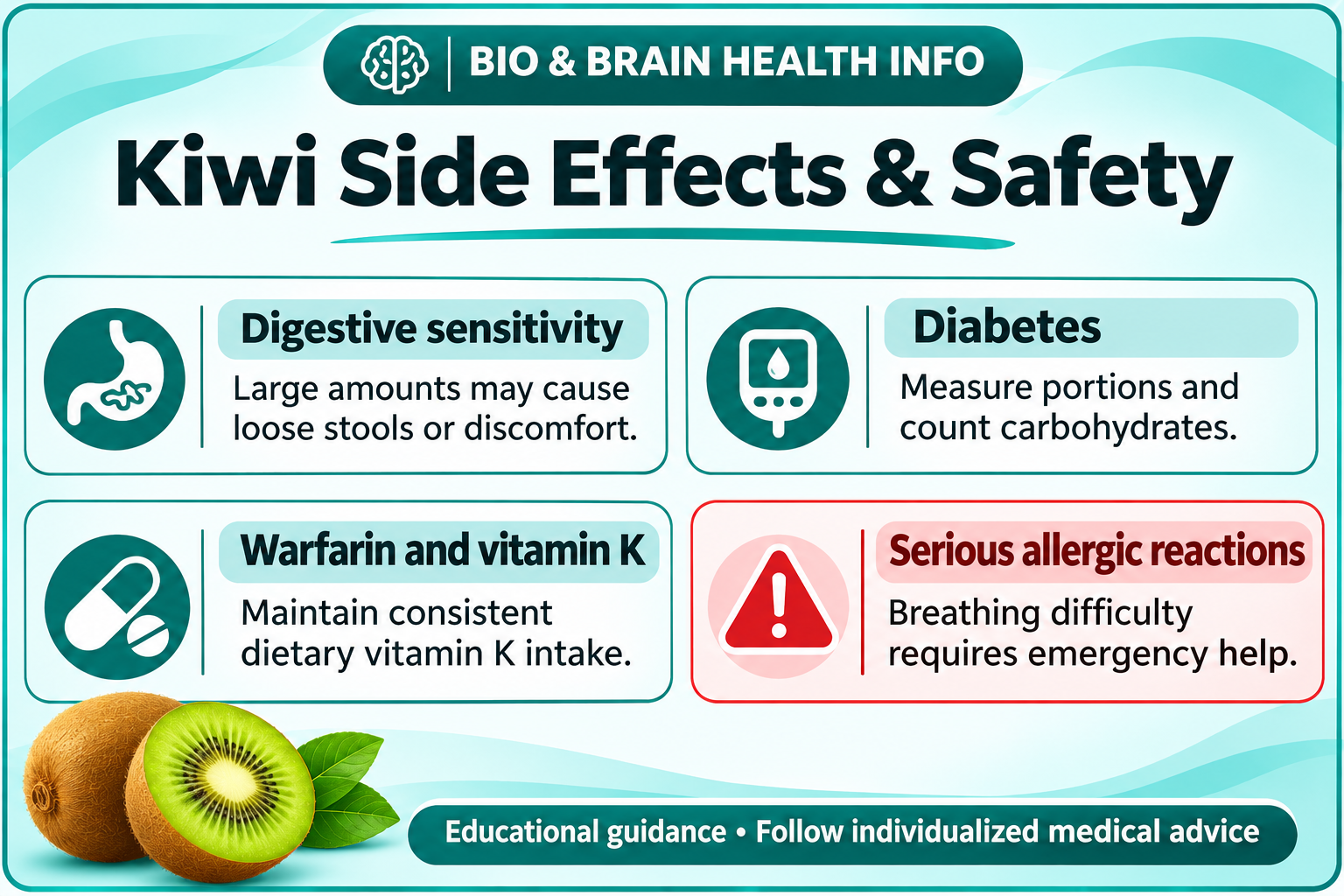
Children can experience significant reactions. Stop eating the fruit if an allergic reaction is suspected. Throat swelling, breathing difficulty, faintness or rapidly progressing symptoms require emergency care. Use prescribed epinephrine according to the person’s allergy action plan. Do not rely on removing the peel, cooking the fruit or switching colors to guarantee safety.
Allergy Safety
Do not dismiss mouth itching as merely an enzyme effect. Allergy symptoms can overlap with local irritation. Suspected serious reactions require emergency assistance; avoid deliberate re-exposure until assessed.
Digestive tolerance and kidney considerations
Some people develop loose stools, bloating or discomfort when consuming large amounts of kiwi. The fruit is often used as an option in dietary management of constipation, including IBS-C, but individual tolerance varies. Monash University kiwifruit and constipation guidance provides further dietary context. A reference green fruit also supplies about 215 mg potassium. People with kidney disease should follow individual potassium targets rather than assume that every fruit is forbidden.
Warfarin and vitamin K
Green kiwi contains vitamin K, which is relevant for people taking warfarin or other vitamin K antagonists. The NIH vitamin K fact sheet advises maintaining consistent vitamin K intake rather than suddenly increasing or decreasing it. Do not stop warfarin or eliminate kiwi automatically. Discuss substantial dietary changes with the anticoagulation team, particularly if you are planning a new daily fruit regimen.
Medication Safety
Keep dietary vitamin K consistent if you take warfarin. Ask your healthcare team about substantial diet changes and concentrated kiwi preparations. Never adjust prescribed medication independently.
9. How to enjoy kiwi health benefits safely
Choose ripe fruit that is free of spoilage. Wash the outside under running water before slicing, even when discarding the skin. Some people eat the skin, which changes the edible weight and fiber exposure; the major green-fruit constipation trial used peeled fruit. The FDA produce safety provides general produce handling advice.
Try sliced kiwi with plain yogurt, oats or an appropriate protein-containing meal. Compare dried and sweetened products by actual serving weight and ingredients. Fruit powders and juices do not necessarily reproduce whole-fruit research. See Diabetes Snacks: Balanced Options for practical snack ideas.
10. Frequently asked questions
Can I eat kiwi daily?
It can fit a varied diet if tolerated. There is no universal required daily amount.
Does kiwi help constipation?
Human trials support fresh kiwifruit for some adults with constipation. Persistent or concerning symptoms require broader assessment.
Is gold kiwi better than green kiwi?
Neither is universally superior. Vitamin C, fiber and enzyme composition vary by cultivar.
Does kiwi cure insomnia?
No. Small studies suggest possible benefits, but evidence is insufficient to establish it as an insomnia treatment.
Can people with diabetes eat kiwi?
Many can include it in their individualized eating plan. Measure the portion and count carbohydrate as advised.
Conclusion
The most dependable kiwi health benefits come from its nutrient profile, and human evidence supports fresh fruit as a possible dietary strategy for constipation in selected adults. Distinguish whole fruit from extracts, measure portions and recognize allergy or medication precautions. Continue appropriate medical care.
BBH Key Takeaway
Enjoy kiwifruit as food. Constipation research is more directly applicable to fresh fruit than supplement marketing; sleep and disease-prevention claims remain uncertain.
Scientific references
USDA FoodData Central, green raw kiwifruit, record 168153 • USDA-derived nutrient table • 2018 review of nutritional and health attributes • 2023 international multicenter randomized trial • November 2026 narrative review of constipation evidence • 2025 British Dietetic Association constipation guidelines • 2025 placebo-controlled kiwifruit extract trial • UK scientific opinion on green kiwifruit powder • 2022 gold kiwifruit randomized trial • 2022 randomized crossover trial of carbohydrate exchange • 2023 food order and carbohydrate exchange trial • 2025 narrative review of dietary sleep interventions • 2023 pediatric kiwifruit allergy review • 2026 kiwifruit allergy review • NIH vitamin K fact sheet • Monash University kiwifruit and constipation guidance • NIH vitamin C fact sheet • FDA produce safety
Related reading on BBH
Explore: Physical Health → Weight, Nutrition & Metabolic Health support page