Dragon Fruit: Nutrition, Benefits and Side Effects
Dragon Fruit Health Benefits, Nutrition and Risks

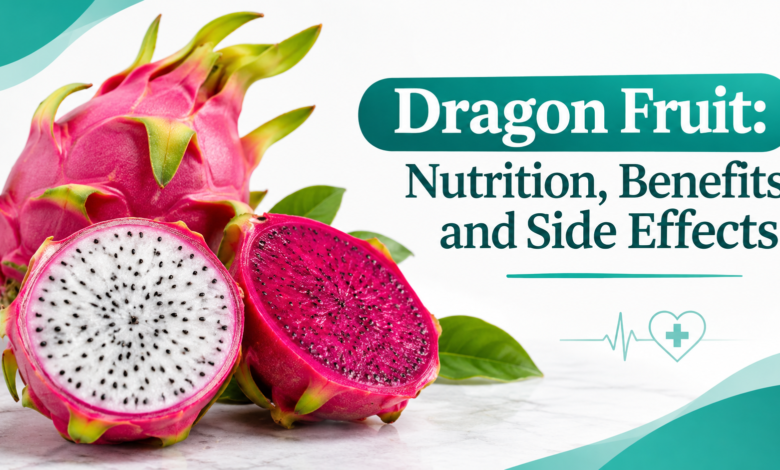
Dragon fruit stands out in an American produce aisle because of its vivid skin, speckled flesh and unfamiliar appearance. Its reputation as a superfood can make ordinary nutrition decisions unnecessarily confusing. A shopper may encounter a fresh white-fleshed fruit, a frozen red pitaya packet or a powdered supplement marketed for blood sugar. Those products are not interchangeable, and their benefits cannot be inferred from color alone.
Thank you for reading this post, don't forget to subscribe!Understanding dragon fruit health benefits requires attention to the actual edible portion, the variety and the evidence behind each claim. This US-focused guide combines food composition data with human clinical research and practical safety guidance. It explains why preliminary glucose and vascular findings are interesting without presenting pitaya as a treatment for diabetes or heart disease.
Independent Clinical Review
Review status: Pending independent clinical review. This article draws on the research and public guidance linked below. BBH will add the reviewer’s name, credentials, and review date once an independent review is documented.
Medical Safety & Disclaimer
This article provides general nutrition education, not diagnosis or treatment. Follow individualized guidance for diabetes, kidney disease and food allergies. Do not replace prescribed medicines with dragon fruit, powders or extracts.
Quick Answer
The USDA survey reference for dragon fruit provides approximately 68 calories, 16.24 g carbohydrate and 1.8 g fiber per 100 g. Red-fleshed varieties contain betalain pigments. Human trials have investigated glucose and vascular outcomes, but they do not establish dragon fruit as a disease treatment. Allergic reactions, including anaphylaxis, have been reported.
In This Guide
Topics covered
Nutrition facts • Red, white and yellow varieties • Blood sugar portions • Diabetes meta-analysis • Vascular research • Gut health • Red pigments and medical warning signs • Allergy • US shopping and storage • FAQs
1. Dragon fruit nutrition facts: Understanding the USDA reference
Dragon fruit, also called pitaya or pitahaya, is the fruit of certain climbing cacti. The edible pulp contains numerous small black seeds. The outer skin is normally discarded in ordinary household preparation. USDA FoodData Central includes a dietary survey reference for dragon fruit. It is important to name that record because food composition databases contain different entries for fresh fruit and branded frozen products.
| Nutrient | Per 100 g | Per 150 g edible portion |
|---|---|---|
| Energy | 68 kcal | 102 kcal |
| Total carbohydrate | 16.24 g | 24.4 g |
| Dietary fiber | 1.8 g | 2.7 g |
| Protein | 0.7 g | 1.1 g |
| Vitamin C | 19.8 mg | 29.7 mg |
| Potassium | 206 mg | 309 mg |
Source: USDA FoodData Central, dragon fruit, FNDDS 2709234. Figures are rounded estimates from a USDA FNDDS survey record, not a laboratory assay of every dragon fruit cultivar. Different samples and branded label records can show different results. A package reporting a different fiber or calorie value is not necessarily incorrect. Use the actual label where applicable and avoid combining figures from separate records into one supposedly precise table.
Which nutrients explain dragon fruit health benefits?
The fruit contributes water, carbohydrate, dietary fiber and vitamin C. The small edible seeds contain components that differ from the pulp, but a typical fruit serving is not a concentrated source of protein. Vitamin C contributes to normal collagen formation and immune function, as described by NIH vitamin C fact sheet. A 150 g serving in the named reference supplies roughly one third of the US adult label Daily Value of 90 mg. The contribution is useful without implying protection from infections or correction of a diagnosed deficiency.
Compare Honeydew: Nutrition, Benefits and Side Effects and Watermelon: Nutrition, Benefits and Side Effects for other water-rich fruits. A consumer can obtain a varied nutrient intake without buying an expensive imported fruit or supplement. Taste, affordability and availability are valid factors in choosing fruit.
2. Dragon fruit health benefits: Red, white and yellow varieties
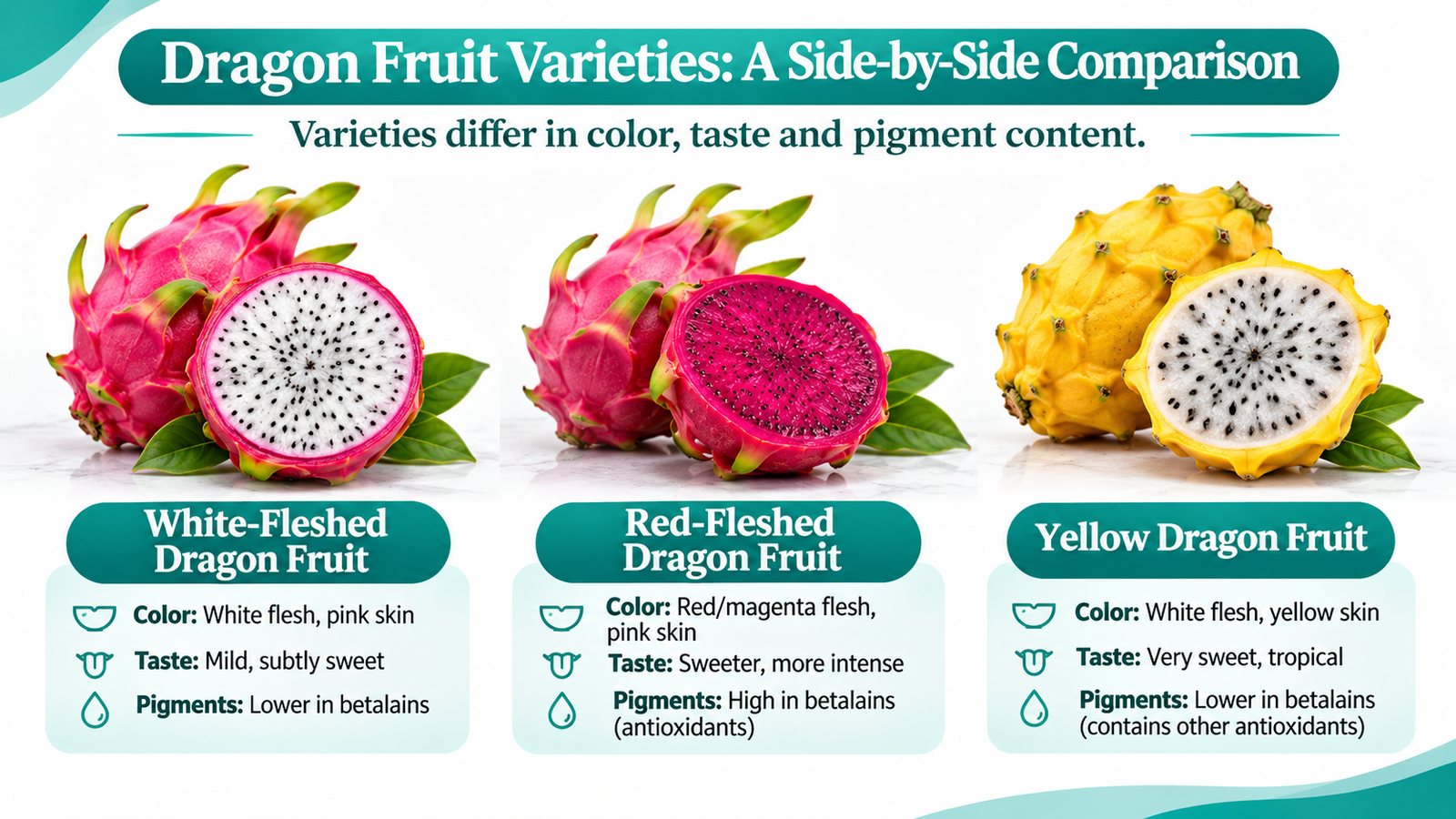
Common retail forms include pink-skinned fruit with white flesh, pink-skinned fruit with red or magenta flesh and yellow-skinned fruit that commonly has white flesh. The species and cultivars represented by these retail names can vary. Red-fleshed pitaya contains betalain pigments, particularly betacyanins, that contribute its characteristic color. White-fleshed fruit lacks the same visible concentration of red pigments.
| Retail form | What the consumer can reasonably infer |
|---|---|
| Pink skin, white flesh | White pulp with black edible seeds; nutrition depends on the cultivar. |
| Pink skin, red flesh | Red or magenta pulp containing betalain pigments. |
| Yellow skin, white flesh | A distinct retail type; sweetness and nutrient content may vary. |
The amount of pigment cannot be reliably quantified from a photograph or a variety name. Storage, ripeness and growing conditions can influence composition. A study of red-fleshed fruit or a standardized pigment-rich powder should not automatically be generalized to white or yellow pitaya. This is especially important when an article describes laboratory antioxidant measurements as though they were clinical health outcomes.
3. Dragon fruit health benefits and blood sugar: US portion awareness
Using the USDA survey reference, approximately 92 g of edible dragon fruit contains 15 g total carbohydrate. This is an illustrative carbohydrate-counting comparison, not a prescribed serving or a prediction of post-meal glucose. A larger fruit may contain considerably more edible flesh than expected, and the outer skin must not be included in the portion weight.
| Edible pulp | Approximate total carbohydrate | Approximate calories |
|---|---|---|
| 75 g | 12.2 g | 51 kcal |
| 92 g | 14.9 g | 63 kcal |
| 100 g | 16.2 g | 68 kcal |
| 150 g | 24.4 g | 102 kcal |
A smoothie containing a packet of pitaya, banana, juice and syrup can supply substantially more carbohydrate than a measured portion of plain fruit. Adding yogurt or another protein source changes the nutritional composition but does not cancel the carbohydrate already present. The complete meal matters, along with medication, activity and individual physiology.
Read Fruit and Diabetes: Portions and Choices and Carb Counting for Diabetes for further US meal-planning guidance. Follow the carbohydrate-counting method recommended by your own diabetes team. Total carbohydrate includes naturally occurring sugars and fiber under US labeling conventions. A no-added-sugar product can still supply substantial carbohydrate.
Diabetes Safety
The portion table is not an insulin-dosing guide. Do not adjust or stop diabetes medicines on the basis of pitaya research. Follow your established treatment plan for low blood sugar and seek medical advice for recurrent unexplained glucose changes.
4. Dragon fruit health benefits and diabetes: What the meta-analysis found
The Poolsup et al. 2017 systematic review and meta-analysis investigated randomized trials comparing dragon fruit with a control in people with prediabetes or type 2 diabetes. Four small trials were included, comprising 36 participants with prediabetes and 109 with type 2 diabetes. The pooled prediabetes result suggested a reduction in fasting glucose. The pooled results for type 2 diabetes did not demonstrate statistically conclusive improvements in fasting or two-hour post-meal glucose.
The review is informative precisely because it separates populations and outcomes. A result in prediabetes does not automatically establish an effect in people taking insulin or other glucose-lowering medicines. Small samples, differences in fruit preparations and methodological limitations constrain the certainty of the estimates. The studies were not sufficient to establish sustained improvements in HbA1c or diabetes remission.
The appropriate interpretation is that dragon fruit merits further study, not that it is a proven glucose-lowering therapy. A consumer choosing pitaya for a snack can use ordinary nutrition information without depending on a therapeutic claim. It is also important to distinguish the effect of substituting fruit for another food from the effect of adding fruit to an unchanged diet.

5. Dragon fruit health benefits and vascular research: The 2022 trial
The 2022 randomized double-blind crossover trial of vascular function used a randomized, double-blind, placebo-controlled crossover design in 19 healthy young adults. The intervention was a defined whole dragon fruit powder supplying betalains over a 14-day period. Researchers assessed measures of endothelial function and arterial stiffness, reporting improvements in certain acute and short-term outcomes.
This design provides stronger evidence for the measured outcomes than a laboratory antioxidant test alone. Nevertheless, it was small, short and conducted in healthy participants. Vascular function measures are intermediate outcomes. They are not equivalent to demonstrating fewer heart attacks or strokes, improved survival or an effective treatment for established cardiovascular disease.
The 2020 systematic review of betalain-rich cacti and vascular function considered animal and human research involving betalain-rich cacti. Evidence from a cactus pear intervention is not necessarily direct evidence about pitaya, and animal findings cannot establish human clinical effectiveness. A review that combines multiple species or preparations should be interpreted according to the actual intervention tested.
For broader eating-pattern context, see Mediterranean Diet and Type 2 Diabetes. The fruit can contribute to a varied diet, but its use should not displace lipid-lowering medicines, blood-pressure treatment or other clinician-recommended care.
6. Content gap: Dragon fruit health benefits and gut microbiome claims
Dragon fruit is frequently advertised as a prebiotic food. A prebiotic claim requires more than showing that a carbohydrate can be fermented by microorganisms in a laboratory. Evidence of a beneficial effect in people depends on the substance, amount, population and health outcome assessed. Research involving isolated pitaya oligosaccharides, extracts or animal models does not establish that an ordinary serving of fresh fruit produces the same effect.
A practical distinction is between the established contribution of dietary fiber and claims about specific bacterial species. The named USDA survey record supplies 1.8 g fiber per 100 g, so a 150 g serving contributes 2.7 g, approximately 10% of the US label Daily Value of 28 g. This is a contribution to a larger dietary pattern rather than a guarantee of improved microbiome diversity.
The NIDDK constipation nutrition describes the role of adequate dietary fiber and fluid in constipation management. Other foods, including beans, vegetables and whole grains, can provide additional fiber. People may experience bloating or loose stools after large servings or abrupt dietary changes. Persistent gastrointestinal symptoms should not be treated simply by escalating fruit intake.
Evidence Check
The presence of fermentable carbohydrates, plant pigments or laboratory antioxidant activity is not evidence that a fruit cures digestive disorders, cancer or inflammation. Human outcome studies and the exact food preparation matter.
7. Dragon fruit side effects: Red pigments and possible bleeding
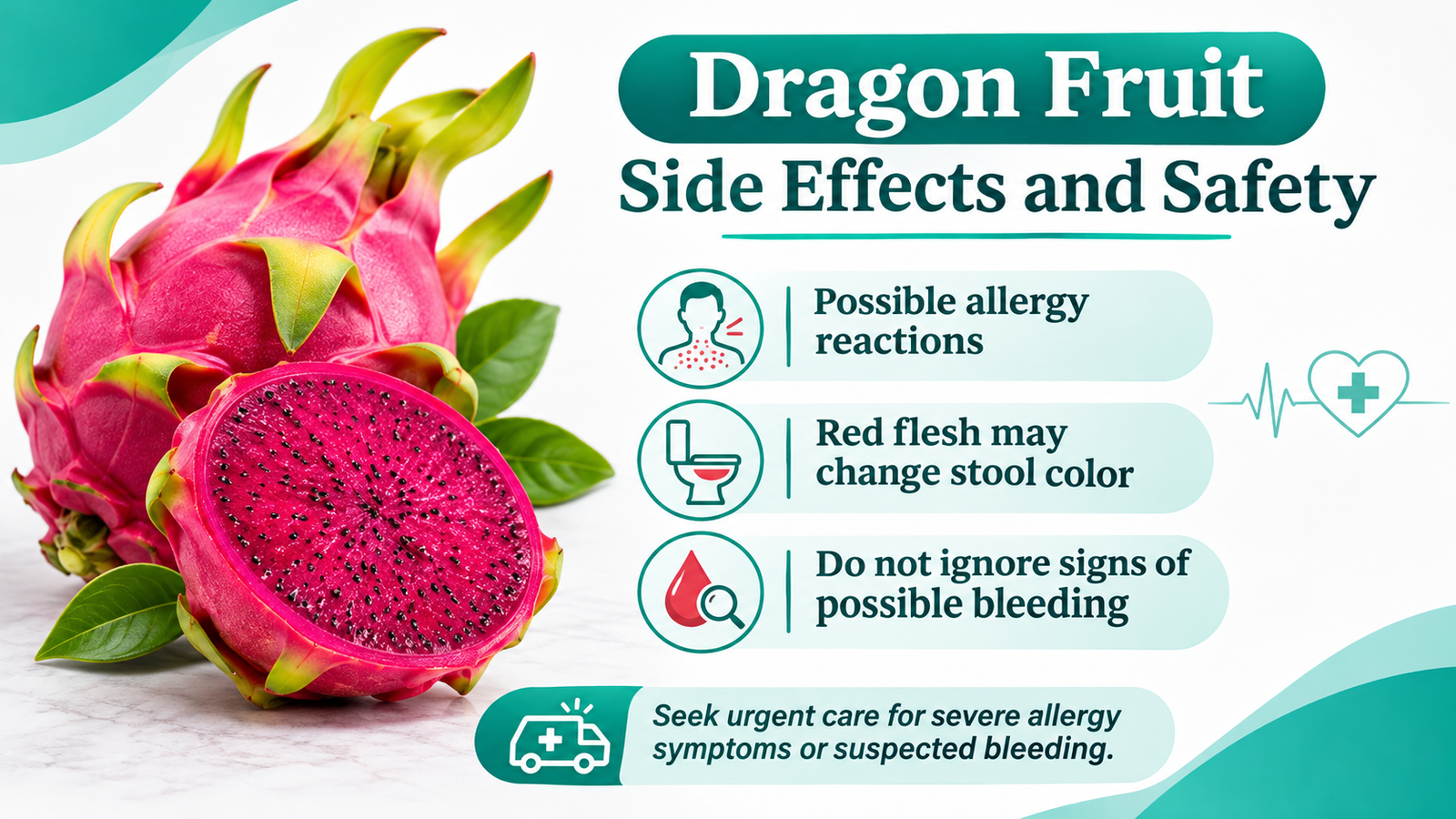
Red-fleshed pitaya contains intense pigments, and a change in stool color after eating deeply colored foods may have a dietary explanation. However, color alone is not a reliable way to distinguish food pigment from blood. A person should not assume that red stool or urine is harmless simply because they recently ate dragon fruit.
The NIDDK gastrointestinal bleeding symptoms describes signs of gastrointestinal bleeding, including bloody stool or black, tarry stool, and symptoms such as dizziness or faintness. Seek medical assessment for suspected bleeding. Severe bleeding, fainting or other emergency symptoms require urgent care. Persistent red urine also warrants appropriate assessment rather than automatic attribution to fruit. This safety distinction is more useful than promising that a color change will always resolve within a particular number of hours.
8. Dragon fruit allergy: What recent case reports show
The 2025 pitaya anaphylaxis case report documents an adult who developed anaphylaxis following pitaya consumption. A separate 2026 dragon fruit allergy case report describes a systemic reaction in a patient with evidence of cross-reactivity involving other plant allergens. These reports demonstrate that serious reactions are possible, but case reports cannot determine how common dragon fruit allergy is in the United States.
Do not interpret a novel or exotic fruit as hypoallergenic. A person with a suspected reaction should discuss the history with an allergist. Peeling, changing the variety or buying frozen pulp is not a dependable way to remove a potential allergen. The appropriate advice depends on the individual’s diagnosis.
Allergy Safety
For breathing difficulty, throat swelling, collapse or other signs of anaphylaxis, use prescribed epinephrine if indicated and call 911. Avoid deliberate home testing after a suspected serious reaction. See FDA food allergy information.
9. Kidney precautions, weight claims and individual tolerance
The NIH potassium fact sheet describes potassium’s physiological roles and the risk of excessive blood potassium in susceptible individuals. The USDA reference portion of 150 g provides about 309 mg potassium. People with a prescribed restriction or medicines affecting potassium balance should compare portions within their clinician-directed plan. Dragon fruit is neither a kidney detox treatment nor universally prohibited for everyone with kidney disease.
Weight-management claims also need an appropriate comparator. A serving replacing a higher-calorie snack may reduce energy intake on that occasion. Adding it to an unchanged diet does not establish weight loss. Pitaya powders, juice cleanses and restrictive fruit-only diets should not be promoted as necessary for fat loss or nutritional adequacy.
10. How to enjoy dragon fruit health benefits in everyday US meals
Choose fresh fruit with intact skin and no obvious spoilage. Wash the outside under running water before cutting, even though the skin will be discarded. Follow FDA safe produce handling and use clean utensils. Scoop out the edible flesh, including its small seeds, and refrigerate cut fruit promptly.
Frozen plain pulp can be convenient when fresh fruit is unavailable. Compare the serving weight and ingredients rather than relying on the front of the package. The FDA Nutrition Facts guide explains US Nutrition Facts conventions. Sweetened puree, smoothie bases and prepared bowls may contain added sugar or other ingredients. A whole bowl can be substantially larger than the suggested label serving.
| Product | Practical check |
|---|---|
| Fresh fruit | Edible weight and condition. |
| Frozen pulp | Ingredient list and serving size. |
| Smoothie bowl | Total carbohydrate and added ingredients. |
| Powder or extract | Preparation differs from fresh fruit; therapeutic claims require evidence. |
A measured portion can complement yogurt, oatmeal or a salad. It is not necessary to eat pitaya daily. A varied diet with accessible foods is preferable to building a nutrition plan around expensive specialty products. For people who enjoy its mild flavor, ordinary fruit can provide culinary variety without any need for a supplement.
11. Frequently asked questions
Is dragon fruit good for diabetes?
It may fit an individualized eating plan, but clinical evidence does not establish it as diabetes treatment. Count the actual carbohydrate portion.
Is red pitaya better than white pitaya?
Red flesh contains betalain pigments. Nutrient amounts and clinical effects cannot be assumed to be superior in every circumstance.
Can dragon fruit improve gut health?
It contributes dietary fiber. Specific microbiome or disease-treatment claims require stronger human evidence.
Are the small black seeds edible?
Yes, they are ordinarily eaten with the pulp. Avoid the fruit if medically contraindicated by allergy.
Can red dragon fruit change stool color?
Food pigments may affect color, but suspected bleeding must not be dismissed as a food effect.
Does dragon fruit lower blood pressure?
Small vascular studies do not establish a reliable blood-pressure treatment or prevention of cardiovascular events.
Conclusion
Dragon fruit offers dietary variety, vitamin C and fiber. Human research on blood glucose and vascular function is promising in some settings but limited in scope. Choose an appropriate edible portion, read product labels and distinguish fresh fruit from powders and extracts. Take allergic reactions and possible bleeding seriously rather than assuming that an unfamiliar fruit is harmless.
BBH Key Takeaway
Enjoy dragon fruit as ordinary food when medically appropriate. Use a named nutrient reference, evaluate the actual intervention in clinical research and continue individualized medical care.
Scientific references
USDA FoodData Central, dragon fruit, FNDDS 2709234 • Poolsup et al. 2017 systematic review and meta-analysis • 2022 randomized double-blind crossover trial of vascular function • 2020 systematic review of betalain-rich cacti and vascular function • 2025 pitaya anaphylaxis case report • 2026 dragon fruit allergy case report • NIH vitamin C fact sheet • NIH potassium fact sheet • NIDDK constipation nutrition • NIDDK gastrointestinal bleeding symptoms • FDA Nutrition Facts guide • FDA safe produce handling • FDA food allergy information
Related reading on BBH
Physical Health → Weight, Nutrition & Metabolic Health support page
Honeydew: Nutrition, Benefits and Side Effects • Watermelon: Nutrition, Benefits and Side Effects • Fruit and Diabetes: Portions and Choices • Carb Counting for Diabetes • Mediterranean Diet and Type 2 Diabetes