Setting Boundaries With a Narcissist Husband
7 Boundaries With a Narcissistic Husband


Setting boundaries with a narcissist husband starts with asking what happens when you say no. If you’re wondering how to deal with a narcissist husband, this guide offers five examples of boundaries in marriage, including emotional boundaries with a spouse around insults and privacy. It also explains when coercive control in a relationship makes confidential support a safer first step.
Thank you for reading this post, don't forget to subscribe!It’s almost midnight. You’ve said you want to finish the conversation tomorrow, but your husband follows you into the bedroom and asks why you’re “walking away again.” You explain that you have work in the morning. He repeats the question. Ten minutes later, you’re defending why you need to sleep.
If you’re looking up setting boundaries with a narcissist husband, you may already know what you want to say. What you’re less sure about is what will happen after you say it. Will he let the conversation end? Will he keep following you? Will you have access to your phone or the car if you need to leave?
Those questions matter more than finding the perfect wording. This guide offers five practical examples and a way to decide which response makes sense in your situation.
What setting boundaries with a narcissist husband can look like
A boundary identifies what you are willing to participate in and what you will do when a limit is crossed. “Please stop calling me selfish” is a request. “If the name-calling continues, I’ll end the call” specifies an action you can take if ending the call is safe.
Start with behavior you can describe plainly. “He kept calling after I said I was at work.” “He went through my messages.” “He moved my keys after I said I wanted to leave.” Describing what happened helps you explain what’s at stake to someone you trust.
The term narcissist husband reflects how readers may search for this topic. A single argument, a recurring pattern of behavior, and a clinical diagnosis are different questions. You can respond to insults, threats, or control without deciding whether your spouse has a personality disorder. Recognizing Narcissistic Tendencies in Relationships
What research says about coercive control in a relationship
A systematic review and meta-analysis found that exposure to coercive control was associated with symptoms of post-traumatic stress and depression. The research measured associations with mental health. It did not test whether boundary scripts change a partner’s behavior. Lohmann et al., systematic review and meta-analysis
Ask yourself, What happens when I make an ordinary choice he dislikes? A disagreement over plans is one thing. Being punished for seeing a friend, followed when you try to leave a room, or denied access to money you need changes the decisions you can safely make. Domestic abuse guidance recognizes controlling behavior and emotional abuse alongside physical and sexual violence. NHS domestic violence and abuse guidance
Before setting boundaries with a narcissist husband, check what happens when you say no
When setting boundaries with a narcissist husband, use the last few incidents to guide your next decision. Think of a time you declined a request, ended a call, visited someone, or asked for more time. What happened in the next ten minutes? What happened later that day? Were you still free to go to work, contact other people, or use money you needed?
| What happened before | An option to consider |
|---|---|
| He disagrees but lets you end the discussion and respects the pause. | State a brief limit. Pick one behavior and say what you’ll do. Give a time to discuss any necessary logistics. |
| He keeps arguing or demanding explanations, and a quieter action is available and safe. | Take a practical step. You might respond to nonurgent messages at a time that works for you. Consider his past response before changing how you communicate. |
| He follows you, blocks an exit, threatens you, monitors accounts, or takes away access to essentials. | Seek confidential support first. Talk to an advocate before announcing a new limit or changing access to accounts or devices. |
A private action can make sense when a spoken limit creates another argument. It can also introduce risk if your partner notices the change and retaliates. If you’re unsure, tell an advocate what happened the last time you did something similar. Public Health Agency of Canada safety planning guidance · 1800RESPECT safety planning guidance
The same boundary can call for different actions
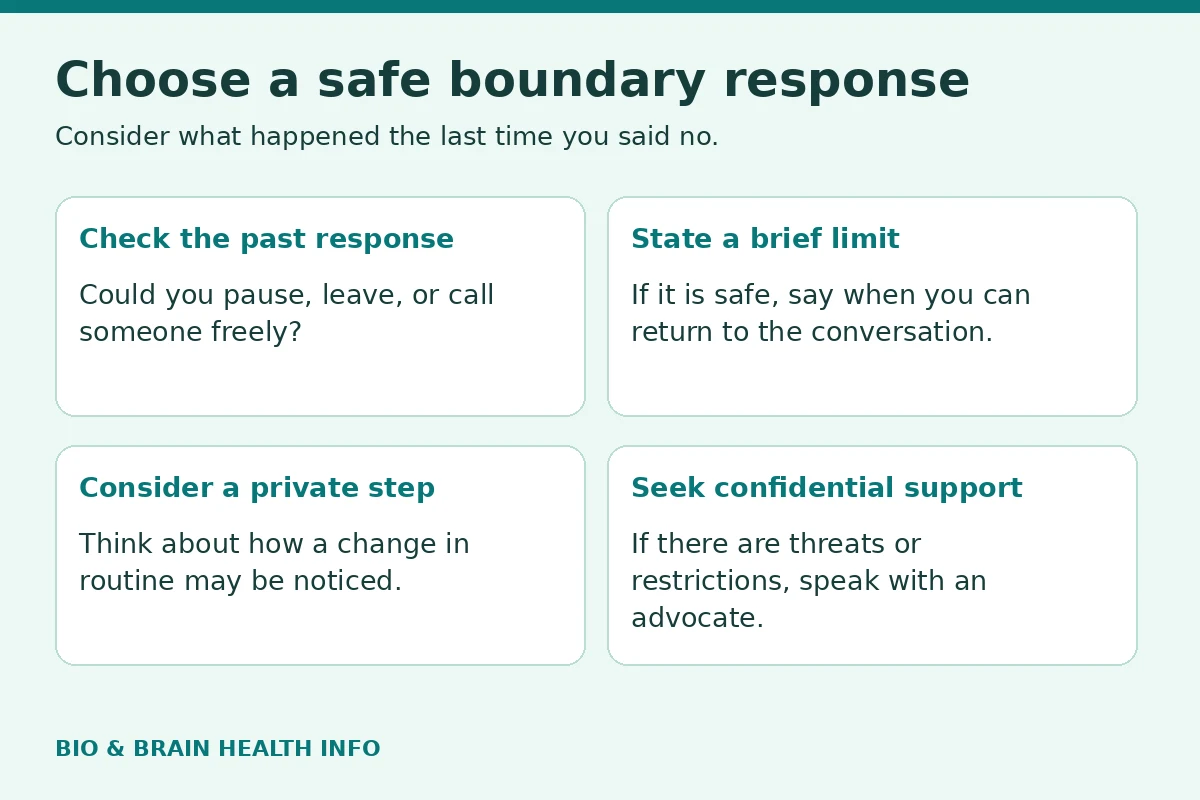
Two readers want arguments to stop after 10 p.m. The first can end a call and go to bed. Her husband is annoyed, but he leaves the conversation until morning. She can say, “I’ll talk about this tomorrow,” then end the call.
The second tried to end a late-night discussion last week. Her husband stood in the doorway and took her phone. Her next step needs to account for what happened. A confidential conversation with an advocate about reaching help and identifying a safer device is a more appropriate starting point than trying the same script again. Safety planning while living with an abusive partner
If you have started second-guessing how much control you have over ordinary choices, read How Living With a Narcissist Can Affect You.
Five examples of boundaries in marriage
Use these scripts where the action is safe and available to you. Change the wording to sound like something you would say. Think through how the conversation might end and what you can safely do afterward.
1. End a conversation when insults begin
What you might say. “I’ll discuss the schedule. If you call me names, I’ll end the call and we can try tomorrow.”
If the insults continue and you can safely hang up, do so. If hanging up has led to threatening calls, visits to your workplace, or escalation at home, talk through safer ways to handle contact with a specialist. Consider what happens after the conversation as well as what happens during it.
2. Pause a conversation when you are too tired to continue
What you might say. “I’m stopping for tonight. I can talk about the appointment tomorrow after breakfast.”
A specific time can make a pause practical when an issue genuinely needs discussion. If he repeats the question, you can repeat the time once. If ending a conversation has led to being followed, cornered, or prevented from sleeping, raise that pattern when you seek confidential support.
3. Emotional boundaries with a spouse around privacy
What you might say. “My conversation with my friend is private. I’m happy to discuss the part that affects our plans.”
If you suspect a device or account is monitored, get advice from a safer device before changing passwords, removing shared access, or deleting history. The safest choice depends on what your partner can see and how he has responded to similar changes. Canadian safety planning guidance
If a conversation often ends with you doubting what you heard or saw, BBH has an example-based guide. Covert Gaslighting
4. Take time before agreeing to a financial decision
What you might say. “I’m going to read the full agreement before deciding whether to sign.”
If you can safely take the time, review what you are being asked to agree to and get independent advice as needed. If refusing has led to threats or to losing money for food, medicine, or transport, first talk to a domestic abuse service about options that fit your situation. Financial and legal advice depends on your circumstances and where you live. NHS guidance on signs of domestic abuse
5. Keep children out of adult disputes
What you might say. “Please send pickup details to me directly. The children don’t need to carry that message.”
If a safe communication channel is available, keep logistical messages short and specific. If a child has already been pulled into an argument, you can tell them, “It’s the adults’ job to work out the plan.” If there are threats involving the children or existing court arrangements, get advice specific to your family before changing arrangements.
How to tell whether a boundary is helping
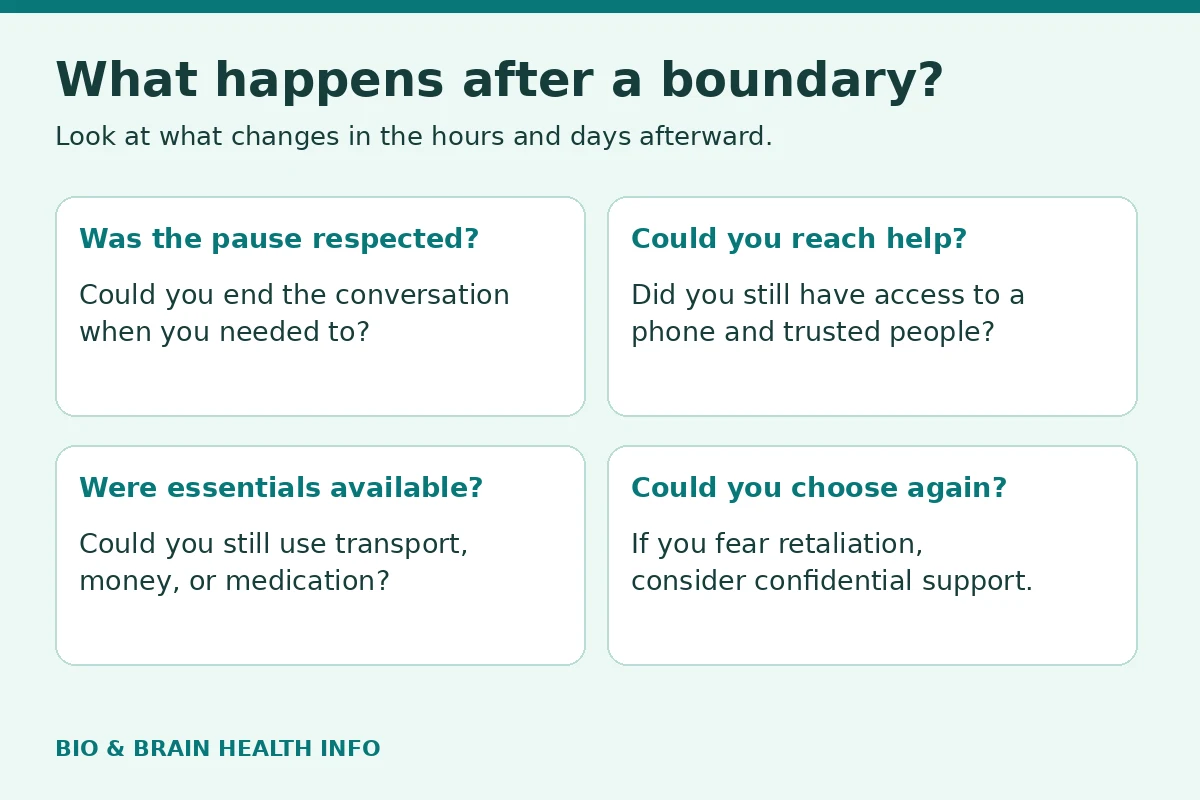
The first conversation tells you something, but the next few days may tell you more. Did your partner respect the pause? Did you still have access to your phone, transportation, and funds? Could you continue your usual routine afterward? Did you feel able to make the same choice again?
Consider two responses to a request for privacy. One partner says he’s hurt that you didn’t tell him about a conversation, then accepts that you want to keep it private. Another demands your passwords, checks your call history, and threatens to stop paying for your phone. The second response affects your access to help. It calls for a different next step.
Is setting boundaries with a narcissist husband working if he still gets upset?
A partner can be upset and still respect a limit. Look at whether your ability to make ordinary choices is respected over time. Ask, Can I end an uncomfortable conversation without being punished afterward? If the answer depends on who is home, whether your keys are available, or whether you have money for transport, share those details with someone who can help you assess the situation.
If keeping notes could expose you to monitoring or retaliation, ask an advocate about safer options before recording incidents. You can describe one specific event from memory when you reach out. The Hotline’s personal safety planning tool
When support matters more than another conversation
If you’re frightened about what will happen after a conversation, it’s reasonable to speak with someone privately. You could tell a trusted person, “Last time I tried to leave the room, he blocked the doorway. I want help thinking through my options.”
Where there is abuse or coercion, the U.S. National Domestic Violence Hotline advises against couples counseling with the abusive partner. Disclosures in a joint appointment can create risks afterward. An individual conversation with an advocate or qualified professional is a more appropriate starting point for discussing those risks. The Hotline’s guidance on couples counseling and abuse
If repeated criticism has made it hard to trust your own reactions, BBH has two related guides. How Childhood Criticism Shapes Self-Esteem · Emotional Neglect in Adulthood
Find confidential support where you live
Use a device you can access safely. In immediate danger, contact local emergency services. You can use the resources below to think through safety and find local support while you are still deciding what you want to do.
| Country | Support resource |
|---|---|
| United States | National Domestic Violence Hotline: Create a Personal Safety Plan |
| United Kingdom | NHS: Getting Help for Domestic Violence and Abuse |
| Canada | Public Health Agency of Canada: Plan for Your Safety |
| Australia | 1800RESPECT: Safety Planning |
Frequently Asked Questions
How to deal with a narcissist husband who says a boundary is unfair
If discussion is safe, explain the limit briefly and give any practical information he needs. “I can discuss the bill tomorrow morning. I’m going to sleep now” tells him when you’re available. If the discussion repeatedly turns into pressure or intimidation, consider confidential support to decide what you can safely do next.
Should I announce consequences in advance?
A simple explanation can help when both people can safely pause and return to the subject. If announcing a limit has led to threats, monitoring, or interference with your ability to leave, seek advice specific to your situation first. An advocate can help you assess whether and how to communicate a change. The Hotline’s safety planning guidance
What if I can’t afford to leave right now?
You can reach out for information while you’re still deciding what you want and what is possible. A local service can help you think through communication, transport, money, and people you can call. You can start with one concern you want help with today. Personal safety planning
Do I need to know whether my husband has a diagnosis?
You can make decisions based on what you experience. If he responds to an ordinary request with threats or interferes with access to money, transport, or communication, those behaviors are worth discussing with a qualified professional or advocate. You can seek support while the diagnosis question remains open.
Choose one next step
If you’re considering setting boundaries with a narcissist husband, start with one recurring situation. What happened the last time you said no? What action can you safely take this time? Who could help if the response worries you?
For one reader, that may mean ending a phone call after an insult. For another, it may mean contacting an advocate from a safer device. Choose the action that fits what has actually happened in your relationship.
For more BBH guides on boundaries, support, and recovery, visit the Narcissistic Relationships hub.
Research and references
- Lohmann et al. The Trauma and Mental Health Impacts of Coercive Control: A Systematic Review and Meta-Analysis
- National Domestic Violence Hotline. Safety Planning While Living With an Abusive Partner
- National Domestic Violence Hotline. Should I Go to Couples Therapy With My Abusive Partner?
- NHS. Getting Help for Domestic Violence and Abuse
- Public Health Agency of Canada. How to Plan for Your Safety
- 1800RESPECT. Safety Planning