Traveling With Diabetes: Checklist
Traveling With Diabetes: Packing & Safety


Traveling with diabetes can be safe and enjoyable with a little more preparation than an ordinary packing list. Whether you use insulin, tablets, an insulin pump or a continuous glucose monitor (CGM), the goal is to protect access to medication, avoid unexpected glucose emergencies and have a practical backup when travel plans change.
Thank you for reading this post, don't forget to subscribe!This BBH guide prioritizes readers in the United States and also covers the UK, Canada and Australia. It combines patient education from the CDC, American Diabetes Association (ADA), TSA, FDA, Diabetes UK and Diabetes Canada. Rules can change between airports, airlines and countries, so check official requirements for the exact route and your device before departure.
Traveling With Diabetes: Essential Checklist
Travel planning is different for someone using insulin than for a person managing type 2 diabetes without medicines that cause low glucose. Both may need extra food, water, medicine supplies and a clear plan for unexpected illness. The most useful checklist is personalized to your actual prescriptions, medical conditions, trip length and climate.
For international journeys, consider four questions: Can I access all essential supplies while traveling? Will temperatures damage medication? Will meal and medication schedules change? What will I do if a device fails or I become ill? Answering these questions in advance reduces preventable surprises.
The CDC recommends keeping diabetes supplies and accessible snacks in carry-on bags, carrying more supplies than usually needed and accounting for delays. This is a planning measure, not a reason to change your usual medicine dose. CDC: Tips for Traveling With Diabetes.
Two to Four Weeks Before Your Trip
Make a travel appointment if you will cross several time zones, use a pump, have recently experienced severe hypoglycemia, have complications affecting feet or vision, or will visit an area with limited healthcare access. Discuss vaccination needs, prescriptions, medication storage, activity changes and any destination-specific health risks. Ask the care team whether a medication review is needed before extended travel.
Ask for a letter listing diabetes, medicines, devices, needles, glucagon and other supplies when relevant. Carry a prescription list showing generic medicine names as well as brands, because brand names vary internationally. Check whether your travel insurance covers diabetes-related events, pre-existing conditions, medical evacuation, and replacement of lost medicines or technology.
Research a nearby clinic or emergency service at the destination, particularly for remote travel. Save important phone numbers offline, and know how to say that you have diabetes in the local language. For long journeys, a travel companion may benefit from knowing how to recognize and respond to severe low glucose.
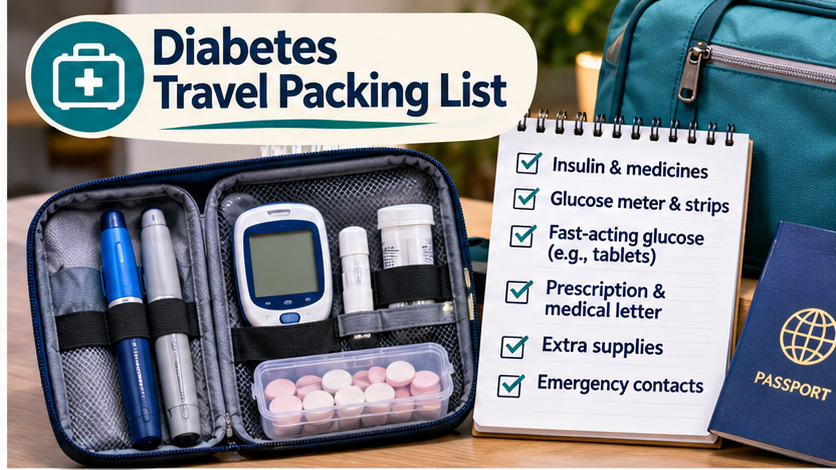
Diabetes Travel Packing Checklist: What Goes in Carry-On?
Place medication and critical supplies in a personal bag that stays with you rather than in checked baggage. Bags may be delayed or exposed to freezing or excessive heat. For long trips, divide reserve supplies between carry-on bags where permitted, but make sure each set remains accessible and accounted for.
| Pack | Examples |
|---|---|
| Prescribed medications | Insulin pens/vials, tablets, injections and prescriptions appropriate to your regimen |
| Monitoring equipment | Glucose meter, strips, lancets, CGM sensors and compatible receiver or phone |
| Power and device backups | Chargers, cables, batteries, pump infusion sets, spare sensors and manufacturer-recommended backups |
| Treating low glucose | Glucose tablets or gel and other fast-acting sugar suitable for your treatment plan |
| Emergency supplies | Glucagon if prescribed; clinician-approved sick-day plan, ketone supplies when indicated |
| Documents | Medication list, doctor letter, insurance details and emergency contacts |
| Practical extras | Snacks, water access, footwear, sharps container or compliant disposal plan |
Bring additional supplies for unexpected travel delays; the amount should be based on the length of the trip, the destination, and your clinical team’s recommendations. Diabetes UK suggests substantial spare supplies—often two to three times what you usually need—but packing space, insurance and lawful quantity limits also require consideration. Diabetes UK: Travelling With Diabetes.
Traveling With Diabetes: Insulin Storage and Temperature
Insulin can lose effectiveness when exposed to extreme temperatures. Unopened insulin generally has product-specific refrigerated storage requirements, while in-use storage limits vary significantly by formulation, brand and device. Read the manufacturer’s current leaflet rather than assuming all insulin lasts the same number of days outside a refrigerator.
Use a suitable travel cooling solution if needed, while avoiding direct contact between insulin and ice or frozen gel packs. Never deliberately freeze insulin. Do not leave supplies in a hot parked car, direct sun, luggage holds or an unmonitored hotel minibar that might freeze medication. If you suspect temperature damage or notice an unexplained change in glucose control, speak to a pharmacist or clinician about whether replacement is needed.
Other injectable medications, such as some GLP-1 medicines, may have different handling requirements. Do not copy insulin storage rules onto every medication. The NHS medicine storage guidance gives general advice, but the instructions specific to your medicine take priority.
Traveling With Diabetes: Airport Security and Devices
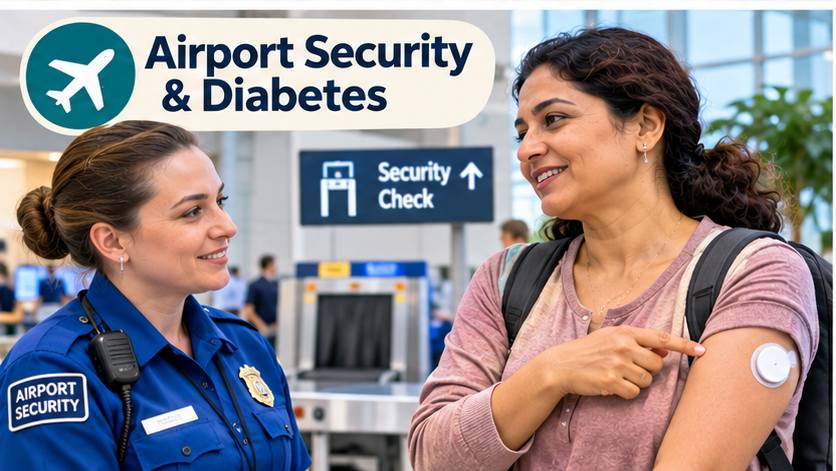
In the United States, TSA allows reasonable quantities of medically necessary liquids, gels and related equipment even when they exceed ordinary carry-on liquid limits, but these items must be declared for screening. Tell the officer if you carry a pump, CGM, needles or other medical equipment. TSA recommends labeling medicines, although it is not always mandatory under its general rules.
The precise screening pathway for a wearable device depends on the model and manufacturer. Some pumps or sensors have restrictions for certain scanners or X-ray equipment. Read device-specific guidance and explain your needs before screening. You can request alternative screening when appropriate; never disconnect an essential device without a safe plan.
Airport rules, border medicine regulations and accessibility rights may differ outside the United States. A security officer may still inspect supplies. Carry a clinician’s letter and allow extra airport time, and consult the airline plus the airport authority rather than relying on a social-media claim that every device is exempt from all checks.
For US rules, consult TSA medical screening guidance and the American Diabetes Association’s air-travel advice. These are particularly useful when planning transport of sharps, medical liquids and devices.
Traveling With Diabetes Across Time Zones
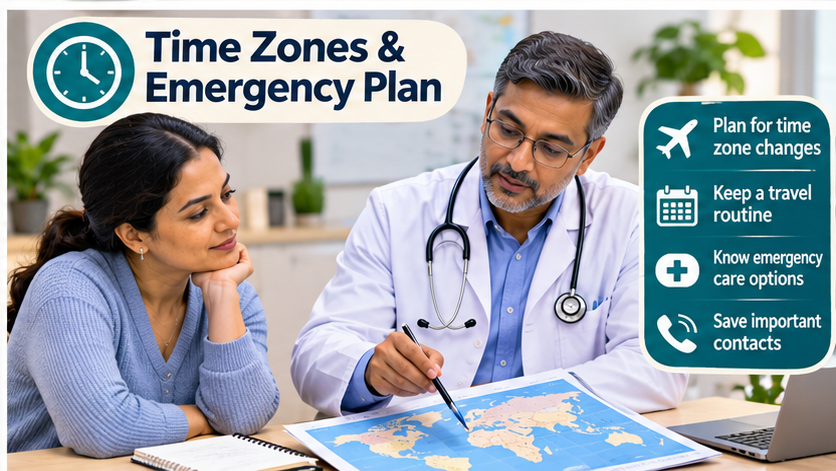
Crossing several time zones can change the time between insulin doses and meals. Traveling east shortens the local day, while traveling west lengthens it, but there is no universally safe adjustment table for every basal insulin, pump setting, multiple-dose regimen or mixed insulin treatment. Some noninsulin medications also require schedule planning.
Before travel, give your diabetes team the departure and arrival time zones, flight duration, stopovers, current doses, medicine names and typical mealtimes. Ask for a written schedule that specifies which clock to follow during transit and when to switch to local time. Avoid guessing or doubling doses to “catch up.”
Smartphones may change clock settings automatically; pumps and meters vary in how their internal clocks and logs behave. Check device instructions before changing time zones. Keep a paper backup of the schedule if your phone loses power or connectivity. Cambridge University Hospitals’ insulin-travel guidance illustrates why personalized changes matter.
Food, Hydration and Movement on Long Journeys
Delays, unfamiliar food, changed portions and extra walking may alter glucose patterns. Carry suitable shelf-stable snacks rather than depending entirely on airline or train food. Drink water when available, especially in warm climates, but follow any medical fluid restrictions. Excessive alcohol may worsen low-glucose risk and interfere with judgment and sleep.
On long journeys, move your legs and walk when safely possible. People with limited mobility or increased clot risk may need additional travel recommendations from a clinician. Avoid walking barefoot in unfamiliar accommodation if you have neuropathy or reduced foot sensation, and inspect your feet after prolonged walking.
Eating carbohydrate is not automatically a mistake during travel. Match meals and monitoring to the individualized care plan; if you use mealtime insulin, your clinician should explain how to handle delayed food, snacks and time shifts. A practical approach should allow enjoyment of the trip, not insist on identical meals everywhere.
Preventing and Treating Low Blood Sugar Away From Home
People using insulin or sulfonylureas may have an increased risk of low glucose during unusual activity, delayed meals or alcohol consumption. Early warning signs can include shaking, sweating, hunger, palpitations, dizziness and confusion. Keep fast-acting glucose where you can reach it, not at the bottom of a large suitcase.
For many alert adults with blood glucose below 70 mg/dL (3.9 mmol/L), a standard response is 15 grams of fast-acting carbohydrate and a repeat glucose check after 15 minutes, with further treatment as directed by the care plan. This is not appropriate as an oral treatment for someone unconscious or unable to swallow. If severe hypoglycemia is a known risk, ask about prescribed glucagon and teach a companion how to use it.
Check whether travel companions know when to call emergency services. If you are confused, unconscious or have a seizure, emergency intervention is essential. Do not drive or continue strenuous activity during suspected or confirmed hypoglycemia. For additional detail read Preventing Low Blood Sugar Episodes.
Illness, Dehydration and Ketone Safety During Travel
A stomach illness, fever or infection may change glucose regulation and make it hard to maintain food or fluids. Bring a written sick-day plan explaining monitoring, hydration, medicines and when ketone testing is required. If you use an SGLT2 inhibitor, illness, fasting, dehydration and surgery can increase ketoacidosis risk in certain circumstances, sometimes without extremely high glucose.
Vomiting, abdominal pain, deep or rapid breathing, marked dehydration and confusion can indicate a dangerous metabolic condition. Seek urgent medical assessment rather than assuming a gastrointestinal infection is harmless. Never stop or continue medication contrary to your prescribed sick-day instructions without clinical guidance.
Research available medical facilities and the international emergency number before leaving. Carry insurance information and the generic names of your treatments because the local pharmacy may use different product names. A translated medical summary may be valuable for longer trips.
Road Trips, Cruises, Hiking and Remote Destinations
Car travel requires planning for breaks, temperature control and safe driving. If you use medication that can cause hypoglycemia, ask your clinician about testing before and during long drives and your local licensing requirements. Never drive when low, confused or dangerously sleepy. Keep your glucose treatment within reach, not locked in the trunk.
Cruises and remote trips may involve limited pharmacy access or long distances from emergency care. Consider more reserve supplies, copies of prescriptions, device backups and the capacity to keep medications at the correct temperature. Do not assume a cruise ship or remote hotel stocks the exact insulin you use.
For hiking or beach travel, protect devices from water, dust, heat and impact according to their specifications. More walking and changes in exertion can change glucose needs, so review the activity plan with a clinician. For related advice see Exercise and Blood Sugar: Safety Tips.
Medical Letters, Travel Insurance and Accessibility
A medication letter can explain diagnosis, insulin or injectable requirements, medically necessary liquids, devices, sharps and rescue medicines. It does not automatically override border or aviation rules, but it can make communication easier. Carry both digital and offline copies where feasible.
Insurance policies may exclude particular pre-existing conditions, depend on disclosure or have limits on emergency medication replacement. Read the actual terms. For international travel, check legal requirements for importing medicines—including controlled or restricted medicines that may be prescribed for other conditions.
A medical identification card or bracelet can be helpful for travelers at risk of hypoglycemia or who use insulin. Consider giving a trusted companion an emergency contact and practical rescue instructions, while protecting personal health information from unnecessary disclosure.
Travel-Day Schedule: A Practical Example
| When | Action |
|---|---|
| Before leaving home | Confirm medicines, prescriptions, glucose treatment, device power, backup supplies and storage |
| At airport or departure point | Declare relevant medical items and explain device screening needs |
| During the journey | Keep supplies accessible; use prescribed testing, hydration and meal plan |
| After landing | Check time-zone schedule, accommodation storage and emergency contacts |
| Each travel day | Monitor as directed, inspect feet when appropriate and reassess plans if unwell |
Traveling with diabetes is easier with a realistic schedule. A timeline is most helpful when it reduces uncertainty without adding unnecessary monitoring. Discuss specific preflight and overnight glucose targets with your diabetes team rather than copying someone else’s numbers. If anxiety about travel is significant, plan a conversation with your clinician before departure.
Seven Travel Questions Many Diabetes Checklists Miss
1. What if the flight is delayed overnight?
Carry reserve medication, accessible food, monitoring supplies and a plan for extra insulin storage.
2. What if a CGM sensor falls off abroad?
Bring replacement sensors and a backup glucose meter compatible with your supplies.
3. What if a pump stops working?
Ask your diabetes team for a manufacturer-specific backup insulin delivery plan before leaving.
4. What if insulin is exposed to freezing temperatures?
Avoid using potentially damaged medicine until you obtain guidance based on the product and exposure.
5. What if my destination uses different insulin brands or strengths?
Use generic names and verify concentrations or device compatibility with a clinician or pharmacist.
6. What if airport security cannot accept my preferred device screening?
Request appropriate assistance and confirm the manufacturer’s alternative screening instructions beforehand.
7. What if illness prevents me from eating or drinking?
Use a prescribed sick-day plan and seek prompt help for dehydration, vomiting or possible ketoacidosis.
Traveling With Diabetes in the USA, UK, Canada and Australia
USA: CDC travel guidance and ADA travel-rights resources are useful starting points. TSA permits medically necessary liquids and related supplies subject to screening and declaration; the device manufacturer may impose additional scanning precautions. CDC travel advice offers a concise overview.
UK: Diabetes UK recommends a healthcare letter, extra supplies and a medication plan for time-zone changes. Use the airline and UK airport’s current screening procedures and check government rules when carrying medicines internationally. Glucose readings are commonly expressed in mmol/L.
Canada: Diabetes Canada provides a dedicated air-travel checklist. Check the Canadian Air Transport Security Authority (CATSA) for current checkpoint rules and retain medicine and device documentation.
Australia: Verify current aviation security requirements, airline medical-assistance procedures and medication import rules for both departure and destination. Diabetes Australia and your diabetes team can help prepare for long-distance flights; airport rules should be verified through the appropriate Australian authorities.
Medical Safety Box: When Travel Requires Urgent Care
Frequently Asked Questions
Can people with diabetes travel by plane?
Usually yes, with an individualized medication plan, appropriate monitoring, accessible supplies and attention to medical needs.
Should insulin be packed in checked luggage?
Keep essential insulin in carry-on baggage to reduce risks from loss and temperature extremes.
Can I take juice or insulin through US security?
TSA permits reasonable amounts of medically necessary liquids, subject to declaration and screening.
Do I need a doctor’s letter?
It is strongly useful for explaining medicines and devices; requirements vary between countries and airlines.
How much spare medication should I pack?
Take enough for delays and emergencies; diabetes organizations often advise substantial extra supplies, tailored to the itinerary.
How should I adjust insulin across time zones?
Obtain an individualized written schedule; adjustments vary with insulin type, doses, direction and journey length.
Can CGM or insulin pumps go through airport scanners?
Device-specific restrictions vary; check manufacturer and airport security guidance before screening.
What if my glucose meter stops working?
Carry backup supplies and arrange replacement or clinical help using the plan made before departure.
Can I use an ice pack to store insulin?
Use a suitable method that prevents freezing or heat damage and follows the product’s specific instructions.
Do I need extra snacks during a flight?
Carry accessible fast-acting glucose when at risk of lows and other snacks suitable for delays.
What about driving with insulin?
Discuss testing and hypoglycemia precautions and follow local driver licensing requirements.
What should I do if I become sick abroad?
Follow the clinician-approved sick-day plan and seek urgent care for severe symptoms, dehydration or possible ketoacidosis.
Are diabetes medicines available everywhere?
Do not assume the same brand, strength or device is available; bring documentation and reserve supplies.
Does travel insurance cover diabetes?
Coverage differs; check exclusions, disclosure requirements and medical-emergency limits before buying.
BBH Menu, Submenu, Support and Five Internal Articles
Medical Research, Official Guidance and Review Status
- CDC: Tips for Traveling With Diabetes
- ADA: Air Travel and Diabetes
- TSA: Medical Items and Screening
- FDA: Insulin Pump Travel and Safety
- Diabetes UK: Travelling With Diabetes
- Diabetes Canada: Air Travel Checklist
- NHS: Storing and Travelling With Long-acting Insulin
- Cambridge University Hospitals: Travelling With Insulin Injections