Diabetes in Pregnancy vs Gestational Diabetes
Diabetes in Pregnancy vs Gestational: Differences


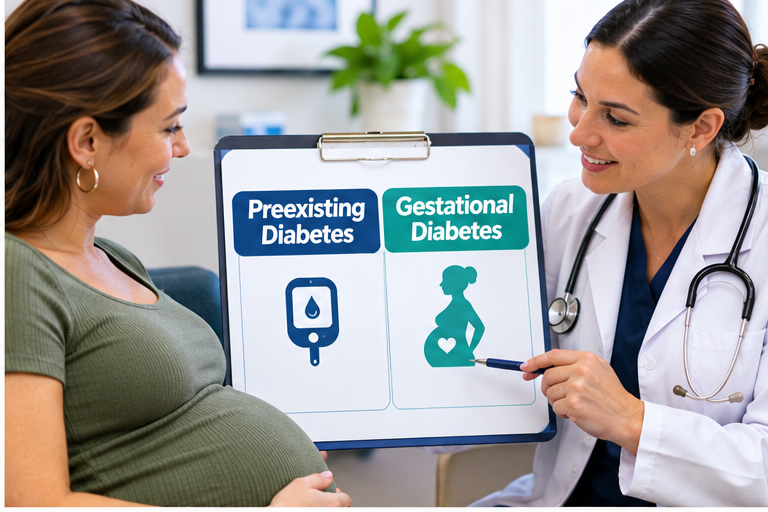
Diabetes in pregnancy vs gestational diabetes is not simply a question of which condition causes higher blood sugar. The essential distinction is whether diabetes existed before conception or whether gestational diabetes developed during the pregnancy. That difference influences early pregnancy risk assessment, medicines, monitoring and what happens after delivery.
Thank you for reading this post, don't forget to subscribe!This research-based comparison is written specifically for readers in the United States, using the ADA 2026 Standards of Care, CDC, NIDDK and US screening guidance. It explains terminology, screening and practical differences without implying that one person’s diagnosis predicts their pregnancy outcome.
What the two diagnoses actually mean
The phrase “diabetes in pregnancy” is a broad description. It can include type 1 diabetes that was present before conception, type 2 diabetes that predated pregnancy, previously unrecognized overt diabetes detected early in pregnancy, or gestational diabetes that develops during pregnancy. It is not an exact synonym for gestational diabetes.
Preexisting diabetes means that glucose regulation was abnormal before pregnancy, even when the diagnosis was only discovered after conception. Type 1 diabetes requires ongoing insulin, while type 2 diabetes may have been managed with medicine, nutrition or other approaches before conception. Gestational diabetes is generally diagnosed during pregnancy in a person not already known to have overt diabetes.
The distinction is important because prolonged high glucose around conception can affect early fetal development, when many organs are forming. Gestational diabetes commonly becomes evident later, as placental hormones increase insulin resistance. But the calendar date of an abnormal result cannot by itself reveal when the underlying problem began.
The CDC distinguishes diabetes that is already present from diabetes that first develops during pregnancy. ADA 2026 classification standards likewise caution that early high readings may represent previously undiagnosed type 2 diabetes or other conditions. A clinician should evaluate the complete context.
Diabetes in Pregnancy vs Gestational Diabetes: Side-by-Side
Both conditions require maternal and fetal care, but the clinical starting point is different. A person with known type 1 diabetes usually enters pregnancy with insulin treatment and may require a carefully revised preconception plan. Someone with type 2 diabetes may need medication changes before or immediately after conception. A patient diagnosed with gestational diabetes commonly begins with structured nutrition, activity, home monitoring and additional treatment when needed.
The table below provides a general US clinical comparison, not a diagnostic test or medication prescription. If a person has high glucose very early in pregnancy, ask whether the laboratory results meet criteria for overt preexisting diabetes rather than assuming the condition is gestational.
| Feature | Preexisting diabetes | Gestational diabetes |
|---|---|---|
| Condition | Already present before pregnancy (type 1 or 2), including newly recognized overt diabetes | Develops or is first recognized during pregnancy without clear overt preexisting diabetes |
| Usual timing | Before conception, or identified early | Often diagnosed at 24–28 weeks |
| Early fetal development | Preconception and first-trimester glucose especially relevant | Often diagnosed after organ formation, but timing of glucose abnormalities varies |
| Insulin | Essential for type 1; preferred when needed in type 2 pregnancy | Preferred medication if nutrition/activity alone are insufficient |
| Postpartum status | Diabetes continues; medicines often need reassessment | May resolve, but OGTT required 4–12 weeks postpartum |
| Long-term monitoring | Ongoing diabetes care | Future type 2 diabetes screening, typically at least every 3 years |
When pregnancy diabetes is screened or diagnosed
Routine US screening for gestational diabetes usually occurs between 24 and 28 weeks in pregnant people not already diagnosed with diabetes. Practices may use a one-step 75-gram oral glucose tolerance test or a two-step method starting with a 50-gram glucose challenge and proceeding to a diagnostic test when indicated.
Before approximately 15 weeks, clinicians may check for previously unrecognized diabetes or abnormal glucose metabolism in selected patients. The ADA 2026 guidance separates early abnormal-glucose assessment from the routine midpregnancy GDM screening process. If the early tests identify overt diabetes, the care plan should reflect that finding.
The US Preventive Services Task Force recommends screening for gestational diabetes at or after 24 weeks and finds insufficient evidence to assess routine screening in otherwise asymptomatic people before 24 weeks. That population-level statement does not mean someone with symptoms or high-risk clinical findings should wait for routine screening.
Home glucometer or CGM readings alone should not be used to label the type of diabetes. Laboratory diagnostic testing, medication history, the time of diagnosis and professional interpretation are necessary. A person already known to have type 1 or type 2 diabetes does not need a new gestational diabetes diagnosis for the same condition.
Symptoms, risk factors and signs that need help
Both preexisting diabetes and gestational diabetes may produce few obvious symptoms. High blood glucose may cause thirst, frequent urination, fatigue, blurry vision or increased infections. However, these complaints can overlap with normal pregnancy experiences and cannot confirm a diagnosis. Many cases of gestational diabetes are found through routine testing rather than symptoms.
Family history, previous gestational diabetes, certain metabolic conditions and other factors may influence risk. Neither diagnosis should be presented as evidence of personal failure. Access to nutritious food, safe physical activity, healthcare, transport and stable finances can influence the practical ability to manage glucose.
Vomiting, abdominal pain, deep breathing, marked dehydration, severe weakness or confusion can signal a metabolic emergency, including diabetic ketoacidosis. Pregnancy can make ketoacidosis possible at lower-than-expected glucose concentrations, particularly when insulin is insufficient. Emergency care should not be delayed by a seemingly ordinary meter reading.
How risks to the pregnancy differ
Preexisting high glucose at conception and during the earliest weeks can increase the risk of congenital anomalies and pregnancy loss. This is one reason preconception diabetes planning receives strong emphasis in professional guidelines. These risks are not predictions about any individual pregnancy; clinical support and good management improve prospects.
Gestational diabetes identified later more often raises concerns about fetal growth, delivery complications, hypertensive disorders and low blood sugar in the newborn. Preexisting diabetes can also cause these later complications. The timing and duration of glucose exposure, along with blood pressure, kidney health and other conditions, influence clinical decisions.
Some pregnant people with established diabetes may have existing retinopathy or kidney disease, which requires special attention. Gestational diabetes does not automatically imply those longstanding complications, although it may coexist with other metabolic or cardiovascular risks. The care team decides which screenings and scans are appropriate.
Blood glucose targets: are they different?
Many US pregnancy-care plans use fasting glucose below 95 mg/dL, one-hour postmeal glucose below 140 mg/dL or two-hour postmeal glucose below 120 mg/dL, measured from the beginning of the meal. These commonly used ADA benchmarks apply to many diabetes-in-pregnancy situations but are individualized for safety.
A person with type 1 diabetes using insulin may need a more detailed schedule of premeal, nighttime and continuous glucose readings to avoid severe lows. Pregnant people with gestational diabetes may commonly be asked to record fasting and postmeal readings. The exact plan depends on treatment, symptoms and fetal or maternal findings.
A1C has a role, particularly in preconception planning and evaluating longer-term glucose management, but it cannot replace pregnancy-specific home monitoring. A1C may be altered by pregnancy-related changes in red blood cells. A CGM trend should also be interpreted with pregnancy-specific targets rather than automatically using generic adult time-in-range goals.
How insulin and other medicines are used
People with type 1 diabetes must continue insulin before, during and after pregnancy. Insulin requirements may change rapidly, especially during the first trimester, later stages of pregnancy and the days following delivery. Do not stop a pump or long-acting insulin without an explicit, clinically safe replacement plan.
Insulin is the preferred medication for management of type 2 diabetes during pregnancy and for gestational diabetes when medication is necessary, according to ADA 2026 guidance. Some people with gestational diabetes can achieve recommended glucose control through nutrition and activity, but others need insulin. Requiring insulin should not be framed as a failure.
Metformin crosses the placenta. Its use in pregnancy is a nuanced decision, with differing practices and individual considerations. Many medications used for type 2 diabetes outside pregnancy, including certain GLP-1 drugs and other treatments, require reassessment because safety data or pregnancy labeling may not support continuing them.
People planning pregnancy should review medications that may affect fetal development, including some blood-pressure and cholesterol medicines. If pregnancy is already confirmed, contact clinicians promptly rather than discontinuing everything independently.
Nutrition and activity without harmful restriction
Both diagnoses benefit from nutrition advice that meets pregnancy energy and nutrient needs while supporting glucose targets. A dietitian experienced with diabetes in pregnancy can help create realistic meals using vegetables, fruits, protein, whole grains and fats in suitable amounts. The plan must consider nausea, food preferences and family budgets.
There is no evidence-based requirement that pregnant people eliminate all carbohydrates. Extreme restriction, prolonged fasting or intentional skipped meals can be unsafe, especially when insulin is prescribed. Meals and snacks may need careful timing, and a clinician should assess persistent vomiting, unintended weight loss or difficulty eating.
Appropriate movement may improve glucose management when obstetric clinicians consider activity safe. Gentle walking after meals is one option for some patients, but pregnancy complications may require modifications. Any insulin-related low-glucose risk needs an individual exercise and snack strategy.
Finger-prick meters, CGM and insulin pumps
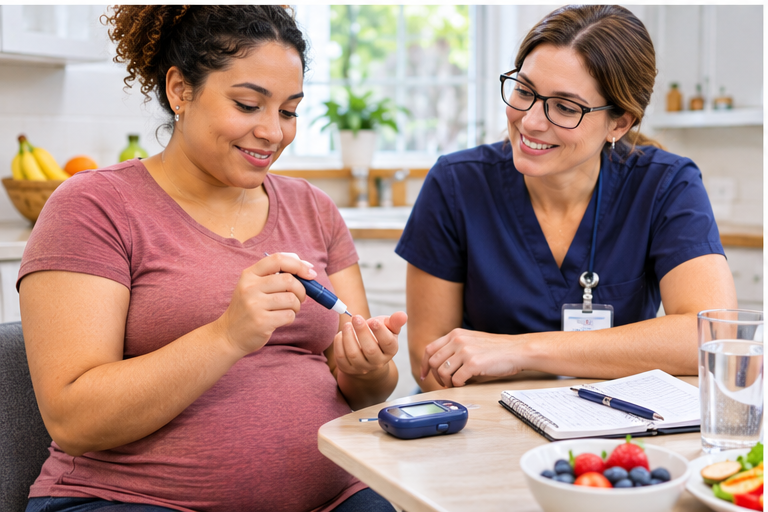
Finger-stick glucose meters provide capillary readings at specific times. A continuous glucose monitor provides interstitial glucose trends and may offer alerts, although values can lag during rapid glucose changes. People using CGM should have access to finger-stick testing for device failures, symptom mismatches or product-specific confirmation requirements.
Real-time CGM has particularly strong evidence for pregnant people with type 1 diabetes, where it can provide information beyond A1C alone. The evidence and appropriate metrics for type 2 diabetes during pregnancy and gestational diabetes are not identical. Not every pregnant person requires a CGM.
Insulin pumps deliver insulin; a CGM measures glucose. Some compatible automated systems combine both, but none remove the need for appropriate training, infusion-site care and an emergency backup plan. Changes to insulin settings need qualified guidance, especially during pregnancy.
Prenatal checks, ultrasound and blood pressure
Preexisting diabetes may require assessment of diabetic retinopathy before or early in pregnancy, kidney function and blood pressure. Some complications can change during pregnancy, so specialist follow-up is valuable. A person with gestational diabetes may still require assessment for hypertension, fetal growth or other risks, but the same eye or kidney surveillance schedule does not automatically apply.
Ultrasound assessments and antenatal surveillance depend on glucose control, medicines, fetal growth, blood pressure and other obstetric circumstances. No single diabetes label dictates a fixed ultrasound schedule or delivery method. An obstetrician or maternal-fetal medicine specialist should explain the rationale for each test.
Preeclampsia symptoms can include severe headache, visual changes, severe upper abdominal pain and certain other concerning signs. A clinician may recommend low-dose aspirin for selected higher-risk pregnancies, including preexisting diabetes, under an individual obstetric plan. Do not self-prescribe.
Delivery planning and newborn care
Both preexisting diabetes and gestational diabetes may influence when and where delivery is planned, but neither automatically requires a cesarean birth. Decisions reflect fetal size, maternal health, glucose management, previous obstetric history and current pregnancy findings.
Newborns of mothers with diabetes may require glucose monitoring after birth because maternal glucose exposure can affect fetal insulin secretion. Feeding support and, when necessary, treatment for low newborn glucose should follow hospital protocols.
People using insulin need an individualized plan for delivery, including hospital glucose monitoring and how insulin is administered during labor or surgery. The plan may differ for a patient with gestational diabetes controlled without medication.

Diabetes in Pregnancy vs Gestational Diabetes: After Birth
The postpartum difference is substantial. Someone with preexisting type 1 or type 2 diabetes still has diabetes after delivery. Insulin needs may fall quickly, and the team should make a safe transition to an appropriate postpartum plan. Breastfeeding, fatigue and irregular meals can add practical challenges.
For gestational diabetes, glucose often returns to a non-diabetic range after pregnancy, but the condition creates a long-term risk of type 2 diabetes. ADA 2026 recommends a fasting 75-gram oral glucose tolerance test 4–12 weeks postpartum to check for persistent diabetes or prediabetes. This follow-up is important even if the patient feels well.
A1C alone is not the preferred early postpartum test because blood loss and red-cell changes can influence the result. Long-term screening at least every three years is generally advised after gestational diabetes, with additional testing when indicated. A future pregnancy should include preconception screening and risk discussion.
A missed postpartum appointment is a common, solvable care gap. Before leaving the maternity hospital, ask who will order the test, how to schedule it and where the results will be discussed. This concrete next step may be more helpful than generic advice to “follow up.”
Five real-world scenarios that clarify the difference
Scenario one: A woman with type 1 diabetes becomes pregnant. Her condition is preexisting diabetes in pregnancy. Insulin remains essential, and the team may reassess CGM settings, eye health and pregnancy-specific glucose goals.
Scenario two: A woman who has never been tested for diabetes has markedly elevated laboratory glucose at an early prenatal appointment. Her clinician must evaluate whether this is previously unrecognized overt diabetes rather than automatically classifying it as gestational diabetes.
Scenario three: At 26 weeks a woman with no known diabetes has an abnormal gestational screening test and a confirmatory diagnostic test. This may be gestational diabetes. The treatment plan depends on follow-up glucose patterns and clinical findings.
Scenario four: A person previously diagnosed with type 2 diabetes was using multiple medications before conception. She needs prompt pregnancy-specific medication review. A diagnosis that already existed should not be relabeled as gestational diabetes.
Scenario five: A person diagnosed with gestational diabetes gives birth and her home readings appear normal. She still needs a postpartum OGTT because normal symptoms or sporadic meter readings cannot reliably exclude persistent prediabetes or diabetes.
Emotional health, equity and practical care coordination
A diabetes diagnosis during pregnancy can trigger guilt, anxiety and constant worry about the baby. Compassionate counseling should clarify that complications are risks, not certainties, and that adequate treatment can make a difference. People should be supported rather than blamed for an isolated glucose number.
US insurance rules can affect access to insulin, test strips, CGM sensors and nutrition counseling. Ask the prenatal team or social worker about Medicaid pregnancy coverage, commercial insurance benefits, equipment suppliers and available local supports. Do not skip necessary medication because a refill is costly; alert the prescriber promptly.
Make a written care plan with clinician contacts, glucose targets, ketone instructions if applicable, monitoring frequency, medicine plan, emergency symptoms and postpartum testing. It should be understandable and workable during family routines, travel and newborn care.
Frequently Asked Questions
Is diabetes in pregnancy the same as gestational diabetes?
No. The broader term includes preexisting type 1 and type 2 as well as gestational diabetes.
Can gestational diabetes be diagnosed in the first trimester?
Clinicians should first assess for previously unrecognized overt diabetes or early abnormal glucose; interpretation depends on test results and criteria.
When is gestational diabetes routinely screened in the US?
Usually at 24–28 weeks in people without known overt diabetes.
Can type 2 diabetes be discovered for the first time during pregnancy?
Yes. A diagnosis made during pregnancy does not prove the condition began during pregnancy.
Which type has a higher risk of congenital anomalies?
Poorly controlled preexisting glucose around conception poses important early developmental risks; individual outcomes vary.
Do both use the same glucose targets?
Many general pregnancy goals overlap, but frequency, therapy and individual targets may differ.
Does gestational diabetes always require insulin?
No. Some people achieve targets with nutrition and activity, while others need medication.
Can someone with type 1 diabetes stop insulin after birth?
No. Type 1 diabetes requires ongoing insulin, though doses may change substantially postpartum.
Does gestational diabetes always disappear after delivery?
Often glucose improves, but persistent prediabetes or diabetes must be excluded with postpartum testing.
What postpartum test is recommended after gestational diabetes?
The ADA recommends a 75-gram OGTT approximately 4–12 weeks after birth.
Why not use A1C alone right after delivery?
Blood loss and pregnancy-related changes in red blood cells can reduce its reliability.
Will both conditions mean a cesarean birth?
Not automatically. Delivery decisions depend on multiple medical and obstetric factors.
Can continuous glucose monitors be used?
Yes, especially for type 1 diabetes in pregnancy, with professional guidance and backup testing.
Are maternal symptoms enough to distinguish the two?
No. Symptoms overlap and laboratory history and classification are necessary.
What is an urgent warning sign?
Vomiting with abdominal pain, deep breathing, confusion or severe dehydration warrants emergency medical assessment.
BBH Menu, Submenu, Support and Five Related Articles
Research Sources and Independent Clinical Review