CGM vs Finger-Prick Tests: Comparison
CGM vs Finger-Prick Tests: Which Is Bette

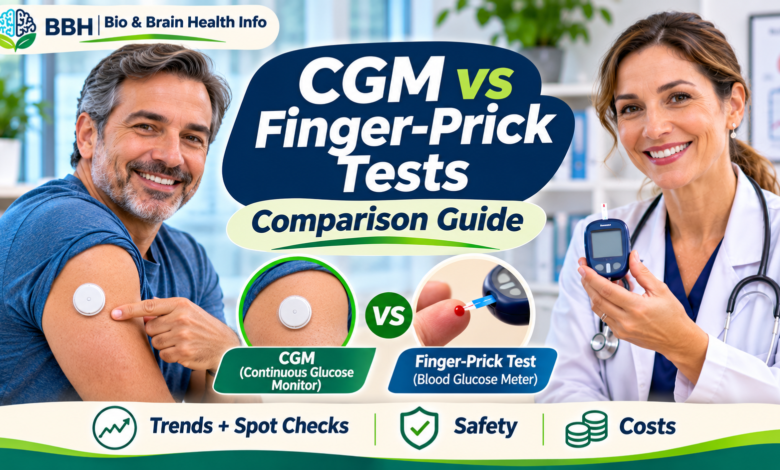
CGM vs finger-prick tests is a common question for people who want to manage diabetes safely without unnecessary testing or expense. A continuous glucose monitor (CGM) measures glucose in fluid beneath the skin repeatedly and displays trends, while a finger-prick blood glucose meter shows one capillary blood glucose value at the moment of testing. These methods provide different types of information—and for many people, the safest approach includes both.
Thank you for reading this post, don't forget to subscribe!This research-based BBH comparison prioritizes readers in the United States and draws on the American Diabetes Association (ADA) 2026 Standards of Care, FDA device information and Medicare guidance. It also addresses clinical considerations for the UK, Canada and Australia. Rather than calling one option universally best, it explains how to select technology based on diabetes treatment, low-glucose risk, safety, accessibility and realistic costs.
CGM vs Finger-Prick Tests: How They Differ
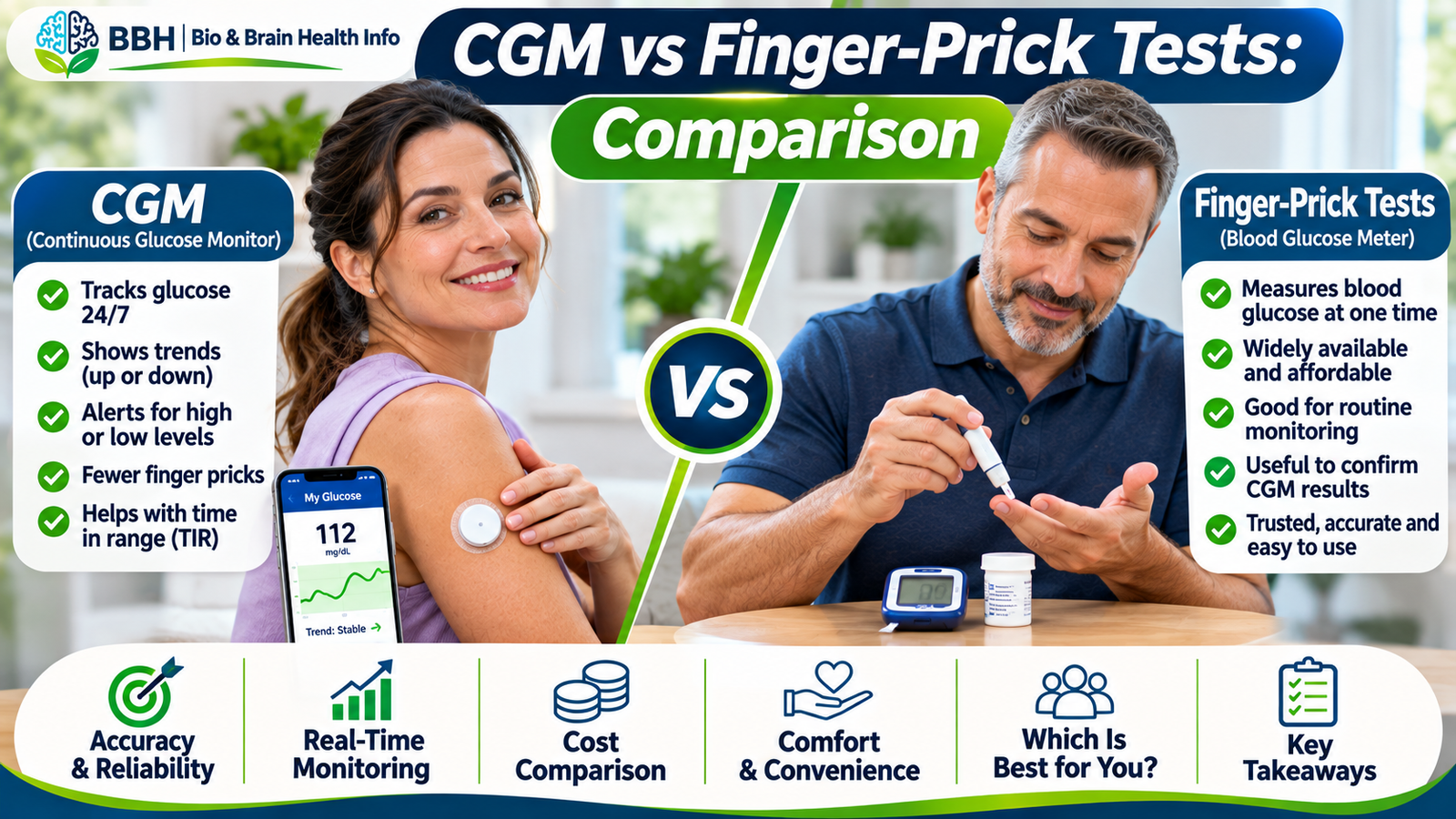
A CGM usually uses a small sensor inserted into the skin, often on the upper arm, and sends repeated estimates of interstitial-fluid glucose to a phone or receiver. Many prescription systems provide alarms and data summaries. A traditional meter requires a small blood sample placed on a compatible test strip whenever the person performs a test.
This distinction matters: a CGM provides patterns and direction, whereas a meter supplies a single blood-glucose snapshot. More data can make it easier to identify recurrent overnight lows or rises after meals, but more data also need interpretation. A finger-prick reading can answer an immediate question when a CGM is unavailable or showing a number that conflicts with symptoms.
The ADA 2026 Diabetes Technology Standards recommend access to blood glucose monitoring devices according to personal treatment and clinical circumstances, and support use of CGM for many adults receiving insulin or other glucose-lowering therapies when beneficial. This is evidence-based support for individualized use—not evidence that everyone must purchase CGM.
CGM vs Finger-Prick Tests: Side-by-Side Comparison
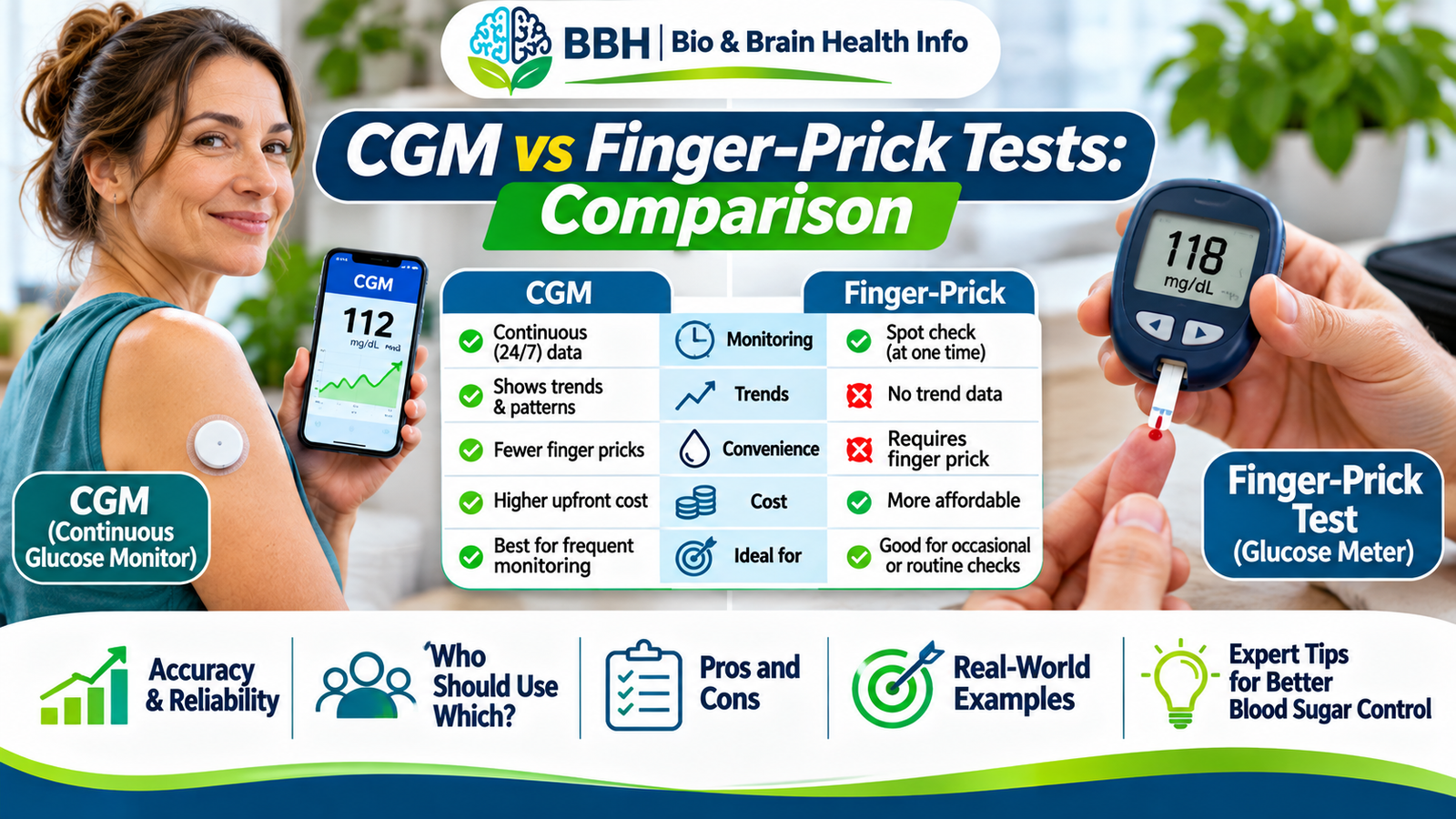
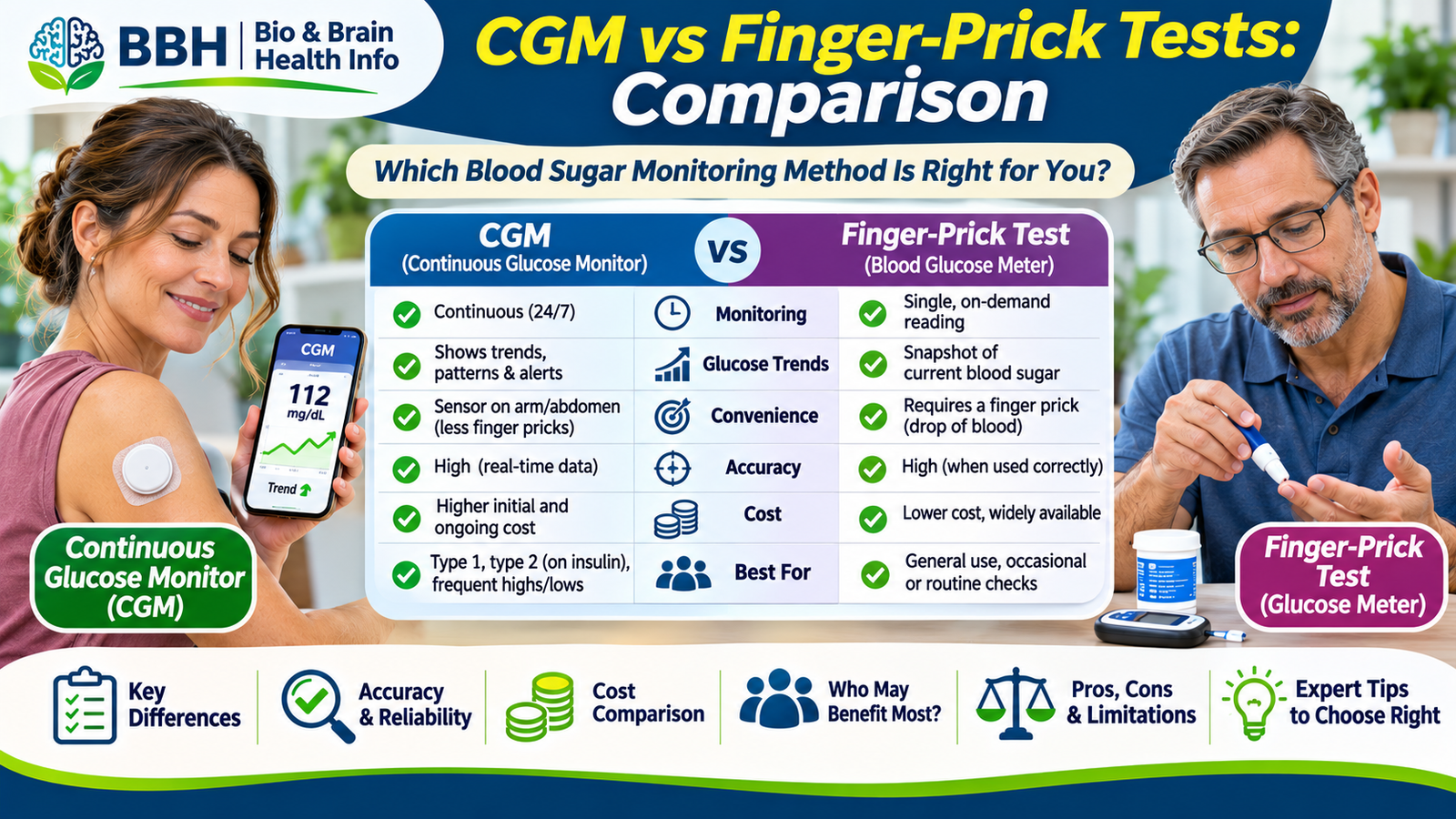
| Comparison factor | CGM | Finger-prick meter |
|---|---|---|
| What is measured? | Glucose in interstitial fluid | Glucose in capillary blood |
| Frequency | Repeated measurements throughout wear | Only when a test is performed |
| Trend information | Graphs and arrows, depending on device | Individual readings; patterns only if logged |
| Alarms | Available on many prescription models; not universal | Typically no continuous high/low alarm |
| Finger punctures | Usually fewer routine finger pricks; still need backup checks | Fresh blood sample for each test |
| Accuracy during rapid changes | May lag behind blood glucose | Useful for current capillary blood check when performed correctly |
| Consumables | Recurring sensors and optional receiver | Recurring compatible test strips and lancets |
| Skin considerations | Continuous adhesive exposure and insertion site | Temporary finger soreness or skin injury |
| Practical role | Continuous pattern recognition and selected therapy support | Spot checks, confirmation and reliable backup |
| Cost and coverage | Device-specific and often higher recurring cost | Often lower initial expense, but strip costs add up |
The table describes general technology categories, not a guaranteed feature list for every model. Manufacturer indications, alert options, sample-site instructions, coverage criteria and connectivity change. Review the exact device’s current FDA clearance and instructions before making treatment decisions.
How CGM Sensors and Finger-Prick Meters Work
A CGM senses glucose in interstitial fluid beneath the skin. Many sensors send automated estimates to a display and may communicate with compatible insulin-delivery systems. Some products require additional user interaction; alarm and sharing features vary. CGMs do not automatically deliver insulin unless used in a separate compatible system that includes an insulin pump or delivery device.
A finger-prick blood-glucose meter estimates glucose from a small blood drop applied to a chemical test strip. The meter and the strips must be compatible; choosing an unrelated strip can cause inaccurate results. Clean and fully dry hands before testing, especially after food preparation or handling fruit.
Because the two methods measure different fluids with different technologies, exact numerical agreement is not expected every time. The appropriate question is whether the result is sufficiently reliable for the clinical situation and whether the person is following a safe monitoring and treatment plan.
CGM vs Finger-Prick Tests: Accuracy and Glucose Lag
Interstitial glucose can differ temporarily from capillary glucose as glucose rises or falls quickly, such as after eating, physical activity or insulin treatment. The physiological delay is not a fixed number of minutes for every person, device or situation. Sensor measurement uncertainty adds another source of difference.
A finger-stick reading is not a perfect laboratory measurement either. Dirty or wet hands, expired strips, improper sample volume, temperature and some device-specific interferences may affect the value. Repeating an unexpected test using clean hands and fresh compatible supplies may clarify a discrepancy when clinically safe.
Pressure on a sensor while sleeping can sometimes produce an artificially low signal, sometimes called a compression low. But never assume that a low warning is false just because it occurs at night. Assess symptoms, confirm as indicated and follow a clinician-approved emergency action plan.
ADA 2026 and FDA materials emphasize that people using CGM should still have access to a traditional meter. This is especially important during sensor warm-up, loss of transmission, suspected inaccuracy or rapidly changing glucose. ADA Diabetes Technology 2026, full text.
When Must CGM Readings Be Checked With a Finger-Prick?
- When symptoms such as shaking, sweating or confusion do not match the sensor reading
- When the CGM is warming up, offline, showing an error or without recent data
- When glucose is changing rapidly and an immediate treatment decision depends on reliable information
- When the sensor seems compressed, damaged or consistently inaccurate
- When the manufacturer requires a finger-stick for calibration or another specific situation
- When clinical staff advise confirmation in a hospital or other care setting
A person who is severely confused or unresponsive needs an emergency response—not repeated attempts to force perfect agreement between devices. For an alert person with possible hypoglycemia, use the established testing and treatment protocol while recognizing that meter testing should not delay urgent care for severe symptoms.
A sensor displays only glucose-related information. It cannot determine whether someone has ketones, an infection, dehydration, stroke or every other serious cause of symptoms. If someone with type 1 diabetes or SGLT2 inhibitor treatment develops vomiting, abdominal pain or deep breathing, seek assessment for ketoacidosis even when glucose looks less elevated than expected.
CGM Benefits: Trends, Time in Range and Alerts
A CGM may show overnight patterns, recurring lows, changes following meals and physical activity, and how glucose responds over several days. This can help users and care teams decide whether the current treatment approach is working. Some alarms can warn of falling or rising glucose before a person recognizes symptoms.
Reports such as an Ambulatory Glucose Profile (AGP) summarize trends and can reveal patterns that occasional meter checks miss. CGM may also reduce some finger-prick burden, though users need occasional capillary testing for specified safety situations. The overall benefit depends on correct device use and education.
Limitations include adhesion problems, skin reactions, cost, compatibility, alarm fatigue, phone or battery failures and data overload. A device without appropriate alerts may not be suitable for someone at high risk of severe hypoglycemia. Over-the-counter glucose biosensors have different intended uses from some prescription CGM systems.
Finger-Prick Testing Benefits: Simple Checks and Backup
A meter can provide a spot reading without a continuously worn sensor, making it practical for someone who tests only occasionally or wants an immediate capillary sample. Many meters are easy to carry, do not require a phone and have comparatively modest upfront equipment prices.
For people taking insulin, a reliable blood glucose meter remains important even when CGM is the primary monitoring tool. If a device fails, supplies are delayed or a reading conflicts with symptoms, the meter provides an alternative source of information. Some people find finger-prick testing easier to understand and less intrusive than wearing a sensor.
However, each test requires a blood sample, so frequent checking can cause soreness and recurring strip expenses. Isolated readings may miss a nighttime low or show a normal value while repeated peaks occur at other times. Recording time, meals and symptoms can help make meter readings more useful.
CGM vs Finger-Prick Tests: Which Is Better for You?
For most people with type 1 diabetes, modern guidelines support CGM as an important part of care, together with finger-stick backup access. People with type 2 diabetes treated with insulin may also gain meaningful benefit, particularly when low glucose or large swings are a concern.
For type 2 diabetes managed without insulin, the decision is more individual. A meter may be sufficient for a specific clinical question or a short-term testing plan. Selected people may gain insight from CGM, but that does not mean the extra monitoring improves outcomes for everyone. A short-term professional CGM may provide useful information without an ongoing personal sensor subscription.
Older adults, children and people with visual or cognitive challenges may benefit from particular CGM features or from simpler meter designs. Device training, caregiver availability, comfort, language and affordable supplies are just as important as technical performance.
CGM vs Finger-Prick Tests: Low Blood Sugar Safety
Low glucose can cause sweating, trembling, hunger, weakness, confusion and sometimes seizures or loss of consciousness. CGM low-glucose alerts can be valuable, particularly overnight, but they depend on device functioning, connectivity, settings and the exact product’s alert capability.
A standard alert threshold is below 70 mg/dL (3.9 mmol/L), although personal targets differ. Some people who are awake and can swallow follow a prescribed fast-carbohydrate treatment plan with rechecking; severe hypoglycemia requires emergency action, potentially including prescribed glucagon. Do not put oral glucose into the mouth of an unconscious person.
People with recurrent or unrecognized lows should ask their diabetes team to review medicines, food intake, activity and monitoring methods rather than relying only on a more advanced device. See Preventing Low Blood Sugar Episodes for related safety information.
Time in Range: What Only CGM Shows Clearly
Time in range measures the percentage of CGM recording time within an agreed target interval. For many nonpregnant adults, a general range of 70–180 mg/dL (3.9–10.0 mmol/L) and a goal of more than 70% time in range are commonly discussed, but individualized goals may differ, particularly in pregnancy or for frail older adults.
A CGM summary can also show time below range, time above range, glucose variability and patterns by time of day. These are useful alongside A1C rather than a complete replacement. An apparently good average may conceal dangerous lows, while two people with similar A1C can have very different daily experiences.
A finger-prick meter may identify broad patterns if multiple readings are recorded, but it does not continuously capture time in range. Patients should review CGM reports with a clinician rather than aim for an artificially perfect graph. ADA 2026 Glycemic Goals and Hypoglycemia.
Meals, Exercise, Sleep and Travel: Real-Life Differences
When eating, CGM may show a trend curve after meals, while finger-prick testing can capture a particular time point, often one or two hours after eating begins when clinically indicated. Not every glucose rise after food is harmful, and changes should not prompt unsupervised insulin adjustments.
During exercise, glucose may change quickly. CGM trend arrows can help people notice directions of change, but lag and sensor error mean finger-stick confirmation may sometimes be necessary. People who use insulin need personalized activity safety advice rather than copying an internet correction chart.
At night, CGM may reveal patterns missed by scheduled meter checks, although some alerts are false or missed. During travel, carry approved backup supplies, chargers and a finger-stick meter even when relying mainly on a sensor. Check the manufacturer’s security-scanner and storage instructions for your particular device.
Skin Comfort, Adhesives, Lancets and Test Strips
CGM users may experience itching, contact dermatitis or adhesion problems. Follow approved sensor-placement instructions and seek clinical guidance for significant irritation or infection. Do not move sensors to unapproved sites because photographs on social media suggest a more comfortable location.
Meter users should wash and dry hands and use fresh, single-use lancets. A side fingertip prick may reduce discomfort for some people. Do not share lancing devices or use expired, incompatible test strips. The FDA warns that matching the strip to the precise meter matters for measurement reliability.
Neither system eliminates the need for attention to hygiene and device maintenance. A person with reduced vision, neuropathy or hand weakness may need accessible product designs or caregiver training.
CGM vs Finger-Prick Tests: Costs and US Coverage
The total cost of finger-prick monitoring depends on the meter, monthly strip use, lancets and insurance coverage. The cost of CGM depends on recurring sensor supplies, optional receivers, approved product requirements and the insurance plan. A low purchase price is not the same as low lifetime cost.
Under Medicare’s current CGM coverage guidance, eligibility can include being treated with insulin or having a documented history of problematic hypoglycemia, together with the other applicable criteria. Relevant clinician appointments and continued documentation are required. Medicaid coverage varies by state, and private insurance plan policies differ. Check current requirements before purchase. CMS: Glucose Monitoring Supplies.
Ask whether the sensor is billed through the pharmacy or durable medical equipment channel, whether a receiver is covered, and how many strips are allowed for backup monitoring. Compare real monthly out-of-pocket costs rather than relying on advertised list prices. An insurer may prefer one brand, but a suitable device also needs to work with the patient’s phone, medical needs and abilities.
CGM vs Finger-Prick Tests: Accessibility and Privacy
People with limited vision, arthritis, hearing difficulties or cognitive limitations may need large-print or audible meter features, accessible CGM alerts or family assistance. A technically advanced system is not a good choice if the person cannot operate it or respond safely when a warning appears.
Some CGM platforms allow sharing glucose data with a trusted caregiver. Discuss consent, privacy and which alerts should prompt a call. Constant monitoring by family members can become intrusive without an agreed plan. Finger-prick logs can also contain private medical information and should be stored securely.
Alarm fatigue and diabetes distress can occur when people monitor every fluctuation. Some may benefit from fewer clinically relevant alerts or a targeted monitoring schedule set by their care team rather than more data. Technology should support independence and well-being.
CGM and Finger-Prick Testing in the UK, Canada and Australia
United Kingdom: NHS CGM eligibility varies by diabetes type, treatment and clinical criteria. Finger-prick supplies remain relevant for specific situations and backup. Most devices display mmol/L, unlike the mg/dL format common in the US.
Canada: Coverage for sensors, meters and strips depends on province or territory and private insurance. A diabetes educator can explain eligibility and help choose a compatible system. Readings generally use mmol/L.
Australia: Eligible CGM and glucose testing supplies may be available through national or local programs such as the NDSS under current rules. Costs, indications and access differ from the US; mmol/L is the usual unit.
Before moving between countries, confirm the device’s local authorization, replacement-sensor availability, receiver or phone compatibility and glucose-unit display. A US reading of 100 mg/dL corresponds to approximately 5.6 mmol/L; the displayed numbers are not directly interchangeable.
A Six-Question Decision Checklist
| Question | What to consider |
|---|---|
| Do I use insulin or have recurrent low glucose? | If yes, discuss CGM and appropriate alerts with the diabetes team. |
| Do I need ongoing trend data or only occasional spot readings? | Choose monitoring frequency according to clinical benefit rather than curiosity alone. |
| Can I keep a reliable backup blood glucose meter? | CGM use still requires access to finger-stick checks for key safety situations. |
| What will the monthly supplies actually cost? | Compare strip use and sensor replenishment after insurance, not only starter prices. |
| Can I operate the device and understand alarms? | Assess vision, hand strength, phone compatibility, language and caregiver support. |
| How will the data change treatment or self-care? | Agree on a realistic plan with the care team instead of reacting to isolated graphs. |
Seven Often-Missed Clinical Questions
1. Why might a CGM read low when a meter does not?
Interstitial lag, compression or sensor uncertainty may explain differences, but symptoms and the established action plan matter.
2. Can an OTC CGM replace prescription hypoglycemia alarms?
No. FDA indications and alert capabilities differ; not all products are intended for people using insulin.
3. Is a finger-prick reading always accurate?
No. Strip age, hygiene, sample amount, storage and device interferences can cause misleading results.
4. What if the phone battery dies?
An affected CGM may lose app information or alarms; use an approved receiver or backup meter according to device instructions.
5. Will a normal CGM value rule out ketoacidosis?
No. Ketones and symptoms require separate assessment, particularly with SGLT2 medicines or insulin deficiency.
6. Is more glucose data always better?
Not necessarily. Information is useful when a person and care team can act on it without excessive distress.
7. Should someone with limited hand dexterity use CGM automatically?
Not automatically. Insertion, pairing, adhesive handling and alerts may create barriers; evaluate actual usability.
CGM vs Finger-Prick Tests: Frequently Asked Questions
Is CGM more accurate than finger-prick testing?
Neither is universally more accurate in every situation. They measure different fluids and can vary during rapid changes.
Does CGM completely replace a blood glucose meter?
No. A meter remains important for sensor issues, symptoms that disagree with readings and other situations in device instructions.
Which is better for type 1 diabetes?
CGM is recommended for many people with type 1 diabetes, with appropriate education and meter backup.
Which is better for type 2 diabetes not using insulin?
It depends on treatment goals and risk; some benefit from CGM, while a meter may suffice for targeted checks.
Can CGM alert me while sleeping?
Many prescription CGM products can provide alerts, but availability and reliability depend on the exact device and settings.
Why do CGM and meter numbers differ?
Interstitial-fluid lag, device uncertainty, pressure on the sensor or meter testing errors can contribute.
What is time in range?
The proportion of sensor wear time within an agreed glucose interval.
Does CGM hurt?
Sensor placement may cause brief discomfort or skin irritation, with differences across people and products.
Can a finger prick be painful?
It can sting briefly. Proper lancing technique and fresh lancets can reduce discomfort.
Will Medicare cover CGM?
Eligible beneficiaries may qualify, depending on treatment, hypoglycemia history and other current Medicare requirements.
Do I need a smartphone for CGM?
Some devices offer compatible receivers; check product-specific requirements.
What happens if a sensor fails?
Use backup finger-stick monitoring and follow the manufacturer and diabetes team’s guidance.
Can I use both CGM and finger-prick tests?
Yes. Combining CGM with backup capillary testing is common and often important for safety.
Can CGM diagnose diabetes?
A CGM is not a general replacement for recommended diagnostic laboratory testing.
What about travel and exercise?
Both can change glucose; plan supplies, sensor limitations and monitoring with your clinician.
BBH Main Menu, Submenu, Support and Five Related Articles
Medical Research Citations and Independent Review
- ADA Standards of Care 2026: Diabetes Technology
- ADA Standards 2026: Glycemic Goals and Hypoglycemia
- ADA 2026: Diabetes Technology, Full Text
- CMS: Medicare Glucose Monitoring Supply Guidance
- FDA: How Blood Glucose Monitoring Devices Work
- CDC: Continuous Glucose Monitors
- FDA: Finger-Prick Meter and Strip Safety