Diabetes in Older Adults: Care Considerations
Diabetes in Older Adults: Care and Safety

In This Guide
- Why diabetes care changes with age
- Individualized A1C targets and safety
- Low blood sugar and falls
- Medication review and simpler care
- Memory, thinking and self-management
- Frailty, balance and physical activity
- Nutrition, hydration and weight loss
- Heart, kidney, eye and foot health
- CGM and accessible glucose monitoring
- Family help and independence
- Hospital, care-home and palliative transitions
- Sleep, mood and social connection
- Frequently overlooked considerations
- Guidance in the USA, UK, Canada and Australia
- Frequently asked questions
Why diabetes care changes with age
Age alone cannot determine diabetes treatment. Healthy independent adults may benefit from different goals than people with frailty, dementia or multiple illnesses. Kidney function, nutrition, vision, hearing, mobility and the ability to manage medicines all affect safe care. The 2026 ADA Standards recommend assessing medical, psychological, functional and social needs. Ask what the person wants to maintain: independence, comfort, activity and the ability to engage with family. An approach built only around laboratory targets can miss the outcomes that matter most.
Individualized A1C targets and safety
Healthy older adults may have individualized A1C targets such as below 7.0–7.5% when safely achievable. For people with complex health conditions or functional limitations, a less stringent goal such as below 8% may be appropriate. In very complex or poor health, clinicians may prioritize avoiding symptomatic low and high glucose instead of relying on A1C. These are examples from guidance, not patient-specific instructions. Anemia and kidney disease can affect A1C accuracy. Review goals whenever treatment burden, function or medical conditions change.
Low blood sugar and falls
Hypoglycemia can cause sweating, weakness, confusion, falls, injury and serious emergencies. Some older people do not recognize typical warning symptoms. Insulin, sulfonylureas, irregular meals, reduced kidney function and changing activity increase risk. Discuss any recent low, fall or episode of unexpected confusion with the treating team. A glucose level below 70 mg/dL is a common alert threshold, but each person’s treatment plan matters. For seizure, unconsciousness or inability to swallow, call emergency services and use prescribed glucagon if trained; never give food or drink orally to someone unconscious.
Medication review and simpler care
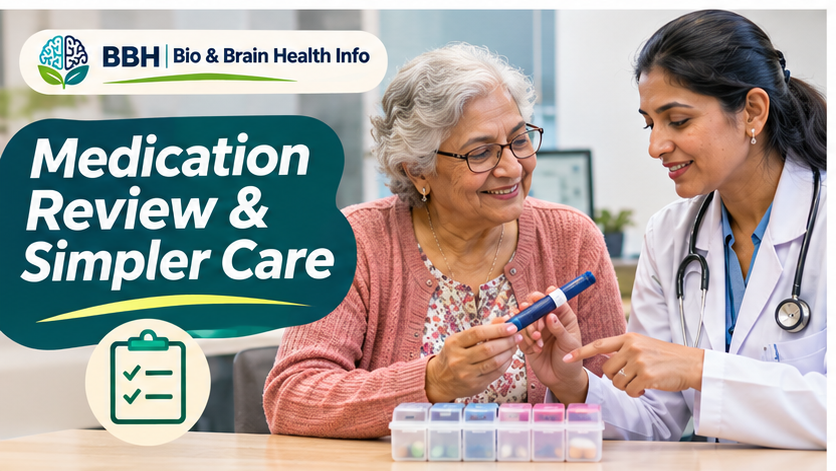
Medication reconciliation is especially important when someone sees multiple specialists or uses many prescriptions. Ask whether each medicine still offers meaningful benefit, and whether dose timing, adverse effects, kidney function or cost make treatment difficult. Simplification or deintensification can reduce errors and low-glucose risk when supervised by clinicians. Insulin may remain essential; do not stop it on the basis of online advice. Pharmacists can advise on accessible packaging and labels. Confirm whether the person can open containers, inject safely, distinguish pills and obtain refills.
Memory, thinking and self-management
A new problem remembering medicine doses, handling glucose devices or responding to alerts may signal cognitive changes, depression, low glucose, delirium, infection or medicine adverse effects. Screening can guide evaluation, but a questionnaire does not diagnose dementia. Use clear printed instructions, accessible devices and shared plans with caregivers where the older adult consents. Sudden confusion requires prompt medical assessment rather than being dismissed as normal aging.
Frailty, balance and physical activity
Frailty, reduced muscle strength and slower walking can make falls more likely. People with neuropathy, vision changes or cardiovascular conditions may need specialized activity guidance. Safe walking, adapted resistance exercise and balance training can support independence. Some adults may benefit from physiotherapy or seated exercises. Evaluate footwear, lighting and mobility aids. Changes should be appropriate to the person’s physical capacity and low-glucose risk rather than based on a standard fitness target.

Nutrition, hydration and weight loss
Restricted appetite, dental problems, swallowing difficulty, isolation or difficulty shopping can cause inadequate food intake. Excessively restrictive diabetes diets may worsen malnutrition or frailty. Discuss adequate protein, fiber-rich foods and regular meals with a dietitian when appropriate. Unexpected weight loss should prompt assessment for underlying illness, depression, adverse effects or poor nutrition. People with kidney disease or heart failure may need customized protein, fluid or salt recommendations. Food plans should be realistic, culturally familiar and affordable.
Heart, kidney, eye and foot health
Diabetes care in later life includes prevention of symptomatic and long-term complications. Blood pressure and cholesterol treatment, kidney testing, eye examinations and foot assessments may remain appropriate, but frequency and intensity should match health and treatment goals. Reduced vision and hearing can interfere with reading labels and using glucose monitors. Foot pain, wounds or numbness may impair mobility. Persistent wounds or infection require medical evaluation rather than home experimentation.
CGM and accessible glucose monitoring
Continuous glucose monitoring can help selected insulin-treated older adults recognize lows and support family communication. Yet alarms, charging, small displays, dexterity demands and unfamiliar smartphone interfaces can make devices challenging. Choose technology based on actual ability and preferences, not novelty. Teach caregivers how to respond to alerts and when to confirm unexpected sensor readings with a meter. A simpler device may sometimes serve the person better.
Family help and independence
Caregivers can support medicine organization, meals, appointments and emergency planning while respecting autonomy and consent. Establish who knows the low-glucose plan, maintains prescription records and can contact clinicians. Social isolation and transportation challenges may interfere with care. Community and home-health services may be useful where available. Caregiver fatigue also warrants recognition and support; a safe plan is sustainable only when both practical needs and relationships are considered.
Hospital, care-home and palliative transitions
Hospital discharge or transition to assisted living can introduce treatment errors when instructions change. Reconcile medicine lists and communicate glucose goals, dietary considerations and emergency steps. In advanced frailty or palliative care, avoiding painful symptoms and dangerous lows often matters more than achieving strict A1C targets. Essential medicines may still be needed; type 1 diabetes generally continues to require insulin. Discuss comfort-focused planning with the care team and the patient or authorized representative.
Sleep, mood and social connection
Depression, anxiety, sleep apnea, neuropathic pain and loneliness can affect diabetes self-management. These should not be dismissed as inevitable consequences of aging. Ask about sleep quality, mood, pain and meaningful activity. Support might include treatment for a sleep disorder, mental-health assessment, social connection or a simpler medicine plan. Improved quality of life is a valid goal even before laboratory numbers change.
Frequently overlooked considerations
A1C can be unreliable in anemia and some kidney conditions. New confusion may indicate hypoglycemia or infection. Unintentional weight loss can be harmful. Medication simplification is sometimes safer than intensification. Devices must accommodate hearing, vision and hand strength. Care transitions can trigger dosing errors. Individual goals include comfort and independence, not just laboratory results. These points deserve attention during each reassessment.
Guidance in the USA, UK, Canada and Australia
United States: ADA 2026 recommends individualized targets, hypoglycemia assessment and evaluation of physical and cognitive function. UK: NHS diabetes and community services support individualized reviews and frailty assessment. Canada: provincial services and Diabetes Canada guidance support person-centered treatment. Australia: GPs, diabetes educators and aged-care teams can coordinate medication, nutrition and home support. Access and eligibility vary by location.
Frequently asked questions
Do all older people need A1C below 7%? No; goals are individualized. Can medication be simplified? Sometimes, with professional review. Is low glucose dangerous? Yes; it can cause falls and confusion. Can CGM help? It may help selected people, especially insulin users. Does memory loss change diabetes care? It can affect safe medicine use. Is exercise worthwhile? Adapted activity may help preserve function. Should unexpected weight loss be celebrated? No; investigate it. What about nursing homes? Clear treatment handoffs and symptom-focused goals matter. When is emergency care needed? For seizures, unconsciousness, stroke-like symptoms or severe confusion.
Care checklist for appointments
Review current medicines, hypoglycemia, falls, memory, kidney health, eye and foot symptoms, food intake, sleep, blood pressure and goals. Write down who to contact after an emergency and which tasks can be simplified. Repeat the review when health or living circumstances change.
BBH related reading and support
- Living With Type 2 Diabetes: Daily Guide
- Preventing Low Blood Sugar Episodes
- Diabetic Foot Care: Everyday Prevention
- Diabetes Treatment Goals: Individualized Care
- Diabetes and Sleep Problems
Main menu: Physical Health. Submenu: Diabetes & Blood Sugar. Support: BBH Support & Resources.
Research references
- ADA 2026 Standards: Older Adults
- ADA Standards: Glycemic Goals and Hypoglycemia
- CDC: Low Blood Sugar
- American Geriatrics Society: Diabetes
- Diabetes Canada guidelines
Medical disclaimer: This guide is educational, not individualized diagnosis, medication or emergency treatment advice. Illustrative images do not represent actual patients.