Carb Counting for Diabetes: Beginner Guide
How to Count Carbs for Diabetes

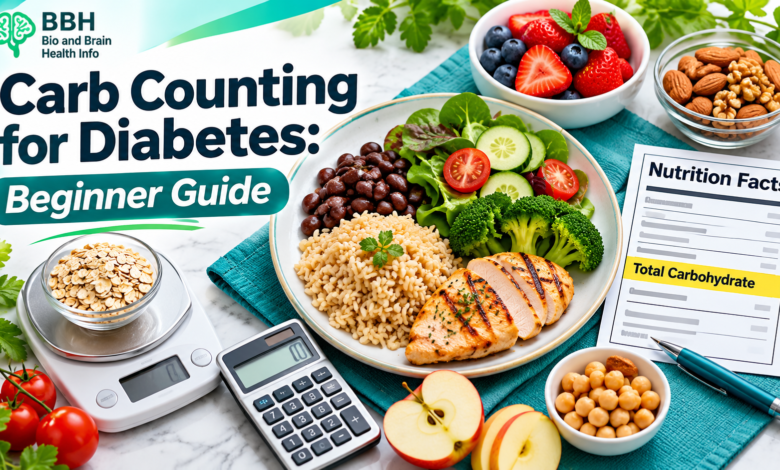
Carb counting for diabetes helps people understand how the carbohydrate in meals and drinks may affect blood glucose. It can be a simple way to plan portions, or a more detailed skill used alongside prescribed mealtime insulin. A beginner does not need to memorize every food value or avoid all carbohydrates to start.
Thank you for reading this post, don't forget to subscribe!This research-based carbohydrate counting guide explains food labels, how to count carbs for diabetes, the 15-gram carbohydrate-choice approach, meal examples, and important safety considerations. The United States is our main reference, with practical differences for the United Kingdom, Australia and Canada.
Carb Counting for Diabetes: Beginner Basics
Quick answer
Start with the carbohydrate grams in the food portion you actually eat. Read the serving size and total carbohydrate on a US Nutrition Facts label, multiply when eating more or less than the listed portion, and include carbohydrate-containing drinks. About 15 g carbohydrate equals one US carbohydrate choice, but this is a counting unit—not a universal meal prescription.
Carbohydrates are found in starches, sugars and many nutritious foods such as fruit, beans, yogurt and whole grains. Most digestible carbohydrate raises blood glucose, though the response also depends on fiber, fat, protein, medicines and individual physiology. Counting offers information, not perfect prediction.
The ADA 2026 guidance supports individualized nutrition and emphasizes vegetables, legumes, fruit, whole grains and other minimally processed foods while limiting highly refined carbohydrate sources. A person’s needs vary with age, activity, medications, pregnancy and other conditions.
Who Benefits From Carbohydrate Counting?
People with type 1 diabetes who use mealtime insulin often learn detailed carbohydrate counting so their prescribed insulin plan can match food intake. Some people with type 2 diabetes also use this skill, especially when insulin treatment, glucose patterns or personal preferences make precise tracking helpful.
For others, simplified meal planning, the diabetes plate method or consistent portions may be sufficient. There is no requirement to weigh every ingredient forever. The best method balances accuracy, flexibility and quality of life.
Does everyone with type 2 diabetes need to count carbs?
No. Someone whose glucose is well managed with an individualized eating pattern may not gain much from meticulous numbers. The American Diabetes Association notes that people not using mealtime insulin may prefer simplified carb choices rather than precise gram-by-gram counting.
What about prediabetes?
Diet quality, activity and sustainable habits matter for prediabetes. Carb awareness may be helpful, but a rigid tracking approach is not automatically indicated. Clinicians and registered dietitians can advise on a plan that supports overall metabolic health.
Related reading: diabetes diet guide to choosing foods.
Which Foods Contain Carbohydrates?
The first step in diabetes carb counting is recognizing where carbohydrate occurs. Bread, rice, oats, pasta, potatoes, beans, fruit, milk, yogurt, desserts, sweetened drinks and many packaged sauces can contain meaningful amounts. Plain meat, fish, eggs and oils generally contain little or no carbohydrate, although prepared versions may include coatings or sauces.
| Food group | Common examples | What to remember |
|---|---|---|
| Grains and starches | Bread, tortillas, rice, pasta, oats, potatoes | Portion size changes carb grams |
| Fruit | Apples, berries, oranges, bananas, dried fruit | Whole fruit has fiber; juice is easier to overconsume |
| Dairy and alternatives | Milk, yogurt, flavored plant milks | Compare plain and sweetened labels |
| Legumes | Beans, lentils, chickpeas | Contain carbohydrate plus protein and fiber |
| Sweets and drinks | Biscuits, candy, soda, sweet coffee | Often concentrated in quickly consumed carbohydrate |
| Nonstarchy vegetables | Leafy greens, cucumber, broccoli | Usually less carb than starches, but not necessarily zero |
Ingredient lists help identify added sugars, but counting only sugar misses starch. A food described as “no added sugar” can still contain carbohydrate from flour, milk, fruit or other ingredients.
Related reading: balanced diabetes snack options.
Carb Servings vs Food Servings
In the US, one carbohydrate choice is commonly defined as approximately 15 grams of carbohydrate. Thus 30 g is about two choices and 45 g about three choices. These choices are bookkeeping units; they are not the same as a package’s labeled serving size.
For example, a packaged cracker serving might list 22 g total carbohydrate. That is about 1.5 carbohydrate choices, even though the package says “one serving.” A meal could contain multiple such foods, so you add the amounts actually eaten.
Why 15 grams is not a target for every snack
A recommendation that “every snack should be 15 grams” is too rigid. A snack’s role depends on hunger, medication safety and overall meal plan. Some people do not need snacks at all. A planned medication-related snack should follow the individual’s care plan.
How to Read US Nutrition Facts Labels
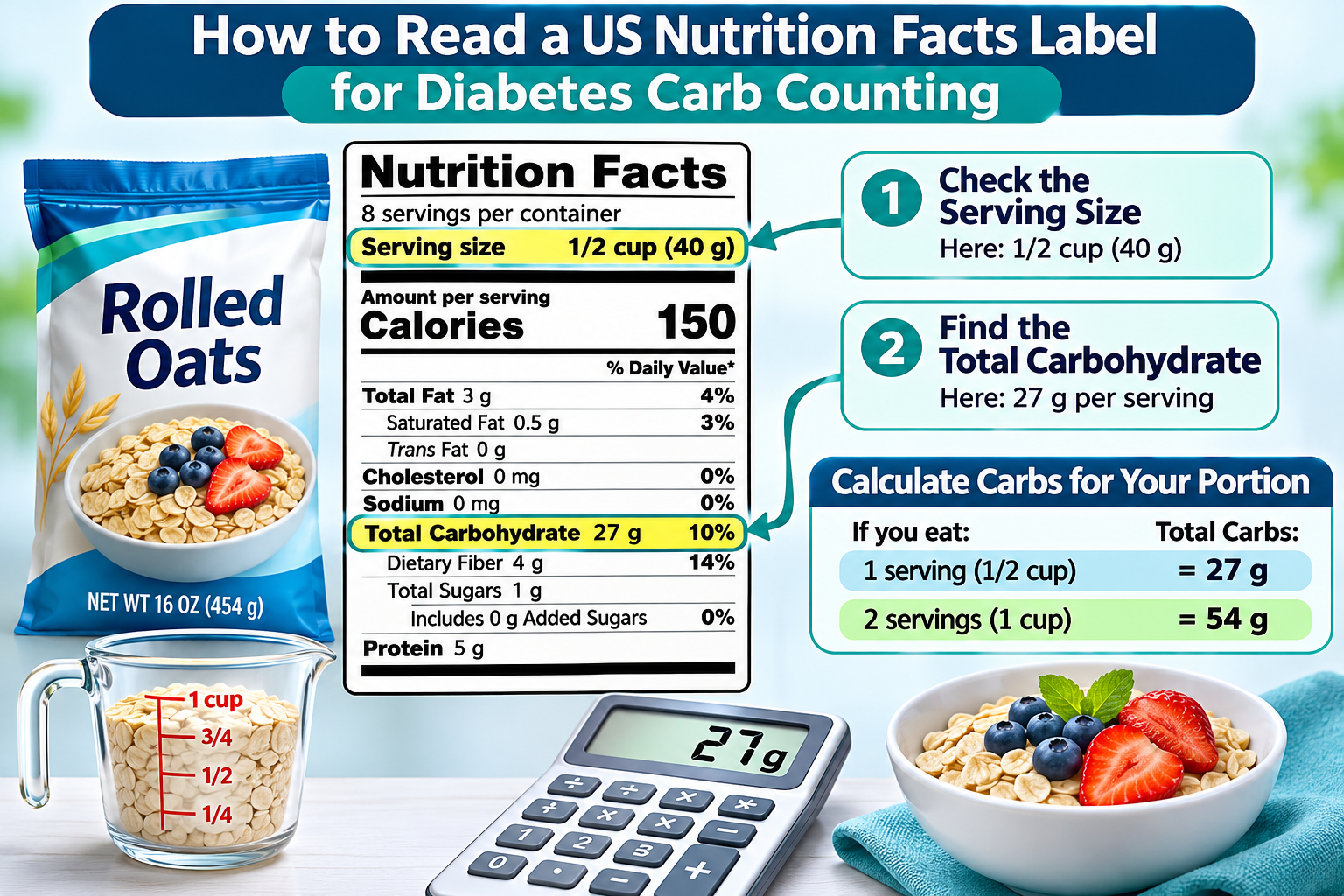
US food packages list a serving size and the amount of total carbohydrate per labeled serving. Read those two items first. Beneath total carbohydrate you may see dietary fiber, total sugars and added sugars; these are additional details, not independent quantities that should all be added on top of total carbohydrate.
Step 1: Find serving size and servings per container
A package may contain two or three labeled servings even if it looks like a single snack. If you eat the entire package, multiply carbohydrate per serving by the number of servings eaten.
Step 2: Read total carbohydrate—not just sugars
A food with little added sugar may contain substantial starch. “Sugar-free” cookies can therefore affect glucose. Total carbohydrate is a practical starting point for the US carb counting for diabetes method described by CDC and ADA.
Step 3: Match label figures to your actual portion
If the label lists 24 g carbohydrate for a 40 g portion and you eat 60 g, the arithmetic is 24 × 60 ÷ 40 = 36 g carbohydrate. This method is especially helpful with cereal, crackers and snacks that are easy to portion differently each time.
How to Calculate Carbs in a Portion
The basic formula is straightforward: carbohydrate eaten = labeled carbohydrate × actual portion ÷ labeled portion. Keep all weights in the same unit, such as grams. For cups or slices, use the label’s matching household measures when accurate.
| Example | Calculation | Estimated carbs |
|---|---|---|
| Crackers: 20 g carbs per 30 g, eat 45 g | 20 × 45 ÷ 30 | 30 g |
| Cereal: 36 g carbs per 60 g, eat 30 g | 36 × 30 ÷ 60 | 18 g |
| Bread: 18 g per slice, eat two slices | 18 × 2 | 36 g |
| Yogurt: 14 g per tub, eat one tub | 14 × 1 | 14 g |
Values in this table are teaching examples, not verified nutrient values for any specific product. Actual products differ. Check the label or a reliable food database before using the amount in an insulin calculation.
Counting mixed meals
For a sandwich, add the bread, any carbohydrate-containing spread, milk or drink and sides. For a rice bowl, include rice, beans or lentils, sauces and dessert when relevant. Protein and vegetables improve nutrient quality but do not automatically cancel the carbohydrate in a meal.
Repeatedly practicing how to count carbs for diabetes with familiar meals can reduce the effort required over time. A measuring cup or inexpensive kitchen scale can help at the beginning, but food portions also need a sustainable real-life approach.
US, UK, Canada and Australia: Label Differences
A major gap in beginner articles is assuming that every country’s label handles fiber and carbohydrate identically. This can lead to undercounting or double subtraction when readers move between countries or import packaged foods.
| Country | What to check | Practical difference |
|---|---|---|
| United States — priority | Nutrition Facts: serving size and total carbohydrate | Total carbohydrate includes fiber; don’t automatically subtract fiber for insulin without education from your team |
| United Kingdom | Nutrition panel: carbohydrate per 100 g and per portion; ‘of which sugars’ is a subset | Fiber is generally shown separately; use the carbohydrate line and calculate for your food weight |
| Australia | Nutrition Information Panel: carbohydrate per serve and per 100 g | Dietary fiber is generally listed separately; NDSS teaches gram counting or 15 g exchanges |
| Canada | Nutrition Facts: total carbohydrate and fiber | Diabetes Canada explains subtracting fiber from total carbohydrate in its carb-counting method; follow your team’s approach |
How to use per-100-gram labels
Suppose a UK or Australian package states 38 g carbohydrate per 100 g, and your portion weighs 75 g. Multiply 38 × 75 ÷ 100 = 28.5 g carbohydrate. This formula works even when the portion you eat differs from the manufacturer’s serving size.
In Canada, nutrition guidance may use an available-carbohydrate calculation that subtracts fiber, whereas a standard US label displays fiber within total carbohydrate. The right approach depends on the country and the insulin or meal-planning method you’ve been taught; do not move a subtraction rule from one system into another without checking.
Carb counting terms across countries
The term “carbohydrate choice” or “carb exchange” often refers to about 15 g, including in US and Australian education. That shared number does not make all food labels directly interchangeable. Reading the actual nutrition panel and understanding its definitions is more reliable than assuming “net carbs” means the same thing everywhere.
Related reading: fruit and diabetes portion guide.
Should You Subtract Fiber or Use Net Carbs?
Fiber is a type of carbohydrate that typically has less direct effect on glucose than digestible sugars and starches. But the rules for counting it vary by national label format, clinical method and the individual’s treatment. This topic deserves more care than the popular advice to always subtract all fiber.
For a basic US approach, start with the total carbohydrate shown on the Nutrition Facts panel and ask your dietitian or diabetes educator whether fiber adjustments are appropriate for your insulin plan. In Canada, Diabetes Canada provides education on subtracting fiber. UK and Australian labels already present carbohydrate differently from US and Canadian labels.
What about sugar alcohols and low-carb products?
Sugar alcohols can still contribute energy and affect digestion; their effect on blood glucose varies by ingredient. A marketing claim such as “2 g net carbs” may reflect the manufacturer’s preferred calculation, not a standardized measure useful for every person. Compare total carbohydrate, serving size, fiber and ingredients.
Important safety note
If you use insulin-to-carbohydrate ratios, do not change how you subtract fiber or sugar alcohols without diabetes-team guidance. An inconsistent calculation can affect an insulin dose and create a risk of low or high blood glucose.
Related reading: seven-day diabetes meal plan example.
Carb Counting for Diabetes: Sample Meals
Below are examples of how to combine foods and total carbohydrate estimates. All values are approximate teaching values, not universal servings, and should be checked against local nutrition labels, food databases or a dietitian’s advice.
| Meal | Illustrative carbohydrate items | Approximate total |
|---|---|---|
| US breakfast | One slice whole-grain toast (18 g), small apple (15 g), eggs (minimal carbohydrate) | 33 g |
| US lunch | Two tortilla wraps (36 g), vegetables (5 g), beans (15 g), chicken or tofu | 56 g |
| UK dinner | Cooked potatoes (30 g), peas (10 g), protein and vegetables (5 g) | 45 g |
| Australia/Canada snack | Plain yogurt (12 g), berries (10 g), nuts (minimal carbohydrate) | 22 g |
The examples do not say how many grams you should eat. Needs depend on treatment, nutrition goals and personal preferences. A person using rapid-acting mealtime insulin should use product-specific numbers and their prescribed ratio rather than these illustrative values.
A simple plate method alternative
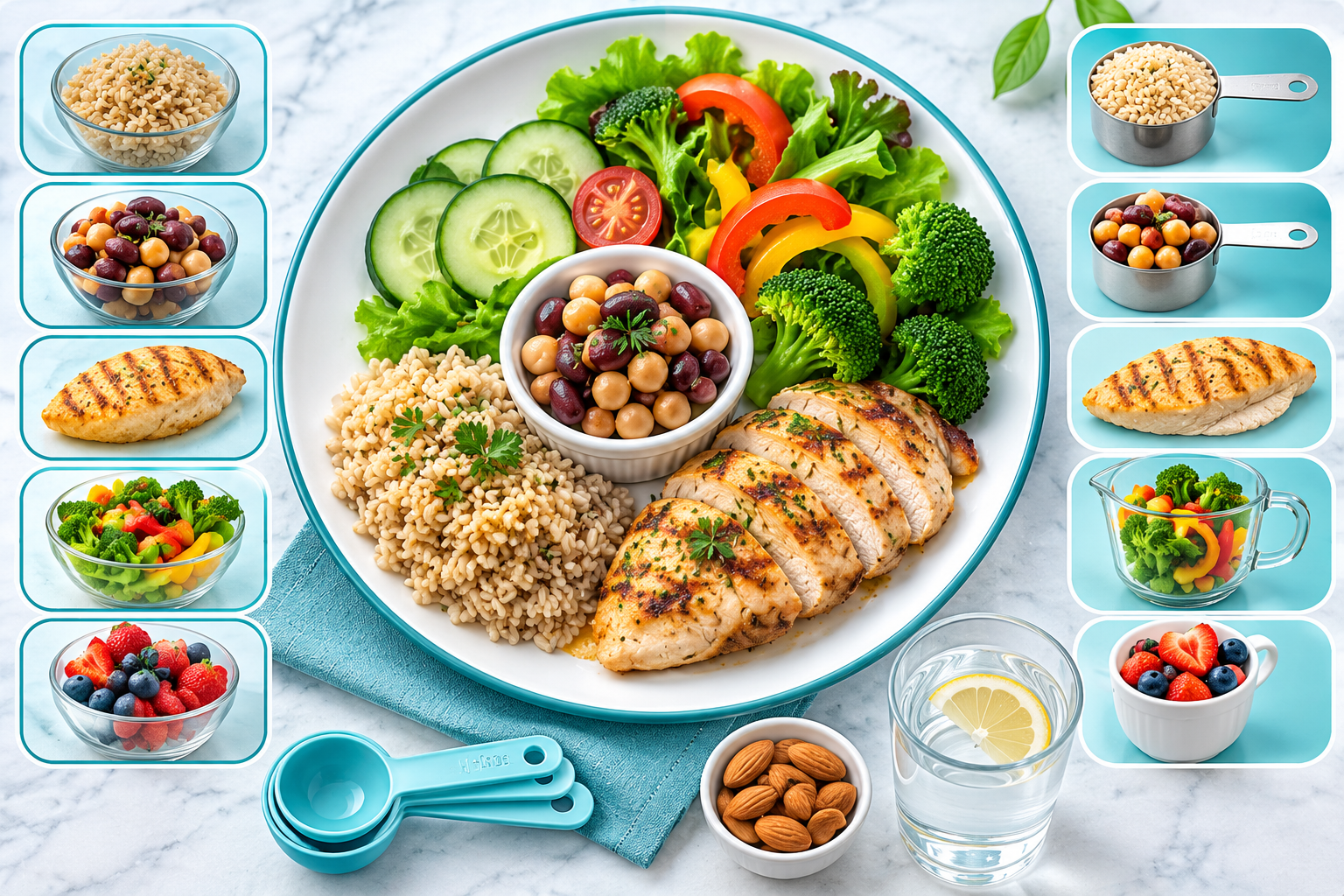
For people who do not want detailed counts, an individualized plate pattern may be easier: plenty of nonstarchy vegetables, an appropriate protein portion and a measured portion of carbohydrate-containing food. Water or an unsweetened beverage may be suitable. This is a flexible planning idea rather than a diagnostic or insulin-dose formula.
How Many Carbs Should You Eat Per Meal?
There is no medically universal rule that everyone with diabetes should eat 30, 45 or 60 grams at each meal. Individual needs reflect total energy requirements, treatment, activity, pregnancy, age, food preferences and glucose responses. Repeated generic “carb limit” advice can be misleading.
The CDC describes one carbohydrate serving as about 15 grams, and some educational meal plans use several such choices. The quantity that fits one person may not fit another. For type 1 diabetes, people may adapt carbohydrate intake while matching it with a prescribed insulin plan.
Quality matters alongside quantity
Choose whole grains, legumes, vegetables, fruit and other nutrient-dense carbohydrate sources more often, as supported by the 2026 ADA Standards. Including fiber and protein can help make meals satisfying. Added sugars and refined starches can still be enjoyed occasionally, but their quantities matter in an overall plan.
When practicing carb counting for diabetes, reviewing trends with a healthcare professional is more useful than chasing a single perfect amount. A food log or continuous glucose monitoring pattern may help identify meals worth adjusting.
Carb Counting With Mealtime Insulin
Some people prescribed rapid-acting mealtime insulin receive an individualized insulin-to-carbohydrate ratio. That ratio describes how much insulin is needed to cover a particular amount of carbohydrate for that person. Ratios can differ by time of day, sensitivity, activity and health status.
An example ratio appearing in an educational resource is not appropriate for self-dosing. Insulin errors can cause serious hypoglycemia. Only use a dose formula given by your treating team, including any corrections or instructions for exercise and illness.
Why accuracy matters more with insulin
The carbohydrate amount in a meal may be combined with factors such as current glucose, active insulin and planned movement. A wrong serving size or misunderstood country-specific fiber figure can change the dose significantly.
Does carb counting replace glucose monitoring?
No. Even precise carbohydrate estimates cannot predict all changes in glucose. Illness, stress, hormones, meal composition and gastric emptying can influence results. Blood glucose monitoring remains important as directed by the care team.
Insulin safety
Do not calculate, start, increase, decrease or stop insulin using the example meal counts in this article. Seek personalized instruction on carbohydrate counting and insulin doses from a qualified diabetes clinician.
Carb Counting Tools and Apps
Nutrition Facts labels are the most direct resource for packaged US foods. In the UK and Australia, per-100-gram tables help with portion arithmetic. Diabetes Canada and NDSS offer education sheets and examples for local readers. Food databases and nutrition apps can also help, but user-generated entries may be inaccurate.
For home cooking, keeping a short recipe record can save time. Record the total carbohydrate in the entire recipe and divide by the number of equal portions actually prepared. If the recipe yields six portions, a recipe with 180 g total carbohydrate averages about 30 g per portion.
Cooking may change water content and the weight of food, so raw and cooked database entries are not automatically interchangeable. Match your entry to the state you weighed and check for oils, sauces, condiments and added starches.
Eating Out, Travel and Mixed Meals
Restaurant meals can be challenging because portion sizes vary and nutrition data are sometimes missing. Look for published nutrition details when available, estimate familiar components, and avoid interpreting an estimate as a precise laboratory number.
For pizza, pasta, rice bowls or takeaway curries, break the plate into carbohydrate-containing parts. Consider breading, sweetened sauces, beans and beverages as well as the main starch. When portions are uncertain, glucose monitoring and clinical guidance can help refine expectations over time.
Travel can also involve imported food labels. A Canadian package purchased in the US, for example, may follow different label conventions. Read the country of origin and nutrition panel before applying familiar assumptions.
Related reading: low blood sugar symptoms and treatment guide.
Special Situations and Medication Safety
Children and adolescents
Children with type 1 diabetes may need family-centered education, school support and coordination of meal plans with prescribed insulin therapy. Their nutrition and growth needs should never be reduced to an adult carb limit.
Pregnancy and gestational diabetes
Pregnancy requires sufficient energy and nutrients for fetal development. People with gestational diabetes should follow a maternity diabetes team’s carbohydrate guidance; severe restriction or unmonitored fasting can be unsafe.
Kidney disease, gastrointestinal illness and eating concerns
Kidney disease, digestive conditions, food insecurity and a history of disordered eating may require adjusted advice. Frequent logging can cause distress for some people, so a dietitian can recommend less intensive methods when appropriate.
Treating low blood glucose is different
Routine carb counting should not delay treatment of hypoglycemia. People who can safely swallow generally need fast-acting carbohydrate according to their clinician’s plan; severe confusion, seizures or inability to swallow require emergency response. Foods rich in fat or fiber are not the first choice for rapid low-glucose treatment.
Common Beginner Carb Counting Mistakes
| Common mistake | Better approach |
|---|---|
| Using sugar grams instead of total carbohydrate | Read total carbohydrate and serving size on the relevant label |
| Assuming one package equals one serving | Check servings per container and multiply |
| Counting an ingredient twice | Remember total carbohydrate already includes sugars and, in US labels, fiber |
| Applying US fiber subtraction to a UK panel | Check national label format before making adjustments |
| Ignoring drinks and sauces | Include sweetened drinks, spreads, dressings and added starch |
| Using example carb counts to dose insulin | Follow the individualized clinician-prescribed method |
| Treating 15 g as a mandatory meal target | Use 15 g as a unit of measurement, not a universal plan |
A beginner who makes a counting error has not failed. The purpose is to learn how the food system works and identify patterns gradually. Food choices can still be healthy even when a portion estimate is imperfect.
A Seven-Day Carb Tracking Practice
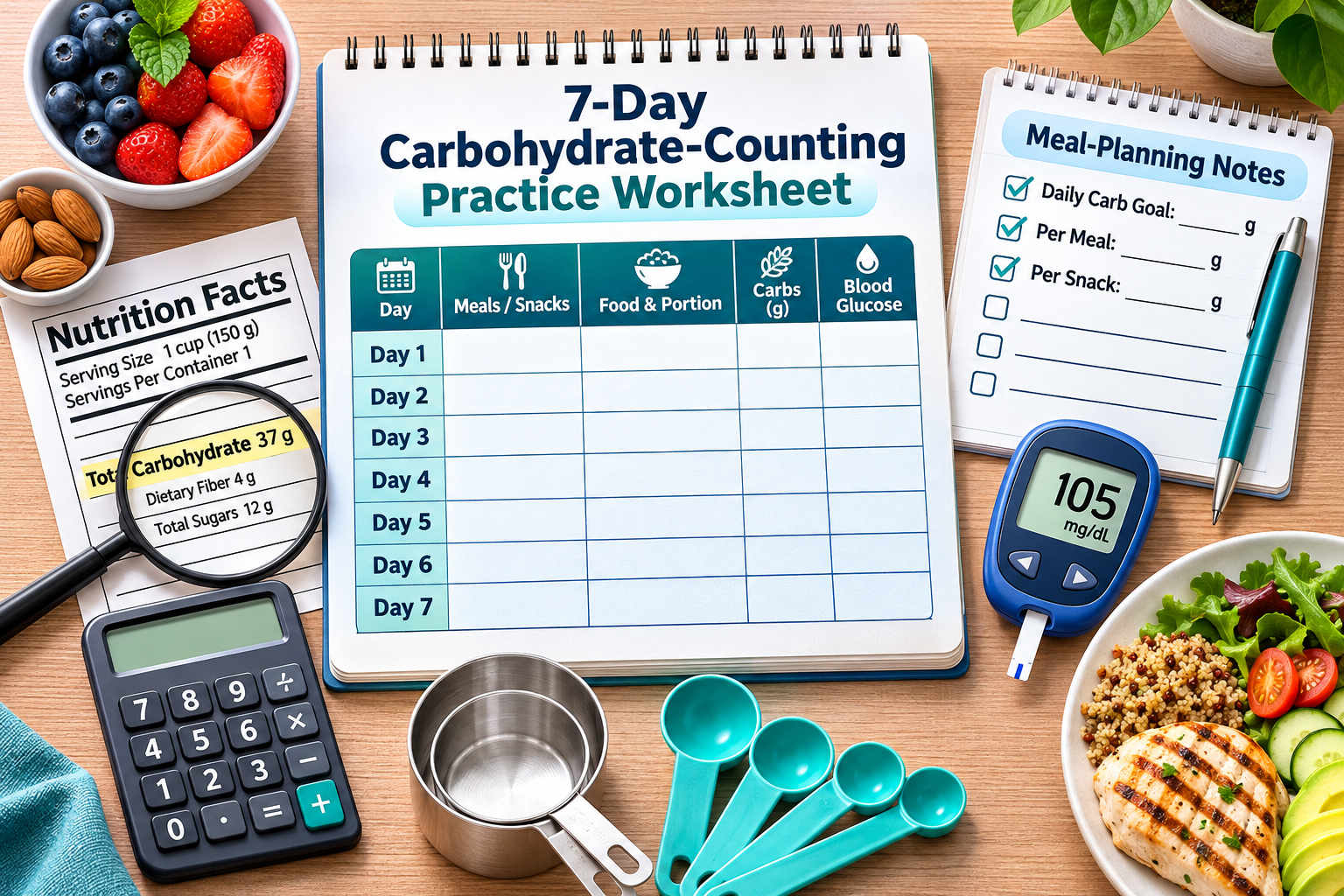
For the first two days, choose one familiar packaged food and locate the carbohydrate information. On days three and four, practice adjusting the number for a different portion. On day five, estimate a simple homemade meal using a reliable database. On day six, compare a US panel with a UK, Canadian or Australian panel. On day seven, review what was useful and what remained confusing.
A practical journal has four columns: food and amount eaten; carbohydrate source; estimated grams; and questions to discuss with the diabetes team. People monitoring glucose may also review readings if their care plan recommends it, without assigning blame to every result.
The goal of this carbohydrate counting guide is confidence, not perfection. Repeated meals often become easier to estimate, while complex restaurant meals may always require some judgment.
BBH Support and Diabetes Resources
Explore the BBH Support and Resources page and Diabetes & Blood Sugar Hub for further educational material. Check medication decisions with your own care team.
Frequently Asked Questions
Is carb counting only for type 1 diabetes?
No. It is particularly important for some insulin users, but people with type 2 diabetes may also choose a simple or detailed approach. It is not required for everyone.
Is one carb choice always 15 grams?
About 15 g is the commonly taught exchange unit in several diabetes education programs. Food labels can show very different quantities per serving.
Should I subtract all fiber from the label?
Not universally. US, UK, Australian and Canadian labels and clinical methods differ. Use the approach taught by your diabetes care team.
Can I eat fruit while counting carbohydrates?
Yes. Whole fruit provides fiber and other nutrients. Count the portion’s carbohydrate and consider your individual glucose pattern.
Are zero-sugar products carb-free?
No. A food may contain starch, milk sugar or other digestible carbohydrate despite a sugar-free claim.
Does carb counting mean I must eat low carb?
No. Carb counting measures intake; it does not prescribe an extremely low-carb diet. Nutrition goals should be individualized.
Should I count protein and fat as carbohydrates?
Protein and fat are separate nutrients. However, foods containing them can also have carbohydrate, such as beans and yogurt, and mixed meals can change glucose timing.
Can I use carb grams to decide my insulin dose?
Only if you have received an individualized insulin-to-carb ratio and dosing instructions from your diabetes team. Never use generic online ratios.
Related BBH Guides and Support
Continue Learning with BBH
- Diabetes Diet: What to Eat and Limit
- Diabetes Snacks: Balanced Options
- Diabetes Meal Plan: 7-Day Example
- Fruit and Diabetes: Portions and Choices
- Low Blood Sugar: Symptoms and Treatment
Need additional educational resources? Visit BBH Support and Resources and the Diabetes & Blood Sugar Hub. These are not emergency services.
Evidence, Sources and Medical Disclaimer
- CDC: Carb Counting to Manage Blood Sugar
- American Diabetes Association: Carb Counting and Diabetes
- ADA Standards of Care 2026: Nutrition Therapy and Positive Health Behaviors
- Diabetes UK: Learn About Carb Counting
- Diabetes Canada: Carb Counting for Blood Sugar Control
- Australian NDSS: Carb Counting Quick Guide
Medical and nutritional disclaimer
This guide provides general education, not an individualized carbohydrate allowance, insulin dose, diagnosis or treatment plan. People using insulin or other medicines that can cause low blood glucose should obtain personalized carb-counting education. Seek urgent help for severe hypoglycemia, confusion, seizures, inability to swallow or other medical emergencies. Independent clinical review of this article is not claimed.
Bio and Brain Health Info (BBH) · Physical Health → Diabetes & Blood Sugar