Mediterranean Diet and Type 2 Diabetes
Mediterranean Diet for Diabetes: Benefits

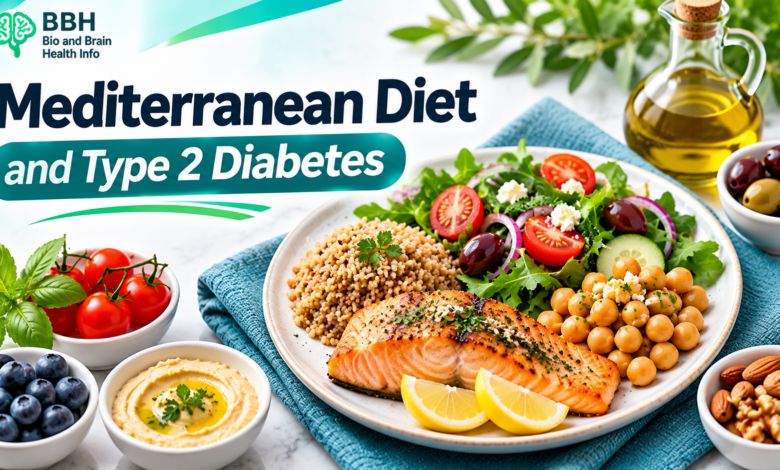
The Mediterranean diet and type 2 diabetes are often discussed together because this eating pattern emphasizes vegetables, legumes, whole grains, fruit, olive oil, nuts and fish. It offers a flexible way to improve food quality while paying attention to blood glucose and long-term cardiovascular risk.
Thank you for reading this post, don't forget to subscribe!This guide reviews the evidence for a Mediterranean diet for diabetes, explains carbohydrate portions, includes a practical seven-day menu and considers affordability in the United States, United Kingdom, Australia and Canada. Rather than promising a cure or prescribing a rigid gram target, it shows how people can adapt meals to their own glucose response, medications, food preferences and healthcare advice.
Mediterranean Diet and Type 2 Diabetes: Quick Answer
The American Diabetes Association’s 2026 Standards advise people with diabetes to consider Mediterranean-pattern elements, particularly fatty fish, nuts and seeds, to help lower cardiovascular disease risk and improve glucose metabolism. The newer ADA/EASD 2026 consensus also identifies favorable metabolic and cardiovascular findings.
What Is a Mediterranean-Style Eating Pattern?
The term refers to eating traditions historically associated with countries around the Mediterranean, not one standardized meal schedule. Everyday meals generally feature plant foods, with olive oil as a principal fat source, plus fish or seafood, moderate amounts of other protein foods, and fewer highly processed meats or sugar-sweetened foods.
A healthy Mediterranean eating pattern is defined by the balance of foods over time rather than one specific ingredient. Someone can adopt it using supermarket vegetables, frozen fish, canned beans and familiar whole grains without purchasing specialty Mediterranean-branded products.
Is it a low-carbohydrate diet?
Not necessarily. Whole grains, beans, lentils and fruit all supply carbohydrate. Their fiber and nutritional value may be useful, while the amount eaten still matters for post-meal glucose. A Mediterranean-style plan can be tailored to lower or moderate carbohydrate intake when appropriate.
Is wine necessary?
No. Alcohol is not required for any health benefit, and starting to drink is not advised. Alcohol can interact with diabetes medicines, worsen hypoglycemia risk in some circumstances and add calories. Water and other unsweetened beverages are appropriate options.
Mediterranean Diet and Type 2 Diabetes: The Evidence
Major professional guidance supports the pattern because it can make several risk factors more favorable at once. Clinical studies and systematic reviews have examined HbA1c, blood pressure, lipid profiles, body weight and cardiovascular outcomes, although the size of benefit varies by population, intervention and comparison diet.
Effects on A1C and glucose
Choosing minimally processed carbohydrate sources, unsaturated fats and higher-fiber foods can support glycemic management. Some studies report improved A1c or fasting glucose relative to comparison diets. These findings should not be read as a prediction of a specific A1C reduction for every person.
Cardiovascular benefits
Heart disease prevention is particularly important for people with type 2 diabetes. The ADA recommends Mediterranean-style elements to reduce cardiovascular disease risk, and the 2026 ADA/EASD report describes favorable cardiovascular and metabolic effects. Replacing some saturated fat with unsaturated oils, nuts and fish is one plausible contributor.
Why results differ
Trials vary in duration, calories, dietary counseling, medication changes and adherence. A pattern that works well in one study may not produce identical results in a busy household. The strongest interpretation is that this is a legitimate option among several evidence-based eating patterns, not a guaranteed superior diet for everyone.
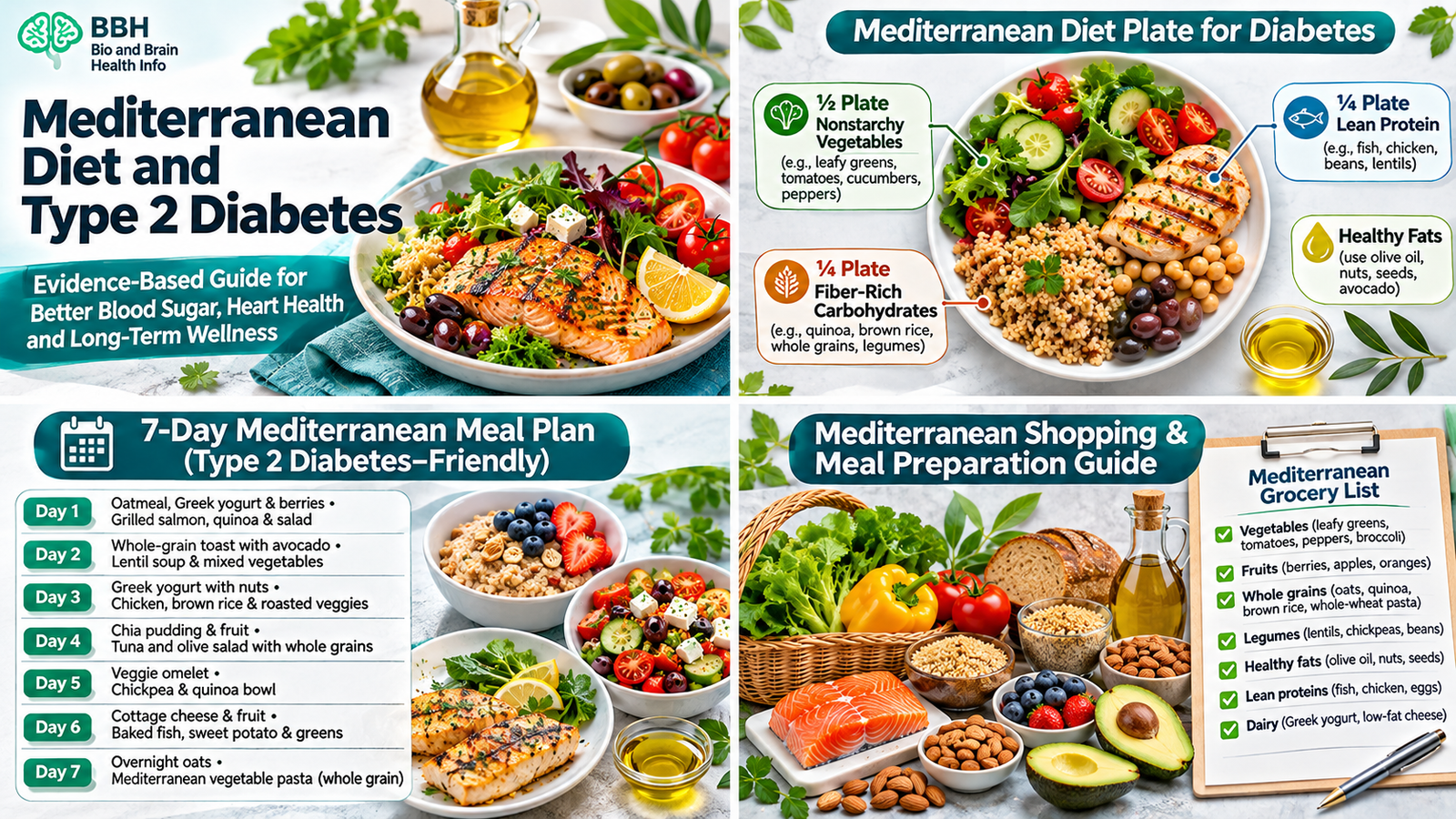
How to Build a Diabetes-Friendly Mediterranean Plate
A practical approach starts with abundant nonstarchy vegetables, an adequate protein source and a portion of carbohydrate food matched to individual requirements. Add a modest amount of olive oil, nuts or seeds for flavor and unsaturated fats. This resembles the familiar diabetes plate approach, adjusted to Mediterranean food choices.
| Plate element | Examples | Diabetes consideration |
|---|---|---|
| Nonstarchy vegetables | Spinach, broccoli, peppers, tomatoes, aubergine, salad | Increase variety without assuming dressing is carbohydrate-free |
| Carbohydrate foods | Beans, lentils, barley, brown rice, whole-grain bread, fruit | Check portions and monitor response when advised |
| Protein | Fish, eggs, tofu, yogurt, poultry, legumes | Consider preparation methods and kidney-related needs |
| Unsaturated fats | Olive oil, walnuts, almonds, seeds | Nutritious but energy-dense; portions still matter |
For example, a lunch might combine a large leafy salad, a modest portion of lentils or farro, grilled chicken or tofu, and an olive-oil-and-lemon dressing. The specific amount of lentils or grain depends on that person’s meal plan, not a universal rule.
Related reading: Diabetes Diet: What to Eat and Limit.
Mediterranean Diet Foods to Eat More Often
Vegetables, fruit and legumes
Leafy greens, tomatoes, peppers, mushrooms, berries, apples, chickpeas, beans and lentils add fiber, nutrients and variety. Frozen and canned options can be practical; select lower-sodium canned vegetables and rinse legumes when helpful.
Whole grains rather than refined grains
Oats, barley, bulgur, quinoa, whole-grain bread and brown rice can fit, but whole grain does not mean carbohydrate-free. Compare serving sizes and amounts of carbohydrate. A bowl of grain may affect glucose differently from a smaller side portion eaten with vegetables and protein.
Foods to use less frequently
Limit frequent intake of sugary drinks, heavily processed meats, refined sweets and products high in saturated fat or sodium. This is a pattern of usual choices, not a rule against every occasional dessert. Enjoyment and cultural fit are important for sustainability.
A Mediterranean diet for diabetes does not require imported olives, expensive organic produce or unfamiliar recipes. Many basic foods already sold in US supermarkets are appropriate.
Related reading: Carb Counting for Diabetes: Beginner Guide.
Mediterranean Diet and Blood Sugar: Carbs and Portions
A common misconception is that olive oil or fiber-rich food makes the carbohydrate in a meal irrelevant. Beans, bread, pasta, rice, fruit and milk still contain carbohydrates. Pairing them with protein, fiber and fat may change digestion and satiety, but does not cancel their glucose impact.
Can people still eat pasta?
Yes, when portion and meal composition are individualized. A modest serving of whole-grain pasta with vegetables, a protein source and an unsaturated-fat dressing may be more balanced than a very large plain pasta serving. Glucose monitoring can help someone understand their response.
How much carbohydrate should a meal contain?
There is no single gram allowance for everyone with type 2 diabetes. People using insulin may need carbohydrate counting matched to prescribed dosing. Others may use the diabetes plate method. Dietary counseling should account for treatment, physical activity, food access and personal goals.
The Mediterranean diabetes meal plan below uses meal ideas rather than fixed carbohydrate values, because product sizes and personal requirements differ across households.
Healthy Fats: Olive Oil, Nuts and Seeds
Olive oil supplies mostly monounsaturated fats; walnuts, almonds and seeds provide unsaturated fats, fiber or other nutrients. Substituting these for butter, processed meats and high-saturated-fat sauces can improve the overall fat profile of a meal.
Nuts and oils are calorie-dense even when considered heart-healthy. Someone managing weight may find measuring portions initially useful. Selecting unsalted nuts can help people who also need to manage blood pressure.
Does extra-virgin olive oil lower glucose instantly?
No single oil acts as an immediate glucose-lowering treatment. Benefits relate to sustained dietary patterns, food substitutions and overall health. Olive oil should not replace medication or be added freely on top of an otherwise high-calorie diet.
Related reading: Best Foods for Type 2 Diabetes.
Protein Choices: Fish, Beans, Yogurt and Eggs
Fish, including oily fish when appropriate, provides protein and often omega-3 fats. Beans and lentils also supply protein, but contain carbohydrates that may need counting. Unsweetened yogurt, eggs, tofu and poultry can add flexibility without relying on large amounts of red meat.
Canned salmon, sardines, chickpeas, lentils and eggs can be inexpensive options. People with kidney disease or other medical conditions may need personalized advice about protein, potassium, sodium and other nutrients.
Cooking methods matter: baking, grilling or using moderate oil is often preferable to frequently deep-frying fish or vegetables. Food safety is important when selecting fish, particularly during pregnancy.
Related reading: Diabetes Meal Plan: 7-Day Example.
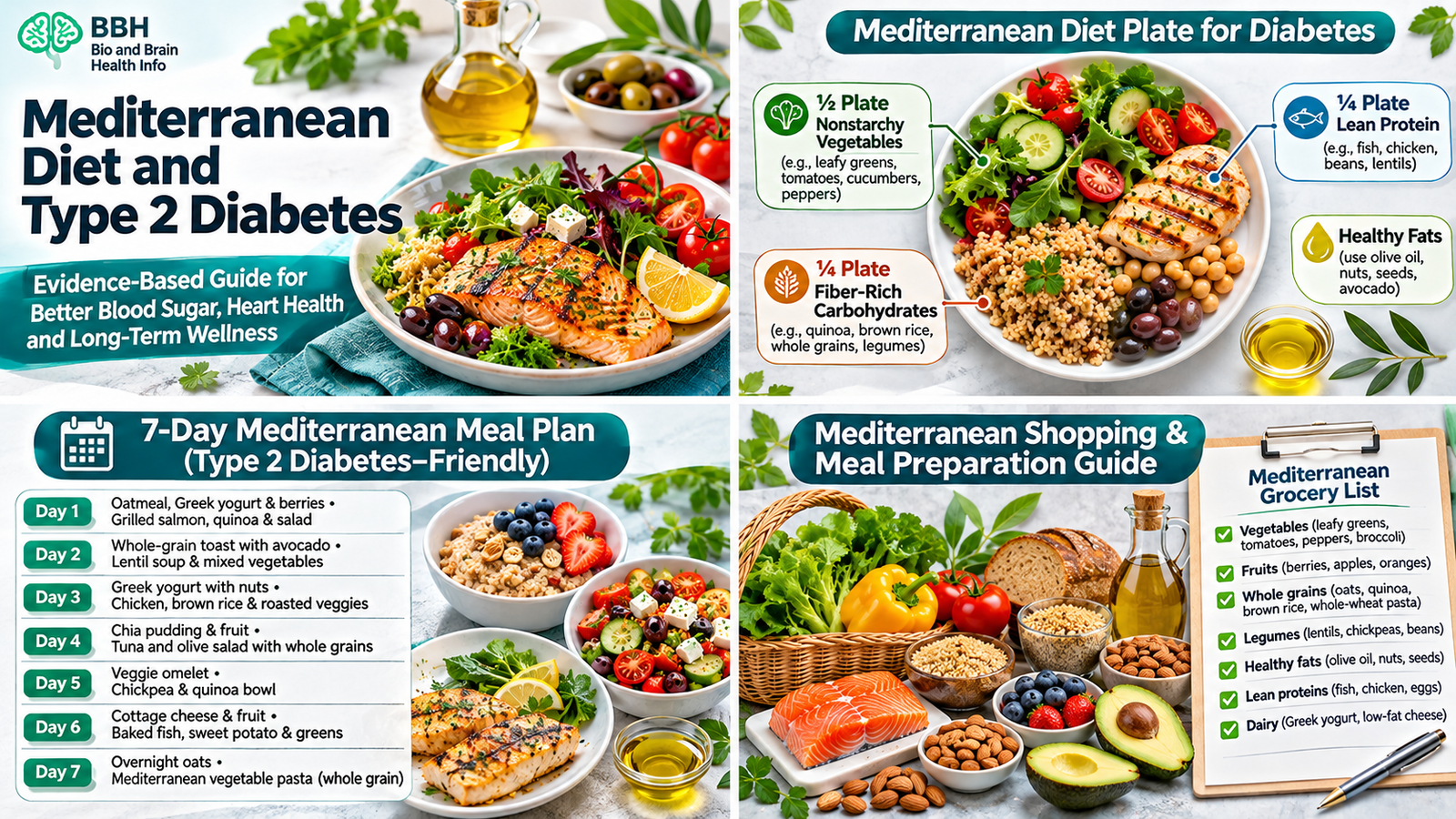
Mediterranean Diet 7-Day Meal Plan for Type 2 Diabetes
These seven days are flexible examples for US readers, not prescriptions for calories, carbohydrate grams or medication doses. Substitute foods according to allergies, local availability, budget and advice from a registered dietitian.
| Day | Breakfast | Lunch | Dinner | Optional snack |
|---|---|---|---|---|
| Monday | Plain Greek yogurt, berries, oats | Chickpea-and-vegetable salad | Baked salmon, broccoli, small portion barley | Apple and nuts |
| Tuesday | Eggs, tomatoes, whole-grain toast | Lentil soup and salad | Chicken or tofu with peppers and quinoa | Carrots and hummus |
| Wednesday | Oatmeal, walnuts, cinnamon | Tuna or bean whole-grain wrap | Vegetable-and-bean stew, yogurt | Berries |
| Thursday | Unsweetened yogurt, chia, fruit | Farro or brown-rice salad with beans | Grilled fish or tofu, vegetables | Small pear and cheese |
| Friday | Vegetable omelet, whole-grain toast | Leftover lentil vegetable bowl | Whole-grain pasta, tomatoes, mushrooms, protein | Unsalted nuts |
| Saturday | Overnight oats with plain yogurt | Hummus, vegetables, whole-grain pita | Roast chicken or chickpeas, greens, potatoes | Plain yogurt |
| Sunday | Eggs, spinach, fruit | Bean-and-tomato salad, grain portion | Baked fish or tofu, mixed vegetables, lentils | Fruit and seeds |
Not everyone needs snacks between meals. Those taking insulin or sulfonylureas may require specific advice on meal timing and preventing low blood glucose. Drinks, sauces and serving sizes also contribute to carbohydrate intake.
A useful type 2 diabetes Mediterranean diet plan can repeat favorite dishes rather than requiring 21 different recipes. Preparing beans, vegetables and one whole grain ahead of time may simplify weekday meals.
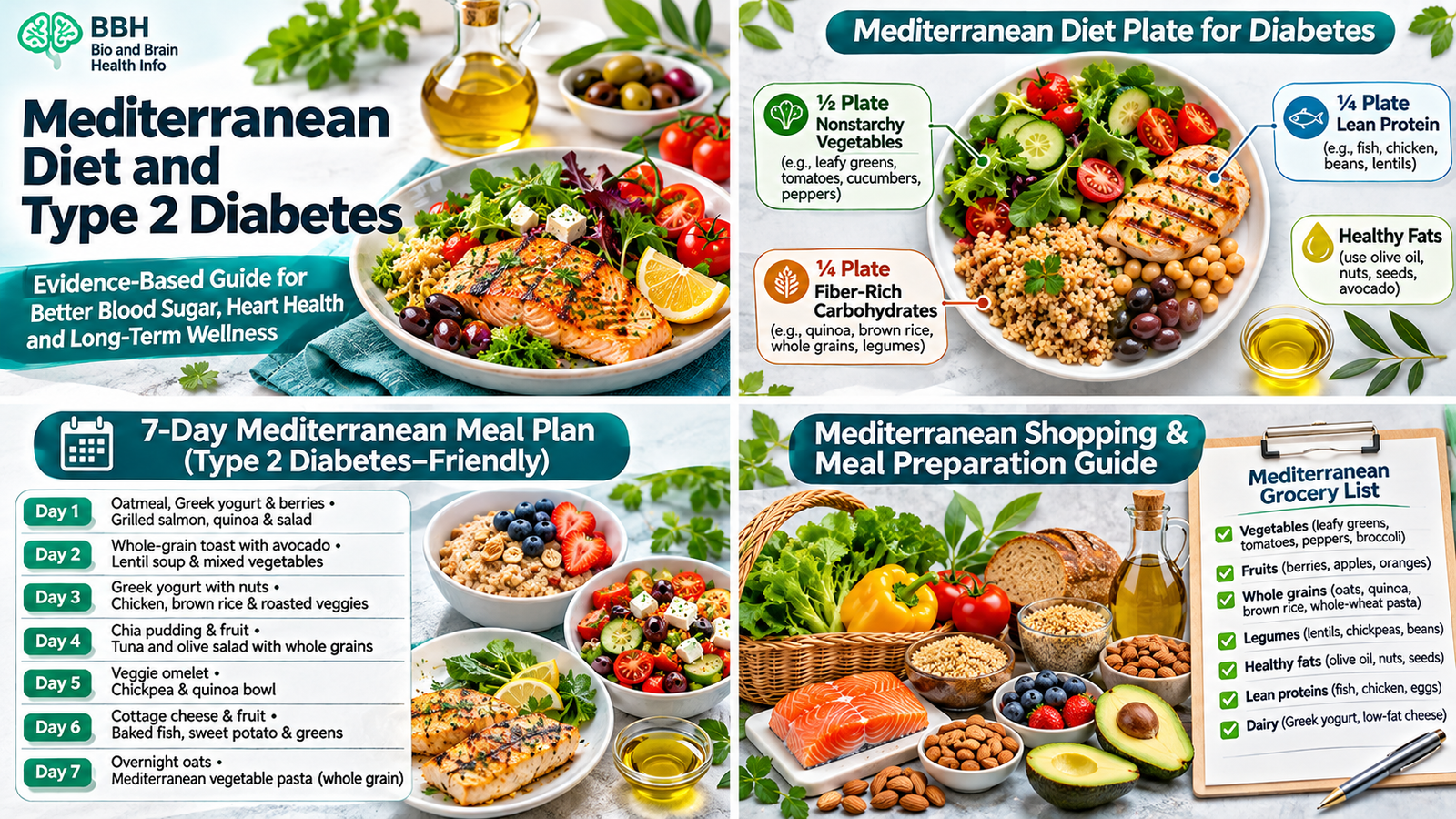
Affordable Mediterranean Diet Shopping List
| Category | Practical choices | Money-saving option |
|---|---|---|
| Vegetables | Leafy greens, cabbage, carrots, tomatoes, peppers | Frozen vegetables; seasonal produce |
| Fruit | Apples, citrus, berries, pears | Frozen berries; seasonal fruit |
| Beans and grains | Canned beans, dry lentils, oats, brown rice | Buy dry beans and store-brand grains |
| Protein | Eggs, tofu, fish, plain yogurt | Canned fish; batch-cooked legumes |
| Fat and flavor | Olive oil, nuts, herbs, garlic, lemon | Use smaller oil quantities; buy spices in bulk |
Canned foods can be practical. Compare sodium, added sugar and serving sizes rather than assuming all packaged foods are unhealthy. A simple pantry can support many meals: canned tomatoes plus beans makes a stew; oats and yogurt make breakfast; frozen vegetables pair with fish or tofu.
Mediterranean Diet for Diabetes in the USA, UK, Australia and Canada
United States: US-priority implementation
Use familiar supermarket foods and the Nutrition Facts label to check total carbohydrate and serving size. USDA-style frozen vegetables, dry lentils, canned chickpeas, plain Greek yogurt, brown rice and olive oil provide convenient building blocks. Favor unsweetened drinks and adjust carbohydrate portions for the care plan.
United Kingdom
Diabetes UK provides Mediterranean meal plans and supports flexible, individualized eating. Oily fish, pulses, vegetables, porridge oats and wholemeal bread are common options. UK nutrition panels often show carbohydrate per 100 g, so readers can calculate the amount for their portion.
Australia
The National Diabetes Services Scheme includes Mediterranean-style eating among suitable evidence-informed dietary patterns. Australians may use chickpeas, canned fish, plain yogurt, seasonal vegetables and wholegrain products while checking nutrition panels and individual glucose needs.
Canada
Diabetes Canada discusses the Mediterranean pattern as an option for people living with diabetes. Lentils, beans, frozen berries, oats, fish and unsalted nuts are accessible choices. Canadian labels and local guidance may differ from US labels, particularly for carbohydrate counting and fiber.
Across all four countries, a healthy Mediterranean eating pattern is adaptable. It is the recurring mix of foods, not the national origin of a recipe, that matters.
Mediterranean vs Low-Carb, DASH and Other Eating Patterns
| Pattern | Main emphasis | Important distinction |
|---|---|---|
| Mediterranean-style | Plant foods, unsaturated fats, seafood, legumes | May include moderate carbohydrate; portions still matter |
| Lower-carbohydrate | Reduced carbohydrate relative to usual intake | Degree of restriction varies; medication review may be needed |
| DASH | Vegetables, fruit, whole grains, less sodium | Often helpful where blood pressure is a priority |
| Vegetarian or plant-based | Plant proteins and plant foods | Quality and carbohydrate balance still matter |
Several approaches can be appropriate. The ADA emphasizes shared decision-making, cultural preferences, nutrition adequacy and long-term adherence rather than one universal diet for everyone. A person with food allergies, kidney disease or particular medication needs may benefit from another plan or a modified version.
Related reading: Can Type 2 Diabetes Go Into Remission?.
Weight Management, Remission and Mediterranean Eating
Some people experience weight reduction when replacing highly processed, energy-dense foods with satisfying meals featuring vegetables, legumes and protein. A Mediterranean-style pattern can also support health outcomes even without major weight loss, according to the 2026 ADA/EASD consensus.
Type 2 diabetes remission is a specific clinical state, not a synonym for eating well. Improved blood glucose while continuing medication does not necessarily meet the international remission definition. No diet can promise remission for everyone, and medical follow-up remains important even if glucose improves substantially.
Diet quality, cardiovascular protection and wellbeing are worthwhile goals whether or not someone loses weight. Avoid treating a person who needs medication as having failed an eating plan.
Medication Safety and Special Health Conditions
Changing meal timing or substantially reducing carbohydrate intake may increase hypoglycemia risk in people using insulin or sulfonylureas. A clinician may need to adjust treatment. Never change or stop prescribed medication simply because a new eating pattern seems healthier.
Kidney disease, blood pressure and cholesterol
People with chronic kidney disease may need advice on protein, potassium, phosphorus and sodium. Those with high blood pressure should consider lower-sodium food selections and overall energy balance. Cardiovascular medicines may still be important when glucose improves.
Pregnancy, eating disorders and digestive conditions
Gestational diabetes, pregnancy, histories of disordered eating, food allergies and digestive disorders warrant individualized nutrition support. A restrictive program is not implied by Mediterranean eating, and adequate nutrition remains a priority.
Eating Out, Meal Prep and Real-Life Flexibility
Restaurants may serve large portions of bread, pasta, rice and dressings. Consider sharing a dish, ordering extra vegetables or taking leftovers home when useful. A salad topped with beans, chicken or fish can be balanced, but the bread, dressing and dessert also count toward the overall meal.
Meal preparation can be simple: roast vegetables, cook a pot of lentils, prepare an unsweetened yogurt sauce and choose one protein option for several days. Vary herbs and seasonings rather than buying expensive specialty sauces.
A Mediterranean diet for diabetes should fit work schedules, family preferences and available cooking time. Repeating practical choices is often more helpful than aiming for an idealized holiday-style menu.
Common Myths and Content Gaps
Myth: All Mediterranean foods are low carb
Beans, fruit, whole grains and bread contain carbohydrate. Food quality and portion sizes both matter for glucose management.
Myth: Olive oil can be eaten without limits
Unsaturated fats can be beneficial replacements for saturated fats, but energy intake and portion sizes may still matter.
Myth: This diet automatically reverses diabetes
Improved glucose control is possible; medication-free remission is a separate clinical assessment and cannot be guaranteed.
Myth: Expensive imported foods are required
Frozen vegetables, canned fish, legumes and store-brand whole grains can work well. Healthy eating does not need boutique ingredients.
Myth: Wine is essential
Alcohol is unnecessary and may be inappropriate, particularly with certain medications or medical conditions.
For beginners, the connection between the Mediterranean diet and type 2 diabetes is best understood through repeatable meals, sensible carbohydrate portions and follow-up care rather than restrictive food rules.
A Four-Week Mediterranean Eating Starter Plan
| Week | Small action | What to observe |
|---|---|---|
| 1 | Add vegetables to one main meal most days | Taste, ease, grocery cost |
| 2 | Choose beans or lentils several times; compare grain portions | Satiety and glucose response if monitoring |
| 3 | Replace some saturated fats with measured olive oil or nuts | Meal satisfaction and practicality |
| 4 | Plan two fish or suitable plant-protein meals and review routine | Budget, consistency and questions for dietitian |
A four-week starter plan is an educational habit-building framework, not a clinical intervention. Individuals using glucose-lowering medication should discuss significant changes with their team. Any monitoring should follow the care plan rather than a rigid schedule from an article.
The purpose of combining a Mediterranean diet and type 2 diabetes plan is to support food confidence, glucose management and long-term health—not perfection.
Mediterranean Diet and Type 2 Diabetes FAQs
Can I eat rice on a Mediterranean diet?
Yes. Brown or other rice can fit, with a portion chosen according to individual carbohydrate needs. Pair it with vegetables and protein.
Is the Mediterranean diet better than keto for type 2 diabetes?
Not universally. Patterns differ in carbohydrate content and sustainability. Evidence supports Mediterranean-style eating, but personal medication safety and preferences matter.
Can Mediterranean eating improve A1C?
Research suggests it can support glucose management, but the amount of improvement varies. A1C should be assessed through usual medical follow-up.
Are potatoes and bread allowed?
They are not categorically forbidden. Serving size, frequency, food quality and total meal composition are relevant.
Is the Mediterranean diet expensive?
It need not be. Beans, frozen vegetables, canned fish, oats and store-brand whole grains can provide economical options.
Can I stop diabetes tablets if glucose improves?
Never without clinical review. Some medicines provide protective benefits beyond glucose lowering.
Is Mediterranean eating suitable for vegetarians?
Yes. Legumes, tofu, vegetables, grains, yogurt or suitable dairy alternatives can be used to build vegetarian meals.
Do I need to snack every day?
No. Snack frequency depends on hunger, nutritional needs, medications and the person’s care plan.
Related BBH Articles and Support
Research Sources and Medical Disclaimer
- American Diabetes Association: 2026 Standards, Section 5, Nutrition and Positive Health Behaviors
- ADA/EASD: Management of Type 2 Diabetes, 2026 Consensus Report
- American Diabetes Association: Science-Based Diabetes Meal Patterns
- Diabetes UK: Mediterranean Meal Plan
- Diabetes Canada: Mediterranean Diet and Diabetes
- Australia NDSS: Healthy Eating
Bio and Brain Health Info (BBH) · Physical Health → Diabetes & Blood Sugar