Blueberries: Nutrition, Benefits and Side Effects
Blueberry Health Benefits, Nutrition and Risks

Blueberries are often advertised as a superfood that can sharpen memory, protect the heart and slow aging. But how much of this reputation is supported by research in people? If you are managing blood sugar, planning a heart-supportive diet or trying to protect your long-term brain health, knowing what the evidence actually shows can help you make better decisions.
Thank you for reading this post, don't forget to subscribe!Understanding blueberry health benefits involves more than counting antioxidants. The form of the fruit, portion size, overall diet and quality of the research all matter. This guide examines established nutrition facts, emerging human studies and possible side effects for readers in the United States, United Kingdom, Canada and Australia.
Medical Safety & Disclaimer
This article provides general nutrition education and does not replace diagnosis, medical treatment or individual dietetic advice. People with diabetes, food allergies, prescribed dietary restrictions or medications that interact with vitamin K should discuss dietary changes with their healthcare team. Never stop prescribed medication because of a food or supplement claim.
Quick Answer
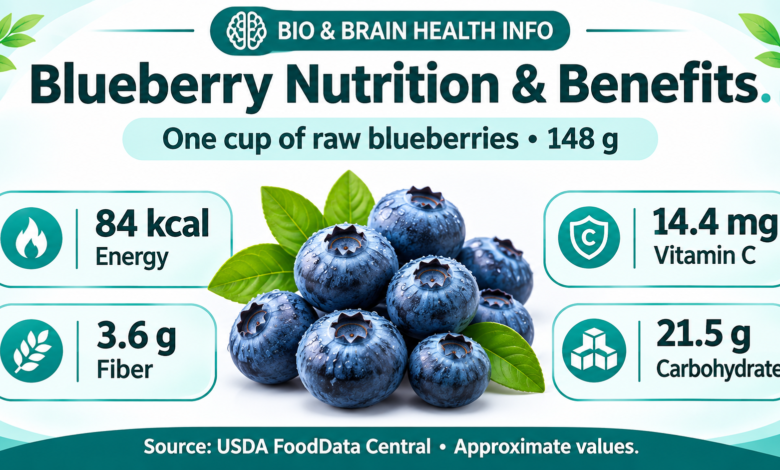
One cup of raw blueberries (148 g) supplies approximately 84 calories, 21.5 g carbohydrate, 3.6 g fiber and 14.4 mg vitamin C. Blueberries also contain anthocyanins. Human research suggests possible benefits for blood vessel function, but evidence that blueberries improve memory or prevent chronic disease remains uncertain.
In This Guide
What you will learn
Nutrition facts • Anthocyanins • Heart health • Brain and memory research • Blood sugar • Fresh versus frozen berries • Wild versus cultivated berries • Supplements • Safety and food storage • Practical portions • FAQs
1. Blueberry nutrition facts: What does one cup contain?
Blueberries are mostly water, with carbohydrate providing the majority of their energy. They contain fiber, vitamin C, vitamin K and manganese, and relatively little fat or protein. These properties make them a convenient fruit to include in a diverse diet. They should not be treated as a complete meal or a substitute for foods that supply protein and essential fats.
| Nutrient | Per 100 g | One cup (148 g) |
|---|---|---|
| Energy | 57 kcal | 84 kcal |
| Total carbohydrate | 14.5 g | 21.5 g |
| Total sugars | 10.0 g | 14.7 g |
| Fiber | 2.4 g | 3.6 g |
| Protein | 0.74 g | 1.10 g |
| Fat | 0.33 g | 0.49 g |
| Vitamin C | 9.7 mg | 14.4 mg |
| Vitamin K | 19.3 mcg | 28.6 mcg |
| Manganese | 0.336 mg | 0.50 mg |
| Potassium | 77 mg | 114 mg |
Source: USDA FoodData Central, blueberries, raw, FDC 171711. These are approximate reference values, not a laboratory analysis of your particular fruit. Cultivar, growing conditions, maturity and storage may affect composition. Sugars and fiber are included in the total carbohydrate figure.
What nutrients contribute to blueberry health benefits?
Vitamin C contributes to normal collagen production and immune function. Vitamin K participates in blood clotting and bone metabolism. Manganese is involved in several enzyme systems, and fiber contributes to normal bowel function. A single serving contributes to nutrient intake but cannot guarantee nutritional adequacy. The rest of the diet remains important.
2. Anthocyanins: What makes blueberries blue?
Anthocyanins are plant pigments belonging to the flavonoid family. They help produce the blue-purple colors of blueberries. Other foods, including blackberries, purple cabbage and blackcurrants, also contain these compounds. Their concentrations differ across plant varieties and growing conditions.
Laboratory experiments can measure antioxidant activity, but such measurements do not directly demonstrate protection against human diseases. After digestion, anthocyanins and related compounds undergo substantial metabolism. Their effects in the body may involve metabolites and biological signaling rather than simply neutralizing free radicals in the same way observed in a laboratory test tube.
Evidence Literacy
An antioxidant test, a study in cells and a randomized clinical trial answer different questions. A food’s high antioxidant capacity does not prove that it prevents cancer, reverses aging or repairs brain cells.
3. Blueberry health benefits: What human research supports
Supporting blood vessel function
A six-month randomized controlled trial published in 2019 examined blueberry consumption in adults with metabolic syndrome. The intervention equivalent to one cup of blueberries per day improved some measures of vascular function. The study did not establish that blueberries prevent heart attacks or strokes. Improvements in a measured cardiovascular marker should not be interpreted as proof of fewer clinical events.
A 2026 systematic review and meta-analysis reported encouraging vascular findings while finding no significant improvement in certain cognitive outcomes. The authors emphasized the need for larger and more standardized clinical trials. These findings support a cautious interpretation: blueberries may be a useful component of a heart-supportive diet, not a replacement for blood pressure or cholesterol treatment.
Contributing to digestive health
A cup of blueberries provides approximately 3.6 grams of dietary fiber. Fiber can support bowel regularity, particularly when the overall diet includes a variety of fruits, vegetables, whole grains and legumes. Some plant compounds and fibers interact with intestinal microbes. However, evidence does not establish that blueberries alone can restore a healthy microbiome or treat irritable bowel syndrome.
If you are increasing fiber intake, begin with amounts you tolerate and drink fluids according to your medical needs. People with persistent constipation, pain or other digestive symptoms should seek individualized advice.
Providing nutrient-dense snacks
Blueberries offer natural sweetness and useful nutrients for relatively modest energy intake. They can replace some desserts or sweetened snacks, depending on preferences. This substitution can be useful, but adding fruit to an already sufficient diet does not guarantee weight loss. Appetite, total energy intake and long-term eating habits determine the outcome.
For a more complete snack, combine berries with plain yogurt, nuts or another suitable source of protein and fat. Choose portions that fit your nutritional requirements rather than relying on a universal superfood serving.
4. Blueberries and brain health: Evidence versus marketing
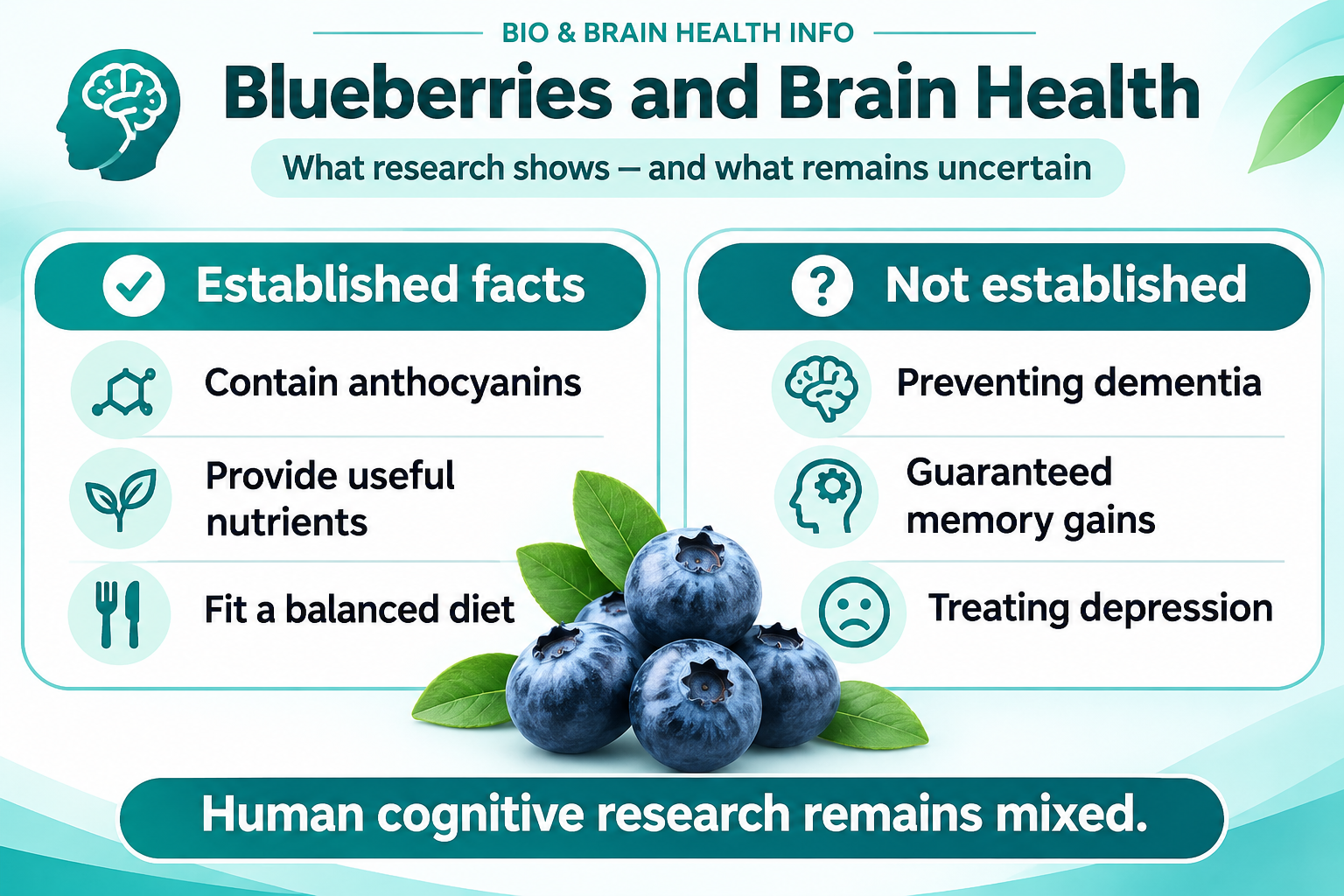
Researchers have investigated whether anthocyanin-rich foods influence memory, attention, mood and other measures of cognitive function. Blueberries are of interest because their plant compounds may affect vascular and metabolic processes relevant to the brain. Biological plausibility, however, is not proof of a clinical benefit.
Are blueberry health benefits for memory proven?
A 2024 randomized trial in people with metabolic syndrome did not find strong overall improvements in cognition, mood, alertness or sleep following its blueberry intervention. A 2025 review of anthocyanin interventions found promising signals in some cognitive outcomes, but the research included multiple foods or compounds, different doses and populations. Its results cannot be attributed exclusively to ordinary blueberries.
A 2026 blueberry-specific systematic review reported no significant improvement in executive function or mood in its pooled analyses. Taken together, the findings do not justify a promise that eating blueberries will prevent dementia, improve academic performance or treat depression.
For someone concerned about memory, addressing sleep, physical activity, cardiovascular risk, medication effects and nutritional deficiencies may be relevant. Persistent or worsening cognitive symptoms deserve medical evaluation. Read Vitamins and Minerals for Brain Health for related nutrition education.
Brain Health Safety
Blueberries are food, not a treatment for dementia, depression or other neurological conditions. Do not delay assessment or discontinue prescribed treatment based on memory-enhancement claims.
5. Blueberries and blood sugar: Can people with diabetes eat them?
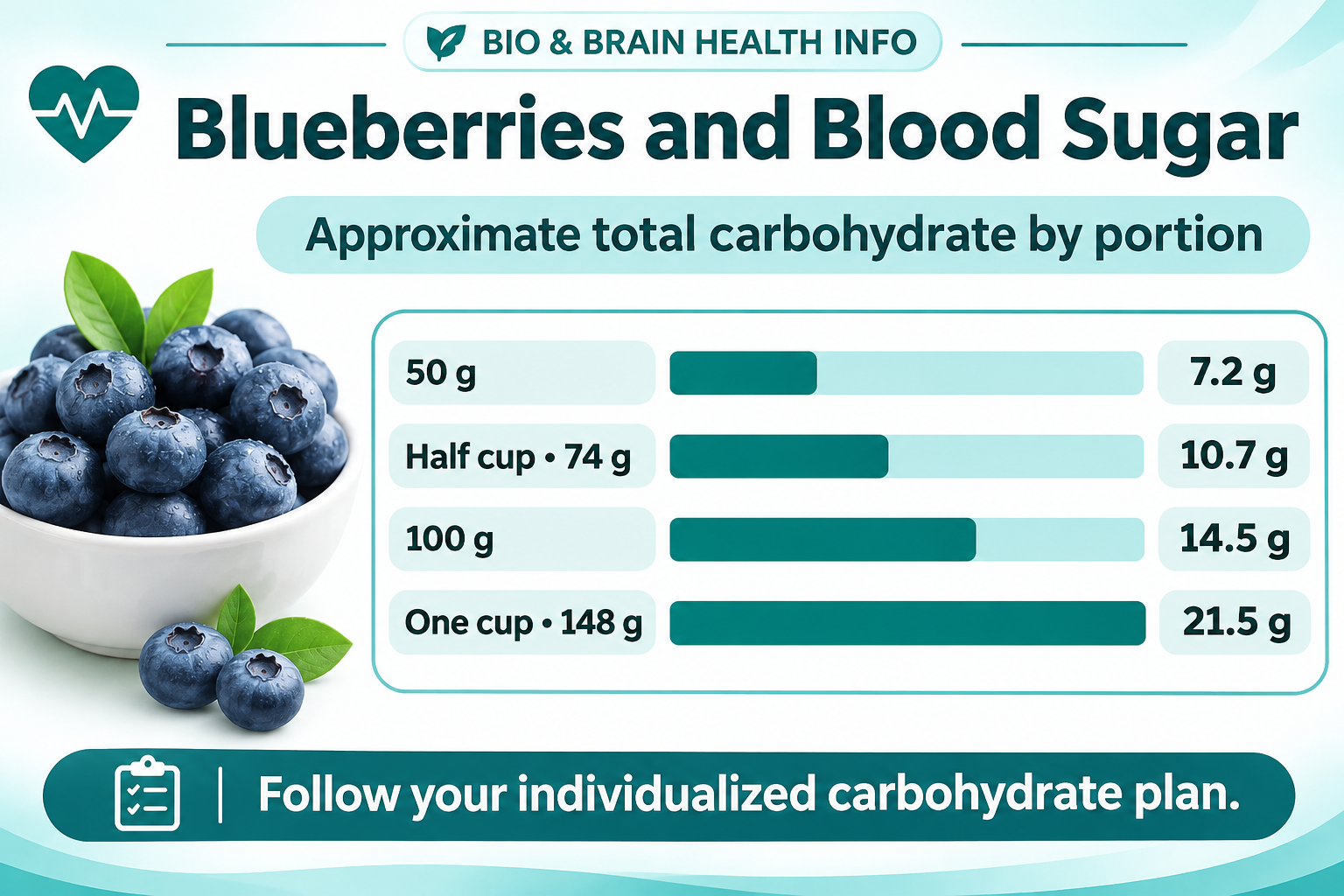
Many people with diabetes can include whole blueberries within an individualized eating plan. Although the berries contain fiber, they also contain digestible carbohydrate. A full cup provides approximately 21.5 grams of total carbohydrate. A smaller portion may be more appropriate for someone whose meal plan allows less carbohydrate.
| Edible portion | Approximate total carbohydrate | Approximate fiber |
|---|---|---|
| 50 g | 7.2 g | 1.2 g |
| Half cup (74 g) | 10.7 g | 1.8 g |
| 100 g | 14.5 g | 2.4 g |
| One cup (148 g) | 21.5 g | 3.6 g |
The estimates are based on USDA composition values. US total carbohydrate figures include fiber; label conventions and carbohydrate-counting practices can differ in the UK, Canada and Australia. Use the approach recommended by your local diabetes team.
A 2026 crossover study investigated wild blueberry drinks consumed with a high-carbohydrate breakfast in 24 healthy adults. Such a small, short-term study cannot establish a treatment dose for diabetes or predict long-term HbA1c changes. Results involving drinks with standardized anthocyanin doses should not be assumed to apply directly to every bowl of berries.
See Fruit and Diabetes: Portions and Choices and Carb Counting for Diabetes: Beginner Guide for additional guidance.
Blood Sugar Safety
Blueberries can raise blood glucose. If monitoring is part of your diabetes care plan, consider the entire meal, not just the berries. For hypoglycemia, follow your prescribed fast-acting carbohydrate treatment plan. Do not adjust insulin or other medicines based on a single food response.
6. Blueberry health benefits: Fresh vs frozen berries
Unsweetened frozen blueberries offer a practical option when fresh berries are expensive or unavailable. Freezing generally preserves many nutrients, although the effects of processing and storage vary by compound. Fresh fruit is not automatically superior, especially after prolonged transport or storage.
| Form | Practical considerations |
|---|---|
| Fresh whole berries | Convenient raw snack; refrigerate and use before spoilage. |
| Unsweetened frozen berries | Useful year-round; follow package instructions and recall notices. |
| Sweetened dried berries | May contain added sugar; water removal concentrates carbohydrate by weight. |
| Juice | Often contains less fiber than whole fruit. |
| Freeze-dried powder | Composition depends on processing, serving size and added ingredients. |
When comparing packages, check the ingredient list and nutrition information. A frozen product containing only blueberries differs from berries packed in syrup. Compare equal edible weights when evaluating carbohydrate or energy, rather than relying on differences in cup volume.
7. Wild vs cultivated blueberries
Wild blueberries and cultivated blueberries differ in species or variety, size, growing conditions and composition. Some wild varieties contain higher concentrations of particular anthocyanins, but the range varies substantially. A stronger pigment concentration does not establish superior health outcomes in every individual.
Availability, price, taste and dietary variety are reasonable considerations. A person who enjoys affordable frozen cultivated berries does not need to purchase expensive wild blueberries to eat a nutritious diet.
8. Content gap: Why a blueberry research dose is not a supplement recommendation
Nutrition headlines often describe a study involving a cup-equivalent of berries, yet the intervention may have used standardized freeze-dried powder rather than fresh fruit. A capsule labeled blueberry extract might contain a completely different mixture of compounds. The study population may also have had a particular medical condition or age range.
| Research or product format | What readers should check |
|---|---|
| Whole fruit | Edible weight, carbohydrate and fiber. |
| Freeze-dried whole-fruit powder | Fruit-equivalent amount and whether the whole fruit was retained. |
| Extract capsule | Measured active compounds, independent quality testing and safety. |
| Sweetened blueberry drink | Total carbohydrate, serving size and added ingredients. |
Before translating a study into a shopping decision, check what participants actually received, how long they consumed it, whether the study had a control group and which outcome changed. A change in laboratory or vascular measurements is not the same as preventing a heart attack or dementia. Funding sources and conflicts of interest also deserve consideration.
These distinctions help explain why blueberry health benefits should not be reduced to a single antioxidant score or a supplement dose. Whole fruit is a practical dietary choice; concentrated products warrant a separate assessment of evidence and safety.
9. Blueberry side effects and medical precautions
Digestive symptoms and food allergies
Large portions of fruit can contribute to bloating or digestive discomfort in some individuals. Food tolerance varies, and sudden increases in fiber may aggravate symptoms. Blueberry allergy is possible. Symptoms such as hives, itching or swelling warrant appropriate assessment.
Difficulty breathing, throat swelling or faintness after eating may indicate a severe allergic reaction. Call emergency services and use prescribed epinephrine promptly if indicated by your allergy action plan. Do not intentionally retest a suspected serious food allergy at home.
Vitamin K and warfarin
Blueberries contain vitamin K. People taking warfarin are generally advised to keep vitamin K intake reasonably consistent, rather than eliminate all foods containing it. A sudden major change in diet may affect anticoagulation management. Ask your anticoagulation clinic or clinician for advice before making significant dietary changes or taking concentrated supplements.
Medication Safety
Do not stop warfarin or other prescribed medicines because of blueberries. Discuss significant diet changes, vitamin K intake and concentrated berry supplements with your healthcare professional.
10. How to enjoy blueberry health benefits in a balanced diet
Try half a cup of berries with plain Greek yogurt and oats, a small portion of berries with unsalted nuts, or blueberries added to a whole-grain breakfast. Suitable combinations depend on dietary restrictions, allergies and personal preferences. Whole berries can also add flavor to salads and homemade desserts without requiring a large quantity of added sugar.
The Mediterranean-style eating pattern emphasizes dietary variety rather than a single food. Read Mediterranean Diet and Type 2 Diabetes and Diabetes Snacks: Balanced Options for practical meal ideas.
11. Selecting, washing and storing blueberries
Choose berries without visible mold or signs of spoilage. Keep fresh berries refrigerated and rinse them under running water before eating. Do not wash produce with soap or household disinfectant. Handle berries with clean hands and utensils. Follow local food safety guidance for frozen berries, especially if a product is subject to a recall or carries instructions to cook before consumption.
12. Frequently asked questions
Is it healthy to eat blueberries every day?
Daily blueberries can fit into many varied diets, but no universal daily serving is necessary. Individual medical needs, cost and preferences matter.
Do blueberries lower blood sugar?
Blueberries contain carbohydrate and can raise glucose after consumption. Research into metabolic effects does not establish blueberries as a glucose-lowering treatment.
Are frozen blueberries as nutritious as fresh?
Unsweetened frozen blueberries are a nutritious option. Nutrient retention varies with processing and storage; neither form is universally superior.
Can blueberries prevent dementia?
No clinical evidence establishes that blueberries prevent dementia. Research on cognitive performance remains mixed.
Are blueberry supplements better than whole berries?
Not necessarily. Supplements may differ from whole fruit in fiber, compounds, dosage and quality. Benefits observed in a food study cannot automatically be transferred to an extract.
Conclusion
The most reliable blueberry health benefits come from the fruit’s contribution to a varied diet. Human vascular research is promising, while cognitive and glucose-related findings remain incomplete. Choose a portion and preparation that fit your individual needs rather than seeking a guaranteed medicinal effect.
BBH Key Takeaway
Whole blueberries provide fiber, vitamins and anthocyanins. Enjoy fresh or unsweetened frozen berries as part of a varied diet. Consider carbohydrate portions, medication needs and the strength of the evidence before acting on health claims.
Scientific references
USDA FoodData Central: Blueberries, raw. Curtis et al., 2019: Six-month cardiometabolic randomized trial. Curtis et al., 2024: Cognition and mood trial. 2025 systematic review of anthocyanins and cognition. 2026 systematic review of blueberry vascular and cognitive outcomes. 2026 wild blueberry postprandial crossover trial. 2024 state-of-the-science perspective on blueberries.
Related reading on BBH
Explore: Physical Health → Weight, Nutrition & Metabolic Health support page