Papaya: Nutrition, Benefits and Side Effects
prediabetes carb portions, low-carb prediabetes diet

Papaya is a sweet tropical fruit that is often recommended for constipation, immunity and skin health. But is the ripe fruit really a digestive enzyme treatment? Can people with diabetes eat it? Is green papaya safe during pregnancy? Online advice can be confusing because it frequently mixes research on ripe fruit, unripe fruit, fermented preparations, seeds and leaf extracts as though they were the same food.
Thank you for reading this post, don't forget to subscribe!Understanding papaya health benefits requires separating established nutrition facts from experimental medical claims. This guide focuses on ordinary ripe papaya as food, with practical considerations for readers in the United States, United Kingdom, Canada and Australia. It also explains when a particular preparation requires additional caution. The goal is to help readers make informed choices rather than recommend a universal daily dose.
Medical Safety & Disclaimer
This article provides general nutrition education, not medical diagnosis or treatment. If you are pregnant, have diabetes, a latex or papaya allergy, digestive symptoms or medication-related dietary restrictions, consult a qualified healthcare professional. Do not replace prescribed treatment with papaya, papain or leaf extracts.
Quick Answer
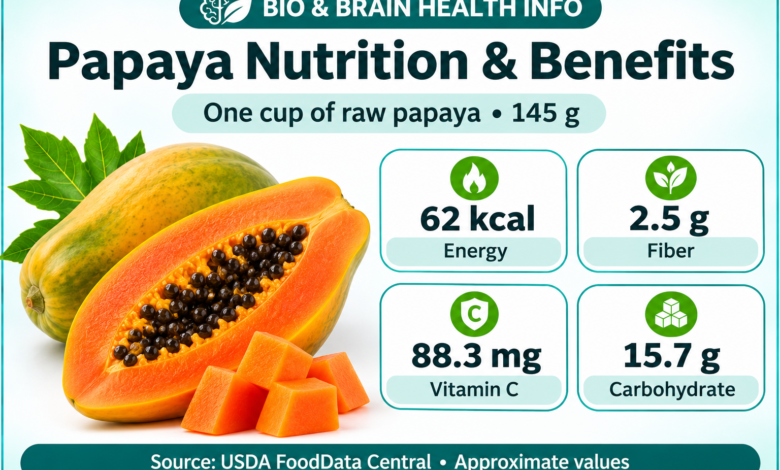
One cup of raw ripe papaya pieces (145 g) contains approximately 62 calories, 15.7 g total carbohydrate, 2.5 g fiber and 88.3 mg vitamin C. Papaya can contribute to a varied diet, but evidence that ordinary fruit treats digestive disorders, diabetes or dengue is insufficient. Unripe papaya and concentrated papain products require particular caution in pregnancy.
In This Guide
What you will learn
Nutrition facts • Vitamin C and carotenoids • Digestion research • Papain and ripe fruit • Blood sugar • Heart and brain health • Pregnancy • Seeds and leaf extracts • Medication and allergy precautions • Food safety • FAQs
1. Papaya nutrition facts: What does a cup contain?
Ripe papaya is mostly water and supplies energy primarily through carbohydrate. Its orange flesh contains vitamin C, folate and carotenoids, as well as dietary fiber. It contains relatively little protein and fat. The values below describe the edible raw flesh, excluding the skin and seeds. They should not be applied to dried papaya, green papaya or sweetened fruit products without checking their separate nutritional composition.
| Nutrient | Per 100 g | One cup (145 g) |
|---|---|---|
| Energy | 43 kcal | 62 kcal |
| Total carbohydrate | 10.82 g | 15.7 g |
| Total sugars | 7.82 g | 11.3 g |
| Fiber | 1.7 g | 2.5 g |
| Protein | 0.47 g | 0.68 g |
| Fat | 0.26 g | 0.38 g |
| Vitamin C | 60.9 mg | 88.3 mg |
| Potassium | 182 mg | 264 mg |
| Folate | 37 mcg | 54 mcg |
| Vitamin A | 47 mcg RAE | 68 mcg RAE |
| Water | 88.06 g | 127.7 g |
Source: USDA FoodData Central: papayas, raw. These rounded reference values vary with cultivar, maturity and storage. Total carbohydrate includes sugars and fiber. The US adult nutrition-label Daily Value for vitamin C is 90 mg, so this serving provides approximately 98% of that reference. This percentage does not mean every person has identical vitamin requirements.
Which nutrients explain papaya health benefits?
Vitamin C contributes to collagen synthesis, normal immune function and absorption of nonheme iron. Folate participates in cell division, potassium contributes to normal muscle and nerve function, and some carotenoids can be converted into vitamin A. Fiber helps meet daily dietary needs. These physiological roles do not establish that eating one fruit cures a deficiency or prevents infection.
2. Papaya health benefits: Vitamin C, vision and iron absorption
Papaya can help people meet vitamin C needs without relying exclusively on citrus fruit or supplements. Vitamin C supports the formation of connective tissue and participates in several normal biochemical processes. Adequate intake matters, but consuming extra vitamin C does not guarantee additional immune protection when nutritional requirements are already met.
Vitamin C also helps the body absorb nonheme iron from plant foods. For example, ripe papaya served with an iron-fortified cereal or a meal containing lentils can complement the iron in that meal. Papaya is not itself a concentrated source of iron. Suspected anemia requires investigation and, when indicated, treatment. See NIH vitamin C fact sheet.
Papaya contains carotenoids including beta-cryptoxanthin and beta-carotene. Some have provitamin A activity; others, such as lycopene, do not. A Human randomized crossover study of carotenoid bioavailability found that carotenoids from papaya were relatively well absorbed compared with those from the specific tomato and carrot meals studied. This was an absorption experiment, not a trial proving prevention of eye disease.
An earlier 2001 vitamin A status trial in lactating women used a large daily amount of puréed papaya in a particular population and found improvements in a measure of vitamin A status. Its results do not establish that an ordinary cup treats vitamin A deficiency in every setting. A varied diet and appropriate medical assessment remain important.
Practical Nutrition Tip
Serve ripe papaya alongside iron-containing plant foods or with a meal containing a little unsaturated fat. These combinations can support nutrient absorption, but do not replace prescribed treatment for a diagnosed deficiency.
3. Papaya and digestive health: What human studies show
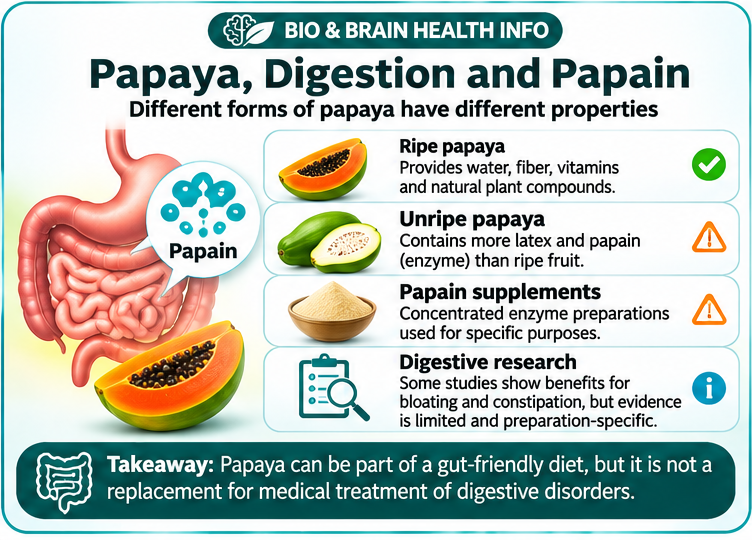
Papaya is often described as a natural remedy for constipation and bloating. As a whole fruit it supplies water and fiber, which can contribute to a dietary pattern supporting bowel regularity. However, constipation has many possible causes, including medication effects, low fiber intake, pelvic floor dysfunction and other medical conditions. A single fruit cannot address all of them.
A 2013 randomized trial of a papaya preparation in digestive disorders investigated a commercial papaya preparation called Caricol in people with digestive complaints. The study reported improvements in constipation and bloating among its measured outcomes. The intervention was a specific prepared product, not a controlled comparison of ordinary fresh ripe papaya portions. Its findings should be interpreted in that context.
People who want to increase dietary fiber can introduce foods gradually and drink fluids according to their individual medical needs. If a food causes discomfort, reduce the portion or discuss alternatives with a dietitian. Persistent constipation or bloating deserves assessment rather than repeated use of concentrated digestive products.
4. Content gap: Papaya health benefits are not the same as papain benefits
Papain is a protein-breaking enzyme associated particularly with the latex of unripe papaya. It is used in some food-processing applications and marketed in digestive enzyme supplements. Ripe edible flesh is not equivalent to concentrated latex or purified papain. The amount and activity of enzymes depend on ripeness, processing and the specific product.
| Papaya form | What it means for evidence |
|---|---|
| Ripe fruit | Ordinary food supplying water, fiber and nutrients. |
| Unripe fruit | Contains more latex; often used in cooked dishes. |
| Purified papain | Concentrated enzyme with product-specific activity and safety. |
| Fermented papaya | Processed preparation, not equivalent to raw fruit. |
| Leaf or seed extract | Distinct composition; separate safety and clinical evidence required. |
The 2026 EFSA food enzyme safety evaluation assesses a particular food enzyme for intended manufacturing uses. A regulatory safety assessment of a food-processing enzyme does not establish that taking a concentrated oral enzyme supplement treats a digestive disorder. The exposure, formulation and purpose differ.
When reading a headline about papaya, first identify the actual plant part and preparation used, then ask whether the study involved people and whether the measured outcome matters clinically. A laboratory test of protein breakdown cannot prove relief from chronic digestive symptoms. This distinction also prevents readers from assuming that fresh fruit can replace prescribed pancreatic enzyme therapy.
Digestive Safety
Seek prompt medical care for severe abdominal pain, persistent vomiting, blood in stool or unexplained weight loss. Do not use papain or papaya preparations to delay evaluation of concerning symptoms.
5. Papaya and blood sugar: Can people with diabetes eat it?
Many people with diabetes can include ripe papaya within an individualized eating plan. Its natural sugars count toward carbohydrate intake, and fiber does not cancel out the digestible carbohydrate. A measured serving is more informative than describing the fruit as either forbidden or safe without qualification.
| Edible portion | Approximate total carbohydrate | Approximate fiber |
|---|---|---|
| 50 g | 5.4 g | 0.85 g |
| Half cup (72.5 g) | 7.8 g | 1.2 g |
| 100 g | 10.8 g | 1.7 g |
| One cup (145 g) | 15.7 g | 2.5 g |
| Two cups (290 g) | 31.4 g | 4.9 g |
A cup of papaya is approximately one 15-gram carbohydrate choice in common US diabetes education. This is not a universal portion recommendation or an insulin dosing instruction. US total carbohydrate includes fiber; national labeling conventions and clinical counting methods may differ. Follow the guidance of your local diabetes team.
Consider the whole meal when evaluating a glucose response. A bowl of papaya with sweetened yogurt or a smoothie containing juice and several fruits may supply substantially more carbohydrate than the papaya alone. Research on fermented papaya preparations or isolated compounds does not establish that raw ripe fruit lowers blood sugar. Read Fruit and Diabetes: Portions and Choices and Carb Counting for Diabetes: Beginner Guide.
Blood Sugar Safety
Papaya can raise blood glucose. Follow your individualized carbohydrate plan. For hypoglycemia, use the prescribed fast-acting carbohydrate treatment rather than relying on fruit. Do not change insulin or other medications based on one food response.
6. Papaya health benefits for heart and brain health
Papaya provides potassium, fiber and carotenoids as part of a varied dietary pattern. These nutrients have established roles in normal physiology. However, direct clinical evidence that ordinary papaya reduces cardiovascular events, reverses arterial plaque or treats high blood pressure is insufficient. A nutritious food should be evaluated in the context of the rest of the diet.
Similarly, vitamin C and carotenoids are relevant to normal biological function, but this does not mean papaya prevents dementia or improves memory. Studies of isolated compounds cannot automatically be translated into clinical effects of the whole fruit. Persistent cognitive symptoms or cardiovascular concerns require appropriate assessment. Read Mediterranean Diet and Type 2 Diabetes and Vitamins and Minerals for Brain Health.
7. Ripe versus unripe papaya: Pregnancy and breastfeeding
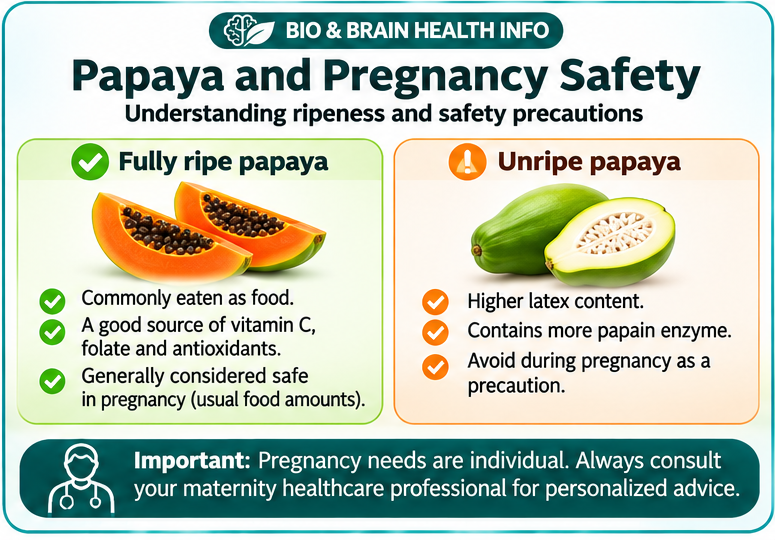
When considering papaya health benefits during pregnancy, ripeness matters. Ripe papaya is commonly eaten as food. Unripe and partly ripe papaya contain more latex, which raises different safety considerations. A 2002 pregnancy safety study in rats investigated papaya in rats and isolated rat uterine tissue. Ripe juice did not produce significant contractions in the isolated tissue experiment, whereas crude latex produced marked contractions.
This animal evidence is not proof that every exposure to green papaya causes harm in humans. It does, however, support a precautionary approach when combined with the limited human pregnancy safety data. MedlinePlus: Papaya safety and interactions identifies unripe papaya as potentially unsafe during pregnancy. Pregnant readers should avoid unripe and partly ripe papaya and concentrated papain products unless specifically advised otherwise by their maternity clinician.
Ordinary fully ripe fruit is a different exposure, but a person with individual pregnancy complications or dietary restrictions should discuss any concerns with their maternity team. During breastfeeding, stick to ordinary food amounts rather than medicinal preparations whose safety is poorly established.
Pregnancy Safety
Avoid unripe or partly ripe papaya and concentrated papain remedies during pregnancy. Animal findings do not prove a human miscarriage risk, and accidental exposure does not mean harm has occurred. Discuss concerns with your maternity healthcare professional.
8. Papaya leaves, seeds and dengue claims
Papaya leaf preparations have been studied in dengue, including investigations of platelet counts. The 2022 scoping review of papaya leaf juice for dengue reviewed available research. A change in platelet count is not equivalent to proof that a remedy prevents severe bleeding, shock or death. Studies vary in design and preparation, and ordinary papaya flesh is not the same as leaf juice.
The CDC: Dengue clinical care emphasizes timely clinical management and recognition of warning signs in dengue. There is no specific antiviral treatment established for dengue. People with suspected dengue should seek medical care and follow professional guidance. Severe abdominal pain, repeated vomiting, bleeding or marked deterioration require urgent assessment, even when fever has resolved.
Papaya seeds are sometimes promoted as parasite cleanses. Reliable evidence is insufficient to recommend routine medicinal seed consumption or a safe therapeutic dose. Suspected parasitic infection requires appropriate diagnosis and treatment rather than a homemade remedy. Do not give concentrated seed or leaf preparations to children without professional advice.
Medical Safety: Leaf and Seed Products
Do not use papaya leaf juice to replace dengue monitoring or treatment. Do not use papaya seeds as a substitute for prescribed antiparasitic medicine. Food and medicinal plant preparations have different risk profiles.
9. Papaya side effects and medication precautions
Allergy and digestive tolerance
Papaya allergy can occur, including cross-reactions in some people with latex allergy. Symptoms may include mouth itching, hives or swelling. Difficulty breathing, throat swelling or faintness may indicate anaphylaxis. Call emergency services immediately and use prescribed epinephrine if indicated by your allergy action plan. Large portions or concentrated preparations may also cause digestive discomfort.
Medication interactions
MedlinePlus identifies potential interactions involving papaya products and medicines including warfarin, levothyroxine and diabetes drugs. The evidence and relevance vary according to preparation and dose. This does not establish that a normal serving of ripe fruit is dangerous for everyone taking these medicines. Discuss concentrated preparations or major dietary changes with your pharmacist, and never stop prescribed treatment independently.
10. How to enjoy papaya health benefits safely
Choose ripe fruit with a suitable texture and aroma, avoiding visible spoilage. Wash the exterior under running water before cutting, even though the skin is discarded. Use clean utensils, remove the seeds and refrigerate cut fruit promptly. Follow FDA produce safety and local recall notices. In Australia, papaya may also be sold as pawpaw; in the US, the name pawpaw can refer to a different species.
Try a measured portion with plain yogurt, oats or a suitable protein-rich food. Whole fruit retains its fiber, while sweetened dried papaya and fruit drinks may contain added sugars or more carbohydrate per serving. Compare the actual ingredients and edible weights when shopping. See Diabetes Snacks: Balanced Options for balanced snack ideas.
11. Frequently asked questions
Can I eat ripe papaya every day?
It can fit many varied diets, but no universal daily serving is required. Consider dietary variety, tolerance and your medical needs.
Does papaya cure constipation?
No. Fiber and water can support bowel regularity, and limited preparation-specific research is promising, but persistent constipation requires assessment.
Does ripe papaya lower blood sugar?
It contains carbohydrate and may raise glucose. It is not an established diabetes treatment.
Can papaya improve eyesight?
It provides carotenoids and nutrients relevant to normal vision. It has not been established as a treatment for eye disease.
Is papaya safe during pregnancy?
Fully ripe fruit is commonly eaten, while unripe fruit and concentrated papain products warrant avoidance as a precaution. Ask your maternity clinician about individual concerns.
Conclusion
The most dependable papaya health benefits come from vitamin C, fiber, carotenoids and its contribution to a varied diet. Human studies of absorption and specific digestive preparations provide useful insights, but their findings do not establish broad medical treatment claims. Choose ripe fruit in suitable portions, distinguish it from concentrated plant products and seek medical guidance where needed.
BBH Key Takeaway
Enjoy ripe papaya as a nutritious food. Distinguish fruit from papain, leaf extracts and seeds; consider carbohydrate portions, allergies and pregnancy precautions. No single fruit replaces medical care.
Scientific references
USDA FoodData Central: papayas, raw • 2013 randomized trial of a papaya preparation in digestive disorders • Human randomized crossover study of carotenoid bioavailability • 2001 vitamin A status trial in lactating women • 2002 pregnancy safety study in rats • MedlinePlus: Papaya safety and interactions • 2026 EFSA food enzyme safety evaluation • 2022 scoping review of papaya leaf juice for dengue • CDC: Dengue clinical care • NIH vitamin C fact sheet • FDA produce safety
Related reading on BBH
Explore: Physical Health → Weight, Nutrition & Metabolic Health support page