Pineapple: Nutrition, Benefits and Side Effects
Pineapple Health Benefits, Nutrition and Risks

Pineapple is often promoted as a natural digestive aid, an inflammation fighter and even a weight-loss remedy. Its sweet, acidic taste makes it a popular addition to breakfast, salads and smoothies. Yet people managing blood sugar, mouth sensitivity or food allergies may wonder whether the fruit is suitable for them. The biggest source of confusion is the assumption that the effects of a concentrated pineapple enzyme supplement are identical to the effects of a serving of fresh fruit.
Thank you for reading this post, don't forget to subscribe!Understanding pineapple health benefits begins with separating established nutrient functions from experimental treatment claims. This educational guide focuses on ordinary edible pineapple and uses US reference servings while acknowledging different labeling practices in the United Kingdom, Canada and Australia. It explains how to choose portions, evaluate scientific headlines and identify circumstances in which professional advice matters more than another dietary experiment.
Medical Safety & Disclaimer
This information is for education, not diagnosis or treatment. If you have diabetes, food allergies, persistent digestive symptoms, a prescribed dietary restriction or take medicines, consult your healthcare team as appropriate. Do not replace prescribed treatment with pineapple or bromelain supplements.
Quick Answer
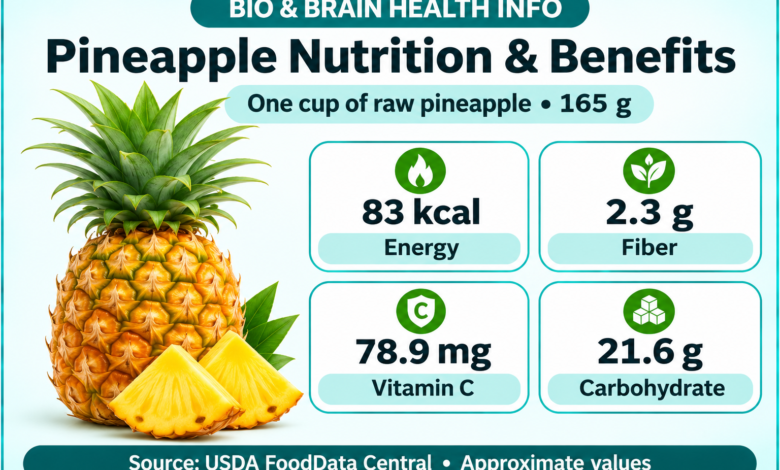
One cup of raw pineapple chunks (165 g) provides approximately 83 calories, 21.6 g total carbohydrate, 2.3 g fiber, 78.9 mg vitamin C and 1.53 mg manganese. It can contribute to a varied diet. Research on bromelain supplements does not establish that eating pineapple treats pain, inflammatory disease or digestive disorders.
In This Guide
What you will learn
Nutrition facts • Vitamin C and manganese • Digestion and bromelain • Evidence on inflammation • Blood sugar and portions • Fresh, canned and juice comparisons • Mouth irritation and allergy • Pregnancy and medication safety • Practical meals • FAQs
1. Pineapple nutrition facts: What does a cup contain?
Raw pineapple flesh is largely water, and carbohydrates supply most of its energy. It contains small amounts of protein and fat, along with vitamin C, manganese and dietary fiber. The reference values below describe raw edible chunks rather than the rind, crown or a sweetened canned product. Actual composition varies naturally with cultivar, maturity and storage conditions.
| Nutrient | Per 100 g | One cup (165 g) |
|---|---|---|
| Energy | 50 kcal | 83 kcal |
| Total carbohydrate | 13.12 g | 21.6 g |
| Total sugars | 9.85 g | 16.3 g |
| Dietary fiber | 1.4 g | 2.3 g |
| Protein | 0.54 g | 0.89 g |
| Fat | 0.12 g | 0.20 g |
| Vitamin C | 47.8 mg | 78.9 mg |
| Manganese | 0.927 mg | 1.53 mg |
| Potassium | 109 mg | 180 mg |
| Folate | 18 mcg | 30 mcg |
Source: USDA FoodData Central: pineapple, raw, all varieties. The values are rounded independently. Total carbohydrate includes sugar and fiber in US nutrition labeling. On the US adult nutrition label, 78.9 mg vitamin C is about 88% of the 90 mg Daily Value, while 1.53 mg manganese is about 67% of the 2.3 mg Daily Value. Daily Values are general labeling references, not personalized nutrient prescriptions.
Which nutrients explain pineapple health benefits?
Vitamin C contributes to normal immune function, collagen production and absorption of nonheme iron. Manganese participates in several enzyme systems involved in metabolism and normal bone formation. Fiber contributes to a balanced dietary pattern and normal bowel function. The presence of these nutrients does not make pineapple a complete food; it is relatively low in protein and fat and should be combined with other appropriate foods.
2. Pineapple health benefits for immunity, skin and iron absorption
Vitamin C is essential for normal tissue maintenance. Collagen is a structural protein found in skin, blood vessels and other tissues. Meeting vitamin C requirements supports these processes, but eating additional pineapple does not guarantee faster healing, younger-looking skin or protection from infection. People with nutritional deficiencies may require assessment and treatment beyond changing a single food.
Vitamin C can improve absorption of nonheme iron from plant foods. Pairing pineapple with beans, lentils or an iron-fortified cereal is one practical way to combine complementary nutrients. This does not mean pineapple itself contains a large amount of iron, and it should not be used as a substitute for prescribed iron therapy. The NIH Office of Dietary Supplements: vitamin C explains the underlying nutrient functions.
Manganese is another notable nutrient in pineapple. Its role in enzyme systems is established, but it does not follow that taking concentrated manganese supplements will improve metabolism. The NIH Office of Dietary Supplements: manganese describes requirements and the importance of avoiding excessive supplemental intake. A varied diet usually provides a more sensible starting point than pursuing unusually high doses of individual nutrients.
Practical Nutrition Tip
Choose a serving of pineapple alongside other nutrient-rich foods, such as legumes, plain yogurt or an appropriate protein source. A balanced meal provides more than the fruit alone.
3. Pineapple and digestive health: What bromelain actually does
Bromelain refers to a group of protein-degrading enzymes obtained from pineapple. The fruit and stem contain related enzymes, but commercial products commonly use concentrated preparations. Their activity depends on the source, manufacturing process and formulation. A label stating a particular weight of pineapple extract does not necessarily tell you how much active enzyme it contains.
Protein breakdown in a laboratory or food preparation is not the same as demonstrating improved digestion in a human clinical trial. Healthy digestive systems already produce enzymes for breaking down dietary protein. Although pineapple can contribute water and fiber to the diet, there is insufficient evidence that a typical serving treats chronic bloating, reflux or pancreatic enzyme insufficiency.
The Leelakanok et al. (2023): systematic review and meta-analysis assessed clinical studies involving bromelain and identified potential uses in certain settings, including pain management and topical wound care. These findings concern the preparations tested, not an ordinary bowl of fruit. The 2026 critical review of bromelain research also identifies the need for stronger clinical studies and better characterization of treatment regimens. Neither establishes a standard therapeutic pineapple portion.
Digestive Safety
Persistent bloating, unexplained weight loss, blood in stool, severe abdominal pain or repeated vomiting deserve medical evaluation. Do not use pineapple or enzyme supplements to delay assessment or replace prescribed pancreatic enzymes.
4. Content gap: Pineapple health benefits and the enzyme activity problem
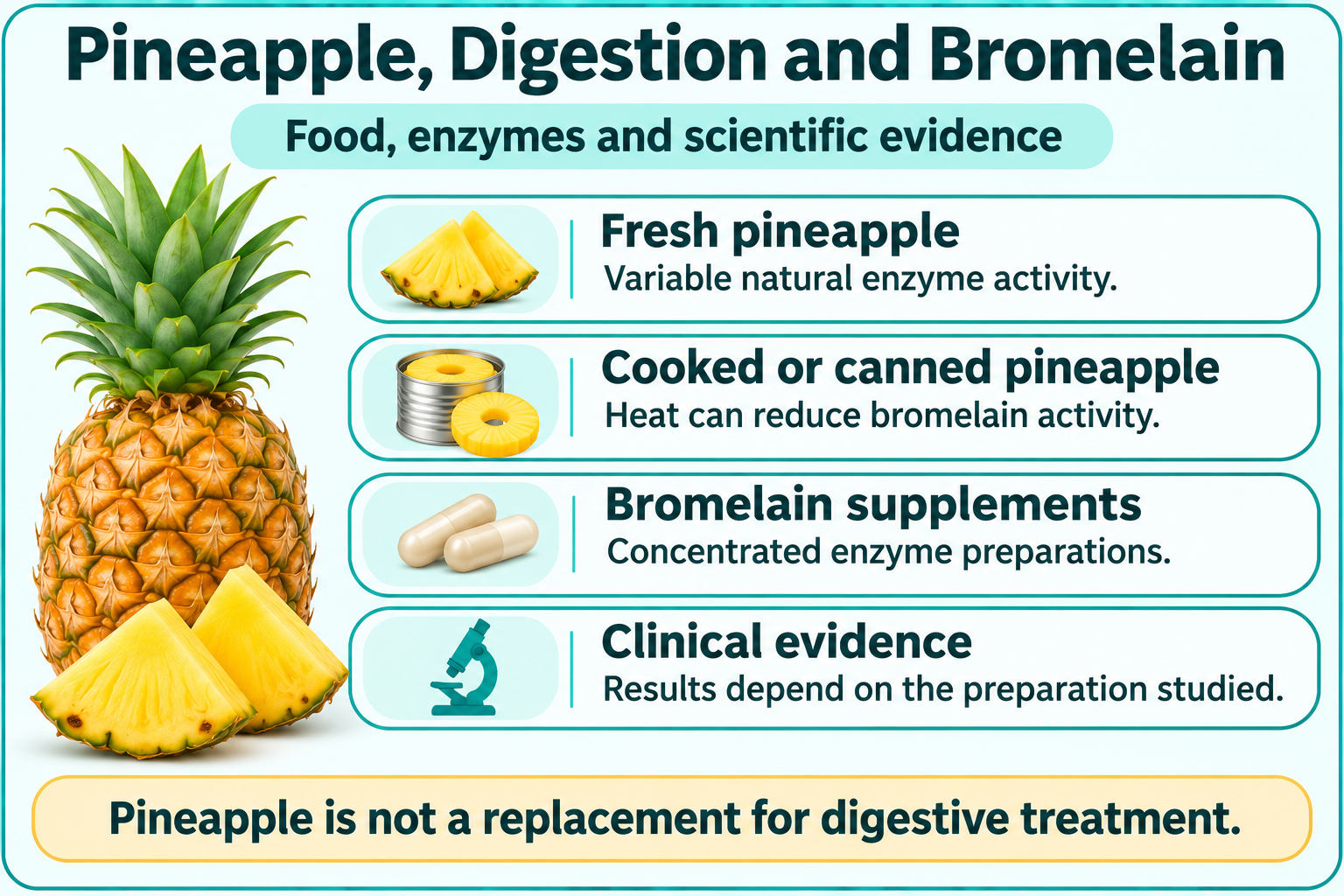
Many nutrition articles list bromelain as if all pineapple products deliver a predictable dose. This is misleading. Enzymes are proteins whose activity depends on conditions such as temperature and processing. Fresh fruit, cooked pineapple, canned fruit and concentrated enzyme products cannot be assumed to deliver the same exposure. Even two fresh fruits can differ in measurable enzyme activity.
Food science research on Thermal inactivation of pineapple fruit bromelain demonstrates that heating can reduce bromelain activity. This explains a familiar kitchen observation: fresh pineapple may interfere with gelatin setting, while sufficiently heat-processed pineapple generally does not have the same effect. The demonstration concerns protein breakdown in food, not proof of digestive treatment in the body.
| Product | How to interpret the evidence |
|---|---|
| Fresh pineapple | Whole fruit with variable natural enzyme activity. |
| Cooked or canned pineapple | Heat can reduce enzyme activity; fiber and other nutrients remain in varying amounts. |
| Pineapple juice | Fiber is generally reduced; processing affects enzyme activity. |
| Bromelain supplement | Concentrated formulation with product-specific activity and safety. |
| Medical wound product | Specialized preparation used under professional supervision. |
This distinction matters for consumers comparing products. A supplement may specify enzyme activity using units that differ between manufacturers; milligrams alone do not establish equivalent activity. There is no validated conversion from cups of pineapple to a therapeutic dose of bromelain. Nor does reduced enzyme activity make cooked fruit nutritionally worthless.
A useful evidence-checking approach is to identify the plant part, preparation, dose, route of administration and outcome measured. If the study investigated an enzyme applied to a wound, it cannot support claims that drinking pineapple juice produces the same result. If a study measured a laboratory marker, it cannot automatically demonstrate symptom improvement or disease prevention.
5. Pineapple and blood sugar: Can people with diabetes eat it?
Many people with diabetes can include pineapple within an individualized eating plan. Its naturally occurring sugars contribute to total carbohydrate, and a sweet taste alone does not determine the size of a glucose response. Portion weight, the other foods eaten, activity, medicines and individual physiology also matter.
| Edible portion | Approximate total carbohydrate | Approximate fiber |
|---|---|---|
| 50 g | 6.6 g | 0.7 g |
| Half cup (82.5 g) | 10.8 g | 1.2 g |
| 100 g | 13.1 g | 1.4 g |
| One cup (165 g) | 21.6 g | 2.3 g |
A 115 g portion supplies roughly 15 g total carbohydrate, about one carbohydrate choice in common US diabetes education. This is a reference calculation, not a required serving size or insulin dosing instruction. UK and other national labeling conventions may report carbohydrate differently from US labels. Use the counting method recommended by your own healthcare team.
For a practical comparison, consider pineapple eaten with unsweetened yogurt versus pineapple juice served alongside a sweetened breakfast. The entire meal contributes to glucose exposure. Monitoring as recommended by your care team can help you learn how particular meals affect your own blood glucose. Read Fruit and Diabetes: Portions and Choices and Carb Counting for Diabetes: Beginner Guide.
Blood Sugar Safety
Pineapple can raise blood glucose. Do not change medication or insulin based on a single food response. Use your prescribed hypoglycemia treatment plan for low blood sugar; severe symptoms or inability to swallow require emergency assistance.
6. Pineapple health benefits and inflammation: Separating research from claims
Bromelain has attracted scientific interest because of its biological activity and possible effects on inflammatory pathways. Human research includes specific clinical settings, while other claims rely mainly on laboratory or animal experiments. A finding in cultured cells does not establish that a person eating pineapple experiences the same effect.
The NIH NCCIH: Bromelain usefulness and safety summarizes the limitations of evidence for oral bromelain. Research on postoperative discomfort and selected other conditions is not equivalent to proof that the fruit treats arthritis, sinusitis or chronic inflammation. The specialized topical enzyme preparations used in professional wound care should never be confused with fresh pineapple or homemade wound applications.
There is also insufficient evidence that pineapple reverses heart disease, prevents cancer or protects against dementia. A fruit can be a valuable part of a dietary pattern without acting as a medicine. For broader nutrition context, read Mediterranean Diet and Type 2 Diabetes and Vitamins and Minerals for Brain Health.
Evidence Literacy
Ask whether the research used whole fruit, a supplement or a medical product. Look for meaningful clinical outcomes and appropriate comparison groups rather than relying on laboratory activity or advertising claims.
7. Pineapple health benefits: Fresh, frozen, canned and juiced
Fresh pineapple is not the only useful option. Unsweetened frozen chunks are convenient and can reduce food waste. Canned pineapple can be an affordable pantry food; compare products packed in water, juice or syrup. The liquid and fruit together may contribute more carbohydrate than a drained portion, depending on the product.
Juice usually contains considerably less fiber than whole fruit and may be consumed quickly in a larger portion. Compare actual serving weights and nutrition labels rather than assuming that all pineapple products have the same sugar content. A label stating no added sugar does not mean that a juice contains no natural sugars.
Dried pineapple is more concentrated because much of its water has been removed. Sweetened dried products may also include added sugar. A small handful can represent a substantially different fruit portion from a handful of fresh chunks. The most useful comparison is often based on the amount you actually intend to eat.
8. Pineapple side effects: Mouth irritation versus allergy
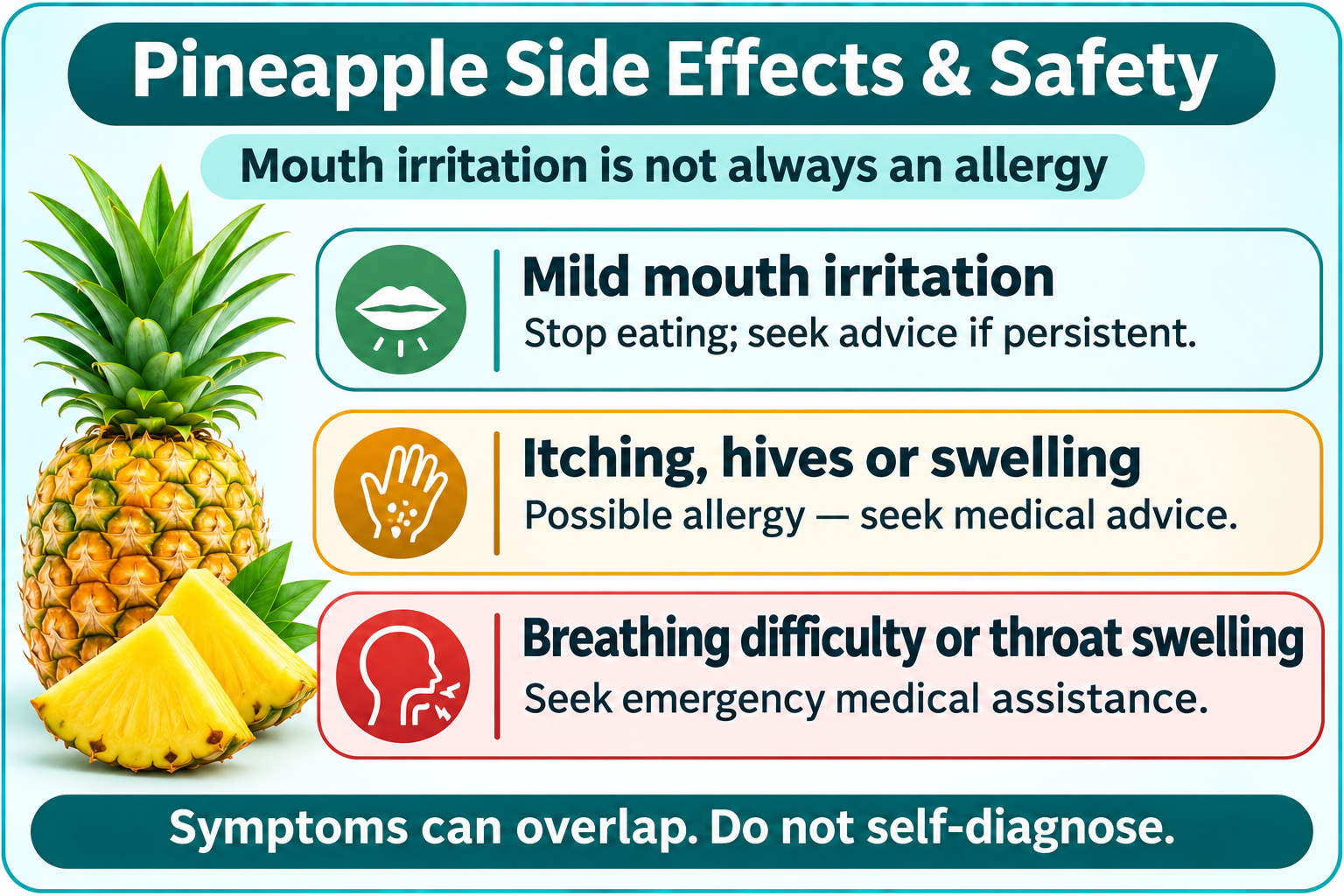
Some people notice a tingling or sore sensation on the tongue after eating fresh pineapple. Its acidity and protein-degrading enzymes can contribute to local irritation. The 2026 fresh fruit allergy review discusses how nonimmune irritation may resemble allergic symptoms. This distinction is useful, but a symptom description alone cannot reliably rule out allergy.
| Possible reaction | What to do |
|---|---|
| Mild local soreness or burning | Stop eating the fruit. If persistent or recurrent, seek advice. |
| Itching, hives or swelling | Stop eating and seek medical guidance; symptoms can represent allergy. |
| Breathing difficulty, throat swelling or faintness | Treat as an emergency; call local emergency services and use prescribed epinephrine if indicated. |
People with a suspected pineapple allergy should not deliberately test whether cooked pineapple is safe at home. Heating can affect enzyme activity but does not guarantee removal of all allergens. An allergy specialist can advise on appropriate evaluation. Acidity may also aggravate reflux symptoms in some individuals; food triggers differ from person to person.
Allergy Safety
Never assume tongue tingling is harmless if symptoms progress or involve swelling, breathing problems or other body systems. Use your emergency allergy plan and seek urgent help when indicated.
9. Pregnancy, medicines and bromelain supplement precautions
Pregnancy and breastfeeding
Pineapple is commonly eaten as food, and ordinary food servings should not be equated with concentrated bromelain products. Reliable human evidence that eating pineapple induces labor is lacking. NCCIH notes that supplement safety during pregnancy and breastfeeding is not well established. Discuss medicinal enzyme products with your maternity clinician rather than using them to attempt to induce labor.
Medication and surgery considerations
A 2026 bromelain food and supplement risk assessment examined safety uncertainties surrounding bromelain in foods and supplements, including concerns for people using anticoagulant or antiplatelet therapy. Its exploratory risk estimates are not personalized prescribing guidance. The Memorial Sloan Kettering: bromelain also discusses potential interactions. Ask a pharmacist before taking concentrated bromelain, especially if you take medicines that affect bleeding or have a planned procedure. Do not independently stop prescribed medication.
Reported oral supplement adverse effects include gastrointestinal discomfort and diarrhea. Unlike food portions, concentrated preparations may contain a substantial amount of active enzyme. The absence of symptoms during a short trial does not establish safety for long-term daily use. Supplement regulations and permitted claims differ across countries.
Supplement Safety
Avoid self-prescribing concentrated bromelain for inflammatory disease, clot prevention, wound treatment or pregnancy-related purposes. Tell your clinician about supplements and follow procedure-specific instructions.
10. How to enjoy pineapple health benefits in balanced meals
Try measured pineapple chunks with plain yogurt, a small serving of nuts or a meal containing beans and vegetables. If using it in a smoothie, account for all ingredients and consider whether the resulting drink provides a suitable portion. Whole fruit is often a convenient default when fiber is a priority. Read Diabetes Snacks: Balanced Options for additional snack ideas.
Wash the exterior under running water before cutting, even though the rind is discarded. Use clean utensils and refrigerate cut fruit promptly. Follow FDA: selecting and serving produce safely and local food safety advice. Avoid products with signs of spoilage, damaged containers or a relevant recall. Do not rely on a fruit’s color alone to determine whether it is safe.
11. Frequently asked questions
Can I eat pineapple every day?
It can fit into many varied diets, but there is no universal required portion. Consider tolerance, blood sugar needs and dietary variety.
Does pineapple burn belly fat?
No reliable clinical evidence establishes that ordinary pineapple selectively reduces abdominal fat. Overall eating patterns and other factors matter.
Is canned pineapple unhealthy?
Not necessarily. Check the packing liquid, portion and nutrition label. Heat processing changes enzyme activity but does not remove all nutritional value.
Does pineapple cure inflammation?
No. Studies of specific bromelain preparations cannot establish that ordinary fruit treats inflammatory disease.
Why does pineapple make my tongue hurt?
Acidity and enzymes may contribute to irritation, but allergy is also possible. Stop eating if symptoms occur and seek appropriate medical advice.
Conclusion
The most dependable pineapple health benefits come from its vitamin C, manganese, fiber and contribution to dietary variety. Research on bromelain is scientifically interesting, but concentrated enzyme preparations are distinct from fresh fruit. Choose a suitable portion, consider individual tolerance and use professional guidance for medical concerns.
BBH Key Takeaway
Enjoy pineapple as a food, not as a treatment. Compare portions and processing methods, recognize allergy warning signs and discuss concentrated enzyme supplements with your healthcare team.
Scientific references
USDA FoodData Central: pineapple, raw, all varieties • NIH NCCIH: Bromelain usefulness and safety • Leelakanok et al. (2023): systematic review and meta-analysis • 2026 critical review of bromelain research • 2026 bromelain food and supplement risk assessment • 2026 fresh fruit allergy review • Thermal inactivation of pineapple fruit bromelain • NIH Office of Dietary Supplements: manganese • NIH Office of Dietary Supplements: vitamin C • Memorial Sloan Kettering: bromelain • FDA: selecting and serving produce safely
Related reading on BBH
Explore: Physical Health → Weight, Nutrition & Metabolic Health support page