Continuous Glucose Monitors: Complete Guide
Continuous Glucose Monitors: Uses and Safety

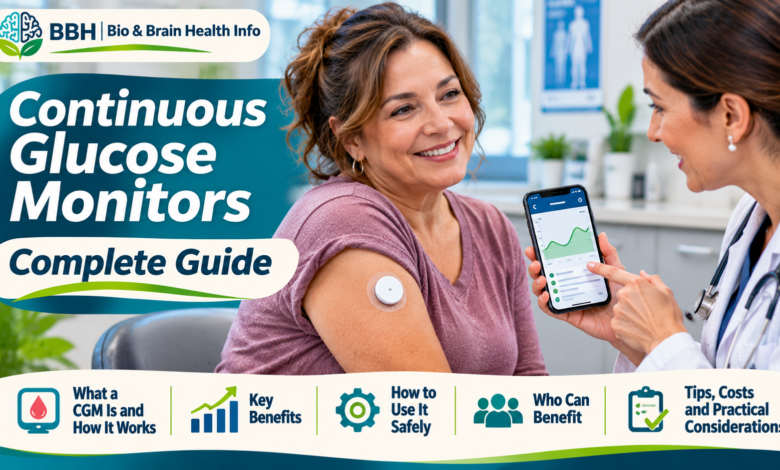
Continuous glucose monitors (CGMs) are small wearable devices that measure glucose frequently throughout the day and night and show trends on a compatible reader or phone. Unlike an occasional finger-stick reading, they can help reveal what happens between meals, during exercise or while sleeping. Some systems provide alerts for low or high glucose, but features differ by device.
Thank you for reading this post, don't forget to subscribe!This BBH guide prioritizes US readers and summarizes 2026 American Diabetes Association (ADA) recommendations, FDA device information and CDC clinical education, with additional information for the UK, Canada and Australia. It explains how the devices work, why numbers may differ from a meter, which features matter and how to use results without turning every fluctuation into a medical emergency.
Continuous Glucose Monitors: What You Need to Know
The American Diabetes Association’s 2026 Diabetes Technology Standards recommend CGM use for adults taking insulin, for those taking other therapies that can cause hypoglycemia and for others when CGM helps manage diabetes. It also emphasizes education, ongoing support and access to traditional blood-glucose monitoring.
People with type 1 diabetes frequently use a CGM as a key part of treatment. Many people with type 2 diabetes—particularly those taking insulin—also benefit. Some devices are available over the counter for eligible users who do not take insulin, but OTC models may lack important low-glucose alerts and should never be assumed to suit someone at risk of severe hypoglycemia.
CGM is a tool for making decisions with your diabetes team. A normal reading does not rule out illness, a sensor cannot diagnose diabetes by itself in every context, and more data are not automatically better if monitoring generates anxiety without useful action.
How Continuous Glucose Monitors Work
A small sensor sits in or just under the skin, often on the upper arm or another site approved for that specific device. It measures glucose in interstitial fluid and transmits readings to a compatible receiver, mobile app or connected system. Depending on the model, an adhesive patch holds the sensor in place for several days or longer.
Interstitial glucose generally tracks blood glucose, but readings can differ, especially when glucose is rising or falling quickly. This difference is sometimes called a physiological lag. CGM readings also have measurement uncertainty, especially during a new sensor’s warm-up period or if a device is malfunctioning.
The screen may display a current estimated glucose value, an arrow showing the direction and speed of change, a line graph and alarm notifications. Some systems share information with caregivers or integrate with compatible insulin delivery systems. CDC CGM overview explains these core functions.
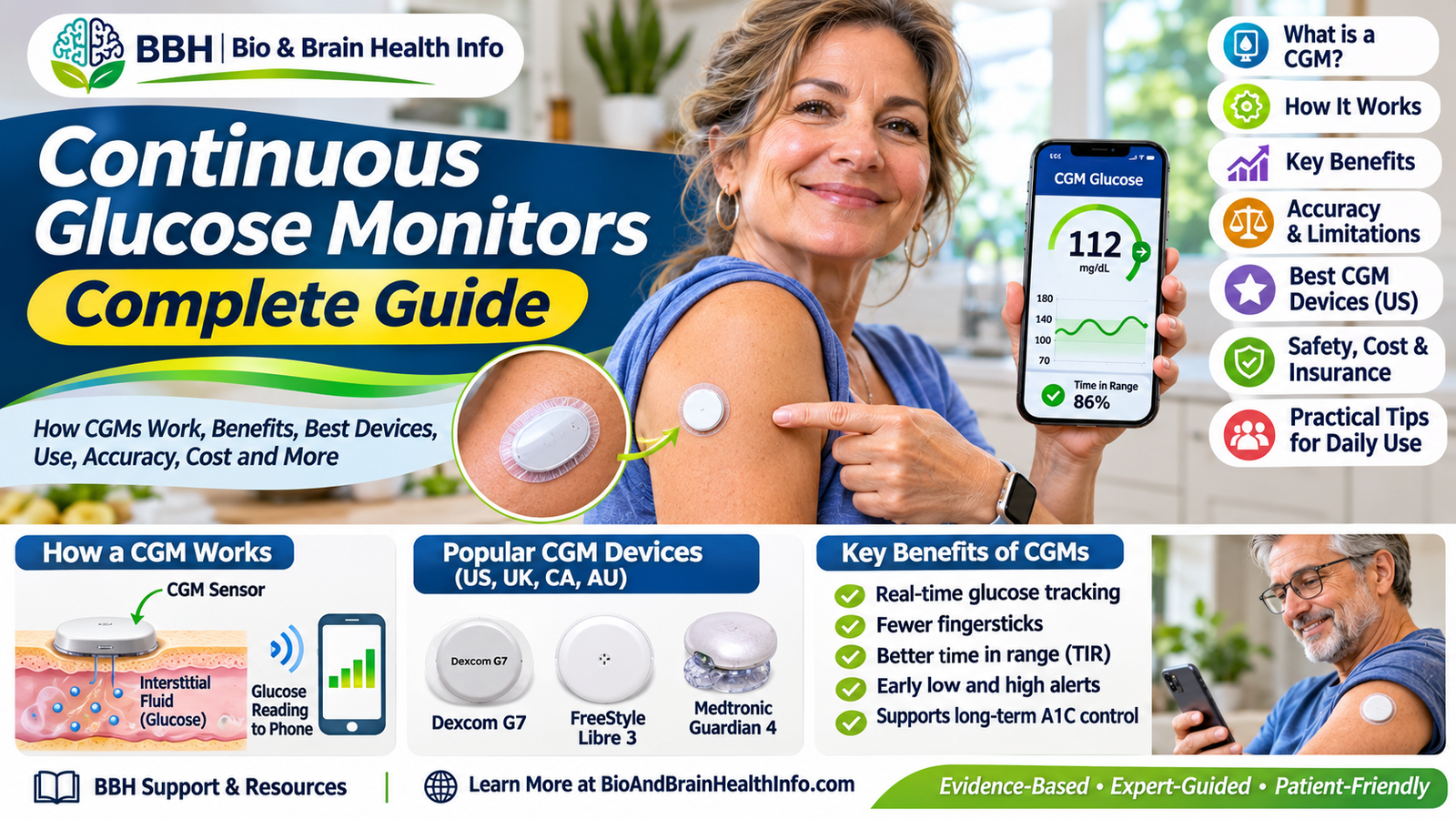
Who Benefits Most From Continuous Glucose Monitors?
CGM is particularly important for people with type 1 diabetes and for people with type 2 diabetes treated with insulin. Those with hypoglycemia unawareness, recurrent lows or variable glucose patterns may benefit from alerts and retrospective trend reviews. A person taking a medicine that can cause hypoglycemia may also find CGM useful.
For someone not using insulin, CGM can sometimes help explain patterns related to meals, activity or medication, but whether it improves care depends on the clinical context. Some individuals prefer short-term professional CGM through a clinic rather than continuous personal use. Others are better served by simpler blood-glucose monitoring.
Children, pregnant people, older adults, people with disabilities and caregivers may have different training or device needs. The best choice depends on approved indications for the specific product, available support and how data will be used. A device that works for a healthy adult may be unsuitable for someone who cannot recognize or safely respond to low glucose.
Continuous Glucose Monitors: Real-Time, Scanned and Professional
Real-time CGMs transmit readings automatically to a connected display. Many provide configurable alerts, though the exact capabilities and default settings vary. Intermittently scanned or flash systems historically required the user to scan a sensor for certain information; newer generations may also transmit automatically. Check current product documentation instead of relying on older definitions.
Professional CGM is clinic-owned equipment worn temporarily to collect data for a healthcare review. It may provide information visible to the user during wear or be evaluated retrospectively. A prescription CGM and an OTC glucose biosensor differ in intended users, alarm design and clinical use.
Integrated CGMs can communicate with compatible automated insulin delivery systems. These systems combine a sensor, an algorithm and a pump or other delivery components. An ordinary CGM by itself only measures glucose; it does not inject insulin.
CGM, Finger-Stick Meter and Insulin Pump: Differences
| Technology | What it does | Strength | Important limitation |
|---|---|---|---|
| CGM | Reads interstitial glucose frequently | Trends, alerts and time-in-range | May lag and require meter confirmation |
| Finger-stick meter | Measures capillary blood glucose at one moment | Confirm unexpected sensor values, backup readings | Requires individual finger-stick tests |
| Insulin pump | Delivers insulin through an infusion system | Flexible insulin delivery when prescribed | Not a glucose sensor by itself |
| Automated insulin delivery | Uses compatible CGM and insulin delivery algorithm | May automate some insulin decisions | Still requires training, oversight and backup planning |
For people deciding between methods, the practical question is not which technology sounds most advanced. It is which technology produces information the person and clinician can act on safely, with the necessary training, costs and accessibility support.
Using Continuous Glucose Monitors for the First Time
A clinician or trained diabetes educator can help select a compatible device and teach sensor application, pairing, warm-up requirements, alert settings, safe removal and use of backup glucose meters. Follow the current instructions for your exact model, including approved insertion locations and whether calibration is required or allowed.
- Check prescription or OTC indications, age limits and smartphone/reader compatibility
- Wash and prepare the approved skin site according to manufacturer directions
- Apply the sensor using the provided applicator; do not improvise placement
- Pair the sensor and verify app notifications and critical alerts
- Allow the required warm-up; use a meter while CGM data are unavailable
- Learn what to do when symptoms differ from readings or the sensor is disconnected
- Plan replacement supplies, disposal and skin irritation management
A newly applied sensor may require a settling or warm-up period. A person should not assume the first displayed reading is infallible. Ask the care team for the correct way to handle discrepancies, calibration if supported and how to keep enough backup supplies available during travel or delayed deliveries.
Reading CGM Glucose Levels and Trend Arrows
A displayed glucose value is a snapshot, while the arrow tells you whether glucose is relatively stable, climbing or dropping. A reading such as 110 mg/dL with a downward arrow may carry a different short-term meaning from the same value with an upward arrow. The appropriate response depends on medication, symptoms, meals and an established action plan.
It is easy to overreact to every rise after eating. Healthy physiology includes variation. People who use insulin should not stack extra doses just because a trend line rises; correction instructions need to account for active insulin and other clinical factors.
Compare patterns over several days rather than blaming one meal for a small fluctuation. Exercise, illness, sleep disruption, hormones, stress and medication timing can all influence readings. A care team can help distinguish actionable patterns from ordinary biological and sensor variability.
Time in Range (TIR), Time Below Range and AGP
Time in range represents the proportion of monitored time spent within an agreed glucose range. For many nonpregnant adults, the commonly used standard target range is 70–180 mg/dL (3.9–10.0 mmol/L); a typical general goal is more than 70% of time in that range, with limited time below range. These are not universal personal targets, especially during pregnancy or for frail people with high hypoglycemia risk.
Time below range and time above range offer information that A1C alone cannot reveal. Someone may have a reasonable average but many unsafe lows, while another person may have persistent highs without the same apparent A1C. A clinician can review the Ambulatory Glucose Profile (AGP), a standardized display of daily patterns.
Data sufficiency also matters. Guidance often uses approximately 14 days of CGM data with at least 70% active wear for meaningful interpretation in many contexts. A single weekend or missing sensor data may not represent usual patterns. The ADA 2026 glycemic targets guidance describes how to use CGM metrics with A1C. ADA 2026 glycemic goals.
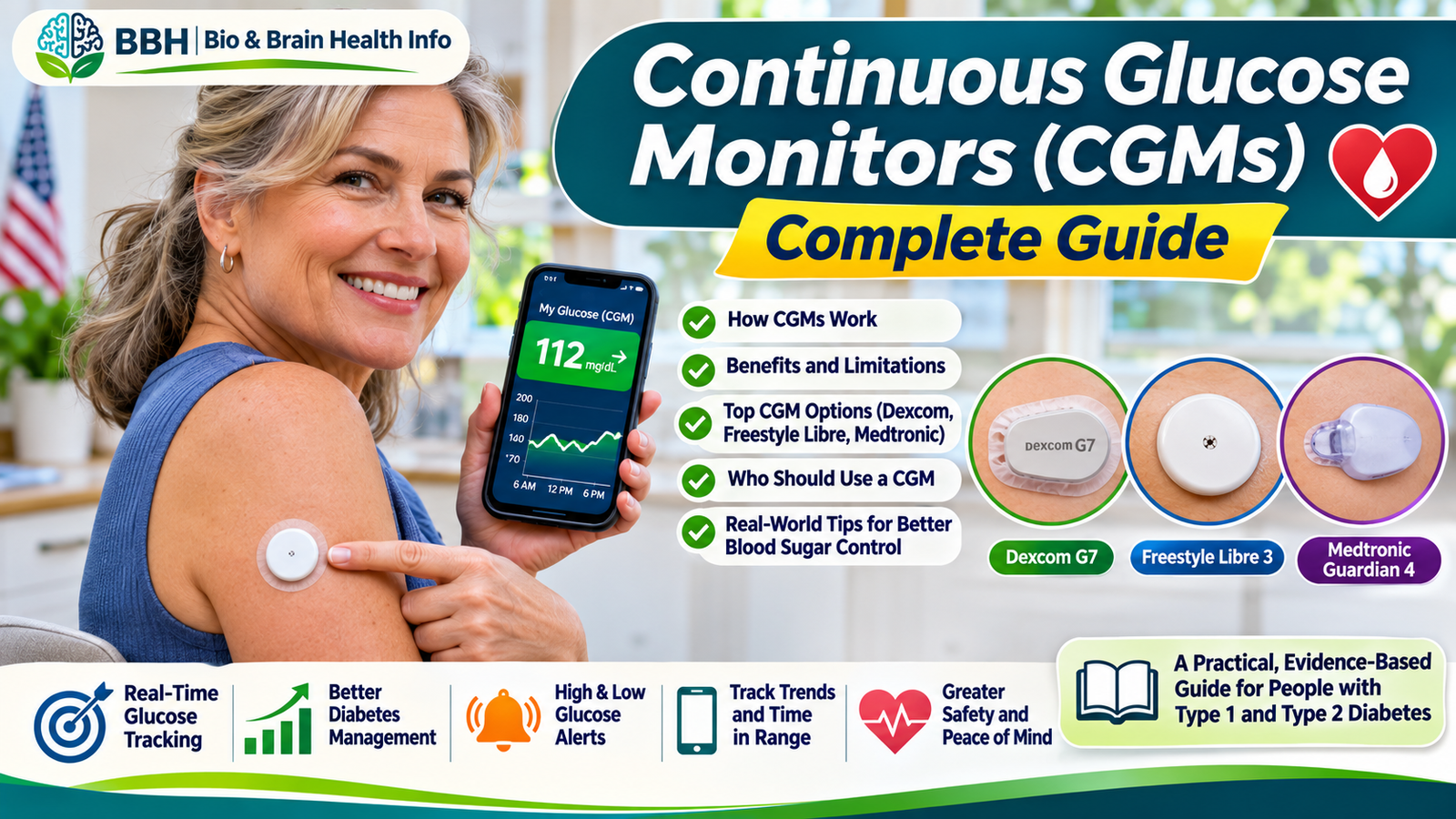
Continuous Glucose Monitors: Accuracy, Lag and Finger-Stick Checks
CGMs are useful but do not measure the same fluid as a meter. During rapid changes—after a meal, exercise, insulin or treatment for a low—the CGM may temporarily differ from finger-stick glucose. Pressure on a sensor during sleep can sometimes cause falsely low readings, often called compression lows.
The ADA 2026 advises that people using CGM maintain access to blood-glucose monitoring in circumstances including suspected inaccuracy, warm-up, loss of communication, device warnings, missing supplies and rapidly changing glucose. A meter is also important when symptoms do not match sensor information.
If someone feels shaky, weak, confused or unusually unwell while CGM appears normal, do not ignore symptoms. Confirm glucose if possible, follow the person’s established treatment plan and seek urgent medical care for severe symptoms. Similarly, a surprisingly low alert without symptoms may require confirmation when feasible, but an emergency should not be delayed for repeated tests.
Sensor accuracy can be affected by technique, device-specific interference from medicines or substances, skin conditions or defective supplies. Review each product’s current labeling for interference warnings; do not assume advice about one model applies to every device.
CGM Alerts: Nighttime Hypoglycemia and Emergencies
Low-glucose alarms can help identify risk while sleeping or exercising, particularly for insulin users. Yet alarms can be missed if a phone is silent, disconnected or out of range. Some products have no urgent-low alarms. Check what the specific device does before relying on it for safety.
An alert is not a diagnosis. Follow written instructions for confirming and treating low glucose when appropriate, and use prescribed glucagon or emergency services for severe hypoglycemia. If someone is unconscious or cannot swallow safely, never attempt to give oral glucose.
CGM does not directly test for ketones and cannot exclude diabetic ketoacidosis (DKA). Nausea, vomiting, abdominal pain and deep breathing warrant assessment, especially in people with type 1 diabetes or those taking SGLT2 inhibitor medicines. Severe symptoms require urgent medical care even if a CGM value seems reassuring.
Using CGM With Food, Exercise, Sleep and Travel
CGM can help connect patterns with routines such as breakfast composition, evening walks, sleep and illness. However, a glucose rise after eating does not necessarily mean a food must be eliminated. Consider nutrition, enjoyment, medication and overall patterns rather than reacting to isolated peaks.
During exercise, trend information can help people on insulin follow a personalized safety strategy; rapid changes make a backup meter especially important. Swimming, sweat, contact sports and adhesive irritation may affect sensor wear. Follow the device’s specific water and activity limits.
For travel, carry sensors, a charged reader or compatible phone, charging accessories, a finger-stick meter and enough prescribed supplies. Keep appropriate backups in carry-on luggage and check manufacturer guidance on airport scanners or security devices. See Exercise and Blood Sugar: Safety Tips.
Skin Reactions, False Lows and Troubleshooting
Adhesive reactions, itching, discomfort and loss of sensor adhesion may interfere with use. Apply only to approved sites and avoid damaged or infected skin. Seek medical advice for persistent irritation, blistering or signs of infection. Some individuals benefit from a clinician-recommended barrier product, but compatibility with the device must be checked.
A reading that drops suddenly during sleep without symptoms may reflect compression on the sensor, though real hypoglycemia must not be assumed away. If a phone loses connection, check Bluetooth, battery, supported device compatibility and the manufacturer’s troubleshooting guide. Use a meter whenever CGM data cannot be trusted or accessed.
Report repeated errors to the manufacturer and diabetes team. Keep spare supplies available because replacement policies and delivery times vary. Prolonged gaps in monitoring can create particular risk for people who depend on glucose data for insulin therapy.
Comparing Popular CGM Options Without Marketing Claims
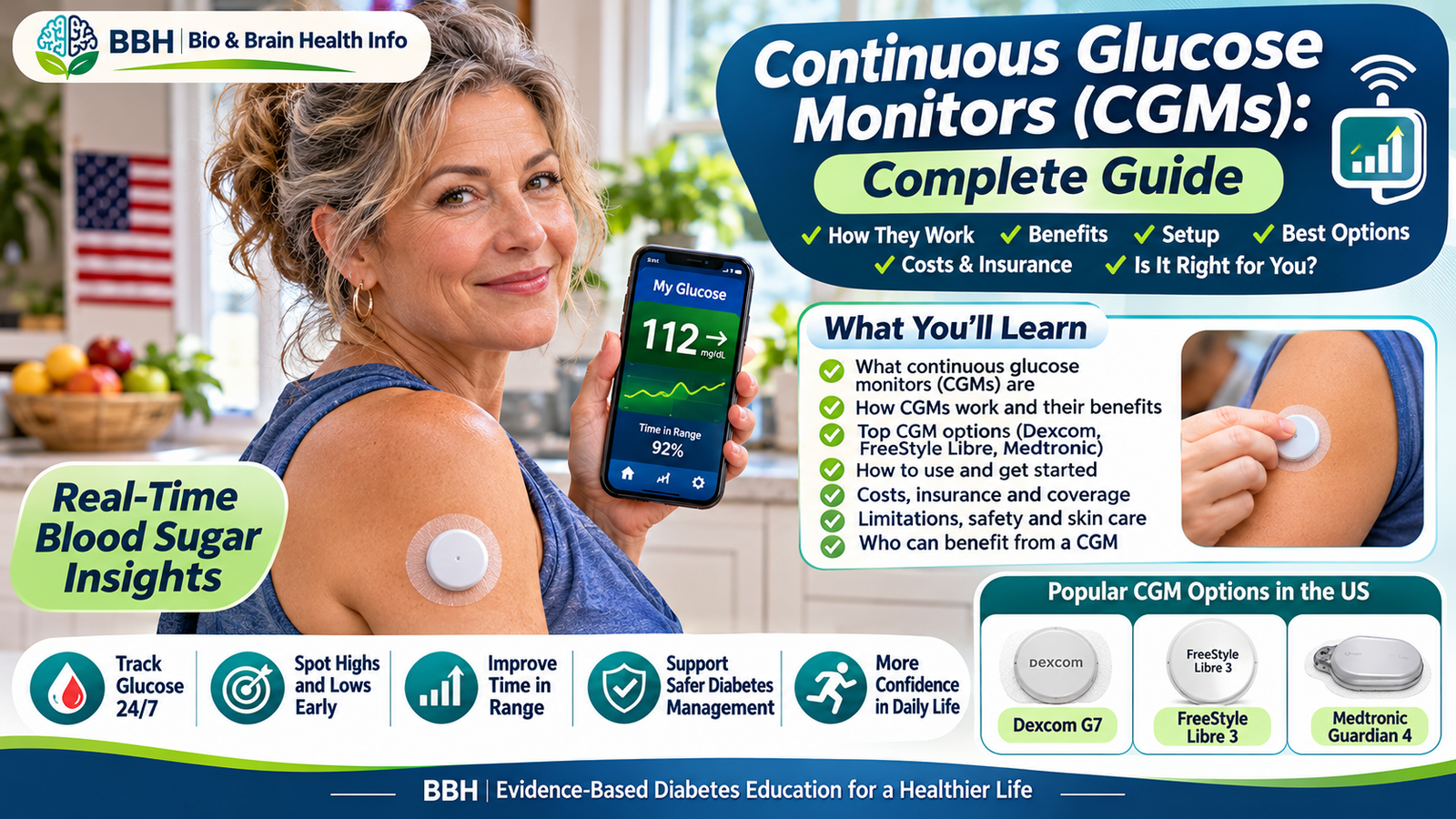
US patients may encounter prescription products in the Dexcom, FreeStyle Libre and Medtronic families as well as nonprescription glucose biosensors. Models differ in sensor life, compatibility, alerts, integration with automated insulin delivery, age indication and support requirements. Features and availability change, so exact current specifications should be checked with FDA labeling and manufacturers.
| Device category | Typical use | Safety question |
|---|---|---|
| Prescription real-time CGM | Often for people using insulin or at risk of low glucose | Check real-time alerts, age limits, receiver support, compatibility and coverage |
| Intermittently scanned or flash CGM | Some systems may require scanning for features; newer models differ | Check if alerts and automatic readings work on the selected model |
| Professional/clinic CGM | Short-term or diagnostic monitoring arranged by a care team | Confirm whether data are visible during wear and how results are reviewed |
| Over-the-counter glucose biosensor | Only for people meeting the specific FDA-cleared indications | Not a substitute for prescription low-glucose warning systems |
The FDA cleared OTC glucose biosensors, including a version of Dexcom Stelo for eligible people not using insulin. OTC availability should not be confused with suitability for someone at risk of severe low glucose. Read the precise cleared indications for the device and seek clinical advice if taking insulin or medicines that can cause significant hypoglycemia. FDA CGM clearance explanation.
CGM Cost and Insurance in the United States
Coverage depends on the plan, device, prescribing clinician, diabetes treatment and documentation of clinical need. Medicare has coverage criteria for certain people who use insulin or have a history of problematic hypoglycemia, subject to applicable requirements. Medicaid rules differ by state, and commercial plans use their own formularies and authorization policies.
Before choosing a system, ask whether sensors are covered through the pharmacy or durable medical equipment benefit, whether a separate receiver is required, what the monthly copay will be, and how replacement or failed sensors are handled. Do not assume that a sensor advertised as free is free of follow-on supplies or subscription costs.
If a claim is denied, ask the insurer and care team for the written medical-necessity and appeal requirements. A diabetes educator, pharmacist or social worker may help explore covered models or manufacturer assistance options. Avoid quoting universal prices, because negotiated insurance rates and retail pricing vary widely.
CGM Access in the UK, Canada and Australia
United Kingdom: NHS access depends on diabetes type, clinical criteria and local pathways. Diabetes UK notes that people with type 1 diabetes generally should be offered CGM and that some with type 2 diabetes are also eligible. Diabetes UK: NHS CGM eligibility.
Canada: Public reimbursement and private insurance vary by province or territory and by device and clinical indication. Ask a diabetes educator or insurer about the current eligibility for sensors, receivers and supplies rather than assuming US rules apply.
Australia: The National Diabetes Services Scheme (NDSS) provides subsidized CGM access to eligible groups under current criteria, with details depending on diagnosis and program status. Check the latest official NDSS guidance and speak with your diabetes team.
Whichever country you live in, ensure your chosen sensor is supported by local healthcare systems and your phone or receiver, and confirm that emergency glucose-management supplies are available.
CGM Privacy, Accessibility and Diabetes Burnout
CGM reports may include sensitive health data. Decide whether you want family members or clinicians to receive remote glucose information and review app permissions, account security and data sharing. Shared alerts can support care but may feel intrusive if the arrangement is not voluntary and clear.
Some people experience alarm fatigue, distress about glucose spikes or pressure to achieve perfect graphs. These responses matter clinically. A CGM should support better care, not create a sense that every number is a moral score. The team can help prioritize useful alerts and meaningful patterns.
For people with visual impairment, arthritis, hearing loss or cognitive challenges, device accessibility and caregiver training are particularly important. A system that cannot be operated reliably is not the best system even if its specifications look attractive.
A Seven-Day Beginner CGM Learning Plan
| Day 1 | Learn sensor setup, warm-up, backup meter and emergency response |
| Day 2 | Review glucose arrows and when to confirm an unexpected reading |
| Day 3 | Observe typical meal patterns without unprescribed dose changes |
| Day 4 | Record safe activity and its possible effects on trends |
| Day 5 | Check alarms, phone settings, skin comfort and sensor adhesion |
| Day 6 | Review nighttime trends and whether any alerts need clinical discussion |
| Day 7 | Summarize questions for the diabetes team, including time below range |
The purpose is learning, not deliberately creating glucose changes. Do not experiment with insulin, skip meals or overexercise to see what the sensor does. Reviewing patterns with a professional is often more useful than changing behavior based on a single day’s graph.
Seven Questions CGM Guides Often Overlook
1. Why does CGM say low when a finger-stick looks normal?
Interstitial-fluid lag, compression or sensor error can explain discordance; evaluate symptoms and confirm with a meter.
2. Do all CGMs warn about dangerous lows?
No. Alert capability differs, and some OTC products are not intended to provide hypoglycemia alarms.
3. Can CGM diagnose an emergency?
Not by itself. CGM does not assess ketones or distinguish all causes of severe illness.
4. Why did my time in range improve but I still feel unwell?
Other medical conditions and the amount of time spent below range may matter; discuss symptoms with a clinician.
5. What if I cannot afford continuous sensors?
Ask about periodic professional CGM, plan coverage, support programs and a safer backup monitoring plan.
6. Can a caregiver see my data?
Some systems support data sharing, subject to permissions and compatibility; consent and privacy still matter.
7. Should every glucose spike trigger action?
No. Interpretation depends on trends, clinical goals, treatment, symptoms and whether the data are reliable.
Continuous Glucose Monitors: Frequently Asked Questions
What is a continuous glucose monitor?
A wearable sensor system that measures interstitial glucose frequently and displays readings and trends.
Does CGM replace finger-stick testing?
Not completely. A meter is needed for suspected inaccurate readings, missing data or symptom mismatch.
Does insertion hurt?
People often report brief discomfort; individual experience and device design differ.
Does a CGM deliver insulin?
No. Some CGMs connect to compatible pumps, but a stand-alone sensor does not deliver medication.
Who should use CGM?
Insulin users and people at risk of lows often benefit; eligibility and usefulness should be reviewed individually.
What does the trend arrow mean?
It reflects whether glucose is rising, falling or relatively stable.
What is time in range?
The proportion of monitored time spent within a target interval such as 70–180 mg/dL for many nonpregnant adults.
Why is my sensor different from my meter?
CGM measures interstitial fluid and may lag behind blood glucose during rapid changes.
Can sleeping on a sensor cause false lows?
Pressure may sometimes cause compression-related low readings, which require appropriate checking.
Can people with type 2 diabetes use CGM?
Yes. It may help depending on medicines, low-glucose risk and individual treatment needs.
Are over-the-counter CGMs right for insulin users?
Do not assume so; check specific FDA indications and alert capabilities.
Can CGM be used in pregnancy?
It is used for selected pregnant people with diabetes under pregnancy-specific clinical guidance.
Will insurance pay for CGM?
Coverage depends on program, clinical eligibility, insurer and device.
Can a CGM cause skin irritation?
Adhesive reactions are possible; seek advice for persistent rash, discomfort or infection.
What if my CGM stops working?
Use backup blood-glucose monitoring and the manufacturer’s and clinical team’s instructions.
BBH Main Menu, Submenu, Support and Related Reading
Research Citations and Clinical Review Status