Slow Wound Healing and Diabetes
Why Wounds Heal Slowly With Diabetes


Slow wound healing and diabetes can be a concerning combination, especially when a small cut, blister or sore seems to stay open longer than expected. Diabetes may alter the body’s normal repair process, and some people also have reduced feeling or blood flow in their feet. However, not every slow-healing wound is caused by high glucose, and an individual wound’s healing time cannot be predicted from a website.
Thank you for reading this post, don't forget to subscribe!The most important distinction is between a minor, uncomplicated injury and a wound needing immediate professional care. New diabetic foot ulcers deserve prompt assessment because infection, pressure, nerve damage or poor circulation may be present without severe pain. This BBH guide explains what current research supports, what to avoid, and how clinicians investigate the reasons a wound is not improving.
Slow Wound Healing and Diabetes: What Counts as Delayed Healing?
In slow wound healing and diabetes, normal healing progresses through overlapping stages: stopping bleeding, inflammation and cleanup, formation of new tissue and blood vessels, and remodeling of the scar. Minor superficial cuts can often improve over days, but healing varies with depth, location, blood flow, injury type and medical conditions. A deep foot ulcer or pressure wound is not comparable to a small paper cut.
There is no single number of days that defines delayed healing for every wound. A clinically assessed wound is monitored for measurable progress, including its size, depth, drainage, surrounding skin and infection signs. For diabetes-related foot ulcers, waiting one or two weeks before seeking assessment is unsafe if an open ulcer is already present.
A scab is not proof that deeper tissue has healed. Likewise, a wound that does not hurt may still be serious if protective sensation has been lost. If a wound is not progressing as expected, a clinician should look for the underlying cause rather than simply switch creams.
Why Does Diabetes Slow Wound Healing?
For slow wound healing and diabetes, persistently elevated blood glucose can interfere with the repair environment. Laboratory and clinical research describes effects on inflammation, immune-cell function, collagen formation, small vessels and tissue responses to injury. Yet healing depends on much more than one glucose reading; local circulation, pressure, infection, smoking, nutrition and medicine-related factors can change the outcome.
High glucose and the immune response
The body uses immune cells to remove damaged tissue and fight pathogens. With poorly controlled diabetes, parts of that response may be less effective, while inflammation can remain prolonged. This helps explain why infections and nonhealing wounds can become more challenging, though an elevated glucose value does not prove a particular wound is infected.
Reduced circulation and oxygen delivery
Peripheral artery disease can reduce the oxygen and nutrients reaching a wound. A person might experience cool feet, poor healing, reduced pulses or pain while walking. However, some people with neuropathy have significant circulation disease without typical pain. Blood supply should therefore be assessed clinically rather than inferred from appearance alone.
Neuropathy and repeated pressure
Nerve damage can remove the warning signal that usually prompts someone to avoid injury. Repeated pressure from walking, ill-fitting shoes or a foot deformity may keep reopening an area. In some cases, the missing ingredient is not a new dressing but effective pressure relief, called offloading. For more detail, see Diabetic Neuropathy: Symptoms and Care.
Signs That a Diabetes-Related Wound Needs Medical Review
Watch for a wound becoming larger, deeper, more painful, unusually numb, foul-smelling or increasingly wet, or for surrounding redness, warmth, swelling or skin discoloration. Drainage can occur in wounds without infection, so no single sign diagnoses infection. Increasing or persistent changes should be assessed by a qualified professional.
Wounds on the feet deserve particular caution: people with lost sensation or reduced circulation may not feel pain even when the injury is serious. A wound with an exposed tendon, visible deep structures, black skin, or a spreading area of redness requires urgent evaluation. New fever, chills, marked illness or confusion may mean infection is more severe.
Slow wound healing and diabetes may also be discussed when scratches, surgical incisions or skin breaks elsewhere take longer than expected to close. Diabetes is one possible contributor, but clinicians also consider anemia, steroid or immune-suppressing medicines, malnutrition, venous disease, swelling and other conditions.
Why Foot Ulcers in Diabetes Need a Different Plan
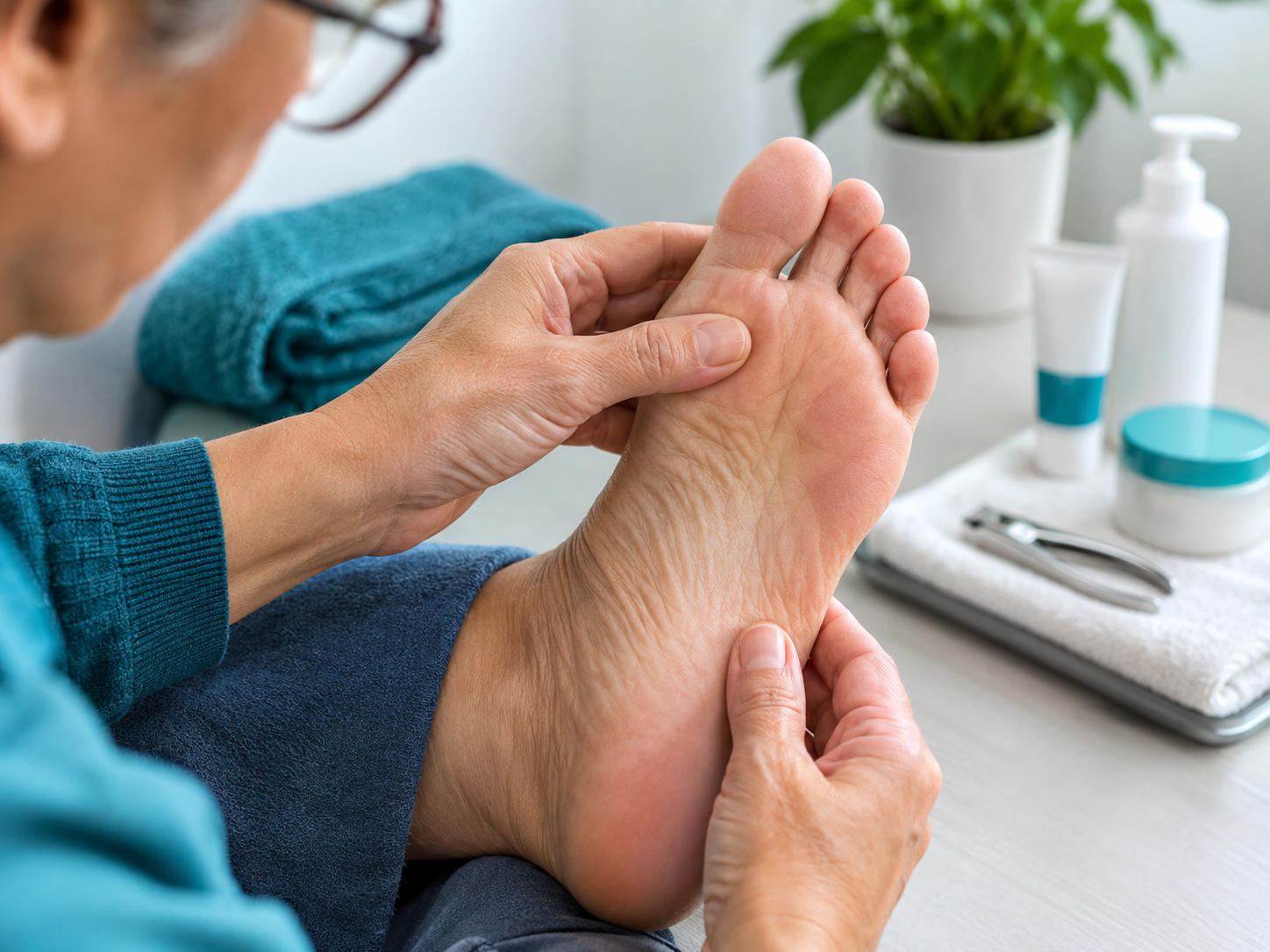
Diabetes-related foot ulcers often involve several interacting problems: neuropathy, repeated mechanical stress, infection or impaired circulation. A clinician should examine the wound and entire foot, not simply photograph the sore. A previous ulcer or amputation, visible deformity, severe callus or kidney disease can change the level of risk and referral priority.
A red, swollen and unusually warm foot can indicate acute Charcot neuro-osteoarthropathy, infection or other urgent conditions, sometimes with little discomfort. Suspected Charcot foot requires urgent specialist assessment and avoidance of weight-bearing until a suitable plan is established. Continuing daily walks to “improve circulation” may be harmful in this situation.
For routine prevention—not treatment of an existing ulcer—protective footwear, nail and skin care and regular examinations can help. See Diabetic Foot Care: Everyday Prevention for a step-by-step preventive routine.
How Clinicians Evaluate a Slow-Healing Wound
Understanding slow wound healing and diabetes requires a thorough assessment of where the wound came from, how long it has been present, its measured dimensions, tissue depth, surrounding skin, temperature, drainage, foot shape, sensation and blood supply. The team reviews glucose management, previous ulcers, medicines, smoking, recent infections and general health.
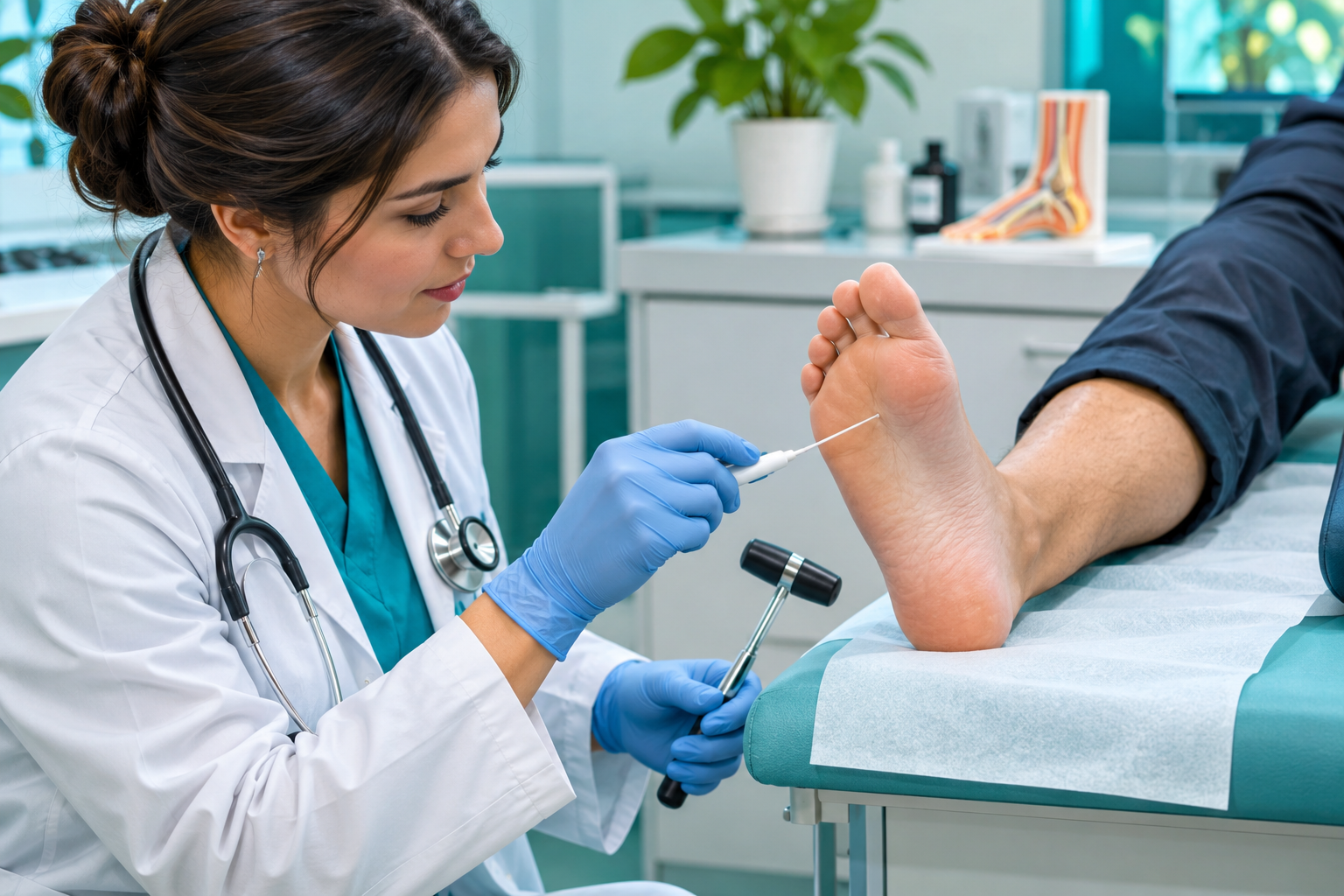
A clinician may test protective sensation with a monofilament and examine pulses. When circulation is uncertain, ankle-brachial index, toe pressure, Doppler waveforms or other vascular tests may be used; some tests need careful interpretation in people with diabetes. Suspected deep infection may require imaging or evaluation for bone involvement.
If infection is suspected, clinical findings guide diagnosis and treatment. Tissue sampling can sometimes help direct antibiotics; superficial swabs alone may be misleading. Tests such as A1C, blood count, kidney function and inflammatory markers can be useful for selected patients, but no test replaces examination of a concerning wound.
Slow Wound Healing and Diabetes: Evidence-Based Treatment
For a diabetes-related foot ulcer, good standard care generally involves thorough assessment, wound cleaning and appropriate dressing, clinician-performed removal of nonviable tissue where indicated, offloading, assessment of circulation, treatment of clinically diagnosed infection and appropriate systemic diabetes care. These interventions are adjusted to the wound and may require a multidisciplinary service.
Wound dressings are chosen for moisture balance, tissue condition and the amount of fluid produced. A wet, heavily draining wound may need a different dressing from a relatively dry wound. The goal is an environment that supports repair while protecting surrounding skin, not simply using whichever product promises the fastest healing.
Advanced therapies, including some skin substitutes, negative-pressure wound therapy or topical oxygen therapy, may be considered for selected chronic diabetic foot ulcers after optimal standard care has not been sufficient. They are not substitutes for adequate blood flow, offloading and infection treatment; evidence and eligibility vary. Claims that a single cream, powder or supplement can reliably cure diabetic ulcers should be treated skeptically.
When Are Antibiotics Needed?
A wound can contain bacteria without being clinically infected. The IWGDF and Infectious Diseases Society of America guidelines recommend not treating clinically uninfected diabetic foot ulcers with systemic or local antibiotics simply to promote healing or prevent infection. Unnecessary antibiotics can cause side effects and contribute to resistance.
When infection is present, treatment depends on its extent, severity, possible bone involvement, circulation and the patient’s overall condition. Some infections require urgent surgical assessment, drainage, removal of dead tissue or hospital treatment. Do not self-prescribe leftover antibiotics or continue a worsening infection with home remedies.
Pressure Relief and Blood Flow: The Often-Missed Essentials
Offloading reduces mechanical pressure that repeatedly injures the bottom of the foot. Depending on the location and medical situation, specialist-prescribed devices may include casts or removable walkers. The IWGDF recommends a nonremovable knee-high device as first-line offloading for many neuropathic plantar forefoot or midfoot ulcers when appropriate, with alternatives where contraindicated or not tolerated.
An ordinary running shoe is not necessarily adequate for an active ulcer. A clinician must also consider falls risk, infection, ischemia, balance, mobility and whether a person can use the prescribed device safely. If peripheral artery disease is restricting healing, vascular assessment and possibly revascularization may be needed.
Do not walk long distances or begin a new exercise program on an open ulcer without professional advice. If a special pressure-relieving device is prescribed, ask exactly when and how to use it, how to care for skin underneath, and which warning signs require urgent review.
Daily Habits That Support Healing and Prevention
With slow wound healing and diabetes, healthy routines improve the environment for healing but cannot substitute for proper wound assessment. Follow individualized glucose goals, take prescribed medicines correctly, manage blood pressure, avoid tobacco, and attend follow-up appointments. Glucose values may fluctuate during infection or illness, so people using insulin or other medicines may need an individualized sick-day plan.
People with high-risk feet should inspect both feet daily, avoid walking barefoot, protect against burns, wear appropriate socks and shoes and avoid harsh callus removers. Do not soak an open wound, use hydrogen peroxide repeatedly or place caustic home preparations on tissue without clinical direction. The choice of cleaning agent and dressing depends on the wound.
For a minor wound outside the high-risk foot context, gentle cleaning and protection may be appropriate while watching for changes. But if the person has neuropathy, poor circulation or a new diabetic foot ulcer, prompt assessment should take priority. The advice should be individualized to the specific wound rather than broadly prescribing home treatment.
Nutrition, Protein and Other Healing Factors
Repair requires adequate overall energy and nutrients. A diet with sufficient protein, vegetables, fruits, whole grains and suitable fats can support general health. Restrictive diets, unintentional weight loss, poor appetite or food insecurity may interfere with wound care and deserve discussion. Adequate fluid intake is helpful for many people, but restrictions may apply with heart or kidney disease.
More protein is not always better. Someone with chronic kidney disease may need carefully individualized nutrition advice, and people on dialysis can have different requirements. Zinc, vitamin C and other supplements should not be assumed to accelerate healing in everyone; treating a documented deficiency is different from prescribing high-dose supplements without evidence.
Smoking cessation can improve cardiovascular and vascular health. Physical activity is valuable when wounds and foot risk permit it, but an active plantar ulcer or suspected Charcot foot often requires activity modification. Sleep and pain management may also support a person’s ability to follow treatment.
What Other Slow Wound Healing Guides Often Overlook
1. Not every delayed wound is caused by diabetes
Venous leg ulcers, pressure injuries, arterial ulcers, skin infections, inflammatory disease, medication effects and other conditions can have different treatments. Assuming the cause is simply “high sugar” risks missing circulation problems or a different diagnosis.
2. A wound can become serious without pain
People with neuropathy may not notice a rapidly changing foot injury. The absence of pain is therefore not a reliable reason to wait. Ask about foot sensation and circulation at every relevant visit.
3. Progress should be measured, not guessed
Clinicians assess changing wound size, tissue quality, infection and surrounding skin. It is reasonable to ask whether healing is on track and what will be done if progress stalls. Photographs can help document change but do not replace clinical examination.
4. More ointment is not the answer to inadequate blood flow
If ischemia or persistent pressure is the main problem, repeatedly changing topical products may not solve it. Effective offloading and vascular care can be more important than a branded dressing.
5. Access to care changes outcomes
Repeated visits, transport barriers, expensive dressings, footwear and limited access to specialists affect how practical a plan is. Ask for written instructions, affordable alternatives, a clear next appointment and an escalation contact. A simple plan that can actually be followed is more useful than a long list of unrealistic tasks.

Medical Safety Box: When to Get Urgent Help
Slow Wound Healing and Diabetes: USA, UK, Canada and Australia
United States: ADA 2026 standards emphasize foot-risk assessment, pressure relief, blood-flow evaluation and evidence-based ulcer treatment. Insurance coverage and access to podiatry, vascular care and wound clinics vary. Ask about a multidisciplinary diabetic foot service if the wound is complex.
United Kingdom: NICE guidance advises immediate acute referral for limb- or life-threatening diabetic foot problems. Other active diabetic foot problems should be referred within one working day to the appropriate foot service for prompt triage. Patients should not wait for their next routine annual review.
Canada: Clinical pathways may vary by province and community. Ask the diabetes team which foot specialist, wound clinic or vascular service handles new ulcers, and how quickly you should be seen.
Australia: GP-led care, podiatry, diabetes education and high-risk foot services may form part of wound management. Ask for a written referral route, pressure-management instructions and urgent-contact information. The principles of early assessment and safe wound treatment remain relevant across all four countries.
Seven Questions to Ask Your Wound-Care Team
- Is this wound a diabetic foot ulcer, another type of ulcer or a minor injury?
- Have you checked circulation and protective sensation?
- Do I have signs of infection or possible bone involvement?
- Should I avoid weight-bearing or use an offloading device?
- Which dressing should be used, how often, and by whom?
- What measurable improvement should we expect, and when will you review it?
- What warning signs mean I should call immediately or go to emergency care?
Frequently Asked Questions
Why do cuts heal more slowly in people with diabetes?
High glucose can affect inflammation, immune defenses and tissue repair, while neuropathy, circulation problems and repeated pressure may also contribute. Not every delayed wound has the same cause.
Does every person with diabetes have slow wound healing?
No. Many people with diabetes heal ordinary injuries normally. Risk differs by glucose history, circulation, sensation, wound type and other conditions.
How long should I wait before seeking help for a foot ulcer?
Do not wait for a fixed number of days. An open diabetic foot ulcer needs prompt professional assessment; worsening infection or a hot swollen foot requires urgent evaluation.
Should I apply antibiotic cream to every wound?
No. Clinically uninfected foot ulcers should not be treated with antibiotics merely to improve healing. Follow your clinician’s wound-specific plan.
Can an ulcer be dangerous if it does not hurt?
Yes. Neuropathy can reduce pain signals even when a foot injury is severe.
Should diabetic wounds always be kept dry?
Not necessarily. Appropriate wound-care dressings manage moisture according to tissue type and drainage. A clinician should guide treatment of a diabetic foot ulcer.
Will vitamin C or zinc tablets speed healing?
There is no guarantee that supplements speed healing without a deficiency. Nutrition should be individualized, especially with kidney disease.
Is walking safe with a diabetic foot wound?
It depends on wound location, pressure, circulation and clinical findings. Some ulcers require offloading or reduced weight-bearing.
What if my wound keeps getting smaller but is still open?
Improvement is encouraging, but continuing follow-up matters until healing is confirmed. Seek reassessment if progress stalls or warning signs develop.
Can a slow-healing wound be caused by something other than diabetes?
Yes. Infection, vascular insufficiency, venous disease, pressure, medication effects and other diagnoses require consideration.
Related BBH Guides and Support
Medical Sources and Disclaimer
- American Diabetes Association, Standards of Care in Diabetes—2026: Foot Care
- International Working Group on the Diabetic Foot, Clinical Guidelines
- IWGDF/IDSA: Diagnosis and Treatment of Diabetes-Related Foot Infections
- NICE NG19: Diabetic Foot Problems—Prevention and Management
- IWGDF: Offloading Foot Ulcers