Diabetes and meditation are often discussed together because managing glucose can be emotionally demanding. Worry about symptoms, medication, food choices, appointments and future complications may add stress to everyday life. Brief mindfulness practices may help some people cope with that burden, but meditation is not a medical treatment for diabetes and should not be presented as a proven method of controlling blood sugar on its own.
Thank you for reading this post, don't forget to subscribe!This evidence-based BBH guide is written exclusively for the United States. It draws on the American Diabetes Association (ADA) Standards of Care 2026, the National Institutes of Health’s NCCIH, a 2026 systematic review and randomized research. The goal is to separate realistic coping benefits from exaggerated claims about A1C, insulin resistance and remission.
What meditation is—and what it is not
Meditation is a broad term for practices that train attention, awareness or a particular attitude toward experiences. Mindfulness often involves noticing breath, sounds, body sensations or thoughts without immediately reacting. Some practices use a spoken guide; others use quiet sitting, gentle movement, walking or compassionate reflection.
There is no requirement to sit cross-legged, follow a specific religion or empty the mind. Someone with neuropathy or joint pain may prefer a chair, while another person finds gentle walking easier. A practice should be adaptable to physical comfort, cultural preferences and access needs.
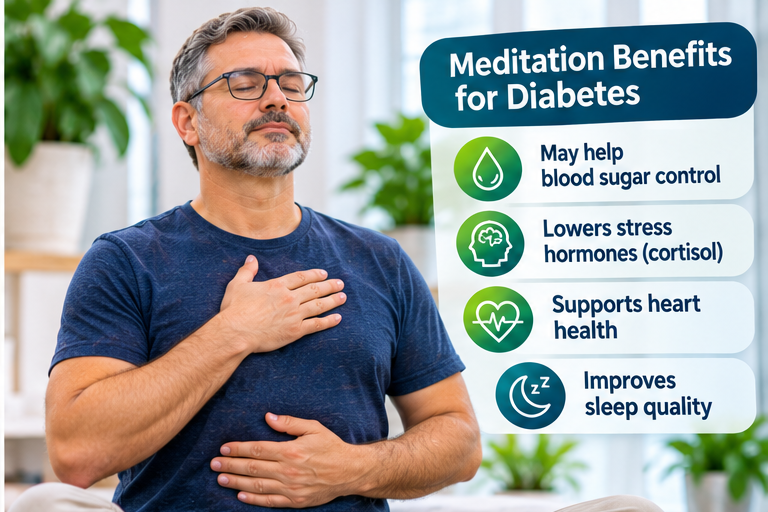
Meditation is not a substitute for glucose monitoring, insulin, other prescribed medicines, medical nutrition therapy or professional mental-health care. It is best understood as an optional coping skill that can complement a complete plan. Some people find it helpful; others prefer therapy, physical activity, social connection or another practical stress-management approach.
How stress can complicate diabetes self-care
Stress can influence sleep, food choices, physical activity, attention and the ability to follow a complicated medicine routine. The physiological response to stress involves hormones and other processes, but the resulting glucose pattern differs between individuals and cannot be predicted from mood alone.
Someone may notice higher glucose readings during illness, poor sleep or a stressful period. Another person may eat less, increase activity or experience low glucose related to insulin and a missed meal. For that reason, it is unsafe to assume that anxiety always raises blood sugar or that calming down will normalize a dangerous reading.
The American Diabetes Association’s 2026 Standards emphasize personalized psychosocial care, diabetes distress screening and strategies such as grounding and mindfulness. Identifying practical barriers—including time, financial pressures, complicated equipment and medication access—is equally important.
What research on mindfulness and A1C actually shows
Studies have tested mindfulness-based stress reduction (MBSR), meditation and related programs in people with diabetes. A 2026 meta-analysis of randomized trials reported improvements in several psychological outcomes and a favorable pooled HbA1c signal, but the studies differed in participant characteristics, program content, duration and comparison groups.
Another 2026 randomized comparison of video-delivered MBSR with active stress-management education found greater improvements in perceived stress with meditation but did not demonstrate a greater HbA1c improvement. That is not a contradiction: improvements in emotional outcomes do not always translate into a measurable advantage over an effective active control.
A 2025 systematic review found low or very low certainty in several estimates, including a possible modest A1c reduction in type 2 diabetes. Heterogeneity, small trials, short follow-up and difficulty blinding participants limit confidence in precise effects.
For readers, the sound conclusion is that meditation can be considered as an adjunct for stress and quality of life, while glucose-lowering effects remain less certain. No evidence supports replacing insulin, stopping metformin or promising diabetes remission from meditation.
Diabetes and Meditation: Coping With Diabetes Distress
Diabetes distress is the emotional burden specifically tied to living with diabetes. People may feel frustrated by glucose fluctuations, alarm fatigue, fear of hypoglycemia, repeated appointments or the cost of supplies. This is not identical to clinical depression, although the conditions can coexist.
Meditation may offer a brief pause before reacting to a distressing glucose result, helping someone notice the urge to blame themselves or give up. It does not solve a missing prescription, unaffordable sensor or unsafe medical plan. Those problems need direct action and professional assistance.
The ADA recommends screening for diabetes distress and considering education, problem-solving or referral when routine care cannot address it. Mindfulness-based therapies are among psychosocial strategies considered in modern guidelines; care should be matched to the person’s needs.
A person who experiences panic, hopelessness or significant interference with daily functioning may require a clinician or licensed therapist rather than simply a mindfulness app.
Type 1 diabetes: essential safety boundaries
People with type 1 diabetes require insulin. No relaxation practice can replace the insulin that the pancreas does not produce. A meditation session should never cause someone to delay an essential dose, ignore a pump alarm or skip a prescribed glucose check.
An individual using CGM may notice changing sensor numbers during a stressful period. Rather than attempting to meditate the number down, they should follow their established diabetes action plan, including finger-stick confirmation when needed and appropriate treatment of low or high glucose.
Fear of hypoglycemia can make relaxation difficult. A short practice after checking that supplies and alerts are accessible may feel safer than an extended session. Ask the care team about a workable plan for activity, stress and glucose monitoring.
The 2026 ADA–EASD adult type 1 diabetes consensus recognizes mindfulness and other psychological approaches as potentially useful for mental-health and self-management issues; it does not replace medical treatment.
Type 2 diabetes: practical expectations
For type 2 diabetes, mindfulness may help people recognize emotional eating cues, cope with stigma or build more consistent routines. These are possible behavior-related benefits, not guaranteed changes in body weight, insulin sensitivity or HbA1c.
Someone may choose five minutes of attention to the breath before preparing a meal or after a demanding workday. Another person may prefer mindful walking, counseling or diabetes self-management education and support. No single approach is necessary for every patient.
Treatment plans often address nutrition, activity, glucose monitoring, medication, cardiovascular risk and sleep. Meditation belongs alongside those elements only when the person finds it acceptable and it does not increase treatment burden.
A useful measure is whether the practice improves the ability to respond thoughtfully to everyday stress and follow a realistic plan—not whether it instantly changes a meter reading.
A gentle five-minute breathing practice
Choose a quiet, comfortable place where essential diabetes supplies and any needed medical alerts remain accessible. Sit in a chair, lean against a cushion or stand safely. Keep the eyes open if closing them feels unpleasant, dizzying or unsafe.
For the first minute, notice contact with the chair or floor. For the next two minutes, breathe at a comfortable natural pace without holding the breath or trying to achieve a strict count. If thoughts appear, gently return attention to the sound or sensation of breathing.
For the fourth minute, notice where the body feels tense. Relax the jaw or shoulders if comfortable. In the final minute, choose one practical next action, such as drinking water, checking the written care plan or contacting the healthcare team about a concern.
Stop if the practice creates dizziness, panic, traumatic memories, dissociation or worsening discomfort. Resume normal breathing, look around the room and choose a grounding activity. Slower breathing is not an instruction to hyperventilate, hold the breath or ignore urgent medical symptoms.
Mindful walking and movement alternatives
Not everyone is comfortable sitting still. A short mindful walk involves noticing the feet meeting the ground, sounds nearby and the pace of movement. Walking can also be a form of physical activity, but it should be appropriate for mobility, heart health, neuropathy and glucose management.
People taking insulin or medicines that cause hypoglycemia may need activity-related precautions from the diabetes team. Do not assume that walking is risk-free or use mindfulness to ignore dizziness or a low-glucose warning. Proper footwear matters when sensation in the feet is reduced.
Someone with limited mobility can practice seated awareness, mindful listening or looking at a comforting object. Short sessions are acceptable. The practice should support independence rather than feel like another performance target.
Meditation, sleep and nighttime glucose
Poor sleep and diabetes can interact through mood, hunger, daily energy and treatment routines. A brief guided relaxation session before bed may help some people wind down, but persistent insomnia, sleep apnea or nighttime hypoglycemia needs appropriate medical assessment.
A person using CGM should maintain medically important alerts and follow device-specific instructions. Meditation audio must not replace or silence a required alarm, and earphones should not prevent someone from hearing essential signals where relevant.
If waking at night is related to glucose symptoms, follow the clinician’s monitoring and treatment plan. Do not dismiss repeated sweating, shaking or confusion as anxiety or an overactive mind.
The National Center for Complementary and Integrative Health notes potential benefits of meditation for anxiety and sleep in some research, while acknowledging evidence limitations and possible adverse experiences.
Mindful eating without food guilt
Mindful eating may involve noticing hunger, fullness, taste and satisfaction, or pausing before a rushed meal. It is different from strict dieting, prolonged fasting or treating food as morally good or bad. People with diabetes still need an adequate eating plan compatible with their treatment.
A simple exercise is to eat the first few bites without distractions and notice flavors and comfort. This can support awareness but should not interfere with carbohydrate counting or timed meals when those are required for insulin safety.
If someone has a history of disordered eating, excessive focus on body sensations or food tracking may be unhelpful. Ask a qualified dietitian or therapist about a safer alternative. Avoid using mindfulness as a method of suppressing hunger.
Meditation, CBT and diabetes education: different roles
Meditation teaches attention and response to experience; cognitive behavioral therapy (CBT) can address unhelpful patterns of thinking and behavior through a structured therapeutic approach. Diabetes self-management education and support (DSMES) provides practical training in medicines, monitoring, nutrition and problem-solving.
These interventions can complement each other but are not interchangeable. Someone whose main challenge is understanding insulin adjustments needs appropriate diabetes education. A person with depression may need evidence-based mental-health treatment. An individual with distress and an already manageable diabetes regimen might value short mindfulness sessions.
The 2026 EASD guideline for diabetes distress evaluates psychoeducational and psychological approaches and emphasizes matching care to disease type and individual needs. Comparing interventions requires careful attention to the quality of the studies, not only an impressive headline.
The most effective plan is often the least burdensome plan that addresses the actual problem.

When meditation is not appropriate—or needs modification
Meditation is generally considered low risk for many people, but it can provoke anxiety, unpleasant memories or other adverse experiences in some participants. People with significant trauma histories, severe mental-health symptoms or dissociative experiences may prefer therapist-guided grounding or a different coping technique.
If an exercise produces breathlessness, chest discomfort, fainting, confusion or worsening physical symptoms, stop and seek the appropriate medical evaluation. A meditation instructor is not a replacement for emergency care. People with insulin-treated diabetes should retain access to medically required alarms and rescue supplies.
Mindfulness cannot treat diabetic ketoacidosis, hypoglycemia, major depression or suicidal crisis on its own. If there is immediate danger in the United States, call 911. For a mental-health crisis, call or text 988.
Choose a teacher or app that does not promise a cure, demand medication cessation or apply pressure to purchase long-term packages. Evidence-based care remains the priority.
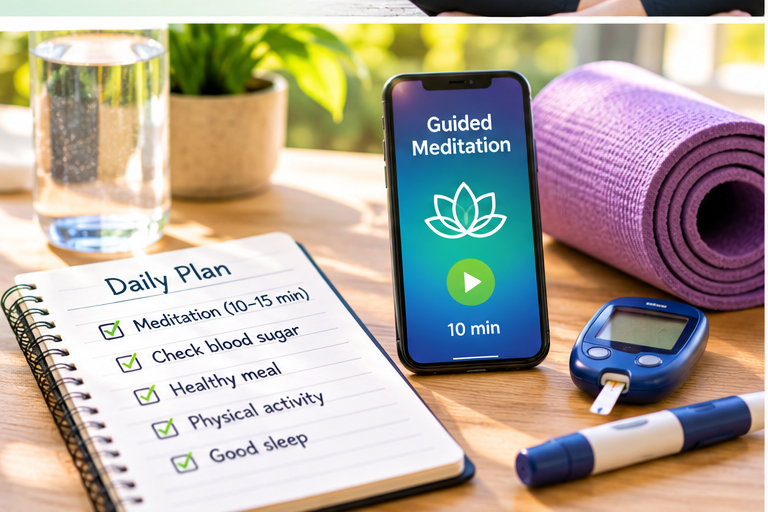
A seven-day starter routine
Day 1: try one minute of comfortable breathing while seated. Day 2: add awareness of sounds or the feeling of feet on the floor. Day 3: notice a stressful thought and let it pass without a judgment about your glucose numbers.
Day 4: practice three minutes before a familiar activity, such as reading or preparing a meal. Day 5: test a brief seated or walking practice depending on mobility and the healthcare plan. Day 6: reflect on whether the exercise was calming, neutral or uncomfortable.
Day 7: decide whether a small routine is worth keeping. Consistency matters more than duration, and choosing not to continue is an acceptable outcome. This plan does not prescribe glucose-test frequency, medication changes or new physical activity.
A realistic routine can be one or two minutes on difficult days. The aim is to reduce burden, not create a daily streak that causes guilt.
How to tell if a practice is helping
Rather than seeking an immediate glucose drop, consider tracking one or two meaningful observations: how tense you feel before and after practice, whether you sleep more comfortably, or whether you can respond to a difficult result without harsh self-criticism.
These are subjective observations, not proof of medical effectiveness. A1C and glucose outcomes still require usual clinical monitoring, and changes may be influenced by medication, nutrition, illness and multiple other factors.
If meditation increases anxiety or becomes a compulsory ritual, reconsider the approach. A licensed mental-health professional or diabetes educator may suggest alternatives that address the person’s actual needs.
Ask whether the practice is improving your quality of life, not whether it makes every glucose reading “perfect.”
What competitors often miss: six evidence gaps
First, cortisol explanations are frequently oversimplified. Stress hormones interact with glucose regulation, but a brief meditation session does not guarantee a measurable or lasting glucose reduction.
Second, research often combines different mindfulness programs, varying session lengths and mixed populations. Results cannot automatically be applied to every adult with type 1 or type 2 diabetes.
Third, changes in emotional distress and changes in A1C are different outcomes. A program can help perceived stress without outperforming another program on A1C.
Fourth, mindfulness is not equally comfortable for everyone. Adverse reactions and trauma-sensitive alternatives should be discussed rather than ignored.
Fifth, care barriers such as medicine cost or missing equipment require practical assistance, not simply breathing exercises.
Sixth, glucose devices and emergency symptoms take priority over a wellness activity. Meditation is not a safe way to wait out possible low glucose, ketoacidosis or a serious illness.
Diabetes and Meditation: Evidence and Practical Role
| Outcome | Research takeaway | Practical interpretation |
|---|---|---|
| Stress and anxiety | Some studies show improvement; effect size and certainty vary | Optional coping skill alongside appropriate care |
| Diabetes distress | Mindfulness-based therapies may help some individuals | Combine with DSMES and practical problem-solving |
| HbA1c and glucose | Mixed findings; not consistently superior to active controls | Do not replace medicine or monitoring |
| Sleep | Potential benefit in some populations | Assess insomnia, apnea and nighttime glucose separately |
| Blood pressure | Research remains heterogeneous | Continue prescribed cardiovascular care |
| Safety | Can trigger distress in some people | Stop if uncomfortable; use alternatives |
Diabetes and Meditation: Frequently Asked Questions
Can meditation cure diabetes?
No. Meditation does not replace insulin, other medicines or medical monitoring.
Can meditation lower blood sugar?
Some studies show improvements, but evidence is mixed and no immediate or guaranteed effect is established.
Can mindfulness improve A1C?
Certain meta-analyses report possible improvements, while some controlled trials show no added advantage over active stress education.
Is meditation safe for type 1 diabetes?
Usually as an adjunct if comfortable, but insulin and glucose safety must remain the priority.
Is meditation useful for type 2 diabetes?
It may help coping and routines, but effectiveness varies and it is not a replacement for diabetes care.
How long should beginners meditate?
A comfortable minute or several minutes can be a reasonable starting point; there is no medically required duration.
Does meditation reduce diabetes distress?
Mindfulness-based approaches may help some people; assessment and practical support are also important.
What is a body scan?
A practice of noticing body sensations; choose an alternative if it creates anxiety or discomfort.
Can I meditate while wearing a CGM?
Yes if safe, but do not silence needed alerts or ignore readings that disagree with symptoms.
Can meditation treat hypoglycemia?
No. Follow the prescribed rapid-carbohydrate, recheck and emergency plan.
Can meditation replace anxiety therapy?
No. Persistent or significant anxiety may need professional assessment and evidence-based treatment.
What if meditation makes me panicky?
Stop, ground yourself and consider a different approach or qualified professional support.
Should I meditate on an empty stomach?
There is no requirement to fast; do not miss meals or medicines that affect glucose.
Does mindful eating mean eating less?
No. It is awareness of the eating experience, not a substitute for adequate nutrition.
Can I meditate before bed?
Some people find it relaxing, but preserve glucose alarms and evaluate ongoing sleep symptoms.
Are guided meditation apps medically approved?
Many are general wellness tools rather than clinically validated diabetes devices; check claims, privacy and costs.
Can walking count as mindfulness?
Yes, noticing movement and surroundings may be an accessible alternative when physical activity is medically appropriate.
How do I know whether meditation works for me?
Consider stress, comfort and routine sustainability rather than expecting a sudden glucose change.
BBH Main Menu, Submenu, Support and Five Related Articles
Research Citations and Independent Clinical Review
- ADA 2026: Health Behaviors and Psychosocial Well-Being
- NCCIH: Meditation and Mindfulness — Effectiveness and Safety
- ADA: 10 Tips to Ease Diabetes Stress
- 2026 Mindfulness in Diabetes: Systematic Review
- 2025 Mindfulness in Type 2 Diabetes: Review
- 2026 Randomized Trial: MBSR vs Stress Education
- 2026 EASD Guideline: Diabetes Distress
- 2026 ADA–EASD Type 1 Consensus Report