Diabetes Diet: What to Eat and Limit
Best Foods for Diabetes: What to Eat


BBH Physical Health · Diabetes & Blood Sugar · Evidence-based U.S.-priority nutrition guide with UK, Canada and Australia context
Thank you for reading this post, don't forget to subscribe!After a diabetes diagnosis, food advice can feel contradictory. One source says to avoid all carbohydrates; another recommends whole grains and fruit. Some people buy expensive products labeled ‘diabetic’ while others stop eating familiar family meals. Evidence-based nutrition care is more practical: build a pattern that helps glucose management, heart health and everyday well-being without unnecessary restrictions.
A diabetes diet is not one rigid menu. The American Diabetes Association’s 2026 Standards of Care recommend individualized medical nutrition therapy and a variety of nutrient-dense eating patterns. This guide explains what to eat more often, what to limit, how to structure meals and how recommendations compare across the United States, United Kingdom, Canada and Australia.
1. Core principles of healthy eating with diabetes
Food affects glucose, but it also influences cardiovascular risk, digestion, energy, weight and enjoyment. The American Diabetes Association (ADA) 2026 emphasizes individualized nutrition therapy rather than one fixed ratio of carbohydrate, protein and fat. What suits an active young adult may not suit an older person with chronic kidney disease.
A sustainable plan usually features plenty of non-starchy vegetables, whole fruit, beans and lentils, fiber-rich grains, protein foods and unsaturated fats. The pattern should also take account of budget, cultural foods, cooking access and personal preferences. It does not require expensive specialty products labeled for diabetes.
Nutrition advice should be matched to diabetes type, medications and any specific clinical goals. People taking insulin may need to match carbohydrate intake with their prescribed treatment. Someone managing prediabetes may instead focus on balanced portions, food quality and activity.
A registered dietitian nutritionist experienced in diabetes can help develop a realistic eating pattern, including favorite foods. No single meal can diagnose or cure diabetes, and an occasional treat does not determine an entire month’s health.
2. Diabetes Diet Plate Method: How to Build Meals
The diabetes plate method is a practical visual starting point. On a suitable plate, use approximately half the space for non-starchy vegetables such as broccoli, leafy greens, peppers, cucumber or cauliflower. Reserve one-quarter for protein and one-quarter for a carbohydrate-containing food.
Protein options include fish, eggs, skinless poultry, tofu, tempeh, yogurt and legumes. Carbohydrate portions might include brown rice, oats, wholegrain bread, wholemeal chapati or sweet potato. Beans and lentils contain both carbohydrate and protein, so they may fill more than one food-group role.
| Plate component | Approximate visual share | Examples |
|---|---|---|
| Non-starchy vegetables | Half the plate | Broccoli, greens, cauliflower, salad, peppers |
| Protein | One-quarter | Fish, eggs, poultry, tofu, lentils |
| Carbohydrate foods | One-quarter | Brown rice, wholegrain bread, oats, beans, starchy vegetables |
| Beverage and fats | Outside plate as needed | Water, unsweetened tea, a little olive oil or nuts |
Use modest amounts of unsaturated fats such as olive or canola oil, avocado, seeds or nuts. Choose water or another unsweetened drink. The method guides food proportions but does not prescribe a universal calorie intake or an exact gram amount of carbohydrate.

The plate method also adapts to mixed meals. A stir-fry with tofu and vegetables plus rice or a bean-based chili alongside salad can be balanced without arranging each ingredient in a separate quarter.
3. Diabetes Diet: Foods to Eat More Often
Non-starchy vegetables supply fiber, volume and many micronutrients with relatively modest carbohydrate content. Include colorful varieties, raw or cooked, fresh or frozen. Frozen vegetables without heavy sauces can be budget-friendly and nutritious.
Beans, chickpeas and lentils provide fiber, plant protein and carbohydrates. Oats, barley, brown rice and wholegrain breads can also be incorporated in portions appropriate to individual needs. Whole grains are not carbohydrate-free; their value comes from greater fiber and nutritional quality.
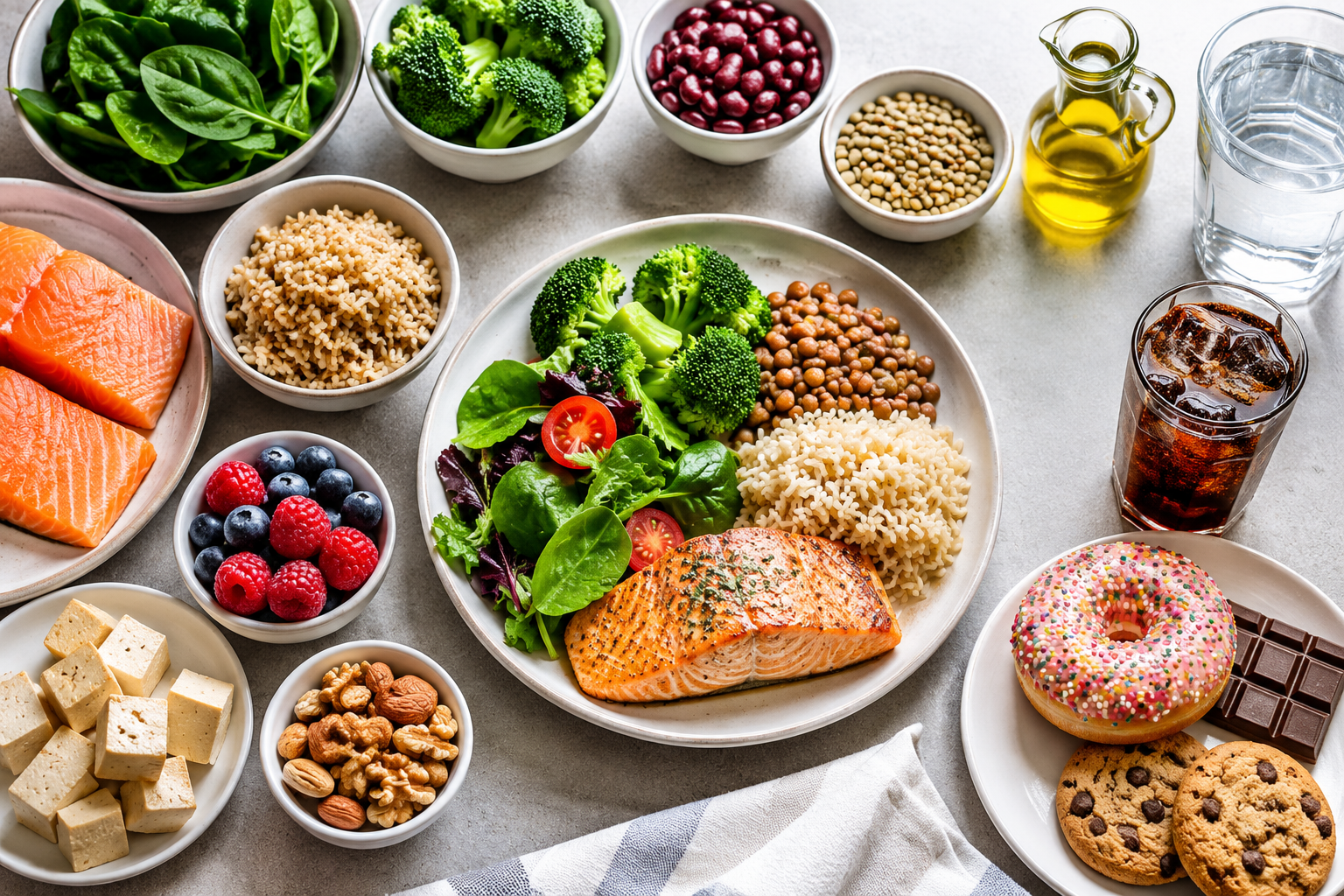
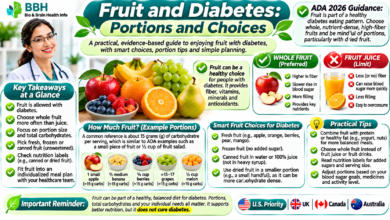
Whole fruits such as berries, apples, citrus and pears can fit into diabetes meal plans. They are different from fruit juice, which is easy to drink quickly and lacks much of the fruit’s fiber. Unsweetened yogurt or milk may also fit, while the carbohydrate content of dairy drinks varies.
Fish, eggs, tofu, lean poultry, nuts, seeds and unsaturated oils support variety and heart health. Choose unsalted nuts in sensible portions and watch added sugars in flavored yogurts, granola and packaged foods.
4. Diabetes Diet: Foods and Drinks to Limit
Sugar-sweetened beverages deserve special attention because they deliver substantial carbohydrate without much fullness. Regular soda, sweetened iced tea, energy drinks and large juices are reasonable first targets for reduction. Water, sparkling water or unsweetened tea are helpful alternatives.
Refined grains and highly processed snacks such as many pastries, sweets, white-flour crackers and desserts may contribute large quantities of rapidly absorbed carbohydrate, sodium or unhealthy fats. They are best treated as occasional foods rather than daily dietary staples.
| Choose more often | Limit or have less frequently | Practical swap |
|---|---|---|
| Water or unsweetened tea | Sugary soda or large juice | Sparkling water with citrus |
| Whole fruit | Fruit juice and sugary smoothies | An orange or berries |
| Whole grains and legumes | Refined pastries or frequent white-flour snacks | Oats or bean salad |
| Fish, tofu and lean proteins | Processed meats | Grilled fish or tofu |
| Nuts and unsaturated fats | Excess butter or deep-fried foods | Unsalted nuts or olive oil |
Processed meats and products high in saturated fat or sodium can worsen overall cardiometabolic risk. Review packaged foods for portion size, total carbohydrate, added sugars, sodium and saturated fat. Foods marked ‘sugar free’ can still contain carbohydrate and calories.
There is rarely a medical reason to label all bread, rice, potatoes or fruit as forbidden. The amount eaten, preparation and the rest of the meal are important. A smaller portion of a familiar staple with protein and vegetables can be more realistic than a permanent ban.
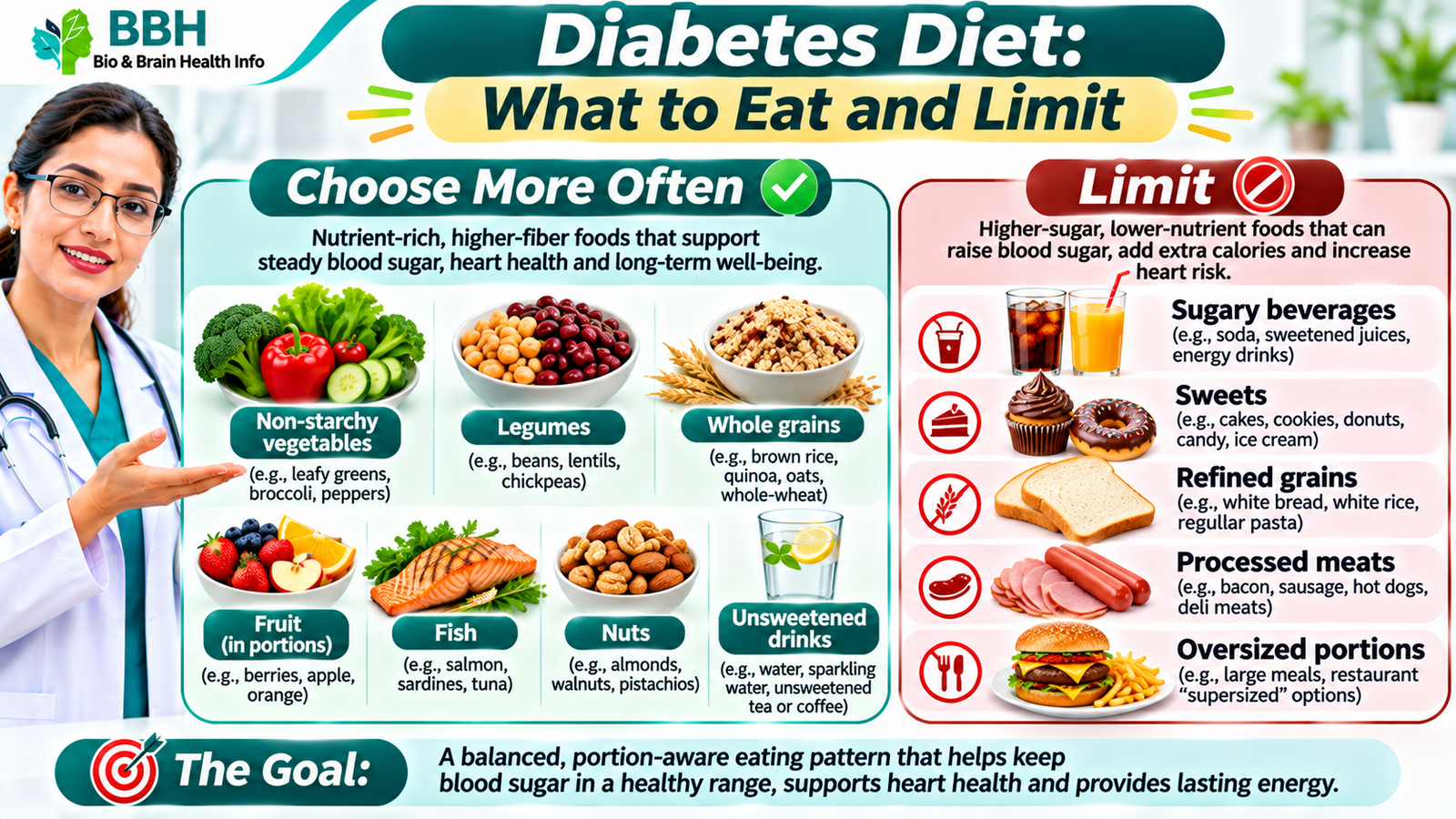
An effective diabetes diet is personalized to meals, glucose patterns, medication use and sustainable preferences.
5. Understand carbohydrates, fiber and portions
Carbohydrate-containing foods include grains, starchy vegetables, fruit, milk, yogurt, beans, sweets and sugary drinks. Carbohydrates can raise glucose, but their type, portion, surrounding meal and individual insulin response influence the change.
Fiber supports digestive and cardiovascular health and can slow carbohydrate absorption. The ADA 2026 advises at least about 14 grams of fiber per 1,000 calories as a general nutrition goal, with the exact intake tailored to a person’s needs.
The glycemic index describes the effect of a standard amount of available carbohydrate under defined testing conditions. It can be a useful secondary guide, but portion size and the total amount of carbohydrate often matter more for practical meal planning.
People using mealtime insulin may benefit from structured carbohydrate-counting education. Others may prefer the plate method or consistent meal portions. Neither approach should become an excuse for skipping meals while using medication that can cause hypoglycemia.
6. Breakfast, lunch and dinner examples
For breakfast, consider plain Greek-style yogurt with berries and unsweetened oats, or eggs with a slice of wholegrain toast and tomatoes. Porridge may also work, especially when portions are planned and sugary toppings are limited.
For lunch, try a salad containing beans or chicken with a portion of wholegrain bread, or vegetable soup with lentils and an appropriately sized grain serving. The exact amounts depend on appetite, medication and activity.
Dinner may include baked fish or tofu, roasted non-starchy vegetables and a moderate portion of quinoa, brown rice or sweet potato. In South Asian kitchens, wholemeal roti, dal, sabzi and curd can be adapted using the same balanced-plate principle.
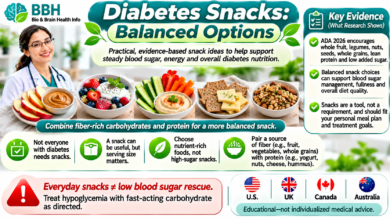
Snacks are not compulsory for everyone. If useful, options include a piece of whole fruit with nuts, unsweetened yogurt, hummus with cut vegetables or wholegrain crackers. Insulin users should follow their agreed meal and snack schedule.
An effective diabetes diet is personalized to meals, glucose patterns, medication use and sustainable preferences.
7. Simple swaps for familiar meals
Try plain sparkling water in place of regular soda, whole fruit rather than juice and wholegrain toast instead of heavily sweetened breakfast pastries. These swaps can reduce added sugar while keeping meals accessible.
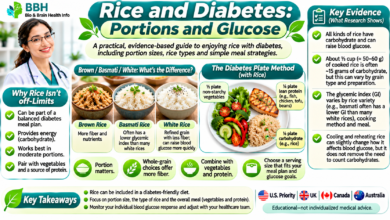
Switching some refined grain to an intact whole grain can increase fiber, but it does not remove the need to consider portions. Brown rice still contains carbohydrate, and a very large serving may raise glucose substantially.
Restaurant meals can be adjusted by choosing a vegetable side, adding a source of protein, asking for sauces separately or sharing oversized portions. It is not necessary to treat eating out as a failure.
For mixed vegetarian meals, include legumes and tofu while monitoring how much carbohydrate comes from both grains and beans. Meal planning should remain flexible enough to accommodate festivals and family gatherings.
8. A practical three-day sample menu
Day one: unsweetened yogurt and berries with oats for breakfast; a chickpea-and-vegetable salad with wholegrain toast for lunch; salmon, broccoli and a portion of brown rice for dinner. Optional snack: nuts or an apple.
Day two: eggs with vegetables and wholegrain toast; lentil soup, salad and a modest wholegrain roll; then tofu or chicken stir-fry with vegetables and quinoa. Optional snack: plain yogurt.
Day three: overnight oats with chia and whole fruit; a bean-and-vegetable bowl with avocado; then baked fish, roasted peppers and a small sweet potato. For vegetarian diets, substitute tofu or lentils for fish.
| Day | Breakfast | Lunch | Dinner |
|---|---|---|---|
| 1 | Yogurt, berries and oats | Chickpea salad with wholegrain toast | Salmon, broccoli and brown rice |
| 2 | Vegetable eggs and toast | Lentil soup and salad | Tofu stir-fry with quinoa |
| 3 | Overnight oats, chia and fruit | Bean vegetable bowl with avocado | Fish, peppers and sweet potato |
These are illustrative combinations rather than calculated prescription menus. They do not specify the right carbohydrate grams, calories or protein for any particular person. Adjust with a dietitian, especially when taking insulin or managing other medical conditions.
9. Type 1, type 2, prediabetes and medications
People with type 1 diabetes require insulin regardless of food choices. Nutrition education focuses on balancing carbohydrate with insulin dosing, activity and safety; a low-carbohydrate plan never replaces prescribed insulin.
In type 2 diabetes, nutrition approaches can include Mediterranean-style, culturally adapted, plant-forward or moderately lower-carbohydrate patterns. The ADA emphasizes individual choice. Very restrictive regimens may be hard to sustain and can have nutritional or lipid-related drawbacks.
People with prediabetes often benefit from quality dietary improvements and, where appropriate, weight management and increased activity. A diagnosis of prediabetes does not require buying special diabetes foods or eliminating all carbohydrates.
People taking insulin or sulfonylureas should not abruptly cut carbohydrate or skip meals without discussing medication adjustments with their care team, because hypoglycemia can occur. Those using SGLT2 medicines should discuss ketogenic diets or prolonged fasting with their clinician because of ketoacidosis risk.
10. UK, Canada and Australia: what differs?
U.S. ADA 2026 guidance prioritizes individualized nutrition therapy, food quality, fiber and less added sugar. Diabetes UK similarly advises diverse whole foods, wholegrain carbohydrates, fruit and vegetables, while cautioning against assuming one eating pattern suits everyone.
Diabetes Canada’s balanced-plate resources emphasize proportions and familiar foods rather than strict food bans. Australian NDSS guidance also illustrates half the plate as vegetables or salad, a quarter as lean protein and a quarter as carbohydrate foods.
The countries differ in food-label formats, common dietary staples, healthcare access and availability of registered dietitians, but the main principles overlap. Portion size, carbohydrate quality, individual risk and adherence matter more than finding one universally perfect diet.
Regional examples can be easily adapted: oatmeal in the U.S., wholemeal toast in the UK, lentil soups in Canada or grain bowls and vegetable-rich meals in Australia can all fit an individualized eating plan.
11. Common diet mistakes and safety gaps
One frequent misconception is that honey, jaggery, dates or brown sugar cannot raise glucose because they sound natural. These remain sources of sugar or carbohydrate and should be counted appropriately.
Another is assuming a food labeled gluten-free, keto or sugar-free is automatically better for diabetes. Packaging claims do not replace reading total carbohydrate, serving size and nutrient information.
Highly restrictive plans, skipped meals or unplanned fasting can be unsafe with certain diabetes medications. Pregnancy, chronic kidney disease, food allergies and eating disorders require tailored professional advice rather than generic meal lists.
Use glucose results to learn patterns without turning eating into a punishment system. Discuss persistent high or low values with the diabetes team; a single postmeal rise is not proof that a specific food must be eliminated forever.
12. Frequently asked questions
Can people with diabetes eat rice? Yes. Portion size, rice type and the foods eaten alongside it influence glucose response. Wholegrain choices often provide more fiber.
Is fruit allowed? Yes. Whole fruit is generally preferred to juice and can be included in portions tailored to individual needs.
Are bananas or potatoes banned? No. Both contain carbohydrate, and preparation, amount and the remainder of the meal determine their place in a balanced plan.
Do all people with diabetes need to count carbohydrates? No. Carb counting is especially useful for some people using mealtime insulin, but the plate method may be sufficient for others.
Can a low-carbohydrate diet help type 2 diabetes? It can improve glucose measures for some people, especially short term, but it is not the only effective approach and should be planned safely.
Does a sugar-free label mean no carbohydrate? No. Always check the nutrition facts and serving size.
How should I handle a low glucose reading? Follow your prescribed hypoglycemia treatment plan rather than withholding necessary fast-acting carbohydrate.
Can diet cure type 1 diabetes? No. Type 1 diabetes requires insulin. Some people with type 2 diabetes may achieve remission under specific conditions, but this is not a permanent cure.
conclusion. Conclusion: Build a Sustainable Eating Pattern
A practical diabetes diet should support stable glucose patterns, cardiovascular health and a satisfying routine. Instead of searching for forbidden-food lists, start with more vegetables, fiber-rich carbohydrates, appropriate protein, healthy fats and fewer sugary drinks.
Regular monitoring and professional review can help determine how meal timing and portions interact with medicines. An individualized nutrition plan is more useful than a restrictive diet that is difficult or unsafe to maintain.
Explore Related BBH Guides
For more detailed, evidence-based information, explore Diabetes Snacks: Balanced Options (practical between-meal choices); Rice and Diabetes: Portions and Glucose (cooked rice portions and meal combinations); Oatmeal and Diabetes: What to Know (oat varieties and breakfast portions).
Evidence and Further Reading