Fruit and Diabetes: Portions and Choices
Best Fruits for Diabetes: Portion Guide

BBH Physical Health · Diabetes & Blood Sugar · Evidence-based US-priority guide with UK, Canada and Australia comparisons
Thank you for reading this post, don't forget to subscribe!Do people with diabetes need to avoid bananas, grapes or mangoes? Should fruit be measured, and is fruit juice equal to whole fruit? Conflicting online advice can make a nutritious food group seem dangerous. Current diabetes organizations support fruit as part of a balanced diet while emphasizing reasonable portions and total carbohydrate.
This guide to fruit and diabetes explains serving choices, carbohydrate counting, whole fruit versus juice, and myths about common fruits. U.S. ADA 2026 guidance is the primary clinical reference, with practical UK, Canadian and Australian comparisons.
The aim is flexible planning, not a universally prescribed fruit allowance. Someone using mealtime insulin, who is pregnant or who has kidney disease may need specific guidance. No fruit cures diabetes, and a numerical serving illustration cannot substitute for personal nutrition assessment.
Can people with diabetes eat fruit?
The short answer is yes. Fruit contributes vitamins, minerals, water, and, especially when eaten whole, dietary fiber. The American Diabetes Association (ADA) 2026 recommends whole fruit among nutrient-dense carbohydrate sources in a balanced eating pattern for people with prediabetes and diabetes.
Fruit does contain naturally occurring sugars and other carbohydrates. These can increase blood glucose, so quantity and timing matter, particularly when someone needs to count carbohydrates for medication. Yet fruit is not equivalent to soda or confectionery simply because both can contain sugar.
Different fruits offer different textures, nutrient profiles and serving sizes. A small apple, portion of berries or orange may be easy to fit into a snack, while a very large banana or oversized fruit bowl can provide considerably more carbohydrate than expected.
The best plan reflects a person’s diabetes treatment, appetite, preferred foods and glucose patterns. Fruit restrictions should not replace professional medical nutrition therapy, nor should internet lists imply that any single fruit is guaranteed to lower glucose.
How fruit carbohydrates affect glucose
Fruit contains varying mixtures of fructose, glucose and sucrose, along with fiber, water and other plant compounds. The amount of available carbohydrate in the serving strongly influences the glucose response. Ripeness, processing and the other foods eaten alongside fruit can also make a difference.
The glycemic index describes how a defined amount of available carbohydrate affects glucose under standardized conditions. It can help explain some differences between foods, but it is not a complete guide to a normal portion or mixed meal.
Instead of ranking fruits from magically safe to dangerous, consider total carbohydrate, serving size and nutritional quality. A small portion of a higher-glycemic-index fruit can fit into a meal, while a huge serving of a lower-index fruit still supplies substantial carbohydrate.
Patients using glucose monitoring may observe their own patterns after an ordinary meal. Single readings can vary for reasons including medication, activity and stress. Discuss recurring patterns with the healthcare team before making major changes.
Careful fruit and diabetes planning weighs the fruit’s nutrients alongside its portion, carbohydrate content and the person’s care plan.
Fruit and Diabetes: Understanding Portions
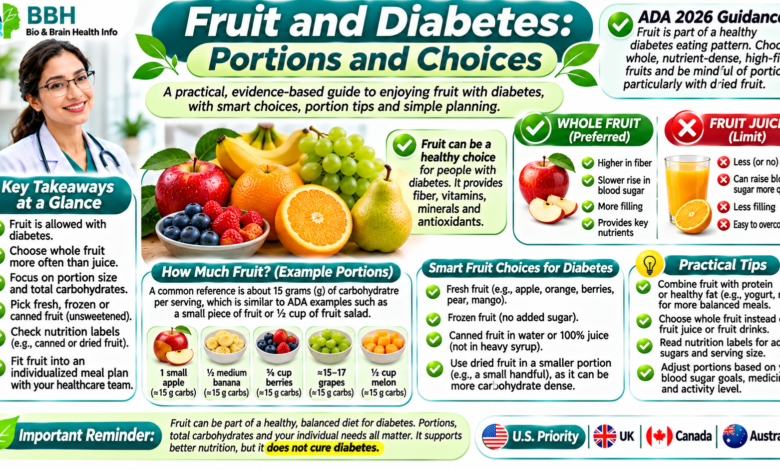
In U.S. diabetes education, one carbohydrate choice commonly corresponds to approximately 15 grams of total carbohydrate. Fruit serving examples in ADA or CDC educational materials illustrate this amount, but the size differs greatly between fruits. The 15-gram reference is a counting tool, not a required allowance for everyone.
For instance, ADA guidance describes a small piece of whole fruit or about one-half cup of fruit salad as useful examples when planning meals. A small portion of berries or grapes can be counted using a reliable carbohydrate database, packaging information or food scales.
| Fruit example | Carbohydrate planning context | What to check |
|---|---|---|
| Small whole fruit | Often used as an approximately 15 g carbohydrate example | Fruit size varies |
| About ½ cup fruit salad | Common ADA serving illustration | Composition changes the total |
| Berries | Amount varies by type and measured volume | Check cup or gram portion |
| Banana or mango | Large sizes may exceed one 15 g choice | Weigh or check reliable carb chart |
| Dried fruit | Small amounts can be carb-dense | ADA example: ~2 Tbsp ≈15 g carbs |
In the UK, public-health fruit ‘portions’ refer to fruit-and-vegetable recommendations and may not contain 15 grams of carbohydrate. An 80-gram fruit serving and a 15-gram carbohydrate exchange answer different questions; do not assume they are identical.

In Canada and Australia, serving examples likewise depend on local guidance and food size. Especially for large bananas, mangoes and dried fruit, weighing or checking a local carbohydrate guide is more accurate than relying on the number of pieces.
Berries, apples, pears and citrus
Berries can be convenient because they contribute fiber and color to yogurt, porridge or salads. Strawberries, raspberries, blueberries and blackberries differ in carbohydrate density, so a portion measured by cup or weight is more useful than a fixed count of berries.
Apples and pears offer portable whole-fruit options. Eating the edible peel where appropriate retains additional fiber. A very large apple may be more than one carbohydrate choice, while a small one may fit a planned snack more easily.
Oranges and mandarins contain vitamin C and water. Whole citrus fruit is generally preferable to consuming the same fruit primarily as juice. Fruit size still varies, and sweetened packaged citrus drinks may include added sugars.
Kiwi, peaches, plums and other seasonal choices can also fit. Choosing variety makes the plan more sustainable and can avoid repeatedly paying premium prices for one fashionable ‘superfruit’.
Fruit and Diabetes: Bananas, Mango and Grapes
Yes. Bananas, mangoes and grapes are not universally prohibited for people with diabetes. The main issue is how much carbohydrate the selected serving contributes to the overall meal. A small banana and a large banana may have noticeably different carbohydrate amounts.
Diabetes UK specifically notes that large bananas can be substantially larger than a conventional fruit portion. A small banana or a portion of sliced banana served with plain yogurt may be easier to plan than a very large banana added to sweet cereal.

Mango is a nutritious fruit, but a whole large mango can supply much more carbohydrate than a small sliced serving. Use a measuring cup or kitchen scale if accurate carbohydrate counting is necessary rather than trusting generic ‘one mango’ labels.
Grapes are small and easy to eat by the handful. Count or weigh a portion when relevant; the carbohydrate content varies with size. Diabetes guidance emphasizes portion awareness, not a prohibition on the fruit itself.
Fruit and Diabetes: Whole Fruit vs Juice
Whole fruit generally contains intact fiber and requires chewing, which can help fullness. Fruit juice makes it easy to consume carbohydrate from several pieces of fruit quickly. Even a drink labeled ‘100% fruit juice’ is a source of free sugars in common dietary guidance.
The ADA 2026 recommends replacing sugar-sweetened beverages, including juices, with water or low- or no-calorie drinks. Diabetes UK similarly favors whole fruit and advises limiting juice or smoothies, with a small 150 mL glass as its illustrative upper portion for those who choose them.
| Form | Main considerations | Practical choice |
|---|---|---|
| Whole fruit | Fiber, chewing, nutrient density | Choose most often |
| 100% fruit juice | Less fiber, easily consumed quickly | Prefer water; limit routine juice |
| Smoothies | May contain multiple fruit portions or added sugar | Check ingredients and total carbohydrate |
| Dried fruit | Concentrated carbohydrate in small volume | Measure small servings |
| Frozen or canned | Nutritious when unsweetened | Look for no added sugar or own juice |
A smoothie may retain some pulp, but it can still provide a very large fruit serving in liquid form, especially when sweetened milk, syrup, honey or juice is added. Its overall carbohydrate quantity needs consideration.
Juice has a different role when treating low glucose. For an alert person who can safely swallow and follows a standard hypoglycemia plan, measured fast-acting carbohydrate such as juice may be appropriate. Advice to limit routine juice consumption must never interfere with rescue treatment.
Dried, canned and frozen fruit
Fresh, plain frozen and canned fruit without added sugar can all fit. The ADA 2026 explicitly includes frozen fruit and fruit canned in its own juice or with no added sugar. For canned products, read the label and consider draining the liquid.
Dried fruit such as raisins, dates, cranberries and apricots is compact. It is easy to consume a relatively large carbohydrate amount in a few bites; the ADA gives an example in which two tablespoons of dried fruit contain about 15 grams of carbohydrate.
Some dried cranberries and packaged fruit snacks also have added sugar. Check the nutrition panel for total carbohydrate, added sugar, serving size and other ingredients. Fruit leather and sweetened dried snacks are not automatically equivalent to fresh fruit.
Frozen berries are useful when fresh berries are costly, and unsweetened canned peaches or pears can add variety. Fruit canned in heavy syrup is more likely to supply added sugar, while a ‘no added sugar’ label does not mean carbohydrate-free.
Fruit with meals, snacks and protein
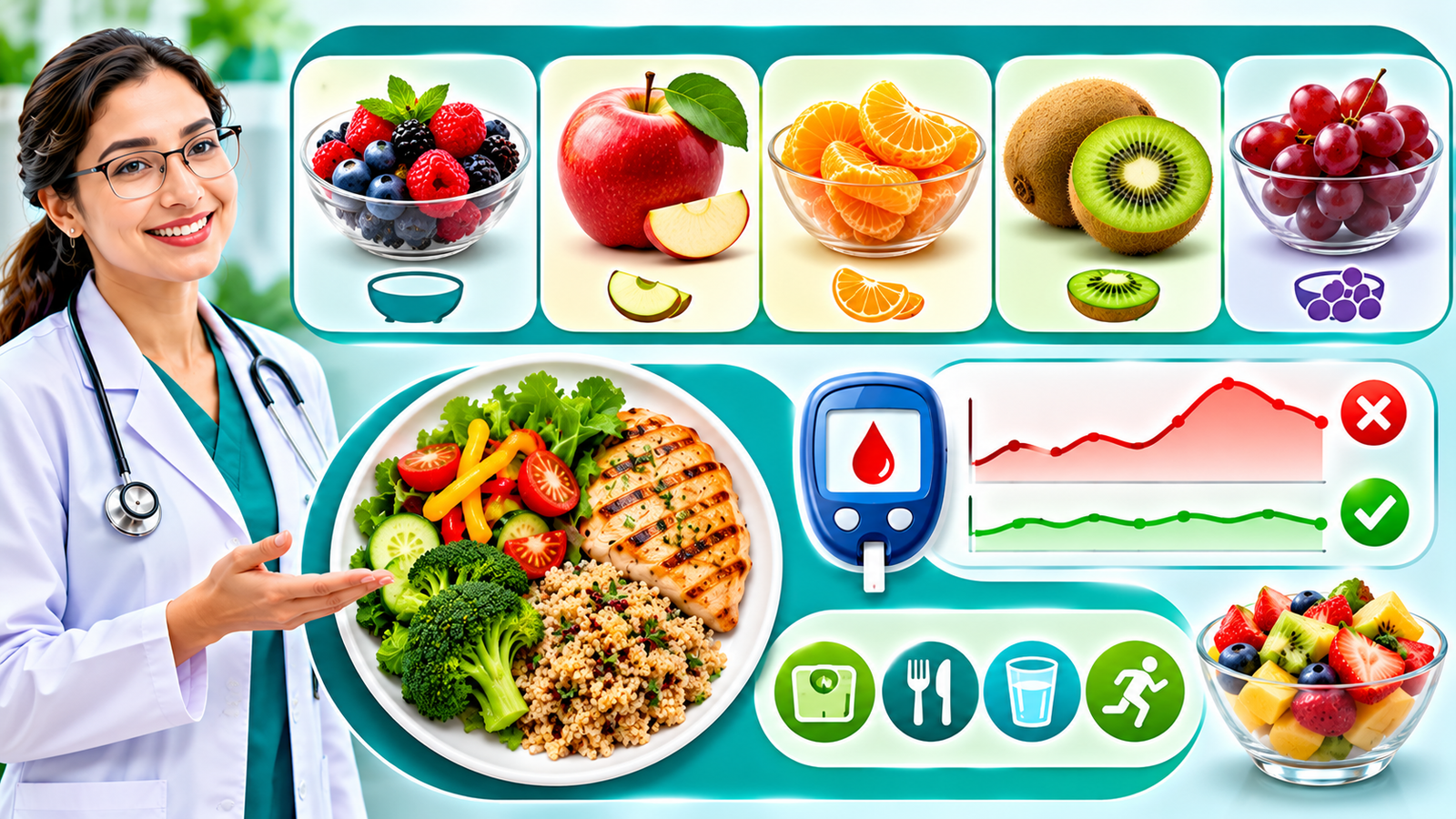
Fruit can be included with breakfast, lunch, dinner or as a snack. Try berries with plain yogurt and nuts, a small apple with nut butter, or orange slices alongside a balanced meal. These ideas combine nutrients and may help the meal feel satisfying.
Pairing fruit with protein or unsaturated fat may slow digestion, but it does not cancel the fruit’s carbohydrate. A fruit-and-yogurt bowl still needs portion awareness, especially if honey, sweetened granola or dried fruit is added.
Some people prefer spreading portions through the day rather than eating a very large fruit salad at once. Timing should be individualized around hunger, physical activity and medication rather than following a universal ‘never eat fruit at night’ rule.
If a person takes insulin or sulfonylureas, meal timing and carbohydrate intake can influence hypoglycemia risk. Do not abruptly eliminate planned snacks or alter prescribed medicines based on a general blog recommendation.
US, UK, Canada and Australia guidance
In the United States, ADA 2026 guidance welcomes whole fruit as part of a nutrient-dense eating plan, and ADA educational materials commonly use approximate 15-gram carbohydrate portions when teaching carbohydrate counting.
Diabetes UK advises that fruit is compatible with diabetes management, while drawing attention to large portions of grapes, tropical fruit and dried fruit. UK 5-a-day public-health serving sizes should not be confused with carbohydrate exchanges.
Diabetes Canada encourages whole or cut vegetables and fruit rather than drinking juice, with serving sizes chosen according to glucose goals and the overall meal. Diabetes Québec provides a practical carbohydrate-based fruit serving guide.
| Country | Fruit guidance | Important difference |
|---|---|---|
| United States | ADA: prioritize whole fruit; 15-g carb choices can aid counting | mg/dL glucose units and carb-exchange teaching |
| United Kingdom | Diabetes UK: fruit welcomed; mind portions and juice | 5-a-day portion is not the same as 15 g carbs |
| Canada | Diabetes Canada: choose whole fruit over juice | Individualized carbohydrates and food-group planning |
| Australia | Diabetes Australia/NDSS: whole fruit and varied serves | Local dietary fruit serving sizes and mmol/L units |
Diabetes Australia and the NDSS recommend including fruit within balanced eating, usually emphasizing whole fruit over juice. Standard Australian serves are typically described by fruit size or weight, often around 150 grams for a medium piece, but carbohydrate can still vary between foods.
Fruit myths and common mistakes
One myth is that sweetness alone determines whether fruit is suitable. Taste is not a reliable substitute for measuring carbohydrate. Some fruits taste tart yet supply carbohydrate, while a smaller portion of a sweet fruit can fit a balanced plan.
Another myth says people with diabetes must permanently avoid bananas, mangoes, grapes or watermelon. Leading diabetes organizations do not endorse such blanket bans. Portion size, preparation and individual glucose response are more useful guides.
‘Natural’ sugar is still sugar. Honey, agave, maple syrup and fruit concentrates can all add carbohydrate. A ‘no added sugar’ smoothie or fruit cup may still contain naturally occurring sugars and should be counted when relevant.
A third mistake is treating fruit as free food and consuming a very large platter at one sitting. Enjoyment and nutritional quality matter, but total carbohydrate is still important for diabetes treatment.
When to seek individualized diet advice
A registered dietitian experienced in diabetes can teach carbohydrate counting, portion estimation, food-label reading and how fruit choices fit personal glucose goals. An individualized plan may differ considerably for type 1 diabetes, type 2 diabetes and gestational diabetes.
Pregnancy has different nutritional requirements and glucose targets. People with advanced kidney disease may require attention to potassium or other nutrients, depending on laboratory findings and the treating team’s advice.
People who take insulin should follow their prescribed carbohydrate-to-insulin approach rather than guessing dose adjustments from a fruit list. SGLT2 medications, illness, fasting and other medical circumstances can also make restrictive eating plans unsafe.
If readings frequently exceed individual targets, review the whole meal, medication timing and glucose records with a clinician rather than blaming one fruit. Unexpected weight loss, severe vomiting, confusion or abnormal breathing deserves timely medical assessment.
Frequently asked questions
Can people with diabetes eat bananas? Yes. Choose a portion that fits the carbohydrate plan; a large banana provides more carbohydrate than a small one.
Are grapes bad for diabetes? No. The size and amount of the serving matter because grapes are easy to consume in large quantities.
Is mango too sweet for people with diabetes? Mango can fit in measured portions; a whole large mango may provide considerably more carbohydrate than a small serving.
Which fruit has the least sugar? Some berries and melons have relatively modest carbohydrate per typical serving, but no fruit is carbohydrate-free and serving size still matters.
Is fruit juice healthy for diabetes? Whole fruit is generally preferred. Routine juice can provide substantial carbohydrate with less fiber, although measured juice may be used to treat low glucose under a care plan.
Can dried fruit be included? Yes, in small measured amounts, checking for added sugars; the carbohydrate is concentrated.
Should fruit be eaten only in the morning? No universal time restriction is required. Meal timing depends on treatment and personal glucose patterns.
Can fruit cure diabetes? No. Fruit is part of nutritious eating but does not replace medical treatment or guarantee remission.
Conclusion: Enjoy Fruit With Portion Awareness
An evidence-based approach to fruit and diabetes avoids unnecessary food bans. Whole fruits offer fiber and micronutrients, while serving size and the amount of carbohydrate should fit the individual’s treatment and eating pattern.
Use varied fresh, plain frozen or suitable canned fruit; measure juice and dried fruit carefully if consumed; and ask a diabetes dietitian for help when accurate carbohydrate counting or medication matching is needed.
Scientific References